Food Truck Laws Gilbert, Arizona
Navigating Local Regulations
The food truck industry in Gilbert, Arizona, continues to flourish, reflecting a widespread trend that appeals to Arizonans seeking diverse culinary experiences. The town of Gilbert recognizes the importance of mobile food establishments to the local economy and community vibrancy, which is why it has taken steps to adapt regulations to support these mobile entrepreneurs. With an understanding that ease of operation for food trucks can contribute to a dynamic food scene, Gilbert has implemented measures to facilitate the operation of food trucks while ensuring public health and safety are not compromised.
Understanding the regulations governing food trucks is essential for both current and aspiring mobile food vendors. In Gilbert, these regulations span various aspects such as permitting, zoning, and food safety compliance. Each mobile food unit must navigate through this regulatory landscape to ensure they meet the town’s standards. These standards are crafted to strike a balance between fostering a friendly environment for the food truck industry and maintaining the necessary oversight.
The town's proactive approach in licensing food trucks has simplified the process for vendors to obtain the authorization needed to operate. For example, the Gilbert Town Council adopted a new mobile vending license, which streamlines procedures for food trucks and other portable businesses. These regulatory adjustments indicate Gilbert's dedication to cultivating a place where food truck operators can thrive, and patrons can enjoy the rich tapestry of food options available.
Getting Started
Initiating a food truck business in Gilbert, Arizona, requires a careful understanding of the local laws and regulations. Potential owners must consider the business model that suits their vision, and a robust business plan is vital for success.
Understanding Food Truck Laws
In Gilbert, food truck operators are subject to municipal requirements that include obtaining the necessary business licenses and adhering to health and safety standards. It's crucial to comprehend how recent changes may affect operations, such as eased restrictions that aim to foster growth while ensuring public welfare.
Selecting a Business Model
One must decide whether to run an independent operation or join a franchise. An independent food truck offers more creative control and can be named and branded as one sees fit, but it also requires a more hands-on approach with marketing. Conversely, a franchise can provide a ready-made business structure and immediate brand recognition.
Creating a Business Plan
A strong business plan outlines the path to profitability and should cover key areas:
Business Structure: Will your food truck operate as a sole proprietorship, or will forming an LLC offer better liability protection?
Licensing: In Arizona, securing a business license is a non-negotiable step.
Team: Consider the size and experience of your team. Are your team members aware of the local regulations related to food safety?
Marketing: A compelling marketing strategy is critical. This could range from social media outreach to participating in local food truck events.
Finances: Include funding strategies, projected revenues, and cost structures.
By meticulously going through each of these stages, your food truck business in Gilbert, Arizona, is set on a course for potential growth and a sustainable enterprise.
Licensing and Permits
In Gilbert, Arizona, food truck operators must navigate through a series of licensing and permits to ensure their mobile food establishment is compliant with local and state laws. This process involves obtaining the correct licenses, meeting state and county health requirements, and paying any applicable fees.
Obtaining a Food Truck License
To operate a food truck in Gilbert, one must apply for a business license. The application requires a fee and an Employer Identification Number (EIN), which can be acquired through the IRS. The Gilbert business registration and licensing page provides a streamlined process for application submission.
Mobile Food Establishment Permits
The Arizona Department of Health Services oversees the health and safety regulations for food trucks. Applicants must adhere to rules about food safety, temperature control, and proper waste disposal. The Maricopa County Environmental Services Department offers guidance and applications for mobile food establishment permits, ensuring that food trucks meet these regulations.
Special Event Permits
For temporary events or participation in annual gatherings, food trucks may require additional special event permits. These are usually short-term licenses specific to the scope and duration of an event, and details can be found on local municipality websites or by contacting event organizers.
Additional Permit Requirements
Operators should be aware of additional requirements such as state licenses and county licenses from the Arizona Department of Revenue, which may include tax regulations. Food trucks are also subject to OSHA regulations and local food truck law, which can influence permit and licensing needs. It's essential for food truck owners to stay current with both state and county requirements to avoid legal and financial penalties.
Site Selection and Zoning
When selecting a site for a food truck in Gilbert, Arizona, it is imperative to consider both the strategic value of the location and the applicable local zoning laws. The right choice can significantly impact the success of the business, while adherence to regulations ensures legal operation.
Choosing a Location
Location is paramount for any food truck business, and Gilbert, Arizona is no exception. Operators should look for areas with high foot traffic, such as locations near bars or bustling commercial districts. Proximity to public parks can also be advantageous due to the influx of patrons, especially in pleasant weather. However, it's important to note that each area in Gilbert is governed by specific ordinances, and some may restrict the operation of mobile food establishments to certain zones or require additional permits.
High Foot Traffic Areas: Near bars, major streets, commercial districts
Popular Public Spaces: Adjacent to public parks, community centers
Complying with Local Zoning Laws
Local zoning laws in Gilbert restrict where food trucks can operate. These restrictions are in place to manage city planning and to ensure the safety and convenience of the public. A mobile food vendor must navigate these regulations to find spaces where they are allowed to conduct business. For example, Gilbert’s Land Development Code, Ordinance No. 2809, may involve distance requirements from established brick-and-mortar restaurants or stipulations on operating hours. Food truck operators in Gilbert must become familiar with these local zoning laws to avoid penalties and to maintain good standing within the community.
Examining Gilbert's Zoning Requirements: Reference local Land Development ordinances
Assessing Location Legality: Ensure compliance with restrictions, such as permitted distances from existing commercial businesses
By carefully choosing a location and complying with the specific zoning laws of Gilbert, Arizona, food truck operators can create a thriving business while integrating smoothly into the community's landscape.
Food Safety and Inspections
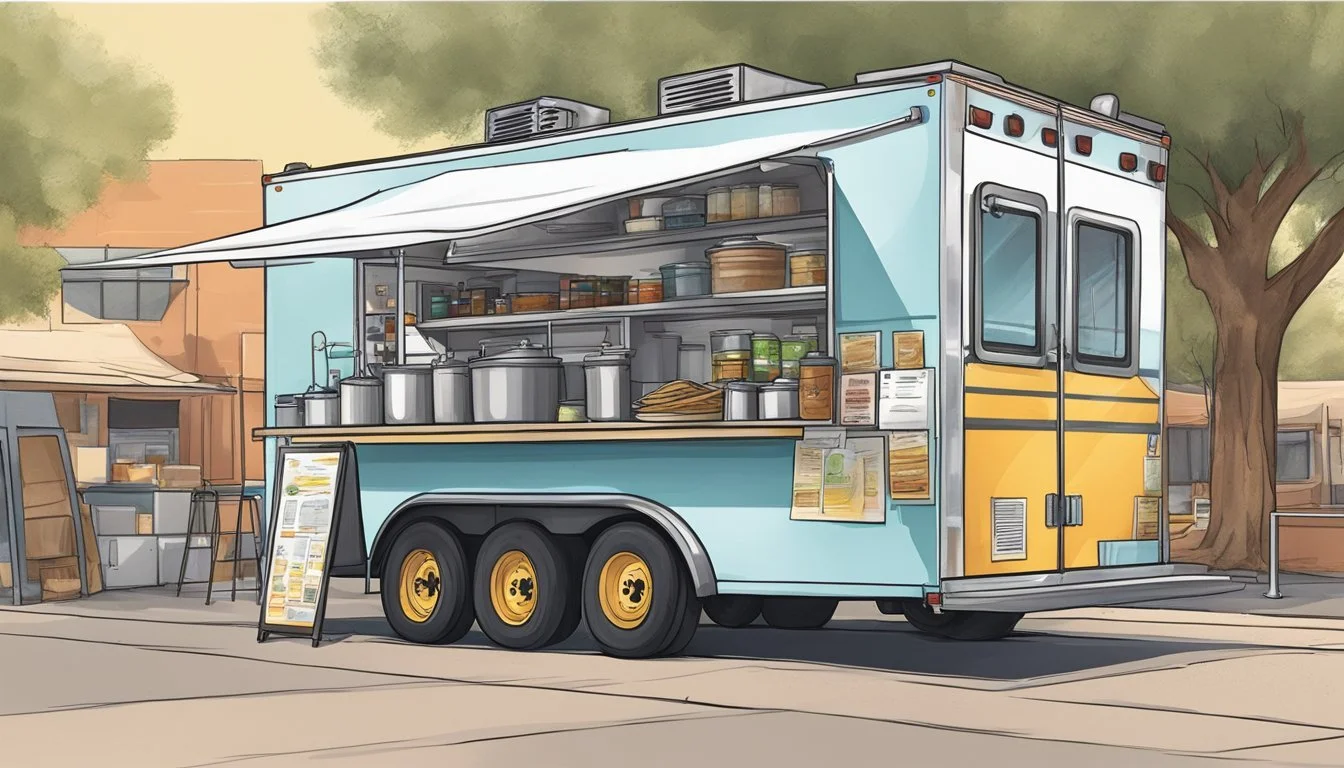
In Gilbert, Arizona, food trucks must adhere to stringent food safety and inspection regulations to ensure public health. Owners are responsible for maintaining compliance with local and state laws, specifically around food handling and safety standards.
Health and Safety Regulations
Food trucks in Gilbert are regulated by the Maricopa County's health and safety guidelines. Operators must possess a valid Arizona Food Handler Card, ensuring employees are knowledgeable about safe food handling practices. Critical areas of focus include:
Personal Hygiene: Proper handwashing and illness policies.
Food Temperature Control: Storage and serving temperatures to prevent food-borne illnesses.
Cross-contamination Prevention: Separate equipment for different food types.
Yearly health inspections ensure that food trucks meet the ServSafe guidelines, a food and beverage safety training program widely recognized in the foodservice industry.
Preparing for Inspections
Food truck operators should prepare for both announced and surprise inspections by keeping detailed records of their food safety practices, including:
Training Documentation: Evidence of staff trained in food safety, typically with a ServSafe certificate.
Equipment Maintenance: Logs showing regular checks of refrigeration and cooking equipment.
In addition to standard health inspections, food trucks may be subject to a fire inspection to assess the safety of cooking equipment. It is crucial to have:
Proper Fire Extinguishing Systems: Checked and tagged regularly.
Ventilation: Compliance with regulations to prevent grease buildup.
Regular self-inspections using checklists based on the Maricopa County health department's standards can keep food trucks inspection-ready.
Operational Considerations

Food trucks in Gilbert, Arizona, must maneuver through a specific set of challenges to ensure efficient operations. Compliance with regional laws and regulations is critical, and operational success hinges on the strategic procurement and management of equipment and inventory.
Acquiring the Right Equipment
Selecting the proper cooking equipment is paramount for a food truck's functionality and productivity. In Gilbert, equipment must meet the safety standards stipulated by Maricopa County regulations. This includes not only the cooking appliances but also refrigeration units to maintain proper food safety standards. Examples of necessary cooking equipment include:
Grills
Deep fryers
Ovens
Steam tables
Each piece must be versatile and durable to handle the rigors of mobile food service and to perform a variety of cooking techniques. It is vital that food trucks are fitted with high-quality equipment that can withstand daily transportation and usage.
Purchasing and Managing Inventory
Effective inventory management is essential to avoid overstocking and minimize waste. Food truck operators in Gilbert should conduct regular inventory checks and track ingredient usage patterns. Purchasing ingredients requires working with reputable suppliers who can provide fresh, high-quality products that meet local food safety ordinances.
An inventory should encompass:
Non-perishable items: Canned goods, seasoning, and condiments.
Perishable items: Meats, dairy, and fresh produce.
Inventory lists and par sheets are valuable tools for managing purchases and ensuring that the truck is stocked with essential ingredients before setting out for the day's operations. Investing in good inventory software or systems can assist with this process, keeping track of all items in real-time and signaling when it's time to reorder.
Financial Management

Effective financial management is critical for food truck operators in Gilbert, Arizona. They must navigate through the nuances of tax compliance and insurance procurement to ensure financial stability and legal adherence.
Understanding Sales Tax Obligations
Food truck owners in Gilbert must collect, report, and pay sales tax on the food and beverages they sell. Sales tax in Arizona is a combination of state, county, and city taxes, and the Arizona Department of Revenue administers it. Operators must register their business to receive a Transaction Privilege Tax (TPT) license and regularly file TPT returns. Compliance with tax obligations helps to avoid penalties and ensures the business remains in good standing.
Securing Insurance Policies
Acquiring the right insurance policies is essential for safeguarding against financial risks. Food truck owners should secure a combination of liability, vehicle, and property insurance. Liability insurance covers legal fees and damages if the business is sued, while vehicle insurance protects against accidents on the road. Property insurance is important for protecting the food truck's equipment and inventory from damage or theft. It is advisable to consult with an insurance professional to tailor a policy that fits the specific needs of the mobile food establishment.
Marketing and Customer Engagement

In Gilbert, Arizona, successful food truck operations focus on building a cohesive brand and leveraging the power of social media to attract and retain customers. These strategies are essential in a market where differentiation and customer connection are vital to thriving.
Building a Brand
Food truck owners in Gilbert understand that a strong brand sets them apart in a bustling market. Their branding encompasses the truck design, uniformity in their menu, and a consistent tone and message in all communications. They prioritize a memorable logo and a unique selling proposition to create a lasting impact.
Consistency: Key to brand recognition.
Visuals: A distinctive truck design and logo are critical.
Messaging: Clear and uniform across all platforms.
Leveraging Social Media
Social media is a pivotal channel for food trucks in Gilbert, allowing them to engage directly with their clientele. Owners utilize platforms like Instagram and Facebook to share daily locations, special events, and menu updates. Targeted ads and customer interactions through these networks drive foot traffic and foster community support.
Platforms: Facebook, Instagram, Twitter, etc. - each serves a different purpose.
Content: High-quality images, updates, and customer shoutouts encourage sharing.
Engagement: Prompt response to comments and reviews builds customer relationships.
Incorporating these practices, food trucks in Gilbert can develop a strong market presence and maintain a loyal customer base.
Expansion and Growth

Expansion in the mobile food vending industry signifies not just the growth of a food truck's physical reach, but also the scaling of its operational capabilities to meet increasing demand. The following sections discuss the strategic opportunities for growth and the legal considerations essential for sustainable expansion in Gilbert, Arizona.
Exploring Expansion Opportunities
Mobile food vendors in Gilbert are capitalizing on new market prospects brought about by changes in legislation. The Food Truck Freedom law simplifies establishment regulations enabling vendors to operate with greater ease. This change paves the way for expansion into new areas and markets within Arizona itself, offering a more unified and streamlined process. As food trucks venture out of their existing localities, they can tap into a larger base of Arizonans looking for diverse culinary options.
Navigating Legal Considerations for Growth
While looking to expand, it's crucial to understand and navigate the legal barriers. Compliance with Maricopa County’s Mobile Food Establishments regulations ensures that growth is within the legal framework. Additionally, the legislation in Arizona requires food trucks to possess permits similar to those of brick-and-mortar restaurants, such as a business license and food handlers permit. Keeping abreast with these requirements prevents any unnecessary hindrance to the growth trajectory of these mobile food entities.
Regulatory Bodies and Resources

In Gilbert, Arizona, food truck operators must navigate several layers of regulation to maintain compliance. These regulations are established to ensure public health and safety, and operators can find guidance and required permits through state and county level departments.
Arizona Mobile Food Regulations
The Arizona Department of Health Services oversees the health and safety aspects of food establishments, including mobile food units. They mandate adherence to the food safety ordinances, which include maintaining cleanliness, proper handling and storage of food, and ensuring temperature control to prevent the proliferation of bacteria. For mobile food establishments, like food trucks, specific requirements on the state level must be met for operations within Arizona, including Maricopa County.
Key Regulations Include:
Compliance with food safety ordinances
Adherence to OSHA regulations
Proper waste disposal regulations
Tax law regulations
Contact Information for Local Authorities
Local regulations may differ, and it's crucial for food truck business owners to also consult municipal authorities to stay compliant. The Town of Gilbert requires all commercial and home-based businesses, including food trucks, to possess a proper business license. Furthermore, regulations about the operation of mobile food units within town limits, including parking restrictions and zoning requirements, are accessible through the Town's municipal codes.
For direct inquiries:
Gilbert Business Licensing: (Link to Contact Page)
Maricopa County Environmental Services: (Link to Contact Page)
By consulting with these regulatory bodies, food truck operators can find the most current information and resources necessary for lawful operation in Gilbert, Arizona.