Food Truck Laws Grand Rapids, Michigan
Your Essential Guide to Compliance
Operating a food truck in Grand Rapids, Michigan, requires compliance with specific regulations set forth to ensure safety, quality, and fairness in the bustling mobile food industry. Entrepreneurs and chefs looking to bring their culinary creations to the streets of Grand Rapids must navigate a series of legal requirements, including securing the necessary licenses and permits. These regulations are in place to govern where and how food trucks can operate within the city limits, balancing the opportunity for mobile food vendors with the interests of brick-and-mortar establishments and public spaces.

The city of Grand Rapids mandates that all mobile food vendors obtain a license specifically tailored for mobile food vehicles such as food trucks, trailers, or concession stands. This not only legitimates their business but also ensures that they adhere to health and safety standards crucial for protecting consumers. Additionally, when looking to vend in city parks, operators must apply for a separate permit, indicating their adherence to the guidelines specifically designed for these public areas.
Mobile food vending in Grand Rapids is also subject to zoning ordinances that determine the locations where food trucks can operate. These measures are intended to minimize disruptions to local traffic and businesses while maximizing the diversity and accessibility of food options available to residents and visitors of Grand Rapids. Understanding and adhering to these laws is essential for food truck owners to run a successful and legally-compliant business in the city.
Legal Framework for Food Trucks
The operation of food trucks in Grand Rapids, Michigan, is regulated by a combination of city ordinances and state food laws, designed to ensure public safety and fair business practices.
City Ordinances
In Grand Rapids, food trucks fall under specific city ordinances that dictate their operation. The Grand Rapids City Commission plays a crucial role in adopting these regulations, which are often reviewed during public hearings where community members can provide input. A recent, notable change in these regulations includes a test ordinance that is part of a two-year pilot program. This test ordinance is significant as it expands the areas where food trucks can operate, designating up to 13 specific areas for vending.
Michigan Food Laws
On the state level, the Michigan Food Law of 2000 establishes a framework for food safety and sanitation that all food establishments, including food trucks, must adhere to. To start a food truck, operators must familiarize themselves with these laws and complete steps outlined in the Food Establishment Licensing process, such as pre-construction checklists and understanding zoning ordinances. A series of specific permits and licenses are necessary, which include but are not limited to a Business License, Mobile Food Facility Permit, and Public Health Permit. Trucks serving alcohol must obtain a separate Liquor License. Compliance is mandatory, and failure to adhere can result in the suspension of operations or other legal repercussions.
Licensing Requirements
In Grand Rapids, Michigan, food truck operators must navigate through a series of licensing requirements to legally serve the community. Successful operation involves obtaining various licenses and completing a plan review process, each mandated by local and state guidelines.
Starting a Food Truck
Before one can operate a food truck, entrepreneurs must secure a business license and a mobile food vendor license specific to the Grand Rapids area. They should begin by reviewing local zoning ordinances and ensuring their business conforms to municipal regulations. The initial steps include creating a detailed business plan and considering the implications of the Michigan Food Law of 2000 as it pertains to mobile food services.
Licensing Process
The licensing process for food trucks in Grand Rapids involves a detailed plan review. Applicants are required to submit a plan review worksheet along with a plan review application. This step ensures that the design and construction of the food establishment meet the required regulatory standards. Once the plan is approved, operators can apply for a food service license, which enables them to prepare and serve food to the public.
The required documents typically include:
Completed plan review application.
Food service license application.
Proof of business licensure.
Operators must also familiarize themselves with safe food handling practices and, depending on the scope of their menu, may need additional permits. Following the completion of all necessary forms and approvals, one can secure the permits by visiting the City Clerk's Office or through the applicable state department websites.
Operating Locations and Hours
In Grand Rapids, Michigan, food trucks are allocated specific zones for operation, and there are set times during which they can conduct their business. These regulations ensure a structured environment for both vendors and the community they serve.
Designated Areas for Operation
Food trucks looking to operate in Grand Rapids must adhere to the city's designated areas. One such area includes public parks, where they may do business with appropriate permits. Downtown Grand Rapids is another popular hub for food trucks, but operators should be aware of specified zones within this region. These zones are carefully selected to balance the interests of mobile vendors with brick-and-mortar establishments.
Operating Hours and Restrictions
In terms of operating hours, restrictions are in place to respect the regular flow of the city. Typically, food trucks are allowed to serve customers from 6:00am to 2:00am in approved downtown zones. However, specific public spaces, such as parks, have their own rules that limit vending to only during park operating hours, which follow the schedule of dawn to dusk. Additionally, food trucks must maintain a distance of 100 feet from established restaurants to prevent unfair competition and overcrowding.
For further information, individuals may reference the City of Grand Rapids Mobile Food Vendor policies or check with the City Clerk's Office.
Health and Safety Regulations
Food truck operators in Grand Rapids, Michigan must adhere to strict health and safety regulations enforced by the local health authorities. These rules are in place to ensure that mobile food vendors provide safe and hygienic food to the public.
Health Department Guidelines
The Kent County Health Department mandates that all food trucks in Grand Rapids must be licensed and pass periodic health inspections. These inspections assess compliance with food safety protocols, such as proper food storage, handling, and temperature control. Food truck operators are required to display their license in a visible area to inform the public.
Food Safety Compliance
Food safety is a critical aspect of operating a food truck. Operators must follow a set of guidelines that include:
Proper food handling: Ensuring that all food is handled with clean hands and sanitized equipment.
Temperature control: Maintaining hot foods above 135°F and cold foods below 41°F.
Sanitization: Regularly cleaning and sanitizing all surfaces, utensils, and equipment.
Operators must also complete a food safety certification course approved by the Michigan Department of Agriculture & Rural Development (MDARD). This certification helps to further ensure that food truck vendors are knowledgeable about safe food handling practices.
Special Events and Temporary Operations
In Grand Rapids, Michigan, food vendors participating in special events or operating on a temporary basis must adhere to specific permitting requirements. These permits ensure that all food service providers comply with the local health and safety regulations.
Special Transitory Food Unit Permit
A Special Transitory Food Unit (STFU) permit is essential for vendors who wish to operate mobile food establishments across various locations within the state of Michigan. This permit, which can be obtained for a fee of $159, allows greater flexibility as it is not confined to a single location or event. Rather, it permits operation throughout multiple jurisdictions, provided that each local health department is notified in advance of the unit's operation within its area.
Temporary Food Establishment Permits
For vendors intending to serve food at a fixed location for a brief period, a permit for a Temporary Food Establishment is required. This type of establishment is defined as one that operates at a fixed location for a temporary period not to exceed 14 consecutive days. Examples are concessions at fairs or food stands at festivals. A license fee of $73 applies to this permit type, reinforcing the city’s commitment to public health while supporting the vibrancy of local events.
Downtown Grand Rapids Inc. and City Parks Usage
Downtown Grand Rapids Inc. has been instrumental in shaping the regulations that allow mobile food businesses to thrive in Grand Rapids. They have coordinated with the city to ensure that food trucks can operate in specific city parks and other public spaces, adhering to defined user agreements.

Collaborations and Partnerships
Downtown Grand Rapids Inc. works in close coordination with the Grand Rapids Food Truck Association and the City of Grand Rapids to foster a vibrant food truck culture. Through these collaborations, they've established guidelines that permit food trucks to operate from dawn to dusk at public parks and during specific hours in designated downtown areas.
User Agreements
To conduct business in city parks, mobile food vendors must agree to specific terms outlined in a user agreement. This includes adhering to the stipulated times of operation and securing a location through the use of the Food Vending Truck Map provided by the City of Grand Rapids. Moreover, there is an associated license application fee for vendors wishing to set up their mobile food business within the city's jurisdiction.
Economic Impact on Local Community
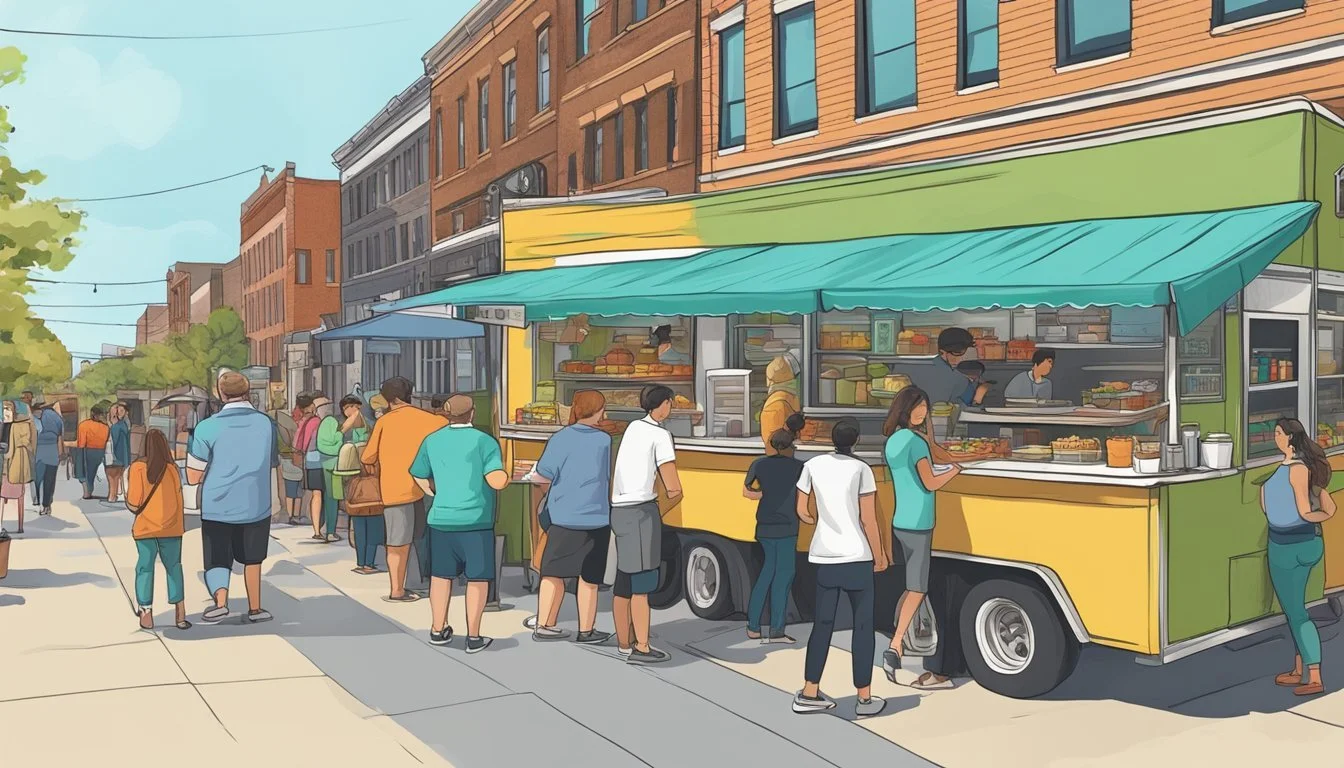
The introduction of food truck ordinances in Grand Rapids has recalibrated the economic terrain for local food businesses by shaping customer patterns and sales figures.
Impact on Brick-and-Mortar Establishments
The legalization of food trucks in Grand Rapids appears to have contributed to a more vibrant culinary scene. This shift has prompted traditional brick-and-mortar food businesses to adapt their strategies to maintain competitiveness. Some established restaurants experienced pressure to innovate and diversify their offerings, whereas others found new opportunities for collaboration. An illustration of this dynamic is the net increase of 26 food businesses downtown, subsequent to the food truck trial run, signaling that both segments can potentially thrive simultaneously.
Customer Traffic and Sales Data
Food trucks have not only altered the culinary landscape of Grand Rapids but also the flow of customer traffic. They have acted as magnets in city parks and public areas, drawing in crowds that might not otherwise frequent these spaces. Sales data suggests a correlation between the presence of food trucks and increased consumer spending in the vicinity. Customers now enjoy a gamut of options, propelling sales both on wheels and within the walls of established eateries.
Policy Changes and Business Dynamics

In Grand Rapids, Michigan, the legal framework governing food trucks has been transformed, responding to public demand and altering the business landscape significantly.
Adjustments to Trial Ordinances
The city of Grand Rapids conducted over a two-year trial ordinance period to evaluate the impact of food trucks on the local economy. Adjustments were made in response to these observations, leading to the creation of a permanent food truck policy. The new ordinance was shaped by public opinion and a comprehensive study biased towards neither food trucks nor traditional restaurants.
Businesses Evaluation and Food Truck Growth
The introduction of the trial ordinance saw a significant net increase in food businesses, including both food trucks and brick-and-mortar establishments. A marked increase in licensed food trucks contributed to this growth, demonstrating a healthy demand for varied dining options. Nevertheless, the city also witnessed some closures due to the competitive environment. By the close of the last fiscal year, the food truck policy's influence on new food businesses was considered a success, indicating citywide economic benefits without undermining existing eateries.
Addressing Noise and Property Concerns

In Grand Rapids, Michigan, food truck operations are subject to specific laws that address noise control and the use of private property to balance the interests of vendors, residents, and other stakeholders.
Noise Regulation
Food truck vendors in Grand Rapids are required to adhere to the city's noise ordinance, which ensures that their operations do not disrupt the local community. The ordinance replaces older decibel-based standards with more precise measures, particularly during designated hours, to minimize impact on neighboring residents and businesses. Compliance with these regulations is necessary for maintaining a harmonious environment.
Private Property Use
When food trucks operate on private property, it's important that they have the consent of the property owner and that they conform to local zoning ordinances. Grand Rapids ordinances stipulate that food trucks should not impede or endanger the welfare of the community and that their presence should align with the interests of local property owners. Cooperation between food truck operators and property owners is imperative, fostering positive relationships with neighbors and contributing to the community's well-being.
Additional Resources
Navigating the regulations for food trucks in Grand Rapids can be complex. It's important for vendors to be well-informed about the state and local guidelines that impact their operation. Resources provided by the Michigan Department of Agriculture and Kent County offer detailed information on licensing, food safety, and specific requirements for food service establishments and concessions.
Guidelines for Michigan Department of Agriculture
The Michigan Department of Agriculture provides a comprehensive step-by-step guide that is an invaluable resource for operators of food trucks and food processing plants. They cover necessary steps like zoning approvals and adherence to the Michigan Food Law of 2000. Industry participants will find a useful checklist for new food establishments and the process to acquire appropriate licensing.
Kent County Resources And Concessions
For those operating in Kent County, local resources focus on public health and are pivotal in maintaining food safety standards. Kent County requires food service establishments, including those operating concession stands and mobile food vendors, to have at least one certified food safety manager. This entity steers the education initiatives and compliance with local ordinances, ensuring all such operations meet the stringent guidelines laid out for food safety.