Food Truck Laws in Massachusetts
Your Essential Guide to Regulations

Operating a food truck in Massachusetts demands a keen understanding of state and local regulations. These rules span across multiple aspects of the business, including permits, food safety, and operational standards. While the flexibility and mobility of food trucks offer a unique opportunity for entrepreneurs, these advantages come with a responsibility to comply with the Retail Food Code Standards for Mobile Food Establishments set forth by the Commonwealth.
For those looking to enter the mobile food industry in Massachusetts, navigating the legal requirements is essential. The state requires food truck owners to obtain several licenses and permits before they can commence operations. For instance, food handlers permits must be secured for each employee to ensure food safety. These are in conjunction with the necessary business license, food truck license, and additional permits that mirror those required of traditional brick-and-mortar restaurants.
Collaboration with local health departments and adherence to the specific Mobile Food Establishment Questions and Answers provided by Massachusetts is also vital. Food truck operators must meticulously plan and report their menu, as well as methods for transportation, storage, and preparation of food to the relevant regulatory authority. Ensuring compliance with these regulations enables food truck owners to not only protect public health but also contribute positively to the vibrant street food culture in Massachusetts.
Understanding Food Truck Regulations in Massachusetts
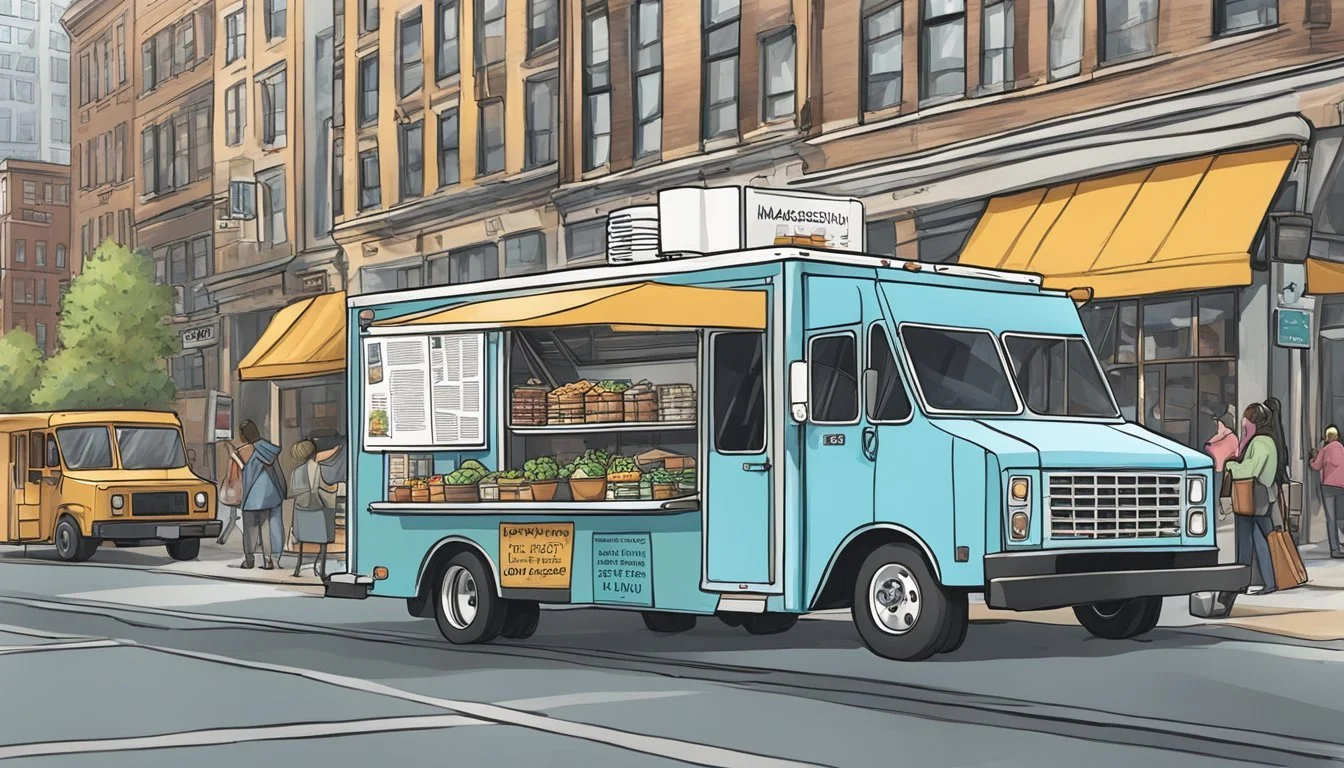
In Massachusetts, food trucks are subject to a comprehensive set of regulations designed to ensure public health and safety while fostering a vibrant mobile food industry.
Statewide Licensing Requirements
The Commonwealth mandates that all food trucks obtain a statewide license to operate. This license serves as a baseline for compliance, ensuring that mobile food establishments meet the necessary safety and operational guidelines.
Local Ordinances and Zoning
Local municipalities may have additional zoning requirements and ordinances specific to food truck operations. Food truck operators must navigate these local laws, which can include restrictions on where they can park and for how long.
Food Truck Operating Permits
Aside from a general business license, food trucks need specific operating permits to run day-to-day activities. These may include separate permits for the preparation and sale of food as well as sanitation clearances.
Health and Safety Standards
Massachusetts upholds strict food safety regulations. Food truck operators are required to ensure proper food handling, storage, and preparation techniques to minimize health risks, which include training staff and implementing necessary measures for food allergy awareness.
Inspection Requirements
Regular inspections are required to maintain a health permit for food trucks. These inspections verify adherence to Massachusetts’ food safety standards and regulations, addressing factors such as sanitation, food handling, and proper equipment maintenance.
Starting a Food Truck Business

When embarking on the journey to start a food truck business in Massachusetts, entrepreneurs must focus on a solid business plan, carefully select their vehicle and equipment, develop a mouth-watering menu with quality ingredients, acquire necessary funding and insurance, and employ effective marketing strategies to stand out in the competitive landscape.
Creating a Business Plan
A comprehensive food truck business plan serves as the roadmap for success. It should detail the business objectives, brand proposition, and strategic financial planning. Prospective business owners must conduct thorough market research to determine their target demographic and competitive analysis to carve out their niche in the food truck market.
Choosing Your Food Truck and Equipment
Selecting the right vehicle is pivotal for a food truck business. Entrepreneurs should weigh the benefits between new or used trucks, alongside necessary kitchen equipment to prepare and serve their menu items. Initial startup costs can be significant, and this decision will impact both budget and operations.
Menu Development and Sourcing Ingredients
A food truck's menu should reflect the brand's identity and cater to customer preferences. Entrepreneurs need to source high-quality ingredients to deliver consistent and delicious fare. Massachusetts has a variety of local suppliers that can provide fresh and sustainable produce to support this endeavor.
Securing Funding and Insurance
To open a food truck business, securing adequate funding is essential. This may include exploring options such as loans, partnerships, or investments. Additionally, the right insurance policy must cover liabilities associated with mobile food establishments, including property damage, employee risks, and vehicle insurance.
Marketing and Branding
Effective marketing and branding are critical components that drive visibility and customer loyalty. Developing a strong brand identity, including a catchy business name and logo, is the first step. Implementing a strategic marketing strategy through social media engagement and local event participation can rapidly increase brand recognition.
By integrating these focused strategies, a food truck entrepreneur in Massachusetts can set the groundwork for a thriving and sustainable food service venture.
Operational Guidelines for Food Trucks

Food trucks in Massachusetts are subject to specific operational guidelines that ensure food safety and hygiene. These regulations are vital for protecting public health and maintaining a reputable business.
Food Preparation and Storage
Food trucks must ensure that all food preparation is conducted under sanitary conditions, adhering strictly to the guidelines set forth by local health authorities. They are responsible for providing adequate storage facilities to prevent food contamination and must have a refrigeration unit to keep perishable items at safe temperatures. Food handling practices must minimize the risk of foodborne illness, with special attention to the proper storage and preparation of food items before serving.
Cooking and Temperature Control
Consistent temperature control is imperative during cooking to prevent the growth of harmful bacteria. Food trucks are required to use thermometers and maintain logs to document that all cooked foods have reached the required internal temperatures. These logs serve as vital records for health inspectors. Holding equipment must also keep prepared food at safe temperatures until sold.
Cleanliness and Sanitation
The internal environment of a food truck must be kept clean and sanitized. Surfaces in contact with food must be wiped down regularly with a sanitizing solution, and a rigorous cleaning schedule should be adhered to. Proper handwashing facilities or stations must be accessible to all employees to promote good hygiene practices, and sanitizing supplies should be readily available and used frequently.
Service and Customer Interaction
When offering service, food truck employees are expected to exhibit a high standard of personal cleanliness and hygiene. They must avoid direct hand contact with ready-to-eat foods, using utensils or gloves instead. Feedback from customers regarding the eating experience should be taken seriously, helping to guide improvements in both food quality and service. Food trucks should openly display their food establishment permit to assure customers of their compliance with health regulations.
By following these operational guidelines strictly, food trucks in Massachusetts can provide a safe dining experience while also strengthening their customer base through reliable and hygienic food service.
Compliance with Food Safety Laws

In Massachusetts, food trucks must adhere to stringent food safety laws to protect public health. These regulations are put in place to minimize the risk of foodborne illness, ensure allergen and contamination management, and maintain proper waste disposal and water supply protocols.
Foodborne Illness Prevention
Food trucks in Massachusetts are subject to regular inspections to ensure compliance with food safety standards. These inspections help prevent foodborne illness by verifying that food is stored, cooked, and handled correctly. It is crucial that all mobile food establishments work with the Local Boards of Health (LBOH) to acquire necessary approvals, including a review of their proposed layout and the volume of food prepared. Employees must receive training on food safety principles, focusing on the proper temperatures for food storage and cooking to eliminate harmful bacteria.
Allergen and Contamination Management
To safeguard against allergen and contamination, Massachusetts has specific guidelines for food truck operators. These include the training of food employees in food allergy awareness, as it relates to their assigned duties, to prevent cross-contact of allergens during food preparation and service. Detailed plans on the menu and the manner for food transportation, storage, and cooking are assessed to ensure a clear strategy for preventing contamination.
Waste Disposal and Water Supply
Effective waste disposal systems and secured water supply are imperative for food trucks to maintain cleanliness and hygiene. The state mandates that all mobile food service establishments must have a process for waste disposal and utilize an approved source of water. If a permanent water supply is not feasible, they must provide and use bottled water to guarantee safe food preparation and cleaning practices.
Each of these components plays a vital role in the Food Protection Program, implemented by the Massachusetts Department of Public Health (DPH) to maintain high safety standards for the state's mobile food establishments.
Financial Aspects of Operating a Food Truck
Operating a food truck in Massachusetts involves several financial responsibilities, ranging from handling sales tax to setting strategic prices. Entrepreneurs must also be prepared to address the costs associated with obtaining necessary licenses and managing fines for any regulatory oversights.
Sales Tax and Business Licenses
Every food truck business in Massachusetts is required to obtain a business license and a sales tax permit. The Massachusetts Department of Revenue mandates that food trucks collect state sales tax on the food and beverages they sell, which is currently set at 6.25%. Business owners must consistently file and remit sales tax payments to remain in compliance with state laws. Acquiring a state sales tax permit is critical for legal operation and requires careful attention to deadlines to avoid late fees.
Cost Analysis and Pricing Strategies
To maintain profitability, food truck operators must conduct a thorough cost analysis. This involves accounting for the initial costs of the truck, kitchen equipment, inventory, and supplies, as well as ongoing expenses like fuel, maintenance, and employee wages. Strategic pricing strategies are imperative to cover these costs while remaining competitive. Prices should reflect the quality of food, the brand positioning, and also the typical market rates in the area.
Handling Fines and Violations
Non-compliance with state regulations, such as food safety standards or permit requirements, can lead to fines and violations. Food truck owners in Massachusetts need to be diligent in maintaining operational standards to avoid such financial penalties. For example, failure to renew permits on time or not adhering to food storage and preparation guidelines could result in significant monetary repercussions. It's essential for food truck owners to stay informed and adhere strictly to all regulations to prevent unnecessary financial burdens due to fines.
Additional Considerations for Food Truck Owners

Food truck owners in Massachusetts must navigate a set of considerations that extend beyond the initial setup of their business. These include strategic decisions about parking and location, ways to maximize event participation, and strategies for networking and expansion.
Parking and Location Strategies
Parking locations are pivotal for food truck success. In Massachusetts, owners must obtain a food vendor permit which can have specifications about where food trucks can operate. It's not just about finding a spot; it's about finding the right spot. Owners should evaluate high-foot-traffic areas while adhering to local ordinances, keeping transportation costs in mind.
Event Participation and Networking
Building a robust network can open doors to exclusive events and generate invaluable word-of-mouth marketing. Successful food truck owners often participate in local events, leveraging these opportunities to showcase their menu offerings. Networking with event organizers can provide a reliable schedule of appearances, benefiting from the built-in customer base these events provide.
Expanding Your Food Truck Enterprise
Expansion requires careful planning with an eye on regulatory compliance. As a mobile food operation grows, obtaining additional business licenses or permits may be necessary. A comprehensive legal toolkit can serve as a guide to manage such transitions effectively. Furthermore, expanding their menu offerings can help owners cater to a broader audience, driving increased sales and profitability.