Food Truck Laws in Mississippi
Regulations and Compliance Guide

Mississippi's vibrant street food scene is testament to the growing popularity of food trucks across the state. These mobile eateries offer an array of flavors and cuisines, providing a dynamic and flexible dining experience for residents and visitors alike. However, operating a food truck in Mississippi involves navigating a series of regulations to ensure safety, quality, and compliance with state laws.
The legal landscape for food trucks in Mississippi encompasses a variety of licenses and permits that are critical for lawful operation. Prospective food truck operators must obtain specific documentation, such as a mobile food establishment permit, which is pivotal in ensuring that the food truck adheres to the health and safety standards set forth by the state. It is mandatory for food trucks to conform to food safety ordinances, public health laws, and proper waste disposal regulations, alongside other operational guidelines that govern street food vending.
Adherence to these regulations not only protects public health but also assures customers about the hygiene and quality of the food served. Understanding and complying with Mississippi's food truck laws provides a solid foundation for success in the industry, while also cultivating trust with patrons, local communities, and regulatory agencies.
Getting Started with Food Truck Business in Mississippi
Launching a food truck business in Mississippi entails navigating state regulations and securing the right equipment. To ensure success, one must draft a comprehensive business plan and select an appropriate vehicle that meets all regulatory standards.
Understanding State Regulations and Ordinances
In Mississippi, food truck operators must adhere to specific food safety ordinances and comply with local health laws. They should establish a legal entity, such as an LLC or partnership, to protect personal assets and facilitate business operations. Thorough knowledge of OSHA regulations and proper waste disposal is mandatory for all food truck owners.
Creating a Solid Business Plan
A detailed business plan is crucial for a food truck startup in Mississippi. This should encompass an in-depth market analysis, a unique business concept, and a well-thought-out menu. Projecting financials, understanding tax implications, and marketing strategies are foundational to the plan. The business plan acts as a roadmap, guiding food truck entrepreneurs through each stage of business development.
Choosing the Right Vehicle and Equipment
Selecting a suitable vehicle is essential, and owners must consider the costs of starting a food truck, which includes the investment in a well-equipped truck. The vehicle and equipment should meet all regulations concerning food temperature control and safety. Choosing the right equipment directly impacts the quality of food served, efficiency of operations, and compliance with Mississippi's foodservice standards.
Legal Requirements for Operating a Food Truck

Understanding and adhering to the legal requirements is crucial for operating a food truck in Mississippi. With various permits and licenses required, food truck owners must navigate a detailed process to ensure compliance with both state and federal regulations.
Acquiring Necessary Permits and Licenses
To operate a food truck in Mississippi, multiple permits and licenses are essential. Every food truck owner must obtain a mobile food unit permit from the Mississippi State Department of Health, which ensures that the business operates within the parameters of state-based food safety and sanitation requirements. In addition, local permits may be necessary depending on the municipality in which the food truck operates.
State Permit: Mobile Food Unit Permit
Local Permits: Vary by location
Business Licensing and EIN Registration
Securing a business license is a fundamental step after establishing the type of legal entity under which the food truck will function, be it a sole proprietorship, partnership, or corporation. Furthermore, obtaining an Employer Identification Number (EIN) from the IRS is compulsory for tax purposes, hiring employees, and for certain business banking services.
Legal Entity: Determine the structure (sole proprietorship, partnership, corporation)
Business License: Mississippi State Business License
EIN: Employer Identification Number from the IRS
Compliance with Food Safety and Health Regulations
Compliance with food safety is non-negotiable. Food truck operators must adhere to the Mississippi Food Code, which aligns with the national standards for food safety issued by the U.S. Food and Drug Administration. Additionally, employees may be required to obtain a food handler’s license. Compliance is verified through regular inspections to maintain the safety and well-being of consumers.
Food Safety: Mississippi Food Code and U.S. FDA Standards
Employee Certification: Food Handler’s License
Inspections: Routine checks by health officials
Financial Aspects of Food Truck Operations

Managing the finances of a food truck involves careful consideration of costs, funding avenues, tax obligations, and revenue tracking. Business owners must navigate these elements adeptly to establish and maintain a profitable operation.
Determining Costs and Funding Sources
Initial investments for starting a food truck in Mississippi can range significantly, with expenses that may include purchasing a vehicle, kitchen equipment, and inventory, as well as acquiring the appropriate licenses and permits. For a fully equipped food truck, entrepreneurs might need to invest between $20,000 to $100,000. To cover these costs, operators often explore various funding sources such as personal savings, loans, or investor capital. It is essential to estimate costs accurately and secure adequate funding to ensure smooth business operations.
Sales Tax and Revenue Tracking
Food truck operators in Mississippi are required to register with the Mississippi Department of Revenue to obtain a sales tax number. They are responsible for collecting sales tax on food sales and submitting it to state authorities. Consistent and precise revenue tracking is critical for reporting to the Department and maintaining compliance with tax laws. Using reliable accounting software or engaging with a professional accountant can help operators manage their finances effectively, ensuring that tax payments and financial reporting are handled accurately and timely.
Menu Planning and Food Preparation
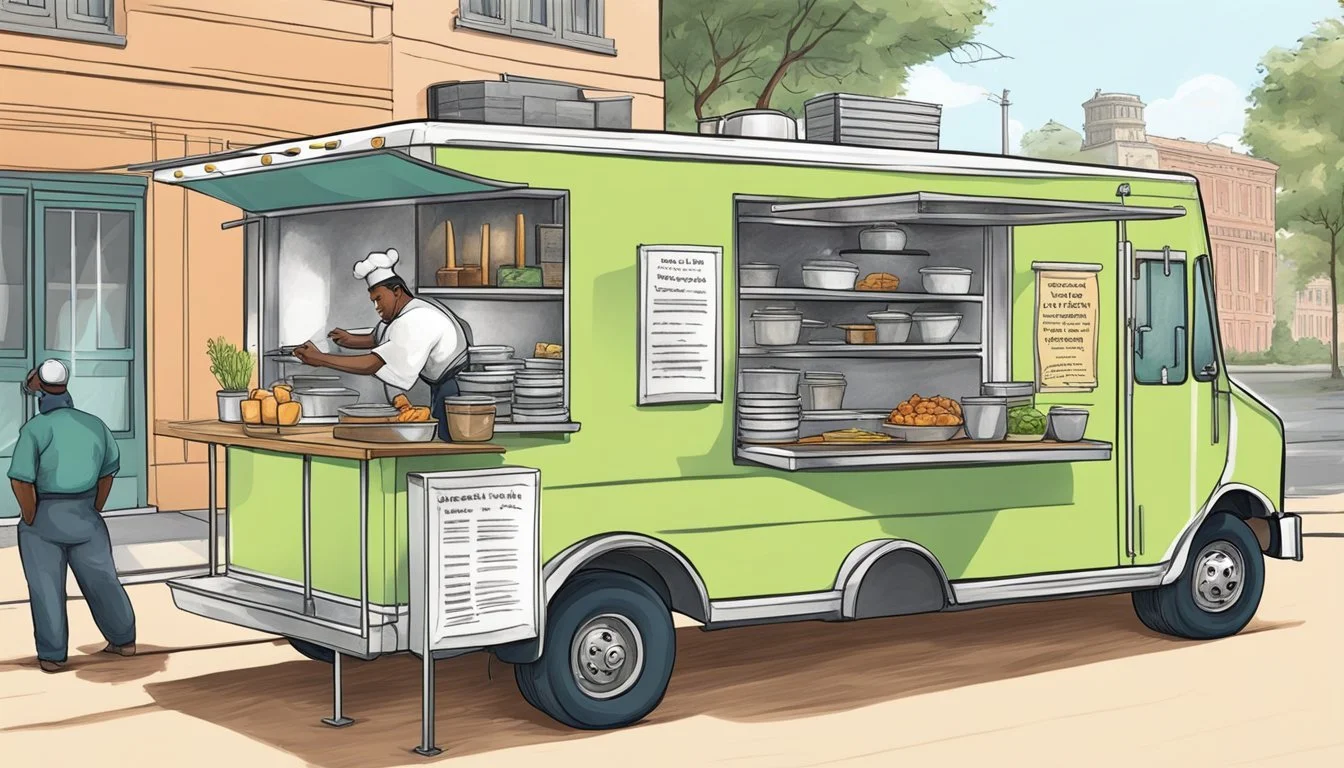
When operating a food truck in Mississippi, owners must navigate the complexities of crafting menus and preparing food in adherence to state regulations. Composing menus that resonate with local culture and ensuring foods are handled in a sanitary and safe manner are paramount.
Designing Menus with Local Ingredients
Food truck operators are encouraged to design their menus around fresh, locally-sourced ingredients. Utilizing Mississippi staples, such as catfish, can appeal to the local palate and support regional farmers and suppliers. For example, a food truck specializing in Southern cuisine might feature a catfish taco using fresh catfish caught in local waterways, seasoned with traditional herbs and spices.
Ensuring Sanitation and Safe Food Handling
Sanitation and safe food handling are critical for food truck operations. They must follow the U.S. FDA Food Code as adopted by Mississippi, which includes maintaining proper temperatures during food preparation to minimize the risk of foodborne illnesses. Food handlers need to be properly trained in these regulations, including the correct procedures for cleaning and sanitizing surfaces and equipment. Food trucks should have a system in place to ensure that all staff consistently follows these protocols, especially when dealing with high-risk ingredients such as poultry or seafood.
Operating Locations and Venue Opportunities
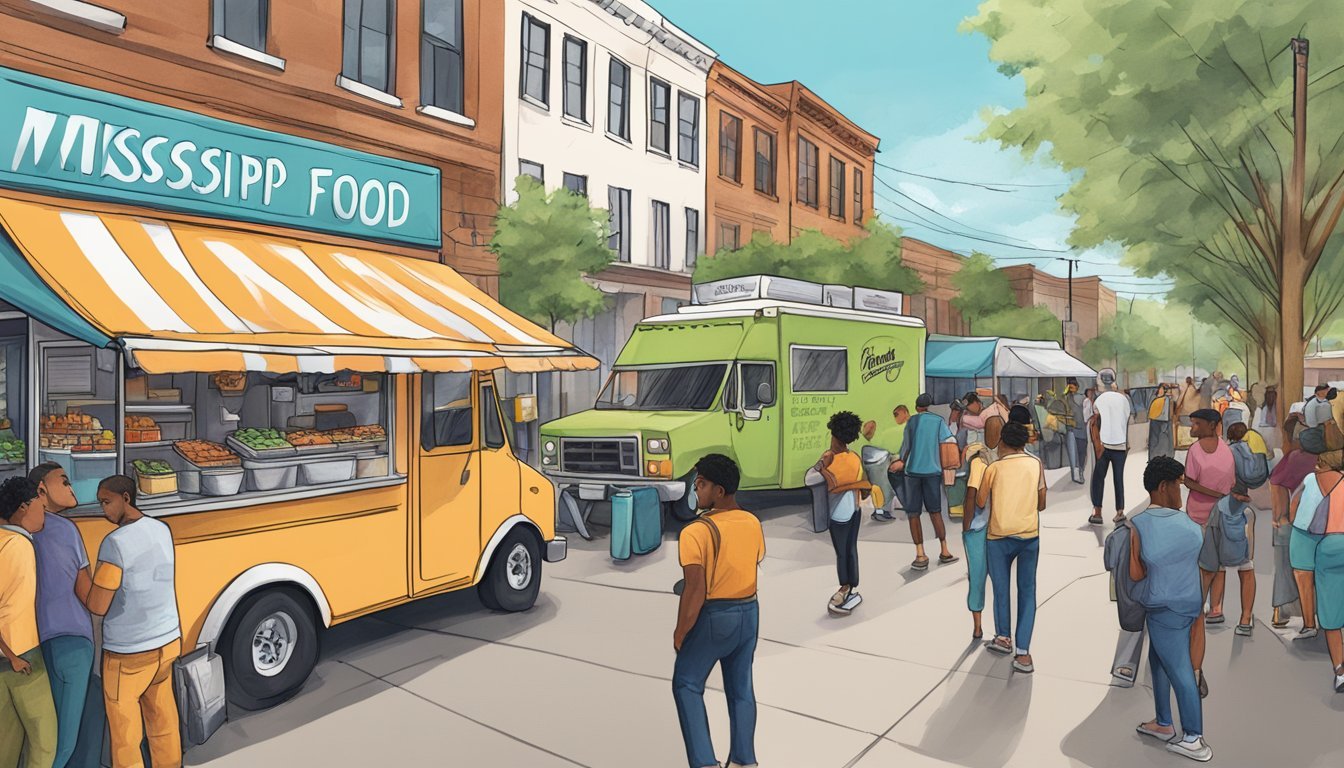
Food truck operators in Mississippi must skillfully select their vending locations to adhere to local ordinances and to maximize their business potential through strategic venue selection.
Navigating Local Ordinances for Vending Locations
Local ordinances play a crucial role in determining where food trucks can operate. These regulations are specific to each municipality and can include zoning laws that designate certain areas within towns and cities for food truck operations. It is essential for food truck owners to contact local city clerk offices or visit official websites to obtain the necessary permits and stay informed about areas with restrictions or prohibitions on food sales.
Exploring Residential, Retail, and Festival Venues
Food truck owners have multiple opportunities to engage with customers in a variety of settings. Residential areas can offer a steady stream of customers, especially during community events. Retail venues, like shopping centers or business parks, provide high foot traffic which can translate into robust food sales. Participating in local festivals or events not only increases visibility but also helps to build a loyal customer base. For each type of venue, understanding and adhering to the specific food truck laws in Mississippi is paramount for legal and successful operations.
Marketing and Customer Engagement

Effective marketing and customer engagement are pivotal for the success of food trucks in Mississippi. They utilize various strategies to amplify visibility and cultivate a steadfast client base.
Leveraging Social Media and Food Truck Associations
Food truck operators take advantage of platforms like Instagram and Facebook to engage with customers. They post mouth-watering images of their offerings, share location updates, and interact with followers to boost their presence. Additionally, joining a food truck association provides networking opportunities, shared resources, and collective marketing efforts, such as events or festivals, which can further increase their outreach.
Building a Loyal Customer Base
Creating a loyal following involves more than just serving good food; it requires consistent branding and customer appreciation. Loyalty programs or promotions, like punch cards or discounts for repeat customers, encourage patrons to return. Collecting customer feedback and responding to it publicly demonstrates their commitment to customer satisfaction and helps to refine their services.
Regulatory and Market Trends Affecting Food Trucks

The food truck industry in Mississippi is subject to dynamic changes in state regulation and local ordinances, as well as evolving customer preferences and market demands. Food truck owners must navigate these waters carefully to ensure their businesses thrive.
Keeping Up with State and Local Law Changes
In Mississippi, food truck operators must stay vigilant as state regulations and local ordinances can alter the landscape of their businesses. For instance, a friendlier food truck ordinance was approved in Hattiesburg that aimed to make operation less burdensome, suggesting a trend towards more food truck-friendly environments across the state. Remaining compliant not only with state licensing but also with local health and safety standards is crucial. For instance, each city may have its own restrictions on where food trucks can operate, and failing to adhere to them can result in fines or the revocation of operating licenses.
Adapting to Customer Preferences and Market Demands
Food truck owners in Mississippi are also responding to changes in customer preferences and market demands. They are revising their menus to include items that cater to local tastes and food trends, ensuring a constant appeal to their customer base. It's not just about the type of food offered; factors like convenience, pricing, and even the inclusion of alcohol—where permitted—play a role in capturing the market. Food trucks that offer a unique and adaptable menu, with an option to include a local brew or cocktail, may find themselves at a competitive advantage, as indicated by some operators successfully integrating alcohol into their business model.