Food Truck Laws in South Carolina
A Comprehensive Guide
Operating a food truck in South Carolina involves navigating a series of regulations set forth to ensure public safety and compliance with local laws. As mobile food vendors proliferate across the state, understanding these laws becomes paramount for entrepreneurs looking to venture into this business. Food trucks, much like their brick-and-mortar counterparts, are required to obtain several permits, including a business license, food handlers permits for each employee, and a seller's permit.
Additionally, South Carolina mandates that food trucks secure a mobile food facility permit specific to their operations. The management of food safety and sanitation falls under the regulation of the state's Department of Health and Environmental Control (DHEC), which inspects the facilities and issues permits to new food trucks prior to their operation. Compliance with municipal zoning is crucial as well, making it necessary for vendors to check with the city or county regarding the areas where they can legally conduct their business.
Understanding Food Truck Laws in South Carolina
Navigating the complex web of food truck laws in South Carolina requires understanding the different layers of regulations from statewide to local levels. This section offers a detailed look at the specific laws including permits, health standards, and licensing protocols ensuring that food truck operators are fully compliant.
Statewide Regulations and Requirements
South Carolina mandates that food truck operators adhere to statewide regulations to maintain public safety and environmental standards. To operate legally, food trucks must obtain various permits and pass inspections set by the Department of Health and Environmental Control (DHEC), which oversees food safety and the prevention of foodborne illness.
Business Formation and Licensing
All food truck businesses must establish a legal structure, such as an LLC or partnership, and secure an EIN for tax purposes. A comprehensive business license is mandatory, and food truck owners should ensure that they meet the specific licensing requirements which may vary depending on their locality within the state.
Vehicle and Mobile Unit Specifications
The food truck itself must meet particular vehicle specifications, including proper installation of cooking equipment and waste disposal systems. Routine vehicle inspections are necessary to ensure that the unit complies with all safety and operational standards.
Permitting Process for Food Trucks
Obtaining a food service permit from the DHEC is a critical step for food trucks. This involves a detailed review of the mobile unit's design, food safety plans, and adherence to food protection manager certification requirements for staff.
Local Ordinances and Zoning
Food truck operators must be cognizant of local ordinances and zoning laws, which can affect where they can park and operate. For example, in Beaufort County, operators must obtain consent from the property owner where the food truck will be located, and different cities might have their unique restrictions on private property usage.
Health and Safety Standards
Health and safety standards consist of maintaining excellent hygiene, securing a food handler’s license for each employee, and following employee health guidelines. Routine inspections result in grades published to inform the public about each food truck's compliance with health regulations.
Sales Tax and Financial Regulations
In addition to a business license, food truck operators are required to collect sales tax. Obtaining a South Carolina retail license is necessary to manage these tax obligations properly. Accurate record-keeping and reporting are crucial for both state and local tax jurisdictions.
Operational Guidelines for Food Trucks
Food trucks in South Carolina operate under strict guidelines to ensure health safety, compliance with local laws, and quality interactions with their customers. These mobile food establishments articulate their mission through service excellence while considering environmental impact and community involvement.
Daily Operations and Management
Food truck operators must maintain high standards of cleanliness and organization within their mobile food units. All team members are required to have up-to-date food handlers permits. The menu should be clearly posted and the phone number displayed for customer inquiries. Cooking procedures, ingredient storage, and food handling must follow the South Carolina Department of Health policies.
Special Events and Catering
Special events and catering services necessitate additional permissions beyond regular operation permits. Outlining adaptive strategies and robust planning prevents disruptions and ensures the team delivers consistent quality. Events represent the food truck's mission by providing tailored services that meet client expectations.
Compliance with Environmental Regulations
Food trucks must adhere to waste management laws to maintain their compliance with environmental regulations. This includes proper disposal of cooking oils and the segregation of recyclables. Teams should prioritize minimizing their environmental impact while conducting their operations.
Engagement with Community and Customers
Building rapport with the local community and engaging with customers is critical for food trucks. Participation in community events and promoting local sourcing where possible reflects their commitment to the community’s wellbeing. Customer feedback should be enthusiastically received and considered for menu or service improvements.
Marketing and Competitive Strategy for Food Truck Owners

Successful food truck owners in South Carolina understand that a compelling marketing strategy and competitive edge are pivotal. Here are actionable strategies that are critical for growth and retaining a customer base.
Menu Diversity:
A varied menu that evolves per season is fundamental. It should cater to the changing preferences of the South Carolinian palette, simultaneously retaining the core items that define the brand.
Seasonal Adaptation: Rotating items based on availability of fresh, local ingredients.
Signature Dishes: Offering standout dishes that set the truck apart from competition.
Target Audience: Identifying and understanding the target audience is key. Food truck owners should focus on demographics such as millennials and Gen Z who prioritize variety and unique dining experiences.
Online Promotion: A strong online presence that leverages social media platforms is essential. These tactics connect directly with tech-savvy consumers who are likely to follow food trends online.
Social Media Shout-outs: Regular posting of the day’s specials, events, or promotions.
Engagement: Interacting with followers to create a community around the food truck brand.
Local Partnerships: Collaborating with other local businesses and participating in community events can increase visibility.
Community Events: Partaking in local festivals or setting up at farmers' markets.
Business Collaborations: Teaming up with local breweries or stores for mutual promotion.
By focusing on these strategic areas, food truck owners can craft a remarkable brand identity and sustainable business model that resonates with South Carolinians’ love for food truck cuisine.
Challenges and Solutions in Food Truck Operation
Operating a food truck involves navigating a myriad of challenges, from food safety to local regulations. Effective solutions can help food truck owners ensure public safety and maintain compliance.
Dealing with Foodborne Illnesses
Food safety is paramount in food truck operation to avoid foodborne illnesses. Scheduling regular inspections and ensuring all employees hold valid food handlers permits are critical steps. Food truck operators must also adhere to safe food handling standards including temperature control and cross-contamination prevention to provide consistently safe meals.
Navigating City Restrictions
Food trucks must follow city-specific regulations that often involve securing a business license and adhering to zoning laws for private property and public spaces. Operators should stay informed of these city restrictions and work closely with local authorities to ensure compliance and avoid penalties.
Maintaining Consistent Food Quality
Consistent food quality is essential for customer satisfaction and public safety. This means all processes, from ingredient sourcing to food preparation, must meet food safety and quality standards. Routine maintenance checks on facilities, outlined by authorities like SCDHEC, ensure a clean and efficient environment that upholds these standards.
Educational Resources and Training
To operate successfully and legally, food truck owners in South Carolina must prioritize education in food handling and management. Compliance with state regulations is non-negotiable, and the right training programs are crucial for ensuring food safety and quality.
Food Handler and Manager Certifications
In South Carolina, anyone involved in food preparation, storage, or service in a food truck is required to obtain a food handler’s license. This ensures that all personnel are knowledgeable about proper food safety practices. Additionally, food trucks must have at least one employee with a food protection manager certification. This certification goes more in-depth, addressing foodborne illness prevention and ensuring that a manager or supervisor is equipped to oversee food safety operations within the food truck.
Partner Programs with Local Schools and Boards
Local schools and boards often collaborate to create programs that benefit both the community and food truck operators. These partnerships may provide vocational training for students in culinary programs, giving them hands-on experience while also aiding food truck businesses. By working with local school boards, food truck owners can help shape curriculum that ensures a steady supply of well-trained workers for the food service industry.
Resources and Support for Food Truck Entrepreneurs
Starting a food truck business involves navigating various regulations and laws specific to the mobile food industry. Entrepreneurs in South Carolina can access a wealth of resources and support to help create a conducive environment for their food truck ventures.
Professional Associations and Networks
For food truck owners in South Carolina, industry-specific associations play a critical role. The South Carolina Food Truck Association (SCFTA) is a non-profit organization dedicated to promoting and supporting food truck operators. Membership offers access to an established network of peers, shared knowledge, and advocacy on regulatory issues.
Governmental Support and Advisory Services
Government entities provide essential services and support to help ensure food trucks are compliant with local regulations. Entrepreneurs must apply for various licenses and permits, a process which can be facilitated through guidance from the South Carolina Department of Health & Environmental Control. Additionally, the South Carolina Secretary of State’s office informs food truck owners about the necessary steps to legally establish and operate their businesses, including registration and compliance with state regulations.
Expansion and Growth Opportunities for Food Trucks
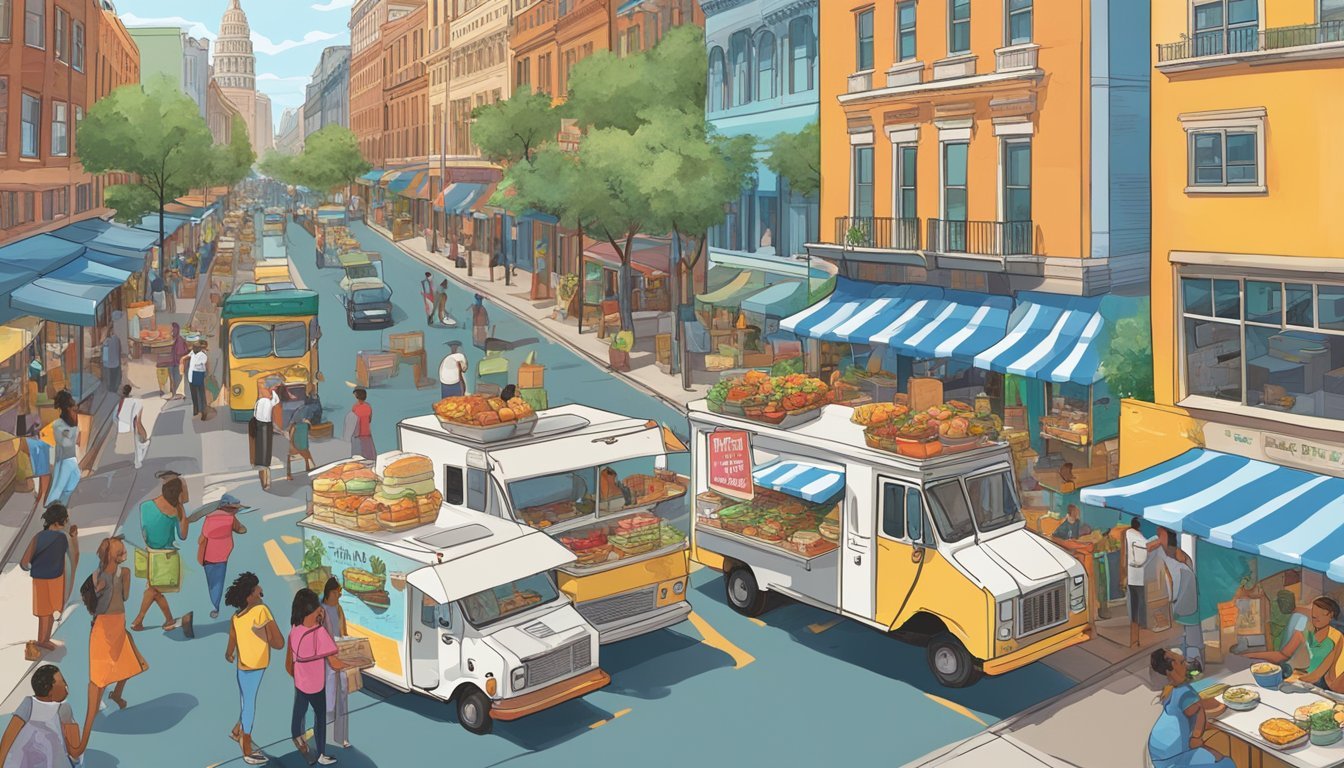
The food truck industry in South Carolina has witnessed a positive trajectory, offering ample opportunities for growth and expansion. Entrepreneurs are tapping into the market trends that favor mobility, diversity in cuisine, and the demand for unique dining experiences. There’s a clear shift towards embracing street food culture which creates a fertile ground for food trucks.
Food truck operators can capitalize on various strategies to enhance their market presence. Firstly, they could consider strategic partnerships with local events, breweries, and businesses to broaden their customer base. There's potential for food trucks to become staples at community gatherings or local farmers' markets, which can significantly increase visibility.
To support this growth, operators should be aware of compliance with legal requirements as outlined by the South Carolina Department of Health and Environmental Control, ensuring it aligns with their expansion goals.
Furthermore, the emphasis on branding and social media marketing cannot be overstated. A strong online presence can attract a larger audience and keep customers informed about new locations and menu items. Joining food truck associations and participating in food truck rallies can also foster community among truck owners and offer collective bargaining benefits.
Growth Opportunity: Event Partnerships
Description: Leveraging local events for increased foot traffic.
Growth Opportunity: Social Media
Description: Building brand awareness and customer loyalty.
Growth Opportunity: Community Presence
Description: Regular attendance at popular spots and markets.
With the right strategies and adherence to regulatory frameworks, food truck businesses in South Carolina have a significant opportunity to thrive in this evolving market landscape.
Appendix: Contact Information for Regulatory Bodies
In the state of South Carolina, those seeking to operate a food truck must navigate various regulatory bodies to ensure compliance with local laws. Essential contact information for these regulatory bodies is provided for the convenience of food truck operators.
South Carolina Department of Health and Environmental Control (DHEC)
Phone Number: 803-898-DHEC (3432)
Address: DHEC, 2600 Bull Street, Columbia, SC 29201
The DHEC is the primary oversight agency for food safety in South Carolina, including the licensing and inspection of food trucks.
South Carolina Department of Agriculture (SCDA)
Phone Number: 803-734-7321
Address: 123 Ballard Court, West Columbia, SC 29172
Website: Food Safety & Compliance
The SCDA plays a role in ensuring that food for consumption is safe, properly labeled, and meets all sanitary requirements.
Local Zoning and Municipal Offices
For specific municipal zoning information, it is recommended to contact the local city, town, or county office directly, as regulations can vary.
By engaging with these regulatory bodies, food truck owners can secure the necessary licenses and permits to operate legally within South Carolina.