Food Truck Laws Las Vegas, Nevada
Navigating Regulations for Street Vending
Las Vegas, known for its vibrant food scene and entertainment, has seen a rise in the popularity of food trucks, offering residents and visitors alike a diverse array of gourmet street food options. These mobile eateries have become a staple on The Strip and beyond, serving everything from classic American fare to innovative fusion cuisine. The agility of food trucks to go where the crowds are gives them a unique edge in the bustling city that never sleeps.
Operating a food truck in Las Vegas requires navigating a series of regulations and laws designed to ensure public safety and fair business practices. The city mandates that mobile food vendors adhere to stringent food safety ordinances and acquire the necessary permits and licenses to operate legally. These regulatory measures are critical, as they help maintain high standards of quality and hygiene, which are paramount in the fast-paced, high-turnover environment of food truck operations.
Securing a city of Las Vegas Mobile Food Vendor business license is a primary step for entrepreneurs looking to join the city's food truck scene. Additionally, compliance with public health laws, tax regulations, and proper waste disposal are all enforceable stipulations that contribute to the sustainability of the industry. As food trucks continue to shape the city's gastronomic landscape, adherence to these laws not only protects customers but also fortifies the industry's reputation.
Business Registration And Legal Structure
In Las Vegas, Nevada, entrepreneurs must navigate a series of legal requirements to operate food trucks. These encompass obtaining the proper business licenses and selecting an appropriate business entity type.
Obtaining Business Licenses
To launch a food truck in Las Vegas, one must secure a business license issued by the City of Las Vegas. This license is a critical step, ensuring that all food trucks operate legally within city limits. Operators should contact the city's business licensing division for guidance and submit the necessary documentation, which includes proof of insurance, vehicle registration, and a Nevada Driver's License. Additionally, compliance with health regulations is essential.
Choosing Business Entity Type
Food truck owners in Las Vegas must decide on a legal structure for their business. Options include:
Limited Liability Company (LLC): An LLC can provide owners with liability protection and potential tax benefits. Organizing as an LLC requires filing with the State of Nevada and obtaining an Employer Identification Number (EIN) from the IRS.
Partnership: If the food truck is co-owned, a partnership may be a viable choice. This entity involves two or more individuals sharing the profits and responsibilities. A partnership agreement should detail the terms of operation and ownership.
Each entity type comes with different regulatory, tax, and financial implications. It is advisable to consult with a legal advisor to determine the most advantageous option for the specific circumstances of the food truck business.
Health, Safety, And Operational Regulations
In Las Vegas, food truck operators must navigate a series of stringent health, safety, and operational regulations to ensure public well-being and compliance with local laws.
Health Permits And Food Safety
Operating a food truck in Las Vegas requires obtaining a health permit from the Southern Nevada Health District, proving that the business adheres to food safety protocols. Approval involves passing a series of evaluations, which may include a ServSafe certification or equivalent test to demonstrate knowledge of safe food handling practices. Food trucks must adhere to all food safety ordinances, which includes maintaining the proper temperature control for food.
Compliance With City Ordinances
Compliance with city ordinance is crucial for food truck operators. The City of Las Vegas has specific requirements like the mobile food vendor lottery, which dictates designated parking spaces for food trucks downtown. This is outlined in the municipal code and operators must keep current with these regulations, including those pertaining to proper waste disposal and adherence to public health laws.
Vehicle Requirements
To legally operate within the city, a food truck's vehicle has to meet certain standards set forth by the law. This encompasses health and safety features like sanitation equipment and food storage. Additionally, the vehicle must comply with all driving and parking regulations, as stipulated in food truck law. Inspections ensure that the vehicle meets the necessary criteria for operation, ensuring the wellness and safety of both staff and patrons.
Location And Parking
In Las Vegas, Nevada, food truck operators must navigate various regulations regarding where they can park and serve food. The city has designated areas for food trucks, as well as restrictions on where they can operate, especially in the downtown area.
Designated Areas And Restricted Zones
Food truck operators are granted specific locations within downtown Las Vegas where they are permitted to conduct business. These areas are carefully chosen to balance the interests of local businesses, pedestrians, and vehicular traffic. However, it's important to note that vending in residential neighborhoods or areas where parking laws would be violated is not allowed. Trucks are also required to move after 30 minutes if they are parked in the right-of-way. This is to maintain an orderly flow of traffic and ensure fairness to all mobile food vendors.
Special Event Participation
Participating in a special event often requires a separate permit, which is subject to specific rules and guidelines. During such events, food trucks are typically allocated spots that may be different from their usual locations. These permits are crucial because they ensure the safety and coordination of the event while providing an opportunity for food truck operators to benefit from increased foot traffic.
Lottery System For Public Spaces
Las Vegas has a lottery system to allocate public spaces where food trucks can operate. This system ensures that access to high-demand locations is randomized and fair, giving all vendors an equal chance to benefit from the prime spots. Interested vendors must apply to enter the lottery, and if selected, they are awarded a time slot in one of the coveted downtown locations. This system helps to prevent congestion and manage competition among food trucks in popular areas.
Through adherence to these guidelines, food truck vendors can successfully navigate the bustling streets of Las Vegas.
Sales And Taxes
In the context of food trucks operating in Las Vegas, Nevada, complying with sales tax regulations and fulfilling tax obligations is crucial for legal and financial accountability.
Sales Tax Compliance
Food truck operators must register for a sales tax permit to legally conduct business in Las Vegas. They need to collect Nevada state sales tax, along with any applicable county or city taxes, on the sale of their goods and services. This collection is mandatory as per Nevada state law, and each sale should clearly reflect the addition of this tax on the customer's receipt.
Key Point on Sales Tax:
Registration for a Sales Tax Permit is mandatory.
Sales tax rate includes State, County, and City levies.
Filing Mandatory Taxes
Besides collecting sales tax, food truck operators are required to file these taxes regularly with the Nevada Department of Taxation. The frequency of filing—whether monthly, quarterly, or annually—depends on the volume of sales. Every operator needs an Employer Identification Number (EIN) for tax filing and reporting purposes.
Important Notes on Tax Filing:
File taxes in accordance to the prescribed schedule by the Nevada Department of Taxation.
An EIN is used to report and file the collected taxes.
Marketing And Customer Engagement
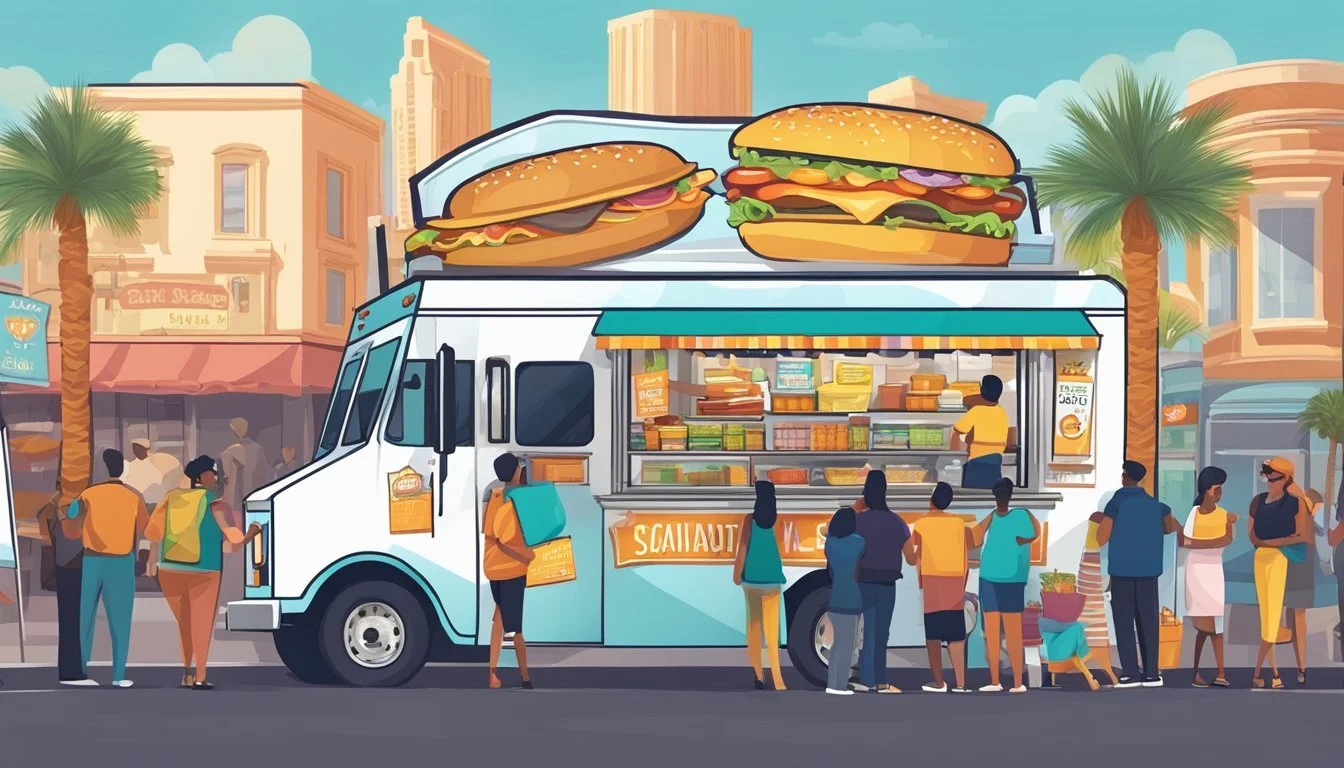
In the bustling food truck scene of Las Vegas, effective marketing and customer engagement are decisive factors for success. Food truck owners must craft a unique brand and menu that resonate with the tastes and preferences of their diverse clientele.
Building Brand Through Marketing
A food truck's brand is the embodiment of its identity, encompassing values, style, and the culinary experience it offers. Marketing is pivotal in carving out a niche in the competitive Las Vegas market. A strategic online presence is crucial, and a professional website serves as the digital storefront for the business. It should convey the truck's brand story and include high-quality images, the owner's philosophy, and customer testimonials.
Food trucks should utilize social media platforms to their advantage, creating a community around their cuisine. Platforms like Instagram and Facebook are ideal for showcasing the food truck's specialties, menu items, and the use of fresh ingredients in a visually appealing manner. Social media can also be used to announce locations, specials, and events, fostering a sense of anticipation and excitement among followers.
Creating an Engaging Menu
The menu is a food truck's silent salesman and its design should not only be enticing but also easy to read and understand. Food trucks can optimize their menus by focusing on a limited selection of dishes that highlight signature flavors and fresh ingredients. Each menu item should have a catchy name and brief description that informs and tempts the customer. The use of chalkboards or digital screens can aid in highlighting daily specials or new additions, encouraging repeat visits.
In Las Vegas, where tastes are as varied as the population, offering special menu items that cater to local events or holidays can create an engaging experience. The menu should be fluid, allowing for adaptations based on customer feedback and sales data, ensuring that the food truck remains current and responsive to its customers' desires.
Additional Considerations
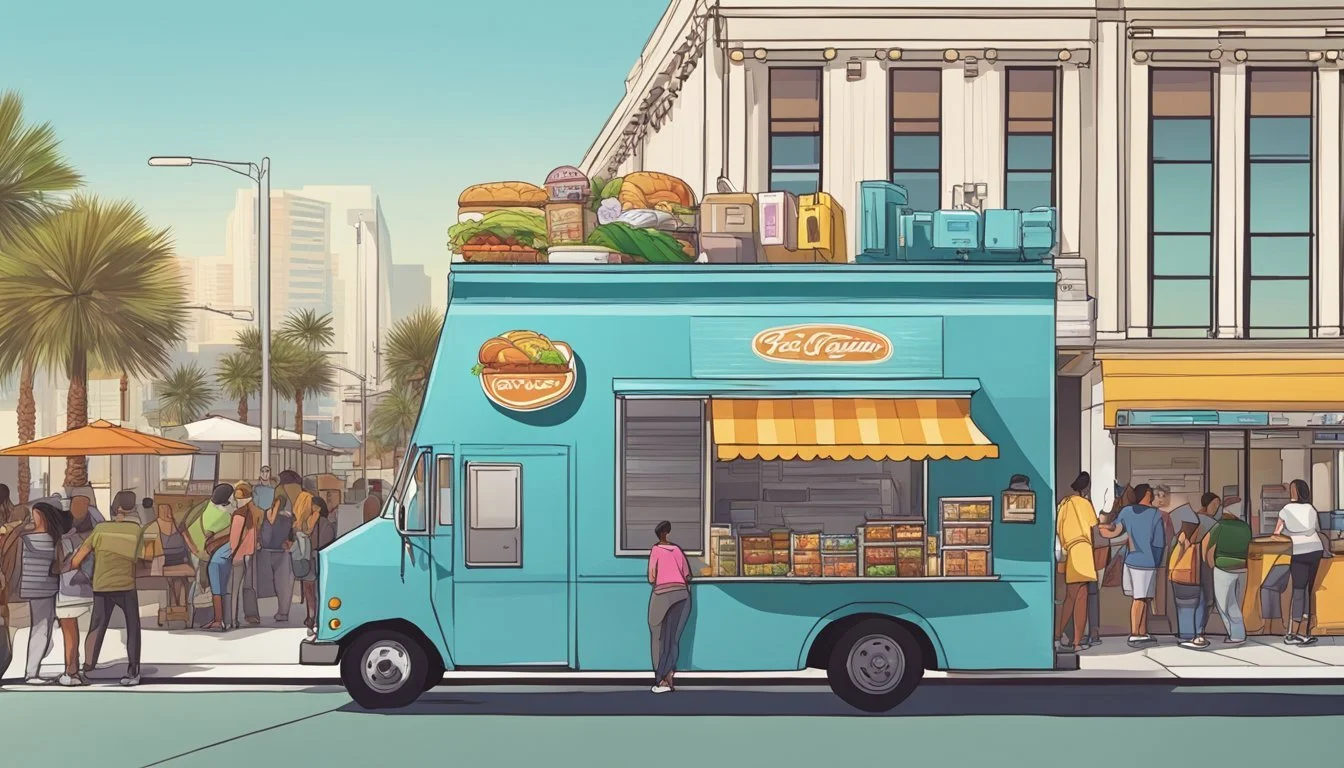
When exploring the vibrant food truck scene in Las Vegas, prospective entrepreneurs should consider both the cultural landscape and the financial aspects critical to their venture. This section navigates through the nuances of integrating into the local scene and provides insight into the costs involved in launching a food truck business.
Understanding Food Truck Scene
Las Vegas' food truck scene is a dynamic and competitive landscape that blends eclectic tastes with the city's pulsing energy. Prospective truck owners must understand not only the legal requirements but also the cultural nuances that differentiate food trucks from traditional bars and restaurants. They should be aware that locations, culinary trends, and customer preferences are pivotal factors in garnering a following.
Startup Costs And Financing
Launching a food truck in Las Vegas involves several startup costs. These expenses can range from the truck itself, kitchen equipment, and initial inventory, to permits and licenses required by the city. Here is a simplified breakdown of potential startup costs:
Food Truck Purchase: $50,000 - $150,000
Kitchen Equipment: $20,000 - $50,000
Inventory: $2,000 - $5,000
Licenses/Permits: $500 - $1,000
Miscellaneous: $3,000 - $10,000
Prospective owners should consider various financing options, which might include small business loans, personal savings, or investor capital. It’s crucial to have a solid business plan to attract potential investors or obtain favorable loan terms.