Food Truck Laws Richmond, Virginia
Your Essential Guide to Compliance
Operating a food truck in Richmond, Virginia, involves navigating a series of regulations to ensure public safety, food quality, and proper business conduct. As one of the most diverse and vibrant mobile culinary scenes on the East Coast, Richmond's food truck operators must adhere to guidelines set forth by the Richmond City Health District. These regulations are designed to uphold the high standards of food safety synonymous with Virginia’s state-wide policies.
Acquiring the necessary permits for a food truck business in Richmond requires understanding and compliance with the Commonwealth of Virginia Board of Health Food Regulations. Prospective food truck operators must secure a permit from the Richmond City Health Department before vending within city limits. This includes a thorough inspection of the mobile food unit to ensure all equipment and operations meet the regulatory requirements. Moreover, adherence to specific fire safety standards is essential, as outlined by the Richmond City Fire Marshal's Office, which imposes its own set of rules for mobile food vendors.
In addition to health and safety protocols, Richmond food truck owners must navigate zoning laws that determine where and when they can operate. These laws balance the interests of stationary businesses with those of mobile vendors and help maintain organized use of public spaces. Food truck entrepreneurs in Richmond are also subject to tax regulations and are obligated to obtain a business license reflecting their operation as a legitimate entity within the Virginia food service industry. This comprehensive oversight is intended to promote a fair, safe, and thriving environment for food trucks and their patrons.
Understanding Richmond's Food Truck Regulations
Navigating Richmond's food truck regulations is crucial for operators to legally serve the community. Comprehensive knowledge of permitting processes, zoning laws, and operational guidelines ensures compliance and success in the mobile food industry.
Permitting Process for Mobile Food Establishments
Operators must obtain a valid mobile food unit permit to establish a food truck business in Richmond. The permitting process includes a detailed review of the food establishment permit application, which requires submission of specific plans and safety protocols. Prospective owners must also follow the sticker placement guidance for their permits, visibly displaying them on their units.
Zoning and Location Restrictions
Richmond's zoning laws dictate where food trucks may operate. These regulations ensure that mobile food establishments comply with health and safety standards and integrate smoothly into urban planning. Food trucks are generally prohibited in residential zones and operators must adhere to the designated vending spaces provided by the city. For more information on the allowed locations, operators can consult the guidelines from the Richmond City Health District.
Operating Hours and Vending Spaces
The city of Richmond stipulates specific operating hours and spaces where food trucks can conduct business. These spaces are allocated to provide harmony between food truck operations and other commercial activities. It is imperative for food truck operators to understand and respect these restrictions to avoid conflicts and legal issues. They are encouraged to contact local regulatory offices for detailed information on allowable operating hours for different locations.
Food Safety and Inspection Requirements
In Richmond, Virginia, food trucks are subject to rigorous food safety and inspection requirements to ensure public health. Adherence to local and state laws is enforced by the Richmond City Health District and the Virginia Department of Health through regular health inspections and mandatory certification for food service managers.
Health Inspections and Food Safety Standards
Food trucks in Richmond must pass health inspections conducted by the local health department to operate legally. These inspections assess compliance with food safety standards, including but not limited to temperature control, cross-contamination prevention, and proper food storage. Inspection frequencies and processes are designed to uphold public safety and ensure that mobile food units meet the same stringent standards as fixed-site restaurants. The Richmond City Health District provides guidelines to help mobile food establishments prepare for these inspections.
Certified Food Protection Manager (CFPM) Requirement
The Virginia Department of Health mandates that all mobile food units have a Certified Food Protection Manager (CFPM) on staff. This individual must have passed an accredited food safety certification examination, illustrating a thorough knowledge of food safety practices and laws. The presence of a CFPM is crucial for ongoing compliance and plays a pivotal role in the food safety program of any food truck, ensuring that all employees are aware of and adhere to safety protocols.
Compliance with Virginia Food Regulations
Lastly, food truck operators must comply with the Commonwealth of Virginia food regulations stipulated in 12 VAC 5-421. Getting approval from the Virginia Department of Health and obtaining a VDH food establishment permit are fundamental requirements. Adherence to these regulations is validated during health inspection reports, which are a matter of public record. Operators should be aware of the general requirements and prepare accordingly to avoid any compliance issues which could compromise their ability to conduct business.
Licensing and Business Operations
Operating a food truck in Richmond, Virginia, requires navigating a variety of licenses and business operations procedures. These ensure compliance with local laws and regulations, and assist in maintaining public health and safety.
Business License and EIN Procurement
To legally operate a food truck, business owners must secure a Virginia business license. This proves that they are authorized to conduct business within the city. Additionally, they must obtain an Employer Identification Number (EIN) from the IRS, which is necessary for tax purposes. This is especially crucial if the business plans to hire employees or if it intends to sell alcohol, in which case an additional alcohol-specific license is mandatory.
Sales Tax, Fees, and Fines
All food trucks are subject to sales tax collection, which demands accuracy in record-keeping and punctual remittance to the Virginia Department of Taxation. Late payments can result in fines, underscoring the importance of adhering to the schedule. Operators should be aware of the applicable fees, such as for health inspections and permit renewals, and budget for these regularly incurred expenses.
Insurance and Liability
The food truck business also needs to maintain proper insurance to protect against liability issues. General liability insurance is imperative to safeguard against accidents and injuries on-premises, while vehicle insurance is required for the food truck itself. Additional coverage, such as property insurance, can help protect equipment and inventory in cases of loss due to theft or damage.
Vehicle Requirements and Maintenance
In Richmond, Virginia, food trucks, pushcarts, and other mobile food units must adhere strictly to the city's comprehensive guidelines. These requirements are aimed at ensuring that the units are safe for operators, customers, and in compliance with local, state, and federal regulations.
Equipment and Utilities Specifications
For mobile food units operating within Richmond, equipment used must meet the specifications set by the Virginia Board of Health Food Regulations. This includes the necessity for adequate water supply systems and waste retention. Equipment must be secured and installed according to manufacturer's instructions and consistent with the U.S. Department of Transportation's guidance on compressed gases if utilized.
Water Systems: Must provide hot and cold running water under pressure.
Gas Equipment: Adherence to U.S. Department of Transportation compressed gas guidance is mandatory.
Health and Safety Standards for Mobile Units
The health and safety of customers and staff are of paramount importance. Mobile units must follow the health standards in the Mobile Food Unit Operation Guide, which includes regular cleaning and maintenance protocols, and ensuring all food contact surfaces are made from safe, non-toxic materials and kept in good repair.
Regular Maintenance: Essential for all food contact surfaces and equipment.
Non-toxic Materials: Use appropriate materials for food preparation and serving.
Fire Safety and Compliances
Fire safety is a critical aspect of mobile food unit operation. Mobile units such as trucks, pushcarts, and trailers must have fire suppression systems that meet the guidelines provided by the Richmond City Fire Marshal. These systems should have up-to-date inspection tags and comply with the National Fire Protection Association's fact sheets and mobile food preparation vehicle handouts, promoting safety in mobile food preparation.
Fire Suppression Systems: A must-have for mobile units.
Inspection Tags: Updated tags required for fire equipment.
All mobile food units must also comply with local Richmond City Fire Marshal Guidance concerning the installation and maintenance of these systems. The aim is to minimize risks and ensure a quick response in case of an emergency.
Additional Considerations for Food Truck Owners
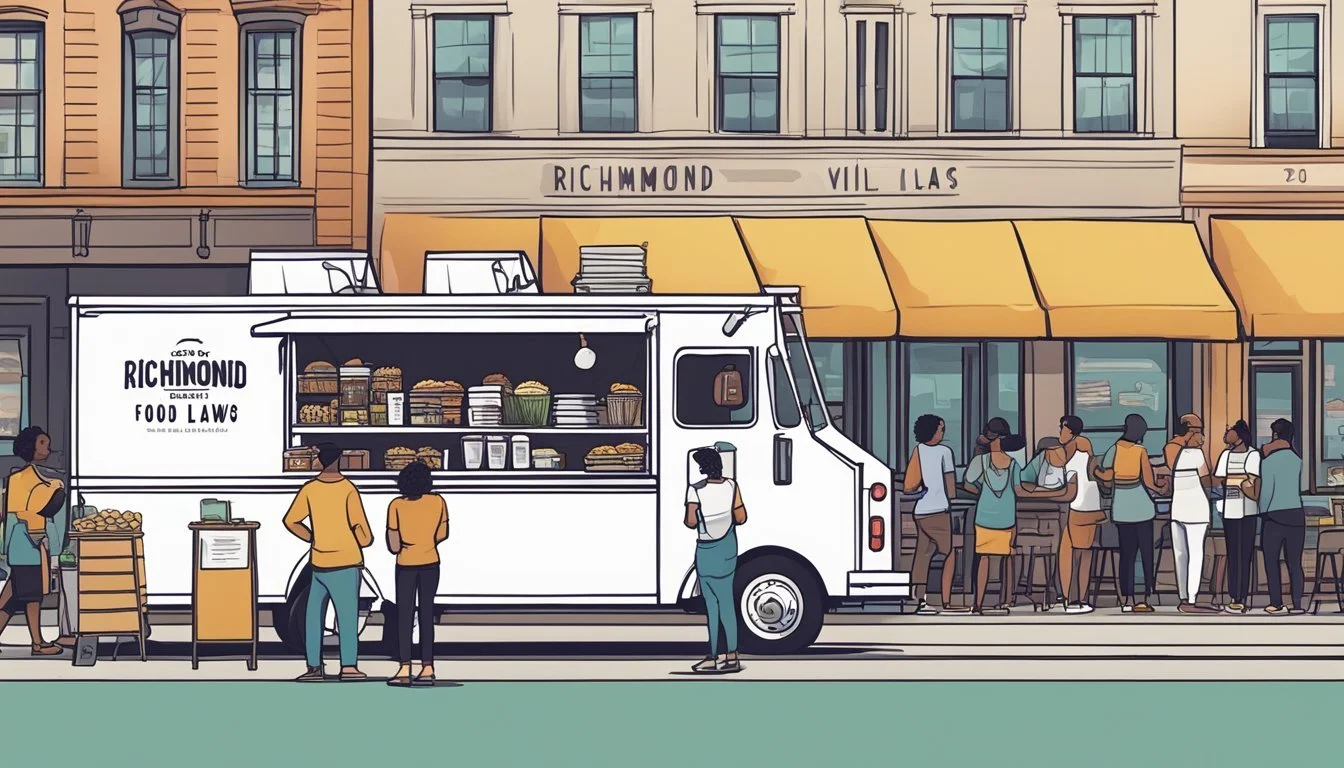
Food truck owners in Richmond, Virginia need to navigate several specific requirements and opportunities to ensure lawful operations and take advantage of the growing market.
Risk Categorization and Plan Review
Every mobile food unit in Virginia falls under the Uniform Statewide Risk Categorization System, which is critical in determining the level of monitoring required to prevent foodborne illness. Prospective owners must submit a detailed plan review to be categorized correctly. This review assesses equipment, preparation processes, and intended menu items.
Events and Catering Opportunities
Food trucks can partake in numerous public gatherings, from festivals to private catering events. To operate at these events, trucks must follow the guidelines set by the Virginia Department of Health, including adhering to sales tax laws and obtaining the necessary temporary food establishment (TFE) permits. Trucks typically face fewer restrictions in non-residential areas.
Resources and Support for Food Truck Entrepreneurs
Richmond offers several resources to support food truck entrepreneurs. This includes assistance with the opening a food establishment guidance document and completing the necessary commissary form. There are also designated departments to guide new owners through the legal framework, such as the Virginia Department of Agriculture and Consumer Services. Operators must be familiar with these to legally sell and prepare food.