Are Macarons Gluten-Free?
Unveiling the Truth About This French Delicacy
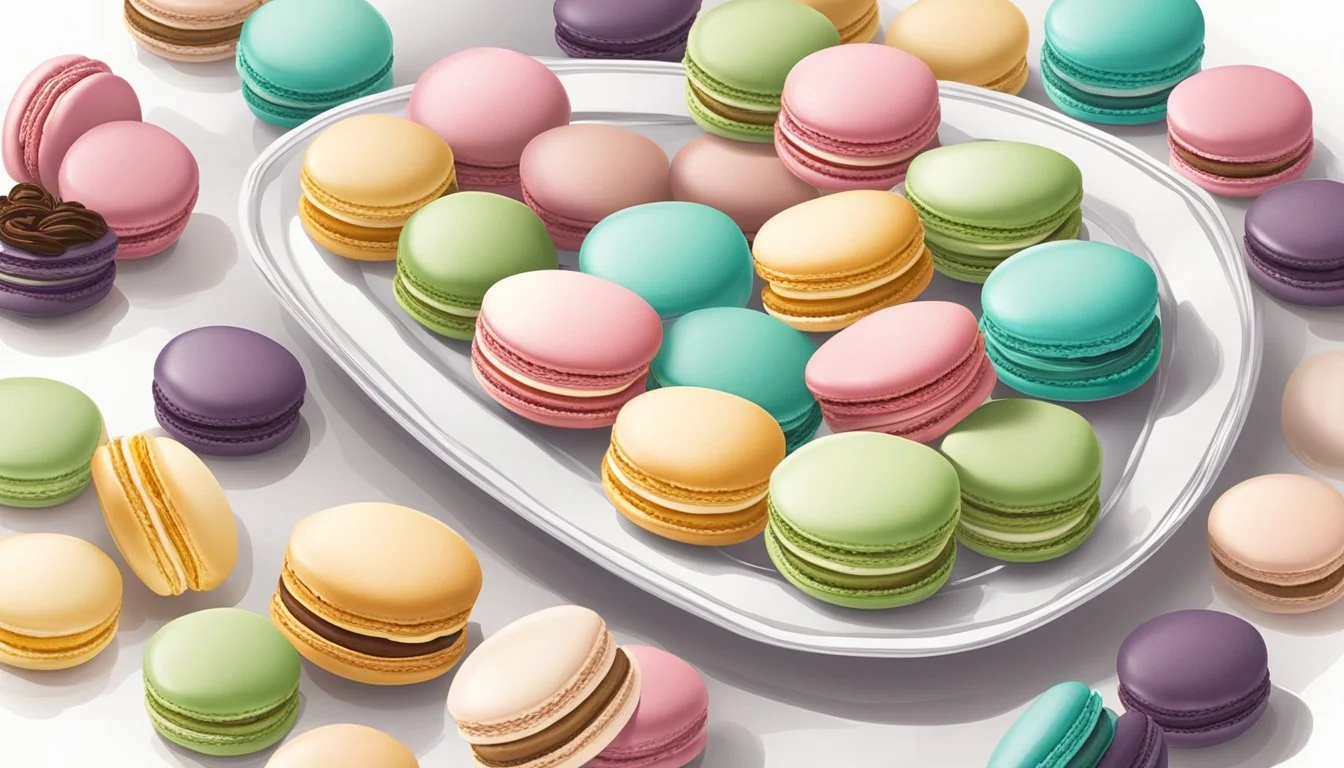
Macarons, the delicate French confections that have gained widespread popularity, are distinguished by their smooth domed shells, ruffled circumference, and a rich filling sandwiched between two halves. While these treats exhibit a vibrant array of colors and flavors, a common question that surfaces is whether macarons are suitable for those adhering to a gluten-free diet. Fortunately for enthusiasts with dietary restrictions, the primary ingredients of macarons are typically gluten-free, comprising almond flour, powdered sugar, and egg whites. The naturally gluten-free status of these ingredients ensures that macarons can often be enjoyed without concern for gluten content.
However, those with gluten sensitivities or celiac disease are advised to proceed with caution. Despite the inherently gluten-free ingredients, cross-contamination can occur during manufacturing or when macarons are prepared in a kitchen where gluten-containing products are also made. Additionally, certain fillings or decorations may not be gluten-free. Therefore, it is crucial to verify the gluten-free status of macarons, particularly when purchased from bakeries or pre-packaged forms. Consulting bakers or checking packaging labels can provide assurance for individuals seeking to indulge in macarons without compromising their gluten-free requirements.
Understanding Macarons

In the realm of confections, macarons stand out as elegant cookies with a distinct composition and history. They should not be confused with the coconut-based macaroons, as macarons are meringue-based treats originated from France.
Definition and Origins
Macarons are distinguished by their smooth, domed shells with ruffled edges known as "feet." Originating from France, French macarons are celebrated for their delicate textures and variety of flavors. The Le Macaron refers to these sweet meringue-based confections that have become a symbol of French patisserie.
Key Ingredients
The classic recipe for macarons includes three fundamental ingredients:
Almond flour: Provides the base and nutty flavor.
Egg whites: Create the meringue for the shells.
Sugar: Sweetens the meringue and provides structure.
Carefully combined, these ingredients yield the iconic light and airy texture of macaron shells.
Macarons vs Macaroons
It is crucial to distinguish between "macarons" and "macaroons," as they are entirely different cookies.
Macarons: A French meringue-based confection made with almond flour, egg whites, and sugar, typically filled with ganache, buttercream, or jam.
Macaroons: A chewy, denser treat primarily composed of coconut, egg whites, and sugar, often dipped in chocolate.
The almond flour and meringue base set macarons apart from the coconut-centric macaroons.
Ingredients and Substitutes
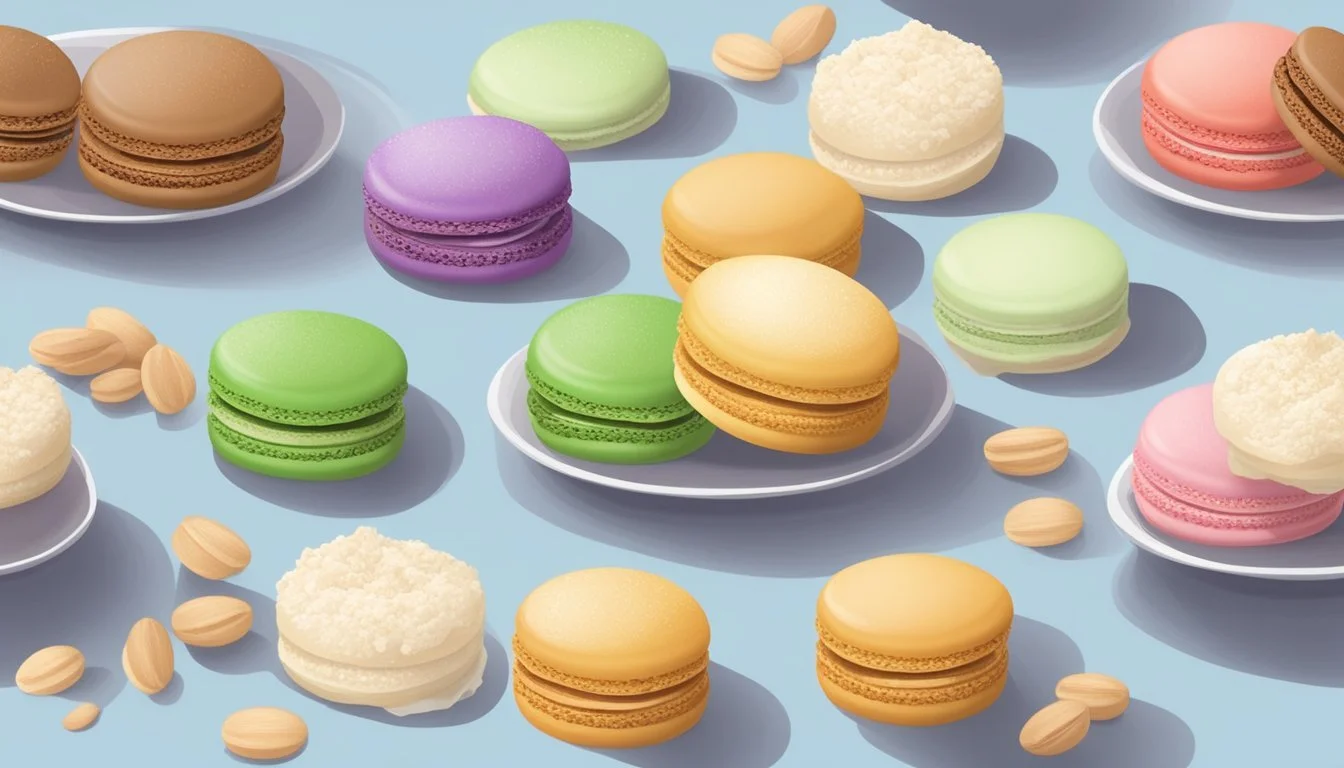
In crafting gluten-free macarons, selecting appropriate ingredients and substitutes is crucial to maintaining both the structural integrity and traditional taste of these delicate confections.
Almond Flour Essentials
Almond flour is the non-negotiable foundation for macaron shells, providing structure, flavor, and naturally gluten-free properties. Precisely measured almond flour is crucial as it affects the texture of the macaron. Some recipes suggest processing almond flour with powdered sugar to achieve a fine, lump-free mixture, ensuring a smooth shell surface.
Gluten-Free Sweeteners
The sweetness and stability in macarons come from the careful balance of granulated sugar and powdered sugar. Granulated sugar's role is to help form a strong meringue, while powdered sugar works in tandem with almond flour to form the base of the macaron shell. Both these sugars are inherently gluten-free.
Egg Whites and Meringue
Egg whites are beaten to stiff peaks to create the meringue which gives the macarons their airy texture. Achieving the right meringue consistency is critical; over- or under-beating can lead to an unsuccessful batch. The protein in the egg whites is what allows them to whip up into a stable meringue, essential for the macaron's architecture.
Dairy and Dairy-Free Alternatives
Butter and cream are traditional components of macaron fillings like buttercream and ganache. For dairy-free or vegan options, substitutes like plant-based butter and dairy-free cream can be used. These alternatives should have a similar fat proportion as their dairy counterparts to ensure the filling sets properly and complements the macaron shells.
Preparing Macarons
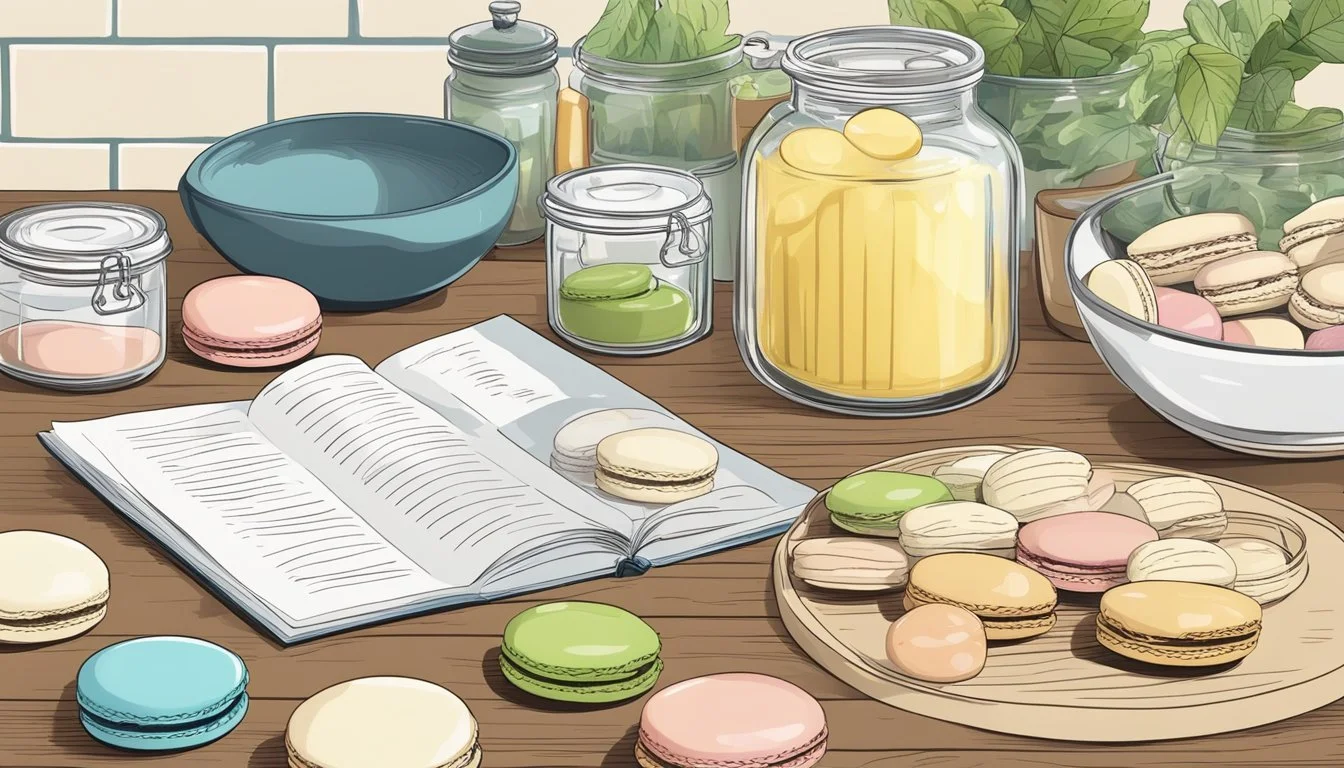
When preparing macarons, the key processes involve a precise macaronage technique, careful piping and baking, and patient cooling and filling to create the iconic delicate treat.
The Macaronage Technique
The macaronage process is crucial to achieve a smooth, shiny batter with a flowing consistency. After combining almond flour and powdered sugar, one gently folds in beaten egg whites until the mixture reaches a lava-like flow. It's essential not to undermix, which would make the macarons lumpy, or overmix, which could cause them to become too flat.
Piping and Baking
Piping the batter onto baking sheets lined with parchment paper requires a steady hand. Using a pastry or piping bag fitted with a plain round tip ensures uniform macaron shells. Once piped, a few taps on the counter release air bubbles. Baking in a preheated oven is typically done at a temperature range of 300º F to 325º F. The exact cook time may vary, but it usually falls between 12 to 18 minutes, depending on size.
Cooling and Filling
After baking, one must allow the macarons to cool to room temperature before attempting to remove them from the sheets. Fillings like ganache, jam, or buttercream are then piped onto half the shells, which are then sandwiched with their counterparts. It is vital for the filling to be of the right consistency to prevent the shells from slipping or breaking.
Gluten-Free Considerations
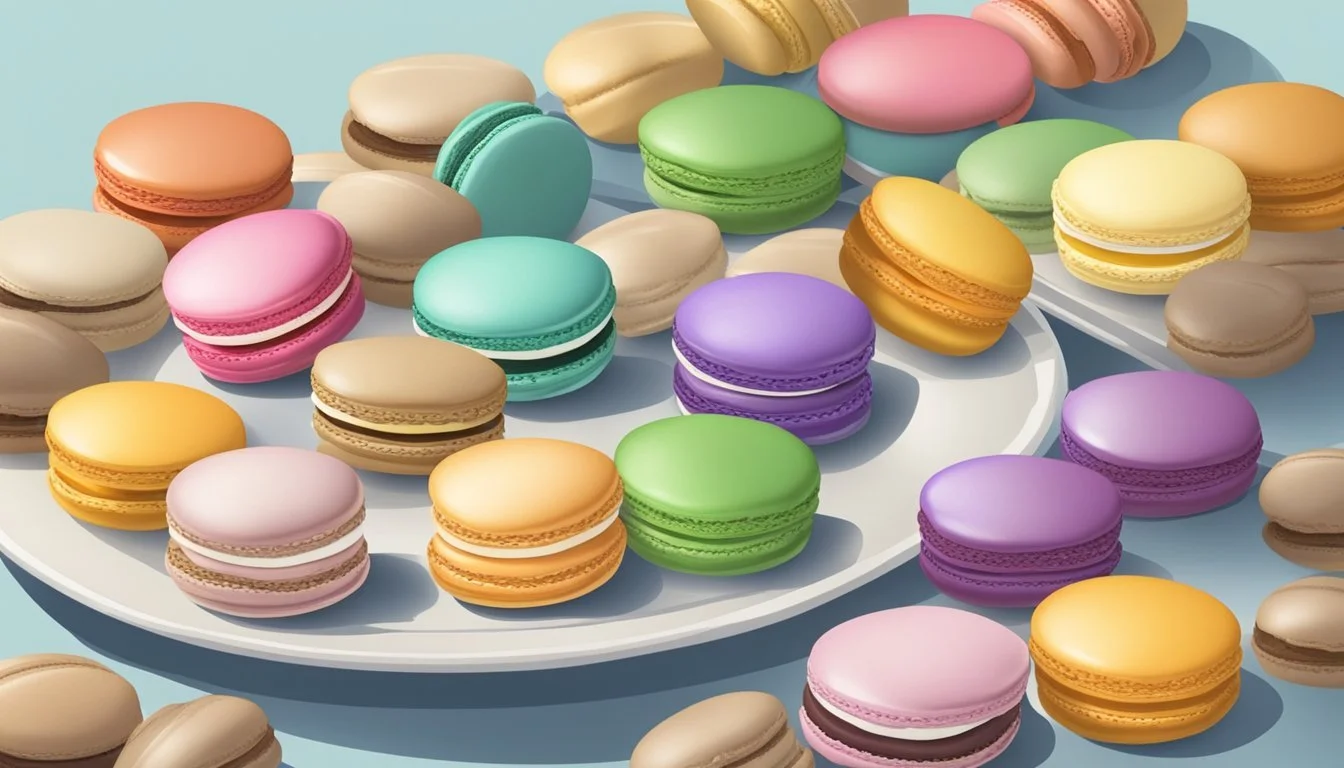
When assessing whether macarons can be an appropriate gluten-free dessert, it's crucial to evaluate both their ingredient list and the potential for cross-contamination.
Ensuring Gluten-Free Status
To verify that macarons are gluten-free, one must confirm that all ingredients are devoid of gluten. Traditional macarons typically contain almond flour, egg whites, powdered sugar, and granulated sugar—all naturally free from gluten. Consumers with celiac disease or gluten intolerance should seek out macarons labeled as gluten-free to ensure they are safe for consumption, as some flavorings or additional ingredients could contain wheat or other gluten sources.
Ingredients to Check:
Almond flour: A gluten-free base ingredient
Egg whites: Gluten-free and essential for structure
Powdered and granulated sugar: Typically gluten-free, but verify the source
Flavorings and colorings: Variable; could introduce gluten
Cross-Contamination Risks
Even if the primary components are gluten-free, macarons can become contaminated with gluten through contact with gluten-containing food items, utensils, and surfaces. Bakeries producing both wheat-based products and gluten-free macarons should employ strict procedures to minimize the risk of cross-contamination. This includes using separate utensils, thoroughly cleaning surfaces, and storing gluten-free desserts separately from those containing gluten.
Prevention Measures:
Utilize separate baking tools and utensils for gluten-free products.
Implement rigorous cleaning protocols for all surfaces.
Strictly segregate storage for gluten-free and gluten-containing desserts.
Decorative Elements
In crafting gluten-free macarons, the decorative elements play a crucial role in their final appearance and can also impact their gluten status. It's important to consider the gluten-free nature of each component involved in decorating macarons.
Coloring and Flavoring Options
When selecting coloring agents for macarons, one should look for food colorings that are explicitly labeled as gluten-free. Gluten is not commonly present in food colorings, but checking labels ensures safety from cross-contamination. Gel food colorings are often preferred as they provide vibrant colors without adding extra moisture that can affect the consistency of the macaron batter. Accurate sifting of the almond flour and powdered sugar mixture is imperative to maintain color consistency and to prevent any clumping.
Food Coloring: Choose gluten-free options.
Gel Food Coloring: Provides vibrant color and preferred moisture levels.
Sifting: Ensures even color distribution and smooth texture.
Shaping and Garnishing
Macarons are known for their smooth, rounded circles that are achieved using a piping technique. To maintain a gluten-free status and ensure proper shaping, use clean equipment and a steady hand to pipe the batter onto baking sheets lined with gluten-free parchment paper or silicone mats. For garnishing, it is essential to use gluten-free toppings, as some decorative sprays and ready-made garnishes may contain gluten through manufacturing cross-contamination.
Piping: Create uniform circles using a steady technique and gluten-free equipment.
Garnishing: Utilize gluten-free toppings to avoid cross-contamination.
Common Problems and Solutions
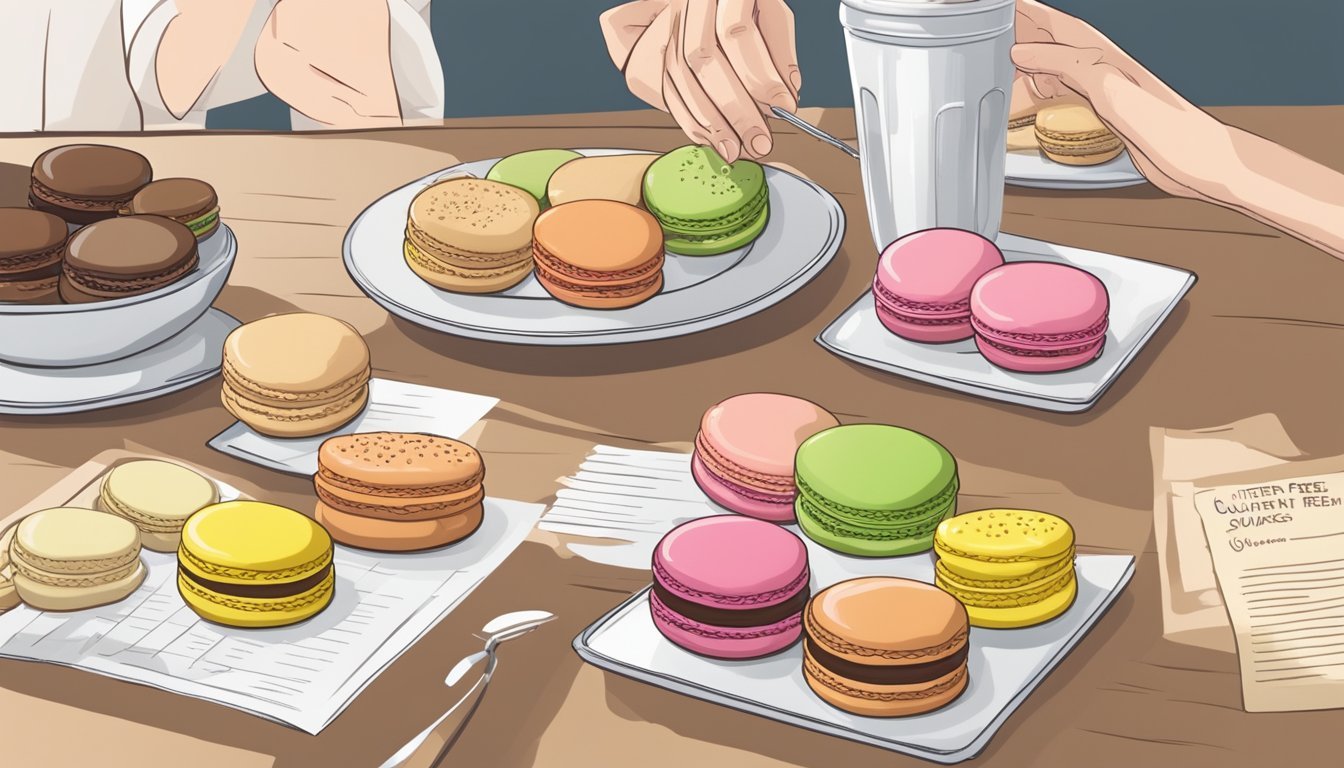
Creating the perfect macaron involves precision and attention to detail. Many bakers face common issues that can affect the final product. This section covers solutions to problems such as air bubbles, texture, and baking issues to ensure a successful batch of macarons.
Addressing Air Bubbles
Air bubbles in macarons can lead to cracked tops and an imperfect appearance. To minimize air bubbles:
Tap the tray: After piping, firmly tap the baking sheet on a flat surface several times.
Use a toothpick: Pop any visible air bubbles by gently poking them with a toothpick.
Achieving Perfect Texture
The desirable texture of a macaron is a smooth, glossy shell with a tender interior. Achieving this includes:
Sift dry ingredients: Sift the almond flour and powdered sugar together to create a fine mixture.
Correct folding: Fold the mixture until it reaches a lava-like consistency, where it falls off the spatula in ribbons.
Troubleshooting Baking Issues
Baking can be unpredictable, and macarons can be especially sensitive to oven temperatures and timing. To troubleshoot:
Oven thermometer: Use an oven thermometer to ensure accurate baking temperatures.
Even baking: Use silicone mats for consistent heat distribution, and adjust the position of the trays as needed.
Resting: Let piped macarons rest until they form a skin and are dry to the touch before baking, which can take around 30 minutes to an hour.
Each of these steps is critical in solving common problems encountered when making macarons, which helps achieve that iconic crisp shell and chewy center that macaron lovers adore.
Serving and Storage
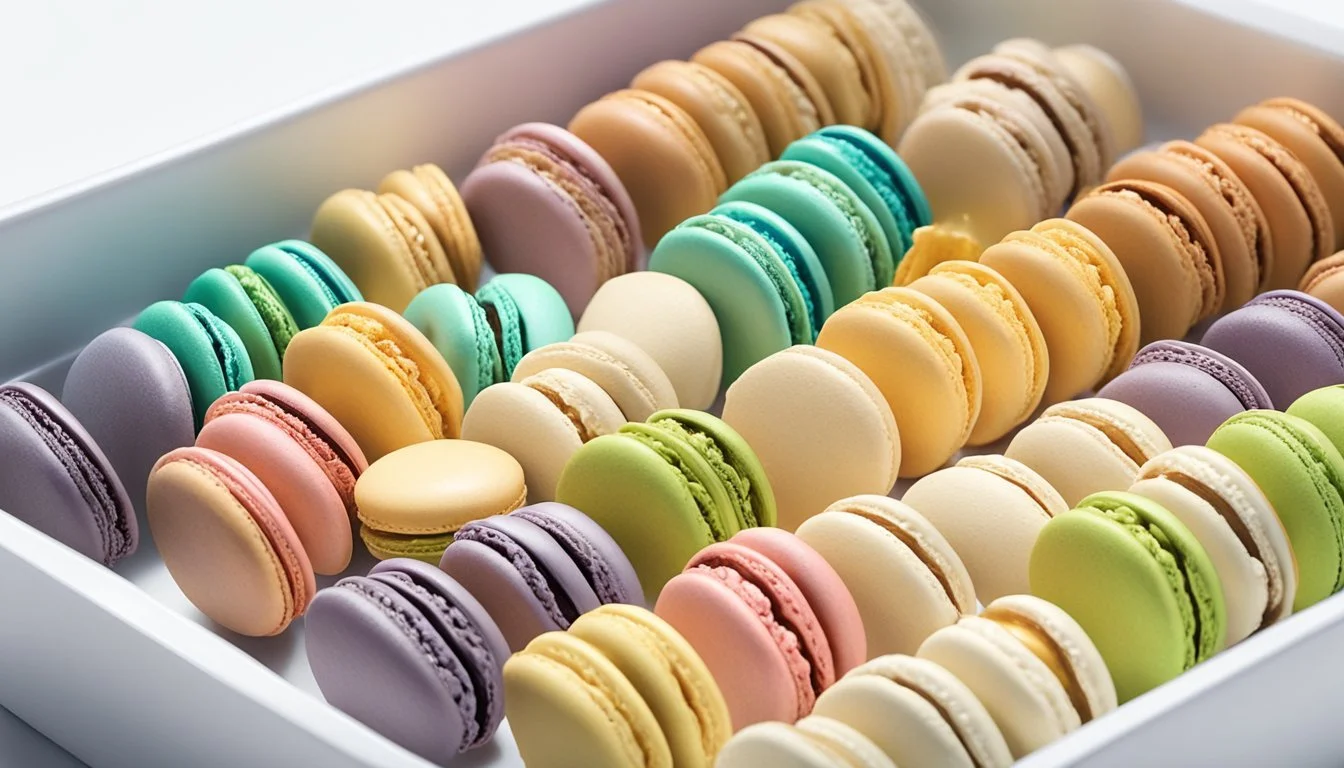
To ensure the best taste and quality of macarons, one must consider the nuances of serving them at the right temperature and employing optimal storage techniques. Attention to detail can maintain the integrity and flavor of these delicate confections.
Presentation and Pairing
When serving macarons, presentation is key—they are often showcased on platters or tiered stands for visual appeal. For events or occasions, macarons can be customized with colors and flavors to complement the theme. Their vibrant appearance makes them popular on platforms like Instagram. It's common to pair macarons with light beverages such as tea or champagne to enhance the tasting experience. Ideally, these confections should be served at room temperature to maximize their delicate texture and sophisticated flavors.
Proper Storage Techniques
Macarons require careful storage to preserve their quality. They should be stored in an airtight container to protect them from moisture and odors. The refrigerator is the recommended place to keep them cold, which can extend their freshness for up to one week. Before serving, macarons should be brought back to room temperature for approximately 30 minutes. For long-term storage, macarons can be frozen for up to 3-4 months. To freeze, one should place them in a single layer within an airtight container, ensuring they are well separated to avoid any flavors transferring.
Advanced Macaron Tips
In the pursuit of macaron perfection, bakers can explore a variety of techniques and considerations that elevate their creations beyond the basics.
Creative Flavor Combinations
A macaron's allure often lies in its unique blend of flavors. Experienced bakers can experiment with ingredients like herbs (such as rosemary or thyme), spices (like saffron or cardamom), or even savory components (like cheese or bacon bits). Incorporating exotic fruits or combining multiple flavors like chocolate and chili can result in a delightful surprise for the palate. Here's a table showcasing a few creative pairings to consider:
Base Flavor Complementary Flavor Resulting Combination Chocolate Raspberry Rich and Tangy Lemon Basil Refreshing and Herbal Pistachio Rose Nutty and Floral Coffee Caramel Deep and Sweet
Mastering the Pastry Bag
The pastry bag is an essential tool for a macaron chef, and mastering it is crucial for consistency and presentation. Tips for achieving uniformity include:
Holding the pastry bag vertically and close to the baking sheet when piping.
Applying steady pressure to ensure even macaron sizes.
Stopping pressure before lifting the bag to avoid peaks or tails.
Using different tip sizes and shapes can also provide varied and interesting textures to the shells.
Baking at High Altitude
Baking macarons at a high altitude requires adjustments due to lower air pressure. Here are some specific tips:
Increase the oven temperature by 15 to 25 degrees to set the shells faster.
Decrease the baking time slightly to prevent over-drying or cracking.
Some bakers recommend reducing the amount of leavening agent (if used) to counteract the quicker rise.
It's essential to keep notes and adjust one variable at a time for precision in this delicate process.
Recipes and Variations
When crafting macarons, one's journey typically begins with the classic French recipe, which sets the foundation for various gluten-free adaptations and an array of creative seasonal and themed variations. Each rendition follows a precise ingredient list and methodology to ensure the macarons' signature delicate texture and rich fillings are achieved.
Classic French Macaron Recipe
The quintessential French macaron is a meringue-based confection made from a simple yet precise combination of almond meal, powdered sugar, and egg whites. This mixture is carefully folded together to form what is known as macaronage. The classic filling often consists of buttercream, ganache, or jam. A standard recipe involves:
130g fine almond meal
130g powdered sugar
90-100g egg whites
130g granulated sugar
Gluten-Free Recipe Adaptations
For those seeking gluten-free options, the typical almond meal and egg white composition of most macaron recipes naturally exclude gluten. However, care must be taken with fillings and any additional flavoring agents, as these can sometimes introduce gluten into the recipe. Homemade macarons can easily be kept gluten-free by ensuring no cross-contamination with gluten-containing ingredients, an essential consideration for those with celiac disease or non-celiac gluten sensitivity. Store-bought or packaged macarons should be scrutinized for gluten, as some manufacturers may add gluten-containing products to their recipes or fillings.
Seasonal and Themed Recipes
Macarons lend themselves to a variety of seasonal and themed recipes, allowing bakers to experiment with flavors and colors corresponding to holidays or events. Ingredients such as pumpkin spice for autumn, peppermint for winter celebrations, or pastel hues for spring are common. Bakers may alter basic recipes by incorporating these flavors into either the macaron shell or the filling, all while maintaining a gluten-free status by vigilantly selecting ingredients.
Exploring the Culinary World of Macarons
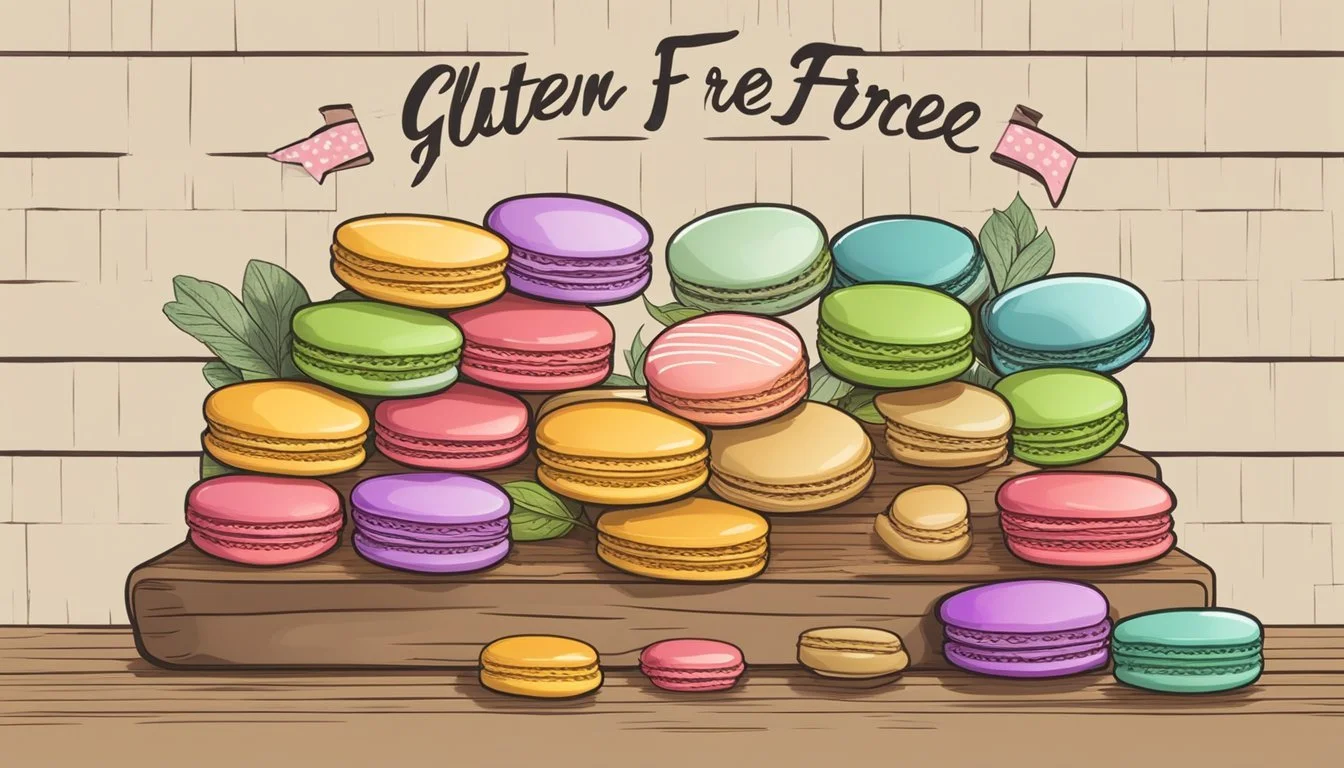
Macarons have become a symbol of sophistication in the culinary world, often associated with high-end patisseries and a staple at elegant events. Their colorful appearance and delicate flavors make them a popular subject in popular culture, professional cooking classes, and special occasions.
Macarons in Popular Culture
Macarons have garnered significant attention in popular culture, often featured on social media platforms like Instagram where stunning visuals of these treats capture the hearts of food enthusiasts. Renowned patisseries like Ladurée have contributed to their iconic status, positioning macarons as both a treat and a trendsetter.
Attending Macaron-Making Classes
For culinary aficionados inspired by these treats, attending macaron-making classes offered by professional chefs provides invaluable hands-on experience. These classes impart crucial techniques from selecting the right ingredients to mastering the perfect consistency, allowing participants to appreciate the art and precision involved in creating macarons.
The Role of Macarons in Events
Macarons hold a special place in various events, often gracing the tables at weddings, parties, and corporate gatherings. Their versatility in flavor and customization makes them a favorite choice for event planners and caterers aiming to add an element of elegance and personalized touch to their menus.
Conclusion
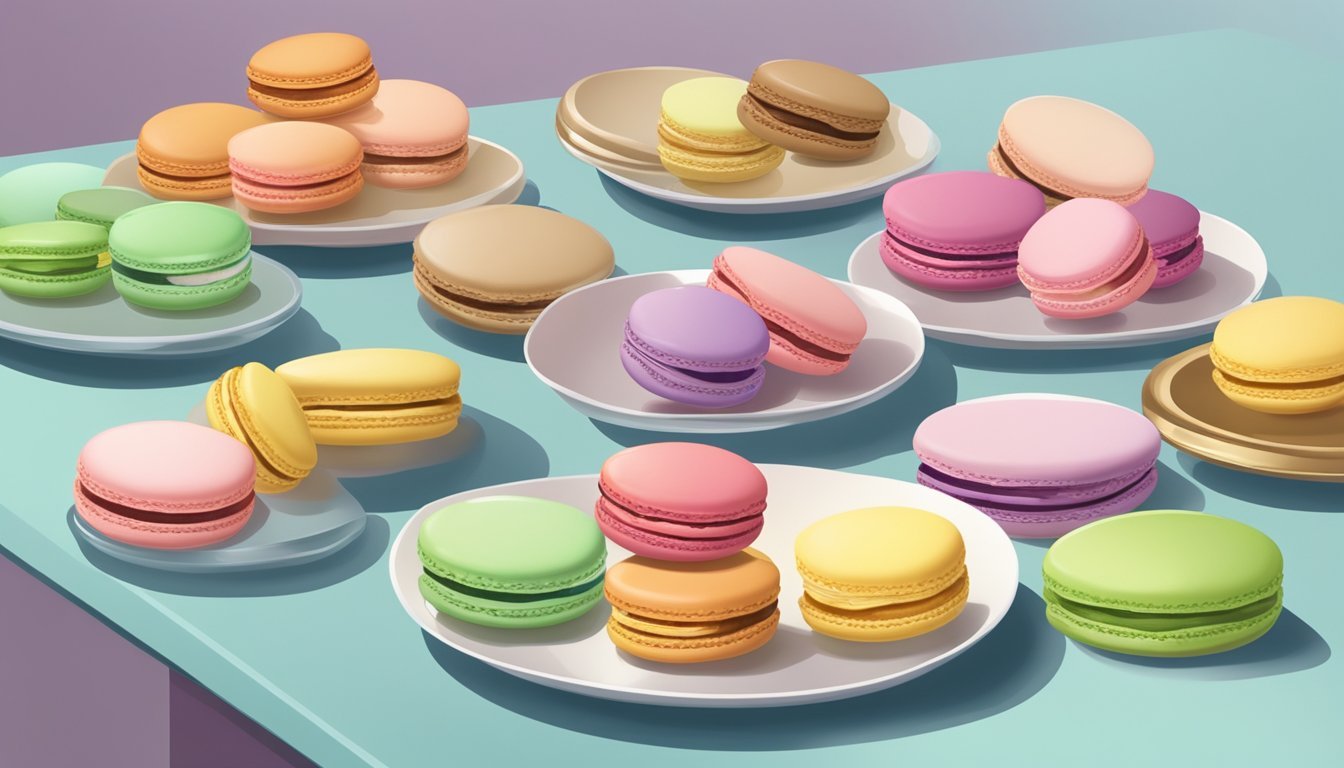
Macarons are renowned for their delicate texture and variety of flavors. They typically consist of ingredients like almond flour, egg whites, and sugar, which are inherently gluten-free. Thus, they can generally be considered appropriate for a gluten-free diet. However, individuals with celiac disease or gluten sensitivity should be cautious.
Ingredients: The foundational components for macaron shells do not contain gluten.
Almond flour: A gluten-free alternative to wheat flour.
Egg whites: Provide structure and are gluten-free.
Sugar: Adds sweetness and is gluten-free.
Cross-contamination: The potential for cross-contamination is an important consideration.
Utensils, equipment, and surfaces must be thoroughly cleaned if previously used for gluten-containing products.
Gluten presence in fillings or garnishes should be verified, as these could contain gluten.
Labeling and Communication: Proper labeling and clear communication with the baker or vendor are imperative for ensuring gluten-free macarons.
Always inquire about the ingredients and preparation process when purchasing from bakeries or stores.
For homemade macarons, source ingredients from certified gluten-free sources.
In essence, macarons can fit into a gluten-free lifestyle, but vigilance is key. Those who are particularly sensitive to cross-contamination should exercise due diligence when selecting where to purchase or how to prepare these confections. Ensuring gluten-free macarons may take extra effort, but it is feasible and worthwhile for enthusiasts who must adhere to gluten-free dietary restrictions.