
Hunting Leases Alabama
Your Guide to Securing Prime Hunting Grounds

Alabama offers a rich tapestry of hunting opportunities across its diverse landscapes, making it a prime destination for hunters seeking game such as white-tailed deer, turkey, and various small game species. The state's hunting leases are an essential component of its outdoor recreation, providing access to private lands for hunting. Through these leases, landowners allow hunters to enter their property for the purposes of hunting, in accordance with established terms and pricing. The system benefits landowners by generating income and managing wildlife populations on their property and provides hunters with more hunting opportunities.
Hunting leases in Alabama come in various forms, ranging from short-term daily agreements to long-term seasonal leases. Costs vary significantly depending on factors like the size of the lease, the duration of the lease, and the types of game available. These leases may be as small as a few acres for a personal hunting experience to thousands of acres that might accommodate larger hunting parties and clubs.
By partaking in a hunting lease, hunters are expected to adhere to Alabama's hunting regulations, which include season dates, bag limits, and hunter education requirements. They are a critical tool for maintaining sustainability within the hunting community, ensuring game populations are responsibly managed. Leases also offer a structured approach to hunting where hunters can find quality, managed properties tailored to their preferred hunting types, such as big game or small game hunting.
Understanding Hunting Leases
Hunting leases in Alabama are formal agreements that are pivotal for managing hunting activities and safeguarding the interests of both landowners and hunters. These leases establish the terms that define the use of land for hunting and outline various responsibilities.
Definition and Purpose of Leases
A hunting lease is a contractual arrangement where a landowner grants hunting rights to hunters for a specified period of time. The primary purpose of a lease is to prevent misunderstandings by delineating rules, restrictions, and responsibilities before any exchange of money or commencement of hunting activities. It functions as a tool for land management, conservation, and ensuring the ethical use of recreational hunting resources.
Benefits for Landowners and Hunters
For Landowners:
Income: Leases generate additional revenue from otherwise underutilized land.
Control: Landowners retain control over their property, specifying when and how it is used for hunting.
Protection: Clearly defined rules and agreements decrease potential for disputes and liability.
For Hunters:
Access: Hunters obtain legal access to private lands which might offer more abundant or specific game.
Management: Participating in a managed hunting environment can enhance the hunting experience.
Conservation: Lease agreements often contribute to wildlife conservation efforts by promoting sustainable hunting practices.
Legal Considerations for Leases in Alabama
Understanding the legal framework governing hunting leases in Alabama is imperative for all parties involved. This knowledge ensures that leases are executed in compliance with state regulations and contribute positively to wildlife conservation efforts.
Lease Agreements
In Alabama, a hunting lease agreement should clearly list the parties involved: the landowner (lessor), the hunter (lessee), and specify the location of the leased land. The agreement must define the purpose of the lease, such as hunting, fishing, or general recreation, and detail the exact description of the land involved in the lease.
Essentials of a Hunting Lease Agreement:
Names and contact information of the lessor and lessee
The clear geographical description of the property
Specific activities permitted
Duration of the lease term
Financial terms, including amount and payment schedule
Insurance and liability considerations
State Regulations and Bag Limits
The Alabama Department of Conservation and Natural Resources stipulates the state regulations for hunting, which include bag limits to ensure a sustainable wildlife population. These regulations are critical to uphold both for the protection of the ecosystem and for maintaining lawful hunting practices.
Key State Regulations:
Hunters must possess the appropriate licenses.
Adherence to species-specific hunting seasons.
Compliance with designated bag limits for each species.
Bag limits in Alabama are strategically set to balance wildlife conservation efforts with the interests of hunters and landowners. Hunters leasing land must remain within these limits, which are subject to change, to support conservation and sustainable hunting practices.
Types of Hunting Leases
Hunting leases in Alabama offer sportsmen the opportunity to secure exclusive hunting rights to a property. These agreements typically specify the types of game that may be hunted, the lease term, and the obligations of both parties: the landowner and lessee.
Private vs. Corporate Leases
Private hunting leases are agreements between an individual landowner and individual hunters or a small group. This arrangement often results in a more personal relationship, with the landowner providing property that has been cared for on a more intimate scale. These properties may range in size, but the management is usually handled by the landowner or family.
Advantages: Tailored management, potentially lower cost, personal interaction.
Common Uses: Small-scale hunting of white-tailed deer, turkey, and other native Alabama game species.
Corporate hunting leases, on the other hand, involve commercial entities or organized hunting clubs. They often lease large tracts of land to accommodate more members or clients. Corporations may not be directly involved in the day-to-day management of the property, which can be an advantage or disadvantage, depending on the lessee's perspective.
Advantages: Access to larger properties, professionally managed hunting programs.
Drawbacks: Higher cost, less personal interaction.
Timberland Leases
Timberland leases are specific types of hunting leases on property primarily managed for timber production. These properties provide diverse habitats beneficial for wildlife and hunting opportunities.
Characteristics: Large acreage, managed forest, varying stages of growth.
Lease Focus: It emphasizes sustainable hunting practices that coincide with the land's primary use for timber production.
Landowner Involvement: The landowner often has a vested interest in maintaining the health of the timberland, which can benefit game populations and create prime hunting conditions.
Common Arrangements: Long-term leases that align with timber management objectives, supporting both wildlife conservation and timber harvesting schedules.
Hunting Lease Locations in Alabama
Alabama offers diverse regions for hunters looking to lease land, with the Black Belt Region and Southeast Alabama being particularly noteworthy. Each area provides unique hunting experiences due to their distinct geography and game available.
Black Belt Region
The Black Belt Region is renowned for its fertile soil and prime wildlife habitats. Counties such as Montgomery in the heart of Alabama are a part of this region and boast abundant whitetail deer populations. This area, stretching from Mississippi in the west through central Alabama to Georgia in the east, offers hunting leases that can include a variety of game from turkey to quail (What wine goes well with quail?).
Southeast Alabama
In Southeast Alabama, one finds a mix of dense forestland and open fields. The region offers hunting leases closer to the Zip 36016 in Barbour County and elsewhere, with properties often featuring species like deer, turkey, and dove. Its proximity to Georgia allows hunters in Southeast Alabama to take advantage of a range of ecosystems, including pine plantations and hardwood bottoms, which are rich in biodiversity and game.
Wildlife and Game Management
In Alabama, wildlife and game management is a structured effort aimed at preserving diverse species while also providing hunting opportunities. This system encompasses a variety of practices, including conservation initiatives and habitat preservation to ensure sustainable game populations for deer and turkey hunting.
Conservation Efforts
Alabama's Department of Conservation and Natural Resources (ADCNR) spearheads conservation efforts to maintain ecological balance and promote healthy game populations. The funding for these initiatives largely comes from the sale of hunting licenses and federal excise taxes on firearms and ammunition.
Feral Hogs Control: Targeted as an invasive species, feral hogs are managed to protect natural resources and prevent damage to wildlife habitats.
Wild Turkey and Deer Management: Programs ensure that sustainable population control measures are in place for popular game like wild turkey and deer, through regulated seasons and bag limits.
Wildlife Habitat Preservation
Preservation of wildlife habitats is crucial for the thriving populations of game animals and overall ecosystem health. ADCNR is responsible for the upkeep and management of over 750,000 acres of public lands, ensuring that environments are suitable for wildlife and accessible for hunting.
Land Maintenance: Regular upkeep and development of these areas ensure high-quality habitats for animals, contributing to successful deer and turkey hunting seasons.
Special Opportunity Areas: These areas offer a unique environment for wildlife, contributing to rigorous wildlife habitat management and conservation.
Finances and Investment
When considering hunting leases in Alabama, financial considerations such as lease pricing and land investment are paramount. Both aspects significantly affect the overall value and potential return on investment for landowners and lessees.
Lease Pricing
Lease terms and pricing in Alabama can greatly vary, depending on factors such as location, available game, and land quality. Prices may range from as low as $1,000 to upwards of $5,000. Typically, lease prices are established per acre; it's not uncommon for lease agreements to describe parcels anywhere between 40 acres to several thousand acres. Lease pricing is also influenced by the types of game available, with properties offering a diverse range of wildlife like deer, turkey, dove, and quail tending to command higher prices.
Land Investment and Development
Investing in Alabama hunting land can offer more than just recreational opportunities; it represents a tangible asset with potential long-term growth in value. Land development for hunting purposes involves enhancing habitats, controlling predators, and maintaining a balance in wildlife populations to make the land more attractive for leasing. As a result, investment in land development not only increases the likelihood of a successful hunting lease but also can elevate the land's overall market value. For investors, a key metric is the acre-to-member ratio, which indicates the balance between available land and hunting pressure – a crucial factor for maintaining quality hunting experiences.
Practical Considerations for Leasing
When entering into a hunting lease in Alabama, lessees must carefully evaluate the land's quality and consider factors such as accessibility and available infrastructure. These assessments are crucial to ensuring a successful and legally compliant hunting experience.
Assessing Land Quality
The quality of the hunting land for lease is a primary concern for potential lessees. Here's what should be taken into account:
Diversity of Habitat: Look for a mix of woods, fields, and water sources like ponds. This diversity can support a variety of wildlife species.
Wildlife Population: Assess the abundance of game species on the property. Signs of healthy populations include tracks, scat, and game trails.
Carrying Capacity: The number of acres of the property affects how many hunters can use the land without over-pressuring the wildlife. Typically, more acreage can sustain more hunters.
Forest Management: Well-managed tracts may have controlled burns or timber harvesting schedules that can improve habitat quality and make the land more attractive for hunting.
Infrastructure and Accessibility
The presence of adequate infrastructure and accessibility to the hunting tracts is essential:
Roads and Trails: Check for a network of roads or trails that provide access throughout the property. The condition of these access points can affect both the hunting experience and emergency response times if needed.
Land Boundaries: Clearly marked property boundaries help prevent disputes with neighboring landowners and ensure compliance with lease terms.
Safety Features: Consider whether there are safety zones, especially if the leased land is near residential areas, to ensure a secure environment for both hunters and non-hunters.
Utility Access: While not always necessary, the presence of utilities such as water or electricity on the property can add convenience for hunters who may want to camp or use cabins during the hunting season.
Key Contacts and Resources
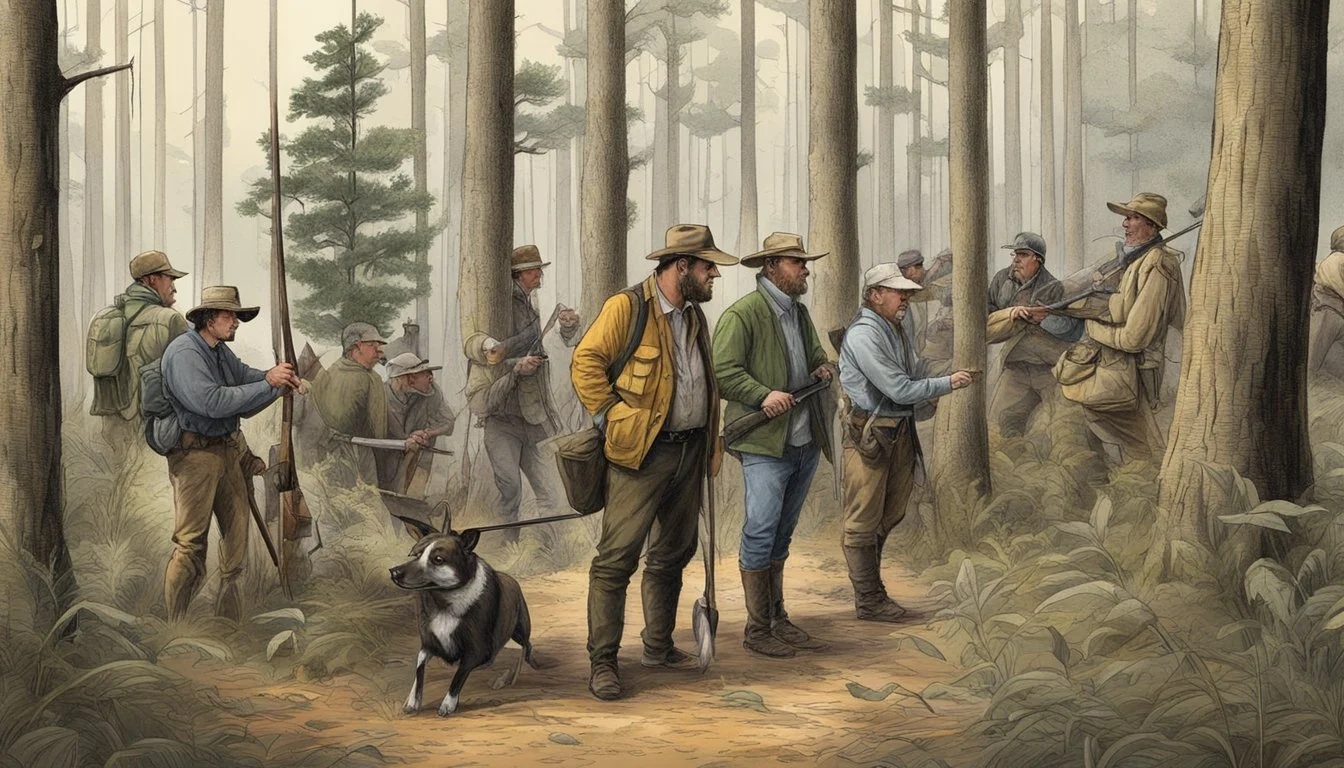
When seeking hunting leases in Alabama, it's crucial to know the right entities to contact for up-to-date information and assistance. Identifying these key resources can greatly streamline securing a hunting lease in the state.
Alabama Department of Conservation
The Alabama Department of Conservation and Natural Resources is the primary state agency responsible for managing and conserving Alabama’s natural resources. Interested hunters should contact them for regulatory information and possible lease options.
Contact Information:
Address: 64 N. Union Street, Suite 468, Montgomery, Alabama 36130
Phone: Not provided
Website: Not provided
Local County Contacts
Each county within Alabama may offer specific details on hunting leases that aren't commonly found on statewide platforms. Local contacts can provide insights into available land, rules, and landowner contacts.
Contact Resources:
Access county websites or courthouse information desks
Consult county-specific hunting forums or boards
Land Management Companies
Numerous land management companies operate within Alabama, offering diverse hunting leases. These companies can provide tailored services and detailed property listings for clients.
Notable Companies:
Alawest, Inc.
International Paper Company
Rayonier Corporation
Hancock Forest Management
Contact Examples:
Alawest, Inc.: 205-339-0300
International Paper Company: Contact through company's official website
Hancock Forest Management: Check company's official website for regional office contacts
By leveraging these key contacts and resources, hunters can efficiently navigate the landscape of hunting leases in Alabama.
Additional Recreational Opportunities

In Alabama, recreational leases not only provide access to prime hunting property but also open up a host of other outdoor activities. Tenants of such properties often enjoy the privilege of fishing in private waters, which tend to be less crowded and offer a peaceful retreat from the busier public fishing spots.
Recreation options extend beyond hunting and fishing. These lands are frequently used for hiking, wildlife photography, and bird watching, providing a year-round playground for outdoor enthusiasts. Companies managing these leases sometimes plant crops such as corn, which serve a dual purpose. They not only attract and nourish wildlife, supporting a rich hunting environment, but also create picturesque settings for other recreation possibilities.
The connection to paper comes through the land's management, which ensures sustainable use of the resources, whether that be timber for paper production or maintaining a balance between recreational use and natural preservation. The overarching aim is to provide a comprehensive outdoor experience that respects the duality of conservation and enjoyment.
Below is a brief list of recreational opportunities found on hunting leases:
Hunting: Deer, turkey, and small game
Fishing: Bass, crappie, and catfish in private lakes and rivers
Hiking and Camping: Trails through diverse terrains
Photography: Flora and fauna as subjects in their natural habitat
Outdoor Sports: Activities such as mountain biking and horseback riding
By leasing these areas, individuals and groups ensure that they have invested in not only a hunting spot but a versatile outdoor haven.
Feedback and Testimonials

Hunters frequently express satisfaction with Alabama's diverse hunting leases, citing the abundance of game and well-managed properties. Praises for the Wooded Acreage often revolve around the serenity and ample deer population in counties like Barbour. A common thread among these testimonials is the appreciation for the equipped properties, with mentions of two deer stands being a notable convenience.
Positive Remarks on Lease Management reflect well on companies like Westervelt Wildlife, which manage extensive acres. Hunters commend the commitment to quality wildlife monitoring and preservation, emphasizing successful hunts along the Tombigbee River. The high quality of deer and turkey hunting opportunities, coupled with the potential for impressive catches in well-stocked ponds, are frequently highlighted.
Feedback often includes Appreciation for Variety and Abundance, with hunters reporting encounters with large bass in the fishing ponds and describing the turkey populations as robust.
Below is a summary of feedback:
Aspect Common Feedback Hunting Land Quality High marks for woodland management and game population. Facilities Appreciation for hunting stands and well-maintained access. Game Variety Positive reports on deer, turkey, and fishing experiences. Support Services Hunters value the ease of lease transactions and information access.
While each hunter's experience is unique, the general consensus tends to value Alabama's hunting leases for their richness in wildlife and the thoroughness of land management, ensuring a gratifying hunting experience.