
The Beginner's Guide to Meal Prepping with a Spiralizer
Mastering Healthy, Quick Dishes
Meal prepping has emerged as a popular strategy for anyone looking to maintain a healthy diet, save time, and streamline their cooking process. With the incorporation of a spiralizer, a kitchen tool designed to create noodle-like strands from vegetables, individuals can easily introduce a variety of nutritious and visually appealing options into their meals. Spiralizers are not only effective in transforming ordinary vegetables into exciting shapes but also encourage the consumption of more plant-based ingredients, which are essential for a balanced diet.
Spiralizing vegetables can be a simple and satisfying way to enhance meal prep. It allows for versatility in the kitchen, as almost any firm vegetable can be transformed into a nutritious substitute for traditional pasta. Vegetables such as zucchinis (What wine goes well with zucchini?), carrots, and sweet potatoes make for excellent spiralized noodles, which can be sautéed to achieve the perfect al dente texture. This technique provides a unique method to integrate more vegetables into daily meals while keeping calorie counts low and nutrient density high.
For individuals seeking convenience without compromising on health, a spiralizer is a valuable tool in the meal-prepping arsenal. It offers a quick and easy way to prepare a bulk of vegetables ahead of time. Once spiralized, these vegetables can be stored in the refrigerator, making them readily accessible for a variety of dishes throughout the week. By dedicating a portion of meal prep time to spiralizing, one ensures that healthy and satisfying choices are always within reach, greatly reducing the temptation to opt for less nutritious, on-the-go options.
Getting Started with Your Spiralizer
A spiralizer is a kitchen tool that transforms vegetables into "noodles," offering a healthy twist to traditional pasta dishes. Learning the basics, choosing the right spiralizer, and understanding the proper techniques and maintenance can significantly enhance one's meal prepping experience.
Understanding the Basics of Spiralizing
Spiralizing is the process of turning vegetables into long, noodle-like strands. It can turn an ordinary zucchini into zoodles, or curly sweet potato strings that can serve as a nutritious base for a variety of dishes. Spiralizers usually come with different blades to achieve various cuts such as ribbons, curls, or strands.
Popular Vegetables to Spiralize:
Zucchini
Cucumbers
Carrots
Sweet potatoes
Beets
Selecting the Best Spiralizer for Your Needs
When choosing a spiralizer, consider the foods you plan to prepare and your kitchen storage space. Handheld spiralizers are great for small jobs and compact spaces, while countertop models are more robust and suitable for larger quantities.
Types of Spiralizers:
Handheld: Compact, affordable, ideal for small tasks
Countertop: More features, sturdier, suitable for frequent use
Essential Spiralizer Tips and Techniques
To ensure the best results, use fresh, firm vegetables. Center the vegetable on the spiralizer for even noodles and apply consistent pressure when turning the handle. Getting comfortable with the tool and experimenting with different vegetables are key to becoming proficient.
Tips for Perfect Zoodles:
Use medium to large-sized zucchini for more substantial noodles.
Pat zoodles dry to remove excess moisture before cooking.
Practical Spiralizer Maintenance and Care
Clean your spiralizer immediately after use to prevent vegetables from sticking and staining the blades. Most spiralizers are dishwasher safe, but hand-washing is recommended to extend the life of the blades. Store blades in a safe place to prevent accidents and maintain their sharpness.
Fundamentals of Meal Prepping
Effective meal prepping hinges on understanding its benefits, mastering simple concepts and ideas, establishing a meticulous plan, and implementing strategies that optimize cooking time and efficiency. This approach ensures control over one’s menu, savings in time, and adherence to a healthy meal plan.
Benefits of Meal Prepping
Meal prepping offers multiple advantages, including time savings by reducing daily cooking and decision-making. It also offers better nutritional control, as meals are planned ahead, reducing the temptation for less healthy options. Furthermore, meal prepping can lead to cost savings, as individuals buy only what is necessary, reducing waste and avoiding impulsive purchases.
Basic Meal Prep Ideas and Concepts
Starting with simple meal components—like combining a protein, a grain, and a vegetable—can form the basis of meal prepping. Utilizing a spiralizer, one can incorporate more vegetables in a creative and appealing way, such as zucchini noodles as a low-carb grain alternative. These elements can be mixed and matched to create a variety of meals that prevent monotony.
Creating an Effective Meal Prep Plan
An effective meal prep plan starts with a clear grocery list aligned with the week’s menu. Scheduling a consistent prep day ensures that meals are ready when needed. A well-thought-out plan considers the shelf-life of prepared foods and includes a balance between fresh and frozen meals to maintain variety and nutrition throughout the week.
Meal Prepping Strategies for Efficient Cooking
They can enhance efficiency by batch cooking large quantities of staples like grains or proteins and by utilizing kitchen gadgets such as slow cookers or spiralizers to expedite preparation. Arranging cooking order by longest to shortest cook times and employing safe cooling and storage methods ensures meals are not only prepared quickly but also stored safely.
Shopping and Ingredient Selection
When embarking on meal prepping with a spiralizer, the reader should focus on selecting the freshest produce and quality proteins to ensure nutritious and flavorful meals. Efficiently navigating this process begins with a well-planned grocery list and an understanding of food labels.
Building Your Shopping List
A comprehensive shopping list is the cornerstone of successful grocery shopping. It should include:
Vegetables: Suitable for spiralizing such as zucchinis, carrots, and cucumbers.
Proteins: Lean options like chicken breast, tofu, or legumes.
Complex Carbs: Whole grains, such as brown rice or quinoa, for a balanced meal.
One should prioritize vegetables that are firm and fresh, as these tend to produce the best results when spiralized. Additionally, including a variety of colors ensures a wider spectrum of nutrients.
Choosing the Right Produce and Proteins
Selecting the right ingredients is crucial for meal prepping. Here are some tips:
Look for produce that is in season for the best flavor and value.
For proteins, choose cuts that are naturally lower in fat and versatile enough to pair with spiralized vegetables.
When opting for organic items, check for the certified organic label to ensure they meet the appropriate standards.
One should also consider the shelf life of produce, opting for vegetables that can stay fresh from the time of purchase to the actual meal prep day.
Understanding Food Labels for Healthier Choices
Making healthier food choices involves reading and understanding food labels, which includes:
Serving Size: Ensure the portion aligns with dietary needs.
Nutritional Information: Check for high levels of protein and fiber, and low levels of sodium and sugars.
Ingredients List: The fewer the ingredients, often the better. Look for whole food items without additives.
By incorporating these practices into their selection process, individuals are better equipped to make informed decisions that align with their health and nutritional goals.
Preparing Your Ingredients
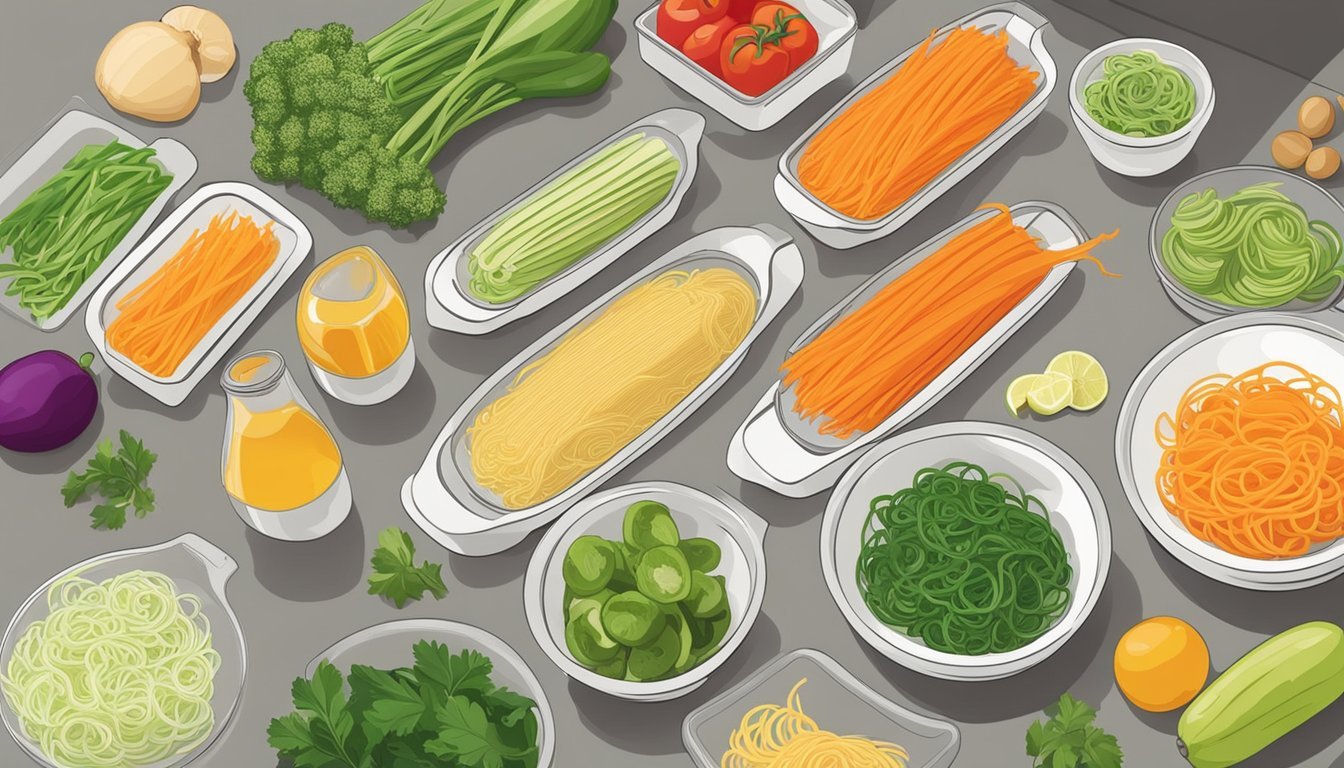
When meal prepping with a spiralizer, proper preparation of ingredients is essential for efficient cooking and optimal taste. Focus should be on preparing vegetables for spiralizing, cooking proteins and grains ahead of time, and mastering effective ingredient prepping techniques.
Washing and Cutting Vegetables
Before spiralizing, ensure that vegetables are thoroughly washed to remove any dirt or pesticides. Carrots and sweet potatoes are popular spiralizing choices and should be peeled if preferred and trimmed to fit the spiralizer. To achieve uniform noodles, cut the ends flat for a stable spiralizing process.
Pre-Cooking Proteins and Grains
For proteins like chicken breast, a simple approach is to bake or grill in batch cooking style, allowing for quick incorporation into meals throughout the week. Grains such as quinoa can be prepared in bulk and stored in the fridge, ready to be added to salads or served as a base for roasted vegetables and beans.
Ingredient Prepping Techniques
Ingredient prepping techniques should focus on efficiency and food safety. For vegetables, spiralize them in large batches and store in air-tight containers. For grains and proteins, use the cooling method before storing to maintain freshness. Always label containers with the prep date to ensure all ingredients are used within their optimal time frame.
Crafting Balanced and Nutritious Meals
When meal prepping with a spiralizer, the goal is to construct meals that meet nutritional needs while maximizing health benefits. By understanding the integration of various food groups, individuals can enjoy a variety of nourishing dishes that cater to both taste and wellbeing.
Understanding Nutritional Needs
To meet an individual's nutritional requirements, meals should consist of a balance of macronutrients—proteins, fats, and carbohydrates—and an abundance of micronutrients—vitamins and minerals. For example, nuts and seeds offer healthy fats and proteins, while berries and lettuce provide essential vitamins and fiber. When crafting a meal, one should ensure that all these elements are present in harmony to support bodily functions and health.
Combining Foods for Optimal Health
A well-rounded diet should include a diverse array of foods to not only prevent nutritional deficiencies but also to promote optimal health. For instance, combining leafy greens like lettuce with a source of healthy fats such as avocado and a sprinkle of seeds can increase the absorption of fat-soluble vitamins. Including a variety of colors in the dish with fruits like berries not only enhances the visual appeal but also ensures a wide range of antioxidants are consumed.
Creating Diverse Meals with a Spiralizer
The spiralizer is a versatile tool that can transform vegetables and fruits into noodle-like shapes, adding a new dimension to meal prep. For a balanced dish, one could spiralize zucchini for its hydrating qualities and pair it with a rich source of protein like cheese or chicken. To add crunch and additional nutrients, nuts can be sprinkled on top. A spiralizer encourages the inclusion of more vegetables in one's diet, promoting nutritious meals while also keeping them visually exciting and texturally pleasing.
Storage and Preservation
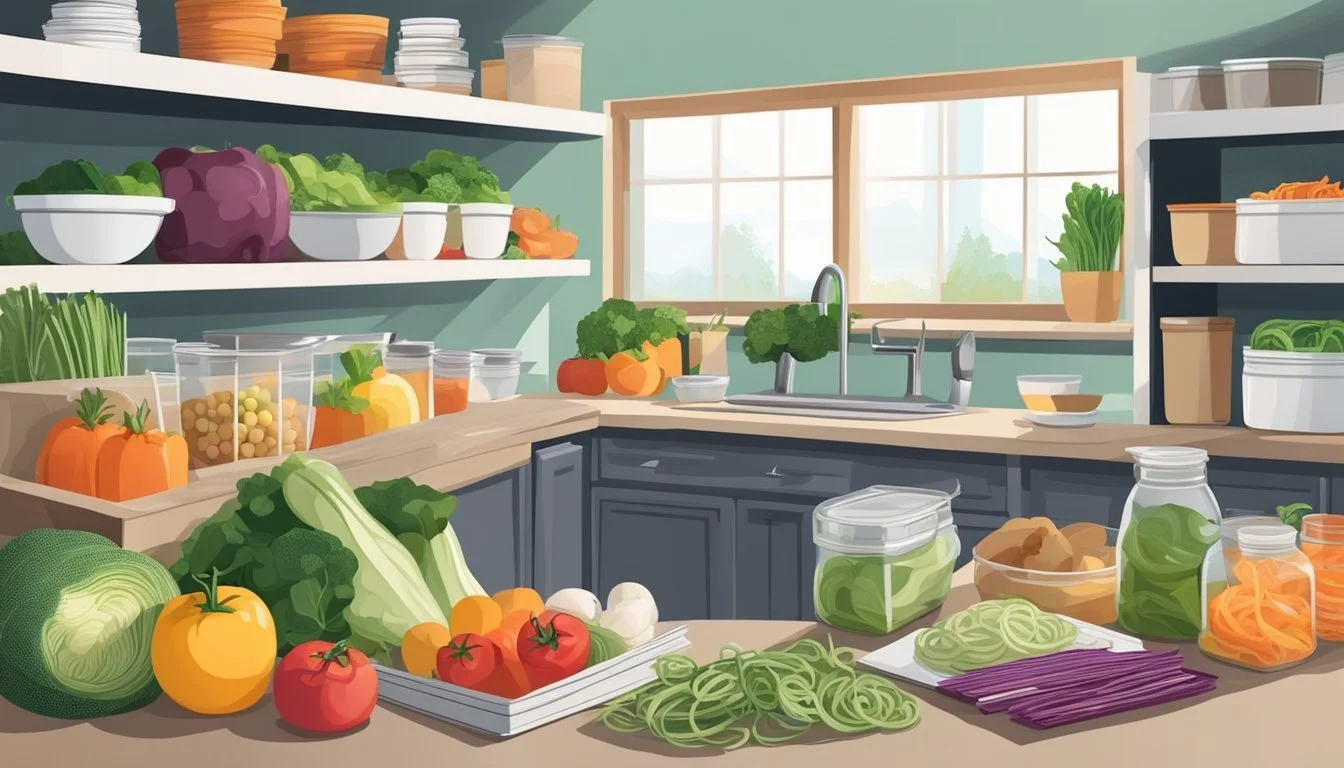
When meal prepping with a spiralizer, ensuring the freshness and safety of your food is critical. Selecting appropriate storage containers and understanding the methods of refrigerating and freezing your prepped meals will maximize their shelf life and taste.
Choosing the Right Containers
One must choose storage containers that are capable of preserving the quality of spiralized vegetables and other ingredients. Airtight containers are essential to prevent air and moisture from spoiling the food. Glass containers are often recommended for their durability and lack of odor retention. When batch-cooking, it is practical to opt for various sizes of containers, allowing for both individual portions and larger quantities to be stored efficiently.
Airtight containers: preserve freshness, prevent spoilage
Glass containers: durable, do not retain odors, BPA-free options
Multiple sizes: accommodate individual portions and batch-cooked meals
Refrigerating and Freezing Your Prepped Meals
Properly refrigerating and freezing meals is crucial for extending their lifespan. Spiralized vegetables should be stored in the refrigerator if they're to be consumed within a couple of days. Place them in the crisper drawer for optimal humidity control. For longer storage, freezing is suitable, though the texture of the spiralized vegetables may change slightly upon thawing.
Refrigerator storage: ideal for short-term, use crisper drawer
Freezing: extends shelf life, may affect texture post-thawing
Meal Planning Throughout the Week
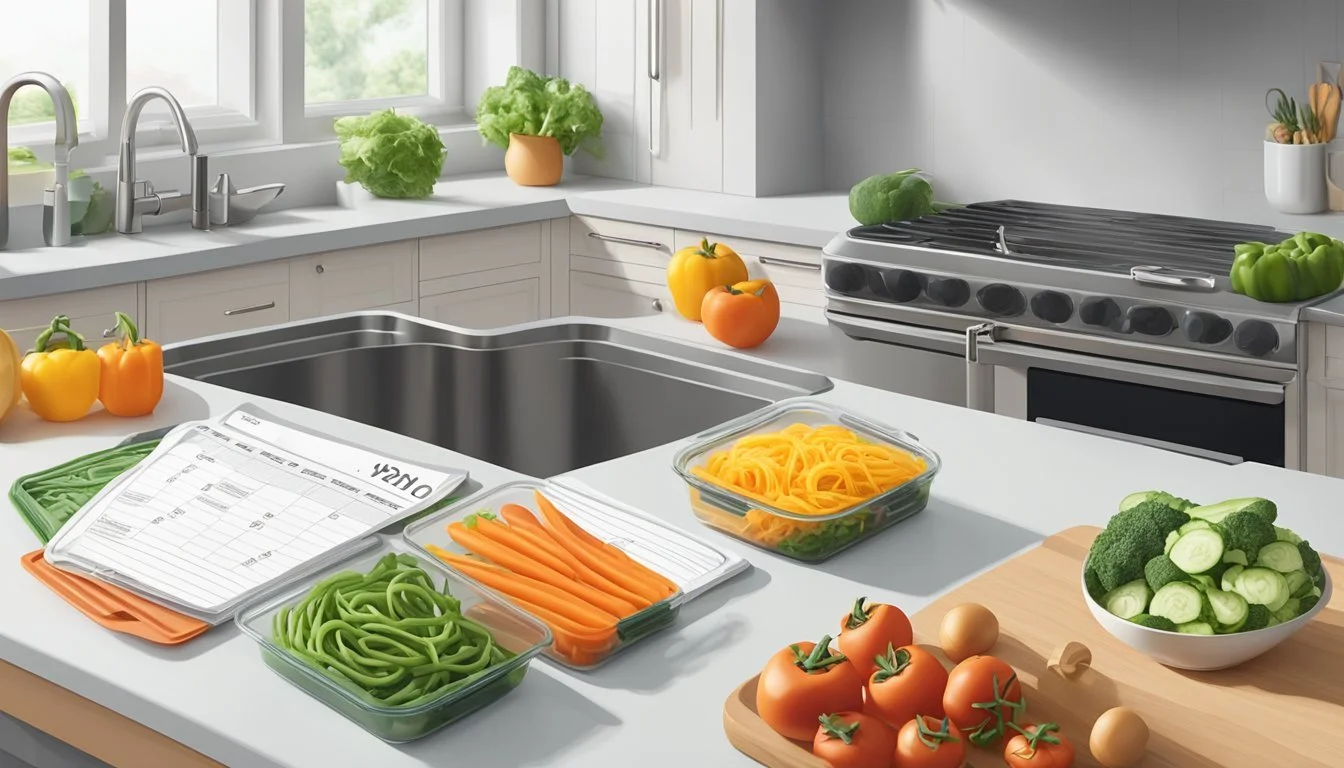
Creating a flexible meal plan for the week allows individuals to enjoy a variety of dishes while optimizing the use of a spiralizer for preparing healthy meals such as salads, noodles, and garnishes.
Designing a Weekly Menu
When designing a weekly menu, one should consider the balance between breakfasts, lunches (What wine goes well with lunch?), and dinners to ensure nutritional diversity and palate satisfaction. A strategic approach would include using a spiralizer to add a twist to conventional meals, turning vegetables and fruits into appealing spirals for salads or substituting pasta with vegetable noodles. Here’s an example of how to structure a week's worth of meals:
Monday: Vegetable spiral noodle stir-fry for dinner; leftovers become part of Tuesday's lunch.
Tuesday: Mixed greens salad with spiralized carrots and cucumber for lunch.
Wednesday: Spiralized apple incorporated into breakfast oatmeal; sweet potato spirals with dinner.
Thursday: Lunch includes a quinoa salad with spiralized beetroot.
Friday: Zucchini noodle spaghetti for dinner; leftover noodles served with different sauce for Saturday’s lunch.
Adjusting Meals for Unforeseen Changes
One must be prepared to adjust their meal plan in the event of unforeseen changes, such as a spontaneous social engagement or an ingredient shortage. One could repurpose spiralized vegetables planned for a dinner salad into a vibrant addition to a brunch omelette the next day or mix them into a quick stir-fry if unexpected guests arrive. Being flexible with meal prep ideas ensures a game plan remains intact despite deviations:
Encountered Issue Adaptable Solution Missing Lunch Ingredient Substitute with another spiralized vegetable on hand Impromptu Guest for Dinner Supplement with spiralized side dishes Perishable Item Spoilage Repurpose other vegetables for spiralizing
This approach allows for adjustments while still maintaining a varied and nutritious weekly meal plan.
Recipes and Inspiration
Spiralizers transform vegetables into noodles, offering a healthy base for a variety of recipes. This guide will explore flavorful and accessible meal prep options that utilize this innovative tool.
Quick and Easy Spiralizer Recipes
A spiralizer turns vegetables like zucchinis into noodles quickly, facilitating recipes that are not only easy to prepare but also nutritious. Recipes such as Zucchini Noodles with Pesto blend fresh zucchini noodles with tomatoes, mozzarella, and pesto sauce, creating a dish that is both light and satisfying. Another example is the Beetroot and Carrot Salad, where spiralized beets and carrots offer a colorful and crisp base, perfect for a quick lunch.
Examples:
Zucchini Noodles (Zoodles) with Pesto
Ingredients: zucchini, pesto, cherry tomatoes, mozzarella balls
Spiralizer setting: medium blade
Preparation: Spiralize zucchini, mix with halved tomatoes and mozzarella, toss with pesto.
Beetroot and Carrot Salad
Ingredients: beets, carrots, vinaigrette
Spiralizer setting: fine blade
Preparation: Spiralize beets and carrots, rinse immediately to prevent staining, toss with vinaigrette.
Themed Meal Prep Recipes
Meal preppers can craft themed dishes for the week, such as Asian-inspired Vegetable Stir-fry with Spiralized Sweet Potato Noodles. They can also create comfort dishes like Paleo Turkey Chili over Spiralized Sweet Potatoes, offering a lower-carb alternative to traditional pasta in chili.
Suggestions:
Asian Stir-fry
Ingredients: sweet potatoes, bell peppers, onions, soy sauce, ginger
Spiralizer setting: medium blade
Preparation: Spiralize sweet potatoes, sauté vegetables, add spiralized sweet potatoes last to retain texture.
Paleo Turkey Chili
Ingredients: ground turkey, sweet potatoes, tomatoes, chili spices
Spiralizer setting: medium blade
Preparation: Cook turkey with spices, spiralize sweet potatoes, combine and simmer.
Finding Inspiration for New Dishes
Those seeking inspiration can look to seasonal vegetables and compatible sauces to invent new spiralizer recipes. For instance, they might pair Butternut Squash Noodles with Sage Brown Butter. Exploring different cuisines can also offer fresh perspectives, like using parsnip noodles as a base for a Rustic Italian Bolognese.
Inspiration Tips:
Seasonal Pairings
Fall: butternut squash noodles with a sage-infused sauce.
Summer: cucumber noodles with a light yogurt dill dressing.
International Flavors
Italian: parsnip noodles topped with hearty bolognese.
Asian: daikon radish noodles with a spicy peanut sauce.
Community and Resources
Connecting with a community and accessing informative resources can greatly enhance a beginner's meal prepping journey with a spiralizer. The online space is rich with communities and content creators who offer valuable insights, recipes, and encouragement.
Joining Online Meal Prep Communities
Individuals looking to expand their meal prepping repertoire with a spiralizer can join various online communities. Facebook houses numerous meal prep groups where members share their spiralized creations and offer support. Furthermore, Instagram and YouTube are platforms where one can follow accounts specializing in spiralized dishes. Downshiftology, run by Lisa Bryan, is an excellent example of a YouTube channel and Instagram account providing tutorials, tips, and recipes specifically tailored for spiralizing enthusiasts.
Facebook Groups: Search for meal prep or spiralizer-focused groups to join discussions and share experiences.
Instagram: Follow hashtags such as #mealprep and #spiralizer to discover new recipes and connect with the community.
YouTube: Subscribe to channels like Downshiftology for visual guides on spiralizing and meal prepping.
Subscribing to Newsletters and Blogs
Subscribing to newsletters and blogs is another effective strategy for staying updated on the latest spiralizer trends and recipes. Many food bloggers and culinary educators, including Lisa from Downshiftology, offer newsletters that deliver fresh content directly to one's inbox. These curated lists often include exclusive recipes, beginner tips, and comprehensive guides that can take one's spiralizing skill to the next level.
Newsletters: Sign up for newsletters from your favorite food bloggers for the latest updates and exclusive content.
Blogs: Regularly check blogs like Downshiftology for in-depth articles and a plethora of information on spiralizing.
Advanced Techniques and Meal Prep Hacks
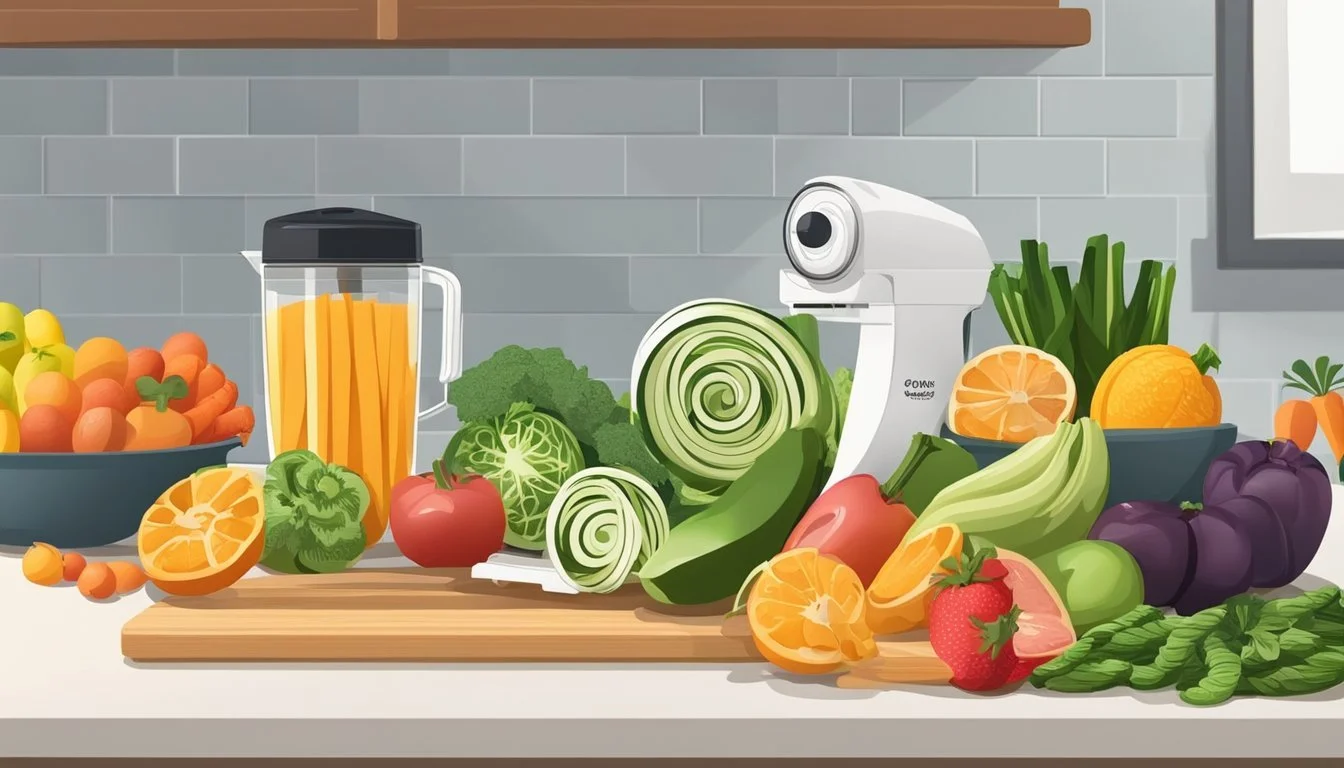
Mastering the art of meal prepping with a spiralizer can transform the daunting task of meal preparation into a streamlined, cost-effective, and creative kitchen endeavor. Utilizing advanced techniques and meal prep hacks not only makes healthy eating simpler but can inject variety into a weekly meal plan.
Using Technology to Improve Meal Prepping
The modern cook has access to a variety of technological tools that simplify meal prepping. A prominent gadget in this realm is the spiralizer, which turns vegetables into noodle-like strands, adding a nutritious twist to traditional pasta dishes and salads. Moreover, apps for meal planning can assist chefs in organizing their weekly meals efficiently, while recipe databases provide endless inspiration. Digital grocery lists synced across devices ensure that the right ingredients are always on hand.
Meal Planning Apps: Helps in scheduling and recipe management.
Digital Grocery Lists: Keeps track of pantry inventory and shopping needs.
Online Recipe Databases: Offers fresh ideas and instructions.
Many individuals also rely on a slow cooker for make-ahead meals. These devices can be programmed to cook food to perfection while one is away, resulting in tender, flavorful dishes that can easily convert into a week's worth of grab-and-go meals.
Meal Prep Innovations and Food Trends
In the world of meal prep, innovation comes in many forms, from the types of meals prepared to the methods used to store them. Budget-conscious individuals often favor make-ahead meals that can be cooked in bulk, such as stews, casseroles, and soups, all of which can be easily divided into portions.
Storage Techniques for Make-Ahead Meals:
Freezing: Applicable for soups and stews.
Vacuum Sealing: Extends the shelf life of ready-to-cook ingredients.
Current food trends also emphasize the importance of preparing balanced meals that are both appealing and nutritious. Ready-to-cook ingredients, pre-sliced and diced, cater to the demand for convenience without sacrificing health. The spiralizer itself follows this trend, enabling cooks to turn almost any vegetable into a visually pleasing and easy-to-cook component of a meal.
Trending Budget-Friendly Meals:
Zucchini Noodles (Zoodles): A low-carb, low-cost alternative to pasta.
Carrot Spirals: Add color and nutrition to salads and stir-fries.
By adopting these advanced techniques and meal prep hacks, cooks can ensure they have a repertoire of healthy, cost-effective meals at the ready, streamlining their cooking process and enriching their diet with minimal effort.
Health and Diet Considerations
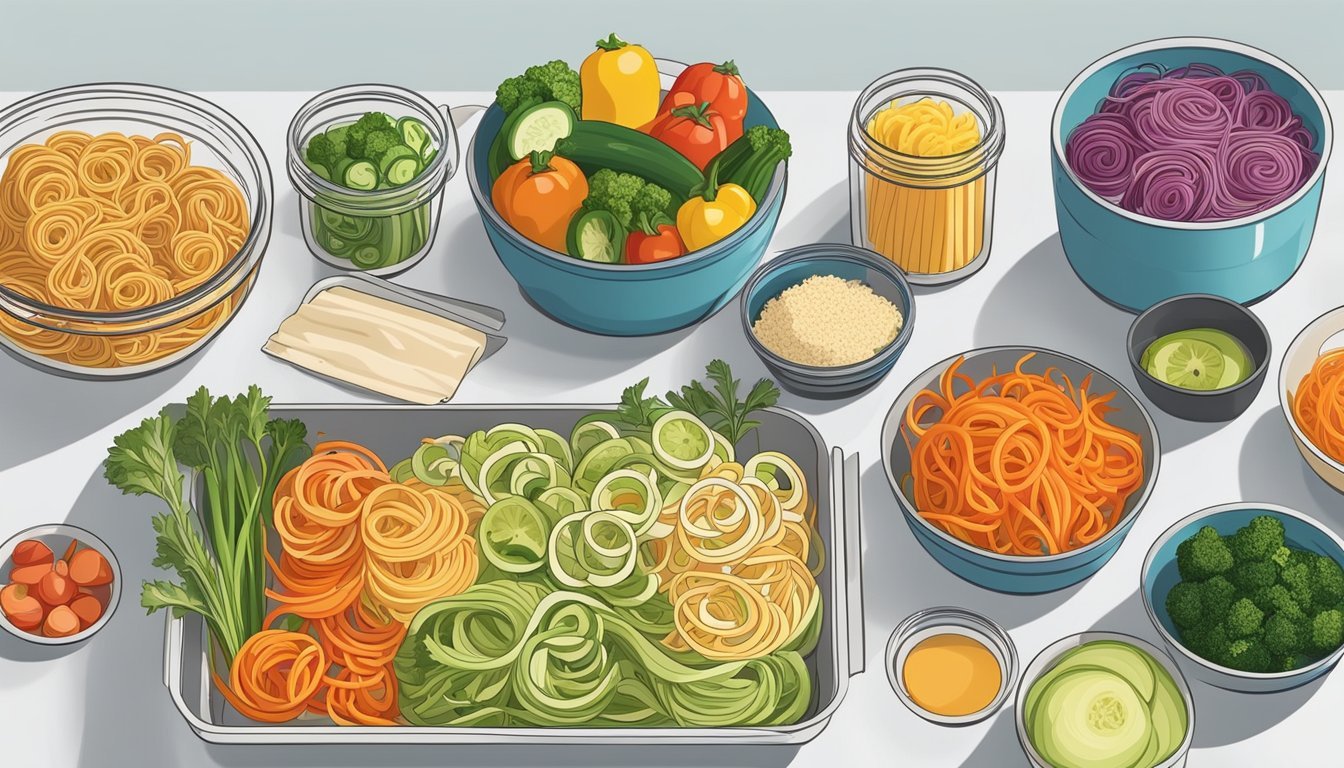
When meal prepping with a spiralizer, individuals should consider their unique health goals and dietary needs. The use of a spiralizer can contribute to a nutrient-rich diet and assist with specific health and dietary objectives.
Accommodating Dietary Restrictions
Individuals with dietary restrictions will find the spiralizer a valuable tool for creating diverse and satisfying meals. For those requiring a low-sodium diet, spiralized vegetables can replace processed foods that often contain high levels of salt. Innovative spice blends, without added salt, can enhance flavors while adhering to dietary constraints. Additionally, substitutes like Greek yogurt can be utilized in sauces and dressings for those avoiding lactose or seeking healthier fat alternatives.
Evaluating Caloric and Macronutrient Needs
A clear understanding of one's caloric and macronutrient requirements is crucial for crafting meal plans geared towards weight loss or other health goals. Foods prepared with a spiralizer typically result in lower-calorie meals due to an increased proportion of vegetables. For those looking to lose weight, replacing high-calorie carbohydrates with spiralized vegetables can contribute to a lower daily caloric intake while still providing satiety. Macronutrient targets can also be met by incorporating appropriate portions of proteins and fats to accompany the spiralized dishes.
Conclusion
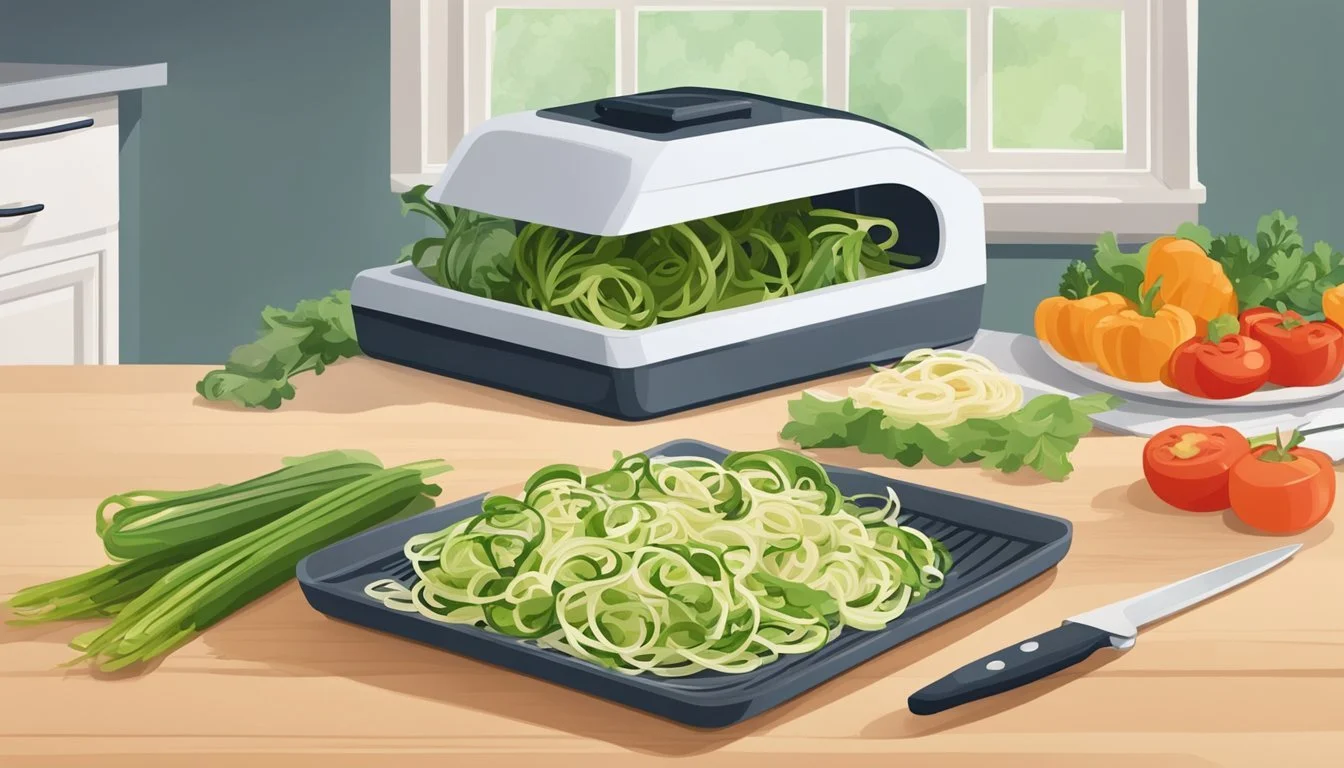
A structured approach to meal prepping with a spiralizer can mitigate decision fatigue and support healthy eating habits. The spiralizer lends itself to creating visually appealing and nutritious meals that can appeal to any food lover. By turning vegetables into noodles, one introduces variety and balance to their diet without compromising on flavor or satiety.
Meal prepping is grounded in the science of eating behavior, demonstrating that pre-made decisions about food can lead to healthier choices throughout the week. When one spiralizes vegetables in advance, they are more likely to utilize these healthy options in their meal plans.
For those with a passion for cooking, meal prepping with a spiralizer does not stifle creativity but rather, it sets the foundation for innovative dishes. One can spiralize a range of vegetables such as zucchinis, carrots, and sweet potatoes, ensuring dishes are not only nutritious but also varied.
Lastly, when one preps meals in advance, they ensure a balance between nutrient intake and personal tastes, aligning with a well-rounded lifestyle. The practicality of a spiralizer fits seamlessly into the fast-paced nature of modern life, making healthy eating accessible and uncomplicated.
A spiralizer is a powerful tool in the arsenal of an individual committed to a healthy and flavorful culinary experience. It is a straightforward, yet profound step towards a lifestyle change that embraces good food prepared thoughtfully.