
Gun Laws in Wyoming for Hunters
Essential Regulations and Compliance Tips

Wyoming offers a vast expanse of wilderness that beckons hunters each year, providing ample opportunities for pursuing a wide range of game. However, it is crucial for hunters to navigate the state’s specific regulations regarding firearms before setting out. The state's gun laws allow for easy purchase and ownership, reflecting a culture that respects the Second Amendment and the hunting heritage. But with this freedom comes the responsibility to understand and abide by the rules set forth for gun use in hunting.
When planning a hunting trip in Wyoming, individuals must account for the necessary licenses, permits, and stamps, which vary depending on factors such as residency and age. For instance, resident hunters between 18 and 65 years old can acquire an annual license for a nominal fee, while special considerations are made for younger enthusiasts. Ownership and usage of hunting equipment, including crossbows, longbows, and firearms, are guided by regulations designed to ensure both safety and ethical hunting practices. For example, specific minimum draw weights for bows and crossbows are mandated to promote humane harvesting of game.
Beyond the basic legal requirements for gun ownership and hunting weapon regulations, it is also important to understand the stipulations regarding where and how firearms can be carried. State law typically prohibits the carrying of concealed deadly weapons without proper authorization, such as a valid Wyoming permit. Hunters must also be cognizant of the most current regulations, which may change periodically, to ensure the legality of their hunting equipment and practices during their excursions in Wyoming's diverse terrain.
Overview of Wyoming Gun Laws
Wyoming respects Second Amendment rights and offers some of the most firearm-friendly environments in the United States. The state adheres to a "shall issue" policy for concealed carry permits, necessitating local sheriff's offices to grant permits unless an individual has a disqualifying condition, such as a violent felony conviction.
Concealed Carry Permits:
Eligibility: 21 years or older, with specific criteria
Requirement: Valid state-issued ID, firearms training
The legislation does not demand firearm registration, and private firearm sales do not require background checks. Use or possession of a firearm in certain situations may be deemed unlawful, such as in the commission of a crime or in restricted areas like schools or government buildings.
Restrictions:
Carrying firearms in designated areas without proper authorization is prohibited.
Possession by convicted felons, drug addicts, or the mentally ill is unlawful.
Hunting laws in Wyoming promote ethical practices, emphasizing wildlife conservation and public safety. Hunters are encouraged to familiarize themselves with state regulations before embarking on hunting expeditions.
Hunting Regulations:
Comply with seasons and bag limits
Secure necessary hunting licenses
Adhere to ethical hunting methods
In sum, Wyoming upholds a strong tradition of gun rights while imposing necessary restrictions to prevent misuse and support public safety. Those engaging with firearms in Wyoming should be well-informed of their rights and responsibilities under state law.
General Requirements for Hunters

When it comes to hunting in Wyoming, understanding the legal requirements is essential for a lawful and ethical hunting experience. Hunters must navigate through a series of regulations, including background checks, education, and knowing the specifics about legal firearms and ammunition.
Background Check and Licensing
In Wyoming, all hunters are required to obtain the appropriate licenses before engaging in hunting activities. Residents and visitors must undergo a background check as part of the licensing process. This check helps ensure that individuals have not violated hunting regulations or been involved in wildlife-related offenses. The Wyoming Game and Fish Department issues licenses and enforces hunting regulations.
Type of License Requirements Resident Proof of residency, successful background check Non-resident Proof of identity, successful background check Apprentice License Available for new hunters under supervision
Hunter Education and Safety
Hunter education is mandatory for those born on or after January 1, 1966. Wyoming offers hunter education courses that hunters must complete to obtain their licenses. The program teaches responsible hunting practices, ethical behavior such as the avoidance of hunter harassment, and safety guidelines.
Education Certificate: Proof of completion is required.
Hunter Safety: Knowledge of safe handling and use of hunting equipment is required.
Legal Firearms and Ammunition
The regulations surrounding legal firearms and ammunition for hunting are clear:
Handguns, rifles, and shotguns are the primary firearms used for hunting in Wyoming.
Open carry is generally allowed, whereas concealed carry requires a permit.
Use of firearm suppressors or silencers in hunting is subject to specific state regulations.
Legal Ammunition:
For big game, ammunition must meet caliber and weight regulations.
Expanding bullets are typically required to ensure a quick and ethical kill.
In all cases, hunters should consult with a law enforcement official or the Wyoming Game and Fish Department for the most current regulations before hunting.
Specific Regulations for Hunting Wildlife
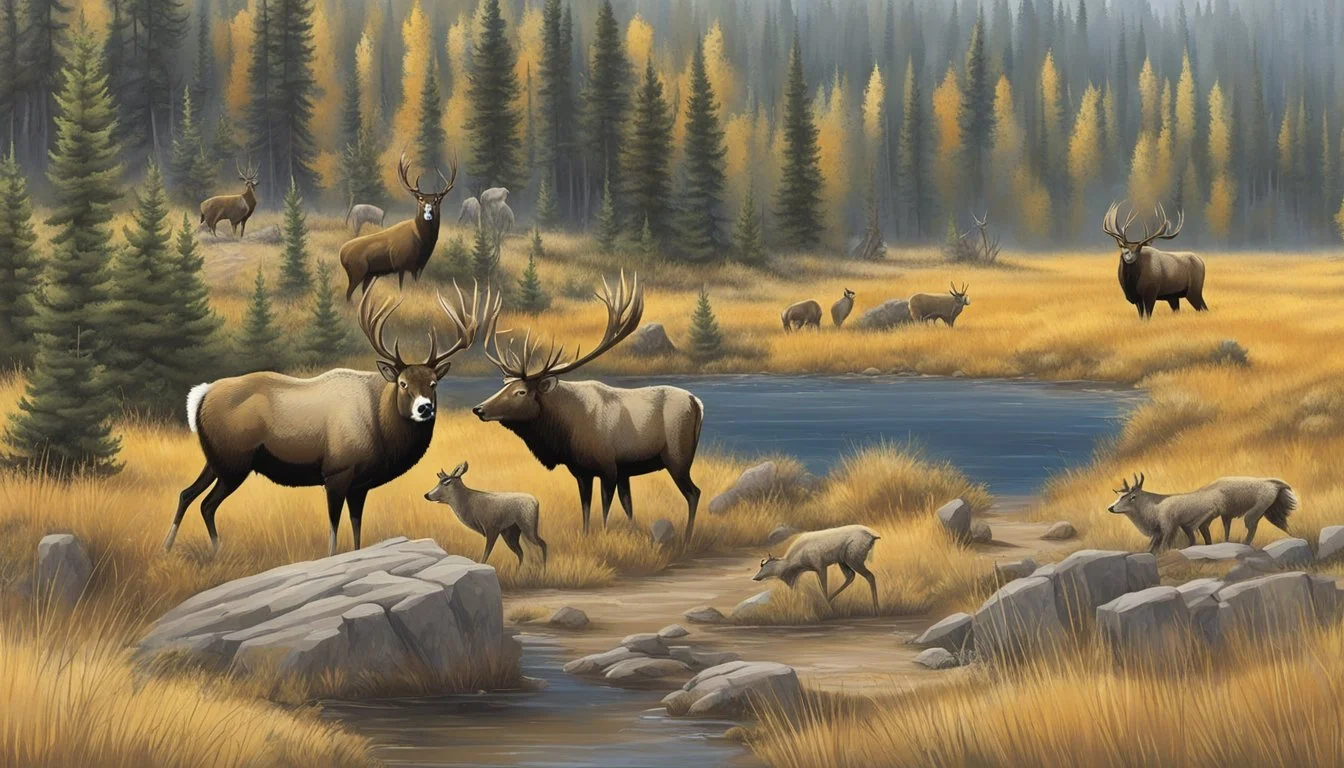
In Wyoming, hunters must adhere to specific regulations that govern the pursuit and harvest of wildlife. These regulations are established to ensure the sustainable management and conservation of game populations across the state.
Big Game and Trophy Hunting
Wyoming is known for its big game and trophy hunting opportunities. Regulations for game animals such as deer, elk, antelopes, and bison (What wine goes well with bison?) are strict and serve to maintain healthy animal populations. Hunters require the appropriate licenses and permits, which can be obtained based on residency and hunter education completion.
Elk, Deer, Antelope: Seasons and tags are determined annually. Hunters under the age of 18 may use the Youth Annual License.
Bison, Mountain Lions: Separate permits are required, often distributed through a lottery due to limited quotas.
Waterfowl and Migratory Bird Hunting
Migratory bird hunting is subject to both federal and state regulations. Hunters targeting migratory birds, such as ducks and crows, must possess a valid hunting license and a Federal Duck Stamp.
Duck Stamps: Available for purchase by hunters 16 years of age and older. Required for hunting waterfowl.
Seasons: Specific dates apply and vary annually.
Predator and Furbearer Hunting
Predator and furbearer hunting in Wyoming involves species like foxes and coyotes. Hunters can use electronic calls and must hold the respective licenses.
Predators: No license required for residents hunting coyotes. Non-residents require a predatory animal license.
Furbearers: A furbearer license is necessary, and trapping regulations apply to ensure humane and sustainable practices.
Carrying Firearms While Hunting
When hunting in Wyoming, sportsmen and sportswomen are permitted to openly carry firearms. It is widely acknowledged that the right to bear arms, protected under the Second Amendment, applies during hunting activities within the state. However, carrying a concealed firearm requires compliance with state laws; a valid Wyoming Concealed Firearm Permit (CFP) is necessary, or alternatively, a permit recognized by Wyoming from another state.
For non-residents interested in hunting in Wyoming, it is critical to understand that permits to carry concealed must be acquired in advance and should align with the requirements established by Wyoming law. Background checks form an integral part of the CFP application process, ensuring public safety remains paramount.
When on private property, hunters must have explicit permission from the landowner to carry firearms, regardless of whether they are carrying openly or concealed. This consensual understanding upholds respect for private ownership rights while also facilitating a safe hunting environment.
Firearm use for self-defense is permitted under Wyoming law, but under the auspice of hunting, the primary use of firearms should be aligned with ethical hunting practices and regulation compliance. Safe and responsible use is not just a legal mandate but also a community expectation to ensure the welfare of all involved.
Hunters are encouraged to familiarize themselves with these regulations to guarantee a hunting experience that respects personal rights, public safety, and the responsibility that comes with carrying a firearm.
Requirement Description Open Carry Allowed while hunting without a permit Concealed Carry Requires a valid CFP or recognized out-of-state permit Background Checks Necessary for obtaining a CFP Permission on Private Land Must be obtained for carrying firearms Firearm Use Primarily for hunting within legal and ethical guidelines Self-Defense Permissible within the bounds of the law
Hunting on Private and Public Lands
In Wyoming, distinct rules apply to hunting on private property and public lands, with emphasis on obtaining the correct permits and observing regulations ensuring public safety and conservation efforts.
Hunting on Private Property
Hunting on private land necessitates the hunter obtaining written permission from the landowner. This permission is required regardless of whether the land is posted or not. Hunters are advised to carry this documentation with them at all times to prevent any legal issues or conflicts with landowners. Respect for private property rights is paramount, and failure to obtain consent can result in trespassing charges.
It's also important for hunters to be aware that private landowners may put up signs that permit or restrict hunting. House Bill 147 seeks to address the issue of unauthorized signage by private landowners that might mislead hunters regarding access to adjacent or encompassing public lands.
Public Land Hunting and State Regulations
Public land in Wyoming offers a variety of hunting zones and opportunities, including access to public shooting ranges. When hunting on public lands, hunters must adhere to state-specific rules including not firing from, along, or across any public road or Wyoming highway to secure public safety.
The state recently proposed updates to its regulations, potentially permitting the use of thermal scopes on public lands for predator hunting. This, however, is still subject to legislative processes.
For those hunting on public lands, the appropriate permits and licenses are critical. Wyoming distinguishes between resident and non-resident licenses, with various associated costs. A resident may obtain an annual hunting license at a fee of $19, while youth under 17 can purchase an annual license for $10. Non-residents must obtain an additional conservation stamp for activities like shed hunting in designated public areas. These regulations are aimed at managing wildlife populations and fostering ethical hunting practices.
Prohibited Practices and Equipment
Wyoming enforces strict regulations on the equipment and methods used in hunting to ensure fair chase, wildlife conservation, and public safety. These rules are designed to maintain ethical hunting standards and protect natural resources.
Prohibited Equipment and Methods
Wyoming law strictly prohibits the use of certain equipment and methods in hunting to maintain fair sportsmanship and safety. These restrictions include but are not limited to:
Silencers: The use of silencers on firearms is unlawful, as they may give hunters an unfair advantage and raise concerns for public safety.
Artificial Light: Using vehicle headlights or any other visible light to spot or disorient game is prohibited.
Electronic Calls: Hunters cannot use electronic calls to lure game animals, as this may disrupt natural behaviors and give an unethical advantage.
Drones: Operating drones to scout, harass, or herd wildlife is illegal and seen as a threat to wildlife management and public safety.
Baiting: It is unlawful to hunt over baited areas, as this can lead to overharvesting and other ecological imbalances.
Game Violations and Penalties
Violating game laws in Wyoming is a serious offense and carries penalties, including fines, loss of hunting privileges, and imprisonment. Key points on violations and penalties are:
Unlawful Possession: Possession of game taken with prohibited equipment or by illegal methods can result in significant legal consequences.
Ammunition Restriction: Use of certain types of ammunition may be restricted to prevent undue suffering of animals and ensure humane hunting practices.
Licensed Dealers: Purchasing firearms from a licensed firearms dealer is essential, as it ensures that all regulations and background checks are adhered to.
Enforcement: Law enforcement officials have the authority to enforce hunting regulations and must be complied with during routine checks for compliance.
Adherence to these rules is mandatory for all hunters in Wyoming, with the aim of supporting ethical hunting traditions and preserving wildlife for future generations.
Hunter's Rights and Responsibilities
In Wyoming, hunters are granted certain rights under gun laws that intertwine with their responsibilities to ensure public safety and lawful conduct. This includes understanding the extent of self-defense laws such as the Castle Doctrine and recognizing where carrying firearms is restricted for the protection of all.
Castle Doctrine and Self-Defense
Wyoming acknowledges a hunter's right to self-defense through the Castle Doctrine, which allows an individual to use reasonable force, including deadly force, against an intruder in their home without a duty to retreat. This law extends to any property they legally possess. Stand-your-ground provisions further permit the use of force in self-defense in any place where a person has a legal right to be.
Second Amendment Rights: Honored but subject to self-defense parameters.
Reciprocity: Recognizes permits from certain other states.
Private Seller Regulations: No waiting period for firearm transfers.
Hunters must be aware that these self-defense laws do not give leeway for illegal use of firearms and are only relevant if they face an immediate and unavoidable threat.
Gun-Free Zones and Restrictions
Wyoming imposes limitations on where guns can be carried to promote public safety, even for hunters with valid permits. Gun-free zones typically include schools, governmental meetings, and certain establishments. Here, even the principle of reciprocity provides no exception.
Gun-Free Zones: Include but are not limited to schools, government meetings, and establishments where alcohol is served.
Public Safety Considerations: Hunters must respect these zones.
Compliance with these restrictions is crucial to uphold the balance between second amendment rights and community safety. Hunters are responsible for being informed about these zones to avoid violations.
By faithfully observing these laws, Wyoming hunters exercise their rights while maintaining the responsibilities entrusted to them as gun owners.
Legal Transactions and Ownership Transfer
When hunters in Wyoming decide to purchase or sell firearms, they must adhere to state laws governing legal transactions and the transfer of ownership. Regarding private sales, Wyoming does not mandate background checks for such transactions, allowing hunters to buy long guns and handguns from private sellers. However, private sellers must not sell to individuals they reasonably believe ineligible to possess firearms under state or federal law.
When involving a licensed firearms dealer, a mandatory background check process is in place to ensure compliance with all federal regulations. This includes checks through databases like the National Instant Criminal Background Check System (NICS).
Handgun transfers typically require more thorough scrutiny compared to long guns. Buyers who are not Wyoming residents must have the handgun transferred to a licensed dealer in their state of residence, following the regulations for interstate transfers of firearms.
In Wyoming, there isn't a requirement for firearm registration; thus, owners of long guns and handguns do not need to register their firearms with the state. The transfer process is relatively straightforward provided that the buyer is a resident of Wyoming and legally able to own a firearm.
Here is a summarized outline of the key points for hunters and others wishing to understand the legal framework for firearm transactions in Wyoming:
Private Firearm Sales:
No state-required background checks
It is illegal to sell to prohibited persons
Dealer-mediated Transfers:
Background checks are mandatory
Federally licensed dealers facilitate the process
Types of Firearms:
Handguns:
Require background checks regardless of the seller
Out-of-state buyers must go through a dealer in their home state
Long Guns:
Private sale background checks not required for Wyoming residents
Firearm Registration:
Registration of firearms is not a state requirement in Wyoming
Wildlife Conservation and Management
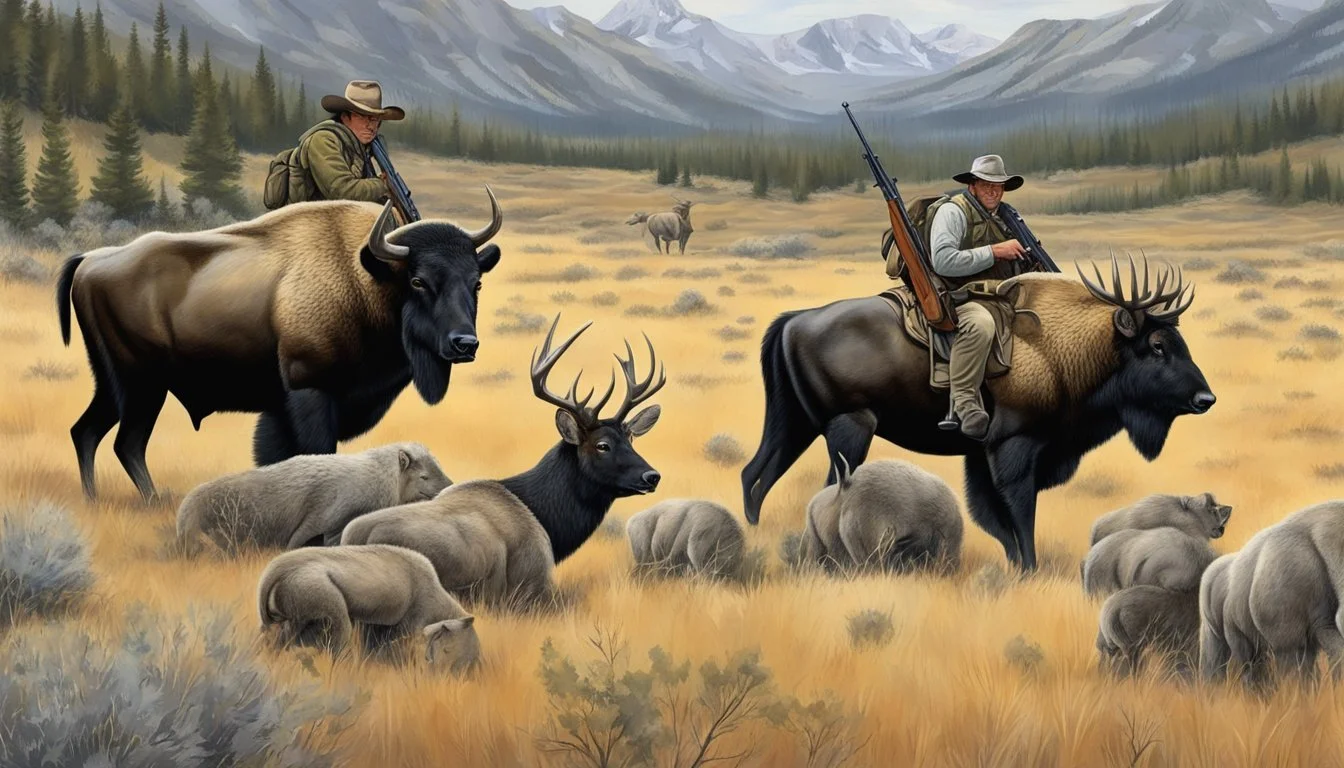
In Wyoming, the Wyoming Game and Fish Department is the chief organization overseeing wildlife conservation and management. Their mandate focuses on safeguarding the state's natural resources, ensuring a healthy balance between preserving wildlife and regulating hunting.
Conservation efforts involve meticulous regulation and the sale of stamps, which are mandatory for hunters. The revenue from these stamps is used to protect various species and their habitats. The Department's commitment to conservation is multifaceted, including initiatives for non-game birds, as well as reptile and amphibian populations.
Stamps and permits serve dual roles: they permit hunters to engage in the sport while also directly contributing to the conservation efforts. For instance:
Habitat Stamp: Required for anyone purchasing a hunting or fishing license, with funds specifically allocated for habitat development.
Conservation Stamp: Mandatory for all licensed hunters, with the proceeds going towards non-game species management.
The Wyoming Game and Fish Department designs regulations to balance game animal populations with their environments. Regulations change annually, ensuring adaptive management responsive to ecological assessments. This approach extends to the protection of non-game species, emphasizing the importance of biodiversity.
To support the management of natural resources, the Department conducts research on birds, reptiles, and amphibians. These studies help inform decisions on habitat conservation measures, restoration projects, and sustainable hunting practices.
In summary, through the careful issuance of hunting seasons, regulations, and mandatory conservation stamps, Wyoming actively manages its wildlife populations. This ensures that both game and non-game species thrive for future generations.
Educational Resources and Hunter Support
Wyoming provides robust educational support for hunters to ensure they are knowledgeable about gun laws, conservation, and safety. Hunter education is mandatory for individuals born on or after January 1, 1966. They must carry proof of this education or be accompanied by a mentor. Recognizing the varying needs of learners, Wyoming facilitates both online and in-person hunter education courses.
Key Resources:
Wyoming Game and Fish Department: Primary source for information on hunting regulations, courses, and licenses.
Official Online Hunter Education: Offers the convenience of completing courses digitally, with customer service support including telephone, email, and chat.
NRA: Provides additional educational resources and advocates for hunter rights, with emphasis on safety and ethical hunting practices.
Wyoming law maintains a strong stance against hunter harassment, ensuring that hunters can legally pursue their sport without undue interference. Additionally, the state promotes conservation through education, encouraging responsible hunting to support wildlife management.
Support Channels:
Telephone: Available for inquiries, often ranging from course details to license regulations.
Email/Chat: For immediate assistance during specific hours, ensuring hunters have access to information as needed.
For hunting violations or legal concerns, specialized lawyers are available, offering dedicated support to address any legalities in the hunting sphere. Wyoming's hunter support system strives to provide a comprehensive and clear resource base for all individuals partaking in the hunting tradition.
Licenses and Permits for Different Hunting Activities

In Wyoming, hunters must obtain specific licenses and permits for various game, conforming to the state’s regulations that manage wildlife conservation and ensure sustainable hunting practices.
Big Game Licenses
Big game hunting in Wyoming requires distinct licenses for deer, elk, and antelope. Residents aged 18 to 65 can purchase an Annual License at $19, while non-residents are required to attain an Annual License for $125. There are special provisions for youth and senior hunters, offering reduced or free licensing options. Hunters using crossbows, longbows, or air guns must ensure their equipment complies with state regulations tied to the specific big game licenses.
Bird Game Permits
Wyoming offers Bird Game Permits for hunting species such as turkeys and migratory birds. These permits are essential for conservation efforts and monitoring the population of game birds. Hunters are responsible for familiarizing themselves with the season-specific regulations and bird limits. Migratory bird hunting mandates adherence to both state and federal guidelines to protect these species during critical periods of their life cycles.
Special Hunting Permissions
Certain areas in Wyoming may require Special Hunting Permissions or tags, which control the hunting pressure on sensitive wildlife populations or for particular hunting experiences. Detailed knowledge of the zone-specific permissions can be the difference between a lawful hunt and potential penalties. Hunters should regularly consult the Wyoming Game and Fish Department for any updates on special permissions or changes in hunting regulations.
Hunter Gatherings and Event Planning
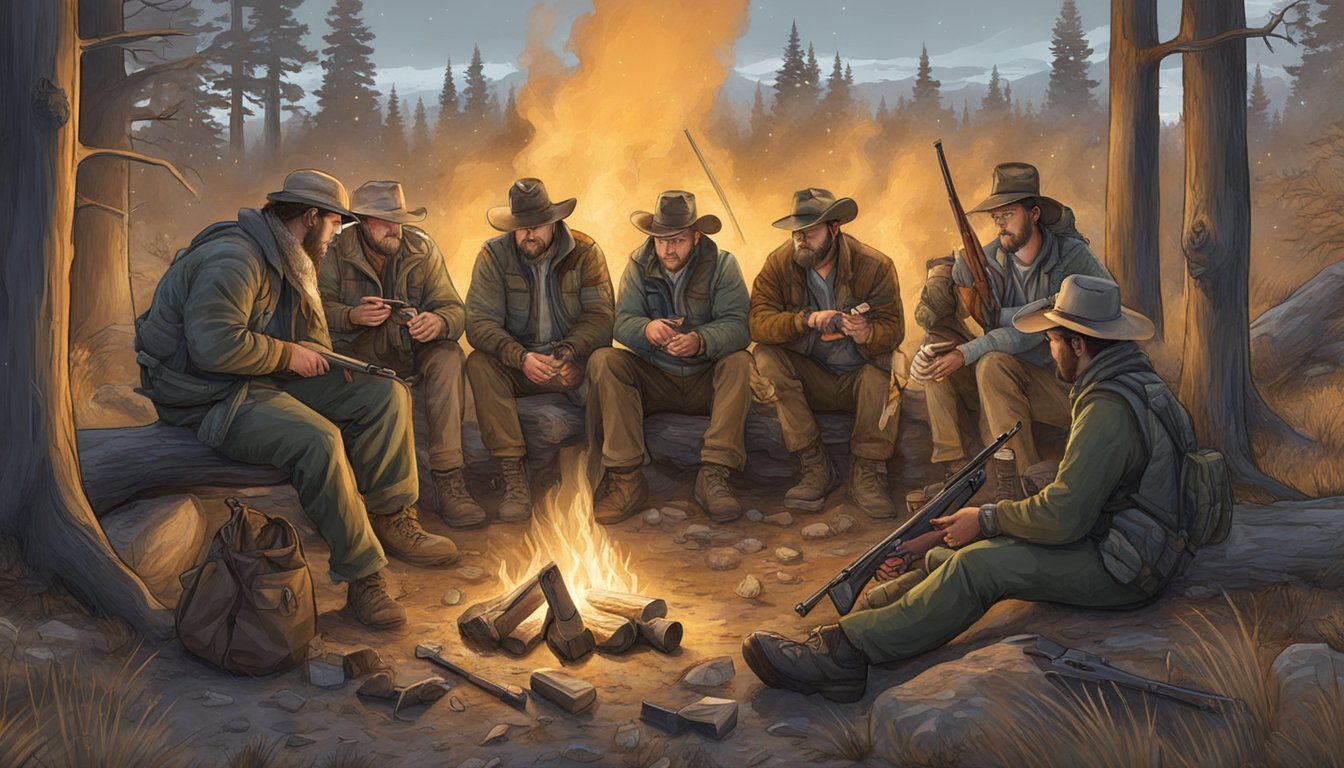
When planning hunting-related events in Wyoming, organizers must consider legal requirements and opportunities for education and conservation. It's imperative to communicate accurate information to ensure that all participants understand and adhere to Wyoming's gun laws.
Firstly, event planners should verify that any games or competitions comply with state regulations regarding firearms. The Wyoming Game and Fish Department may be a valuable resource for any necessary permissions and guidelines for events involving hunting activities.
Table 1: Key Considerations for Hunting Event Planning
Aspect Description Legal Compliance Ensure games are in line with Wyoming's hunting laws and that participants possess valid hunting licenses. Education Incorporate hunter education programs approved by the Wyoming Game and Fish Department to promote safe and responsible hunting. Conservation Inform attendees about the importance of wildlife conservation and sustainable hunting practices. Information Provide up-to-date information on gun laws and hunter responsibilities, potentially inviting NRA representatives for expert insights.
For educational aspects of an event, planners can integrate hunter education sessions or workshops. These can be tailored to both novices and experienced hunters, focusing on safety, skill development, and legal compliance.
Conservation should be a cornerstone of any hunting event. Demonstrate the impact of hunting on the local ecosystem and encourage ethical practices that support wildlife population management.
Lastly, it's beneficial to create informative materials or bulletins that distill complex gun laws into digestible advice. Organizers may consider reaching out to the NRA for resources and expertise in advocating for responsible gun ownership amongst hunters.
By focusing on these aspects, Wyoming hunter gatherings can promote a culture of safety, respect for the law, and a commitment to conservation.
Interstate Hunting Laws and Reciprocity

When hunters cross state lines to enjoy Wyoming's game, they must be aware of interstate hunting regulations and how Wyoming's laws reciprocate with those of other states. The ability to hunt in Wyoming using a permit issued by another state is not recognized; hunters must obtain the appropriate Wyoming hunting license.
Federal laws apply when transporting firearms across state boundaries. Hunters should ensure they comply with the background checks required when purchasing their weapons and must adhere to the Federal Gun Control Act of 1968 and the Firearm Owners Protection Act regarding the transport of firearms.
Wyoming's concealed handgun license is recognized in several states due to reciprocity agreements. While Wyoming permits the carry of firearms for hunting with a valid permit, hunters should verify if their Wyoming permit is honored in the state they come from or travel through.
The table below outlines key points regarding the interstate transport of firearms for hunting in Wyoming:
Requirement Detail Background Checks Mandatory for all firearm purchases Concealed Handgun License Reciprocity Recognized in various states; check local laws Transport of Firearms Must adhere to federal regulations
For a valid Wyoming license, non-residents must apply for and procure the appropriate licenses, permits, and stamps as dictated by the Wyoming Game and Fish Department. These regulations ensure the safety and legal compliance of hunters visiting from other states.
Emerging Issues in Hunting and Firearm Regulation

Recent legislative changes in Wyoming have impacted how hunting and firearm regulations are approached. In particular, the ability for non-violent felons to regain gun rights under Senate File 120 represents a significant shift. Five years post-sentence, these individuals can now have their firearm rights restored, alongside their voting rights. This change echoes a broader conversation on civil liberties and responsible gun ownership.
Technological advances also prompt regulatory updates. As hunting equipment evolves, incorporating advanced parts and accessories, regulations must adapt to ensure safety and ethical hunting practices. For example, new firearm calibers and ammunition have been legalized for hunting big game in Wyoming, affecting how hunters equip themselves for the pursuit of moose, bighorn sheep, elk, mountain goat, and black bear.
Notably, it is essential to recognize the current laws that underscore the use of firearms in hunting:
Legal Calibers and Equipment:
Moose, Bighorn Sheep, Elk, Mountain Goat, Black Bear: Use any centerfire firearm.
New amendments add previously non-legal calibers.
Regulation Simplification:
Language in existing regulations has been clarified to avoid confusion, enhancing comprehension and compliance among hunters.
These highlights signify the shifting landscape of hunting and firearm use in Wyoming. As regulations evolve—balancing the transformation in hunting technologies with the rights of individuals—hunters must stay informed to remain compliant while ensuring safe and sustainable practices.
Resources for Further Information

For updated information on gun laws and regulations in Wyoming, hunters can consult a variety of reputable sources. The Wyoming Game and Fish Department is the primary agency responsible for wildlife management and is a reliable resource for hunters seeking information about licensing and detailed regulations related to hunting.
Wyoming Game and Fish Department: They offer comprehensive guides and regulatory updates essential for both resident and non-resident hunters.
Website: wgfd.wyo.gov
Contact: (307) 777-4600
For advocacy and legal interpretations of gun laws, the National Rifle Association's Institute for Legislative Action (NRA-ILA) provides insights into state-specific firearms laws.
NRA-ILA: They focus on legal aspects of firearm ownership, including concealed carry regulations.
Website: nra-ila.org
Additionally, online platforms like TheGunZone and Giffords can serve as supplemental resources for understanding the nuances of state gun policies.
TheGunZone: Offers explanations of the legal framework surrounding Wyoming gun laws.
Website: thegunzone.com
Giffords: Provides analysis and context for state gun laws across the country, including Wyoming.
Website: giffords.org
When researching, hunters must ensure they are reviewing the most current information as laws and regulations can change. It is advisable to cross-reference information across multiple sources and, if in doubt, contact the Wyoming Game and Fish Department for official guidance.

