
The Role of Aroma in Perceived Ingredient Accuracy
Enhancing Food Identification and Authenticity

Aroma is a key factor in how people judge whether the ingredients in a food or beverage are accurately represented. The volatile compounds released by different ingredients influence taste perception, trigger specific expectations, and help people identify flavors with precision. When the aroma matches what is expected from the ingredients, people are more likely to trust the authenticity of the product.
The role of aroma goes beyond just adding pleasant smells. It works together with taste and texture to create an overall impression of quality and authenticity. When the aroma feels off or does not align with the listed ingredients, the perceived accuracy of those ingredients decreases, which can impact satisfaction and trust in the product.
Sensory analysis, which includes aroma, has become a vital tool for food producers and researchers to fine-tune recipes and ensure consumers experience flavors as intended. Accurate aroma perception supports both the enjoyment and credibility of food, shaping how products are received in the marketplace.
Understanding Aroma and Ingredient Perception

Aroma is a key driver in how accurately people identify ingredients in food products. The interaction between aroma, taste, and other sensory cues influences both sensory evaluation and consumer perception.
Defining Aroma and Its Importance
Aroma refers to the volatile compounds released from food that are detected by the olfactory system, primarily through the nose. These compounds can be aldehydes, esters, alcohols, ketones, or other molecules, each contributing specific sensory impressions.
Aroma’s role in food is critical, as it shapes first impressions and sets expectations before tasting occurs. Sensory evaluation studies have shown that aroma accounts for a significant portion of flavor perception, often surpassing taste in its impact.
The food matrix—the combination of ingredients and their structure—can affect how aroma compounds interact and release during eating. This means the same ingredient can smell differently depending on the surrounding ingredients or preparation method.
How Aroma Influences Perceived Ingredient Accuracy
Perceived ingredient accuracy depends on the alignment between experienced aroma and the actual components of a food product. When typical volatile compounds associated with an ingredient are present, individuals are more likely to recognize that ingredient correctly.
Complex dishes may contain overlapping aromas from several ingredients, making sensory evaluation challenging. The presence of key aroma markers, such as characteristic aldehydes in oil or ketones in dairy, is often used as an indicator for ingredient identification and quality control.
Key Points:
The food matrix can obscure or amplify specific aromas
Ingredient recognition improves with the presence of potent, unique aroma compounds
Inaccurate aroma signals may cause misidentification of ingredients
Aroma vs. Taste and Other Sensory Modalities
While taste detects sweet, sour, salty, bitter, and umami, aroma allows for much greater detail, supporting fine ingredient discrimination. Most of what is perceived as flavor comes from retronasal olfactory perception, which occurs when aroma compounds travel from the mouth to the nasal cavity during eating.
Other sensory modalities—such as texture and visual appearance—also contribute to overall perception, but aroma carries unique chemical and qualitative signals. Table: Contribution to Flavor Perception
Modality Function Importance for Ingredient Accuracy Aroma Identifies volatile compounds High Taste Detects basic tastes Moderate Texture Assesses mouthfeel Low Sight Visual cue for ingredients Variable
Sensory evaluation relies on aroma as a primary cue, especially when distinguishing between similar-tasting ingredients or variants. This makes aroma central to ingredient accuracy in both product development and quality control.
Chemical Foundations of Aroma

Aroma is a sensory quality determined by specific chemical compounds and their interactions with receptors in the nose. The chemical makeup of food, environmental changes, and processing methods influence which VOCs reach the nose and how they are perceived.
Aroma Compounds and Volatile Organic Compounds
Aroma compounds, also known as aroma-active compounds, are typically small, volatile organic compounds (VOCs) with high vapor pressure that enables them to evaporate easily and reach the olfactory system. These molecules include classes such as terpenes, esters, aldehydes, ketones, and sulfur-containing compounds.
Different foods have signature blends of VOCs—including esters in fruits, terpenes in herbs, and aldehydes in baked goods. The concentration, volatility, and threshold of detection for each compound affect whether it will be perceived and how strongly it contributes to an overall aroma.
Role of Chemical Composition in Aroma
The unique chemical composition of ingredients determines the profile of aroma compounds released. Even minor changes in molecular structure—such as the position of a functional group—can alter the perceived aroma. For instance, isomerization may turn a pleasant-smelling compound into one with an undesirable odor.
Foods contain complex mixtures of VOCs, which interact with each other. These interactions can suppress, amplify, or mask particular aroma notes. The matrix of the food (e.g., fat or water content) also affects how molecules are released and perceived by the nose.
Impact of Food Processing on Aroma Formation
Food processing methods, such as heating, fermentation, and enzymatic reactions, produce changes in the aroma profile. Thermal processes, particularly the Maillard reaction, generate new volatile compounds and give roasted, baked, and fried foods their characteristic notes.
Fermentation introduces additional aromas due to microbial activity, often forming alcohols, esters, and acids. The processing stage can alter existing compounds, destroy certain VOCs, and create new aroma-active molecules. Processing conditions, such as temperature and duration, must be carefully managed to ensure the desired aroma qualities are achieved.
Olfactory Receptors and Aroma Detection
The perception of aroma starts when VOCs bind to specific olfactory receptors located in the nasal cavity. Each receptor type responds to particular molecular features, allowing humans to detect a wide variety of aroma compounds with high sensitivity.
The binding stimulates nerve impulses, which the brain processes to identify and differentiate ingredients. Individual differences in receptor genetics can lead to variability in aroma perception among people. The combined signals from multiple receptors create the complex sensory properties associated with food aromas.
Analytical Techniques in Aroma and Ingredient Assessment

Modern analysis of aroma compounds uses several advanced methods to link chemical profiles with perceived ingredient accuracy. Instrument-based and sensory-driven techniques enable detailed mapping of aroma composition and a better understanding of their contribution to food flavor and authenticity.
Gas Chromatography and Mass Spectrometry
Gas chromatography (GC) separates volatile aroma compounds from a complex food matrix. This method provides high resolution, allowing for the identification of individual substances present in trace amounts.
Coupling gas chromatography with mass spectrometry (GC-MS) enables both separation and identification. MS detects the unique mass spectra of each compound, confirming its chemical identity. By using various extraction methods such as solid-phase microextraction (SPME) or solvent extraction before GC-MS, analysts can isolate diverse volatile profiles.
GC-MS is considered a standard for quantifying and profiling aroma compositions in foods. Analytical results support ingredient authentication by matching detected profiles with known standards, reducing the risk of ingredient mislabeling.
Gas Chromatography-Olfactometry and Aroma Analysis
Gas chromatography-olfactometry (GC-O) combines traditional GC separation with direct human sensory analysis. As the separated aroma compounds exit the chromatography column, trained panelists sniff the effluent and describe the perceived odors in real time.
This technique bridges chemical detection with actual aroma perception. GC-O helps identify odor-active compounds that significantly contribute to the perceived flavor, even if present at low concentrations. Evaluators rate the intensity, character, and threshold of various odors, providing data often missed by instrumental analysis alone.
GC-O is particularly valuable for foods with complex aromas where multiple compounds influence perceived ingredient accuracy. Its application improves sensory analysis by linking measurable chemistry to real-world sensory impact.
Advancements in Molecular Sensory Science
The emergence of molecular sensory science, often called "sensomics," integrates chemical analysis with sensory data to determine the true impact of aroma compounds on food flavor. This interdisciplinary approach deciphers how individual molecules or combinations contribute to overall aroma and ingredient authenticity.
Researchers use targeted techniques to isolate and reconstruct key aroma compounds. Component recombination and omission experiments are performed to see how changes in aroma composition affect perceived ingredient accuracy.
Advancements in sensomics, including high-resolution GC and improved sensory methods, have led to better insights into aroma release, perception, and temporal changes during consumption. Molecular sensory science advances both food quality assessment and authenticity control by linking analytical and perceptual data.
Sensory Evaluation and Descriptive Analysis
Sensory evaluation is essential for measuring how aroma impacts perceptions of ingredient accuracy. By analyzing sensory attributes using structured techniques, food developers can identify the relationships between aroma compounds and perceived sensory quality.
Descriptive Sensory Analysis Methods
Descriptive sensory analysis involves using trained assessors to quantify specific sensory attributes such as aroma, taste, and texture. The most widely adopted method is Quantitative Descriptive Analysis (QDA), which applies a set scale to each sensory attribute. Trained panels generate profiles that highlight the intensity and nature of different aromas in foods.
Other common approaches include Flavor Profile Analysis and Spectrum™ methods. These techniques rely on consensus or anchored scaling to achieve consistent, repeatable results. Methods are chosen based on product complexity, the type of ingredient tested, and the required level of detail.
Clear definitions and lexicons are crucial to ensure that panelists understand and rate aroma characteristics accurately. Panelists participate in calibration sessions to align their perceptions and scoring, which minimizes variability in results.
Role of Sensory Panels in Ingredient Accuracy
Sensory panels play a critical role in assessing ingredient accuracy by detecting subtle differences in aroma profiles. These panels can distinguish between authentic, artificial, or degraded ingredients based on their sensory experiences and training.
Panelists are usually selected and trained to identify key sensory attributes relevant to the product being tested. This allows them to evaluate whether the perceived aroma matches expected ingredient qualities. Their feedback helps product developers adjust formulations or processing techniques to maintain sensory quality.
Panel-based evaluations are often complemented by instrumental aroma analyses, like gas chromatography-olfactometry, to link chemical data with human perception. Combining both sensory and instrumental approaches gives a more complete understanding of ingredient accuracy.
Statistical Approaches in Sensory Analysis
Statistical analysis is fundamental to interpreting sensory data. Techniques such as Analysis of Variance (ANOVA) help determine if differences in aroma perception are significant across samples. Multivariate methods like Principal Component Analysis (PCA) visualize how samples vary by aroma attributes.
Panel performance is also monitored statistically to identify inconsistent scoring patterns and ensure data reliability. Statistical models can link sensory profiles to consumer liking or ingredient authenticity, supporting data-driven product decisions.
Tabular summaries and graphical outputs are commonly used to make complex sensory and aroma data easy to interpret. This supports effective communication and decision-making within sensory evaluation teams.
Dynamics of Aroma Perception During Consumption
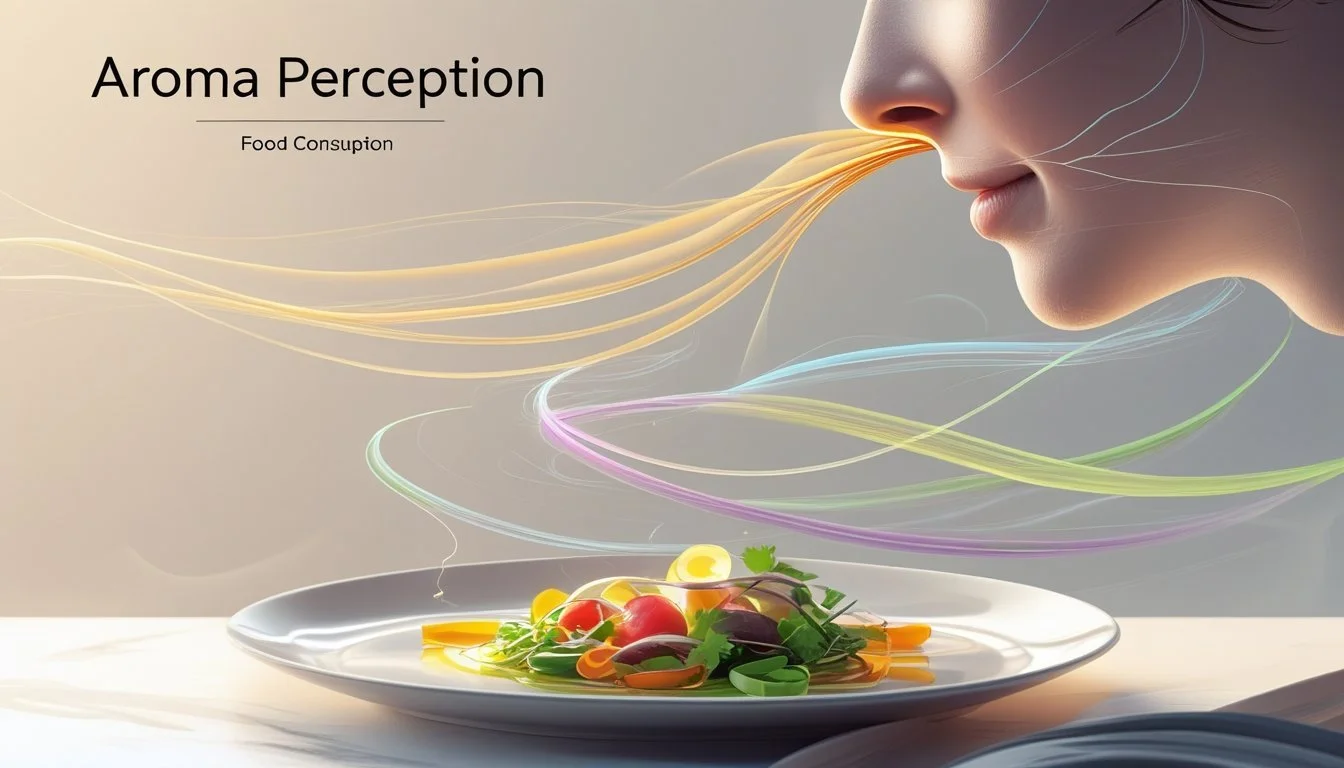
Aroma plays a critical role in how accurately people identify food ingredients. Its perception is dynamic and shaped by both how the aroma is released from food and how it interacts with sensory pathways inside the mouth and nose.
Retronasal Route and Aroma Release
Aroma release occurs as food is chewed and mixed with saliva, allowing volatile compounds to travel from the mouth to the olfactory receptors via the retronasal route. This retronasal pathway is essential for distinguishing complex ingredient profiles during eating.
Different food textures and oral processing behaviors, such as mastication efficiency, impact how quickly and intensely aromas are released. For example, individuals with higher chewing efficiency typically perceive aroma compounds more rapidly and at a higher intensity. This variability influences ingredient recognition since the timing and concentration of aroma compounds can alter the perceived accuracy of an ingredient’s identity.
Breath-by-breath analyses and nosespace techniques can track aroma transfer in real time, revealing how the flavors evolve with each bite. This continuous release shapes the immediate experience of food.
Temporal Sensory Methods
Temporal sensory methods provide detailed insights into how aroma perception changes over the course of consumption. Techniques such as time intensity (TI), temporal dominance of sensations (TDS), and temporal check-all-that-apply (TCATA) allow researchers to evaluate the dynamic progression of aromas.
For example, TI tracks how the strength of an aroma rises and falls during eating. TDS evaluates which aroma or flavor is most dominant at any given moment. TCATA involves subjects checking descriptors as aromas change, producing a detailed timeline.
These dynamic methods demonstrate that aroma perception is not static. Instead, certain notes become more pronounced or fade as the food is processed in the mouth, affecting which ingredients seem most prominent at different times.
Persistence and After-Smell
Persistence refers to how long an aroma lingers after swallowing, a quality often called "after-smell." Some aroma compounds remain in the nosespace after ingestion, creating lasting sensory traces that can reinforce or alter perceived ingredient accuracy.
Short-lived aromas may lead to underestimation of certain ingredients, while persistent compounds can leave a stronger, sometimes misleading, impression. Persistence is influenced by both food matrix properties and individual oral processing.
Understanding which aromas persist and how after-smell influences memory of taste is crucial. It explains why some foods seem to have lasting flavors that may skew judgments of ingredient authenticity.
Food Matrix and Aroma Interactions
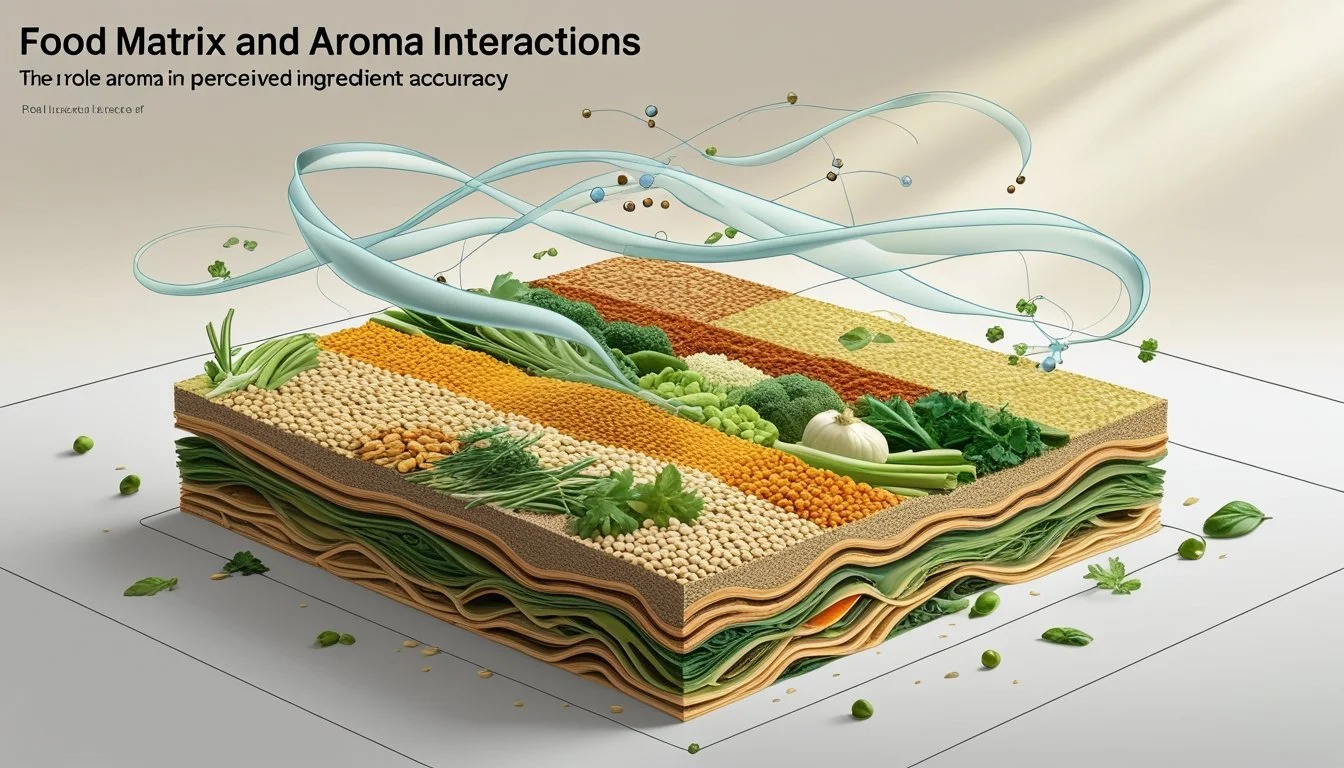
Aroma perception is closely tied to the physical and chemical environment of the food. The way aroma compounds interact with the food matrix, how food breaks down during eating, and signals from texture all affect how accurately specific ingredients are sensed.
Influence of Food Structure on Aroma Perception
The composition and structure of the food matrix significantly affect aroma release. Lipids can trap some volatile aroma compounds, limiting their presence in the headspace and reducing perceived intensity. Proteins may bind or interact with aroma molecules, while carbohydrates can slow their diffusion.
Solid fats, as found in emulsified foods, can significantly delay aroma release until they melt. The distribution of water, fat, and air within the matrix creates barriers or conduits for aroma movement. Food structure determines how quickly the consumer perceives characteristic ingredient notes, directly impacting ingredient recognition.
Oral Processing and Bolus Formation
During oral processing, foods are broken down by mastication and mixed with saliva. This mechanical and enzymatic breakdown transforms the original food matrix into a hydrated, cohesive bolus. Salivation and mastication both accelerate the release of volatile compounds trapped within the matrix.
As the bolus forms, surface area increases and temperature rises slightly. These changes allow more aroma molecules to escape into the headspace and reach olfactory receptors via retronasal airflow. The rate and completeness of bolus formation vary with food type and texture, influencing how readily certain ingredient aromas can be detected and identified.
Texture-Aroma Interactions
Texture characteristics such as hardness, smoothness, and viscosity impact not only mouthfeel, but also aroma release and perception. Creamy and high-fat foods often delay aroma liberation due to slower melting and breakdown. In contrast, brittle or highly aerated foods break apart quickly, speeding up aroma access.
Changes in texture can sometimes mask or alter the apparent intensity of key aroma notes. For example, a thick, starchy matrix may mute sharp or floral aromas, making ingredient identification harder. Texture-related mouth movements, such as chewing versus sipping, also affect how aromas are expelled and perceived by the consumer.
Psychological and Biological Factors Influencing Aroma Perceived Ingredient Accuracy

Both the mind and body shape how people recognize ingredients through aromas. Cognitive processes, sensory receptors, and personal biological differences interact to influence perception accuracy and the sensations experienced.
Cognitive Interactions and Expectation
Expectation and prior experience play a crucial role in aroma perception. When individuals anticipate a specific ingredient, the brain may bias the interpretation of ambiguous aromas toward that expectation. This cognitive effect can lead to both correct identifications and misattributions in complex foods.
Familiarity with certain aromas enhances ingredient recognition, while unfamiliar scent profiles can cause uncertainty. Cognitive priming, such as exposure to ingredient labels or images, further sharpens or distorts perceived accuracy. Memory and attention also affect how well subtle ingredient notes are detected amidst dominant aromas.
Trigeminal Sensations and Chemesthesis
Aroma perception is not limited to the olfactory system. The trigeminal nerve responds to chemical stimuli, a phenomenon known as chemesthesis. These sensations include tingling, cooling, burning, or numbing, and often accompany certain aroma compounds, such as menthol, capsaicin, or mustard oil.
Trigeminal sensitivity differs from pure olfactory detection. It can either enhance or mask perceived aroma, altering ingredient recognition. For example, the burning sensation of chili may override more delicate spice notes, reducing ingredient accuracy. Some aromas consistently engage trigeminal pathways, making their identification more reliable when paired with these physical sensations.
Inter-Individual Variations in Aroma Perception
Perceived ingredient accuracy through aroma varies widely between individuals. Factors such as genetic differences in olfactory receptors, age, health, and prior exposure affect sensitivity and discrimination ability. Some people are anosmic to specific compounds, rendering them unable to detect certain ingredients, while others display heightened sensitivity.
Personal thresholds for aroma detection and the impact of food matrix interactions further contribute to these differences. Gender, cultural background, and dietary habits can also influence how readily a person identifies ingredients based solely on aroma. In group panels, variability must be accounted for to obtain representative data on ingredient accuracy.
Notable Aroma Compounds and Their Impacts
Certain aroma compounds play a direct role in influencing how accurately ingredients are identified in foods and beverages. These compounds can either reinforce or alter the perception of ingredient authenticity by their specific sensory contributions.
The Significance of Vanillin, Sucrose, and Esters
Vanillin gives foods a distinct sweet, creamy vanilla aroma, commonly associated with authentic vanilla flavor. Its presence can make vanilla-containing products more recognizable and appealing due to its familiar scent profile. Synthetic or natural sources both yield similar aromatic impacts, allowing vanillin to serve as a marker for genuine vanilla ingredients.
Sucrose is not an aroma compound itself, but it can influence the release or perception of certain aromas, enhancing sweetness and perceived quality. When combined with aromatic compounds, sucrose can amplify desirable notes and mask less pleasant ones.
Esters are known for their fruity and floral fragrances. They are essential in shaping the perceived authenticity of ingredients in products like fruit-flavored yogurts or beverages. Esters such as ethyl acetate or isoamyl acetate provide signature notes found in bananas, apples, and other fruits.
Key Effects Table
Compound Typical Aroma Effect on Perception Vanillin Sweet, creamy, vanilla Authenticates vanilla presence Sucrose Sweet (not aromatic) Enhances overall aroma impact Esters Fruity, floral Identifies fruit components
Terpenes and Fatty Acids in Ingredient Perception
Terpenes contribute herbal, citrus, or woody notes to foods and beverages. Examples include limonene (citrus) and linalool (floral), both critical for differentiating real citrus or floral ingredients from artificial alternatives. Their unique aromatic signatures help consumers recognize and trust certain flavors.
Fatty acids, particularly volatile short-chain types, produce distinct aromas ranging from buttery and cheesy to grassy or nutty. For example, butyric acid gives a characteristic note to butter and cheese. These compounds reinforce ingredient accuracy by signaling authentic dairy or nut sources.
The balance of terpenes and fatty acids can either enhance or distort perceived authenticity depending on their concentration and interaction with other aroma components.
Role of Antioxidant Activity
Antioxidant activity can affect aroma stability, helping to preserve essential volatile compounds such as esters, terpenes, and vanillin. By slowing degradation and oxidation, antioxidants maintain the integrity of aromas over time.
For example, tea and certain herbs have high antioxidant levels, helping retain signature scents that identify their botanical origins. Without sufficient antioxidant activity, volatile aroma compounds may deteriorate, leading to stale or less authentic ingredient profiles.
Understanding how antioxidant properties preserve or modify aroma is essential for achieving consistent ingredient identification and consumer acceptance.
Consumer Experience and Preference
Aroma plays a central role in how individuals assess food products, influencing judgments on ingredient authenticity and overall satisfaction. The interaction of sensory cues, especially aroma, with expectations and nutritional perceptions shapes consumer choices.
Sensory Experience and Quality Perception
The sensory experience of a product, particularly aroma, directly affects how people judge its quality. Research shows that when consumers perceive a pleasant and identifiable aroma, they are more likely to rate food as fresher and closer to their expectations.
Distinct aromatic profiles act as signals, alerting consumers to the presence or absence of authentic ingredients. This has practical importance in markets where imitation flavors are used. Sensory analysis methods help producers identify key aroma compounds that drive perceived quality and ingredient accuracy.
Food appearance and texture also interact with aroma, enhancing or diminishing perceived quality, but aroma remains a leading indicator for ingredient recognition and acceptance.
Flavour Perception and Consumer Preference
Flavour perception arises from the combination of taste, aroma, and texture. Among these, aroma significantly contributes to identifying specific ingredients. Studies find that consumers align their preferences with products where the perceived aroma closely matches expected ingredient profiles.
Consumers’ flavor preferences are influenced by the intensity and authenticity of the aroma. When off-notes or artificial scents are detected, preference ratings often decline. Preference surveys consistently highlight that aroma-driven flavor perception is linked closely to repeat purchases and brand loyalty.
Manufacturers use both sensory and instrumental analysis to fine-tune aroma compounds, ensuring consistency and appealing to key consumer segments that value authentic ingredient profiles.
Nutritional Profiles and Perceived Ingredient Accuracy
Consumers often associate specific aromas with the presence of natural ingredients and healthier nutritional profiles. For example, a strong citrus aroma may lead consumers to believe a product contains real fruit and natural vitamin content, impacting perceived nutritional value.
Discrepancies between aroma and labeled ingredients can reduce trust and satisfaction. Transparent communication about ingredient sourcing and processing is critical, as informed consumers scrutinize both sensory cues and nutrition claims.
Product formulation increasingly aims to balance aroma authenticity with desired nutritional content, ensuring consumer expectations for both ingredient accuracy and healthfulness are met.

