Alcohol and Drinking Laws in Clay County, Texas
Understanding Local Regulations

Alcohol and drinking laws in Clay County, Texas are informed by the state’s Alcoholic Beverage Code and the unique statutes that apply to the county's jurisdictions. Texas maintains a reputation for strict alcohol regulations, and Clay County is no exception. Alcohol sales are closely monitored and enforced, with businesses required to adhere to state law for the purchase and retail sale of alcoholic beverages.
In Clay County, as in many parts of Texas, the sale of packaged liquor is subject to specific restrictions. While beer and wine sales are permitted within certain hours at licensed stores, gas stations, and supermarkets, the sale of packaged liquor is prohibited on Sundays. Monday through Saturday, packaged liquor may be sold from 10:00 a.m. to 9:00 p.m. In unincorporated areas of Clay County, local ordinances prohibit the sale of packaged liquor entirely on Sundays, reflecting a common practice in several Texan counties to regulate alcohol sales more stringently than state law may require.
Historical Context of Alcohol Laws in Texas

Texas has a complex history regarding alcohol laws. In the early days of Texas history, alcohol was prevalent, with records from Fort Bend County showing a high number of licenses issued for the sale of wines and liquors between 1838 and 1846. However, attitudes toward alcohol began to shift over time.
In the nineteenth century, a strong movement emerged against the consumption of alcoholic beverages. Proponents of prohibition cited the social damage and personal destruction associated with alcohol consumption. Texas experienced a significant influence from this movement, which began in the 1840s and continued into the 1930s.
During the prohibition era, Texas established laws enabling counties to individually prohibit the sale of alcohol:
1870s: Local options allowed counties to decide on the legality of alcohol sales.
Early 20th Century: Incrementation towards a drier stance, culminating in national Prohibition.
The state's Penal Code and Code of Criminal Procedure were first codified in 1856. The civil statutes were solidified in 1879, with later revisions. A major reorganization in 1925 laid the groundwork for current laws. These legal frameworks have dictated the sale and distribution of alcohol and contributed to the creation of dry (no alcohol sales) and wet counties (alcohol sales allowed).
State law mandates separate votes for different types of alcohol sales:
On-premise beer and wine sales (consumption at bars or restaurants)
Off-premise beer and wine sales (consumption elsewhere, e.g., at home)
On-premise liquor sales
Off-premise liquor sales
This granular approach to legislation demonstrates Texas' commitment to allowing local communities to control their stance on alcohol sales.
Overview of Clay County Alcohol Regulations
In Clay County, Texas, the alcohol regulations are determined by both state and local laws. These regulations control the sale, consumption, and distribution of alcoholic beverages to ensure public safety and compliance with legal standards.
Sale Hours:
Monday-Saturday: Sales permitted from 7 am to midnight.
Sunday: Sales begin at noon and end at midnight.
Age Requirements:
It is illegal to sell or serve alcoholic beverages to individuals under the age of 21.
License Requirements:
Businesses must obtain a license to sell alcoholic beverages. These include different types for the sale of beer, wine, and spirits.
Special Provisions:
Sales on Christmas Day are prohibited.
Temporary event permits are available for occasions that meet specific criteria.
Enforcement:
The Texas Alcoholic Beverage Commission (TABC) oversees the state laws.
Local authorities, including Clay County officials, ensure compliance and address any violations.
Entities like restaurants and bars are directly impacted by these regulations and must adhere strictly to avoid penalties. Regulatory changes, such as those affecting sale hours or license types, typically stem from local ordinances or state law amendments.
It should be noted that on special occasions like election nights, local regulations might temporarily change to accommodate community events. Public awareness and understanding of these rules are crucial for both consumers and businesses operating within Clay County.
Texas Alcoholic Beverage Commission (TABC) Role
The Texas Alcoholic Beverage Commission (TABC) holds the pivotal role of regulating the alcoholic beverage industry within the state of Texas. Enforcing state law related to alcoholic beverages, TABC's responsibilities are vast and integral to maintaining the balance between business interests and public safety.
Regulatory Oversight: TABC enforces the Texas Alcoholic Beverage Code, which includes laws governing the sale, distribution, and consumption of alcoholic beverages. This ensures that retailers, manufacturers, and distributors comply with state laws.
Licensing: They issue licenses and permits for various entities such as bars, restaurants, and stores to legally sell alcohol.
Education: TABC provides resources and training to businesses to promote regulatory compliance and responsible alcohol service.
Enforcement: The commission takes action against violations of the Alcoholic Beverage Code. This may involve administrative penalties or collaboration with law enforcement for criminal proceedings.
Furthermore, TABC oversees local option elections, where cities and counties in Texas decide on the type and extent of alcohol sales permissible in their jurisdiction. This unique aspect of Texas alcohol law acknowledges the diverse perspectives and needs of individual communities.
The commission also manages a Delinquent List, which prohibits the sale or delivery of alcoholic beverages to retailers who have not complied with the state's cash/credit law for alcohol purchases. This ensures financial regulations are followed within the industry.
Through its authoritative role, TABC shapes the alcoholic beverage landscape in Texas, ensuring that the industry operates within the legal framework designed to protect and serve the Texan community.
Sales and Distribution in Clay County
In Clay County, Texas, the regulations for the sale and distribution of alcohol are defined by county laws that stipulate operating hours, licensing requirements, and the type of establishments allowed to sell alcoholic beverages. Citizens and businesses must adhere to these specific rules to ensure compliance with local regulations.
Retail Sales by Grocers and Convenience Stores
Grocers and convenience stores in Clay County are permitted to sell beer and wine to customers. These retail sales are subject to established hours, typically conforming to local ordinances that define when alcohol can be sold. For example, packaged alcoholic beverages may be sold from 7:00 a.m. to midnight on most days.
Operation of Liquor Stores in Clay County
Liquor stores operate under a separate set of regulations, with the right to sell spirits in addition to beer and wine. Licensing for these stores is more stringent due to the nature of the products sold. The operational hours for liquor stores may differ from those of grocers and convenience stores, often with restrictions on Sunday sales.
Licensing for Bars and Restaurants
Bars and restaurants seeking to serve alcohol in Clay County must obtain the appropriate licenses, which allow for the sale of beer, wine, and spirits for on-premises consumption. The licensing process ensures that establishments meet the necessary criteria to serve alcohol responsibly. Additionally, these establishments are subject to operational hour restrictions equally important as retail and liquor stores.
Operating Hours and Day Restrictions
In Clay County, Texas, alcohol sales regulations are strictly enforced, with specific hours for sales and clear restrictions on Sundays and public holidays. Retailers must adhere to designated times for selling alcoholic beverages.
Sale Hours for Alcohol Retailers
Monday through Saturday: 10:00 a.m. - 9:00 p.m.
Packaged liquor sales are permitted within these hours
Sunday sales: Prohibited for packaged liquor
Sunday Sales and Blue Laws
In line with Texas "Blue Laws," which are designed to observe Sunday as a day of rest or worship:
All liquor stores are closed on Sundays
Beer and wine may be purchased from noon until midnight in some designated areas, except for liquor, which is not sold on Sundays.
Holiday Restrictions on Alcohol Sales
Thanksgiving Day, Christmas Day, and New Year's Day: No liquor sales
These restrictions apply to all stores and establishments selling alcohol.
This framework of hours and restrictions underscores the state's commitment to regulating alcohol consumption while considering public welfare and tradition.
Legal Drinking Age and Minor Regulations
In Clay County, Texas, alcohol consumption and the associated legal drinking age are governed by state laws that apply uniformly across all counties. The legal drinking age in Texas is set at 21 years old. However, there are certain conditions under which minors may legally consume alcohol.
Underage Drinking and Zero Tolerance Law: It is illegal for minors to drive with any detectable amount of alcohol in their system. Infractions result in penalties that may include fines, mandatory education on alcohol awareness, community service, and license suspension.
Parental Supervision: Minors in Texas are allowed to consume alcohol in the presence of an adult parent, guardian, or spouse, provided that the adult is visibly present when the minor possesses or consumes the beverage.
Circumstance Regulation for Minors
Purchase of Alcohol It is an offense for anyone to purchase alcohol for a minor unless they are a parent, guardian, or spouse.
Furnishing Alcohol to Minors An adult who furnishes alcohol to minors outside of the exceptions is committing a legal offense, punishable by law.
Texas has exemptions that permit minors to consume alcohol for specific religious or medical purposes. Additionally, certain educational programs might include the tasting of alcohol, where it is legally permissible under controlled circumstances.
These laws reflect the state's approach to balancing personal freedom with public safety, ensuring both the well-being of minors and the responsibilities of adults.
Driving and Alcohol-Related Offenses

Clay County enforces strict policies regarding driving and alcohol-related offenses to ensure public safety. These laws encompass DUI and DWI offenses, open container regulations, and public intoxication penalties.
DUI and DWI Laws
In Clay County, Driving Under the Influence (DUI) and Driving While Intoxicated (DWI) are serious offenses. A DWI is constituted when a motor vehicle operator has a blood alcohol concentration (BAC) of 0.08 percent or above. The standard penalties for a first DWI offense can include:
Up to a $2,000 fine
Jail time from 3 to 180 days
Driver's license suspension from 90 days to 2 years
Repeat offenders can expect increased fines, longer jail time, and extended suspension periods.
Open Container Laws and Penalties
It's illegal to have an open container of alcohol in the passenger area of a motor vehicle in Clay County, regardless of whether the vehicle is moving or parked. Violation of open container laws typically results in a fine, and if coupled with a DWI, can lead to enhanced penalties.
Public Intoxication and Related Offenses
Individuals found in public while intoxicated to a degree that they may endanger themselves or others may be charged with public intoxication—a misdemeanor offense. Though penalties can differ, typical consequences include:
A fine up to $500
Potential arrest and incarceration to sober up
By addressing driving and alcohol-related offenses with comprehensive laws and penalties, Clay County aims to dissuade individuals from engaging in such behaviors and enhance community welfare.
Special Provisions and Exemptions
In Clay County, Texas, alcohol and drinking laws contain specific rules that apply to private clubs, hotel bars, and publicly traded corporations such as Walmart. These rules include exemptions that are important to understand for both consumers and businesses operating within the county.
Private Clubs and Registered Hotel Guests
Private clubs in Clay County have the ability to serve alcoholic beverages to their members and registered guests under certain conditions. These establishments are subject to regulations that govern their operation to ensure compliance with state laws. In a hotel setting, registered guests are often given privileges that allow them to consume alcohol within the confines of the hotel bar, often beyond the standard hours that apply to regular retail outlets.
Publicly Traded Corporation Exceptions
Publicly traded corporations, including large retailers like Walmart, may receive exemptions from standard alcohol sales regulations. These corporations often benefit from the ability to sell alcohol under less restrictive conditions, due to the size and reach of their operations. They are, however, still required to adhere to both state and local regulations to maintain their licensure and operational status within Clay County.
Impact of Local Ordinances on Clay County
Local ordinances in Clay County significantly shape the landscape of alcohol sales, affecting both businesses and consumers. Clay County’s alcohol regulations have evolved, with recent changes including a vote to lift certain restrictions on alcohol sales.
The county's administrative approach underscores a balancing act between regulation and economic vitality. City and county laws harmonize to dictate when and where alcoholic beverages may be sold. In unincorporated areas, sales are allowed between 7:00 a.m. and 2:00 a.m., any day of the week, offering flexibility to retailers like liquor stores, gas stations, and supermarkets.
Voter engagement has a direct impact on these laws, with local elections serving as catalysts for change. For instance, restaurant owners in the county received a boost when an ordinance passed, amending the time alcohol sales could commence.
Ordinance
Impact Description
Business Operations Extended hours for alcohol sales potentially increase revenue for local businesses.
Public Spaces Special measures, like the proposal for "alcohol zones" at the Clay County Fairgrounds, create controlled environments for consumption.
Authorities in Clay County appear to strive for ordinances that not only maintain public order but also foster economic growth. These laws are crafted with public input and reflect a community's values and commercial interests. The evolving nature of these local regulations demonstrates a responsive and adaptive governance structure that aligns with the needs and preferences of Clay County's citizens.
Adjacent Counties and City Regulations
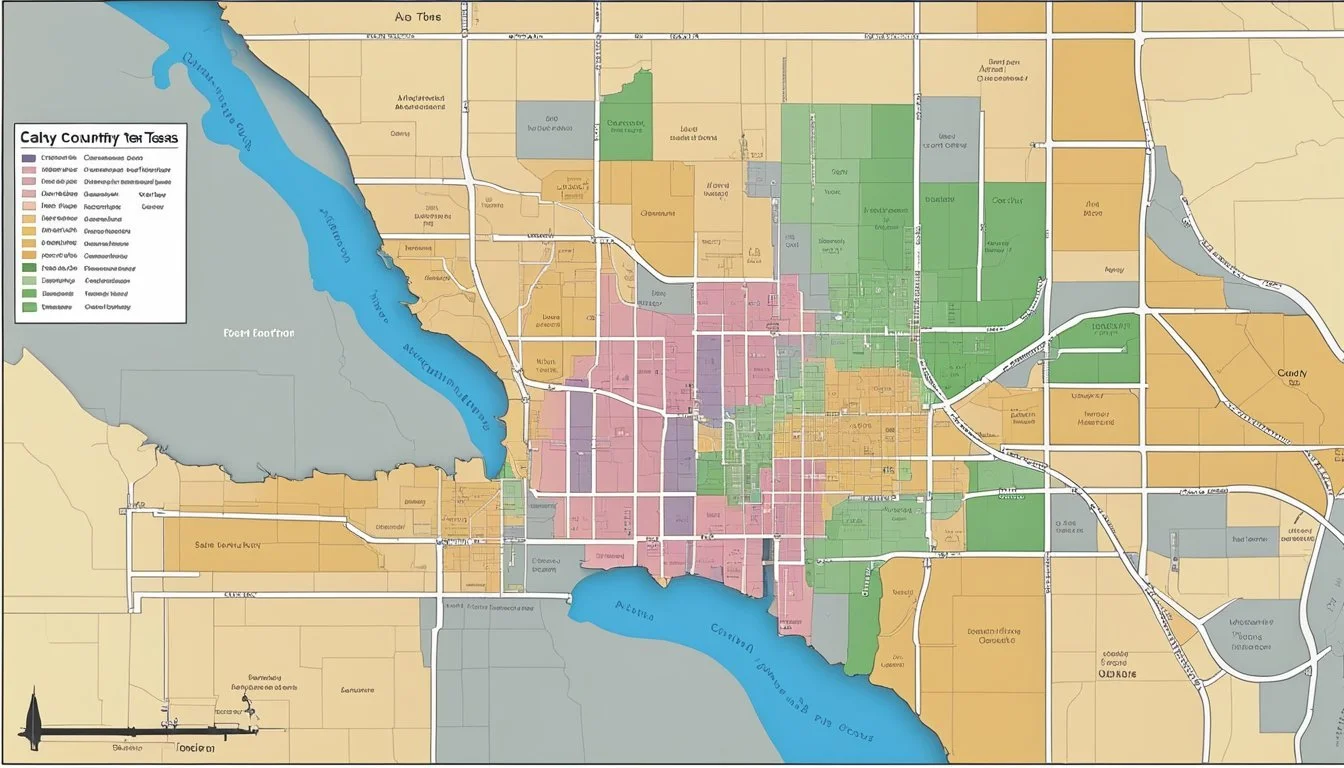
In the context of Clay County, understanding the alcohol laws of neighboring jurisdictions is significant since regional laws in Texas can vary. Below is a concise overview of the regulations in a selection of adjacent counties:
Aransas County: Alcohol sales are legal in all areas.
Brazos County: Here, the laws are generally moderate, allowing for sales with certain restrictions.
Burnet County: Similar to Brazos, Burnet has moderate laws with specific sales times and restrictions.
To provide a structured view of varying regulations, a comparison in the format of a table is included:
County Packaged Liquor Sale On-Premise Consumption Special Notes
Bexar Yes Yes None
Brewster Yes, with conditions Yes None
Cameron Yes Yes None
Collingsworth No on Sunday Yes None
Comal Yes Yes None
Culberson Limited Yes Varied by City
El Paso Yes Yes None
Fayette Yes Yes None
While Clay County has stricter provisions with no packaged liquor sales permitted on Sundays and sales only from Monday through Saturday, other counties like El Paso and Cameron County permit broader alcohol sales.
As for cities within these counties, local regulations can further dictate alcohol sales. For example, in Bexar County, the city of San Antonio allows a wide range of alcohol sales, including both packaged and on-premises consumption. Conversely, smaller cities in counties such as Culberson may have more stringent rules.
It's also of note that some counties, such as Goliad and Guadalupe, completely permit alcohol sales in all areas. On the other hand, Hudspeth, Kenedy, and Kinney Counties observe stricter control on alcohol sales, underscoring the diverse landscape of alcohol regulation within the region.
Resources for Understanding and Compliance

In Clay County, Texas, individuals and businesses seeking information on alcohol and drinking laws have multiple authoritative resources at their disposal. These resources provide clarity on the Alcoholic Beverage Code and regulations, ensuring compliance with state laws.
Texas Health and Human Services operates Prevention Resource Centers, offering extensive data and educational materials. They can be contacted through various means, including phone at 936-634-5753 or by visiting their websites, adacdet.org and prc5.org, for local assistance and guidance.
Texas Alcoholic Beverage Commission (TABC) is another crucial resource, providing comprehensive details on the state's Alcoholic Beverage Code. Their initiatives encompass a range of educational materials for retailers, law enforcement, and the community. Access these resources at tabcprevention.com.
For a broader perspective, the National Institute on Alcohol Abuse and Alcoholism (NIAAA) offers informational materials on policy and the societal impacts of alcohol consumption at the federal level, which can be viewed for comparative and educational purposes.
Quick Access Resource Guide:
Resource Type Contact Information Website
Local Prevention Resource 936-634-5753 (Phone) prc5.org
Alcoholic Beverage Information 844-772-3483 (Toll-Free) adacdet.org
TABC Educational Materials Through TABC portal tabcprevention.com
Federal Alcohol Policy Info - niaaa.nih.gov
Entities involved in the distribution and sale of alcoholic beverages should familiarize themselves with these resources to ensure they understand and comply with the regulations governing alcohol use in Clay County and Texas.
Future Legislation and Potential Changes

In Clay County, the legislative landscape regarding alcohol regulation continues to evolve. Recent trends indicate a shift toward more permissive alcohol laws. A pertinent example is the modification of Sunday alcohol sales, with voters approving extended hours. Prospective changes may follow a similar trajectory as the county aligns with broader state-level adjustments.
The legislation currently in focus includes improvements to consumer protections within the Property Assessed Clean Energy (P.A.C.E.) program. While the P.A.C.E. program primarily addresses energy financing, its outcome could influence the county's regulatory framework, potentially affecting businesses including those selling alcoholic beverages.
Future revisions may also target the Tourist Development Tax with aims to sustain its current application, barring expansion. Although not directly tied to alcohol laws, such fiscal policies can indirectly impact local businesses, including the hospitality sector.
Recent enactments, such as Senate Bill 148 signed by Governor Ron DeSantis, now permit restaurants with the appropriate licensing to sell and deliver alcoholic beverages for off-premises consumption. This change reflects the state's progressive attitude towards alcohol regulation.
Here are some key areas to watch for future legislative developments:
Extended Alcohol Sale Hours: Aligning with voter preferences for more liberal sale times.
Business Regulations: Adjustments in county authority that may affect alcohol vendors.
Consumer Protections: Enhancements in safeguarding consumer interests concerning alcohol sales.
Economic Impacts: Influence of tax allocations and state funding on the county's growth, indirectly affecting the alcohol beverage market.
These areas indicate the county's trajectory towards adapting its alcohol legislation to contemporary norms while securing economic and consumer interests.