Regulations and Compliance
Cooke County, Texas, upholds alcohol regulations that adhere to both state and local laws, reflecting the region's approach to managing the sale and consumption of alcohol. Across Texas, the legal drinking age is set at 21, with strict enforcement to prevent underage consumption. Cooke County aligns with this state mandate, ensuring that all sales and service of alcoholic beverages comply with age verification requirements. The county operates within the statutes set forth by the Texas Alcoholic Beverage Code, which governs the broader scope of alcohol-related activities in the state, from licensing to hours of operation for establishments serving alcohol.
Understanding the specific alcohol laws in Cooke County is crucial for both businesses and consumers. The sale of packaged liquor is barred on several key holidays, including New Year's Day, Thanksgiving, Christmas, and the following day—if it happens to fall on a Monday. This mirrors the general Texas landscape, where varying regulations might restrict or allow sales under different circumstances. Bars and restaurants in the area observe regulated hours of operation for alcohol sales, highlighting the county's jurisdictional nuances which, at times, may differ from the state's guidelines.
Regulations are also influenced by local sentiment, as individual counties in Texas have authority over certain aspects of alcohol legislation. Cooke County's stance on these laws can influence the availability and accessibility of alcoholic beverages, with some localities within the county perhaps taking a 'dry' status, where the sale of alcohol is highly restricted or even prohibited. Both residents and visitors in Cooke County are advised to familiarize themselves with these local laws to ensure compliance and avert legal issues arising from the sale, purchase, or consumption of alcohol.
Overview of Alcohol Laws in Texas
Texas alcohol regulations are shaped by state law and enforced by a dedicated state agency. These laws impact the sale, distribution, and consumption of alcoholic beverages within Texas.
Alcoholic Beverage Code and Jurisdiction
The Alcoholic Beverage Code is the legal framework governing all aspects of alcohol in Texas. Under this state law, specific rules dictate when and where alcoholic beverages can be sold or consumed. These laws can vary between different local jurisdictions within the state, granting them the authority to modify the application of state laws to better fit local preferences or vote on "wet" (alcohol sales permitted) or "dry" (alcohol sales not permitted) status.
Role of the Texas Alcoholic Beverage Commission
The Texas Alcoholic Beverage Commission (TABC) is the regulatory body responsible for overseeing the implementation and enforcement of alcohol laws. They ensure that individuals and businesses comply with Texas state law, provide licenses for alcohol sales, and offer guidance to stakeholders on the legal standards and practices within the alcoholic beverage industry. Their mission also includes keeping Texans safe by regulating the responsible consumption and distribution of alcohol.
Specific Alcohol Regulations in Cooke County
In Cooke County, Texas, the regulation of alcoholic beverages is determined by both state legislation and local preferences through elections. The county exhibits a mix of dry and wet status, with variations in the sale and consumption rules across its jurisdictions.
Dry Counties and Local Variations
Cooke County operates under a system where local option elections dictate the sale and consumption of alcoholic beverages at the city and county levels. While some areas may allow the sale of beer and wine, others might strictly prohibit the sale of all types of alcohol, designating them as dry. These regulations can differ remarkably between Cooke County's cities such as:
Gainesville: Alcohol sales permitted
Muenster: Alcohol sales permitted
Callisburg: No alcohol sales
Lindsay: No alcohol sales
Oak Ridge: Alcohol sales permitted
Each city within Cooke County has the autonomy to hold elections to alter its status from dry to wet or vice versa.
Hours of Sale and Consumption
In Cooke County, like the rest of Texas, the sale of packaged liquor is banned on Sundays. During the rest of the week, the hours during which consumers can purchase alcohol are strictly regulated.
Type of Establishment Alcohol Sales Hours of Operation
Liquor Stores Permitted* Mon-Sat, up to 9 PM
Gas Stations Permitted Mon-Sat, 7 AM to Midnight; Sun Noon to Midnight
Supermarkets Permitted Mon-Sat, 7 AM to Midnight; Sun Noon to Midnight
*No Sunday sales of packaged liquor.
The consumption of alcoholic beverages in public places is also subject to local laws and the discretion of Cooke County's precincts, where each precinct has the potential to enforce specific rules regarding public consumption.
Retail Sales and Distribution
In Cooke County, Texas, the distribution and sale of alcohol are governed by state legislation and local ordinances. The licensing process for establishments, specific regulations for stores, and tailored rules for gas stations and grocery stores are cornerstone components in maintaining legal retail sales of alcohol.
Licensing for Bars and Restaurants
Bars and restaurants in Cooke County are required to obtain specific licenses to serve alcohol. These licenses ensure that these establishments comply with state laws, which include training for staff on responsible service of alcohol. The Texas Alcoholic Beverage Commission (TABC) provides guidance for obtaining these licenses, which can be done through the Alcohol Industry Management System (AIMS).
Regulations for Stores Selling Alcohol
Retailers in Cooke County are also subject to strict regulations when selling alcohol. License and permit requirements are enforced to regulate sales. The sale of packaged liquor is prohibited on specific holidays, including New Year's Day, Thanksgiving Day, Christmas Day, and the day after Christmas if it falls on a Monday. Store hours for alcohol sales are also regulated.
Special Rules for Gas Stations and Grocery Stores
Gas stations and grocery stores, such as Walmart, have additional rules that pertain specifically to their operations. These retailers are often subject to off-premises sale regulations, meaning alcohol must be consumed away from the point of purchase. They must consistently follow state law for retail sales, including the TABC’s Delinquent List, which affects the purchase of alcohol for resale.
Key Timings for Alcohol Sales
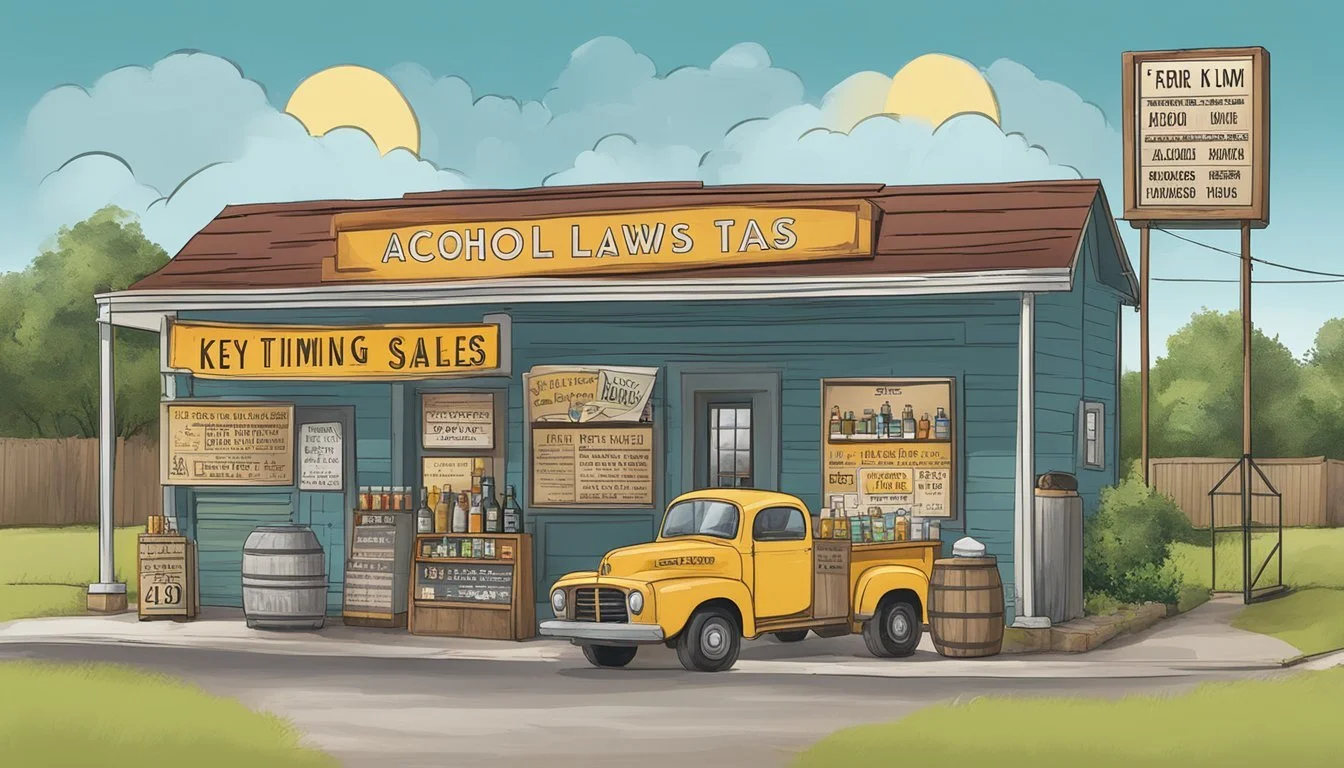
In Cooke County, Texas, alcohol sales are governed by specific timings during weekdays and Sundays, with certain holidays being exceptions when sales are restricted.
Weekday Alcohol Sales
Monday through Friday: Sales of packaged beer and wine are permitted from 7:00 a.m. to midnight. For the sale of liquor, retailers must adhere to the hours set by Texas law, typically ending at 9:00 p.m.
Saturday: The same timings for beer and wine extend, with an additional hour for sales, allowing transactions from 7:00 a.m. until 1:00 a.m. the following day. Liquor sales, similarly, must cease by 9:00 p.m.
Sunday Sales and Special Occasions
Sundays: The sale of packaged beer and wine on Sundays begins later, at noon, and goes until midnight. Liquor sales are forbidden on Sundays.
Holidays: On New Year's Day, Thanksgiving Day, and Christmas Day, the sale of packaged liquor is not allowed. If New Year's Day falls on a Monday, the restriction applies to January 2nd.
These regulations, as dictated by Texas law, must be strictly followed by all alcohol retailers within Cooke County.
Types of Alcoholic Beverages and Limits

In Cooke County, Texas, sales and consumption regulations of alcoholic beverages differ by type, including beer, wine, and liquor, with varying restrictions applicable to each category.
Beer and Wine Restrictions
Beer and wine sales in Cooke County abide by specific time frames dictated by Texas state law. Retailers are permitted to sell beer and wine during the following hours:
Weekdays: 7 a.m. to midnight
Saturday: 7 a.m. to 1 a.m. (Sunday morning)
Sunday: Noon to midnight
Sale by off-premise retailers, such as grocery stores or gas stations, is limited to these periods. Additionally, businesses must adhere to state purchasing laws and cannot sell to customers appearing on the state's Delinquent List which tracks entities that have not paid for their alcohol purchases.
Liquor Sale and Consumption
The sale of liquor requires separate considerations. In Cooke County:
Liquor stores may operate Monday through Saturday from 10 a.m. to 9 p.m. They must remain closed on Sunday, Thanksgiving Day, Christmas Day, and New Year's Day. No exceptions are made for these holidays falling on a Saturday or preceding a Monday.
Consumption regulations stipulate that:
On-premise locations like bars and restaurants are bound by the voter-approved sale hours within the county.
All liquor sales for off-premise consumption are banned on Sundays.
Cooke County complies with statewide regulations, maintaining strict enforcement of these laws to ensure responsible sale and consumption of all alcoholic beverages.
Legal Implications and Penalties
Cooke County enforces Texas state laws pertaining to alcohol with a focus on maintaining public safety. This includes stringent regulations and penalties aimed at deterring and punishing unlawful behavior related to alcohol consumption.
DUI and DWI Laws
In Cooke County, Driving Under the Influence (DUI) applies specifically to minors who operate a vehicle with any detectable amount of alcohol. Adults over 21 are subject to Driving While Intoxicated (DWI) laws when their blood alcohol concentration (BAC) exceeds the legal limit of 0.08%. Penalties for DUI can result in license suspension and fines, while DWI offenders face higher fines, potential jail time, and mandatory alcohol education programs. Texas's implied consent law also plays a role, meaning that refusal to submit to chemical testing can result in automatic license suspension.
Minor in Possession and Community Service
Minors caught in possession of alcohol may be charged with a Class C misdemeanor. Penalties can include fines, community service, and alcohol awareness courses. Community service hours are often mandated as a restitution alternative, aiming to educate and rehabilitate rather than solely punish.
Open Container and Public Intoxication
Texas laws prohibit the possession of open containers of alcohol in a vehicle's passenger area. Violating this regulation can lead to a Class C misdemeanor charge. Public intoxication, another Class C misdemeanor, occurs when an individual is visibly intoxicated to a degree that they may endanger themselves or others. Penalties typically involve fines and potential arrest.
Legislative Changes and Voting
The landscape of alcohol and drinking laws in Cooke County, Texas, has seen significant revisions, stemming from recent legislative action and voting processes.
Recent Bills and Amendments
Senate Bill 2284 has reformed the retail landscape for distilled spirits by granting eligible distillers the right to sell up to four 750-milliliter bottles directly to consumers for off-premise consumption. This amendment impacts Sections 14.05 (c) and 14.05 (f) and likely involves the Texas Alcoholic Beverage Commission (TABC) in its implementation.
Another notable change comes from the passing of Senate Bill 577. The bill affects local governments with public health districts by eliminating their authority to impose fees on businesses obtaining alcoholic beverage licenses or permits.
Public Information and Participation
The participation of Cooke County's public in legislative shifts, particularly concerning alcohol laws, is governed by the state's open meetings and record statutes. Transparency in the legislative process is paramount, and residents can exercise their voting rights to influence decisions.
One such instance was the vote on HB 1518, which escalated to the Texas House of Representatives. The bill and its outcomes pertain to the oversight and regulation of publicly traded corporations in the alcohol industry among other sectors. The framework ensures that citizens are informed and can engage in the legislative process concerning such critical regulations.
Important Considerations for Businesses and Individuals
In Cooke County, Texas, businesses and individuals engaging in the sale or consumption of alcohol must adhere to specific regulations. These rules are particularly pertinent to hotels and bars and may dictate the circumstances under which alcohol may be sold or consumed. Any violation of these laws can result in misdemeanors and fines.
Hotel and Motel Regulations
Hotels and motels in Cooke County must comply with state law regarding alcohol sales. For registered guests, room service and minibar access to alcohol are governed by statewide legal hours of operation. Sale of packaged liquor is prohibited on Sunday, affecting hotel and motel offerings. Businesses must ensure they are not serving alcohol outside of permitted hours, to avoid legal repercussions that may include fines or more severe penalties.
Enforcement and Field Sobriety Tests
Bars and individuals must be aware of enforcement measures such as field sobriety tests. These tests are used by law enforcement to determine a person's level of intoxication when operating a motor vehicle. A failed field sobriety test can lead to a charge of driving while intoxicated (DWI), which is a serious misdemeanor and can incur heavy fines, license suspension, and even imprisonment. Businesses must be diligent in not serving alcohol to obviously intoxicated patrons who may later operate a motor vehicle.