Regulations Overview
In Crane County, Texas, the regulation of alcohol mirrors the complexity and variation seen across the state. Despite Texas having a statewide framework for alcohol laws, local authorities in counties and cities possess the discretion to tailor these regulations to better suit their community's needs and values. Within Crane County, which lacks the bustling metropolis backdrop of major Texan cities, the parameters set on alcohol sales emphasize a conservative approach, with certain restrictions differing between incorporated and unincorporated areas.
The sale of packaged liquor in unincorporated parts of Crane County is prohibited on Sundays, maintaining a day of abstinence in alignment with local customs. From Monday to Saturday, the hours for purchasing packaged liquor span 10:00 a.m. to 9:00 p.m. Beer and wine retailers face less restrictive hours, granting residents and visitors the opportunity to purchase these beverages between 7:00 a.m. and midnight from Monday to Friday and additional hours on Saturday, reflecting the slightly more permissive attitudes towards these less potent forms of alcohol.
Crane County's regulations are a testament to Texas's unique alcohol governance system, which accommodates a diversity of community standards. While the state's legal drinking age is resolutely set at 21, mirroring federal guidelines, the specific hours for alcohol sales and the existence of county-oriented dry laws are a distinct embodiment of the local government's influence. In this county, as with the rest of Texas, the enforcement of DUI laws and age verification requirements remains stringent, demonstrating a consistent commitment to public safety statewide.
Historical Context of Alcohol Laws in Crane County
Texas has a history of local control over alcohol laws, leading to a patchwork of dry and wet jurisdictions. Crane County has experienced this transition firsthand, with shifts in legislation reflecting broader trends.
Prohibition and the Path to Modern Legislation
Prohibition era legislation in Texas, echoing the national trend, granted broad power to counties to regulate alcohol at the local level. Texas's Alcoholic Beverage Code, a culmination of laws and regulations governing the distribution and sale of alcoholic beverages within the state, emerged as a direct response to these historical norms. This legacy of localized control is evident in the range of dry and wet designations across counties, including Crane County.
Crane County's Transition From Dry to Wet Status
Crane County, initially established as a dry county, prohibited the sale of alcoholic beverages within its borders. However, gradual changes in community preferences and legal frameworks have seen Crane transition from its traditional stance. Records indicate homesteaders occupying land in the early 1900s and the eventual shift in county legislation aligning with the evolving Texas Alcoholic Beverage Code, leading to Crane County becoming a wet county where the sale of alcohol is permitted under specific regulations.
Understanding the Texas Alcoholic Beverage Commission
In the state of Texas, the Texas Alcoholic Beverage Commission (TABC) serves as the regulatory authority over the alcoholic beverage industry. Its key functions are to enforce state alcohol laws and regulations, ensuring public safety and compliance within the industry.
Role and Responsibilities
The TABC's primary role is to oversee and control all aspects of the distribution, sale, and consumption of alcoholic beverages within Texas to ensure public welfare. They are charged with granting licenses and permits, supervising licensees, inspecting premises, and providing resources and education to maintain industry compliance.
Regulatory Functions
The Commission rigorously enforces regulations to prevent violations that could compromise public safety. This includes monitoring sales to minors, hours of operation, and the alcohol content of beverages sold. Regulatory activities are conducted objectively to ensure that businesses can operate fairly within the legal framework established by Texas law.
Jan. 23 Commission Meeting
A scheduled commission meeting on January 23, 2024, reflects the TABC's commitment to transparency and public involvement. These meetings are crucial for discussing regulatory changes, industry trends, operational challenges, and strategizing the Commission's efforts in maintaining public safety while accommodating industry needs.
Alcohol Sales and Distribution Regulations
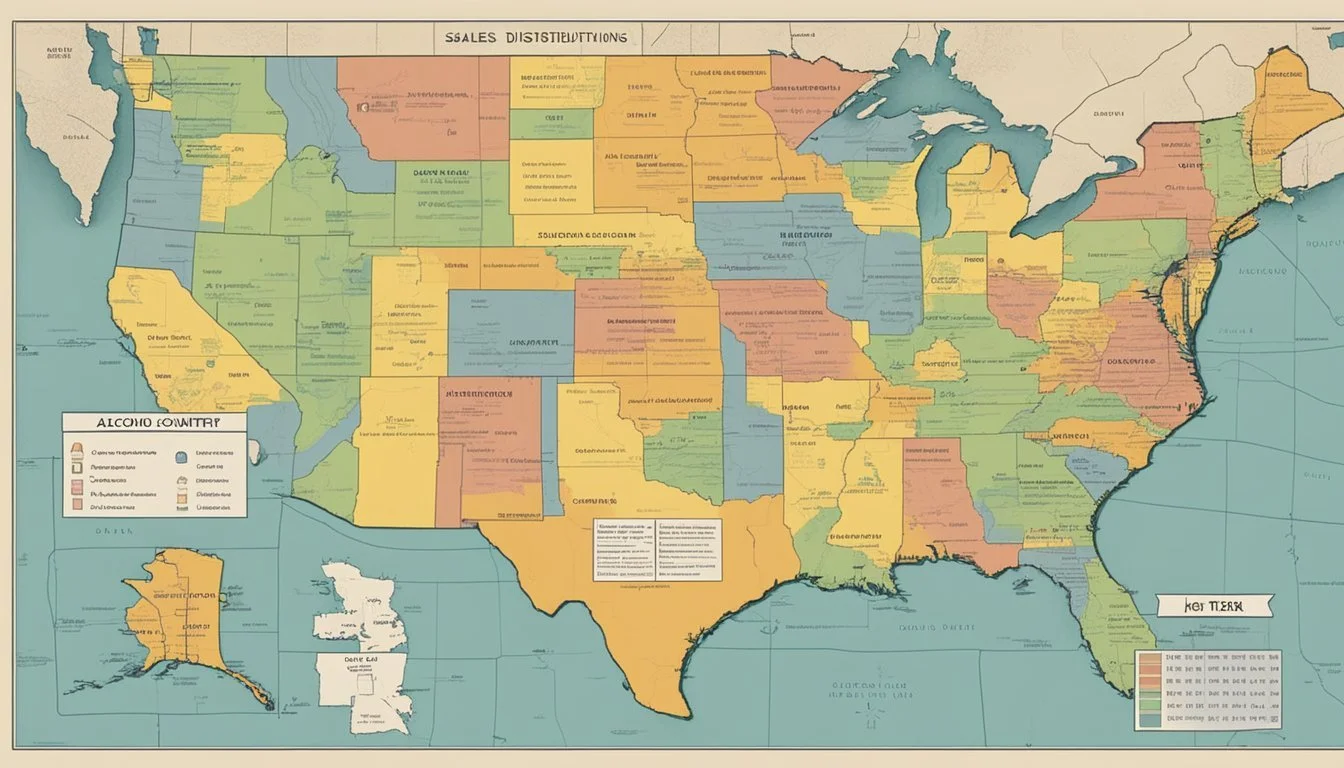
Regulations in Crane County, Texas, are specific, with clear guidelines on licensing and hours of operation. The county adheres to Texas state law, tailoring it to local needs with stipulated hours and provisions for special circumstances.
Licensing Requirements for Alcohol Sales
To legally sell alcoholic beverages in Crane County, businesses must obtain the appropriate licenses or permits from the Texas Alcoholic Beverage Commission (TABC). Each type of alcoholic beverage — distilled spirits, wine, or beer — requires its own specific license or permit. These licenses come with strict regulations and must be prominently displayed within the establishment.
Hours of Sale and Service
Crane County sets specific hours for alcohol sales which differ by beverage type and day of the week:
Packaged liquor is available from 10:00 a.m. to 9:00 p.m., Monday through Saturday. No Sunday sales are permitted.
Sales of packaged beer and wine are more lenient, allowing transactions from noon to midnight on Sundays, and from 7:00 a.m. to midnight, Monday through Friday.
On Saturdays, packaged beer and wine can be sold from 7:00 a.m. to 1:00 a.m.
For on-premises consumption at venues like bars and restaurants, similar yet distinct hours apply, reflecting the need for responsible service of alcohol in social settings.
Special Rules for Gas Stations and Holidays
Gas stations in Crane County are subject to particular constraints. They must adhere to the standard hours for selling beer and wine — no liquor — and often require a separate permit for these sales. Special considerations are made during holidays, where hours of service and sales might vary from the norm. For example, extended hours or restrictions might be in place on days such as Christmas, New Year’s Eve, or Fourth of July. These adjustments are typically communicated well in advance by the TABC and local authorities to ensure compliance.
On-Premise and Off-Premise Consumption Rules
In Crane County, Texas, the regulations defining the consumption of alcohol pivot on whether the establishment holds an on-premise or off-premise permit. These rules govern where and how alcoholic beverages can be consumed.
BYOB Policies
Bars and restaurants in Crane County may allow patrons to bring their own beverages (BYOB), provided they do not hold a Mixed Beverage Permit. It is important for patrons to recognize that BYOB establishments can set their own house rules, which might include corkage fees or restrictions on types of alcohol allowed.
Bars: Can opt for BYOB if they do not have a permit for selling alcohol.
Restaurants: May also offer BYOB options, creating an inviting environment for guests who prefer personal selections.
Mixed Beverage and Package Store Permits
Entities that serve or sell alcohol fall under distinct licensure categories:
Mixed Beverage Permit: Allows the sale of spirits, beer, and wine for on-premise consumption. Holders are typically bars and restaurants where alcohol forms a core part of their service.
Establishment Type Permit Required Consumption Location
Bar Mixed Beverage On Premises
Restaurant Mixed Beverage On Premises
Package Store Permit: Designated for off-premises consumption, this permit applies to stores selling sealed containers of alcohol.
Establishment Type Permit Required Consumption Location
Package Store Package Store Permit Off Premises
Establishments with a Mixed Beverage Permit are subject to state-imposed regulations dictating how they operate, whereas Package Stores cater to consumers purchasing alcohol to consume elsewhere, in private or at BYOB-friendly venues.
Legal Drinking Age and Underage Drinking Laws
In Crane County, Texas, the legal drinking age is set at 21, which aligns with the national standard. Texas enforces strict laws regarding underage drinking, including zero tolerance for minors operating vehicles with any detectable alcohol in their systems.
Age Verification and Enforcement
Businesses serving alcohol in Crane County are required to verify the age of customers to ensure they are not serving minors. Age verification typically involves checking a government-issued identification card. Enforcement of these laws is stringent, with penal codes in place to address violations such as selling to or purchasing alcohol for a minor.
Minor: A person under the age of 21.
Penalties: Include fines, community service, and alcohol awareness courses for offenses.
Guardian and Spouse Exceptions
Texas law allows a minor to consume alcohol in the presence of their adult spouse or guardian under certain conditions. This exception aims to accommodate cultural and familial contexts where alcohol might be a part of social functions.
Guardian: Must be legally responsible for the minor.
Spouse: Must be of legal drinking age and present during consumption.
These nuanced exceptions are subject to the discernment of law enforcement and do not permit public intoxication or underage driving with any level of alcohol in the system.
Driving Under the Influence and Open Container Regulations
In Crane County, Texas, adhering to state laws on driving under the influence (DUI) and open container regulations is critical for the safety of all road users. Violations can lead to severe penalties, and it is important for the residents and visitors of Crane County to understand these rules to avoid legal consequences.
DUI Laws in Texas
Texas law is stringent when it comes to driving under the influence of alcohol. The legal limit for blood alcohol concentration (BAC) is 0.08% for drivers 21 and over. For commercial drivers, the limit is lower at 0.04%, and for those under 21, any detectable amount of alcohol constitutes a DUI offense. A DUI violation in Texas can result in various penalties, including but not limited to:
Fines
License suspension
Jail time
The specifics of the penalties often depend on the number of offenses and the circumstances surrounding the incident.
Motor Vehicle Open Container Restrictions
Open container laws in Texas prohibit the presence of open containers containing alcohol in the passenger area of a motor vehicle. This includes the driver's side, passenger side, and backseat. The law applies to vehicles on a public highway, regardless of whether they are moving or parked. Crane County enforces these state open container regulations rigorously.
Open Container Definitions:
An open container is any alcohol-containing container that is not factory-sealed.
This applies to previously open bottles, cans, flasks, or other drink vessels.
If a driver or passenger is found with an open container, penalties may ensue, including fines. The goal of these laws is to deter drinking and driving to ensure public safety on the roads.
Local Ordinances and City-Specific Laws
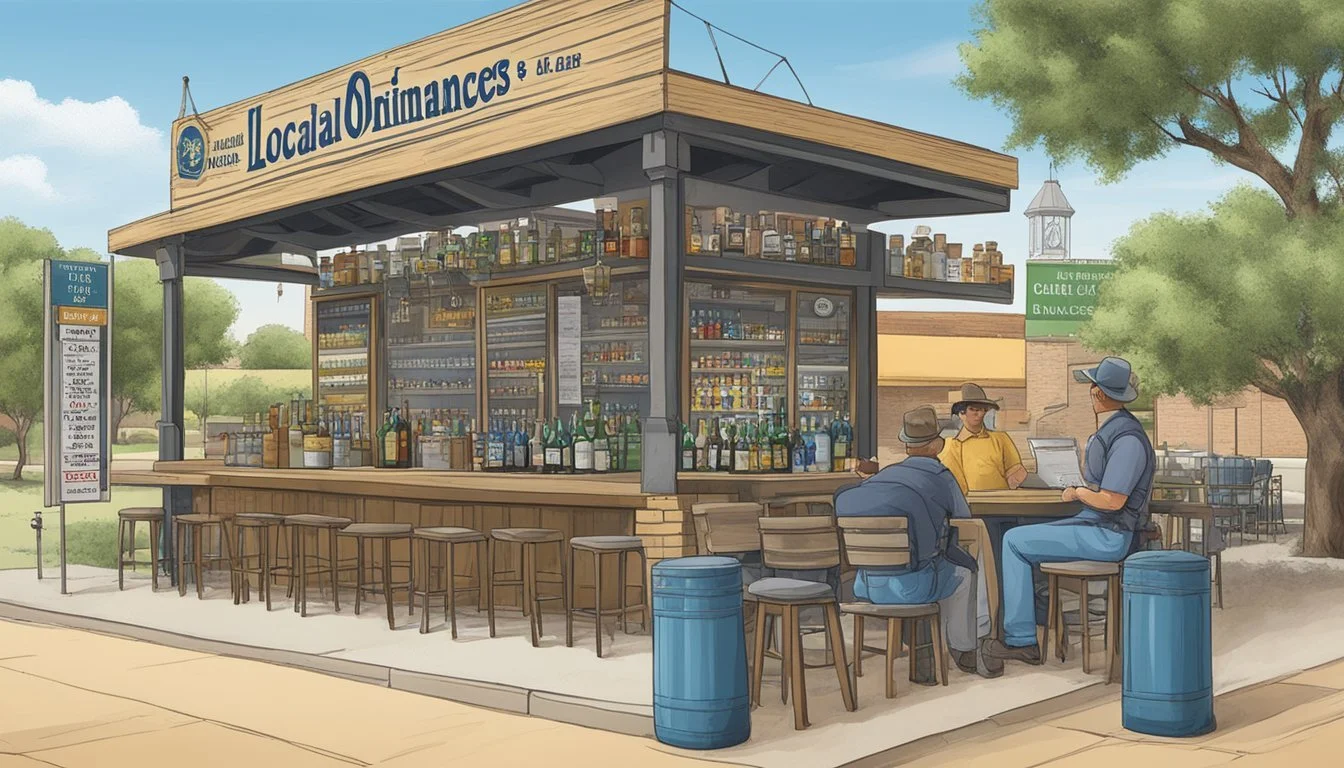
In the State of Texas, alcohol regulations can vary significantly from one county to another, with local city ordinances further tailoring these laws to address specific community needs and standards.
Variances in Nearby Counties and Cities
City of Crane, Texas: Within Crane County, the City of Crane adheres to Texas Alcohol Beverage Code, which outlines the overarching framework. However, local government may impose additional restrictions or permissions pertaining to alcohol sales and use.
Ector County: Comparatively, Ector County may have differing regulations, potentially influencing the hours of sale or distribution of alcoholic beverages. These variations reflect the county's choice to exercise local control over alcohol laws.
Midland County: Midland, another neighboring county, may adopt different alcohol ordinances that impact how businesses operate. It's crucial for establishments in Midland to comply with both state and local laws concerning the sale and consumption of alcohol.
El Paso County: Although further afield, El Paso County showcases the diversity in local alcohol laws, perhaps diverging in aspects such as zoning or distance requirements for alcohol retailers from schools and churches.
Crane County's Unique Provisions
Crane County may impose unique provisions that influence how alcohol is sold and consumed, which can include:
Administrative Hearings: Processes for handling violations, including the administrative hearing process, which can result in penalties for non-compliance.
Cash/Credit Law: Businesses in Crane County must adhere to the state law for purchasing alcohol for retail, which affects cash flow and inventory decisions.
Alcohol Ordinance: As outlined in county-specific ordinances, there may be additional permitting and distance regulations pertaining to alcohol sales, which are distinct from neighboring communities.
Violations, Penalties, and Legal Consequences

In Crane County, Texas, individuals and businesses in the alcoholic beverage industry must navigate state laws carefully to avoid legal consequences. Fines, license suspensions, and criminal charges can result from non-compliance.
Consequences of Non-Compliance
Violations in Crane County can range from the sale of alcohol to minors to breaches of licensing regulations. The Texas Alcoholic Beverage Commission (TABC) enforces state law diligently, and individuals or establishments found non-compliant may face serious repercussions. Penalties are often severe to deter future infractions and maintain community safety.
For Individuals: They can be subject to fines, jail time, and a criminal record.
For Establishments: Penalties may include hefty fines, suspension of liquor licenses, or permanent revocation of the right to sell or serve alcohol.
Handling Violations and Fines
When violations occur, the TABC and local law enforcement agencies are responsible for enforcing penalties. Businesses and Texans involved in the alcoholic beverage industry must adhere strictly to the following:
Age Verification: Strict checking of IDs to prevent underage drinking.
Sales Hours Compliance: Adhering to designated times for alcohol sales.
Documentation and Reporting: Keeping accurate sales records and reporting any breaches.
Fines and legal consequences are assessed based on the severity and frequency of the offenses. Businesses may contest violations through legal channels, but they must present compelling evidence to negotiate penalties or seek lenience. It is critical for anyone involved in selling, serving, or distributing alcohol to understand the full scope of potential legal consequences and operate within the framework of state law.
Resources and Helpful Links

For a comprehensive understanding of the alcohol laws in Crane County, Texas, individuals can access various resources. These sources provide clarification on regulations concerning sales, consumption, and distribution of alcoholic beverages within the county.
Texas Alcoholic Beverage Commission (TABC)
Website: tabc.texas.gov
The official site for TABC, featuring state-wide regulations, licensing information, and details about enforcement.
Public Safety:
TABC's focus on safety within the alcoholic beverage industry is well-documented on their site, including measures against trafficking.
Texas State Legislature
Alcohol Delivery Laws:
Details about House Bill 1024, which involves laws around alcohol delivery, can be found at the Texas Legislature Online.
Texas Local Options
Election Information:
Local option elections can change which types of alcoholic beverage sales are allowed. Understanding these can be crucial for Crane County businesses and residents.
Legal Guide
Drinking Laws in Texas:
A legal perspective on Texas drinking laws, including hours of operation for liquor stores and rules about Sunday sales might be found in resources provided by legal firms specializing in Texas alcohol regulations.
When researching these laws, it's important for businesses and individuals to ensure they are getting information from current and authoritative sources. Regulations can change, so checking with the TABC and the Texas Legislature for the latest laws and amendments is advisable.