Alcohol and Drinking Laws in Fort Bend County, Texas
A Comprehensive Guide

Alcohol and drinking laws in Fort Bend County, Texas are subject to state regulations with local variances reflecting community standards and concerns. In Texas, the Texas Alcoholic Beverage Commission (TABC) oversees the enforcement of state laws relating to the selling, consumption, and distribution of alcoholic beverages. For businesses in Fort Bend County, compliance with state and county-specific alcohol regulations is mandatory, including adherence to the Cash/Credit Law for the purchase of alcohol for retail sales.
Fort Bend County, like other counties in Texas, enforces specific local alcohol laws that might differ from other regions in the state. For instance, sales of packaged liquor in unincorporated areas of the county are not permitted on Sundays. Furthermore, packaged liquor is available for sale from 10:00 a.m. to 9:00 p.m., Monday through Saturday. Another important local regulation pertains to the proximity of alcohol sales to certain public institutions; the sale of alcoholic beverages within 300 feet of a church, school, or public hospital is strictly prohibited.
It is important for residents and businesses to be informed about these local alcohol laws, as they play a vital role in maintaining public order and safety. Individuals and establishments found violating these laws may face legal consequences, including fines and potential closure of establishments by the TABC. The specifics of these regulations and their enforcement are designed to reflect the county's commitment to upholding both the law and the welfare of its communities.
Overview of Texas Alcohol Laws
The regulation of alcohol in Texas is governed by the Texas Alcoholic Beverage Code which dictates the sale, distribution, and consumption of alcoholic beverages within the state. The Texas Alcoholic Beverage Commission (TABC) is responsible for overseeing the alcohol industry in Texas, ensuring compliance with the laws.
Texas Alcoholic Beverage Code
The Texas Alcoholic Beverage Code establishes the legal framework for the sale and consumption of alcohol in the state. It outlines specific directives such as:
Prohibited sales on certain days and hours
Licensing requirements for manufacturers, distributors, and retailers
Age restrictions for purchase and consumption
In Fort Bend County, for example, sale of packaged liquor is not permitted on Sunday and restricted to the hours between 10:00 AM and 9:00 PM from Monday to Saturday.
Role of Texas Alcoholic Beverage Commission
The Texas Alcoholic Beverage Commission serves as the regulatory authority for all aspects of the alcoholic beverage industry in Texas. They:
Issue permits and licenses
Conduct investigations and inspections
Enforce the Texas Alcoholic Beverage Code through administrative actions and penalties
The TABC also handles violations by providing an administrative hearing process and imposing standard penalties for noncompliance with state law.
Fort Bend County Regulations
Fort Bend County enforces specific regulations regarding the sale and consumption of alcoholic beverages. These rules complement state law and address local concerns.
County-Specific Rules
In Fort Bend County, local directives have been established to manage the sale and consumption of alcohol. The county operates under the authority of the Texas Alcohol Beverage Code, which allows for the definition of local alcohol distance regulations. For example, the county has set forth Fort Bend County Local Alcohol Distance Regulations, effective since July 22, 2014. They have the power to enforce regulations in areas outside of incorporated cities or towns, tailoring rules to the unique needs of Fort Bend County.
The Fort Bend County Clerk's office plays a role in maintaining compliance with the Texas Alcoholic Beverage Code. It certifies TABC pre-qualification packets, which include:
Verification of wet/dry status
Ascertainment of permit type
Ensuring that the location does not violate local alcohol distance regulations
Interaction With Houston City Laws
Fort Bend County is in proximity to Houston, creating a scenario where county regulations may intersect with Houston city laws. It is crucial to note that while Fort Bend County's rules apply to unincorporated areas, within the limits of the city of Houston, city regulations take precedence. This is important for businesses that may operate near the jurisdictional boundaries, wherein they must adhere to the rules set by the actual authority governing that specific area.
Businesses in proximity to city borders must be aware of the separate local option elections, which can influence the degree of regulation within respective precincts in Houston. This could affect county establishments near the city limits, necessitating keen awareness of which laws apply to their operation – whether it is Fort Bend County's or Houston's.
Operating Hours and Days

Alcohol sales in Fort Bend County adhere to specific operating hours and days, depending on the type of beverage and the seller’s permit. These restrictions are vital for both consumers and retailers to understand to remain in compliance with Texas state law.
Weekday Sales Restrictions
In Fort Bend County, retailers can sell beer and wine from 7 a.m. to midnight from Monday through Friday. For packaged liquor, the laws vary and in some cases, sales might not be permitted on certain weekdays if the retailer is located in an unincorporated area of the county. Sale times can be influenced by the type of permit held by the establishment.
Weekend and Holiday Regulations
Saturday sales for beer and wine extend from 7 a.m. to 1 a.m. the following Sunday. However, on Sundays, the sale of beer and wine starts later, with the permitted hours being from 10 a.m. until midnight. For liquor stores, sales are prohibited on Sundays. Additionally, sales of alcoholic beverages are subject to county and state regulations during major holidays such as New Year's Day, Thanksgiving Day, and Christmas Day. It is essential for establishments to check specific restrictions that may apply to these holidays.
Types of Alcoholic Beverages

In Fort Bend County, Texas, the alcoholic beverage industry is regulated with specific laws pertaining to the sales and distribution of beer and malt beverages, wine, and spirits. These categories are defined by state law and affect how they can be sold and distributed.
Beer and Malt Beverages
Beer and malt beverages in Texas refer to fermented creations that typically contain lower alcohol by volume (ABV) than wine or spirits. Sales of these beverages are permitted in gas stations, supermarkets, and liquor stores, with specific hours of operation governed by local laws. For example, the sale of packaged beer is usually allowed except during certain hours, notably on Sunday mornings.
Type: Ale, Lager, Stout, Porter
ABV: Up to 4% for beer, above 4% typically considered malt liquor
Sales Location: Various retail outlets
Sales Restriction: No Sunday morning sales
Wine Specifications
Wine in Texas is categorized separately from beer and has its own set of regulations. Wines are distinguished by their fermentation process and grape origin, with a broader range of ABV. Sales restrictions for wine are similar to those for beer, but with different specifications such as percentage and source, which are essential for retailers to adhere to.
Table of Wine Classifications:
Type Description ABV Range
Table Wine Made from grapes or other fruits; common for daily consumption Typically under 14%
Fortified Wine Wine to which a spirit (usually brandy) has been added 14–20%
Sparkling Wine Contains significant levels of carbon dioxide Varies
Spirits and Liquors
Spirits and liquors are the most potent category of alcoholic beverages, distilled rather than fermented, and thus carry higher ABVs. The laws of Texas require a specific license for the sale of spirits, with sales entirely prohibited on Sundays within Fort Bend County and restricted near schools and churches.
Type: Whiskey, Vodka, Rum, Tequila, Gin
ABV: Typically 20% and above
Sales Location: Regular liquor stores
Sales Restriction: No Sunday sales; distance from schools and churches
Licensing Requirements

In Fort Bend County, Texas, individuals and businesses must comply with the Texas Alcoholic Beverage Commission (TABC) regulations to obtain the necessary licenses for alcohol-related activities. This ensures adherence to state law and the maintenance of industry standards.
Business Licensing
Businesses seeking to sell, manufacture, or distribute alcoholic beverages must apply for the appropriate license through the TABC. This includes a range of licenses, such as the Distiller’s and Rectifier’s Permit for those who wish to distill spirits. Applications are processed at the local TABC office in Richmond, TX. Required documentation typically includes:
Business information
Proof of location ownership or lease
Certification of assumed name, if applicable
Temporary Event Permits
Organizations or individuals hosting an event where alcohol will be sold or served may need a Temporary Event Permit. These permits are essential for ensuring that one-off events comply with state laws governing the sale and consumption of alcoholic beverages. The application must be submitted to TABC with:
Event details (date, time, location)
Type of alcohol to be served
Expected number of attendees
Employees and Servers
Employees and servers who handle alcoholic beverages are required to receive certified training under the TABC's guidelines. This training provides them with the knowledge to:
Identify and refuse service to intoxicated persons
Understand the legal age requirements for alcohol consumption
Comply with the state's alcohol-related laws and regulations
Legal Age and ID Verification
In Fort Bend County, Texas, the legal framework surrounding the sale and consumption of alcohol hinges on strict age verification laws. These measures are designed to ensure the safety of both minors and adults by preventing underage drinking and holding adults accountable for lawful conduct.
Minors Purchasing Alcohol
Texas Alcoholic Beverage Commission regulations state that individuals must be 21 or older to purchase alcohol. Any minor who attempts to buy, possesses, or consumes alcoholic beverages is subject to legal penalties. Documentation accepted for age verification includes a:
Driver's license issued by any state
U.S. passport
Military ID card
Other state or federal government-issued ID
Consequences for minors violating these laws include a Class C misdemeanor, a fine up to $500, mandatory attendance of an alcohol awareness class, and community service ranging from 8 to 40 hours.
Adult Responsibility
Adults have a legal obligation to refrain from supplying alcohol to minors. Sellers, such as store clerks and bartenders, are particularly vigilant because they can face criminal charges for serving underage individuals. Adults should be prepared to show valid identification to prove they are over 21. Recognized forms of ID include a:
Military ID
State-issued driver's license
Federal government-issued photo ID
The responsibility to avoid contributing to underage drinking and ensuring the safe distribution of alcoholic beverages within the community rests on adults in Fort Bend County.
Alcohol Consumption and Public Spaces
In Fort Bend County, Texas, regulations governing the consumption of alcoholic beverages in public spaces seek to balance individual freedom with public safety considerations.
Open Container Laws
In Texas, open container laws prohibit the possession of an open container with an alcoholic beverage in the passenger area of a motor vehicle, regardless of whether the vehicle is being operated or is stationary. These laws are in effect across the entire state, including Fort Bend County. The Texas Alcoholic Beverage Code Section 109.35 allows local governments to enact additional regulations to restrict public drinking. For instance, some cities may only permit public alcohol consumption within designated areas, commonly termed as "central business district" zones, after obtaining approval from the Texas Alcoholic Beverage Commission (TABC).
Public Intoxication
Texas law defines public intoxication as an individual appearing in a public place while intoxicated to a degree that the person may endanger themselves or others. Enforcement of this provision is crucial for maintaining public order and safety. In Fort Bend County, public intoxication is taken seriously, and law enforcement officers are vigilant in identifying and managing situations where individuals are visibly intoxicated in public areas, ensuring that the safety of the community is upheld.
Driving Under the Influence
Driving under the influence (DUI) is a serious offense in Fort Bend County, Texas, which can lead to severe penalties. The laws are designed to maintain the safety of the roads by limiting the operation of motor vehicles under the influence of alcohol.
DWI Laws in Texas
In Texas, a person is considered driving while intoxicated (DWI) if they operate a motor vehicle in a public place while intoxicated. Intoxication is legally defined as:
Having a blood alcohol concentration (BAC) of 0.08 percent or higher;
Not having the normal use of mental or physical faculties due to alcohol, a controlled substance, a drug, a dangerous drug, or a combination of two or more of those substances.
For a first offense DWI charge in Texas, individuals face:
Up to a $2,000 fine;
Between 3 and 180 days in jail upon conviction, with a mandatory three days.
The presence of an open alcohol container in the car at the time of the arrest increases the minimum jail time. Additionally, individuals arrested for DWI in Texas have 15 days to contest an administrative license suspension.
BAC Limits and Enforcement
Texas law enforces strict BAC limits for different categories of drivers:
All drivers 21 years and over: 0.08%
Commercial vehicle drivers: 0.04%
Drivers under 21: Any detectable amount of alcohol
Enforcement tactics include sobriety checkpoints and no refusal weekends, where officers can quickly obtain warrants for blood tests. The state implements an implied consent law, whereupon obtaining a driver's license, drivers agree to submit to a chemical test when suspected of DWI. Refusal can result in automatic license suspension.
Business Operations
In Fort Bend County, Texas, the business operations for selling alcoholic beverages adhere strictly to the Texas Alcoholic Beverage Code. The management of alcohol sales in bars, restaurants, and retail stores is directed by comprehensive regulations designed to ensure responsible business practices. Support and guidance for compliance are provided by the Texas Alcoholic Beverage Commission (TABC).
Bars and Restaurants
Bars and restaurants must obtain specific permits to serve alcoholic beverages, and they are subject to TABC's rules for responsible alcohol service. They must adhere to the stipulated hours of operation and ensure all employees handling alcohol are properly certified. For example, the sale of alcohol is prohibited after 2 AM on Saturdays, Sundays, and on the days preceding a national holiday. Establishments must also maintain meticulous records of their purchases and sales of alcoholic beverages.
Hours of Operation: Must comply with TABC regulations.
Employee Certification: Required for those serving alcohol.
Recordkeeping: Mandatory for tracking sales and purchases.
Retail Stores and Supermarkets
Retail entities, including stores and supermarkets in Fort Bend County, are authorized to sell alcoholic beverages provided they have the appropriate licenses. These licenses detail specific conditions under which the sales can occur, such as the prohibition of sales to those under the age of 21 and ensuring that all transactions occur within permitted sales hours.
Licensing: Critical for legal sales of alcoholic beverages.
Age Verification: A must for all sales; buyers must be 21 or older.
Sales Hours: State law dictates specific times when sales are permissible.
Compliance and Violations
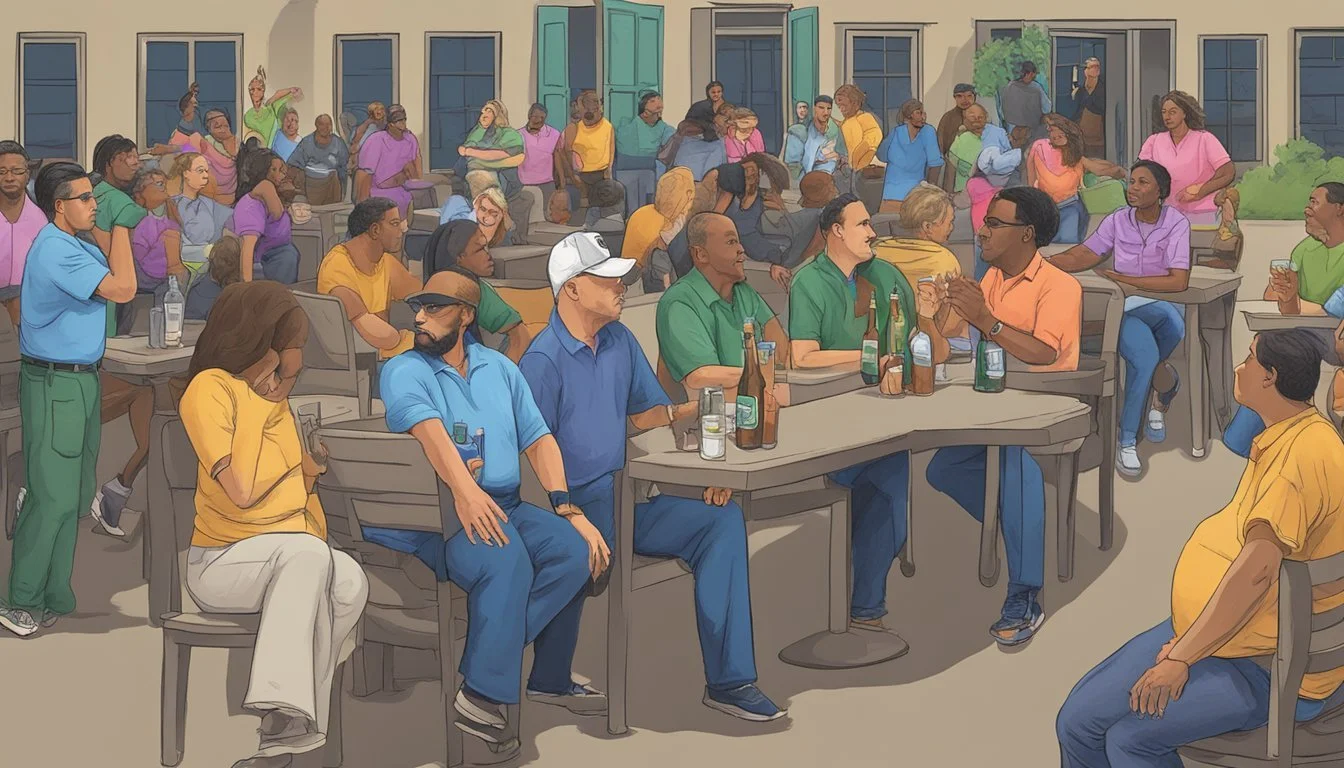
In Fort Bend County, Texas, compliance with alcohol laws is monitored by the Texas Alcoholic Beverage Commission (TABC). Businesses and individuals must adhere to state laws and TABC rules, any breaches of which can lead to enforcement actions and financial penalties.
Enforcement Actions
The TABC is vested with the authority to ensure that all pertinent rules and regulations are enforced. During commission meetings, decisions are made regarding enforcement policies that must be implemented at the local level. When businesses violate these laws, enforcement actions can range from issuing warnings to more severe measures such as suspending or revoking alcoholic beverage licenses.
Penalties and Fines
Penalties for violating alcohol laws within Fort Bend County are determined by the nature and severity of the infraction. Fines are structured as follows:
Minor Infractions:
First Violation: Warning or small fine
Repeated Violations: Increased fines, mandatory education on TABC laws
Major Infractions:
Immediate Suspension: Depending on the violation, a temporary halt in operation may be enforced.
Revocation of License: Chronic non-compliance can lead to permanent loss of the right to sell alcohol.
Businesses must ensure that they are well-informed about ongoing updates to the Texas Alcoholic Beverage Code, which holds important information that affects the sale and distribution of alcohol in Fort Bend County.