Cowboy Butter Roasted Butternut Squash
Elevating Autumn Meals with Rich Flavor
Cowboy Butter Roasted Butternut Squash merges the earthy sweetness of autumn's favorite gourd with the rich, bold flavors of cowboy butter, making it an irresistible fall side dish. As the season brings cooler weather and colorful leaves, butternut squash takes center stage in many kitchens due to its versatility and natural sweetness. When roasted, its flesh becomes tender and caramelized, providing a perfect canvas for the savory and punchy accents of cowboy butter, which is known for its mixture of garlic, citrus, and herbs.
The concept of cowboy butter stems from a compound butter used to enhance the taste of steaks and vegetables with its dynamic blend of flavors. This recipe takes advantage of the butter's dynamic flavor profile by pairing it with butternut squash. As the squash roasts, it absorbs the garlic and herb-infused butter, creating a side dish that's fragrant and deeply flavorful.
This dish's allure lies not only in its taste but also in its simplicity and health benefits. Butternut squash is a nutritional powerhouse, loaded with vitamins, minerals, and fiber. Combining it with the herbs and spices in cowboy butter not only elevates the taste but also ensures the dish remains a guilt-free addition to any fall meal. Whether served alongside a hearty roast or as part of a festive holiday spread, Cowboy Butter Roasted Butternut Squash is a culinary creation that promises to delight the palate and complement the season's fare.
Understanding Butternut Squash
Butternut squash, often hailed as a staple in autumn cooking, belongs to the gourd family. It is technically a fruit, as it contains seeds. However, it is commonly used as a vegetable in culinary contexts due to its savory applications. When selecting a butternut squash, one should look for a solid beige color, without deep cuts or bruises.
Nutrition Facts
This winter squash is not only versatile in the kitchen but also offers a wealth of nutrients. It is rich in fiber, which aids in digestion, and provides a low-calorie count that can fit into various diet plans. Butternut squash is also packed with vitamins such as vitamin A, which is essential for eye health and immune function, and vitamin C, known for its role in skin health and immune defense.
Mineral Content
Moreover, butternut squash boasts a good amount of potassium, critical for heart health, and magnesium, which is involved in muscle function and bone health. Its composition of essential nutrients makes it a beneficial addition to any meal.
Nutrient Benefit Fiber Aids in digestion Vitamin A Supports eye and immune health Vitamin C Enhances skin and immune system Potassium Maintains heart health Magnesium Crucial for muscles and bones
The sweet and nutty taste of butternut squash pairs excellently with a variety of flavors, making it a favorite in both savory and sweet dishes. Its dense flesh roasts well, making it ideal for a preparation where it’s basted with Cowboy Butter, enriching it with a bold, herbaceous, and slightly spicy flavor profile. The squash's inherent sweetness complements the butter's richness and ties together the savory elements of the dish.
Essential Ingredients for Cowboy Butter
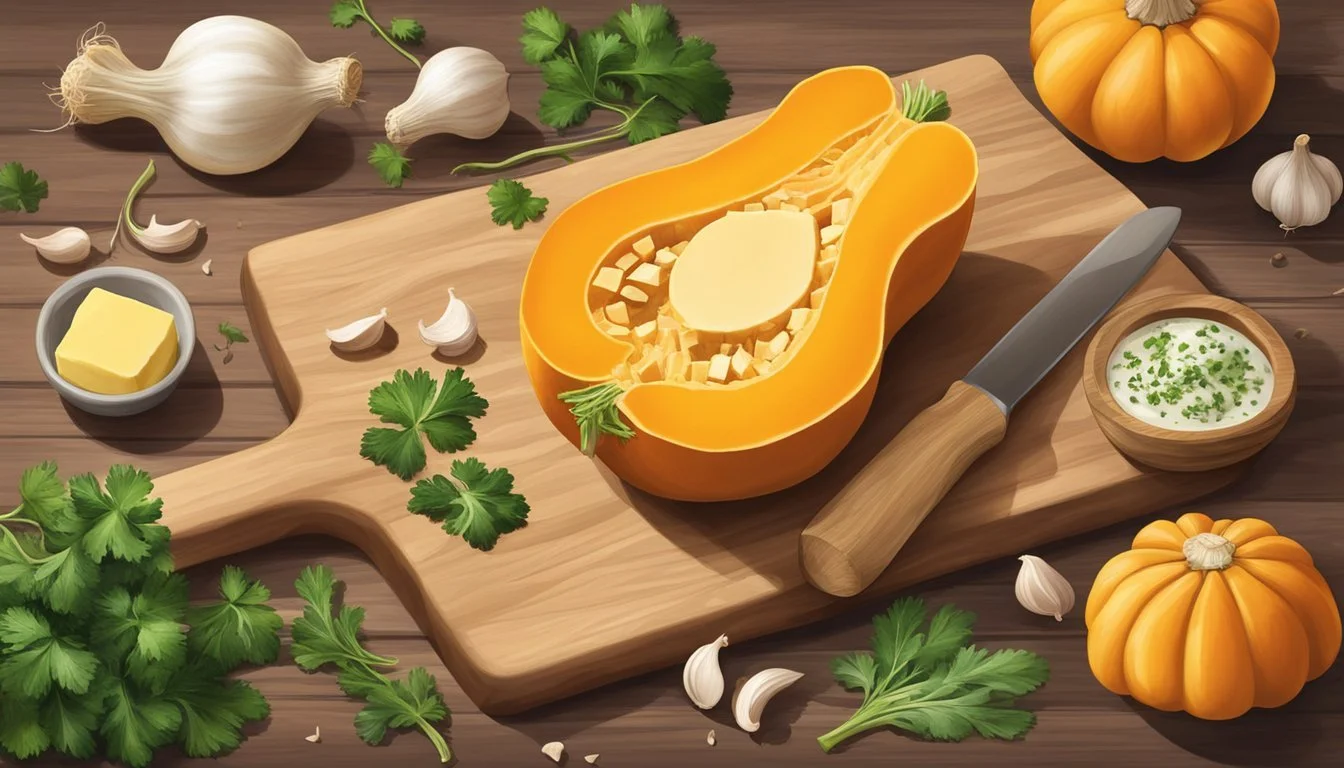
Cowboy Butter combines a variety of ingredients that contribute to its rich and complex flavor profile, serving as the cornerstone of dishes like the roasted butternut squash. A good understanding of these components is crucial for achieving the perfect balance of taste.
The Role of Butter in the Recipe
In Cowboy Butter, butter serves as the foundational base to which all other flavors adhere and meld. It provides a smooth, creamy consistency that carries the herbs and spices evenly, allowing for a well-distributed flavor throughout any dish it accompanies.
Preferred Type of Butter: Unsalted, high-quality butter is recommended for optimal flavor control.
Herbs and Spices to Enhance Flavor
A careful selection of herbs and spices is what sets Cowboy Butter apart, creating an aromatic and savory experience. The intricate interplay of these ingredients transforms simple butter into a culinary delight.
Garlic: Freshly minced or garlic powder provides a pungent, earthy backbone.
Herbs: Chopped fresh herbs like parsley, chives, thyme, and rosemary offer a fragrant bouquet.
Spices: A mixture of spices such as smoked paprika, black pepper, chili powder, cayenne pepper, and sometimes a hint of cinnamon or allspice add warmth and depth.
Acidic and Sweet Elements: Lemon zest and juice, or alternatives like balsamic vinegar, honeymarkle syrup, balance the richness.
Seasoning: Salt is a critical ingredient that highlights all other flavors.
This combination of ingredients lends Cowboy Butter its distinct identity, capable of enhancing not just butternut squash but an array of foods from steaks to vegetables.
Preparation Techniques
The preparation of Cowboy Butter Roasted Butternut Squash involves several key steps, including preparing the squash, concocting the rich Cowboy Butter, and assembling the dish for roasting. These techniques ensure a harmonious blend of sweet and savory flavors, complemented by the richness of the butter.
Prepping the Butternut Squash
The first step is to prep the butternut squash. One begins by peeling the skin off the squash, ensuring that none of the tough outer layer remains. A sturdy vegetable peeler is the ideal tool for this task. Afterward, the squash is cut into two sections, separating the rounded bottom from the narrower neck. Scooping out the seeds from the bulbous end is necessary before proceeding to cut the squash. For even roasting, the squash should be diced into uniform cubes.
Steps to prepare the squash:
Peel the entire butternut squash until no skin remains.
Separate the squash into two sections at the base of the neck.
Remove the seeds from the bottom section.
Cut the squash into uniform cubes for even cooking.
How to Make Cowboy Butter
Cowboy Butter brings a unique taste to this dish. It is prepared by melting butter and combining it with robust seasonings and herbs. To achieve the perfect balance of flavor, one must carefully measure and incorporate ingredients such as garlic, mustard, and perhaps a hint of citrus.
Key ingredients for Cowboy Butter:
Melted butter as the base
Garlic, finely minced
Mustard for a sharp tang
Optional: citrus zest or juice for a bright note
Assembling the Dish
Assembly of the dish requires tossing the prepared butternut squash cubes with the Cowboy Butter to ensure they are well coated with the flavorful mixture. The seasoned squash is then spread in a single layer on a lined baking sheet. This arrangement promotes even caramelization and cooking.
Steps to assemble the dish:
Toss cubed butternut squash with the seasoned Cowboy Butter.
Spread the squash on a parchment-lined baking sheet.
Ensure the cubes are in a single layer for consistent roasting.
Cooking Instructions
This section provides a straightforward approach to roasting butternut squash with the rich finish of cowboy butter, resulting in a sweet and savory dish. Carefully following these instructions will ensure the squash is tender and caramelized to perfection.
Roasting the Squash
The first step in preparing Cowboy Butter Roasted Butternut Squash is to properly cook the butternut squash to create a sweet and savory foundation for the dish.
Preheat the oven to 400°F (200°C) to ensure a hot environment for roasting.
Prepare the baking sheet by lining it with parchment paper for non-stick roasting and easier cleanup.
Peel the butternut squash, then cut it into evenly sized cubes, approximately 1-inch each, to promote even cooking.
Drizzle the squash cubes with olive oil in a large bowl; this helps to season and prevents sticking.
Generously season with salt, pepper, and any other preferred spices, tossing to coat each piece uniformly.
Spread the seasoned squash in a single layer on the baking sheet; this space allows the heat to circulate, leading to even roasting.
Place in the preheated oven and roast for 20-25 minutes or until the squash is tender; stir halfway through to ensure all sides have a chance to become golden and caramelized.
Applying Cowboy Butter
The Cowboy Butter adds a burst of flavor, transforming the roasted squash into an irresistible dish.
While the squash is roasting, prepare the Cowboy Butter by combining softened unsalted butter with a mix of minced garlic, lemon juice, Dijon mustard, chopped parsley, and a pinch of cayenne for a bit of heat.
After the squash is roasted and while still hot, toss the squash in the Cowboy Butter to thoroughly coat each cube with the rich, flavorful mixture.
Return the butter-coated squash to the oven for an additional 3—5 minutes, just enough time for the flavors to marry and the butter to create a slightly crispy exterior.
By following these detailed instructions, one can ensure their Cowboy Butter Roasted Butternut Squash will impress with its depth of flavor and perfect texture.
Serving and Pairing
When it comes to enjoying Cowboy Butter Roasted Butternut Squash, the pairing of main dishes and the selection of garnishes are essential to bring out the dish's sweet and savory notes, ensuring a harmonious plate for any fall meal.
What to Serve with the Dish
Cowboy Butter Roasted Butternut Squash is a versatile side that complements a variety of proteins. Here are specifically tailored pairings:
Poultry: Roasted chicken (What wine goes well with roasted chicken?) or turkey offers a classic combination. The squash's richness pairs well with the mild flavors of these birds, making it an excellent choice for Thanksgiving dinner.
Meat: For a richer protein option, juicy pork chops (What wine goes well with pork chops?) or baked ham provide a salty contrast that complements the sweetness of the butternut squash.
Protein Why It Works Chicken/Turkey Mild flavor complements sweetness. Pork Chops Salty contrast to squash's sweetness. Ham Succulent saltiness with sweet undertones.
Garnishes and Final Touches
To elevate Cowboy Butter Roasted Butternut Squash, consider these garnishes:
Herbs: A sprinkle of fresh parsley or thyme adds a bright burst of color and a refreshing contrast.
Nuts: Toasted pecans or walnuts can introduce a delightful crunch and nutty flavor.
Garnishes should be applied right before serving to preserve their texture and visual appeal. The key is to keep it simple to let the main flavors shine.
Storage and Reheating
Proper storage and reheating methods ensure that the rich flavors of Cowboy Butter Roasted Butternut Squash are preserved. Below, find specific guidelines to maintain quality and taste.
How to Store Leftovers
To keep leftover Cowboy Butter Roasted Butternut Squash fresh, one should place the squash in an airtight container and store it in the fridge. The airtight container will prevent the squash from absorbing other flavors and odors. Leftovers can typically last for up to 3-5 days when refrigerated. For longer-term storage, one may freeze the squash. To freeze, spread the pieces on a baking sheet and place in the freezer until solid, then transfer to a freezer-safe airtight container or bag. This prevents the pieces from sticking together, allowing for easier portioning later on. Frozen squash can last for up to 3 months.
Refrigerator:
Airtight container
3-5 days
Freezer:
Freeze first on baking sheet
Transfer to freezer-safe container
Up to 3 months
Reheating for the Best Flavor
To reheat, one should thaw the frozen squash in the fridge overnight if it was frozen. For reheating in an oven, preheat to 350°F (175°C). Place the squash in an oven-safe dish, cover with a lid or aluminum foil, and warm for about 15-20 minutes or until heated through. This method helps retain moisture and the savory flavor of the Cowboy Butter. Alternatively, for a quicker method, one can use a microwave. Put the leftovers in a microwave-safe container, cover lightly to avoid splattering, and reheat in 30-second intervals, stirring in between to ensure even heating.
Oven Method:
Preheat to 350°F (175°C)
Oven-safe dish with lid
Reheat for 15-20 minutes
Microwave Method:
Microwave-safe container
Cover lightly
Heat in 30-second intervals, stir between
Diverse Uses of Roasted Butternut Squash
Roasted butternut squash, with its creamy texture and sweet flavor profile, serves as a versatile ingredient for both everyday meals and special holiday tables.
Integrating into Various Meals
Soups: A roasted butternut squash soup offers a healthy and hearty option for fall dining. Its creamy texture means it can easily be pureed for a velvety-smooth soup or left in chunks for a rustic touch.
Salads: Roasted butternut squash can be added to salads to provide a sweet contrast to leafy greens. Tossed with quinoa, goat cheese, and apples, it contributes to a nutritious and satisfying meal.
Holiday Meals (What wine goes well with holiday meals?): As a fall side dish, its warm spices and hearty nature make it ideal for integrating into holiday meals. It can complement a variety of mains, from a traditional turkey to a vegan centrepiece.
Creative Recipe Ideas
Enchiladas: For a sweet and savory twist, incorporate roasted butternut squash into enchiladas. The squash pairs well with strong Mexican spices and provides a creamy texture that complements the tortillas and sauce.
Rice Bowls: Enhance rice bowls with cubes of roasted butternut squash for an additional layer of flavor. Combine with proteins like tofu or chicken, vibrant vegetables, and a drizzle of cowboy butter for a complete meal.
Side Dish Enhancements: Mix roasted cubes with caramelized onions and crumbled goat cheese for a side that is sure to impress. It's appropriate for both casual dinners and more formal gatherings, offering a balance of sweetness and savory notes.
Nutritional Profile and Health Benefits

Butternut squash, a starchy vegetable, offers a plethora of health benefits due to its rich nutrient profile. It is particularly noted for its high fiber content, which contributes to healthy digestion and regular bowel movements. The soluble and insoluble fibers within butternut squash work simultaneously to soften stools and foster a balanced gut microbiome, essential for overall gut health.
The fruit is also an excellent source of vitamin A, providing around 83% of the Daily Value (DV) per cup, bolstering eye health and immune function. Additionally, butternut squash's vitamin C content, accounting for approximately 32% of the DV, plays a crucial role in tissue repair and enhances the body's ability to ward off infections.
Nutrient Amount per cup (cooked) % Daily Value (approx.) Fiber Variable - Vitamin A 745 micrograms 83% Vitamin C 29 milligrams 32%
Moreover, butternut squash contains notable amounts of potassium and magnesium, minerals that are vital for maintaining healthy blood pressure levels and supporting bone health. These minerals, in conjunction with its low-calorie footprint and low glycemic index, make roasted butternut squash an ideal side dish for a health-conscious diet.
By incorporating cowboy butter—a flavorful blend of spices and herbs—into a butternut squash dish, one enhances the taste while still reaping these health benefits. The combination of sweet and savory flavors not only pleases the palate but also introduces an enjoyable way to consume essential nutrients necessary for a healthy lifestyle.
Additional Tips and Tricks
In this section, readers will discover how to finesse the texture and taste of their Cowboy Butter Roasted Butternut Squash, as well as how to address any issues that may arise during preparation.
Enhancing Texture and Flavor
Texture: For a perfectly roasted texture, preheat the oven to a high temperature before adding the squash. Using a large baking sheet lined with parchment paper ensures the squash roasts evenly without sticking. Squash pieces should be spread out in a single layer.
Cutting Tips: A sturdy cutting board and sharp knife are vital to achieve even cubes that cook uniformly.
Oil Use: Lightly coating the squash with extra virgin olive oil enhances browning and helps spices adhere.
Flavor: Infusing the squash with Cowboy Butter involves a combination of garlic, parsley, red pepper flakes, and a hint of lemon. Incorporating fresh herbs at the end of roasting can elevate the vibrancy of the dish.
Spice Infusion: For a deeper flavor, let the Cowboy Butter mixture sit for a few hours before use to allow the infusion of flavors.
Pairings: Butternut squash's sweetness complements robust flavors like kale, a quintessential winter squash companion. Toss roasted kale in for a contrasting texture.
Troubleshooting Common Issues
Uneven Cooking: If the squash is cooking unevenly, it may be due to inconsistent piece size or overcrowding on the baking sheet. Ensure pieces are uniform and spaced out.
Solution: Rotate the large baking sheet halfway through cooking for even roasting.
Lack of Flavor: A lackluster taste can be the result of underseasoning or not allowing the Cowboy Butter to permeate the squash.
Solution: Increase seasoning as needed, especially salt, as it heightens all other flavors in the dish. Allow the butter to meld with the squash for several minutes before serving.
Applying these tips and addressing common issues will help to ensure that the Cowboy Butter Roasted Butternut Squash is a delightful addition to any meal.
Food & Safety Considerations
When preparing Cowboy Butter Roasted Butternut Squash, food safety and freshness play critical roles in both taste and health. The squash should be fresh and free from soft spots or signs of decay. Before handling the squash or any other ingredients, one must ensure proper handwashing to prevent the spread of foodborne illnesses.
Storing Butternut Squash: Prior to cooking, butternut squash can be stored in a cool, dark place for up to a month. Once cut, it should be refrigerated and consumed within a week.
Preparation Safety: When cutting the squash, use a sturdy cutting surface and a sharp knife to prevent slipping. Remove the skin with caution, and always scoop out the seeds with a spoon.
Allergen Information: Cowboy butter typically contains dairy such as butter and sometimes other additives like garlic. For individuals with allergies to these ingredients, alternatives such as dairy-free butter and allergen-free seasonings can be used.
Cooking: While roasting, keep the oven door closed to maintain an even cooking temperature and prevent burns. The squash is done when it can be easily pierced with a fork.
Contamination Prevention:
Always separate raw foods from cooked foods.
Use separate utensils for different ingredients to avoid cross-contamination.
Clean all surfaces and cooking equipment with soap and hot water after use.
By adhering to these food safety practices and considering allergen information, one can confidently enjoy a savory and sweet Cowboy Butter Roasted Butternut Squash dish.