
Beef Tartare: The Ultimate Raw Carnivore Dish Explained and Perfected
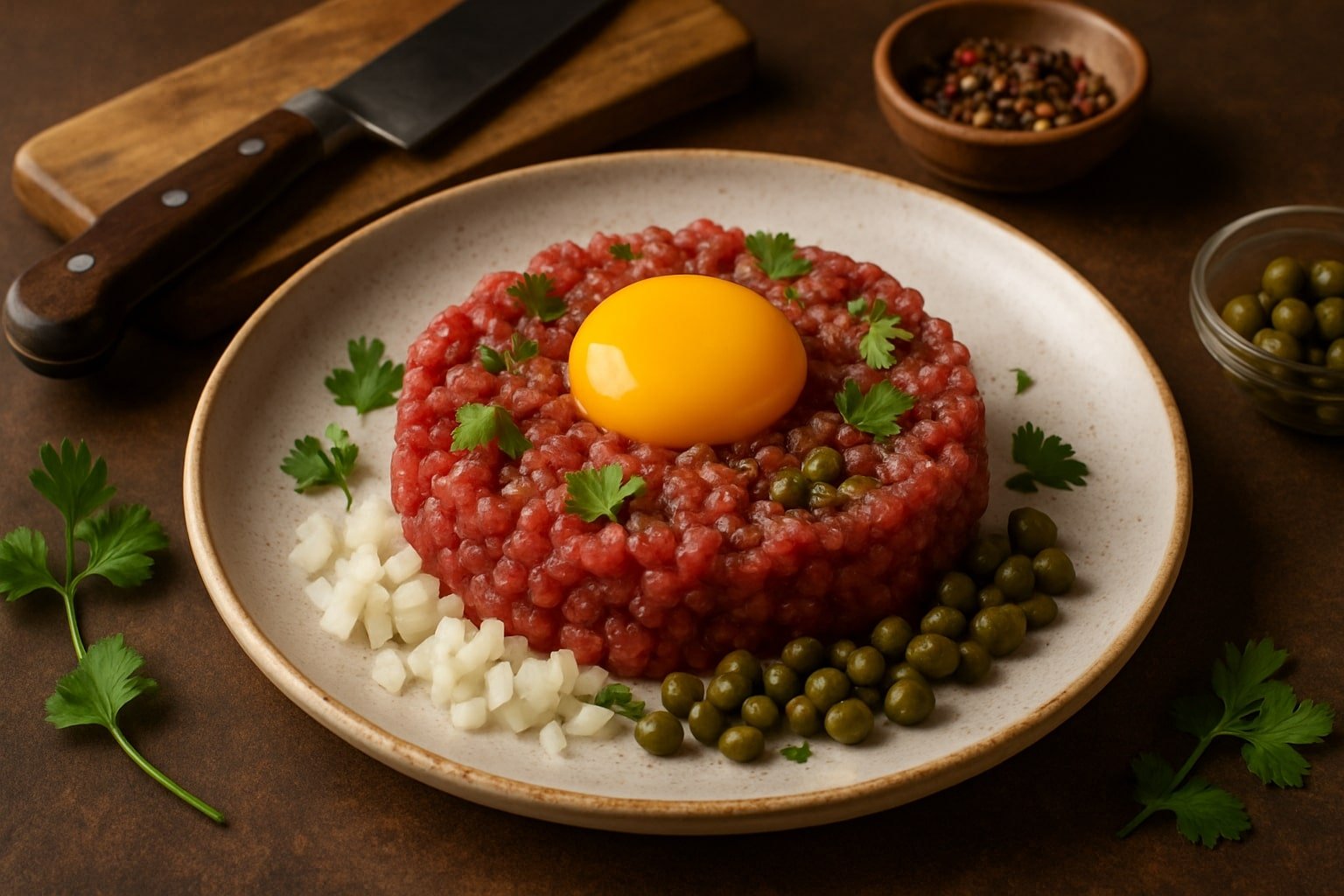
Beef tartare stands out as the ultimate raw carnivore dish, offering a gourmet experience that highlights the natural flavors and texture of high-quality beef. This classic steak tartare is enjoyed around the world for its simplicity, freshness, and the bold taste that comes from carefully selected ingredients.
Whether served as a refined starter in a French bistro or made at home by enthusiasts, tartare relies on skillful preparation and attention to detail. The dish usually features hand-chopped beef, seasoned lightly to enhance its taste without overpowering the meat.
Many appreciate beef tartare for its direct approach to flavor and texture, making it appealing to those who value quality meat prepared in its purest form. This article will explore how steak tartare delivers a unique and satisfying gourmet experience for any raw food lover.
What Is Beef Tartare?
Beef tartare is a dish made from raw, finely chopped beef, most often using high-quality lean cuts like tenderloin or sirloin. Its preparation is precise, with great attention given to freshness and food safety, as well as complementary seasonings and accompaniments.
Origins and History
Beef tartare has roots in 19th-century France, where it is believed to have first gained popularity. The dish likely evolved from a range of raw meat preparations that were enjoyed by various cultures in Europe and Central Asia for centuries.
The name “tartare” is sometimes linked to the Tatars, nomadic tribes from Central Asia, although there is little evidence they consumed beef in this way. In France, steak tartare appeared on restaurant menus in the late 1800s, often with a raw egg yolk and classic condiments.
Variations of tartare were prepared in different regions, but beef tartare as it is known today became a French culinary standard. Its popularity was boosted by its association with fine dining and the use of premium beef.
Difference Between Beef Tartare and Steak Tartare
The terms “beef tartare” and “steak tartare” are often used interchangeably, but there are minor distinctions. Beef tartare specifically refers to dishes using raw beef as the main ingredient, finely chopped and seasoned.
Steak tartare traditionally describes a particular French preparation, often served with additions like onions, capers, Worcestershire sauce, mustard, and a raw egg yolk on top. Classic steak tartare may also be formed into a patty and accompanied by toasted bread or fries.
A helpful comparison:
Term Meat Type Common Additions Beef Tartare Beef Simple seasonings Steak Tartare Beef Egg yolk, capers, onions
Not every beef tartare follows the steak tartare format, but both dishes highlight the natural flavor and texture of raw meat.
Cultural Popularity
Beef tartare is a culinary staple in France but has also found popularity in many other countries. It is featured in Belgian, Swiss, and German cuisines, each with unique local twists and traditional accompaniments.
In modern dining, beef tartare is often seen as a gourmet appetizer in upscale restaurants worldwide. Its appeal comes from the freshness of raw beef and the chef’s ability to balance flavors with condiments and textures.
Despite being viewed as an adventurous choice in some regions, beef tartare’s reputation for quality and craftsmanship keeps it popular among food enthusiasts who appreciate precise preparation and raw meat’s distinct taste.
Choosing the Right Beef
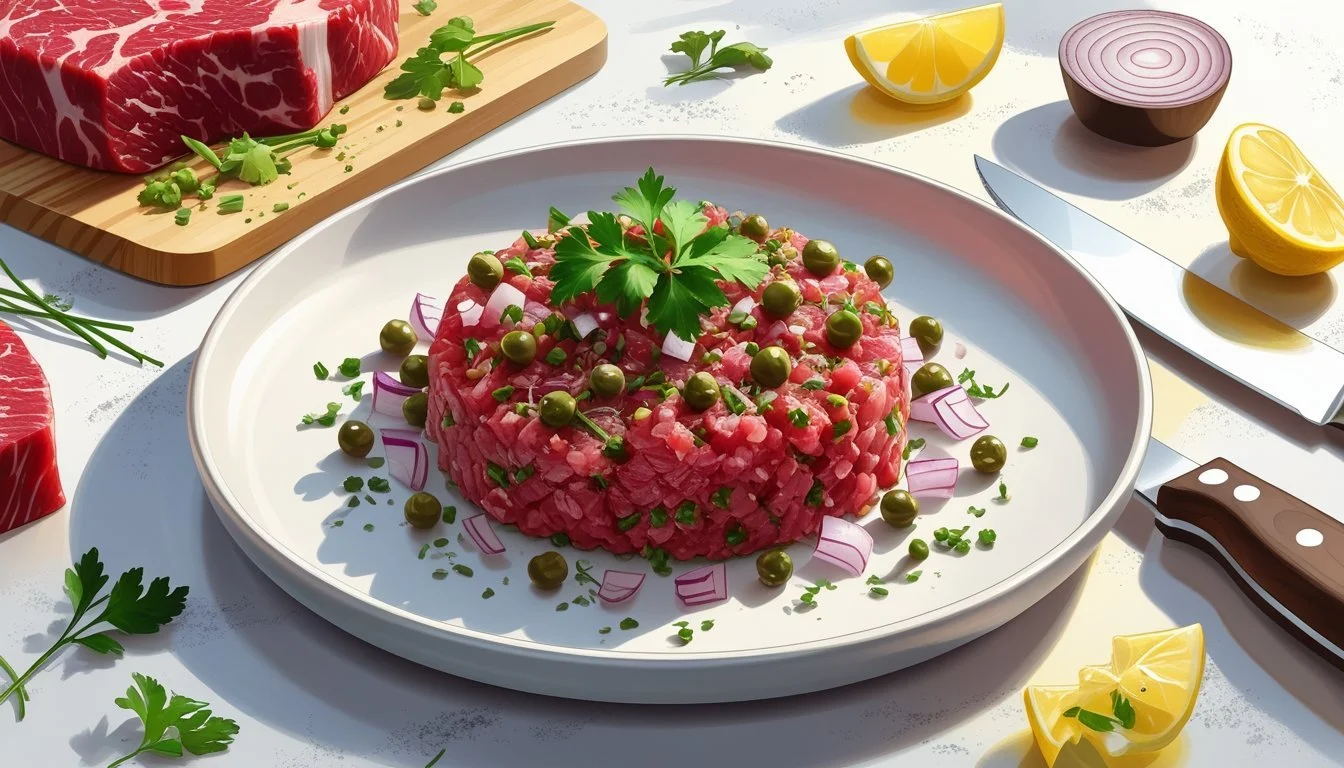
Selecting the proper beef for tartare is essential for both taste and safety. The quality, cut, and freshness directly affect texture, flavor, and health considerations.
Best Cuts for Beef Tartare
Not every cut of beef is safe or suitable for raw consumption. The most popular cuts for beef tartare are tenderloin (filet mignon), top sirloin, and sometimes the round.
Tenderloin is prized for its tenderness and mild flavor.
Top sirloin offers more beefy notes with a slightly firmer bite.
Eye of round can be used if extremely fresh and properly trimmed.
Avoid fatty or sinewy cuts, as they can result in unpleasant texture. Ground beef should not be used due to higher surface bacteria risks. Always opt for a whole, solid piece that can be trimmed and diced precisely before serving.
High-Quality vs. Regular Beef
High-quality beef is crucial for tartare. Unlike regular beef, which may be handled or stored for conventional cooking, beef for raw dishes should come from trusted sources and be graded for freshness and marbling.
Look for labels such as prime, grass-fed, or organic, indicating superior rearing standards and minimal additives. High-quality beef will have a bright red color, firm texture, and fine marbling.
Regular supermarket beef may not meet the safety standards for raw dishes. The risk of contamination increases with lower-grade, poorly handled, or previously frozen meat, which can compromise both flavor and safety.
Sourcing and Freshness
Purchasing beef specifically intended for tartare is necessary. Choose a reputable butcher who understands your intention to use the beef raw.
Request that the cut be freshly prepared, ideally trimmed in front of you. Avoid pre-cut or pre-ground options.
Check the color (bright red), smell (no odor), and texture (firm, not sticky or wet). Use beef as soon as possible after purchase. If possible, store it in a clean, airtight container at a low temperature until just before preparation.
Never use beef past its use-by date or with any sign of spoilage. Freshness is critical for both safety and optimal texture in beef tartare.
Safety and Preparation Standards
Beef tartare relies on raw ingredients, so each step from sourcing to serving directly affects food safety. Using the highest quality, freshest components minimizes health risks.
How to Ensure It Is Safe to Eat
Beef tartare should only be prepared with fresh, high-quality beef from a reputable butcher or supplier. Cuts like tenderloin or sirloin are preferred because they have minimal connective tissue and are easier to trim and inspect.
To further reduce risk, it's recommended to use beef labeled as sushi-grade or specifically marked for raw consumption. The outer layer of meat can harbor bacteria—searing or removing the outer surface before finely dicing helps minimize contamination.
Egg yolks, often served raw atop tartare, should be sourced from pasteurized eggs. Only crack eggs immediately before use to keep them as fresh as possible. Strict cleanliness, including disinfected utensils and surfaces, is essential at every stage.
Preventing Foodborne Illness
Consuming raw beef and eggs exposes diners to foodborne pathogens like E. coli, Salmonella, and Listeria. Proper handling greatly reduces these risks. Only work with beef that has been stored at safe temperatures (below 40°F/4°C) from the moment of purchase.
Careful attention should be given to cross-contamination. Always use separate knives, boards, and containers for raw meat, and wash everything thoroughly with hot, soapy water after use.
Avoid making tartare for young children, pregnant women, seniors, or anyone with a compromised immune system. These groups are more susceptible to serious illness from contaminated raw foods. Most important is preparing and eating tartare immediately after it is made.
Storage and Handling Tips
Never leave raw beef at room temperature. Store beef in the coldest part of the refrigerator and keep it tightly wrapped to avoid contact with other foods. Ideally, prepare beef tartare within one day of purchasing the meat.
Eggs should remain refrigerated until just before use. If preparing larger batches or ahead of time, keep each portion chilled and cover tightly with plastic wrap to limit air exposure.
Quick Reference Table: Safe Handling
Step Key Action Meat Selection Use fresh, high-quality beef Egg Use Choose pasteurized for raw yolk Equipment Sanitize all tools before use Work Surfaces Disinfect before and after prep Serving Prepare and serve immediately
Prioritize cleanliness and cold storage from purchase to preparation to serving. This routine limits bacterial growth and keeps tartare safe to eat.
Essential Ingredients
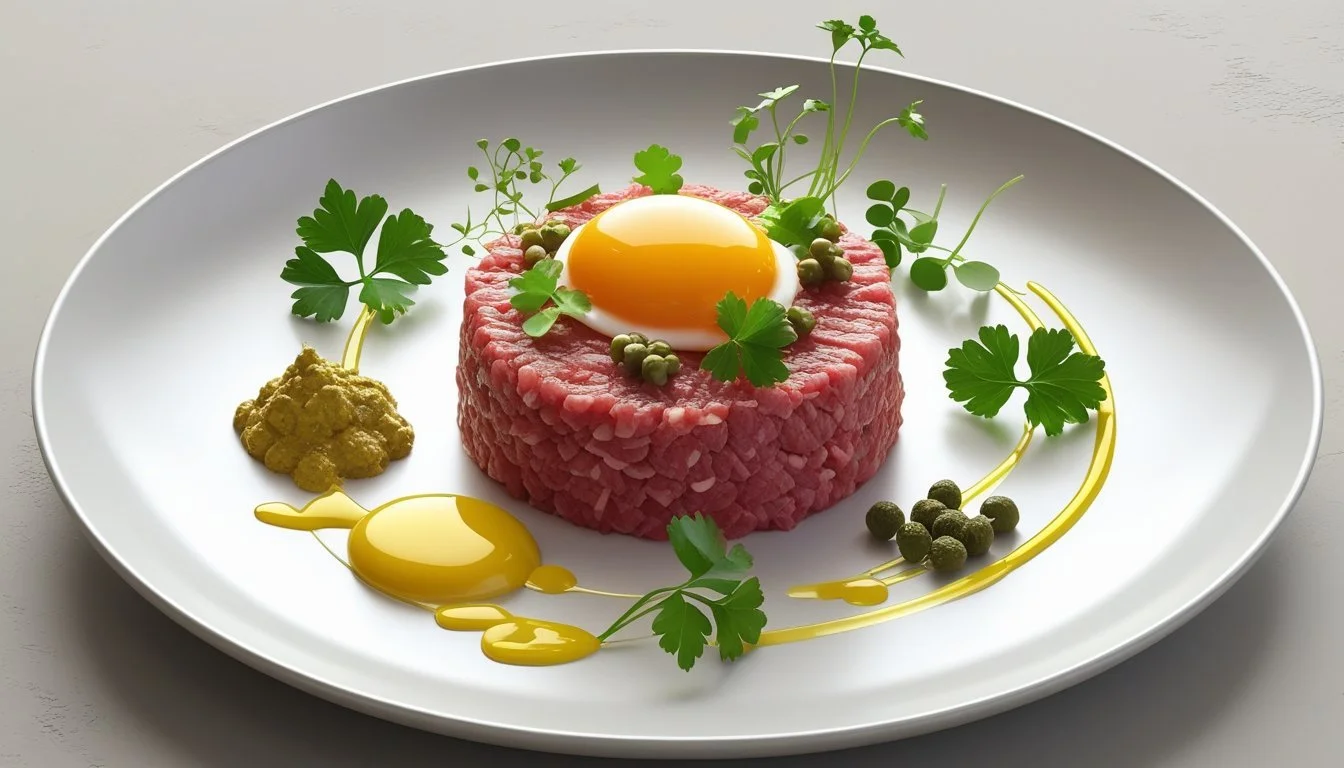
Beef tartare relies on prime, fresh beef and a balance of specific, high-quality ingredients to create its distinct taste and texture. Every element is chosen for clarity of flavor, freshness, and safety.
Traditional Components
The main component of beef tartare is lean, high-quality beef. The most commonly used cuts are tenderloin or sirloin because of their tender texture and minimal fat. It is crucial that the beef is exceptionally fresh, ideally purchased and prepared the same day.
Classically, beef is finely chopped by hand rather than ground. This prevents mushiness and allows better control of texture.
Fresh egg yolk sits atop the assembled tartare. It acts as a rich binder, giving the dish a creamy consistency. Shallots, capers, and cornichons are added for sharpness and crunch. Salt is the fundamental seasoning, drawing out the meat’s subtle flavors.
Flavor Enhancers
Flavor enhancers give beef tartare its signature depth. Dijon mustard is an essential inclusion, bringing gentle heat and tanginess. Many traditional recipes also call for a few dashes of Worcestershire sauce to add an umami note and depth.
A little olive oil can be blended in for smoothness and mouthfeel. The fat used should be mild in flavor so it doesn't overpower the delicate beef. In some variations, a pinch of finely grated parmesan offers a savory, nutty accent without dominating the dish.
Briny ingredients like capers and chopped cornichons deliver both acidity and salt, balancing the richness of the beef and yolk. The proportions are always measured, ensuring that no single flavor overwhelms the dish's balance.
Fresh Herbs and Garnishes
Fresh herbs and garnishes brighten tartare and add distinctive aromatic qualities. Parsley is the most traditional, providing a clean, leafy flavor. Chives add a mild onion note and subtle sharpness, blending well without overtaking the central ingredients.
Some chefs use microgreens as a modern garnish. These bring visual appeal and delicate flavor, making the plate more inviting. Herbs should be finely chopped and sprinkled just before serving to maximize aroma and maintain a fresh, vibrant color.
While not always essential, a small dusting of fresh herbs lifts the flavor profile and balances the savory base of the dish.
Egg Yolks and Their Role
Egg yolks are a core element, often placed whole atop each serving or mixed into the beef itself. Their main role is to enrich the texture, lending silkiness to the tartare. Only the freshest eggs should be selected, minimizing health risks associated with eating raw yolk.
Sometimes, chefs use quail egg yolks for a more delicate visual and taste. The fat in the yolk brings cohesion to the mixture and harmonizes sharp, acidic accents from capers, mustard, or pickles.
The yolk’s subtle flavor allows the beef and seasoning to stand out, serving as both a finishing touch and a functional binder in the final presentation.
Building the Perfect Texture
Consistent texture is at the heart of a memorable beef tartare. Whether preparing hand-cut steak or mixing in flavorful elements, every detail affects the eating experience.
Knife Skills for Uniform Cuts
Knife control is essential when preparing beef tartare. Cooks should use a sharp chef’s knife to trim all exterior surfaces from the beef, minimizing the risk of contamination.
The steak is then sliced into thin slabs, cut into strips, and finally diced into small, even cubes. This uniformity ensures each bite is tender and not stringy or chewy. Avoid using a food processor, as it can turn the meat mushy.
Small, regular cubes also let the beef blend evenly with other ingredients. Precision here not only improves mouthfeel, but it enhances safety by exposing the freshest portion of the meat.
Textural Contrast with Add-Ins
Tartare relies on more than just raw beef for a satisfying texture. Ingredients such as chopped shallot and capers bring crunchy and briny notes that complement the soft beef.
Finely diced pickles or cornichons add a crisp snap, while egg yolk provides creaminess to bind the mix. For extra bite, some recipes include herbs or whole-grain mustard.
The interplay of these components is critical. The result is a balance of smooth, crisp, and mildly chewy elements in every forkful. It is these contrasting textures that distinguish well-made tartare from a simple pile of raw steak.
Balancing Flavors and Seasoning
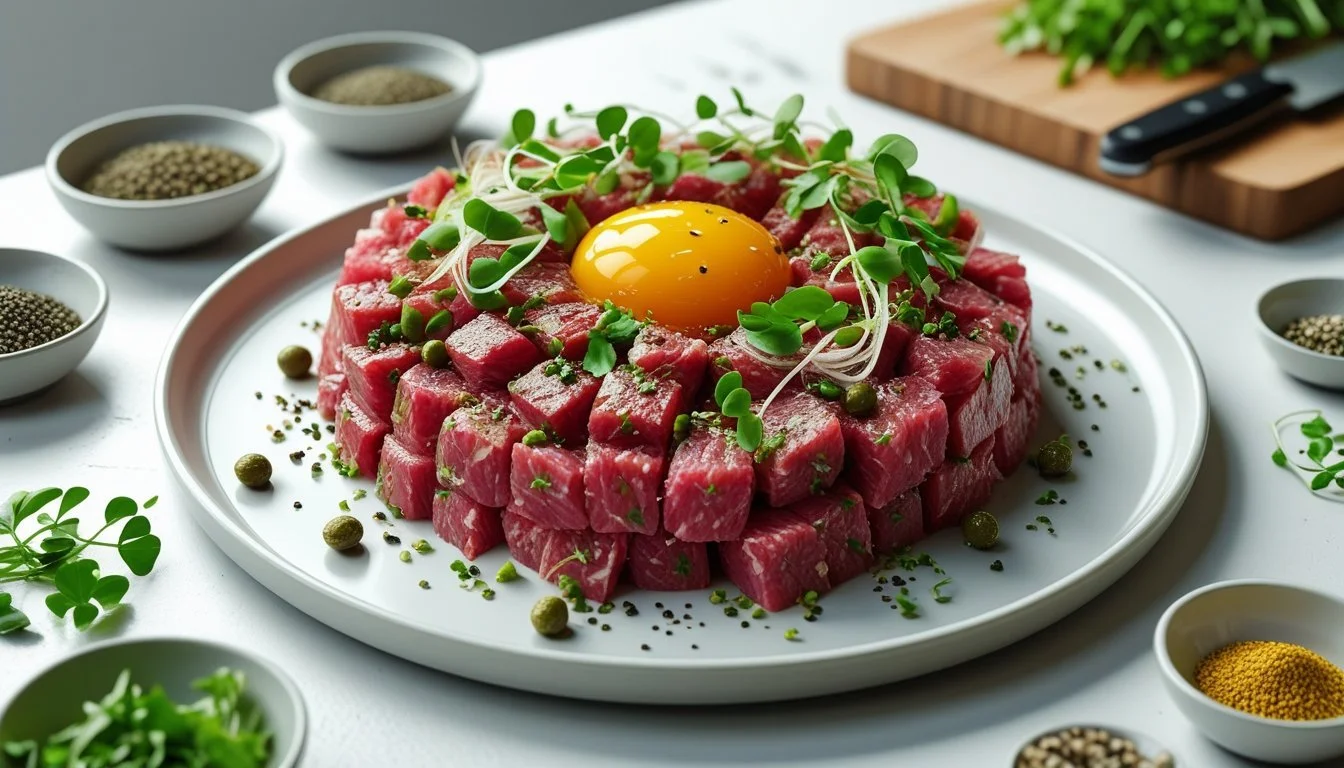
Precision in flavor balancing and careful seasoning are essential for beef tartare to reach its full potential. The goal is to enhance the natural taste of the beef while ensuring each bite is complex yet harmonious.
Achieving the Right Acidity
Acidity is fundamental in beef tartare because it lifts the flavors and helps create contrast with the raw beef. Common sources of acidity include freshly squeezed lemon juice, red wine vinegar, or a splash of high-quality red wine. These elements cut through the richness and keep the dish tasting lively.
Proper acidity also acts as a gentle tenderizer, softening the texture without overpowering the main ingredient. When adding acidic components, they should be introduced in small increments. Tasting after each addition allows adjustments based on the beef's natural flavor.
A simple tip: mix a small portion of the tartare first, adjusting the acid, before mixing everything together. This prevents over-acidification and keeps the flavor fresh and balanced. For variation, some recipes blend both lemon and a mild vinegar for added complexity.
Seasoning Techniques
Proper seasoning ensures that each flavor in the dish is distinct but not dominant. Essential ingredients include sea salt, cracked black pepper, minced shallots, capers, and Dijon mustard. Stirring in these elements evenly prevents pockets of strong or bland flavor.
For depth, a dash of Worcestershire sauce or tamari provides umami without overwhelming the beef's delicacy. A few drops of hot sauce or a drizzle of sesame oil offer a gentle heat or nutty aroma, respectively, but should be used sparingly.
Using a step-by-step approach:
Season lightly, then taste.
Gradually add more, adjusting salt and pepper first.
Finalize with capers, mustard, and any optional flavors like hot sauce.
Consistency and tasting throughout preparation are key to achieving delicious flavor with every serving.
Classic Beef Tartare Recipe
Classic steak tartare highlights the delicate flavor of raw beef, balanced with sharp seasonings and a creamy egg yolk. Proper preparation, knife skills, and thoughtful seasoning are key to a safe and flavorful result.
Step-by-Step Instructions
Start with fresh, high-quality beef such as tenderloin or sirloin. Trim away all fat and sinew. Place the steak in the freezer for about 20 minutes; this firms the meat, making it easier to mince uniformly.
Slice the chilled beef into ¼-inch slices, then into strips, and finally into small cubes. In a bowl, combine the minced beef with finely chopped shallots or onion, capers, and cornichons. Add fresh parsley or chives for extra bite.
Prepare a dressing using Dijon mustard, a dash of Worcestershire sauce, and a little olive oil. Mix the dressing into the beef mixture just before serving. Plate the tartare in a ring mold if desired. Top each portion with a fresh egg yolk. Serve immediately with toasted bread, potato chips, or Belgian endives.
Tips From Professional Chefs
Chefs recommend working quickly with chilled equipment to keep the beef cold and minimize bacterial risk. Always use freshly cut meat—never pre-ground—for best texture and safety.
Select condiments that complement rather than mask the beef’s natural flavor. A light hand with acid and mustard ensures balance. Toasted bread is traditional, but endive leaves or quality potato chips add crunch without overpowering the tartare.
Use a sharp knife to dice the beef rather than a food processor, which can create mushy texture. For extra refinement, season to taste just before serving, allowing the flavors to meld but the beef to stay fresh and vibrant.
Creative Variations
Beef tartare offers a platform for culinary creativity, adapting to diverse tastes and ingredient preferences around the world. Chefs and home cooks experiment with regional spices, sauces, and garnishes to put their own stamp on this classic raw dish.
Global Twists
Many countries have formed their own distinct versions of beef tartare, each highlighting local ingredients and traditions. French steak tartare typically blends minced raw beef with capers, onions, parsley, Worcestershire sauce, and a raw egg yolk.
In Korea, yukhoe offers a nutty, slightly sweet take, adding Asian pear, sesame oil, soy sauce, and pine nuts. In Ethiopia, kitfo uses finely chopped raw beef tossed with spiced mitmita powder and clarified butter (niter kibbeh).
Each twist often includes unique garnishes. It’s common to see pickled vegetables or spicy pastes served alongside, adding acidity and crunch that contrast with the meat’s tenderness. A quick-reference table below compares some global tartare styles:
Variant Notable Ingredients Typical Garnishes French Capers, shallot, egg yolk Cornichon, parsley Korean Asian pear, sesame oil, pine nuts Julienne cucumber, pickles Ethiopian Mitmita, niter kibbeh Cottage cheese (ayib)
Modern Ingredient Pairings
Contemporary tartare recipes expand beyond tradition by embracing unexpected flavors and textures. Many chefs now fold in ingredients like blue cheese or smoked salt for enhanced depth and umami.
Pickled vegetables, such as radishes, onions, or even kimchi, add a tart, lively element that keeps each bite balanced and fresh. Mustards, preserved lemon, or chili oil can replace or supplement classic seasonings.
Crunchy toppings—puffed rice, crispy shallots, or even tempura bits—bring added texture. Some pair tartare with microgreens or edible flowers to introduce color and herbal notes.
Carefully chosen dairy, ranging from crème fraîche to mascarpone, can add creaminess for a more luxurious bite. Plating often emphasizes color contrasts and precise garnishes, making modern tartare as visually appealing as it is flavorful.
Serving Suggestions and Presentation
Proper serving and thoughtful presentation make beef tartare suitable for both casual meals and sophisticated gatherings. Attention to detail helps preserve the freshness and elevates the overall gourmet experience.
Plating for Dinner Parties
Beef tartare looks its best when shaped into a neat, compact patty or small quenelle using a ring mold or two spoons. This approach creates clean lines and highlights the color and texture of the raw beef. Chilled plates are recommended to maintain optimal temperature and freshness.
Garnishes—such as a sprinkle of finely chopped parsley, capers, or shallots—add visual appeal and balance flavors. For a classic French restaurant style, a raw egg yolk can be placed on top, centered and unbroken. Serve the tartare immediately after plating to ensure both safety and flavor.
A small table summarizing plating styles:
Plating Style Notes Patty Traditional, neat, shows off texture Quenelle Elegant, good for tasting menus Deconstructed Separate components for visual interest
Suggested Accompaniments
Beef tartare is often served with toasted bread, crostini, or thin crackers. These accompaniments provide a mild crunch and make the dish easy to eat. Crisp French fries are another popular side, bringing a satisfying contrast in temperature and texture.
Common garnishes can include cornichons, pickled onions, or even a light drizzle of olive oil. Small bowls of mustard, aioli, or tangy sauces allow guests to customize each bite. For a gourmet experience, pair with a light green salad or a selection of marinated vegetables.
Offering a variety of textures and flavors is key to a memorable presentation for dinner parties or special occasions.
Nutritional Value and Health Aspects
Beef tartare is notable for its distinct nutritional profile, offering a variety of essential nutrients from both beef and common accompaniments like egg yolk. Nutrient content, caloric value, and food safety are crucial considerations for anyone interested in this dish.
Key Nutrients in Raw Beef
Raw beef used in tartare is rich in high-quality protein, which supports muscle growth and maintenance. A standard 100g serving provides about 18–20g of protein. It is also a good source of vitamin B12, which is vital for nerve function and red blood cell formation.
Beef tartare contains iron (especially in the easily absorbed heme form), zinc, and other B vitamins such as niacin and riboflavin. Including an egg yolk adds more nutrients, including vitamin D and choline. The fat content can vary; typical servings provide around 10g of fat, depending on the beef’s leanness and added ingredients.
Nutrient (per 100g) Amount (approx.) Calories 150-180 kcal Protein 18-20 g Fat 8-11 g Vitamin B12 2.5 mcg (100% DV) Iron 2.6 mg (15% DV)
Benefits and Considerations
Beef tartare is valued for its nutrient density, providing key micronutrients with relatively few carbohydrates. Its preparation avoids cooking, preserving heat-sensitive nutrients like certain B vitamins. Including egg yolk can further enhance nutritional value by adding healthy fats and extra vitamins.
However, eating raw beef carries a risk of foodborne illness, such as E. coli or Salmonella. It is important to use high-quality, fresh beef from reputable sources and maintain strict hygiene when preparing the dish. Immunocompromised individuals, pregnant women, and young children should avoid raw animal products due to these risks.
Those monitoring cholesterol or saturated fat intake should note the presence of both in beef and egg yolk, which may affect dietary choices. Beef tartare remains a protein-rich option, but proper sourcing and mindful consumption are essential for safety.

