
Beef vs. Bison: Taste, Price, Nutrition Compared for Smart Shoppers
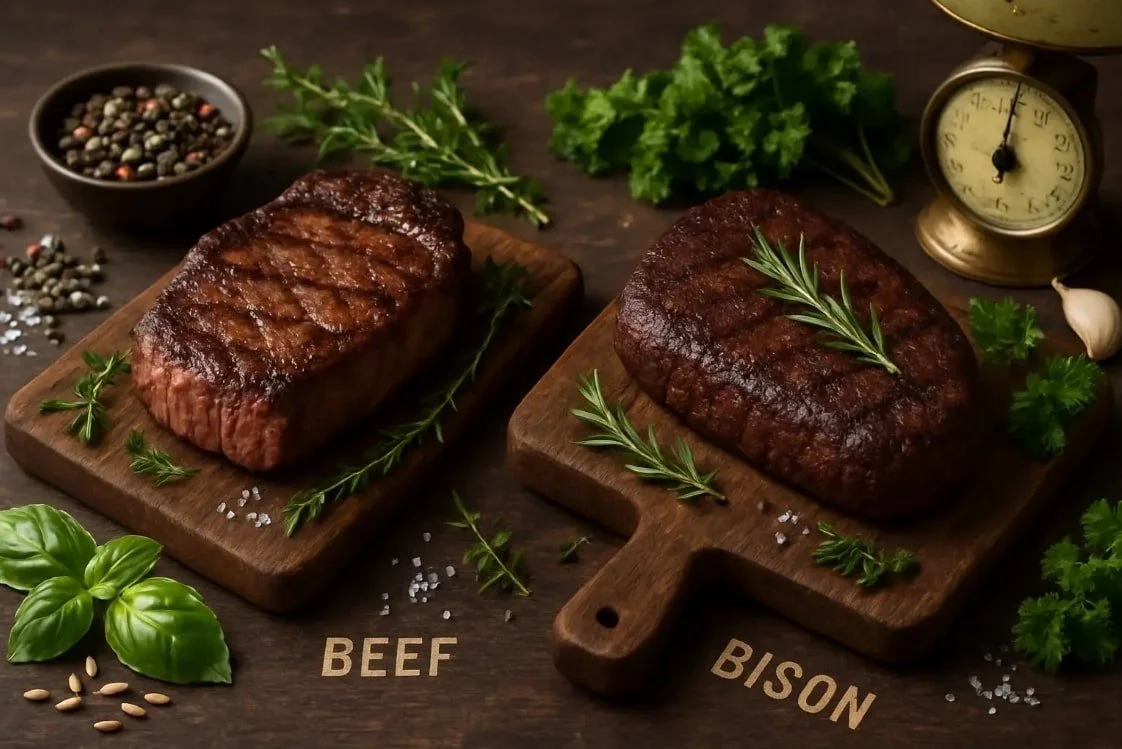
When choosing between beef and bison, many wonder how these meats compare in taste, price, and nutrition. Bison offers a leaner, slightly sweeter, and sometimes gamier flavor than beef, and is generally lower in fat and calories, while beef tends to have a more familiar, uniform taste and is often less expensive. These differences can influence personal preferences and how each meat fits into a diet or recipe.
Nutritionally, bison is richer in selenium, choline, and magnesium, while beef contains higher levels of vitamin B12 and certain B vitamins. Price-wise, bison typically costs more due to smaller production and different farming practices, but some find the nutritional benefits and distinct taste worth the extra expense. Exploring these factors can help anyone make an informed choice next time they’re at the butcher or selecting protein for their meal.
Overview of Beef and Bison
Beef and bison are two of the most popular red meats consumed in North America. Each comes from different animals and offers unique characteristics in terms of taste, availability, and historical significance.
Definition and History
Beef comes from domesticated cattle, which have been raised for thousands of years for meat, dairy, and labor. Cattle were introduced to North America by European settlers in the 16th century and quickly became a staple livestock.
Bison, often called American bison or buffalo, is native to North America. They roamed the continent in vast herds and were a critical resource for Native Americans, providing food, clothing, and materials. Bison came close to extinction in the late 1800s due to overhunting and habitat loss, but conservation efforts have since restored populations.
Key facts:
Beef: Domesticated, global production, European origin in North America
Bison: Wild, native species, significant to indigenous people
Buffalo vs. Bison: "Buffalo" is commonly used for bison in the United States, but they are different from water buffalo found elsewhere
Types and Cuts Available
Beef is widely available in grocery stores and butcher shops throughout North America, offered in many forms. Common cuts include steaks (ribeye, sirloin, T-bone), roasts (chuck, brisket), ground beef, and specialty items like oxtail.
Bison meat, though more limited in availability, can be found at select retailers and specialty markets. Popular offerings include bison steaks, ground bison, bison burgers, and bison chuck roast. The meat is typically leaner than beef and is often raised without added hormones.
Table: Common Cuts
Cut Type Beef Bison Steaks Ribeye, Sirloin Ribeye, Sirloin Ground Ground Beef Ground Bison Roasts Chuck, Brisket Chuck Roast Burgers Beef Burgers Bison Burgers
While both meats share similar cut names, bison cuts are typically smaller and leaner due to the animal’s lower fat content and different muscle structure.
Beef remains more accessible and cost-effective, while bison is prized for its distinct flavor and considered a specialty choice.
Taste and Flavor Differences
Bison and beef both offer a classic red meat experience but have distinct characteristics in taste, aroma, and mouthfeel. These differences come from variations in animal diet, fat content, and how the meats are typically prepared and cooked.
Flavor Profiles
Beef is known for its rich, savory flavor that can be described as buttery, especially in cuts with higher marbling. Its pronounced red meat taste is familiar to most consumers and is often influenced by the level of fat present in the cut.
Bison has a milder, slightly sweeter taste that comes from its leaner composition and lower fat content. Compared to grain-fed beef, bison tends to offer a more “earthy” or “mineral-like” flavor due to higher iron levels. Many people note that bison tastes a bit cleaner, without the heavy or greasy qualities found in fattier beef cuts.
Lean bison steaks highlight this clean flavor, which stands out particularly in dishes where minimal seasoning is used. The subtle differences may be more noticeable when bison is compared with well-marbled, grain-fed beef rather than lean or grass-fed beef.
Texture and Tenderness
Texture plays a significant role in how bison and beef are enjoyed. Beef, especially well-marbled steak cuts like ribeye or strip, is prized for its tender texture and juiciness. The fat within the muscle fibers melts during cooking, resulting in a smooth, moist bite.
Bison is naturally lean meat, with less marbling and lower overall fat. Because of this, bison cuts can be firmer and less juicy than their beef counterparts. Overcooking bison can make it tough, so it’s often recommended to cook bison steaks to a medium-rare or medium doneness for the best texture.
The difference is especially noticeable in thicker cuts such as steaks or roasts. Bison’s lean nature delivers a denser mouthfeel. While not tough if cooked properly, it lacks the luxurious softness of fattier beef, appealing to those who prefer a more substantial bite without excess grease.
Nutritional Comparison
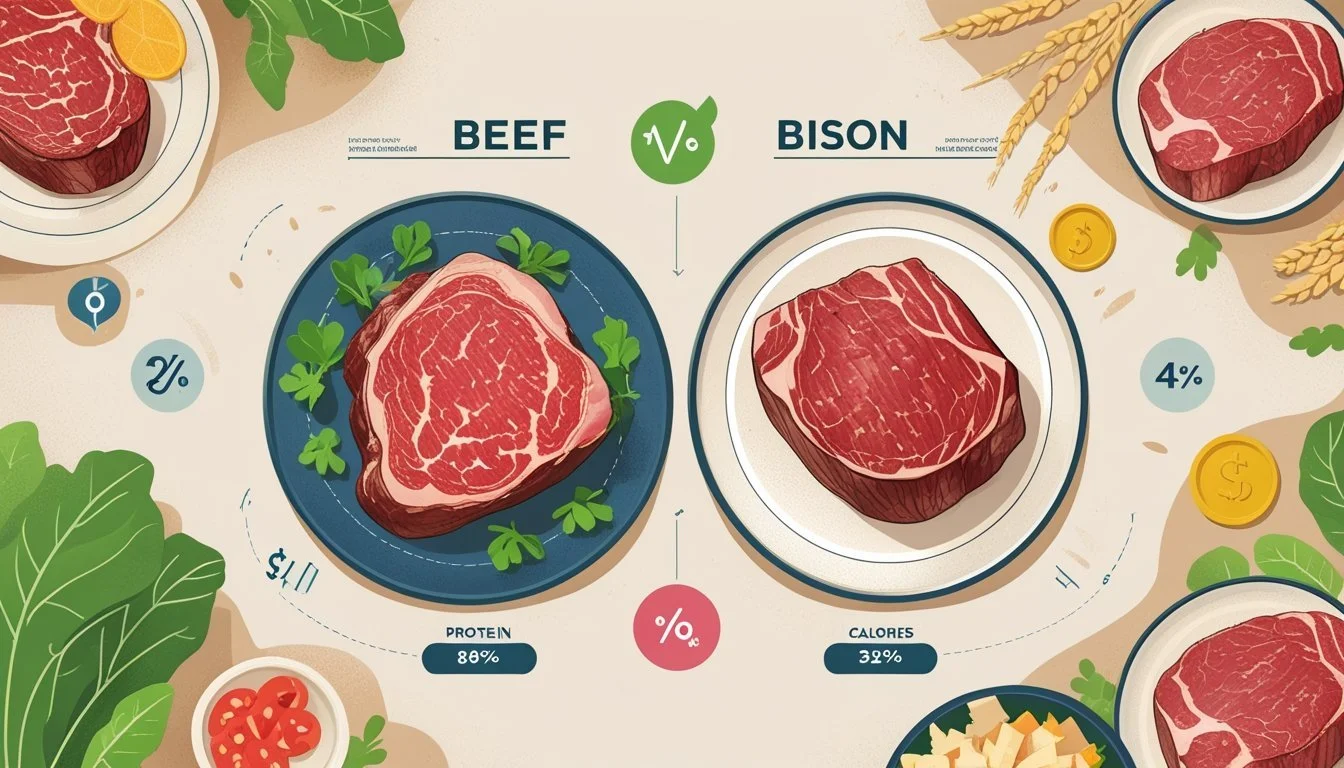
Bison and beef are both classified as red meat, but they differ in several key nutritional areas. These differences are especially notable when it comes to protein, fat, cholesterol, and calorie content.
Protein and Fat Content
Both bison and beef are high-protein meats. A 100-gram serving of bison offers a comparable amount of protein to beef, supporting muscle maintenance and repair.
Where they differ most is in fat content. Bison is known for being particularly lean. According to USDA data, bison contains about 1.8 grams of fat per 100 grams, while beef has closer to 24 grams per 100 grams in a comparable cut.
The lower fat content in bison also leads to fewer saturated fats, which is significant for consumers monitoring heart health. Bison’s lean profile makes it appealing for those seeking to cut fat without sacrificing protein intake found in red meat.
Meat Type Protein (g/100g) Fat (g/100g) Bison ~21 1.8 Beef ~21 24
Cholesterol and Calories
Cholesterol levels in red meat are a frequent concern for many. A 3-ounce grass-fed bison patty typically contains about 7 grams of fat and 152 calories, per USDA. This is leaner than a beef patty of the same size, which can reach up to 291 calories and contain much more fat.
Despite both being red meat, bison tends to have a slightly lower cholesterol content than most cuts of beef. The significant calorie reduction in bison is directly linked to its lower fat content.
For those watching dietary cholesterol or managing calorie intake, bison is generally considered the lighter option. This makes bison a suitable alternative for those wanting to limit calories and unhealthy fats while maintaining protein intake.
Cost and Availability
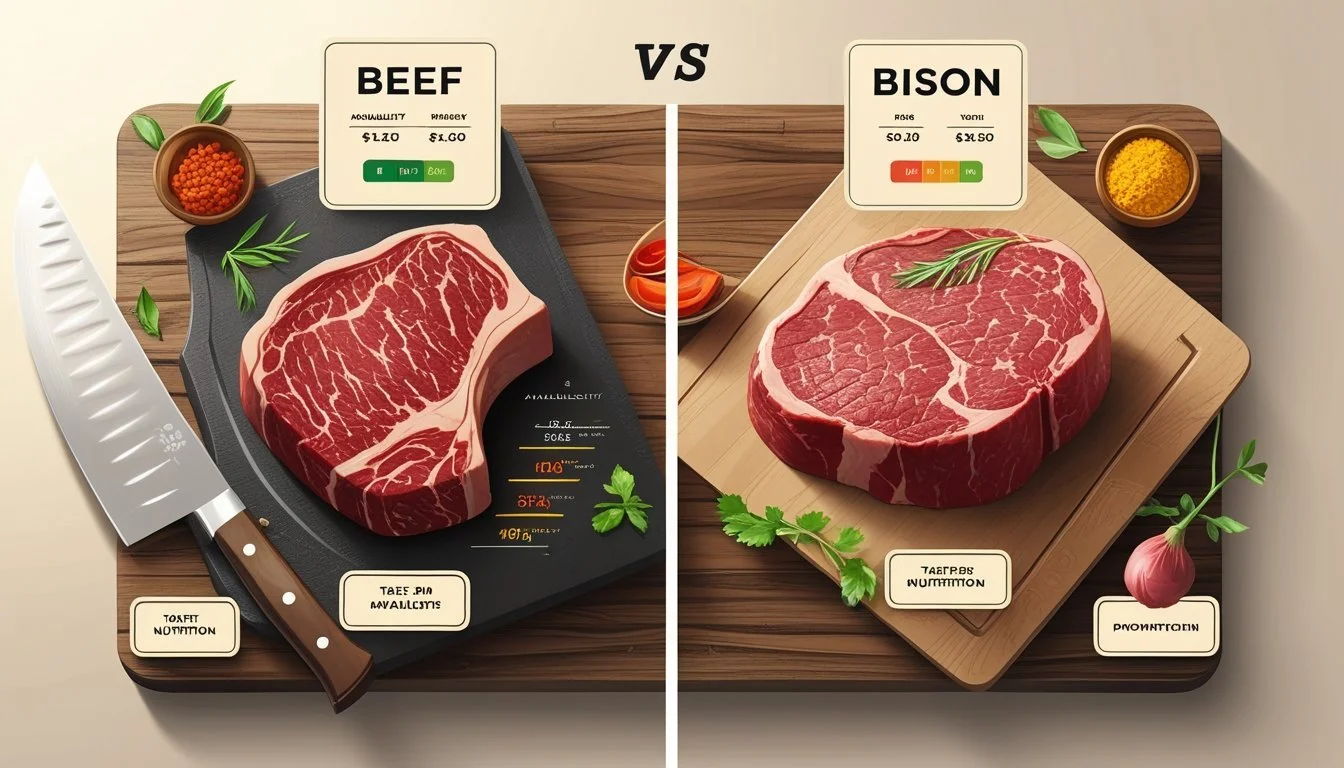
Bison and beef differ considerably in terms of price and where they can be found in North America. The cost per pound and availability are shaped by factors such as production scale, distribution infrastructure, and consumer demand.
Market Price Trends
Bison meat typically costs more per pound than beef. Ground bison often ranges from $7 to $12 per pound, while lean ground beef averages $4 to $6. Steaks show a bigger gap: bison strip steaks can be up to three times the price of standard beef steak.
The smaller bison population and limited ranching practices contribute to these higher prices. Raising and processing bison requires stricter handling and greater regulatory oversight, which increases overhead.
Beef production is widespread with a large supply chain, helping keep its prices lower. Grass-fed beef narrows the price gap but still undercuts bison on average, especially considering the economies of scale involved in beef farming across North America.
Availability in Stores and Restaurants
Beef is widely available across supermarkets, grocery chains, and restaurants throughout North America. It is stocked in a variety of cuts and product forms.
Bison, however, is less commonly found. National retailers may carry bison meat, but options are typically limited to ground meat or a small range of steaks. Specialty stores or online retailers are often required for broader selection.
Restaurants offering bison tend to be concentrated in regions where bison are raised, such as parts of the Midwest and Canada. Even then, it is usually featured as a specialty menu item rather than a staple like beef. The relative rarity of bison farming, coupled with limited distribution channels, impacts both how often consumers encounter it and the product variety available.
Preparation and Cooking Methods
Bison and beef require slightly different approaches in the kitchen due to differences in fat content and texture. The key factors are cooking temperature, internal doneness, and the best methods to preserve juiciness and flavor.
Recommended Cooking Temperatures
Bison is leaner than beef, which impacts its ideal doneness and safe cooking temperature. For the most tender results, bison steaks and roasts are best enjoyed at medium-rare to medium doneness. The USDA recommends an internal temperature of 145°F (63°C) for both bison and beef steaks, followed by a 3-minute rest. Using a meat thermometer helps ensure accurate results and avoids dryness.
Due to bison’s lower fat and quicker cooking time, overcooking can lead to a tough texture. Unlike beef, which can tolerate medium-well or even well-done preparations, bison dries out rapidly if cooked past medium. Hamburger patties for both meats should reach an internal temperature of 160°F (71°C) for food safety, as suggested by USDA guidelines.
Best Cooking Techniques
Since bison is much leaner, it benefits from methods that use medium heat rather than high heat. Grilling, pan-searing, and broiling work well for bison steaks and ground bison but require careful attention to avoid overcooking. For steaks, searing over medium-high heat and finishing on low or indirect heat helps retain moisture.
Slow cooking methods, like braising and stewing, are particularly effective for tougher cuts of both beef and bison. A slow cooker or Dutch oven at low temperatures breaks down connective tissue, delivering tender, flavorful results. Marinating, especially for bison, can help keep the meat moist and add flavor. Resting the meat after cooking—at least 5 minutes—allows juices to redistribute, improving texture and taste.
Popular Dishes and Serving Suggestions
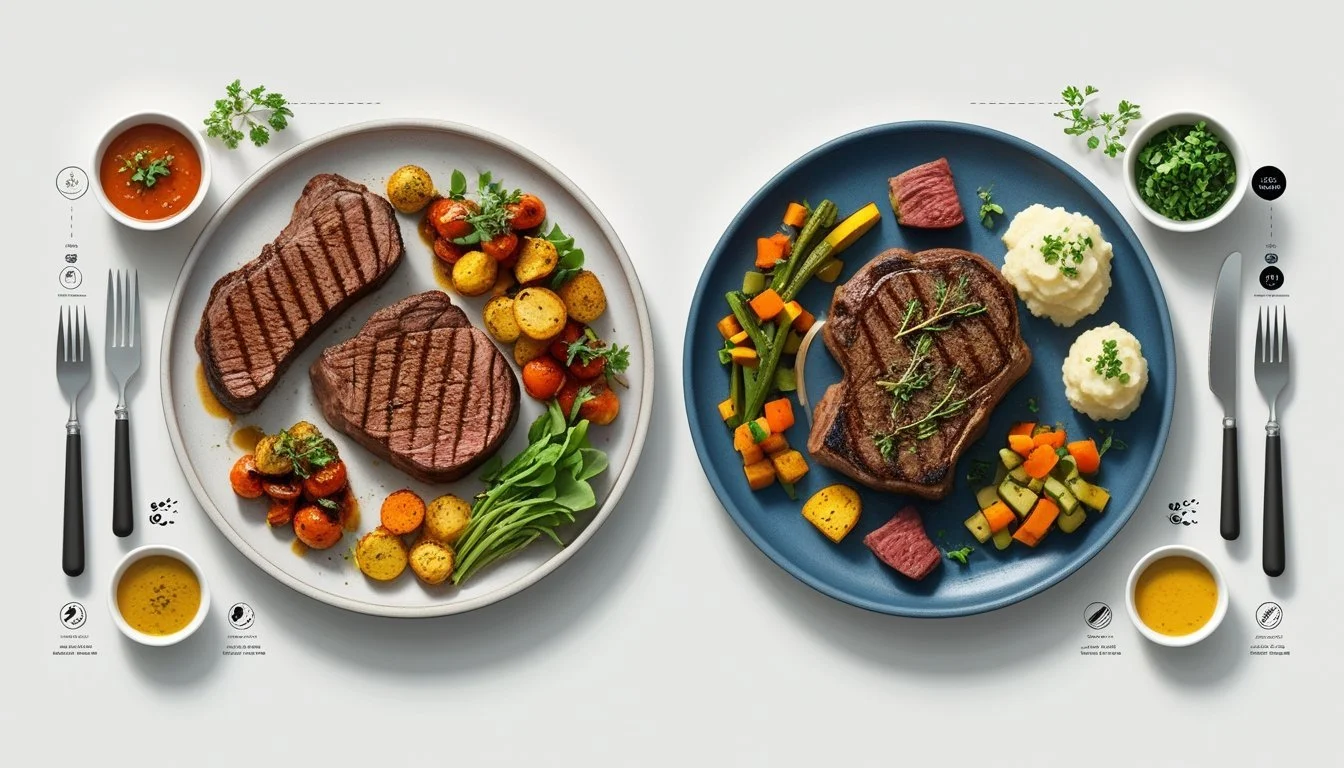
Both beef and bison feature in a wide range of classic and contemporary dishes, but the optimal choice often depends on specific flavor and texture preferences. Cooking techniques and recipe selection can highlight the unique qualities of each meat.
Best Uses for Beef
Beef is widely used because of its rich marbling and naturally robust flavor. Classic steak cuts like ribeye, sirloin, and filet mignon are favorites for grilling or pan-searing. Chuck roast is a strong choice for slow-cooked dishes, as it becomes tender and flavorful over several hours.
Ground beef is a go-to ingredient for burgers, meatballs, chili, and tacos. The fat content helps keep burgers juicy and adds flavor to dishes. In traditional cuisine, beef features in stews, pot roast, and shepherd’s pie.
Burgers made with ground beef remain popular due to versatility, ease of cooking, and widespread availability. Stir fry, fajitas, and beef stroganoff are additional dishes that take advantage of beef’s ability to absorb marinades and spices. Beef can be cooked to a variety of doneness levels—rare to well-done—without drying out.
Best Uses for Bison
Bison is leaner than beef, with a slightly sweeter, cleaner flavor. Its tenderness makes bison steaks best suited for fast, high-heat cooking methods like grilling or broiling. Because it is lower in fat, care should be taken not to overcook bison steaks, as they can dry out quickly.
Ground bison is popular for making bison burgers, offering a meatier and less greasy alternative to traditional beef burgers. It also works well in chili, tacos, and casseroles for those seeking a leaner red meat protein.
Slow-cooked bison dishes, such as roasts or stews, benefit from adding moisture through broth or vegetables. Bison pairs well with simple seasonings—salt, pepper, and fresh herbs—letting its natural flavor stand out. For best results, bison is often cooked to medium-rare.
Environmental and Ethical Considerations
Bison and cattle production have notable differences in how they impact the land and animals involved. Key factors include their effects on ecosystems, greenhouse gas emissions, grazing patterns, and the treatment of the animals.
Sustainability
Bison are typically raised on open pasture and have a grazing style that helps maintain grassland health. Their movement habits allow land to recover and promote native plant diversity. As a result, bison herds can play a role in preventing grassland degradation.
Cattle, in contrast, are often raised in concentrated animal feeding operations (CAFOs) or intensively managed pastures. This can lead to soil erosion, overgrazing, and increased methane emissions. According to several ecological studies, bison contribute less methane per animal than conventional cattle.
From an environmental standpoint, bison generally require less water and produce less waste runoff. However, beef production is far more common, and large-scale cattle ranching supports a vast meat industry under USDA regulation. Commercial bison is less prevalent, but its ecological footprint is typically lower per pound of meat produced.
Animal Welfare and Farming Practices
Many bison are raised in low-stress, free-range systems, favoring more natural behaviors and less confinement. This approach, combined with limited antibiotic or hormone use, often results in higher animal welfare standards compared to conventional beef.
Cattle are frequently kept in feedlots with restricted movement, especially in larger operations. The use of growth hormones and antibiotics is more widespread in cattle farming. While USDA guidelines provide oversight for both industries, bison are generally closer to wild conditions, sometimes even managed in conservation herds to prevent extinction.
Differences in farming scale also mean cattle face higher transportation and procedural stress. Bison, often managed in smaller groups, avoid some of the welfare issues common in large-scale beef production. Animal welfare certifications exist for both, but independent audits and local practices make outcomes variable.

