
The Sacred Cow in India: Myth vs. Nutritional Value and Cultural Perspectives
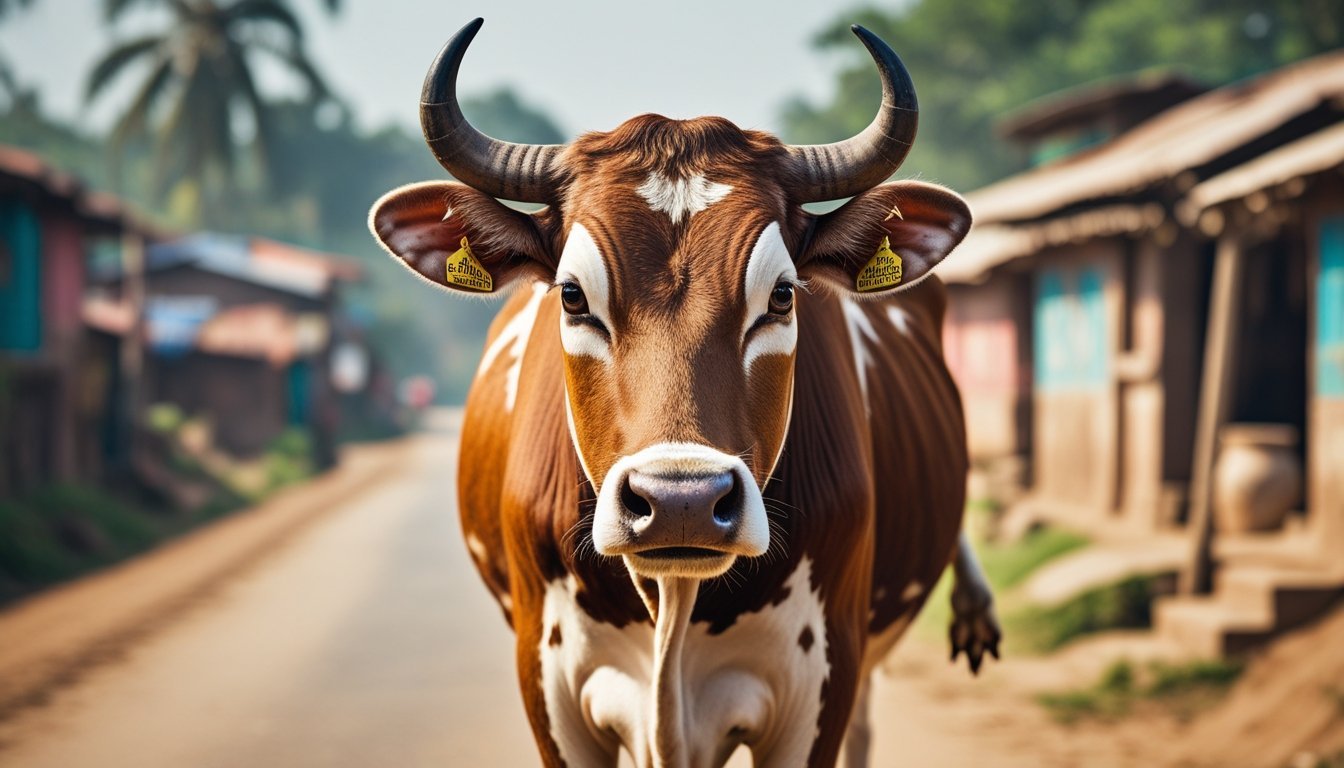
In India, the cow holds a unique position as both a symbol of spiritual purity and a vital source of nutrition, creating a complex intersection of myth and practical value. This dual status has been shaped by centuries of religious beliefs, cultural practices, and modern nutrition science. The cow is often revered as "Gau Mata" (Mother Cow) in Hindu tradition and is closely associated with ideas of divine beneficence and protection.
Despite its sacred status, the nutritional contribution of cows, especially through their milk and related products, plays a major role in the daily lives of millions of Indians. Debates around the cow in India touch not only on ritual and mythological roots but also on pressing issues such as food security and rural economy. This blend of the spiritual and the practical continues to spark conversations across Indian society, making the sacred cow a subject of ongoing interest and debate.
Historical and Spiritual Significance of the Sacred Cow
The sacred cow holds a central place in Indian religious life, especially within Hinduism, serving as both a symbol of abundance and spiritual purity. This reverence is rooted in scriptural references, rituals, and enduring myths that span thousands of years.
Cow Worship in Hinduism
Hindus regard cows as sacred beings representing non-violence, motherhood, and sustenance. Reverence for the cow is evident in daily life—many households feed cows before themselves, and harming or killing a cow is taboo for most Hindus.
Key festivals such as Govardhan Puja celebrate the cow's divine status, honoring its role in sustaining life. Temples across India often maintain cows as a symbol of piety. Nandi, the sacred bull and vehicle of Shiva, is worshipped in numerous temples, reflecting the broader concept of cattle sanctity in Hindu tradition.
Respect for the cow also extends to Kamadhenu, the mythical wish-granting cow, seen as the mother of all cattle and a provider of prosperity. This link elevates cow worship beyond ritual, making it a living practice across religious and social contexts.
Vedic Texts and Ancient Myths
Early references to the sacred cow appear in the Rigveda, where cows are depicted as sources of wealth and nourishment. Cattle played a vital economic and ritual role during the Vedic period, with their products featured in sacrifices and religious ceremonies.
Ancient texts like the Mahabharata, Puranas, and Upanishads highlight the sanctity of the cow. Myths such as Samudra Manthan narrate the emergence of Kamadhenu from the cosmic ocean, reinforcing her spiritual legacy. The Atharvaveda even describes cows as symbolic of prosperity, calling them “Aghnya”—not to be killed.
These sources position cows as sacred animals whose protection symbolizes adherence to dharma (moral duty) and a harmonious relationship with nature.
Symbolism and Spiritual Meaning
The cow is widely regarded as a symbol of Mother Earth, nurturing all creatures without discrimination. Its gentle nature and association with nourishment transform it into an icon of generosity and selflessness.
Deities such as Krishna, who spent his youth among cows, contribute to the spiritual symbolism attached to cattle. Cows, by giving milk and other resources, embody the spiritual significance of selfless giving and support for the community.
In ritual, cows are often invoked as bearers of good fortune and purity. Their image and presence during religious ceremonies reinforce values such as compassion, patience, and reverence for life—core tenets in Hindu practice.
Cultural Practices and Religious Ceremonies
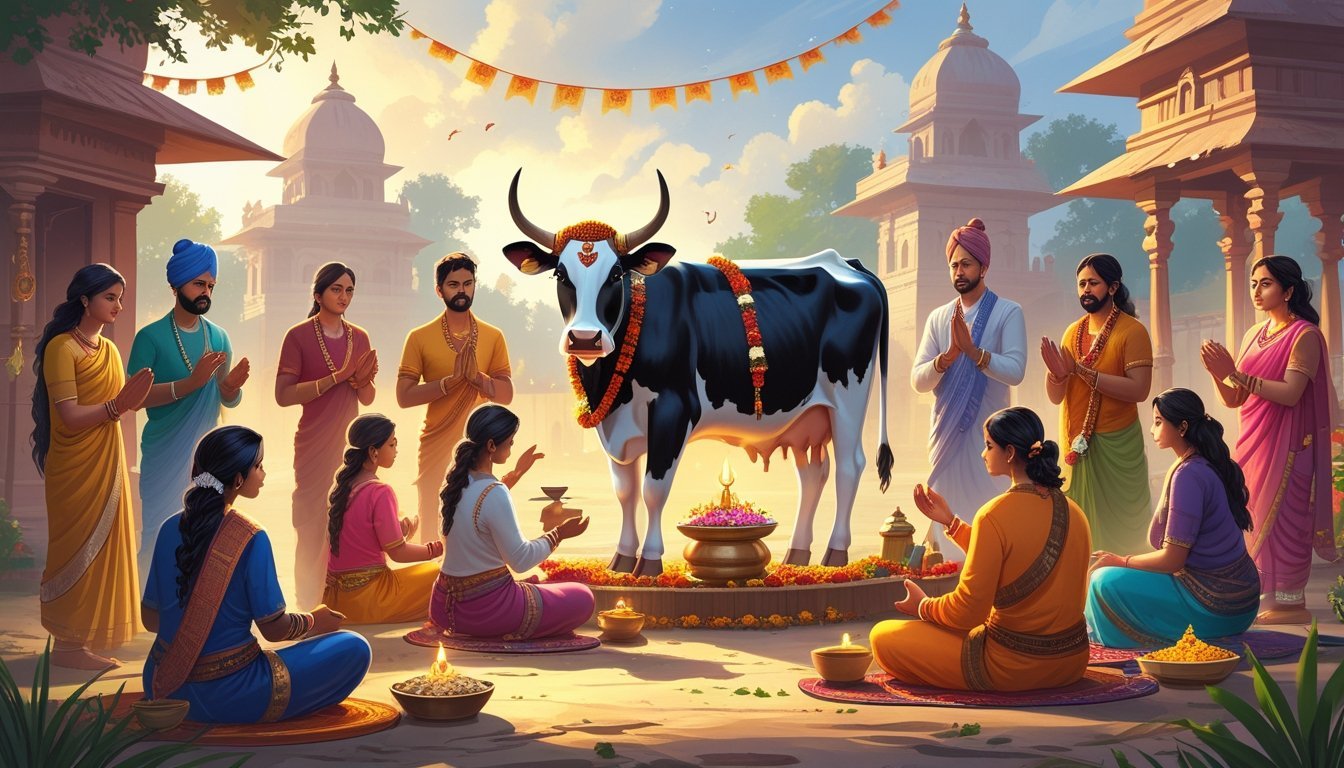
Cows occupy a central position in India’s social and spiritual life. Their presence extends from daily household rituals to major public festivals, connecting deeply with themes of abundance, purity, and gratitude.
Role of Cows in Rituals
Cows play an integral role in Hindu religious ceremonies. They are not only present as living beings but are also invoked symbolically for their associations with fertility, nourishment, and motherhood. In daily pujas, families may offer prayers, food, and garlands to the cow, treating it as dhenu—the giver of sustenance.
Special rituals often involve the products of the cow—such as milk, curd, butter, and especially ghee—which are considered pure and auspicious. Ghee, made from clarified butter, is used in sacred fires (yajnas) for its symbolism of purity and as an offering to deities.
During rites of passage or major religious milestones, cows are sometimes touched or circled as acts of seeking blessings. This practice reflects ideas of cow protection and gratitude, emphasizing the cow's role as a source of both material and spiritual well-being.
Festivals and Celebrations
Several festivals in India center directly on the veneration of cows. For instance, Gopashtami is dedicated to honoring cows and cowherds, marking the day when Lord Krishna, in his youth, was entrusted with tending the cows.
On this day, cows are washed, decorated with flowers, and their horns are sometimes painted in bright colors. Families will often feed the cows special treats, and priests may perform elaborate prayers for their well-being.
Other gatherings, such as Pongal in Tamil Nadu and Makar Sankranti in North India, include symbolic uses of cow products like milk, ghee, and curd in festive dishes. These celebrations reinforce the link between cows and ideas of abundance, wealth, and the goddess Lakshmi, who is associated with prosperity.
Symbols of Purity and Abundance
The cow is viewed as a symbol of purity within Hindu belief systems. The five products derived from the cow—milk, curd, ghee, urine, and dung—are known as panchagavya and are used for ritual purification.
Cows frequently appear in temple iconography and religious art, often as companions of Lord Krishna, who is depicted playing the flute among the herds. This association reinforces ideals of compassion and the nurturing aspect of divinity.
In stories and ceremonies, the cow represents not just material abundance and wealth, but also the virtues of selflessness and motherhood. Ritual acts, such as giving cows as gifts during ceremonial donations, are ways of manifesting gratitude for life's sustenance and for the blessings of purity and prosperity.
Nutritional Value of Cow-Derived Products
Cow-derived products offer diverse nutritional and therapeutic properties. Each product, from milk to byproducts like ghee and cow urine, is recognized in Indian dietary and medicinal practices for specific roles in nourishment and traditional healing.
Milk and Its Health Benefits
Cow's milk is widely consumed in India as a principal source of protein, calcium, and essential vitamins, including vitamin D and B12. It supplies nourishment for all age groups and is considered especially important for children and the elderly.
The easy digestibility of cow's milk and its amino acid profile support muscle growth and repair. Regular dairy consumption is linked with improved bone health and reduced risk of osteoporosis, given its calcium content.
Milk is a foundation for other staples like curd, butter, and ghee, extending its nutritional impact. Its fat content varies, with whole milk providing more energy while toned milk offers a lower-fat option.
Ghee, Butter, and Curd
Ghee and butter, both derived from cow's milk, are rich in saturated fats, but ghee is clarified and contains minimal milk solids. Ghee is prominent in Indian cooking, valued for its high smoke point and unique flavor.
Ayurvedic medicine emphasizes ghee for its purported digestive benefits. It is regarded as a carrier for herbs and nutrients in traditional formulations.
Curd, or dahi, is fermented milk that introduces beneficial probiotics to the diet. It aids in digestion and supports gut health. Curd is also a source of protein, calcium, and B vitamins, making it a regular part of Indian meals.
Product Key Nutrients Health Role Ghee Saturated fat, vitamins A, E Cooking, digestion support Butter Saturated fat, vitamin A Flavor, energy source Curd Protein, calcium, probiotics Digestive, gut health
Cow Urine and Dung in Ayurveda
Cow urine (gomutra) and cow dung (gomaya) hold a unique place in Ayurveda. These byproducts are not consumed as food but are instead incorporated into ayurvedic medicine and traditional therapies.
Cow urine is used in formulations for its claimed antimicrobial and detoxifying properties. It features in ‘Panchgavya’ mixtures, which combine five cow derivatives believed to support health and immunity.
Cow dung is applied externally and sometimes used in purification rituals. It is credited with antiseptic qualities and plays a role in traditional remedies, though scientific evidence is limited. Both urine and dung are discussed for their medicinal properties rather than nutritional value.
Myths and Misconceptions About the Sacred Cow
The sacred status of cows in India is discussed in religious, cultural, and political contexts. Many beliefs about cows stem from a mix of ancient texts, folklore, and modern movements, which leads to debate and confusion.
Origins of the Sacred Status
The oldest references to the cow’s sacred status appear in the Vedas, where cows are symbols of wealth, abundance, and non-violence. The Rigveda highlights cows as sources of prosperity, not only as material assets but also as spiritual symbols tied to rituals.
Upanishads and Puranic stories extend this reverence. In these texts, the cow signifies the universe and spiritual knowledge. Mythology often links cows to deities, such as Krishna, who is depicted as a cowherd, and Shiva, whose steed is the bull Nandi.
Many Indians believe that the sacredness of cows was always strictly enforced. However, historical evidence shows that cow protection practices varied by region, period, and dynasty. Cows were sometimes used for sacrificial rituals in ancient times, and the ban on cow slaughter developed later.
Folklore Versus Historical Fact
Much of modern Indian folklore paints the cow as an eternal object of worship among Hindus. Stories often tell of divine cows, like Kamadhenu, who grant wishes and blessings, shaping how society treats cattle.
A comparison of myth and fact:
Myth/Folklore Historical Fact Hindus never killed cows Ancient texts include references to ritual cattle sacrifices Cow worship is universal in India Respect for cows varies across regions and communities
Hindu nationalism, especially in recent decades, has promoted certain narratives around cow protection for political purposes. The BJP and similar groups have amplified these stories, sometimes blurring historical realities and myths in popular discourse.
Debates on Cow Protection and Cow Killing
Cow protection and the banning of cow slaughter are contentious topics in Indian society. Laws regarding cow slaughter differ by state, with some bans actively enforced while others are more symbolic.
Arguments about cow killing involve not only religious beliefs but also issues of nutrition, livelihood, and minority rights. Hindus are generally opposed to killing cows on religious grounds, but other communities, including some Christians, Dalits, and Muslims, view cattle as a food source.
Political parties, especially those associated with Hindu nationalism like the BJP, use the issue to galvanize support, leading to communal tension. Accusations of cow slaughter have sparked violence and incidents of mob justice, highlighting the deep divide in Indian society over the sacred status of cows.
Economic and Agricultural Role of Cows in India
Cows have shaped India’s agricultural landscape for centuries, providing more than just religious symbolism. Their economic and practical value continues to influence rural livelihoods, sustainability, and resource management across the country.
Cows in Farming and Sustainability
Cows and bulls are critical to farming activities in many rural and indigenous communities. Bulls, in particular, often serve as draught animals, powering plows, carts, and water-lifting devices. This reduces dependency on mechanized equipment, making small-scale farming more affordable and sustainable.
Cow dung, traditionally used as fertilizer, enhances soil fertility without chemical inputs. It also serves as a primary source of biogas in countless villages. Biogas contributes to local energy needs while reducing reliance on nonrenewable fuels.
India maintains the world’s largest cattle population, supporting diverse agricultural systems. The abundance of cattle supports rotational grazing, organic farming practices, and nutrient cycling, which are all important for long-term farm productivity and land health.
Cow Products in Rural Economies
Cow products hold substantial economic significance in rural areas. Milk and its derivatives—such as ghee, curd, and butter—are dietary staples and a main source of income for many farming families. India is one of the world’s top milk producers, with dairy farming forming a crucial part of agricultural wealth.
Dried cow dung serves as both cooking fuel and a building material. Cow urine and dung are used in traditional medicines, pest control, and organic fertilizers, reflecting their multifunctional roles in indigenous and rural life. These products help diversify income streams and support rural economies where industrial products are expensive or unavailable.
In many regions, the sale of cow-related goods at local markets reinforces economic independence and regional self-sufficiency. This integration of cow products into daily life illustrates how their value extends well beyond strictly religious or symbolic roles.
Moral and Ethical Perspectives: Ahimsa and Non-Violence
In India, the sacred status of the cow is grounded in principles of non-violence and compassion for all living creatures. The ethical framework of ahimsa shapes attitudes toward animal life, social interactions, and even dietary choices.
Philosophy of Ahimsa
Ahimsa is a foundational principle in Hinduism, Jainism, and Buddhism. It emphasizes the avoidance of harm—physically, mentally, or emotionally—toward all living beings. The term literally means “non-violence,” but it extends further to include kindness and mindful action.
Key texts, such as the Mahabharata and Chandogya Upanishad, explicitly promote ahimsa as a supreme virtue. The phrase “Ahimsa Paramo Dharma” highlights non-violence as the highest ethical duty. This moral commitment influences not only religious life, but also practical choices, such as vegetarianism and animal protection.
In Indian society, the cow embodies the ideals of gentleness and nourishment, making it a symbolic subject of non-violence. The broader application of ahimsa fosters harmony and respect across communities.
Gandhi’s Viewpoint and Modern Movements
Mahatma Gandhi placed ahimsa at the heart of his social and political philosophy. He believed that non-violence was not merely a tactic, but a way of life that demanded consistent compassion, even in challenging circumstances.
Gandhi’s interpretation of ahimsa influenced India’s independence movement through satyagraha—a method of peaceful resistance. His approach prioritized harmony and discouraged aggression, both towards humans and animals.
Today, this legacy continues in various movements promoting vegetarianism, animal welfare, and peace. Ahimsa remains a guiding concept for activists and citizens working toward a society rooted in kindness and non-violence. Indian laws that prohibit cow slaughter in many states are partly a reflection of this enduring ethical principle.
Modern Legalities and Social Debates
Cow protection in India is shaped by legal frameworks, ongoing public debates about diet and identity, and the operation of numerous shelters that care for cattle no longer used for farming or milk. These themes intersect with religious beliefs, social tensions, and the political landscape.
Cow Protection Laws in Contemporary India
Cow protection laws vary by state across India, with most northern and central states imposing strict bans on cow slaughter. States such as Uttar Pradesh, Madhya Pradesh, and Gujarat enforce prohibitions that extend to the sale and transport of cattle for slaughter.
These laws derive legal backing from Article 48 of the Indian Constitution, which urges the state to take steps to prohibit the slaughter of cows and other cattle. Enforcement mechanisms differ widely, and punishments for violations can include heavy fines and imprisonment.
Political parties, particularly the Bharatiya Janata Party (BJP), have often supported more stringent legislation as part of broader Hindu nationalist agendas. Some states led by the BJP have recently increased penalties and expanded protections. Critics argue these laws sometimes lead to arbitrary enforcement and target minority groups.
Beef Consumption and Social Tensions
While beef is prohibited in many states, it remains legally consumed in parts of southern and northeastern India, where local populations have distinct dietary customs. This patchwork of regulations has become a source of tension.
Incidents of violence, including attacks against individuals suspected of possessing or eating beef, have made headlines in recent years. These acts are often linked to vigilante groups claiming to protect cows on religious grounds. Human rights organizations have noted that such violence disproportionately affects Muslim and Dalit communities, who have different traditional practices.
Public discourse on beef consumption is highly polarized. Some frame it as a question of rights and personal freedom, while others insist on its religious and cultural significance. The issue often surfaces during elections, fueling further debate.
The Role of Gaushalas and Cow Shelters
Gaushalas, or cow shelters, operate in most states and house cattle that can no longer produce milk or work in agriculture. These shelters are usually funded by religious organizations, charities, and state governments.
Their primary goals include sheltering stray or abandoned cows and promoting animal welfare in line with Hindu traditions. Many gaushalas face challenges handling overcrowding, limited resources, and inadequate veterinary care.
Some critics point out cases of neglect and unsanitary conditions. However, gaushalas remain integral to modern cow protection efforts, representing a non-violent alternative to slaughter. They also play a role in rural economies, sometimes producing dung, urine, and organic fertilizers for sale.
Diverse Attitudes Across Cultures and Regions
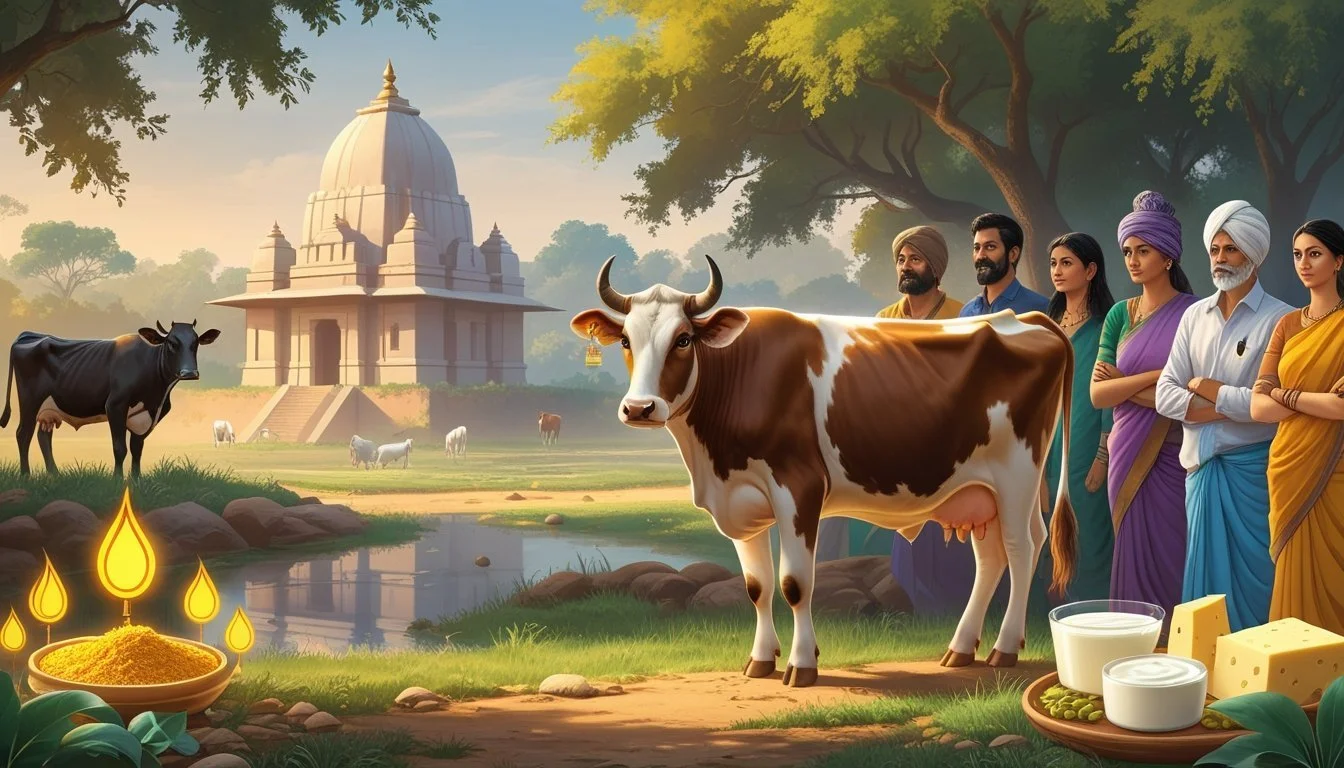
Perceptions of the cow as a domestic animal vary significantly depending on region and cultural background. While cows hold deep symbolic meaning in India, their value and role differ elsewhere, shaped by distinct beliefs, traditions, and practical needs.
Comparisons with Global Cow Symbolism
In India, cows are widely regarded as sacred, especially among Hindus, where religious texts and cultural practices emphasize their spiritual status. This reverence is unique compared to many other cultures.
In contrast, cows are viewed mainly for their agricultural and nutritional value in Europe, North America, and parts of East Asia. For example, in much of the Western world, beef and dairy products are dietary staples, and religious considerations rarely influence cattle treatment.
Several African societies also keep cattle as symbols of wealth, social status, or community ties. However, few cultures outside the Indian subcontinent attribute a sacred or untouchable status to the animal. These global differences show that cows occupy a range of symbolic and practical roles worldwide.
Regional Variations within India
Regional diversity within India affects attitudes toward cows. In the northern and western states like Uttar Pradesh, Rajasthan, and Gujarat, prohibitions on slaughter are strict, and cow protection laws are enforced.
The southern and northeastern regions display more flexibility. For example, in Kerala and parts of the northeast, beef is a common part of the diet among certain communities, reflecting both local customs and religious plurality.
Some tribal and Dalit groups across India may not share the same reverence, using cows more as a source of food and income. These internal differences are influenced by history, economic needs, and the interaction of multiple cultural groups within Indian society.
Region Cow Reverence Dietary Practices Northern India Highly revered Beef rarely consumed Southern/Northeast Mixed views Beef eaten by some groups Western India Strong protection Strict slaughter laws Tribal/Dalit groups Practical approach More varied consumption
Conclusion
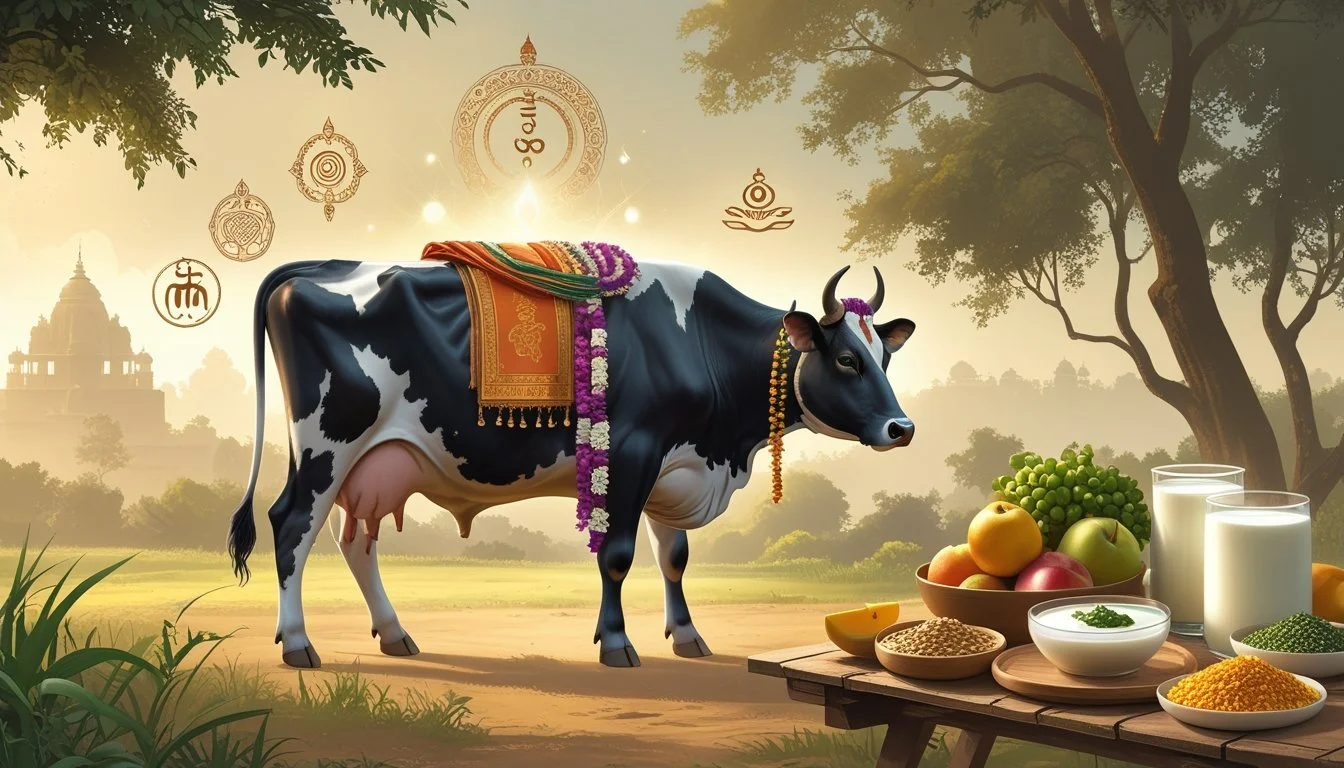
The sacred status of the cow in India is shaped by centuries of religious tradition, social norms, and agricultural needs. While Hindu texts such as the Vedas and Upanishads elevate the cow as a symbol of prosperity and spiritual knowledge, these beliefs also intertwine with the animal’s daily economic importance.
Nutritionally, cows provide milk, which remains a dietary staple across much of India. Dairy products contribute valuable proteins, fats, and vitamins, supporting both child and adult nutrition. However, modern understandings of nutrition recognize that milk is not the only source of these nutrients, and a balanced diet can be maintained without animal products.
The link between reverence for the cow and its practical utility is clear. In rural communities, cows offer not only food but also labor, dung for fuel, and agricultural support. This multipurpose role likely reinforced their protected status and the associated cultural taboos against slaughter.
Below is a summary table for quick reference:
Aspect Religious/Social View Nutritional Value Milk Considered pure and sacred High in protein, calcium, B vitamins Cow as animal Seen as holy, symbolic Provides dairy products, manure, labor
Despite changes in society and evolving nutritional science, the cow’s dual role as a revered symbol and a practical domestic animal endures in Indian life. Their significance continues to be debated and re-examined in various contexts today.

