
Interpreting Sell By vs Freeze By
Understanding Food Label Dates for Safe Storage

When looking at food packaging, consumers often see dates like “Sell By” and “Freeze By,” but many are unsure what these dates actually mean for food safety at home. A "Sell By" date is intended for retailers to manage inventory and is not a direct indicator of food safety for shoppers, while a "Freeze By" date guides consumers on the latest point to freeze a product to maintain its best quality. Understanding the distinctions between these labels prevents unnecessary food waste and helps shoppers make informed decisions.
Uncertainty about these dates can lead to confusion when deciding whether to eat, freeze, or toss food. Many people end up discarding perfectly good products because they misinterpret these labels. This article breaks down what each term signifies, so readers can feel confident about how long to keep their food and how to handle it safely.
Understanding Food Label Terminology
Food product dating uses several terms that guide consumers and retailers on how to handle perishable items. Each date label serves a distinct role in managing food safety, quality, and shelf life. Misunderstanding these terms can lead to unnecessary food waste or, less commonly, safety risks.
Sell By vs Freeze By: Defining the Labels
Sell By labels are instructions for retailers, indicating the date by which a product should be sold or removed from shelves. They are not meant as safety deadlines for consumers. Foods are still safe for a short period after this date if stored properly.
Freeze By dates recommend when to freeze the product to preserve peak quality. This label tells consumers the last day to maintain the item’s freshness in the freezer, not when the product becomes unsafe.
Label Purpose For Whom Sell By Inventory management Retailers Freeze By Quality preservation Consumers
These labels are not expiration dates. They help optimize food quality but do not guarantee or determine the exact moment food spoils.
Common Food Date Markings
Shoppers encounter a range of date labels on food products. The most frequent are Sell By, Freeze By, Best By, and Use By. Each has specific meanings:
Best By: Indicates when the food will have the best flavor or quality. It is not a safety-related date.
Use By: Usually placed by manufacturers for peak quality. For highly perishable foods like infant formula, it may be tied to safety.
Expiration Date: Rarely used, but when present, signals the last day food should be consumed for safety.
Consumers may misinterpret these markings, but older food is not always unsafe. Appearance, smell, and taste remain important factors for judging edibility.
Difference Between Expiration Dates and Quality Dates
Expiration dates are about safety, while quality dates focus on taste and freshness. Very few foods in retail require true expiration dates, which are mandated mostly for products like baby formula.
Most labels such as Best By, Sell By, and Freeze By only estimate how long the product will maintain its best qualities. After these dates pass, foods may lose freshness or texture but are often still safe if handled correctly.
It is important to distinguish between these terms to avoid discarding food unnecessarily or keeping items too long past safety periods. Regular checks using sensory cues and proper storage help ensure both quality and safety.
The Importance of Correctly Interpreting Dates
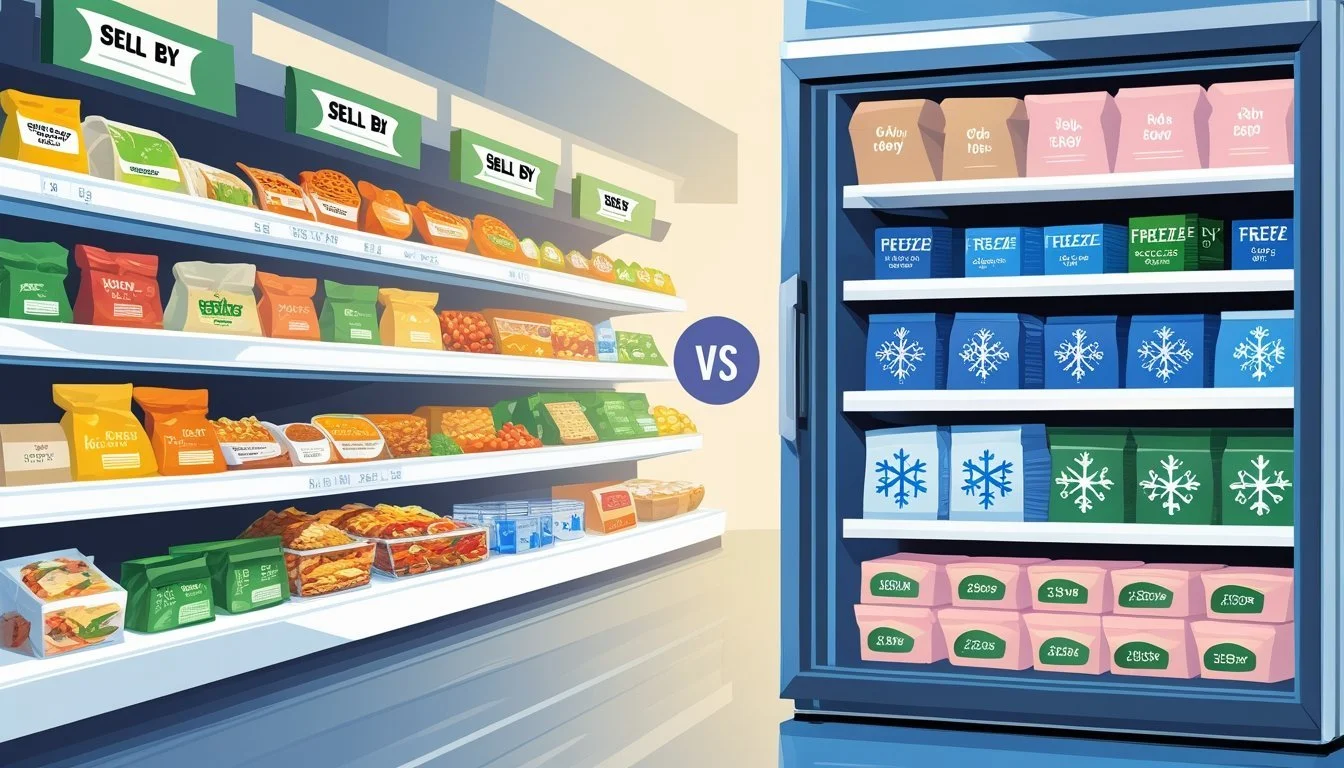
Accurately understanding date labels such as “Sell By” and “Freeze By” keeps food safe for consumption and helps minimize unnecessary waste. The practices around these dates affect how long foods can be safely stored and used at home.
Food Safety Implications
Food safety relies heavily on proper interpretation of date labels. “Sell By” dates guide stores on how long to display products for sale, but they do not always indicate food safety or spoilage for consumers. Many products may remain safe for several days or even weeks after this date if stored correctly.
A “Freeze By” date shows the latest recommended point to freeze a product in order to maintain its peak quality. Freezing by this date preserves flavor, texture, and nutritional value. However, consuming food beyond this window could heighten the risk of spoilage or bacterial growth if it is not frozen in time, especially for perishable items like meat, poultry, or seafood.
Consumers should use their senses—looking for signs of spoilage such as unusual odor, color, or texture—along with date information. Relying solely on expiration or label dates without considering storage conditions may lead to unsafe consumption.
Impact on Food Waste
Misunderstanding date labels often leads to preventable food waste. Many people discard food as soon as it reaches the “Sell By” or “Freeze By” date, even when the product remains safe and high quality. This behavior can significantly increase household and retail food waste.
According to food safety guidelines, dates such as “Sell By” are not indicators of immediate spoilage. Storing products properly extends their usability well past this date in many cases. Using “Freeze By” dates to guide timely freezing instead of disposal helps prevent unnecessary throwing away of still-edible foods.
Careful planning and understanding of label meanings ensure more food is consumed rather than discarded, saving money and reducing environmental impact. Making informed decisions about when to freeze or use foods helps maximize the safe use of food and minimizes waste.
How ‘Sell By’ Dates Affect Purchasing and Consumption
“Sell by” dates are primarily for store management, but they also influence when shoppers buy and consume products. Understanding what these dates mean helps both retailers and consumers avoid food waste and handle products safely.
Grocery Store Inventory and Stock Management
Grocery stores rely on “sell by” dates to keep shelves stocked with products that meet quality and safety standards. These dates tell staff when an item should be removed from display, helping prevent the sale of items nearing spoilage.
Proper inventory rotation uses the “sell by” date to spot older stock quickly. This method, known as First-In, First-Out (FIFO), ensures earlier shipments are sold before newer ones.
In practice, foods approaching the “sell by” date are often discounted to encourage quick sale and reduce losses. If these aren’t sold in time, they are removed and may be donated, composted, or discarded.
Stores also must distinguish between “sell by,” “best if used by,” and “use by” dates. While “sell by” guides store removal, “best if used by” refers to peak quality, and “use by” is often set for safety, especially in perishable goods like meat.
Advice for Consumers
Consumers often confuse “sell by” dates with safety deadlines, but they actually indicate how long a store should display the item. Most products are still safe to use for a short period after this date if stored correctly.
Fresh meat, poultry, and dairy products should generally be used within 1–3 days after the “sell by” date. For foods close to the date, freezing can extend usability.
Using the following simple steps can help:
Check packaging for all dates: “sell by,” “best if used by,” and “use by.”
Purchase items with the latest dates if extra shelf life is needed at home.
Store perishables promptly and correctly—use refrigerators or freezers as indicated.
When in doubt, check for spoilage signs like odor, color changes, or texture changes before consumption, even if the date has not passed.
Understanding ‘Freeze By’ Guidance
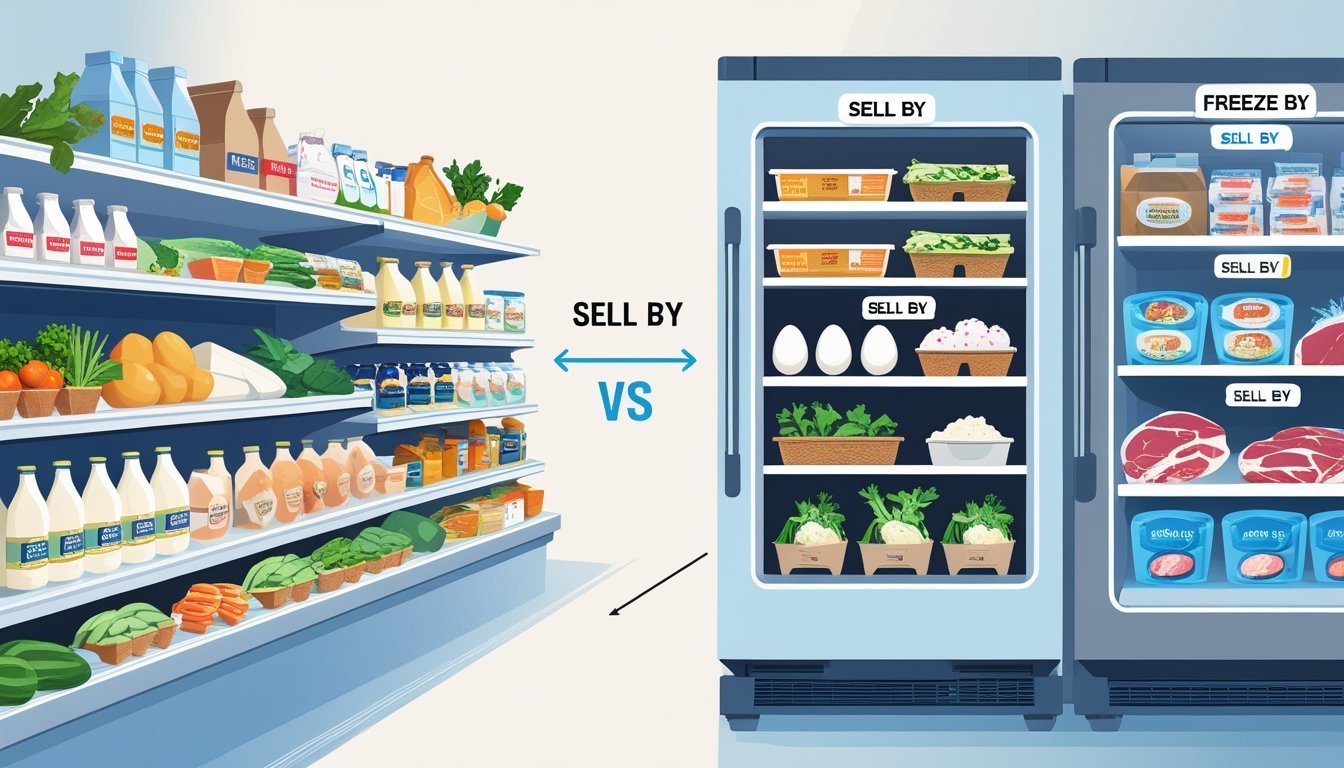
The “freeze by” date found on food packaging is intended to promote best quality and safety. It indicates when perishable products should be placed in the freezer to maintain taste, texture, and reduce the risk of spoilage.
Extending Food Freshness and Safety
Freezing food by the date listed helps retain peak quality and slows the growth of bacteria that may cause foodborne illness. While freezing does not kill all bacteria, it keeps foods safe by halting the activity of microbes, yeasts, and molds.
Consumers should note that “freeze by” is a quality-based recommendation, not an immediate safety limit. For meats, poultry, or seafood, freezing before this date can help preserve nutrients, color, and moisture. Delaying freezing may lead to texture changes or potential spoilage, even if the product is later frozen.
Following the “freeze by” guidance is important because once thawed, food should not be refrozen, and its shelf life shortens. To minimize risk, items showing signs of freezer burn or off-odors after thawing should not be consumed.
Freezing Recommendations for Different Foods
Each food group has specific “freeze by” timelines to ensure optimal safety and flavor. The following table offers general guidance:
Food Type Best to Freeze By Approximate Storage After Freezing Raw Meat/Poultry On or before freeze by 4–12 months (varies by type) Seafood On or before freeze by 2–6 months Bread/Baked Goods Before freeze by 1–3 months Dairy Before freeze by 1–6 months, may affect texture Cooked Dishes Before freeze by 2–3 months
Packaging matters: tightly wrapping products or using airtight containers prevents freezer burn. Label items with the freezing date to track storage times. For safety, always thaw frozen foods in the refrigerator or a safe cold-water method, rather than at room temperature.
Special Considerations for Specific Foods
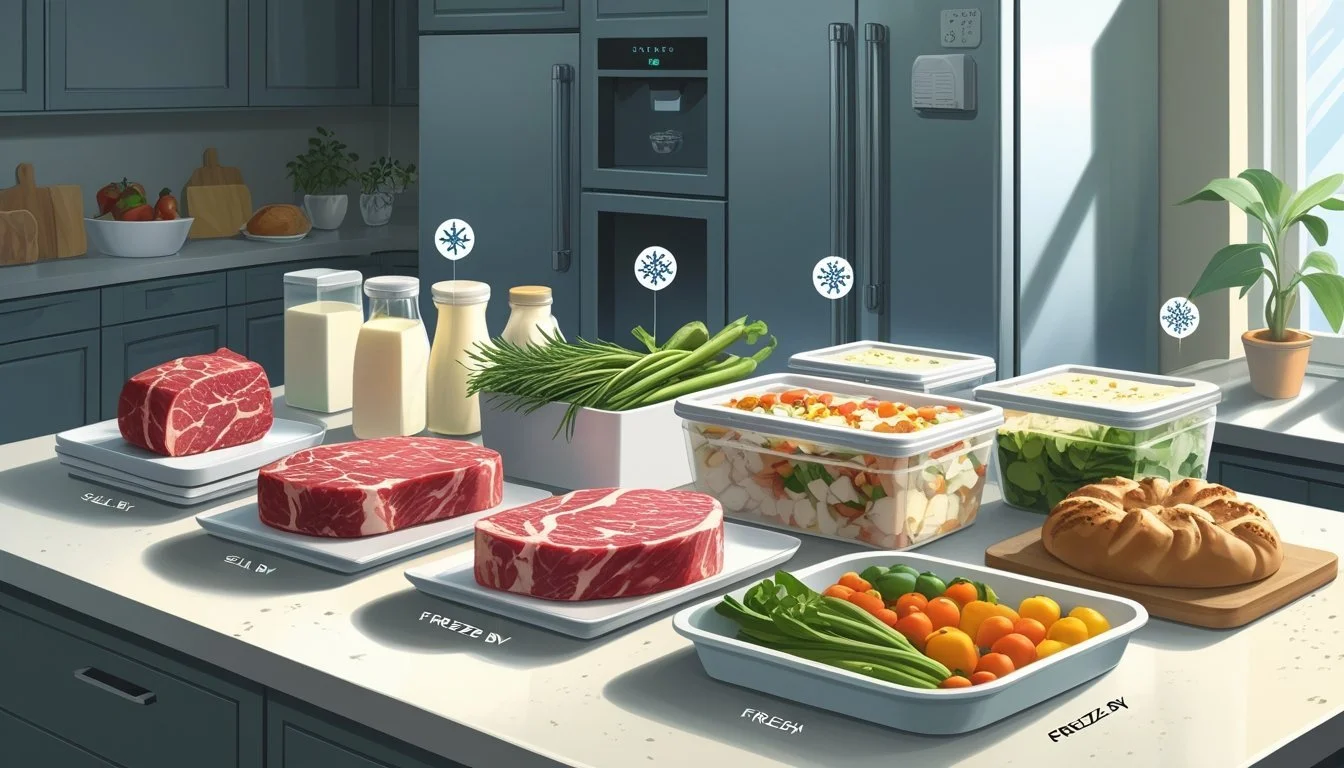
Some foods require extra care when it comes to interpreting “Sell By” and “Freeze By” dates. These include products where safety concerns or unique storage needs play an important role, such as infant formula, eggs, or long-lasting packaged goods.
Handling Infant Formula
Infant formula is regulated with strict guidelines for both “Sell By” and “Use By” dates due to safety and nutrition concerns. The “Use By” date on formula packaging is not a suggestion; it is a critical deadline. After this date, the manufacturer cannot guarantee the formula’s nutritional quality or safety.
Unused formula should never be consumed past the “Use By” date, and it should not be frozen to extend shelf life, as quality and texture can be compromised. If formula is opened, it usually needs to be used within a specific number of hours or days, which is printed on the packaging.
Hospitals, caregivers, and parents must check dates carefully. Outdated infant formula should be discarded immediately; do not attempt to use, repurpose, or donate expired containers.
Eggs, Canned Goods, and Shelf-Stable Items
Eggs typically carry a “Sell By” or “Expiration” date. If refrigerated promptly, eggs can remain safe for several weeks beyond these dates, but quality will decrease over time. A simple freshness test—placing eggs in water—can help: Fresh eggs sink; older eggs tend to float due to increased air inside the shell.
Canned goods and shelf-stable foods, such as dry pasta or rice, may have “Best By” or “Sell By” dates. These products are low risk for bacterial growth if unopened, but quality (flavor, texture, nutrient value) can diminish after the date. Inspect cans for signs of spoilage like bulging, dents along seams, or rust.
For shelf-stable foods, storage in a cool, dry place helps maximize quality. Avoid using items if packaging is damaged or shows signs of moisture, as this can compromise safety even before the listed date.
Regulations and Federal Law
Most date labeling found on food products is not driven by nationwide regulation but by industry standards or individual states. Understanding the distinction between “sell by” and “freeze by” dates requires a look at both federal law and voluntary practices established by food manufacturers.
Role of Federal Law in Food Product Dating
Federal law in the United States does not require food product dating for most foods. The only notable exception is infant formula, which must carry a “use by” date under federal law to ensure safety and nutrient content.
For other foods, terms like “sell by,” “best by,” and “freeze by” are not backed by federal statutes. The U.S. Department of Agriculture (USDA) and Food and Drug Administration (FDA) oversee food labeling but allow flexibility. Federal law does not dictate standardization of these phrases, so their usage and meaning can vary between manufacturers and states.
Some states implement their own dating requirements, especially for perishable items like eggs and dairy. These state-level regulations can include specifics about date formats and how long after processing products may be sold. This patchwork approach means the rules that apply to date labeling can depend on location and product type.
Voluntary vs Mandatory Labeling
Except for infant formula, nearly all date labeling on foods is voluntary at the federal level. Manufacturers use “sell by,” “use by,” and “freeze by” dates to help stores and consumers estimate product quality, not safety.
These labels are intended to inform retailers when to remove items from shelves and help consumers manage freshness at home. While most date labels are suggestions, some states may make certain labels mandatory for select products like eggs or milk.
Since there is no overarching requirement for these dates, labeling practices may vary widely. This lack of standardization can cause confusion, as the same label may have different meanings on different products. Federal agencies offer guidelines, but compliance is typically left to individual companies unless state law applies.
Tips for Reducing Food Waste and Maximizing Safety
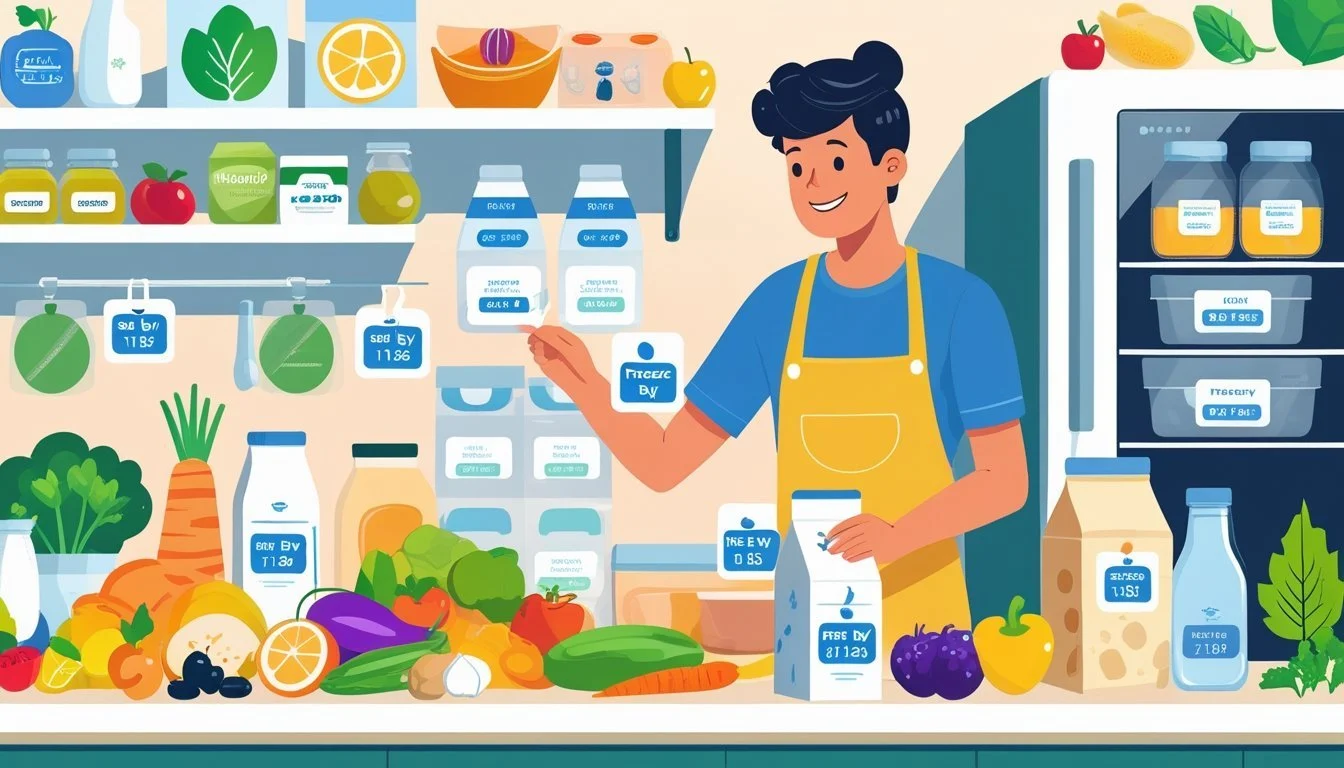
Shoppers can limit food waste and stay safe by making thoughtful choices at the store and at home. Careful storage and attention to food quality help maximize shelf life and lower risks.
Smart Shopping and Storage
Choose foods with later “sell by” or “freeze by” dates if you do not plan to use them right away. Organize the refrigerator and pantry to use older products first; this is known as the “first in, first out” method.
Store perishable foods at or below 40°F (4°C) to slow spoilage and keep them out of the danger zone for bacteria. Keep raw meats separate from ready-to-eat foods to avoid cross-contamination.
Make use of freezing for foods near the end of their safe storage period. Package leftovers in airtight containers and label each item with the date it was stored.
Assessing Food Quality at Home
Check food for visible signs of spoilage, such as mold, unusual odors, and changes in texture. Do not rely exclusively on printed dates, since they are often guidelines for quality, not safety.
If a package appears swollen, leaking, or damaged, it should be discarded. Examine color and smell, especially for meats and dairy, to detect issues early.
When in doubt, do not taste questionable foods, since taste may not reliably indicate contamination. Discard any food that has developed off smells or the presence of gas, since these may indicate microbial growth.

