
The First Expired, First Out Inventory Model Explained
How FEFO Optimizes Product Rotation and Reduces Waste
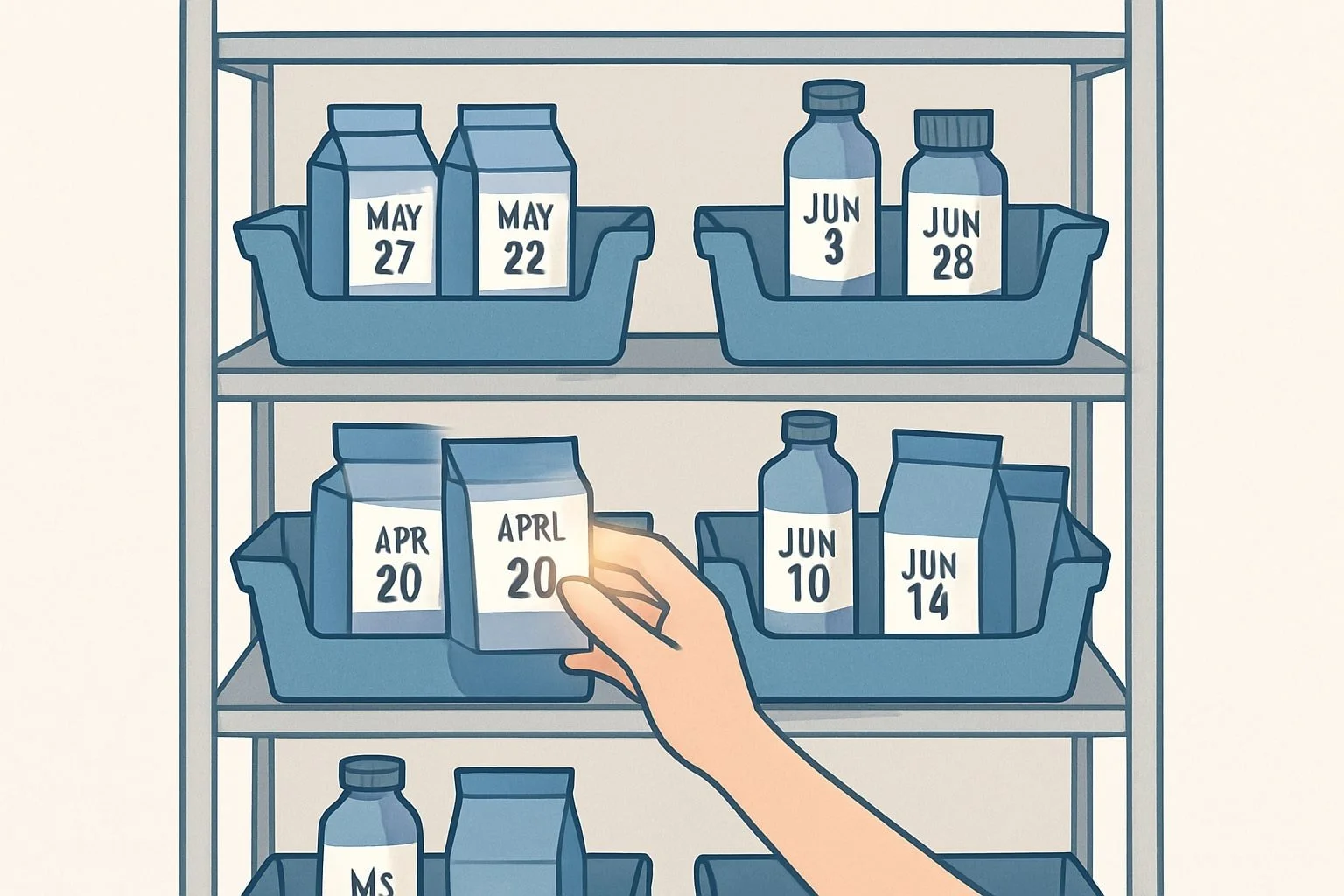
The First Expired, First Out (FEFO) inventory model is an approach that prioritizes using or selling items with the earliest expiration dates before newer stock. This method is especially important for businesses managing perishable goods, pharmaceuticals, or any products with a limited shelf life.
FEFO helps organizations minimize waste, reduce losses from expired inventory, and ensure that customers receive fresher products. Understanding how this system works—and why it matters—can support more effective inventory management for a wide range of industries.
When expiration dates determine stock movement, every decision impacts profitability and product quality. Companies implementing FEFO benefit from better stock rotation and increased compliance with industry regulations.
Understanding the First Expired, First Out (FEFO) Inventory Model
FEFO prioritizes the movement of inventory based on expiration dates, ensuring safety and reducing waste. It is distinct from other inventory methods and provides unique benefits for sectors handling products with limited shelf lives.
Definition and Core Principles
The First Expired, First Out (FEFO) inventory model is a method used to manage stock where the items with the earliest expiration dates are issued, sold, or consumed first.
This approach is particularly important in industries like food, healthcare, and pharmaceuticals, where product safety and regulatory compliance are critical. Unlike methods that rely on arrival times, FEFO emphasizes expiration dates as the core sorting principle.
By consistently using items with shorter shelf lives before others, FEFO helps minimize losses due to spoilage. This leads to improved quality assurance and cost savings. In fast-moving environments, FEFO supports traceability and more accurate inventory turnover.
FEFO vs FIFO vs LIFO: Key Differences
FEFO, FIFO (First In, First Out), and LIFO (Last In, First Out) are three common inventory management methods, but each has a distinct focus.
Model Priority Usage Scenario FEFO Soonest expiration date Perishables FIFO Oldest stock arrival General inventory LIFO Newest stock arrival Non-perishables
FEFO organizes items based on shelf life, not entry date. FIFO is based on the sequence in which products enter the inventory—oldest in, sold first. LIFO prioritizes selling or using the most recently acquired stock first, often for goods without expiry constraints.
While FIFO and LIFO can be applied to a wide range of inventory types, FEFO is essential when there are expiration concerns. This nuance helps prevent both safety risks and unnecessary write-offs.
Role of FEFO in Modern Inventory Management
FEFO plays a crucial part in inventory workflows for businesses handling pharmaceuticals, chemicals, food, and other perishable goods.
By implementing FEFO, organizations ensure expired products do not reach customers, directly supporting public health and brand reputation. It simplifies compliance with industry and legal requirements related to product safety.
Modern warehouse systems often automate FEFO processes using barcodes or RFID to track expiration data, improving accuracy and efficiency. Integrated FEFO practices also allow for better planning by identifying products at risk of expiring, enabling targeted promotions or discounts. This results in fewer losses and better resource use.
How the FEFO Removal Strategy Works
In the FEFO (First Expired, First Out) removal strategy, accurate tracking of product expiration and careful organization by category and storage location are essential. This approach ensures that perishable products are sold or used before reaching their expiration date, reducing waste and maintaining product quality.
Expiration Dates and Their Importance
The core of the FEFO removal strategy is the management of expiration dates. Each item in inventory must display a clear expiration date, which is critical for identifying the order in which products should be removed or sold.
Products with the earliest expiration dates are prioritized for removal. This greatly minimizes the risk of spoilage, particularly in perishable product categories such as dairy, meat, and pharmaceuticals.
An effective FEFO system requires accurate data entry for expiration dates at the time of receiving goods. Automated inventory systems or barcode scanning can streamline this process and reduce errors.
Expiration tracking table example:
Product Expiration Date Removal Priority Milk 2025-06-20 High Yogurt 2025-06-23 Medium Juice 2025-07-01 Low
Product Category and Storage Locations
Products are grouped by category, such as fresh produce, frozen goods, or pharmaceuticals, because each category has distinct storage requirements and shelf-life characteristics. Grouping similar items together helps staff locate and remove stock with the earliest expiration dates more efficiently.
Best practices include:
Assigning designated storage zones for each category.
Clearly labeling shelves or bins by expiration date.
Regular checks of high-turnover areas, especially for perishable products.
Storage location also impacts how easily products can be rotated. Strategic placement of items approaching their removal date—such as at the front of a display or in a separate section—reminds employees to prioritize those items.
The Removal Date Process
Removal date refers to the specific date a product should be taken out of inventory, ideally set shortly before its expiration. Determining this date takes into account shelf life, usage patterns, and potential delays in sale or consumption.
Staff typically conduct regular inventory reviews to identify products near their removal date. Lists or digital alerts can be used to flag these items to ensure prompt action.
A step-by-step process might include:
Reviewing products daily or weekly for approaching removal dates.
Pulling items that have reached their removal threshold from shelves.
Documenting disposal or markdowns as needed.
This structured approach ensures high compliance with food safety standards and minimizes losses due to expired stock.
Applications of FEFO in Inventory Management
The FEFO model directs inventory management decisions by prioritizing items with the earliest expiration dates. This practice supports industries that need to manage perishable products, limit waste, and maintain customer trust through product quality.
Handling Perishable Goods and Products
FEFO is widely implemented in sectors like food, pharmaceuticals, and cosmetics, where shelf life is limited. By always using or shipping the products that will expire first, businesses reduce the likelihood of stock spoiling before it reaches consumers.
This approach is especially important for organizations that deal with variable storage conditions or high-volume inventory turnover. For example:
Grocery stores rotate dairy products and produce using FEFO to avoid loss due to spoilage.
Pharmacies track medicine expiration and supply patients with the earliest-dated stock.
Using FEFO, inventory managers can ensure compliance with industry regulations that demand proper handling of perishable goods.
Minimizing Waste and Financial Losses
One of the central goals of FEFO is to minimize product waste. When perishable products are sold or used before their expiration, there is a direct reduction in the volume of unsellable or discarded items.
Lower waste levels translate to less financial loss from expired goods and decrease costs associated with disposal. This advantage is clear in the following table:
Approach Expired Goods Rate Waste Disposal Costs FEFO Low Low Non-FEFO Higher Higher
Retailers, wholesalers, and logistics providers often use FEFO to optimize stock levels and maintain profitability, especially with bulk or sensitive shipments.
Ensuring Product Quality and Customer Satisfaction
Quality control is more easily maintained when the oldest products are dispatched first. FEFO helps companies deliver items in their best condition, ensuring that customers receive goods within their intended shelf life.
This method strengthens consumer trust and reduces complaints or returns related to expired or poor-quality products. Customer satisfaction improves as businesses consistently meet safety and freshness standards.
FEFO also supports brand reputation by lowering the risk of negative experiences associated with degraded or expired stock. For businesses, reliable quality assurance processes protect sales and long-term customer loyalty.
Implementing FEFO in Supply Chain Operations
The FEFO model ensures that products are distributed or consumed based on their expiration dates rather than their arrival times. This requires careful coordination between picking, traceability, and stock rotation steps within the supply chain.
Picking Operations and Delivery Orders
Efficient picking operations are critical for applying FEFO in warehouses and distribution centers. Workers use inventory management systems that flag items with the earliest expiration dates to be picked first for delivery orders.
Key steps in FEFO picking include:
Scanning product labels to check expiration dates.
Prioritizing pick lists based on expiry, not just location or arrival order.
Training staff to recognize and separate short-dated products for immediate processing.
This process minimizes waste and improves the accuracy of fulfilling delivery orders by making sure customers receive the freshest products.
Traceability Using Lot/Serial Numbers
Lot and serial numbers are essential tools for implementing FEFO in supply chain management. Each product batch receives a unique identifier linked to its production and expiration data.
This traceability system allows companies to:
Track products through every stage of the supply chain.
Instantly locate and retrieve items when needed for recalls or audits.
Maintain compliance with regulations by documenting each product’s movement and status.
A simple table illustrates this:
Product Lot Number Expiry Date Milk A123456 2025-08-10 Juice B654321 2025-07-15
Traceability ensures the right products are shipped and expired items are systematically removed.
Multi-Step Routes and Stock Rotation
Multi-step routes help structure the movement of goods while applying the FEFO principle. Goods may pass through several storage or processing stages, each requiring careful stock checks.
Stock rotation supports FEFO by positioning soon-to-expire items at the front or in designated areas for rapid access. Warehouse management systems can automate stock movements, updating item locations based on expiry.
Routine audits are conducted to ensure storage slots do not contain overlooked or expired items. Combining multi-step routing with disciplined stock rotation reduces losses and upholds product quality from warehouse to final delivery.
Challenges and Solutions with FEFO
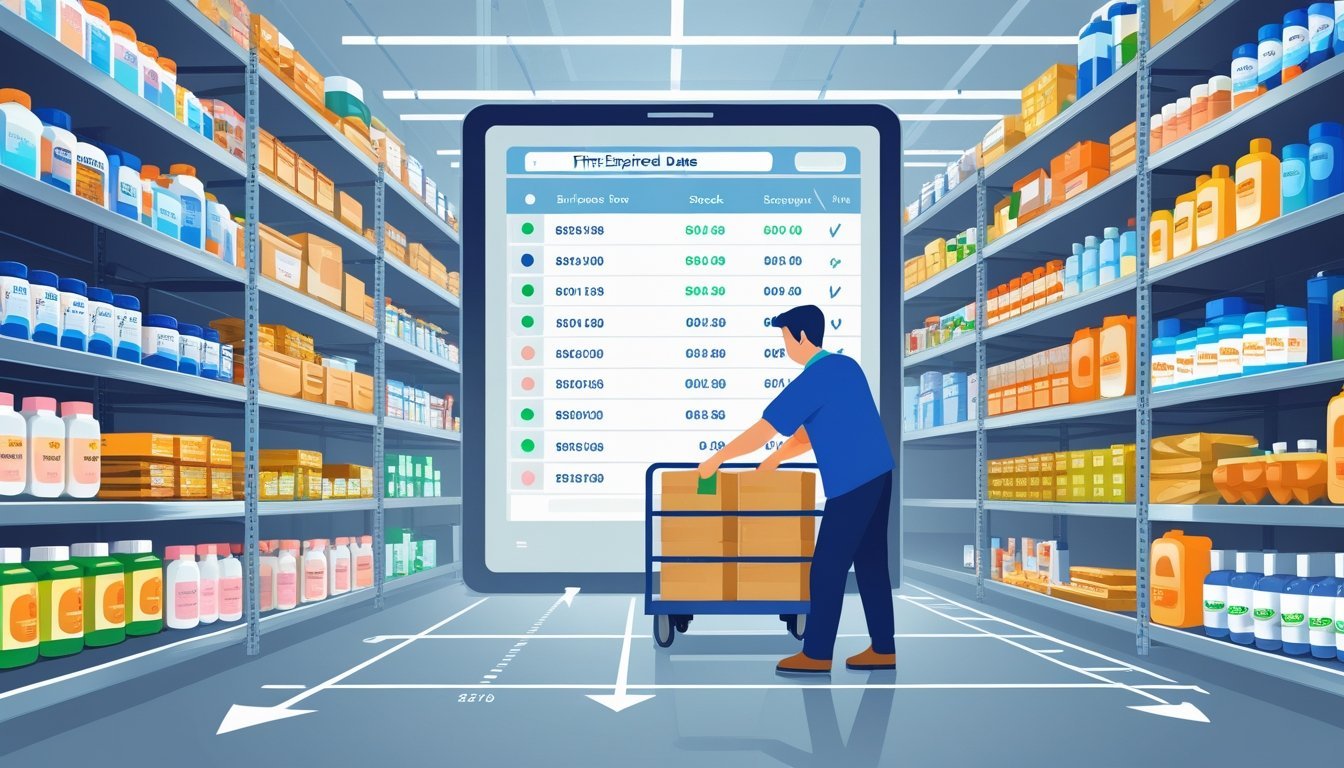
FEFO inventory management faces distinct hurdles, particularly in balancing inventory levels and efficiently handling products nearing expiry. These issues can lead to operational inefficiencies, unnecessary waste, or even lost sales when not properly addressed.
Managing Overstocking and Stockouts
Overstocking occurs when inventory exceeds demand. In a FEFO system, this can result in products expiring before they can be sold, especially with items that have short shelf lives. Conversely, stockouts happen if inventory falls below necessary levels, causing missed sales and dissatisfied customers.
Reasons for overstocking include inaccurate demand forecasting, supplier lead time variability, and inflexible ordering systems. To reduce this risk, companies may implement solutions such as:
Regular stock audits
Use of automated alerts for expiring goods
Integrating demand planning software
Contingency plans, like sourcing from backup suppliers or prioritizing promotional discounts on soon-to-expire products, help address sudden shortages or excesses. Maintaining accurate real-time data on expiry dates and stock levels is critical.
Addressing Slow-Moving Items
Slow-moving items pose a unique challenge under the FEFO model. These are products that remain in inventory longer than expected, increasing their risk of expiring before sale. They can occupy valuable space, tie up capital, and lead to greater product disposal costs.
Tactics to handle slow-movers include:
ABC analysis to identify and focus on risky items
Short-term price reductions or bundled offers to stimulate demand
Rotating stock visually and physically so those with earlier expiry dates are more accessible
Clear reporting and inventory visibility help decision-makers quickly identify items at risk of becoming obsolete. Implementing contingency plans, such as donation or recycling, can further reduce waste while maintaining compliance with organizational and regulatory standards.
Best Practices for Effective FEFO Integration

Optimizing FEFO requires accurate stock tracking, clear policies for handling near-expiry items, and technology that supports visibility and automation. Careful planning and robust systems reduce waste and ensure compliance with industry standards.
Setting Correct Inventory Levels and Safety Stock
Managing inventory levels is foundational for FEFO effectiveness. Accurate demand forecasting helps prevent overstocks of perishable goods, which may lead to avoidable waste. Manufacturers and retailers should regularly review sales trends and shelf life data to estimate ideal stock quantities.
Setting the right safety stock is equally important. Safety stock acts as a buffer against supply delays or demand fluctuations, but maintaining too much can increase the risk of inventory expiring before use. Calculating safety stock should consider lead times, variability in demand, and expiration dates—especially for products with short shelf lives.
Periodic audits and cycle counts verify that inventory records match physical stock. This reduces the risk of stockouts or letting items expire unnoticed. Clear labeling of expiration dates, along with First Expired, First Out shelf organization, is essential for easy identification and quick rotation.
Advanced Removal Strategies and Force Removal
A well-defined removal strategy ensures goods closest to expiration are used first. Beyond standard FEFO, force removal is critical in situations where certain products approach their expiration date but remain unsold or unused. Force removal rules trigger targeted actions, such as promotions, markdowns, or even disposal, to minimize lost value.
A comprehensive removal policy should include:
Automated alerts for near-expiry products
Clear thresholds when force removal actions begin
Defined protocols for handling expired or unsellable stock
Assigning responsibility for these actions ensures consistency and compliance. Periodic reviews of removal efficiency help refine strategies and reduce product waste over time.
Utilizing Inventory Management Software
Modern inventory management software, such as Odoo, enables efficient execution of FEFO processes. These systems allow real-time tracking of lot numbers, expiration dates, and stock movements, dramatically reducing manual errors. Automated reordering and allocation workflows prioritize items by their expiry dates, ensuring timely rotation.
Key features to look for include:
Feature Benefit Expiry date tracking Prevents accidental stockouts Batch management Eases traceability and recall Real-time alerts Supports timely removal actions
Integration with purchasing, sales, and warehouse modules improves visibility across the supply chain. With robust software, businesses can automate remove-and-replenish cycles, ensuring FEFO compliance is both reliable and scalable. Proper training for staff on new systems is important to maximize these advantages.
FEFO’s Impact on Business Performance

The FEFO method helps organizations better manage limited space, reduce waste, and stay responsive to changing demand. Using FEFO also improves tracking over inventory movement and makes compliance with industry standards easier.
Optimizing Storage Space
Implementing FEFO helps companies utilize their storage areas more efficiently. Items with the earliest expiration dates are stored in accessible locations for faster picking, reducing the risk of expired goods occupying valuable shelf space. This practice decreases holding costs by ensuring turnover is consistent and space is not wasted on slow-moving or obsolete inventory.
Warehouses can use bin locations or racking systems to prioritize stock by expiration date. This not only improves space allocation but also streamlines the process of restocking and retrieval. By frequently cycling inventory, organizations reduce the need for emergency disposals and markdowns, which can tie up both space and capital.
Enhancing Production Efficiency
FEFO supports production teams by providing clear guidelines on which materials or products to use first. This structure prevents delays or disruptions caused by finding expired or soon-to-expire raw materials during manufacturing runs. Scheduled use of inventory according to expiration dates also helps to avoid product recalls and quality failures.
Production planners can use FEFO data to optimize scheduling and to coordinate order sizes with supply chain partners. As a result, factories and distribution centers reduce waste and increase throughput, as less time is spent checking for usable stock. This approach ensures compliance with food safety and pharmaceutical regulations, keeping production on track and costs under control.
Supporting Informed Decisions and Market Trends
Using FEFO provides data on product flow and consumption rates that business leaders can use for operational planning or responding to market changes. Inventory and sales reports based on expiration tracking allow managers to identify seasonal trends or sudden shifts in demand. This enables more accurate forecasting and procurement.
Teams can respond more quickly to slow-moving products, plan timely promotions, or modify order quantities to avoid overstocking short-dated items. Having accurate information on expiration-driven inventory movement supports risk reduction and opportunistic purchasing, making it easier to adapt strategies as market conditions change.
Key benefits include:
Better demand forecasting
Early identification of product lifecycle patterns
Timely adjustments in purchasing or marketing strategies
Comparative Overview of Inventory Removal Strategies
Removal strategies like FEFO, FIFO, and LIFO play a crucial role in inventory management. Each method offers distinct benefits and potential drawbacks, impacting cost, product freshness, and regulatory compliance.
Advantages and Disadvantages of FEFO, FIFO, and LIFO
FEFO (First Expired, First Out) gives priority to products with the nearest expiration dates.
Advantages: Minimizes waste in industries handling perishable or date-sensitive goods. Supports consistent product quality and reduces losses caused by expired stock.
Disadvantages: Requires detailed tracking of expiration dates and is more complex to implement in practice than FIFO or LIFO.
FIFO (First In, First Out) sells or uses the oldest inventory first.
Advantages: Simple to manage and ensures products spend minimal time in storage. Regularly used for non-perishable items or where freshness is important but less critical than expiry dates.
Disadvantages: Less effective in industries where products can expire before being sold, as inventory rotation relies on receiving dates rather than expiry dates.
LIFO (Last In, First Out) removes the most recently acquired inventory first.
Advantages: Can lower taxable income in times of rising costs, as newer, higher-priced inventory is expensed first.
Disadvantages: Not accepted by IFRS, can result in older stock becoming obsolete, and is rarely suitable for perishable goods.
Selecting the Right Removal Strategy
Choosing the best removal strategy depends on business type, product shelf-life, and regulatory factors.
FEFO is ideal for pharmaceuticals, food, and other sectors where expiry dates are crucial.
FIFO fits operations with non-perishable or slow-moving inventory needing simple rotation.
LIFO can benefit companies dealing in commodities or non-perishable inventory, but legal and practical constraints limit its use in many regions.
A summary table helps clarify when to use each method:
Strategy Best For Considerations FEFO Perishables, expiring goods Requires date tracking and control FIFO Non-perishables, general goods Simple, but not expiry-driven LIFO Commodities, U.S. accounting Obsolescence risk, not IFRS-compliant
Matching the strategy to product type and business needs ensures efficient inventory flow and minimizes losses. Decisions should consider storage costs, product characteristics, and legal standards.
Additional Considerations in Inventory Control

Effective inventory control in a First Expired, First Out (FEFO) system requires more than simply prioritizing expiry dates. It involves continuous monitoring of product quality, precise adjustment of stock levels, and strategic segmentation of inventory to maintain operational efficiency and reduce losses.
Role of Quality Control and Expiry Date Tracking
Quality control is essential to maintaining product integrity throughout the inventory lifecycle. Regular visual inspections, batch testing, and documentation help verify that items remain safe and fit for use until their expiry dates.
Expiry date tracking systems—often enabled by barcode scanning or digital inventory software—ensure real-time visibility over stock nearing expiration. Automatic alerts can prompt removal, transfer, or special handling of at-risk items, minimizing waste.
Combining routine in-person checks with automated date tracking allows businesses to identify issues early. This approach helps prevent the sale or distribution of expired or compromised goods, which is particularly important in sectors like pharmaceuticals and food.
Adjusting Stock Levels and Discounts for Expiring Products
Maintaining optimal stock levels is vital to minimizing both excess inventory and shortages. Businesses analyze consumption rates and lead times to fine-tune reorder points, especially for items prone to rapid expiry.
When products approach their expiry dates, dynamic discounting strategies can stimulate demand and clear aging inventory. For example, implementing tiered discounts as items move closer to expiration helps reduce waste without sacrificing too much margin.
A table like the one below can guide discount policies:
Days to Expiry Suggested Discount 30+ 0% 15-29 10% 7-14 25% 1-6 50%+
By linking stock monitoring with timely pricing adjustments, companies can better manage cash flow and storage space.
Utilizing ABC Analysis for Improved Results
ABC analysis divides inventory into three categories based on value and turnover rate:
A items: High value, low quantity; require tight control and frequent monitoring.
B items: Moderate value and volume.
C items: Low value, high quantity; require simpler controls.
Applying FEFO principles most rigorously to A and B items ensures that costly or regulated stocks are always within date. For C items, a streamlined approach is often more cost-effective.
Segmenting inventory by ABC analysis supports focused expiry date management. It also assists with planning quality checks and establishing targeted stock level targets for each class. This combination of strategies strengthens overall inventory accuracy and reduces losses from expired products.
Future Trends in FEFO and Inventory Management

Adoption of FEFO is evolving as industries face increasing pressure for efficiency and waste reduction. Advances in technology, data analysis, and customer expectations are shaping the ways inventory is managed, impacting operations from the warehouse to the point of sale.
Integration with Just-in-Time Inventory (JIT)
Businesses are increasingly combining FEFO with the Just-in-Time (JIT) inventory model to enhance speed and minimize waste. JIT focuses on receiving goods only as they are needed, reducing holding costs, while FEFO ensures perishable items move based on expiration dates.
This integration creates a dynamic system where inventory is both fresh and minimal. Advanced inventory management systems can now track expiration dates in real time and synchronize deliveries to match production and sales schedules. Companies use automated alerts to prevent expired stock and can quickly shift orders if delays threaten product freshness.
For perishable goods industries, the mix of FEFO and JIT reduces storage needs and helps maintain higher quality products. Regular analysis of demand patterns ensures optimal inventory turnover. In sectors like food service, pharmaceuticals, and retail, the combined approach limits losses from outdated stock and boosts supply chain responsiveness.
Impact of Customer Demand and Product Form
Consumer expectations for product freshness and safety are raising standards for inventory management. Accurate demand forecasting plays a key role; mismatched stock levels can either result in expired products or missed sales.
Product form—whether it's fresh, frozen, packaged, or processed—also determines FEFO strategies. For example:
Product Form FEFO Application Fresh Foods Strict; daily monitoring Frozen Goods Moderate; shelf life extended but still monitored Packaged Dependent on labeled dates Pharmaceuticals Highly regulated; tracking is crucial
Technology like machine learning helps analyze purchasing habits, seasonality, and shifting trends. Inventory systems adapt, adjusting reorder points and quantities to align closely with customer demand. Granular control reduces spoilage and ensures customers receive products in peak condition.
Evolving Supply Chain Management Practices
Supply chain management is adapting to support FEFO with more visibility and traceability throughout the flow of goods. Companies are adopting RFID tags, barcodes, and blockchain technology to monitor lot numbers and expiration dates at every stage.
Visibility enables quick response to issues such as recalls or supply interruptions. Cross-functional data sharing between suppliers, manufacturers, and retailers streamlines the movement of goods, improving coordination and reducing delays. Collaborative logistics platforms now use real-time data to optimize routing and restocking based on inventory age and expiration status.
Global supply chains are also impacted by new regulations and sustainability pressures, which encourage better tracking and reduction of wasted goods. These advances help companies strike a balance between product freshness, operational efficiency, and compliance requirements.

