
Why the Same Product Has Different Expiration Dates Abroad
Factors Behind Shelf Life Variations

The same product can have different expiration dates in various countries because each nation has its own regulations, labeling standards, and storage expectations. Food safety laws, shelf life testing, and even language conventions influence how manufacturers print and interpret these dates. Consumers may notice different terms like "Best Before," "Use By," or "Sell By" on similar items across borders.
This lack of uniformity can be confusing, especially for travelers or those purchasing imported goods. Label formats can vary between using the day/month/year order, or the month/day/year order, sometimes leading to misunderstandings and premature disposal of safe products.
Understanding these differences helps shoppers make informed decisions and avoid unnecessary food waste. Learning how expiration dates are determined and labeled in each region can protect health and stretch household budgets.
Why Expiration Dates Differ on the Same Product Across Countries
Expiration dates for identical products may vary widely across borders due to regulatory decisions, national food safety rules, and differences in how products are stored and distributed. These factors influence how long food is considered safe and how manufacturers label packaging.
Regulatory Differences
Each country sets its own requirements for how expiration dates should be labeled and enforced. For example, the USDA and the Food and Drug Administration (FDA) in the United States have guidelines that differ from those used by the European Union or countries in Asia.
Government agencies may use terms like "Use By," "Best Before," or "Sell By" with varying definitions. The Food Date Labeling Act in the US attempts to standardize some of this language, but global standards remain inconsistent.
Some countries require a precise day, month, and year, while others allow manufacturers to use only a month and year. This creates a patchwork of rules that manufacturers must follow when exporting products.
In practice, food manufacturers often adjust their labeling to comply with local regulations. This can mean changing the printed expiration date depending on the laws of the destination country.
Variations in Food Safety Standards
National food safety standards can be stricter or more relaxed depending on local priorities and historical experience. These requirements are often shaped by public health agencies tasked with reducing the risk of foodborne illness.
For instance, certain countries demand shorter shelf lives for high-risk foods such as dairy, deli meats, or infant formula to ensure higher safety margins. Other nations permit longer shelf lives if research supports product stability.
Sometimes, risk tolerance is shaped by different scientific assessments and food testing methods. Agencies like the FDA or their equivalents in other countries review data and set their own criteria for what is considered “safe” beyond which consumption is discouraged.
This results in the same product carrying a different expiration date depending solely on the country where it is sold, even with identical packaging and contents.
Impact of Local Storage and Distribution Chains
Local infrastructure and climate significantly influence how long products stay safe and fresh. In hot or humid environments, spoilage tends to happen more rapidly, which may push agencies or food manufacturers to assign shorter expiration periods.
Storage and distribution chains differ; some countries have advanced refrigeration and shipping systems, while others may experience frequent temperature fluctuations. This affects how confident manufacturers and regulators are about the product’s longevity.
Retailers may also store or display products under different conditions. A product designed for a robust cold chain in one country may require tighter expiration dating in a country where that guarantee is lacking.
Manufacturers often use tables or charts internally to determine the maximum allowable shelf life for each export market, factoring in anticipated transport and retail conditions:
Country Typical Storage Conditions Expiration Date Adjustment USA Refrigerated, controlled Standard shelf life India Possible temperature swings Shortened shelf life Germany Strict, cold chain enforced Standard or extended
Common Types of Food Date Labels and Their Meanings
Date labels on food packaging use different terms to communicate quality, freshness, and in some cases, safety. The meaning and regulation of these terms can vary greatly depending on country and product type, leading to confusion among consumers.
Use By vs. Best Before vs. Sell By
Use By dates indicate the last day a product is expected to be at peak safety and quality. Highly perishable items—such as chilled dairy, meat, and ready-to-eat salads—often display use by dates. Consuming these foods after the use by date may pose health risks.
Best Before dates focus on product quality rather than safety. This label tells consumers how long a product will retain its optimal taste, texture, and appearance. Foods such as cereals, pasta, and canned goods often use best before dates. Typically, these items remain safe to eat after the date, but may not be at their best.
Sell By dates are mainly for retailers, signaling how long a product should be displayed for sale. This helps with stock rotation and inventory management. Once past the sell by date, products may still be safe and of good quality, especially if stored properly at home.
Enjoy By, Freeze-By, and Best If Used By
Enjoy By dates are used to suggest optimal freshness and flavor, particularly for baked goods or prepared foods. These labels encourage prompt consumption but are not intended as strict safety guidelines.
Freeze-By dates identify the recommended date for freezing a product to lock in quality. Freezing before this date preserves flavor and texture, but the food remains safe to eat after being frozen.
Best If Used By or Best By dates also relate to quality, letting consumers know the timeframe for peak freshness or taste. These terms are almost interchangeable with best before, appearing on a wide range of shelf-stable and refrigerated products.
Here’s a quick reference table:
Label Type Focus Example Products Safety Concern? Use By Safety/Quality Fresh meat, dairy, salads Yes Best Before/By Quality Canned goods, dry foods No (if stored properly) Sell By Retail stock Dairy, bread No (consumer can eat after) Enjoy By Taste/Freshness Baked goods, prepared meals No Freeze-By Quality Meat, bread No
Sell By Date and Packaging Dates
Sell By Date appears most often on perishable goods and guides retailers on inventory management. For the consumer, it is not an expiration date. Foods might still be wholesome and safe after the sell by date, as long as they have been stored correctly.
Packaging Date (sometimes labeled as “packed on”) shows when the product was manufactured or packaged. This is common on meats and some baked goods. Knowing the packaging date allows consumers to judge freshness independently, especially for products without a use by or best before date.
Retailers and manufacturers rely on these dates to help manage product turnover and reduce waste. In practice, most date labels are there to protect product quality more than consumer health, unless it is specifically a use by date for highly perishable foods. The variety of date labeling terms highlights why understanding what each means is crucial for safe and informed food use.
Factors Influencing Expiration Dates in Different Markets
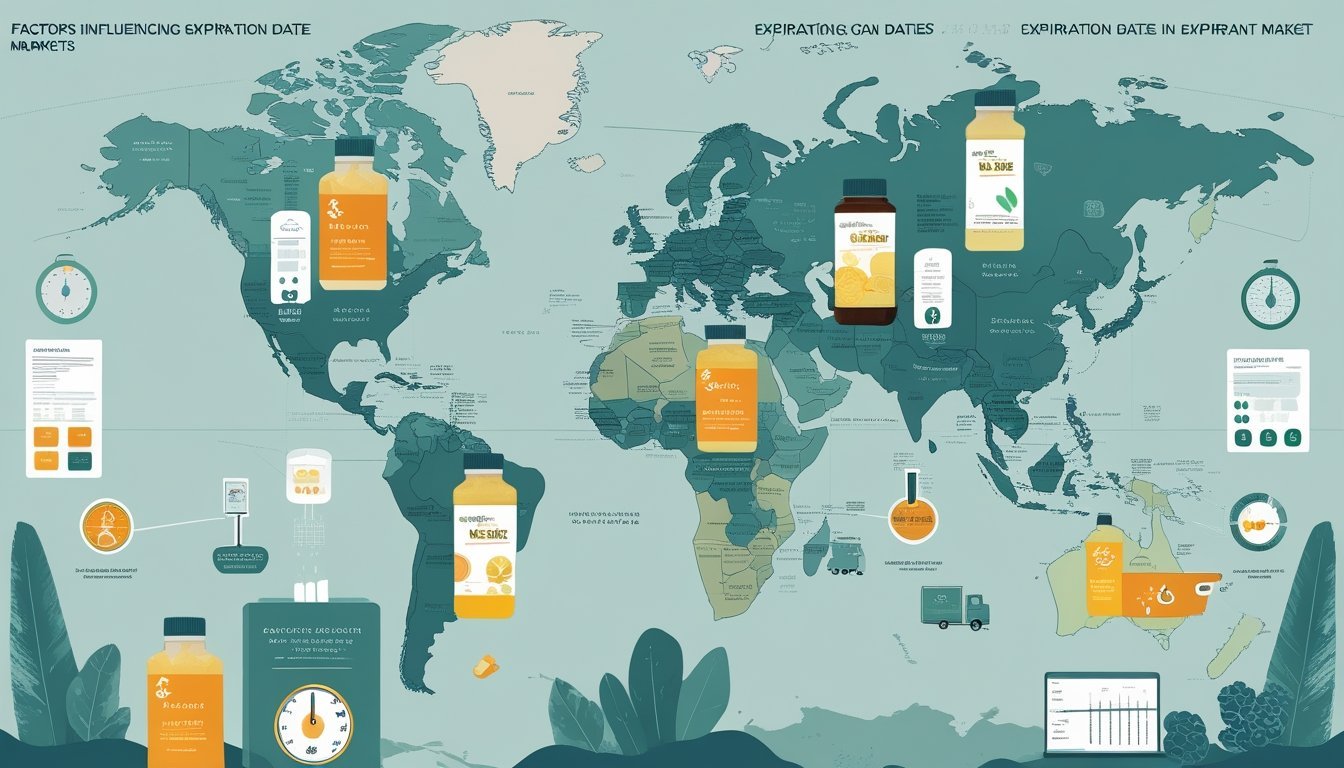
Products may show varying expiration dates abroad because conditions and standards differ across countries. Local climate, technology used in packaging, and distribution systems have a direct impact on how long packaged foods and perishables can safely last.
Climate and Environmental Conditions
Temperature, humidity, and seasonal changes in a region directly influence food storage practices and product expiration. In warm, humid climates, perishables like dairy and meat spoil more quickly. As a result, expiration dates are often set shorter in these environments to ensure safety.
Manufacturers must also account for fluctuations in temperature during transportation. In tropical regions, the lack of proper storage or cold chain infrastructure raises the risk of spoilage, leading companies to reduce recommended shelf life.
Products stored in cool, dry climates can last longer before declining in quality. Shelf life calculations incorporate average environmental conditions, so different countries will often set mmddyy or other date labels based on local realities.
Packaging Materials and Technologies
Advancements and choices in food packaging materials significantly affect how long a product remains safe. High-barrier films, vacuum sealing, and modified atmosphere packaging can extend the shelf life of packaged foods by limiting oxygen and moisture that cause spoilage.
Not all countries have equal access to cutting-edge packaging technology. In some markets, basic plastic or cardboard allows air or humidity to penetrate, resulting in faster deterioration. This impacts expiration date ranges on similar products.
Regulations may also dictate the materials allowed for food packaging, influencing how well products withstand local transport and storage. Labels such as “first in, first out” also guide retailers to use or sell items in the correct order, reducing the risk related to variable packaging standards.
Transportation and Distribution Practices
The speed and reliability of transportation networks strongly shape expiration dating. In countries with efficient logistics, proper storage, and widespread refrigeration, products spend less time in transit. This can justify longer expiry dates, even for perishables.
Where infrastructure is less developed, food often spends more time in storage or on vehicles without optimal conditions. Delays or exposure during distribution can shorten safe shelf life, prompting companies to print more conservative expiration dates.
Retail and distribution routines such as stock rotation and adherence to labeling formats like mmddyy also play a role. Inconsistent handling or stock management in the supply chain can increase the risk of spoilage, making shorter expiration dates a necessary safeguard.
Impact on Food Safety and Consumer Health

Expiration dates play a direct role in how people assess food safety and decide whether food is safe to eat. Differences in labeling abroad can change the level of risk consumers face regarding spoilage and foodborne illnesses.
Foodborne Illnesses and Health Risks
When expiration dates vary between countries, the risk of foodborne illnesses such as salmonella or E. coli infections may increase if people consume food past its safe period. Some nations use conservative expiration dates to minimize health risks, while others allow longer shelf lives, which may raise the chance for bacteria growth.
Certain foods, including dairy, meat, and eggs, are especially vulnerable to contamination if stored beyond their intended date. Unrefrigerated or poorly stored products are at particular risk, even if the printed date has not passed.
Foodborne pathogens are not always visible or detectable through taste or smell. Consuming contaminated food can lead to symptoms like cramps, vomiting, diarrhea, or worse, especially in sensitive groups such as children, pregnant women, and the elderly.
Spoilage and Signs Food Is Not Safe to Eat
Spoilage is a clear indicator that food is no longer safe, but the exact signs may differ across product types. Common spoilage signs include off odors, discoloration, visible mold, and an unusual texture.
Consumers often rely on the "smell test" or visual inspection to judge freshness, especially if the expiration date has passed. However, not all dangerous bacteria produce noticeable signs, meaning food may appear and smell normal while still containing health risks.
Below is a list of spoilage indicators:
Smell: Sour, rancid, or otherwise off odors.
Appearance: Unusual color changes, slime, or mold growth.
Texture: Unexpected softness, stickiness, or tackiness.
Food safety practices recommend discarding items when in doubt, even if only one sign is present. Proper storage and handling are critical to reduce the growth of harmful bacteria and extend the safe-to-eat period.
Case Studies: Expiration Dates on Popular Products Abroad
Expiration dates for common grocery items such as dairy, meats, eggs, and canned goods can be noticeably different depending on the country. These differences tie back to specific national regulations, production processes, and storage recommendations.
Dairy Products: Milk, Yogurt, and Cheeses
Dairy expiration dates abroad often reflect the processing method and distribution practices unique to each country. Pasteurized milk in the United States typically lists an expiration date 7–10 days after packaging, while UHT (ultra-heat treated) milk in parts of Europe may stay shelf-stable for several months, shifting expiration well past what American consumers might expect.
Yogurt shelf life can vary due to the live cultures used and differing bacterial standards. For example, yogurt sold in Turkey may indicate a shorter date compared to Canadian brands, driven by differences in refrigeration and expected turnover rates.
Cheese shows even more inconsistency. Soft cheeses like brie and feta typically have shorter expiration windows than hard cheeses like parmesan or gouda, largely due to moisture content. European hard cheeses often display longer dates than their North American counterparts, reflecting stricter hygiene and aging practices.
Product Type Typical US Expiry Typical EU Expiry Notes Pasteurized milk 7–10 days 7–14 days UHT milk > 2 months Yogurt 3–6 weeks 2–5 weeks Varies by live cultures Soft cheeses 1–3 weeks 2–4 weeks Moisture content affects Hard cheeses 1–3 months 2–6 months Longer aging = longer shelf life
Meats and Poultry
Meat and poultry products are governed by country-specific safety standards and supply chain norms. In the United States, retail meats generally bear “sell by” or “use by” dates that reflect rapid turnover and a short cold-chain route to consumers.
In countries like Canada and the UK, vacuum-sealing and gas-flushing technologies can extend shelf life for meats such as chicken breast, ground beef, or pork loin. This can result in expiration dates up to 50% longer than similar products sold in countries with less advanced packaging or warmer average temperatures.
Regional consumption patterns also play a role. For instance, certain cuts popular in Turkey or Southern Europe may be sold fresher and thus have shorter shelf lives, while prepackaged options for export markets sit on shelves considerably longer.
Vacuum-packed steak:
US: 10–14 days
EU: up to 21 days
Fresh chicken:
US: 5–7 days
UK: 10–14 days (with advanced chilling)
Eggs and Baby Formula
Egg expiration dates vary widely across borders due to different washing, handling, and storage practices. US eggs are washed and refrigerated, prompting labeled "sell by" dates within 3–5 weeks of packing. In contrast, many European countries do not wash eggs, preserving the natural protective coating and allowing for longer ambient storage—some eggs are sold unrefrigerated with best-before dates as far as 28 days post-laying.
For baby formula, regulations are stricter and more harmonized, yet subtle differences persist. American formula generally shows a 1-year shelf life if unopened, while EU and Canadian formulas often feature a 2-year shelf life under sealed conditions, a disparity stemming from differing preservative rules and packaging standards.
Key differences:
Washed eggs (US): Require refrigeration, shorter shelf life
Unwashed eggs (EU): Longer shelf life at room temperature
Baby formula: Longer shelf lives common in Europe and Canada due to packaging and regulatory differences
Canned and Packaged Goods
Canned goods and packaged foods, such as soups, beans, and ready meals, are typically given long expiration horizons, but the actual dates can differ by as much as a year depending on region. US canned vegetables and meats usually carry "best by" dates 2–5 years post-manufacture, reflecting FDA guidelines and widespread use of metal cans with interior coatings.
In Europe and Canada, certain additives common in US canned foods may be restricted, and differences in can lining materials can influence the stated shelf life. Packaged goods, like breakfast cereals and snack bars, may have shorter shelf lives abroad if local preservatives are limited or regulations require more conservative safety margins.
Product US Shelf Life EU/Canada Shelf Life Canned beans 3–5 years 2–4 years Canned fish 2–5 years 2–4 years Packaged cereals 6–12 months 6–10 months
Local regulations on storage, permitted additives, and packaging technology all combine to affect how long these goods can be sold and stored internationally.
How Consumers Can Interpret Different Expiration Dates
Understanding how to read and use expiration dates is key for maintaining food quality and safety. Date labeling varies depending on country, product, and manufacturer, and can directly impact food freshness, nutritional value, and overall consumption safety.
Recognizing International Food Date Formats
International food date formats can vary widely. Some countries use the day/month/year format, while others use month/day/year. For example, 06/09/25 could mean June 9, 2025, or September 6, 2025.
Products often use terms such as best before, use by, and sell by. These labels do not always signify the same thing worldwide. A “best before” date emphasizes food quality and freshness, whereas a “use by” date is more about safety, particularly for perishable foods.
Consumers should check the packaging for a legend or explanation of the date format, especially when purchasing imported goods. Table: Common Date Terms
Term What It Indicates Best Before Peak quality or freshness Use By Last safe consumption date Sell By Guide for store inventory
Best Practices for Checking Expiration Dates
Checking expiration dates is essential for quality assurance and minimizing food waste. Consumers should inspect the date before purchase and upon opening, particularly for products with shorter shelf lives like dairy or deli meats.
If products are close to or past their labeled date, assess their appearance, smell, and texture before consumption. Hard cheeses, for example, may still be usable if mold is safely removed; soft cheeses should be discarded if spoiled.
Stay aware of potential differences across countries—expiration labeling laws and conventions are not universal. When traveling or shopping internationally, refer to trusted food safety sources or official guidelines to interpret unfamiliar terms or date formats.
Safe Storage and Consumption Guidelines
Proper storage plays a critical role in maintaining food quality and freshness after checking expiration dates. Refrigerate perishables such as meat, dairy, and cooked foods promptly and keep cold foods below 40°F (4°C).
Place newer items behind older ones in the pantry or fridge to encourage first-in, first-out usage. This helps prevent accidental consumption past the expiration date and reduces unnecessary waste.
Some items can be safely frozen before their “use by” or “best before” dates to extend shelf life. Always follow label storage instructions closely. If there is doubt about food safety, it’s safest to discard the product rather than risk foodborne illness.
Reducing Food Waste Due to Expiration Date Confusion
Different interpretations and regulations for food expiration dates lead to unnecessary discarding of edible products. Improved food labeling practices can directly address consumer confusion and reduce food waste.
The Impact of Confusing Date Labels
Unclear or inconsistent date labeling causes many consumers to throw away perfectly safe food. According to a 2025 survey, 88% of people discarded food near the listed date, at least occasionally, because they misunderstood the food labels. These actions contribute significantly to food waste both at home and in the broader supply chain.
Terms like best by, sell-by, and use by are not standardized internationally. For example, milk in Idaho can be sold more than 20 days after pasteurization, while in Montana it’s only 12 days. These variations highlight the inconsistency in food expiration dates on similar products across regions, making it harder for consumers to make informed decisions.
The lack of unified food labeling guidelines leads to confusion, particularly when products are imported or travelers compare foods abroad. This confusion drives food labeling mistakes and results in the early disposal of foods that remain safe and high quality.
Initiatives to Improve Food Date Labeling
Efforts to address the problem include campaigns to educate the public on the actual meaning of date labeling terms. Some governments and industry groups are working to standardize terms, such as adopting “best if used by” for quality and “use by” for safety.
Retailers and manufacturers are also updating food labels to provide clearer guidance. For instance, lists and tables on packaging now indicate how long food is safe to consume after the sell-by date, reducing doubt for consumers.
Policy changes are being discussed to harmonize date labeling laws across states or countries. This could include labeling reforms that require clarity about whether the date refers to food safety or product quality, aiming to reduce unnecessary food waste.
The Role of Regulations and Industry in Date Labeling Systems
Date labeling varies significantly because of how governments set rules and how the food industry adapts to local expectations. Both regulations and industry practices impact why consumers may see different expiration dates for similar products in different countries.
How Governments Regulate Expiration Dates
Government agencies define rules for how and when expiration dates should appear on food. In the United States, the FDA and USDA play key roles. The USDA regulates date labeling for meat, poultry, and eggs, while the FDA covers other food categories. However, neither agency generally requires product dating, except for infant formula.
Canada’s Food and Drugs Regulations mandate date marks on prepackaged foods with a shelf life of 90 days or less. The European Union sets its own requirements with “best before” and “use by” dates to indicate quality and safety, respectively. These laws not only ensure consumer information but also protect public health by defining how labeling should communicate safe consumption windows.
In many cases, rules differ even within countries, sometimes allowing manufacturers discretion in determining whether a date is about safety or quality. This patchwork leads to a range of practices globally.
Industry Standards and Global Variability
Food manufacturers and retailers apply date labels according to local laws but also follow industry best practices that may go beyond regulatory requirements. Companies often use different wording such as “best before,” “sell by,” or “expiration date” depending on market expectations and supply chains.
The food industry balances regulatory compliance with consumer preferences and logistical realities. For instance, a manufacturer may print conservative dates in one country due to stricter rules, while using longer dates elsewhere to reduce food waste. This creates noticeable differences in labeling practices for identical products in various markets.
The use of voluntary industry guidelines, as well as input from scientific and trade groups, means expiration dates can reflect both legal mandates and commercial strategy. These factors drive the variability seen in date labeling on a global scale.
Future Trends in Food Expiration Date Labeling Worldwide
Advances in food packaging and monitoring methods are reshaping how expiration dates are determined and displayed. Regulatory changes and global collaboration are also driving a shift toward clearer, more consistent date labeling.
Emerging Technologies and Smart Packaging
Modern food dating increasingly relies on smart packaging designed to monitor freshness and product quality in real time. Sensors and indicators, such as pH-sensitive inks and hydrogels, are being integrated into packaging to signal actual spoilage instead of relying solely on pre-set dates. These technologies help consumers and retailers assess food safety more accurately, reducing unnecessary waste caused by overly cautious date labels.
Key innovations include:
Time–temperature indicators: These provide a visual cue if a product has been stored outside recommended conditions.
Freshness sensors: These detect gases or compounds linked to spoilage.
Interactive labels: Some packaging uses QR codes or digital interfaces to deliver up-to-date quality assurance information from food manufacturers.
By offering more precise freshness data, these methods may change how consumers use expiration dates and interpret food packaging dates on products worldwide.
Moves Toward Uniform Global Standards
Regulatory agencies and industry groups are increasingly working to harmonize food labeling terms and requirements. The variety of phrases—such as "use by," "best before," and "sell by"—creates confusion across countries and contributes to food waste. Some organizations, including the FDA and USDA, are advocating for the adoption of standardized wording and clearer guidance on food dating.
Efforts to align global standards focus on:
Legal definitions: Creating consistent meanings for labeling terms.
International guidelines: The Codex Alimentarius Commission and other bodies promote best practices for date labeling.
Collaboration among food manufacturers: Cross-border discussions aim to unify approaches to quality assurance and expiry labelling.
Greater uniformity can improve consumer understanding and streamline compliance for companies operating in multiple markets, enhancing trust in food packaging dates.
Conclusion
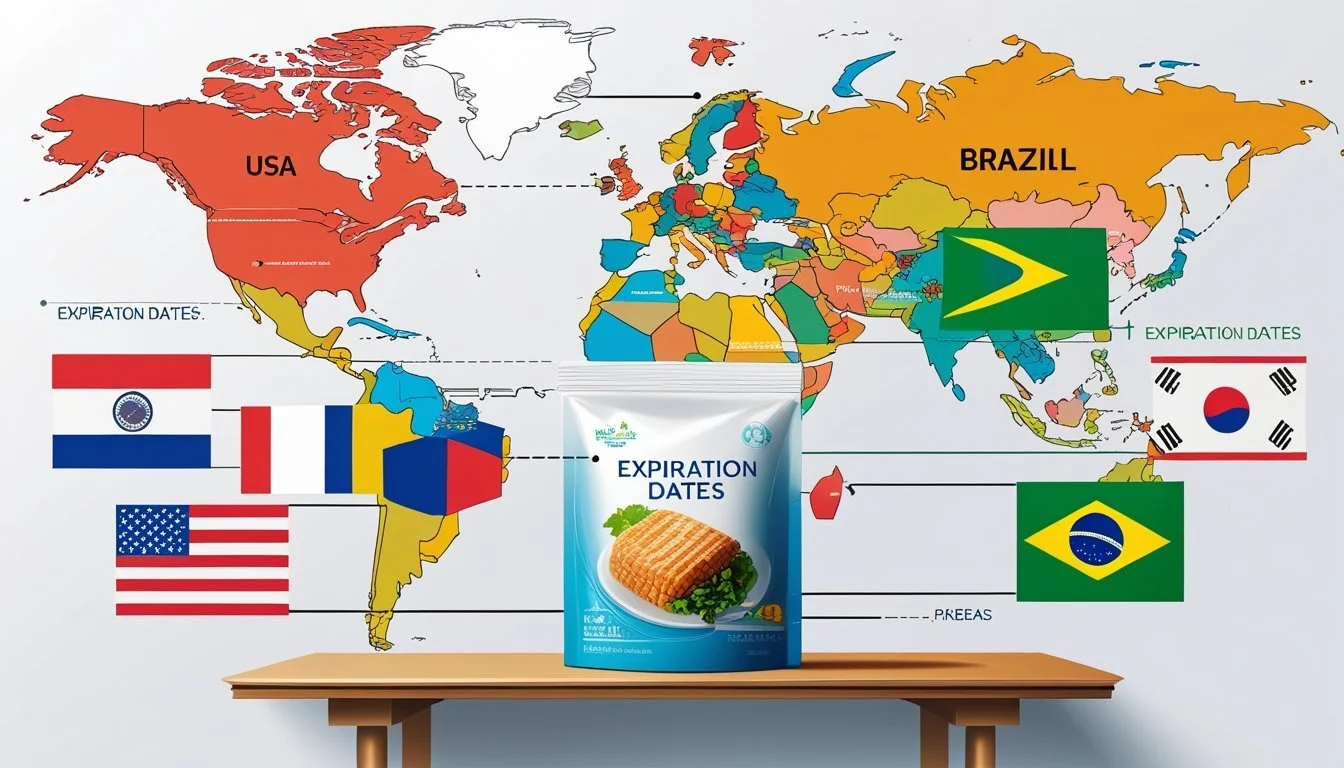
Expiration dates serve as a key indicator for food safety and product quality, yet there is no universal standard for how they are set or displayed. Differences in national regulations, local consumption habits, and storage environments shape these variations.
Some countries require expiration dates to follow specific formats, such as day/month/year using letters for months to prevent confusion. Others may impose shorter shelf lives to ensure safety, especially for perishable items.
Country Expiration Format Typical Shelf Life United States MM/DD/YYYY Varies by product EU Countries DD/MM/YYYY (letters for month) Often shorter for perishables Japan YYYY/MM/DD Strict for fresh food
Manufacturers must adjust packaging and distribution to comply with each region's rules. This can lead to the same product carrying different expiration dates abroad.
For consumers, these differences mean it is important to check the label and understand regional norms. Paying close attention to expiration information promotes both safety and informed choices.

