Food Truck Laws Brownsville, Texas
Regulations and Compliance for Mobile Vendors
In Brownsville, Texas, the rise of mobile food businesses has prompted the city to implement specific laws and regulations to ensure public health and safety. Food trucks, often celebrated for their convenience and diverse culinary offerings, must adhere to rules that govern everything from food preparation to parking and waste management. These regulations are designed to maintain high standards of food safety, manage traffic and parking related to these mobile units, and ensure that food truck operators conduct their businesses responsibly.

Navigating the rules for operating a mobile food unit in Brownsville requires understanding the local requirements, which include obtaining the necessary permits, inspections, and approvals. The City of Brownsville's Planning & Development Services Department oversees the inspection program for mobile food prep units and facilities, ensuring that all mobile food providers meet the city's codes and regulations. Operators must acquire health permits, and depending on the type of mobile unit, submit to inspections by other city departments such as the Fire Marshal.
In addition to municipal regulations, prospective food truck operators must also comply with state requirements such as vehicle insurance, business registration, and inspections as mandated by the Texas Secretary of State and Comptroller. This multi-level compliance ensures that all food trucks operating within Brownsville not only offer a variety of food choices to consumers but also contribute to a safe and regulated dining environment.
Overview of Food Truck Regulations in Brownsville
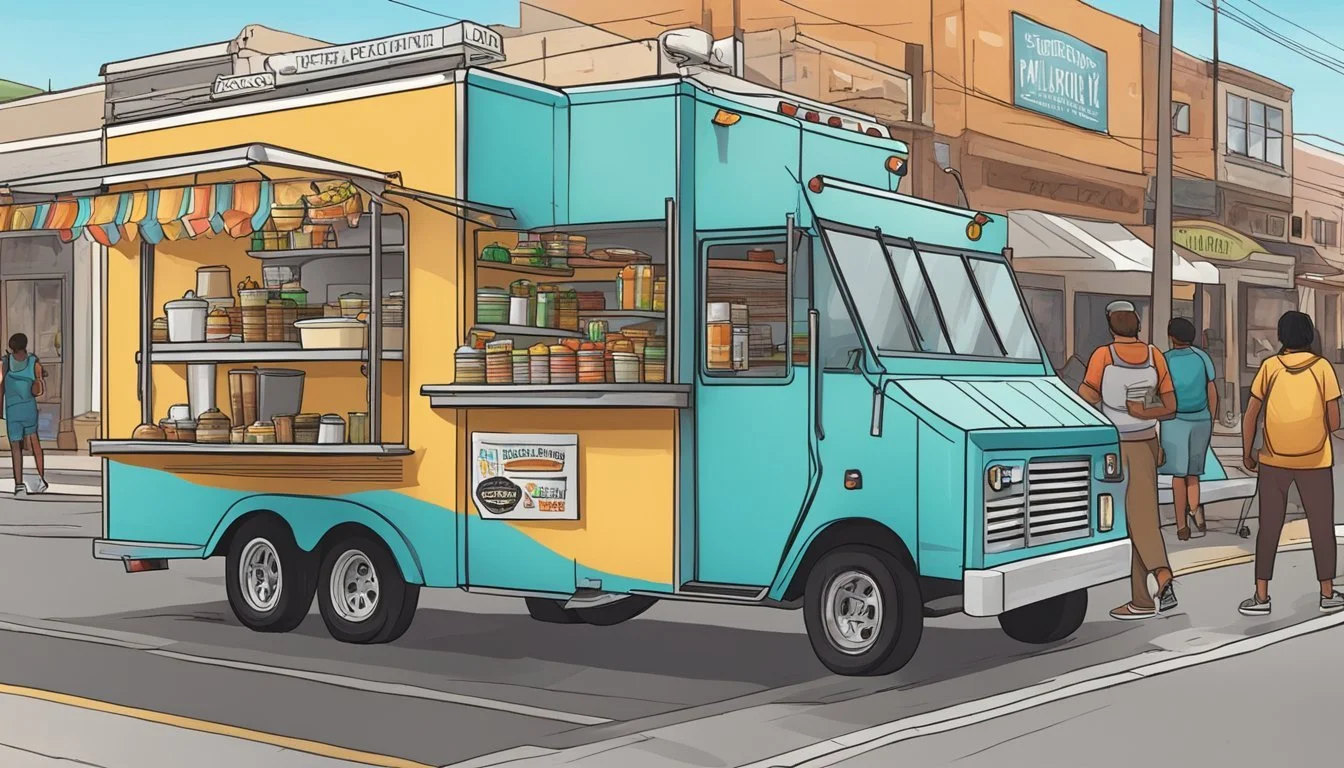
Operating a food truck in Brownsville, Texas, requires navigating local regulations and adhering to state food establishment rules. This framework ensures public safety and business compliance as food truck operators serve the community.
Understanding Local Ordinances
The City of Brownsville has specific ordinances that govern the operation of mobile food units (MFUs), commonly known as food trucks. These ordinances outline requirements for location, permits, and operation. A Brownsville food truck operator must secure proper permits from agencies such as the Texas State Comptroller’s Office and Brownsville Public Utilities Board before commencing operations. Moreover, the local government enacts zoning laws to designate certain areas where food trucks can operate.
Compliance with Texas Food Establishment Rules
Compliance with the Texas Food Establishment Rules (TFER) is mandatory for food trucks in Brownsville. The TFER encompasses regulations related to food safety, hygiene, and employee training. It mandates regular health inspections and requires that food trucks be equipped with the necessary facilities to maintain food at proper temperatures. Food trucks in Brownsville are expected to undergo inspections with all equipment "turned on" to simulate a real-life operational scenario.
Inspectors from the local fire department may also be required to check for safety compliance, ensuring that each food truck meets fire safety standards. Additionally, food trucks are subject to inspection from the Brownsville Public Health Department to ensure they meet all sanitary requirements outlined by the state and local directives.
Starting a Food Truck Business
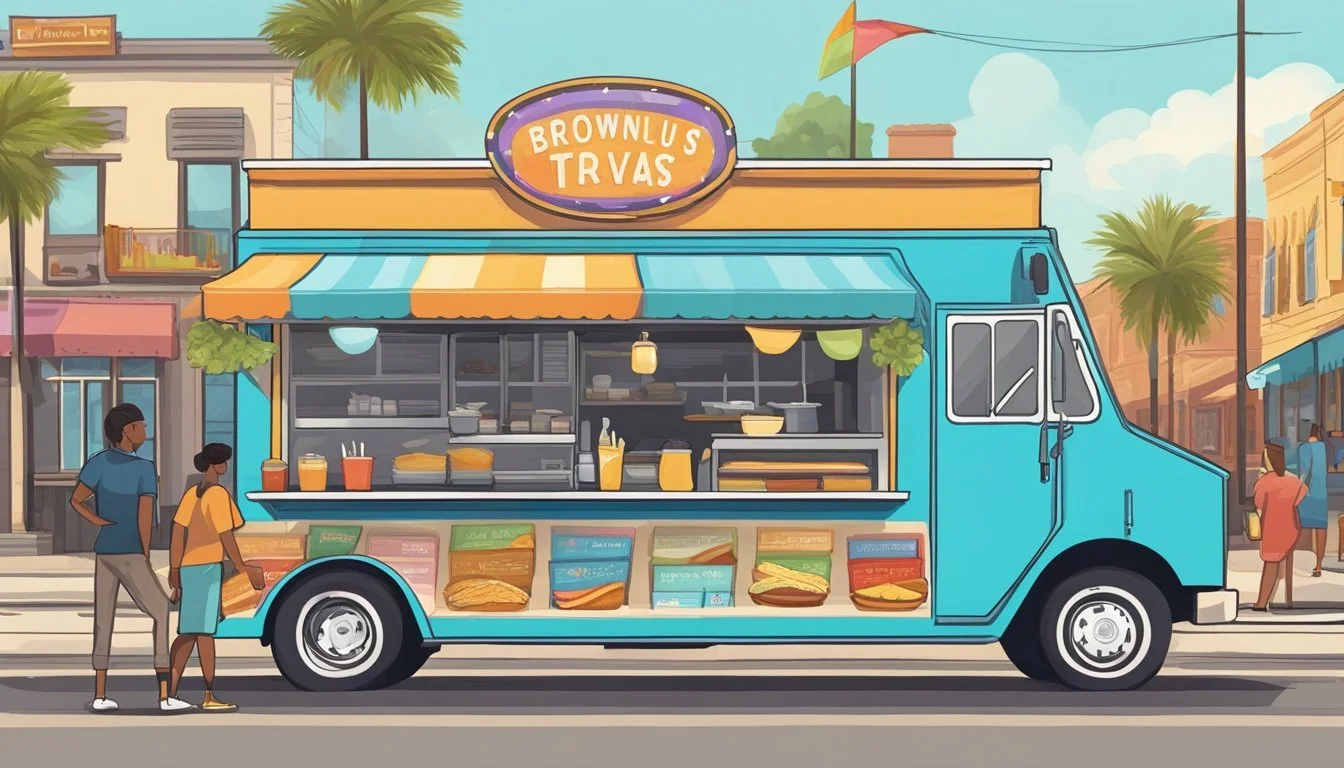
When starting a food truck business in Brownsville, Texas, owners must meticulously choose their business structure, secure the necessary permits and licenses, and consider insurance and liability to ensure compliance and protect their investment.
Choosing the Business Structure
Selecting the appropriate business structure is a foundation for any food truck venture. Options include a sole proprietorship, partnership, limited liability company (LLC), or corporation. In Brownsville, an LLC is often favored for its liability protection and tax benefits. Starting an LLC for a food truck business in Texas involves registering with the Texas Secretary of State, obtaining an Employer Identification Number (EIN) from the IRS, and meeting specific local requirements.
Obtaining Required Permits and Licenses
To operate a mobile food truck, various permits and licenses are essential. The City of Brownsville requires:
A Health Permit, obtained after a successful inspection that assesses the truck's sanitation and operational standards.
A Fire Inspection, if applicable, to ensure safety compliance.
Additional local permits, which could relate to zoning, parking, and vending locations.
Prospective food truck owners must contact the Brownsville Public Health Department by phone or visit their office at an official address to start this process.
Insurance and Liability Considerations
Acquiring the right insurance is critical for food truck owners to protect their mobile eatery against potential liabilities. A comprehensive insurance plan should include:
Vehicle insurance
General liability insurance
Product liability insurance
Workers' compensation, if hiring employees
Food truck businesses should also keep their business registration and insurance documents readily accessible, as inspectors may request these at any time. It is advisable to seek guidance from a knowledgeable insurance agent who can tailor a policy to the needs of a mobile food business.
Operational Requirements for Food Trucks in Brownsville

Before a food truck in Brownsville can serve customers, it must meet specific operational requirements set by local and state authorities. These requirements ensure public health and safety standards are maintained at all times.
Health Inspections and Food Handler Certifications
Food trucks, often referred to as mobile food units, must undergo regular health inspections by the Brownsville Public Health Department to ensure compliance with safety regulations. Operators must possess a current Food Handlers license, proving they've passed a test demonstrating their knowledge of food safety.
Water Supply and Waste Disposal
A mobile food unit needs a potable water tank and a waste retention tank. The Brownsville regulations demand that food trucks have these facilities to manage water supply and waste disposal efficiently. These tanks must adhere to the Department of State Health Services' criteria and are checked during inspections.
Food Preparation and Safety Standards
The preparation of food in mobile food units requires strict adherence to Brownsville safety standards. Food trucks must implement time/temperature control for safety to prevent bacterial growth. Also, a grease trap may be necessary depending on the menu and volume, as local ordinances aim to protect the city's infrastructure.
Vehicle and Equipment Standards
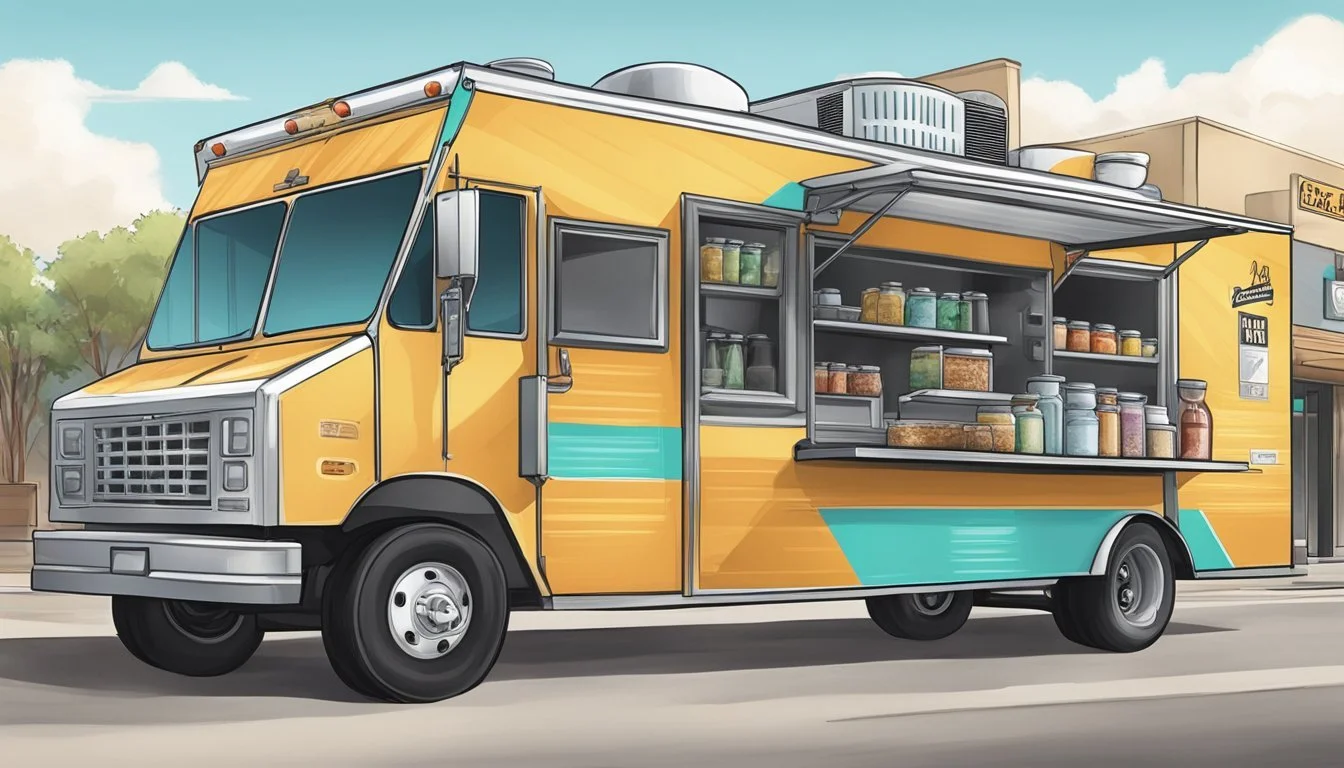
In Brownsville, Texas, food trucks, catering as mobile food units (MFU), are subject to specific regulations that cover the design and maintenance of the vehicle, along with the facilities necessary for operation. These standards ensure food trucks are safe, hygienic, and efficient as retail food establishments.
Design and Maintenance Criteria
Every food truck in Brownsville must conform to design and maintenance guidelines that facilitate hygiene and comply with federal motor vehicle safety standards. The vehicles should be self-contained and readily moveable, preventing any stationary tendencies. To maintain cleanliness and ease of maintenance, the surfaces—the walls, floors, and ceilings—must be smooth and comprised of easily cleanable materials. Doors and windows should close tightly and have screens that protect against pests, preserving the integrity of the menu items inside.
Criteria Checklist:
Self-contained: Unit includes all necessary facilities.
Readily movable: Maintains the ability to move quickly.
Smooth surfaces: Ensures ease of sanitizing and durability.
Tight seals on doors/windows: Prevents pest intrusion.
Necessary Facilities for Operation
A food truck is essentially a compact retail food establishment; as such, it requires specific facilities for operation to prepare and sell food safely. They should have a central preparation facility where food is stored and prepared before service. To aid in food service tasks, the unit must have adequate space for tables and drain boards. A crucial requirement is a three-compartment sink for washing, rinsing, and sanitizing equipment. These features contribute to the overall hygiene and functionality of the food truck, ensuring the stored, displayed, and served foods meet health standards.
Facilities Outline:
Central preparation facility: Base of operation for food prep.
Adequate space: For assembling food and handling equipment.
Three-compartment sink: For mandatory wash, rinse, and sanitize steps.
By adhering to these standards, food trucks in Brownsville ensure they maintain the quality and safety required to operate within the city's regulatory framework.
Location and Parking for Food Trucks

Food trucks in Brownsville, Texas face specific location and parking stipulations that are important for operators to follow. These regulations ensure safety, accessibility, and proper usage of city services.
Navigating Parking Regulations and Restrictions
Food truck operators must adhere to Brownsville's parking regulations when deciding where to situate their mobile units. The city requires that food trucks park in designated areas, with special attention to distance from intersections or stop signs, as mentioned in the parking specifications for food trucks. Operators are prohibited from setting up within 100 feet of these areas to maintain visibility and traffic flow. Compliance with these parking rules is essential for the continued operation of the mobile food unit.
Accessibility and Facility Usage
For food trucks considering operation within a food truck park, it is crucial they provide accessible facilities for all customers. This includes providing access to restrooms that meet ADA standards. Brownsville law stipulates the necessary infrastructure for food trucks, emphasizing the importance of accessibility both to the mobile food unit itself and the related amenities, such as restrooms for patrons. Facilities must be easily reachable and usable for individuals with disabilities, ensuring a broad customer base can be served.
The Business Side of Food Trucks

Operating a food truck in Brownsville, Texas, involves meticulous financial management and a firm grasp of tax obligations, alongside strategies for effective marketing and fostering strong customer relations.
Financial Management and Tax Obligations
For food truck operators, understanding and managing financials is crucial. They must track revenue, expenses, and profit margins meticulously to sustain the business. Mobile food units in Brownsville must register with the Texas Comptroller and adhere to state tax requirements. Expenses often include ingredients for food products, equipment maintenance, and the acquisition of permits. Operators should also account for the cost of complying with public health department regulations, such as ensuring proper water storage and restroom accessibility for staff, which impacts the overall financial plan of the small business.
Marketing and Customer Relations
Marketing is key for food trucks in Texas to differentiate themselves in a thriving market. In cities like Austin, which have a vibrant food truck culture, clear branding and targeted marketing can attract a diverse customer base. Food truck operators should focus on building brand recognition through a combination of social media presence, local event participation, and consistent grade-A ingredients which speak to their commitment to quality. Building rapport with customers is also vital; positive interactions can lead to repeat business and invaluable word-of-mouth referrals for the small businesses.
By maintaining sound financial practices and leveraging marketing to enhance customer relations, food truck operators can establish a flourishing presence in Brownsville's competitive food scene.
Operating a Food Truck in Specific Locations
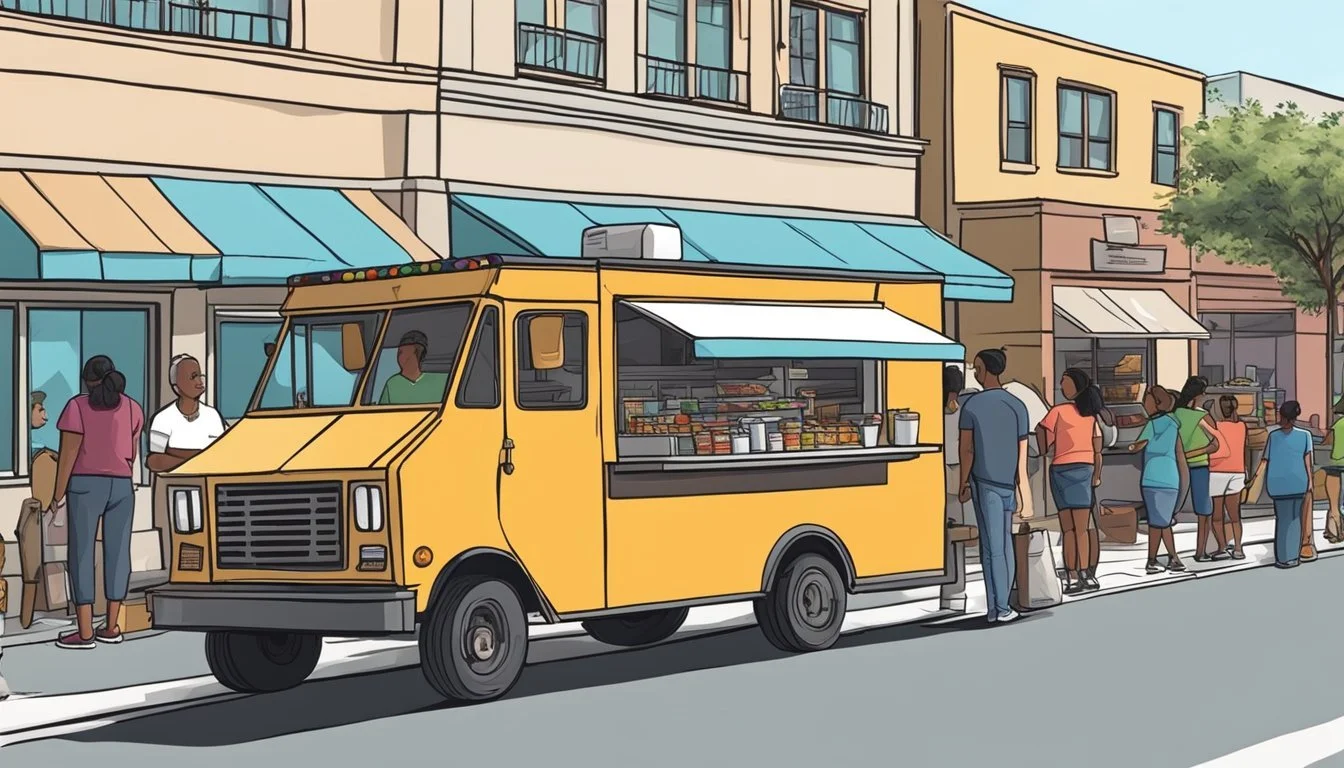
Operating a food truck in Brownsville, Texas requires understanding and adherence to specific local regulations. Knowing where you can operate and what permissions you need is essential for successful integration into the area's vibrant food scene.
Special Considerations for Operating in Parks and Events
When food truck operators plan to serve in municipal parks or at special events, they must obtain the necessary permits from the city. Parks often have designated areas for mobile food units to ensure safety and accessibility. Event participation may require coordination with event organizers and adherence to additional guidelines, beyond regular municipal regulations. For instance, Brownsville's Mobile Food Units (MFU) webpage provides resources on obtaining permits and highlights specific event-related requirements.
Engaging with Local Communities and Businesses
Food truck operators should establish positive relationships with local neighborhoods and businesses to enhance their presence and sustainability. It's crucial to be aware of the local statutes as they relate to the operation of food trucks, especially in terms of zoning and permitted locations, which can vary within Brownsville. Forging partnerships with local businesses, such as arranging to operate nearby, can not only ensure compliance with regulation but also create a mutual benefit. The amendment in the Brownsville ordinance for food trucks on private property exemplifies the city's openness to integrating food trucks into existing commerce areas.
Future Trends and Evolving Laws

In Brownsville, Texas, food truck operators are witnessing an ever-changing landscape shaped by new legislation and market forces. These transform how retail food establishments function, dictate permitting processes, and respond to consumer trends.
Keeping Abreast of Changes in Food Truck Legislation
Staying informed on legislation changes is crucial for food truck owners. Local government actions in Brownsville have already indicated a trend towards facilitating food truck operations, such as the amendment allowing food trucks on private property. As laws evolve, they affect various aspects of operation from health regulations to parking restrictions.
Health and Safety: Continuous updates in food safety laws, like the ones recently passed in Texas, require food trucks to stay compliant with new standards to avoid penalties.
Permitting: The city’s permitting process may adapt over time, potentially simplifying or complicating the steps to legally run a food truck.
Monitoring these changes is not just about compliance—it's about gaining a competitive edge.
Adapting to Market Shifts and Consumer Preferences
Consumer preferences and market shifts play a significant role in shaping the future of food truck operations. As consumer desire for diverse and high-quality food options grows, food truck owners in Brownsville must keep pace with these trends.
Menu Innovation: By introducing new and culturally diverse menu items, food trucks can cater to the evolving tastes of the community.
Sustainability Practices: Emphasis on sustainability and eco-friendly practices is influencing consumer choices, pushing food trucks to consider greener operations.
It is essential for food truck operators to analyze and adapt to these trends, ensuring their long-term viability in a competitive market.