Food Truck Laws Montgomery, Alabama
Navigating Regulations and Permits
Operating a food truck in Montgomery, Alabama, requires navigating a specific set of regulations to ensure compliance with local laws. Food truck operators in the city must obtain a Business License and adhere to health and safety standards established by the Alabama Department of Public Health. It is essential for prospective mobile food vendors to be aware of the guidelines that dictate where they can set up their businesses and the parameters of operating at special events hosted by the city.
The city of Montgomery offers opportunities for food trucks to serve at private events, but for those aiming to be included in city-hosted special events, contact with the Special Events Director is necessary. Vendors must also ensure that their operations align with the local food safety and sanitation requirements that address food storage, clean water access, and waste disposal. This is to provide both a safe eating environment for customers and a fair trading ground for businesses.
Montgomery's mobile food unit policies are designed to support the thriving street food culture while maintaining public health and safety. Food truck entrepreneurs are welcomed, provided they follow the proper channels, such as submitting an Application for Food and Lodging Plan Review and working within the bounds of the food truck locations authorized by the city. These measures help maintain a vibrant and diverse food scene that resonates with both the residents and visitors of Montgomery.
Legal Requirements for Food Trucks
Operating a food truck in Montgomery, Alabama, demands adherence to specific legal requirements to ensure public safety and compliance with local regulations. Food truck operators must secure appropriate business licenses, pass health department inspections, and obtain sanitation certifications.
Business License and Permits
To operate legally, food trucks must obtain a business license within the City of Montgomery. This process involves:
Business License: A fundamental requirement for starting any food truck business.
Special Event Permit: Necessary for participating in city-hosted events, which can involve contacting the Special Events Director to get onto the City Food Truck List.
Location Approval: Private event setups are permissible, but public space utilization might need additional clearances.
Health Department Inspections and Permits
Regular inspections and permits from the Alabama Department of Public Health are mandatory:
Initial Inspection: Performed before the food truck starts operating to ensure compliance with health codes.
Regular Health Inspections: Conducted periodically to maintain standards for public health safety.
Commissary Usage: Food trucks must have an agreement with a commissary, which meets all requirements set by the Department of Public Health, including proper food storage and waste management facilities.
Sanitation and Food Safety Certification
Maintaining high standards of sanitation and food safety is crucial:
ServSafe Certification: Operators should hold a ServSafe or equivalent food safety training certification to ensure they are knowledgeable about safe food handling practices.
Sanitary Conditions: The food truck and all equipment should meet the Alabama Department of Public Health's sanitary guidelines.
Routine Sanitation Checks: These are part of the inspection process and essential for the continued operation of the food truck.
By adhering to these stipulations, food trucks in Montgomery can provide services that are both legally compliant and safe for the community.
Location and Parking Regulations
In Montgomery, Alabama, food trucks are subject to specific location and parking regulations to ensure operational efficiency and public safety. These regulations are designed to maintain the city's aesthetic while providing vendors with opportunities to serve the community.
Assigned Locations for Food Vending
Food truck operators in Montgomery must adhere to designated sites for their vending activities. A map of designated spots downtown provides detailed information on where food trucks are allowed to operate. These locations are chosen to facilitate easy access for customers while minimizing disruptions.
Special Event and Entertainment Districts
During special events or within entertainment districts, Montgomery may have additional or altered guidelines for food vendors. Vendors are often required to obtain a Special Event Permit, which stipulates the terms of operation during these high-traffic times to ensure compliance with public health and safety regulations.
Residential Area Restrictions
Food trucks often face stricter rules when operating in residential areas to avoid nuisance and congestion. They must be parked legally in areas where parking is permitted, as outlined in the Municode Library, and are limited in terms of the hours they may operate to respect the peace and privacy of residents.
Operational Guidelines
In Montgomery, Alabama, food trucks must adhere to specific standards and regulations concerning their equipment, food handling processes, and the sale of prepackaged food items.
Equipment and Vehicle Standards
Food trucks in Montgomery are required to be self-contained units, with their own potable water tanks and wastewater tanks, unless they handle only prepackaged foods. The vehicle should be designed for easy mobility and must be moved daily to return to the commissary for services as needed. All cooking equipment within the food truck must meet health and safety standards set by the Alabama Department of Public Health.
Cooking Equipment: Must be commercial grade and properly installed.
Vehicle Requirements: Must include facilities for food storage at appropriate temperatures, a handwashing sink, and waste disposal methods.
Food Handling and Processing
Every food truck must implement efficient food handling practices to avoid contamination and must be prepared for inspections by the Health Officer. They should operate from a commissary that provides adequate facilities for hygiene and food safety, including:
Handwashing Sinks: Available for staff.
Warewashing Sinks: Present for proper cleaning of utensils and equipment.
Prepackaged Food Regulations
For food trucks selling prepackaged foods, strict adherence to storage and temperature keeping is critical for maintaining food safety. Detailed information regarding the storage and handling of these items are outlined by the Alabama Department of Public Health. The food trucks must also have a plan that specifies if they are exclusively selling prepackaged foods or if other food items are sold.
Storage Standards: Must prevent spoilage and contamination.
Temperature Controls: Necessary for refrigerated and frozen foods.
Financial Considerations

In Montgomery, Alabama, prospective food truck owners need to be aware of the various financial obligations they need to fulfill. This section outlines the primary costs and fees associated with starting a food truck business, as well as the funding options available to help with these expenses.
Startup Costs and Fees
Starting a food truck business in Montgomery entails several upfront costs. The initial investment includes but is not limited to purchasing or leasing a food truck, which can range significantly in price depending on whether it's new or used. Additionally, owners must consider the cost of retrofitting a truck with the proper kitchen equipment and obtaining the necessary food truck wrap or paint for branding.
Beyond the vehicle itself, there are mandatory fees required by the city: To operate within Montgomery, a business license is essential for food truck operations. The specifics of these fees can be found on the Montgomery Food Trucks information page. Furthermore, compliance with health and safety standards set forth by the Alabama Department of Public Health is a cost-incurring step, requiring food trucks to operate from a commissary that meets certain conditions and may involve fees for plan review and permitting as specified in the Mobile Food Requirements.
Funding and Financial Aid Options
For assistance in covering startup costs, several funding and financial aid options are available. Prospective food truck owners may explore small business loans offered by financial institutions, which often provide specific programs for entrepreneurs starting a food processing business. Additionally, individuals might investigate business grants, which are funds that do not need to be repaid, offered by various organizations interested in stimulating local economic development.
Entrepreneurs can also look into crowd-funding platforms as a way to raise capital. These platforms allow a wide array of people to contribute financially to a business venture in exchange for early access to products or other incentives. In some cases, the city or local business associations may have resources or programs to support the growth of food businesses, so it is beneficial for food truck owners to research local economic initiatives.
Business Planning and Development
In Montgomery, Alabama, the success of a food truck business largely depends on meticulous planning and a strong development strategy. Both the business plan and menu offerings are critical to laying the foundation for a prosperous venture.
Drafting a Food Truck Business Plan
A comprehensive business plan is the blueprint of any food truck business. It begins with a clear executive summary, highlighting the business concept, the anticipated market environment, and its expected financial performance. The plan should include a detailed section on market analysis illustrating the target demographic, competitors, and strategies to stand out in Montgomery's bustling food truck scene. The financial projections, including startup costs, continuous operational expenses, and revenue forecasts, are crucial. They provide potential investors with a concrete understanding of the business's financial health and sustainability.
Menu Planning and Product Offerings
The menu is the heart of a food truck business. It should reflect a balance between unique offerings and customer favorites, with items that are both profitable and feasible to make in a food truck kitchen environment. Menu planning necessitates thoughtful consideration of cost, pricing strategy, and supplier relationships. Keeping a finger on the pulse of Montgomery's culinary trends can guide menu decisions to cater to local tastes. The menu directly affects equipment needs, inventory requirements, and staffing, therefore decisions here should align with the overall business objectives detailed in the business plan.
Additional Considerations
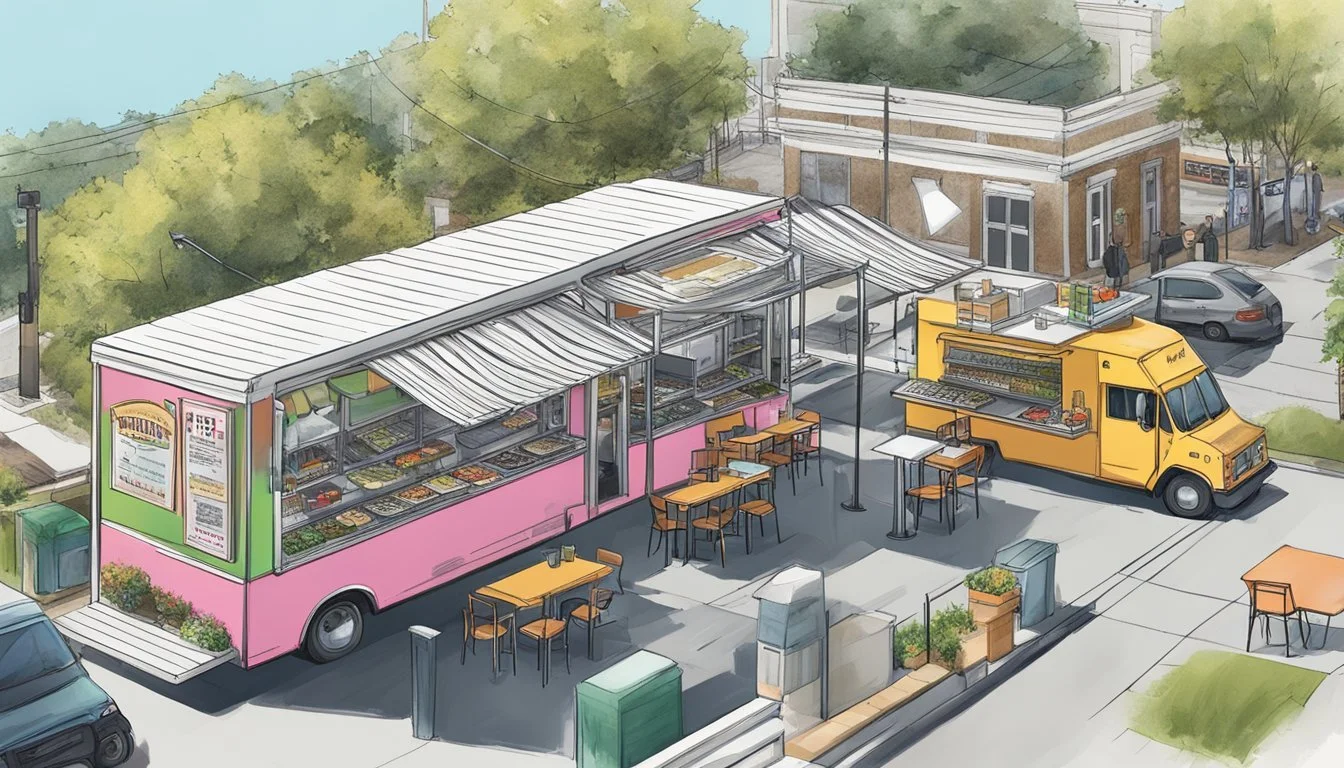
When operating a food truck in Montgomery, Alabama, there are critical regulatory aspects that require attention beyond the basic licensing. These include obtaining necessary approvals, dealing with liquor-related legalities, and respecting customer privacy.
Approvals from Environmental Services
The Alabama Department of Public Health mandates that every mobile food unit must obtain proper approvals from Environmental Services. This division ensures food safety and sanitation standards are met. For example, units must have the required facilities for handwashing and safe food handling as outlined in the food and lodging regulations.
Liquor Licensing Issues
If a food truck plans to sell alcoholic beverages, they must navigate liquor licensing complexities. In Alabama, this involves understanding state regulations and possibly securing additional city permits. The process can be intricate and rigorous to ensure compliance with all legal requirements.
Protecting Customer Privacy
Food trucks collecting any customer information need a clear privacy policy in place that aligns with local and state data protection laws. This policy should articulate how customer data is collected, used, and stored, thereby affirming a commitment to preserving customer privacy. It's also essential that all staff are trained on these practices to prevent privacy breaches.