Steaming Vegetables Without a Steamer Basket
Easy Alternatives at Home

Steaming vegetables is a healthy cooking method that preserves the nutrients and flavors of the produce. Often, recipes call for a steamer basket, which is not always available in every kitchen. However, it is entirely possible to steam vegetables effectively without one. Various household items can be repurposed to create a makeshift steaming apparatus, ensuring that the vegetables are cooked evenly and retain their nutritional value.
One of the simplest methods to steam vegetables without a steamer basket involves using aluminum foil and a heat-proof plate. The foil is shaped into small balls, which are then placed at the bottom of a pot. A plate is rested on top of these foil balls, and the vegetables are arranged on the plate. Water is added to the pot to create steam, and the pot is covered to allow the vegetables to cook through. This technique ensures that the vegetables are kept away from the boiling water, mimicking the effects of a traditional steamer basket.
Another approach utilizes items such as a wire cooling rack or a splatter screen, which can be found in many kitchens. The rack or screen is placed above the pot of boiling water, and the vegetables are laid on top. The setup is then covered with a lid or another suitable cover to contain the steam. This method also raises the vegetables above the water level, allowing for an even steam distribution that cooks the vegetables without them becoming soggy or overcooked.
Understanding Steam Cooking

In steam cooking, vegetables are gently cooked by the heat carried by steam, preserving their nutrients and enhancing natural flavors. This method promotes healthy eating by cooking food without the need for oils or fats.
Principles of Steam Cooking
Steam cooking involves heating water until it vaporizes into steam, which carries heat to the food, causing it to cook. The food is suspended above the boiling water and is subject to the consistent temperature of the steam.
Heat Source: To generate steam, one needs a heat source to bring water to its boiling point.
Water: The only ingredient to create steam is water, making it a pure and natural cooking medium.
Enclosed Environment: A lid is often required to trap the steam and maintain a consistent cooking temperature.
Benefits of Steaming Vegetables
Steamed vegetables retain more nutrients than those cooked by other methods, as the cooking process is gentler and minimizes nutrient loss. Steaming also maintains the tenderness of vegetables, without the need for oils, making it a healthier option.
Nutrient Retention: Vitamins and minerals are better preserved during steaming.
Healthy Eating: It's a method that doesn't add extra calories or fats.
Enhanced Flavor: Natural flavors of the vegetables are more pronounced when steamed.
Texture: Tenderness is achievable without overcooking.
Common Vegetables for Steaming
Certain vegetables lend themselves well to steaming, yielding excellent texture and flavor. Vegetables that are commonly steamed include:
Broccoli: Its florets steam quickly, keeping their vibrant color and nutrients.
Carrots: Achieve a balance between tenderness and retaining a slight crunch.
Cauliflower: Similarly to broccoli, it retains texture and flavor when steamed.
Spinach: Wilt down quickly to a tender, nutrient-rich dish.
Peas: Stay bright green with a soft yet firm texture.
Potatoes: Can be steamed to maintain moisture and a fluffy interior.
These vegetables demonstrate the broad adaptability of steam cooking to a range of textures and flavors in vegetable preparation.
Steaming Techniques Without a Steamer Basket
When it comes to steaming vegetables without a traditional steamer basket, several alternate methods can be employed using common household items. These techniques ensure one can still enjoy the benefits of steamed vegetables with the equipment they have on hand.
Using a Plate and a Pot
One can utilize a simple kitchen pot, water, and plate to steam vegetables effectively. To begin, they need to add a half inch of water to the pot and bring it to a boil. A heat-proof plate then rests on something that will hold it above the water level, such as a metal cookie cutter or a makeshift stand from aluminum foil balls. The lid should be placed over the pot to keep the steam contained.
Creating a Makeshift Steamer with Foil
For a quick DIY steamer, aluminum foil can be used. One should start by tearing off three sizeable pieces of foil and rolling each into a ball. These balls are then placed at the bottom of a pot, and serve as a stand for a heat-proof plate that sits above the water level. Once the water boils, the vegetables are placed on the plate and the pot is covered with a lid.
Utilizing Oven Methods
Steaming in an oven requires a roasting pan and a wire cooling rack. They must pour some water into the pan, ensure it's not high enough to touch the rack, and then preheat the oven. The vegetables are arranged on the rack, which is placed in the pan. Covering the pan with foil creates an enclosed environment for the steam to cook the vegetables.
Steaming in a Microwave
A microwave provides a convenient approach to steaming. Vegetables are placed in a microwave-safe bowl with a small amount of water. They then cover the bowl with a microwave-safe plate or some plastic wrap, leaving a small opening as a vent. Adjusting the steaming times based on the power of the microwave and the type of vegetable will yield perfectly steamed produce.
Preparing Vegetables for Steaming
Steaming vegetables preserves their texture and nutrients. The preparation process is crucial to ensure even cooking and optimal flavor.
Cutting and Slicing for Even Cooking
For even steaming, it's important that vegetables are cut uniformly. This helps in ensuring that all pieces cook at the same rate, preventing some from becoming too soft while others remain undercooked. For example, carrots and broccoli should be sliced into evenly sized pieces or florets. If one is preparing a mixture of vegetables, it is advisable to start steaming the denser ones, like carrots or potatoes, before lighter ones like spinach, to keep everything finishing at the same time.
Root vegetables (carrots, potatoes): julienne or dice to uniform size.
Broccoli/Cauliflower: separate into smaller, equal-sized florets.
Leafy greens (spinach, kale): leave whole or tear into large, similar-sized pieces.
Pre-Steaming Rinse and Clean
Before steaming, vegetables should be thoroughly rinsed to remove any dirt or debris. A clean brush can be used for root vegetables with tough skins. After washing, it's essential to shake off excess water or pat the vegetables dry with a clean towel; however, a little moisture on the vegetables can aid in creating more steam.
Leafy greens: Soak in a bowl of cold water, swish and lift out, then rinse under running water.
Root vegetables: Scrub with a brush under running water.
Cruciferous vegetables (broccoli, cauliflower): Rinse under running water, inspect for dirt in the crevices.
Careful preparation will have a significant impact on the final quality of the steamed vegetables, both in taste and nutritional content.
Ensuring Proper Steaming Technique
Proper steaming technique is contingent on controlling heat and water levels, understanding the timing for different vegetables to reach tenderness, and being able to check for doneness accurately. Ensuring these elements are managed correctly will result in perfectly steamed vegetables every time.
Controlling Heat and Water Levels
To begin, one should fill a saucepan with approximately 1/2 inch of water, ensuring it does not touch the bottom of the steaming substitute, be it a plate on foil balls or a wire cooling rack. Heat the water to a simmer—a consistent but gentle bubbling—then reduce the saucepan's heat to maintain this consistent state. This regulation ensures that vegetables steam with indirect, moist heat without boiling or becoming soggy.
Simmer: A gentle, consistent bubble in the water.
Heat Adjustment: Lower to a point where water remains at a simmer.
Timing and Tenderness
Different vegetables require varying steaming times to achieve the right tenderness. Leafy greens may need only a couple of minutes, whereas firm vegetables like carrots or potatoes may need up to 10 minutes or more. It's crucial to cut vegetables into even pieces to promote uniform cooking. Whole vegetables or larger pieces will take longer to steam.
Leafy Greens: Approximately 2-4 minutes.
Firm Vegetables: Approximately 10-20 minutes, depending on size.
Checking for Doneness
To check if vegetables are done, insert a fork into a piece. If it pierces easily with a bit of resistance, the vegetables are tender and ready to eat. Color is also a good indicator; look for a bright, vibrant color as a sign of proper doneness, but be cautious not to overcook, which can lead to dullness and nutrient loss.
Fork Test: Fork enters with slight resistance.
Color Check: Bright and vibrant means done; dull could mean overcooked.
Alternative Steaming Setups
Steaming vegetables without a standard steamer basket can be effortlessly achieved with items commonly found in the kitchen. These alternative setups ensure the vegetables are suspended above hot water, allowing steam to circulate and cook the food effectively.
Using a Colander or Strainer
A colander or a metal strainer can serve as an effective substitute for a traditional steamer basket. To use this method:
Place a colander or strainer inside a large pot.
Add water to the pot, ensuring the water level is below the bottom of the colander.
Bring the water to a boil, then place vegetables in the colander and cover the pot.
This setup allows steam to rise through the holes of the colander, cooking the vegetables evenly.
Crafting a DIY Steaming Basket
A DIY steaming basket can be fashioned from aluminum foil and a heat-proof plate:
Form three balls of aluminum foil and place them at the bottom of a medium-sized pot.
Position a heat-proof plate on top of the foil balls, above the water level.
Once boiling, place vegetables on the plate and cover with a lid.
This homemade hack mimics the functionality of a steamer basket, with steam enveloping the vegetables as they cook.
Employing a Sieve or Wire Rack
A sieve or a wire cooling rack can double as a makeshift steamer when placed inside a pot:
Ensure the wire rack or sieve fits snugly within the pot.
Pour water into the pot up to an inch or below the bottom of the sieve.
Heat until steaming, add vegetables, and then cover the pot.
With this arrangement, the vegetables rest on the stable surface of the sieve or rack, allowing the steam to distribute uniformly around them.
Steaming Other Foods
Steamed vegetables are a staple, but the art of steaming extends to a variety of other foods such as fish and dumplings. With the proper setup and technique, one can master the steaming process using alternative tools like bamboo or metal baskets to bring out the best flavors and textures.
Steaming Fish and Dumplings
For fish and dumplings, even heat and gentle cooking are crucial. One can use a steamer pot with a makeshift platform, ensuring that neither fish nor dumplings touch the water. Place a heat-proof plate on foil balls or a rack within the pot and arrange the food on the plate.
For fish:
Season the fish to taste.
Arrange them on the plate without overlapping.
Steam until fish is opaque and flakes easily.
For dumplings:
Line the plate with cabbage leaves to prevent sticking.
Leave space between each dumpling.
Steam until the dumplings are tender and cooked through.
Steaming with Bamboo or Metal Baskets
Utilizing a bamboo steamer or a metal steaming basket allows for multi-level steaming, which is ideal for larger batches. They can be used over a wok or a pot of simmering water, enabling one to steam various types of food simultaneously.
With a bamboo steamer:
Arrange food in a single layer without overcrowding.
Stack levels with differing cook times properly; start with the layer that requires the most time.
Monitor water levels to avoid drying out.
Using a metal steaming basket:
Expand the basket inside a pot that fits it snugly.
Place food within, and cover with a suitable lid to retain steam.
Ensure that the water does not touch the food as it might cause sogginess.
Both bamboo and metal baskets are swift and efficient methods for quick recipes that call for steamed food. When one adheres to these specific steps and considerations, they ensure that the delicate flavors and textures of the steamed items are preserved and enhanced.
Steaming Tips and Tricks
Effective steaming hinges on using the correct tools and methods. The following tips and tricks facilitate the steaming process, ensuring vegetables are cooked evenly and retain their nutritional value.
Using Pie Tins and Baking Sheets
For those without a traditional steamer basket, a pie tin can be an excellent substitute. Poke holes in a pie tin, then place it upside down in a saucepan, effectively mimicking a steamer basket. Similarly, a baking sheet can be used, especially when combined with items like heatproof plates to elevate food above simmering water, ensuring vegetables steam properly without contact with the water.
Adjusting Recipes for Steaming
When adapting recipes for steaming, it's crucial to remember that steam conducts heat more effectively than dry air in an oven. This means that cooking times may be shorter when steaming. Recipes that call for baking might require less liquid since steaming introduces moisture, and exact temperatures would shift to a simmering point rather than the specified oven heat.
Picking the Right Pans and Pots
Choosing the appropriate pan or pot is essential for effective steaming. A large pot is suitable for larger batches, providing ample room for steam circulation. The use of a tight-fitting lid is necessary to trap the steam. When using a heatproof plate on top of a foil ball setup, ensure it fits well inside the pot to maximize steam buildup and to quicken the cooking process. Using a saucepan works for smaller servings, and keeping the water level to about an inch ensures that vegetables do not boil but are instead subjected to gentle, consistent heat.
Safety Considerations When Steaming
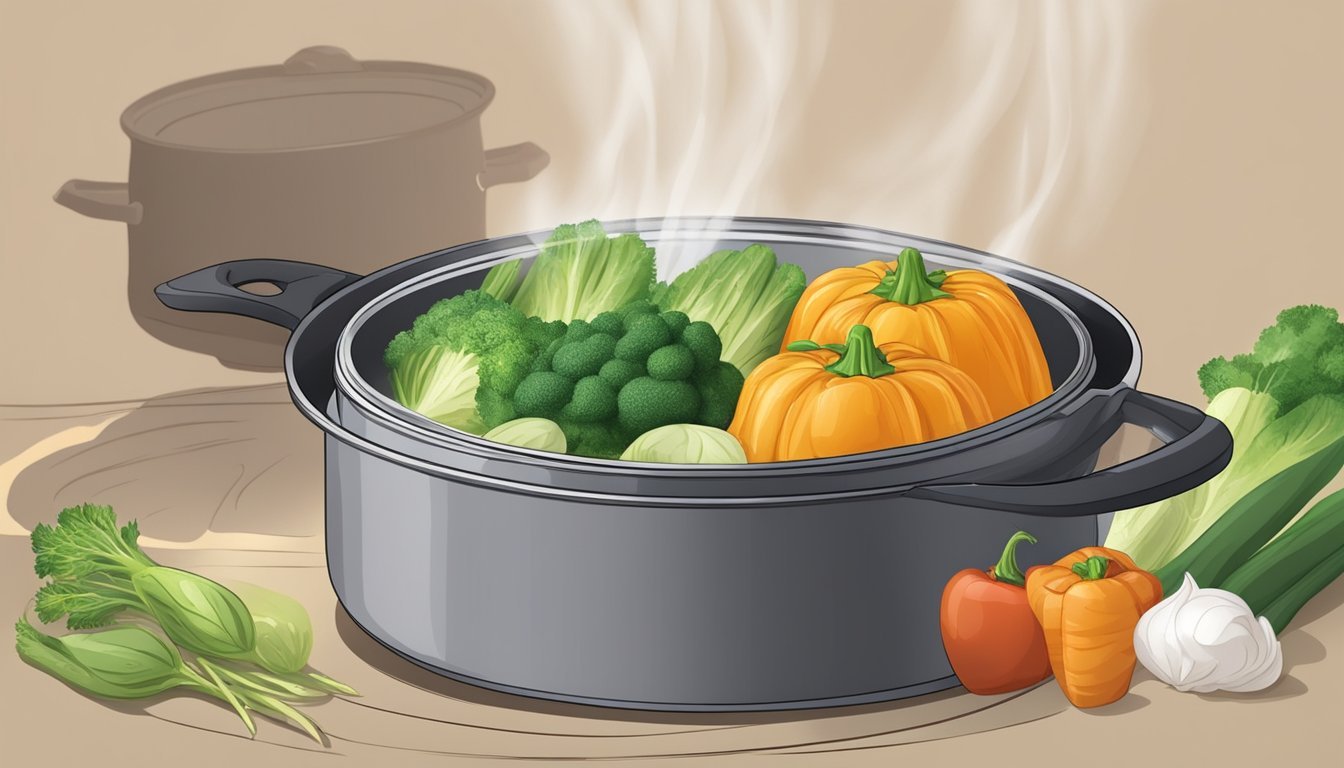
When steaming vegetables without a steamer basket, one must prioritize safety to prevent burns and avoid contaminating food. Proper handling of hot utensils and selecting the right materials for cooking are essential practices.
Handling Hot Utensils with Care
Cooking involves heat and hot equipment, making it crucial for individuals to handle utensils with care to prevent burns. Using oven mitts or pot holders is recommended when touching the pot lid or any other surface that has been exposed to heat. One should always ensure that the lid is secure to avoid steam escaping rapidly, which can lead to scalds.
Avoiding Plastic in Cooking
Food safety is paramount, and it is essential to avoid using plastic in steaming, since it can melt or leach harmful chemicals into the food at high temperatures. Instead, one should opt for heat-proof materials such as glass, silicone, or metal when using makeshift steaming apparatus. This ensures that the vegetables steam effectively without risk of contamination.
Conclusion
Steaming vegetables without a steamer basket is entirely feasible and can yield excellent results. Resourceful cooks have several alternative methods at their disposal. One can use aluminum foil balls and a heatproof plate in a pot, or opt for a heatproof bowl inside an Instant Pot. A metal strainer or colander can also function well as a makeshift steamer when placed over boiling water in a pot with a lid.
These methods not only maintain the nutritional value and texture of the vegetables but are also simple and accessible. Articles from reputable sources such as Epicurious, Food Network, and wikiHow offer detailed guidance on these alternative steaming techniques, ensuring that even those without specialized equipment can feel confident in their ability to prepare steamed vegetables.
The techniques listed are tried-and-true, highlighting the ingenuity in everyday cooking. By adapting common kitchen tools, one can enjoy the benefits of steamed vegetables without the need for specialized gadgets.
It is important to ensure that whatever method is chosen, the vegetables are not in contact with the boiling water, and the pot is covered to keep steam contained. Experimenting with these methods allows for a versatile approach to a healthy cooking technique.