The Blender Pancake Batter Method
Effortless Mixing with No Bowl or Whisk Needed
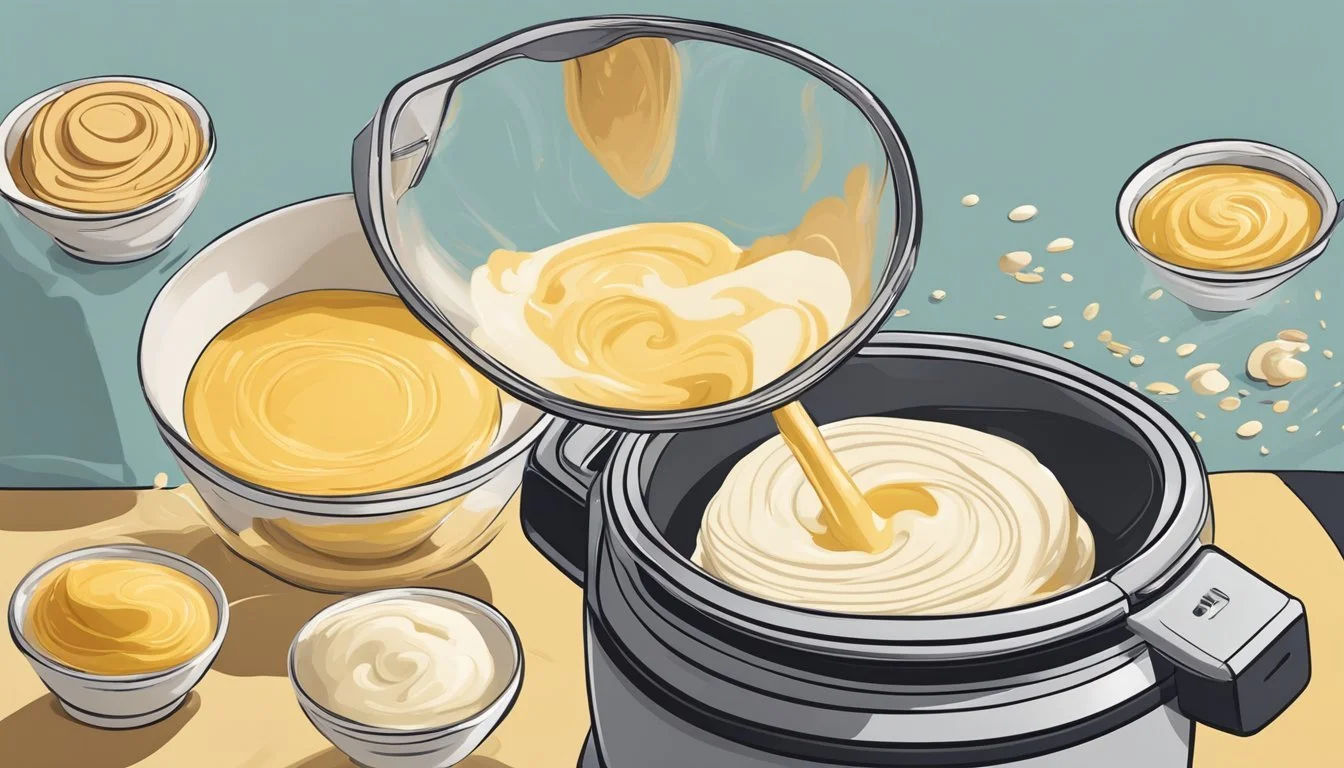
Making pancakes from scratch typically involves mixing a batter in a bowl using a whisk or spoon, but an innovative method has emerged that streamlines the process. Blender pancakes simplify the task of creating a smooth batter while minimizing clean-up. This technique involves placing all the pancake batter ingredients into a blender, where they are combined until a homogeneous mixture is achieved. It's a swift, less-mess procedure that particularly appeals to those who value efficiency and speed in the kitchen.
The recipe for blender pancakes doesn't diverge significantly from the traditional one but leverages the blender's power to mix ingredients quickly and with less manual effort. Ingredients usually include flour, a leavening agent like baking powder, eggs, milk, and flavorings or add-ins of one's choice. The blender's blades effortlessly incorporate the liquid and dry components, creating a batter that is ready to be poured directly onto a hot griddle or skillet.
This approach offers the added benefit of easily integrating whole fruits, like bananas or berries, into the batter. Such fruits are perfectly pureed and distributed throughout the mix, infusing the pancakes with additional flavor and nutritional content. Moreover, this method of preparing pancake batter aligns with the increasingly popular preference for streamlined, no-fuss cooking practices in today's fast-paced lifestyle.
Essentials of Blender Pancake Batter
Making fluffy, delicious pancakes without the need for bowls or whisks is entirely possible with the right technique and knowledge. By utilizing a blender, one can ensure a smooth batter while also simplifying the cleanup process.
Selecting the Right Ingredients
Flour: For the batter's base, choosing between all-purpose flour and whole wheat flour can influence the pancake's texture. All-purpose flour tends to create a lighter pancake, while whole wheat flour offers a more robust flavor and denser texture.
Leavening Agent: Baking powder is pivotal for that desired rise in pancakes. Typically, one teaspoon per cup of flour is effective.
Binders: Eggs contribute to the structure and fluffiness.
Sweetening and Flavoring: A small amount of sugar and salt can enhance the taste. Vanilla extract or cinnamon are optional additions for extra flavor.
Liquids: Milk or a milk alternative is essential for a smooth batter. The quantity can be increased or decreased to affect density and thickness.
Fat: Butter or oil promotes a tender crumb and can be added to the batter or used to grease the cooking surface.
Proper Blender Usage
To create an even mixture without overworking the ingredients:
Start by adding liquids at the bottom near the blades — milk, melted butter or oil, and eggs.
Follow with dry ingredients — flour, baking powder, sugar, and salt.
Pulse the ingredients until just combined, taking care to not overmix as this can lead to a tough pancake due to the development of gluten.
Adjusting Batter Consistency
The batter's thickness will dictate the pancake's final texture. A thicker batter yields fluffier pancakes, while a thinner batter spreads out more, resulting in thinner pancakes. To adjust consistency:
If the batter is too thick, add a tablespoon of milk at a time until the desired consistency is achieved.
If the batter is too thin, a small amount of flour can be added to thicken it.
Ensure that additional ingredients are integrated using the pulse function to avoid overmixing. The goal is to reach a pourable yet substantial consistency that holds its shape on the griddle.
Blending Technique for Optimal Consistency
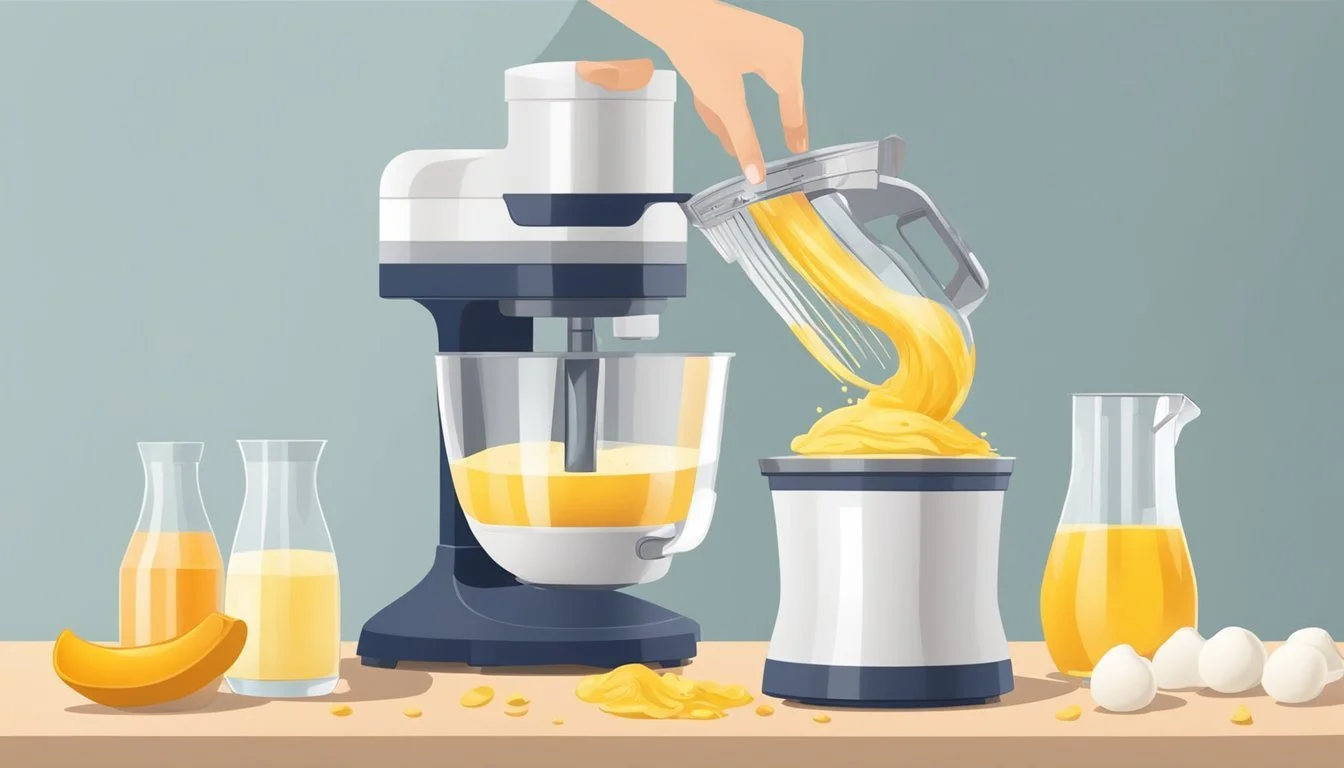
Achieving the right consistency for pancake batter in a blender depends on blending precision and technique. These steps ensure a batter that is neither overmixed nor undermixed, with a texture that leads to delightfully fluffy pancakes.
Creating the Perfect Blend
They start by adding the liquid ingredients to the blender first, such as milk and eggs, before incorporating the dry ingredients like flour and baking powder. This minimizes lumps and facilitates a smoother blend. The process should only be long enough to combine the ingredients, typically no more than a few seconds. Overmixing will develop gluten excessively and result in a tough pancake.
Dry Ingredients: Should be added to the liquid base gradually.
Duration: Brief, just enough to combine the elements.
Importance of Resting the Batter
Once blended, they let the batter rest. Allowing it to sit for a brief period, usually 5 to 10 minutes, gives the baking powder time to activate, creating bubbles that are crucial for a fluffy texture. During this time, the flour absorbs the liquid, which can also improve the batter's consistency.
Wait Time: 5-10 minutes to activate bubbles and improve texture.
Controlling Blender Speed
They control the blender speed to prevent over-aeration, which could burst the tiny air bubbles essential for a fluffy pancake. Starting at a low speed and gradually increasing to medium encourages the even distribution of ingredients without incorporating too much air.
Initial Speed: Low, to combine the ingredients gently.
Final Speed: Medium, to ensure smoothness without over-aerating.
Cooking Blender Pancakes
Blender pancake batter provides a seamless transition from mixing to cooking, requiring no additional bowls or utensils. By blending ingredients, one ensures a homogeneous mixture that is ready to pour directly onto the cookware for perfectly cooked pancakes.
Choosing the Appropriate Cookware
To cook pancakes efficiently, one needs the right type of cookware. A griddle or a skillet is ideal as they provide a flat surface that ensures even heat distribution. Nonstick surfaces are preferred; they reduce the need for excess oil, and pancakes can be flipped with ease. For banana pancakes or add-ins, a well-seasoned cast iron skillet helps in achieving a caramelized edge.
Mastering the Right Heat
The cookware should be preheated to medium-high heat before adding the batter. This is essential for creating the golden-brown exterior and a fluffy interior. To test the heat, sprinkle a few drops of water on the griddle; they should sizzle and evaporate rapidly. It's imperative to avoid overheating as it can lead to burnt edges and an undercooked center.
Flipping Pancakes to Perfection
When bubbles appear on the surface and the edges seem set, it’s time to flip. For the flip, a thin spatula is key to swiftly get under the pancake without breaking the delicate structure. Cooking on the second side usually takes less time. Nonstick cooking spray can be used before flipping to ensure the pancake doesn't stick. Pancakes should be flipped only once to maintain their texture and to prevent them from becoming tough.
Enhancing Pancake Flavors
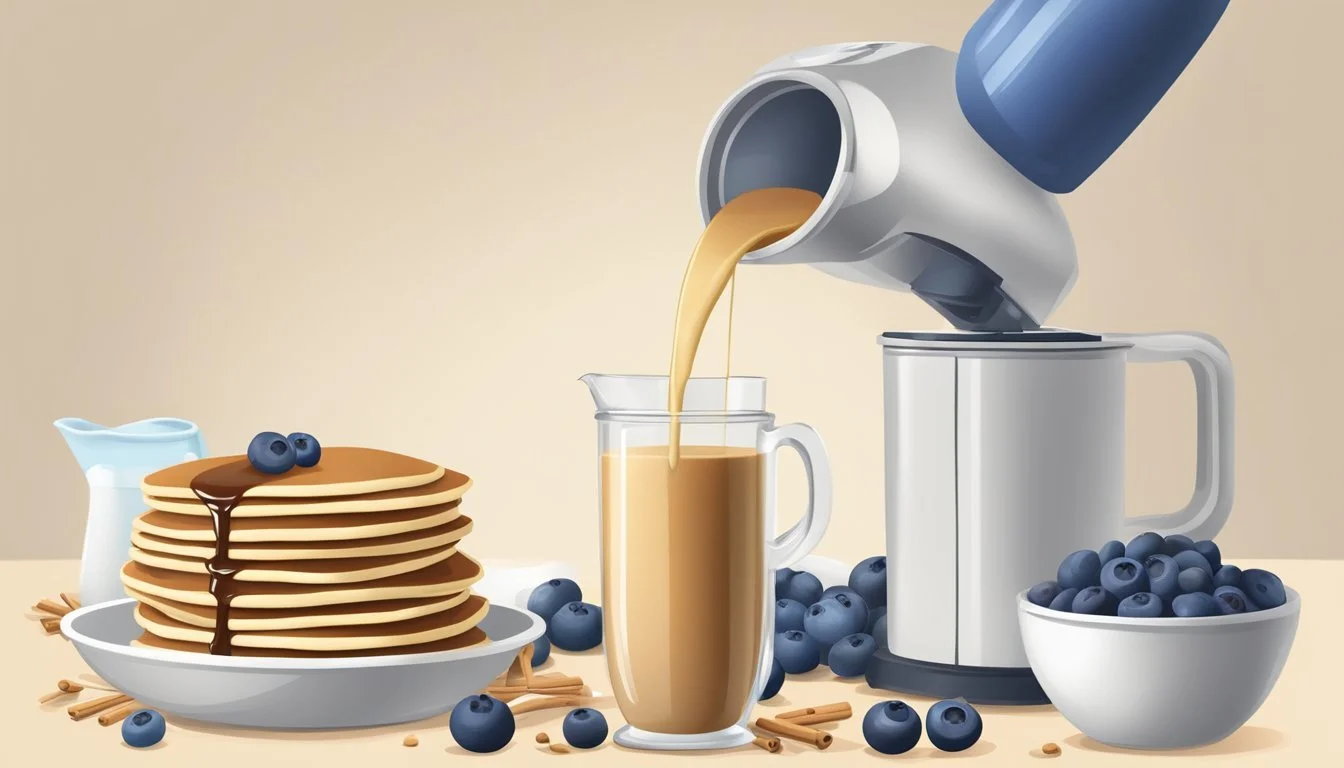
When crafting blender pancake batter, the incorporation of various ingredients can elevate the taste and texture. From fresh fruits to aromatic spices, each addition contributes to a unique and delightful flavor profile.
Incorporating Fruit and Add-ins
Fruit not only infuses pancakes with natural sweetness but also adds moisture for a tender crumb. Bananas and blueberries are classic fold-ins that offer distinct flavors and health benefits. Bananas make the pancakes exceptionally moist and can contribute to a more fluffy texture. On the other hand, blueberries burst with flavor and antioxidants, creating pockets of juicy goodness. Consider these options:
Banana: Mash and blend for soft, moist pancakes.
Blueberries: Fold into the batter after blending to keep them intact.
Raspberries: Offer a tart contrast to the sweetness of maple syrup.
Apple: Grated apple introduces a subtle, fresh crispness.
Exploring Alternative Flours
Traditional pancakes rely on wheat flour, but using alternative flours can introduce new flavors and cater to dietary restrictions regarding gluten. Whole wheat flour adds a nuttier taste and more fiber, while oats lend a hearty texture and are inherently gluten-free. Here’s how to incorporate them:
Whole wheat flour: Offers a deeper flavor and is rich in nutrients.
Oats: Can be ground into oat flour for a gluten-free option, contributing to a hearty texture and slight sweetness.
Creative Seasoning and Spices
Spices and seasonings like cinnamon and vanilla can significantly enhance the character of pancakes without overpowering. Cinnamon introduces a warm depth of flavor, while vanilla extract imparts a classic sweetness that complements any fruit or syrup topping. Employ these seasonings for a well-rounded flavor:
Cinnamon: A pinch of cinnamon can offer a subtle spicy note.
Vanilla extract: A teaspoon can deepen the overall aroma and taste.
A touch of salt is also essential in balancing the flavors and making the sweetness more pronounced. Whether serving pancakes with honey, maple syrup, or a dollop of nut butter, the combination of the right seasonings and mix-ins can transform a simple breakfast into an extraordinary meal.
Serving and Topping Ideas
When it comes to topping blender pancakes, there is an array of traditional and modern choices to delight the palette. Toppings can range from classic syrups to fresh fruits, and from rich spreads to delicate sauces, offering a multitude of flavors to enhance the simple pancake.
Traditional and Modern Toppings
Maple Syrup: A traditional choice, maple syrup provides a signature sweetness and pairs well with almost any pancake.
Honey: As an alternative to syrup, honey offers a natural and slightly floral sweetness.
Fresh Fruits:
Blueberries: Fresh or cooked, blueberries burst with flavor.
Banana Slices: A toping of banana slices adds a creamy texture and natural sweetness.
Dairy Toppings:
Butter: A small pat of butter melts into the warm surface, adding a rich flavor.
Whipped Cream: For a lighter addition, whipped cream gives a fluffy contrast to the pancakes’ texture.
Spreads:
Peanut Butter: A dollop of peanut butter melts over the hot pancakes, offering a savory twist.
Jam: From strawberry to apricot, a variety of jams can provide sweetness and a hint of tartness.
Pairing with Sauces and Spreads
Fruit Sauces:
Simple fruit sauces, made by heating berries or stone fruits, can be poured over pancakes for a tangy and sweet layer.
Spreads:
Peanut Butter: Peanut butter can be slightly warmed for a smoother spread.
Jam Varieties: Spread a thin layer of jam for a fruit-forward flavor.
Decadent Spreads:
Nutella or Chocolate Spread: For a rich and indulgent topping, chocolate spreads pair perfectly with banana or strawberry slices.
Combinations of these toppings and spreads not only provide a variety of flavors and textures but also allow for personalization of each serving.
Special Dietary Considerations
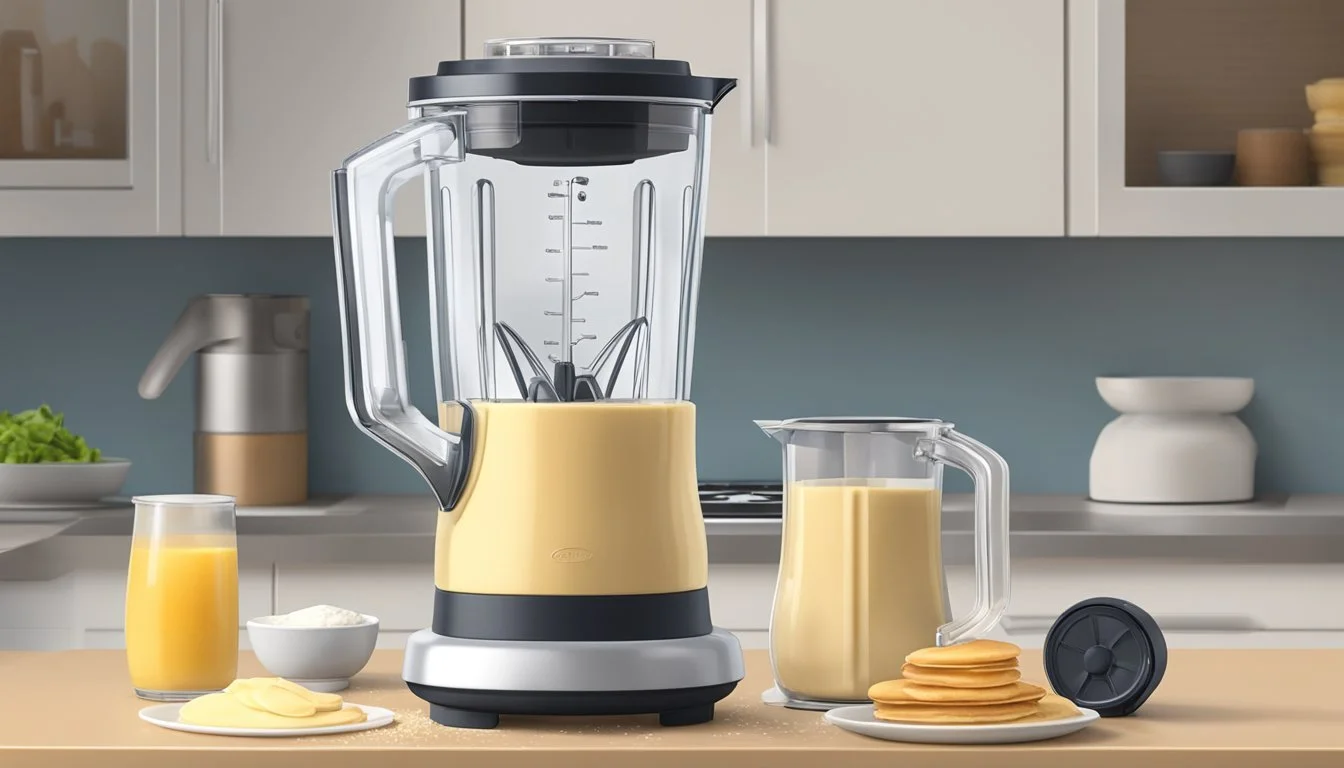
When adapting the blender pancake batter to meet specific dietary needs, one can easily make adjustments to avoid gluten or to enhance the protein content. These tweaks help ensure that pancakes can be a part of anyone's diet without compromising on taste or texture.
Making Gluten-Free Pancakes
For those avoiding gluten, the traditional whole wheat flour can be substituted with gluten-free options. Ingredients like old-fashioned oats or gluten-free flour blends work well. To ensure a smooth batter, these alternatives can be blended to a fine consistency before adding wet ingredients like eggs and milk. Here's a simple guide:
Old-Fashioned Oats: Place in the blender and process until fine.
Gluten-Free Flour Blends: Use in a one-to-one ratio in place of wheat flour.
One popular variation includes banana pancakes; to make them gluten-free, simply replace wheat flour with a gluten-free flour blend and add a ripe banana for natural sweetness and binding.
Adding Protein for a Nutritious Boost
To elevate the protein content of pancakes, one can include ingredients like eggs, peanut butter, or even a scoop of your favorite protein powder. Protein-enriched pancakes support muscle repair and provide longer-lasting energy throughout the day. Here are specific tips to increase protein:
Eggs: Incorporate an extra egg or two into the batter for a higher protein content.
Peanut Butter: Add two tablespoons of peanut butter to the blender for a nuttier flavor and a protein punch.
Protein Powder: Mix in a scoop of protein powder, ensuring it blends well with other ingredients for a smooth texture.
Remember to adjust liquid content accordingly when adding protein powder to maintain the desired batter consistency.
Storing and Reheating Pancakes
When preparing pancakes in advance, proper storage is key to maintain freshness, while effective reheating ensures they are enjoyable as a quick and easy breakfast.
Refrigeration and Freezing Tips
Storing pancakes in the refrigerator should be done by allowing them to cool to room temperature and then placing them in a single layer on a baking sheet to flash freeze. Once they are slightly frozen, they can be stacked with wax paper or parchment paper between each pancake and sealed in a freezer-safe bag or airtight container. They can be refrigerated for up to a few days or frozen for up to two months to extend their freshness.
For freezer storage:
Let pancakes cool completely to avoid condensation and ice crystals.
Place pancakes in a single layer on a baking sheet.
Place the sheet in the freezer for 1-2 hours until pancakes are individually frozen.
Transfer to a freezer bag, placing sheets of parchment paper between pancakes to prevent sticking.
Label the bag with the date—pancakes can be stored for two months.
Reheating for the Best Taste
To reheat and restore the pancakes' just-cooked taste and browned appearance, one can use various methods, including the oven, stovetop, or an air fryer.
Oven: Preheat to 350°F. Arrange the pancakes on a baking sheet and cover loosely with foil to prevent drying out. Warm for about 5-6 minutes.
Air Fryer: Preheat to 350°F. Place the pancakes in a single layer and reheat for 2 minutes on one side, then flip and reheat for another 1-2 minutes.
Stovetop: Heat a nonstick skillet on medium and cook pancakes until warm, usually 1-2 minutes per side.
Using these reheating methods, one can attain pancakes that are both warm through and browned to perfection, with the convenience of a quick and easy breakfast option.
Conclusion
Making pancakes using a blender simplifies the breakfast routine. This method has proven to be quick and efficient, embracing modern kitchen tools for a traditional homemade meal. The blender not only acts as a mixing vessel but also ensures a consistent batter that leads to perfect pancakes.
One can appreciate the benefits of this approach on a busy morning. It eliminates the need for additional bowls and whisks, reducing cleanup time. Additionally, the batter can be easily poured directly from the blender, offering uniformity in size and thickness of the pancakes.
The use of a blender for pancake batter aligns with the desire for a quick and easy breakfast preparation. Here are a few key takeaways:
Consistency: Blenders create a smooth batter conducive to fluffy pancakes.
Speed: Mixing is faster, giving more time to enjoy one's morning.
Simplicity: Fewer utensils mean less washing up.
Versatility: Adding ingredients like fruit or nuts is straightforward and mess-free.
In using a blender, remember to avoid overmixing, which can lead to tough pancakes. Light blending, just until the ingredients are combined, will suffice. Should one prefer pancakes with texture, stirring in additional ingredients like fruit or nuts after blending is recommended.
The blender pancake batter method stands out as an attractive option for those seeking efficiency without compromising on the homemade quality of breakfast. It is an exemplary use of kitchen technology to streamline an essential morning task.