The Balcony Barbecue
Mastering Urban Grilling on a Single Burner

Grilling on a balcony presents unique challenges and requires specific equipment to ensure safety and practicality, especially in compact living spaces such as apartments. A single burner and grill pan are indispensable tools for urban dwellers looking to enjoy the experience of grilling without the need for expansive outdoor spaces. These tools not only conserve space but also offer a convenient and controlled cooking environment suitable for a balcony setting.
The single burner provides a focused heat source that can be adjusted to the desired temperature, making it ideal for searing meats and vegetables with precision. Paired with a single burner, a grill pan allows for the distinctive char-grilled flavor and appealing grill marks that are hallmarks of traditional grilling. Its surface design promotes even heat distribution and the ridges create separation from the grease, resulting in a healthier cooking option.
Using a combination of a single burner and a grill pan for balcony grilling ensures an efficient use of space, as well as ease of use and cleanup. Grilling enthusiasts can choose from a variety of grill pans made from materials such as cast iron or non-stick surfaces, depending on their cooking preferences. With the right equipment, one can master the art of balcony barbecue (What wine goes well with barbecue?), turning a limited outdoor area into a personal culinary retreat.
Understanding Balcony Barbecuing

Balcony barbecuing allows apartment dwellers to enjoy outdoor grilling within their limited space. It requires careful consideration of budget, space restrictions, safety regulations, and environmental factors to ensure a pleasant and lawful grilling experience.
Grilling on a Budget
Barbecuing on a balcony doesn't have to be expensive. A single burner and grill pan can be a budget-friendly alternative to costly full-sized grills. Here's how to keep costs down:
Choose a Compact Grill: Opt for a grill no larger than 24 inches, which is ample for a small gathering and fits well in restricted spaces.
Fuel Savings: Electric grills are economical over time, eliminating the need for propane or charcoal.
Space Considerations on Balconies
The small patio or apartment balcony is often restricted in size, demanding efficient use of space:
Measure Carefully: Before purchasing a grill, measure the balcony to ensure the grill fits with room for movement.
Grill Size: For tight spaces, choose a grill with a surface area around 16 to 24 inches.
Safety and Restrictions
Safety is paramount when grilling on a balcony. Each locale might have restrictions:
Check local laws: Some areas prohibit open flames on apartment balconies.
Safe Operating Practices: Maintain a clean grill, use long-handled tools to manage food, and never leave the grill unattended.
Ventilation and Weather Impact
Balcony barbecue enthusiasts must account for the weather and ventilation:
Proper Ventilation: Ensure the grill is in a well-ventilated spot to prevent smoke accumulation.
Weather Protection: A balcony cover or grill lid can protect against adverse weather, maintaining consistent cooking conditions.
Choosing the Right Grill
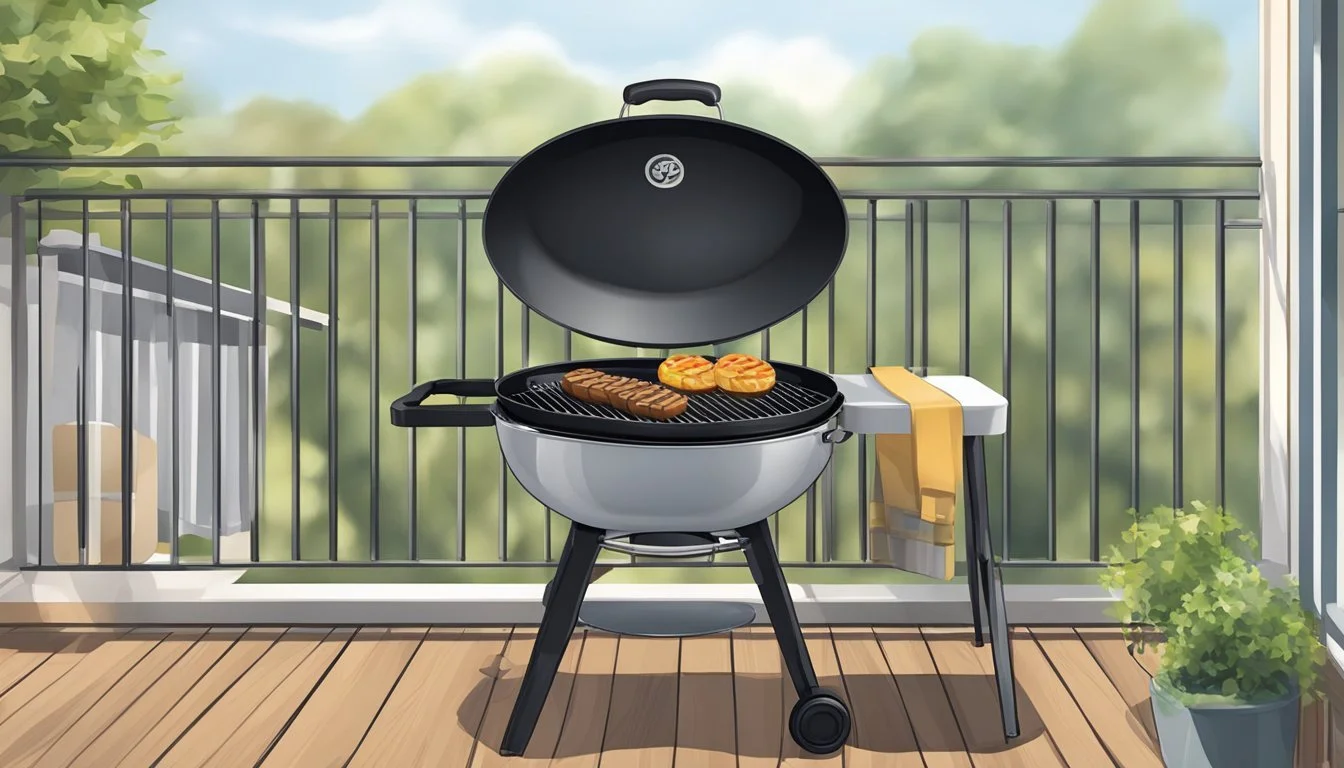
Selecting the ideal grill for a balcony setting hinges on understanding the different grill types available, their key features, and the materials from which they are constructed. It's also essential to weigh the size and portability aspects to match your personal space and lifestyle needs.
Evaluating Grill Types
Gas Grills: Typically favored for their convenience, gas grills like the Char-Broil Classic 280 2-Burner Gas Grill use propane to quickly heat up. They are best for grillers who prioritize ease of use and swift preheating.
Electric Grills: Electric grills, including models like the Weber Q 1400, rely on electricity, making them suitable for balconies where open flames might be restricted. They are adept at reaching high temperatures and can produce satisfactory grill marks with the proper surface.
Charcoal Grills: For those craving the smoky flavor of traditional grilling, small charcoal grills, such as the Weber Original Kettle 22 Inch, bring out the essence of grilled food. They demand more effort in temperature management and cleaning but deliver on taste and experience.
Important Grill Features
Adjustable Temperature Controls: Having the ability to tweak the temperature allows precision cooking for different types of food.
Multiple Burners/Damping Mechanism: Grills with multiple burners or a damping system offer various heat zones, crucial for cooking different items at once.
Easy-to-Clean Surfaces: Nonstick grates and stainless steel are favorable for the post-cooking phase of cleaning.
Built-in Thermometers: A key feature for monitoring cooking temperatures without frequent lid opening, which can be found in grills like the Cuisinart CGG-306 Chef's Style Propane Tabletop Grill.
Material Considerations
Stainless Steel: Renowned for its durability and rust resistance, stainless steel is often used in professional-grade grills.
Aluminum: A lightweight option like aluminum is beneficial for portability but may not retain heat as well.
Cast Iron: Ideal for those seeking to achieve high-heat searing and grill marks. However, cast iron demands proper maintenance to prevent rust.
Grill Size and Portability
Size: Compact grills and single burner models are best for small spaces such as apartment decks. Dimensions should align with your balcony's area to optimize space without overcrowding it.
Portability: For grillers who love camping or picnicking, portable options like the Weber Go Anywhere Charcoal Grill or a portable gas grill are essential. They strike a balance between functionality and easy transport, often featuring ergonomic designs and lightweight construction.
Choosing the right grill involves a comprehensive look at the type, features, materials, and size to ensure it fits your balcony space and culinary ambitions. Whether it's a gas, electric, or charcoal grill, considering these aspects will help determine the most appropriate compact grill for your grilling endeavors.
Mastering the Grill Pan
Choosing the right grill pan and employing the best grilling techniques on a single burner are crucial for achieving perfect grilling outcomes. Proper care and maintenance ensure the longevity of the grill pan. This section teaches the reader how to select the best grill pan, techniques for single burner grilling, and the essentials for keeping the grill pan in top condition.
Grill Pan Selection
When selecting a grill pan, one should look for a pan with deep ridges and a cooking surface that enhances heat retention and distribution. A pan with a nonstick surface or a well-seasoned hard anodized exterior can simplify both cooking and cleaning. Highlighted features to consider include:
Material: Pre-seasoned cast iron or hard anodized materials are excellent for longevity and heat retention.
Surface: Opt for a pan with nonstick qualities or one that is easy to season.
Design: Look for pans with a pour spout to easily drain grease and a handle that remains cool to the touch to prevent burns.
Techniques for Single Burner Grilling
Grilling with a single burner requires attention to detail to mimic the effects of a larger grill. Here are some tactics:
Preheating: Always heat the grill pan on the burner for a few minutes before adding any food to ensure it reaches the right temperature.
Oil Application: Apply a thin layer of oil using a basting brush or paper towel to prevent sticking and promote even cooking.
Heat Management: To avoid burning, adjust the burner as needed to maintain a balance between sufficient heat to cook and not too much that it chars the dishes.
Cleaning and Maintenance
Consistent cleaning and maintenance not only prolong the life of a grill pan but also contribute to better cooking results. Key maintenance tips include:
Post-Use Cleaning: Soak the pan in warm water and use a non-abrasive brush to remove food particles and grease.
Regular Seasoning: If the grill pan is cast iron, maintaining the seasoning layer is crucial. Lightly oil the surface after each use.
Storage: Store the grill pan in a dry place to prevent rust and ensure it’s ready for the next use.
Following these guidelines will help to maintain the grill pan’s performance and longevity, promising many years of satisfying indoor grilling.
Maximizing Cooking Space
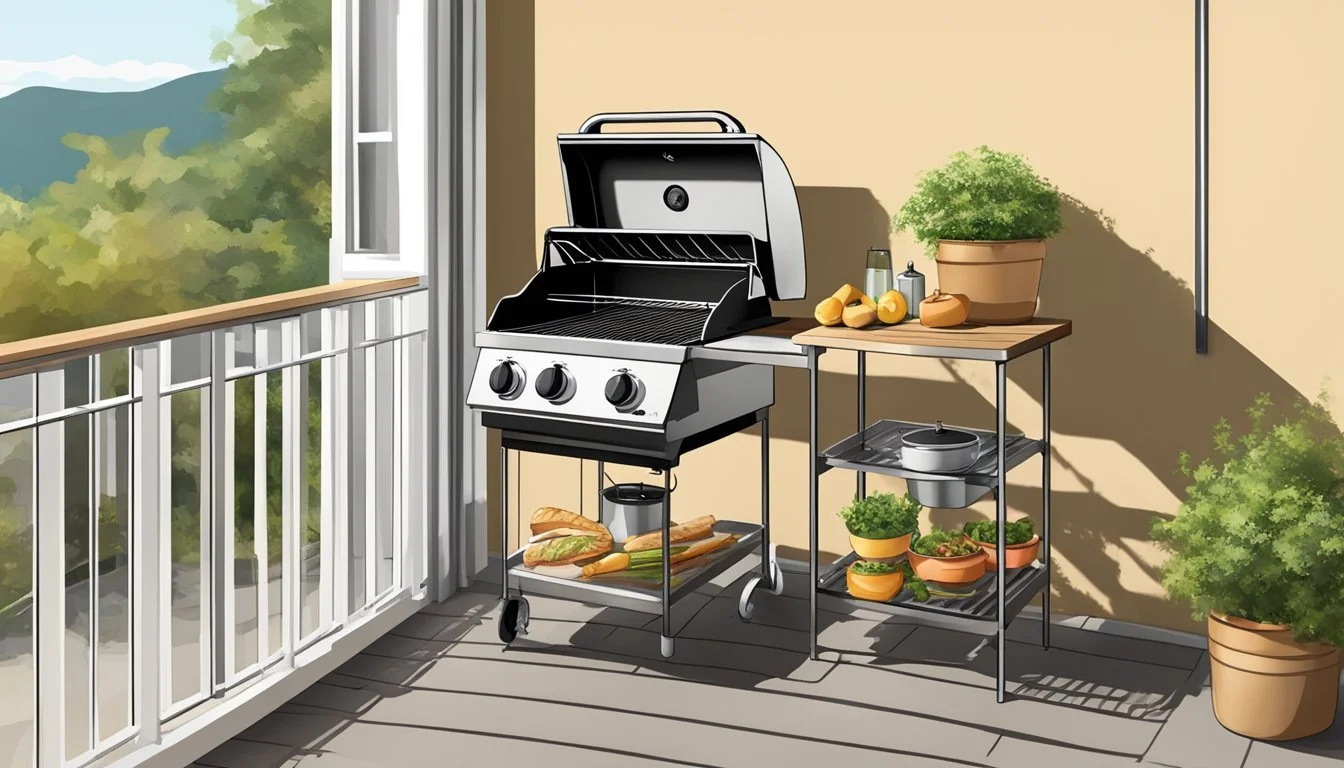
Balcony barbecuing with a single burner and grill pan requires strategic use of available space. This includes optimizing the cooking surface, selecting space-efficient cookware, and organizing grill accessories efficiently.
Effective Use of Cooking Surface
One must ensure that the entire cooking surface of the grill pan is utilized. This can be achieved by:
Zoning: Divide the grill pan into sections for different types of food. Create a hot zone for searing and a cooler zone for longer, slower cooking.
Direct Cooking: Place food items directly over the burner where high heat is required for quick cooking.
Indirect Cooking: Use areas on the perimeter of the grill pan for foods that need lower heat and longer cooking times.
Cookware for Limited Space
Choosing the right cookware is crucial for balconies with limited space:
Multi-functional Pieces: Opt for grill pans that can double as a griddle for maximum versatility.
Vertical Racks: Use skewers and vertical racks to grill multiple items at once without overcrowding the cooking surface.
Compact Design: Select cookware with stackable features to save on storage when not in use.
Storage Solutions for Grill Accessories
Storage is an integral part of maintaining an organized balcony cooking space. One can focus on:
Hanging Tools: Install hooks or magnetic strips to hang utensils, keeping them accessible but off the cooking surface.
Accessory Caddies: Use a caddy or small organizer for spices and condiments, ensuring they're at hand without taking up valuable space.
Foldable Furniture: Incorporate foldable shelves or tables which can be stowed after grilling to free up the area.
Grilling Techniques and Performance
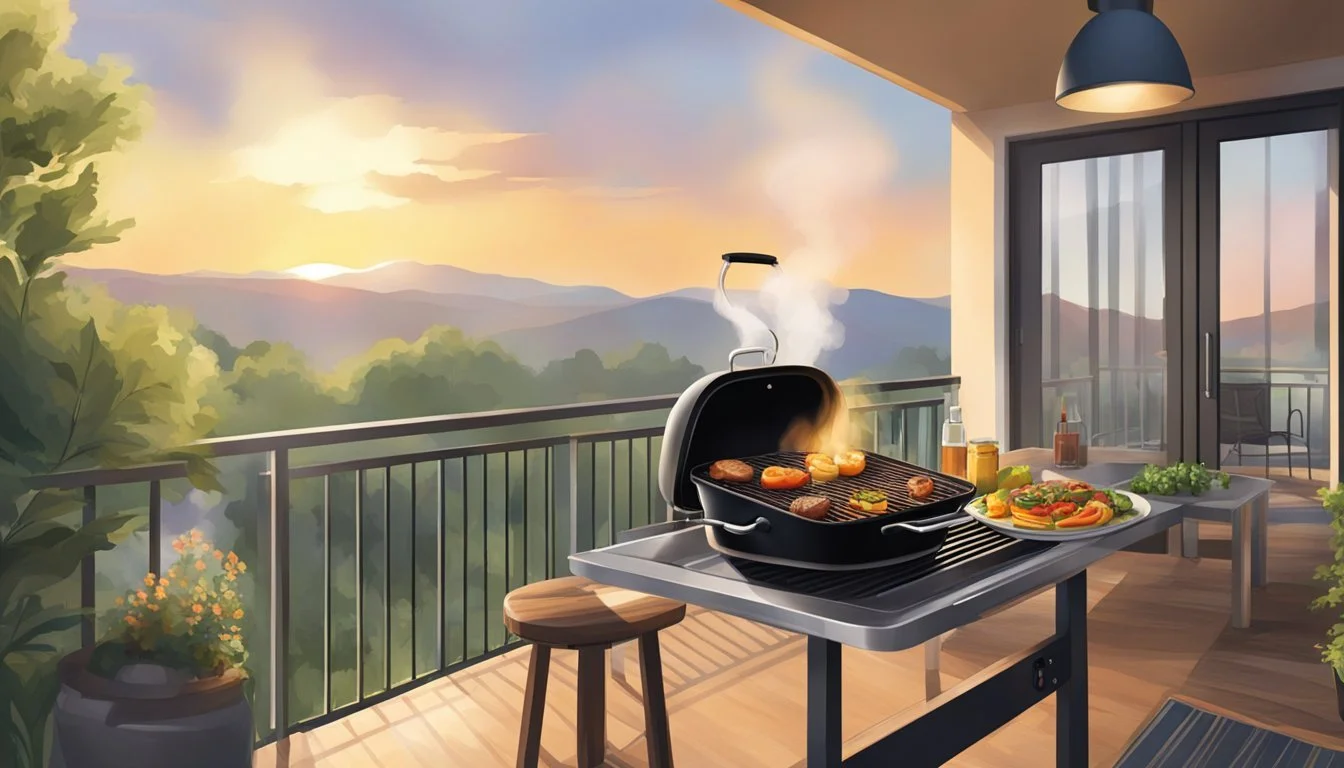
To achieve the best barbecue experience on a balcony setting with a single burner and grill pan, one must master the techniques of grilling. Precise temperature control, a searing heat source, and the proper use of dampers and lids play pivotal roles in the performance and outcome of the dishes.
Achieving Perfect Sear
The key to a perfect sear is high temperature. For balcony barbecues using grill pans, one should preheat the pan to a high temperature before adding the food. The intense heat creates a Maillard reaction, resulting in a caramelized, flavorful crust. It's essential to avoid overcrowding the cooking space to maintain consistent heat distribution.
Temperature Control and Heat Output
Accurate temperature control is crucial for properly cooking different types of foods. Balcony grills with single burners require careful monitoring since they often have localized heat sources. Thermometers can assist in maintaining the desired heat levels. One should adjust the burner to a lower flame to sustain moderate temperatures for cooking through thicker cuts without burning the exterior.
Using Dampers and Lids
Using dampers and lids can influence heat output and circulation. Dampers allow one to regulate the amount of oxygen, which can increase or decrease the heat. For grills with lids, closing the lid can create an oven-like environment, optimal for even cooking. This method also contains flare-ups and helps maintain stable temperatures, especially in a limited space like a balcony.
Grill and Grill Pan Maintenance
Maintaining your balcony barbecue setup, specifically the single burner and grill pan, ensures safe operation and prolongs the life of your equipment. Proper care prevents rusting, wear, and retains the ease of cleaning, which is crucial for their longevity.
Routine Cleaning Tips
After using a grill pan, they should wait for it to cool down before starting the cleaning process to avoid thermal shock, especially if the pan is made of cast iron or enameled cast iron. They can remove excess grease and food particles with a gentle brush or a ball of aluminum foil before washing with warm, soapy water. For cast iron grill pans, avoid soaking as this promotes rusting. Instead, use coarse salt and water to clean caked-on grit and then wipe down the pan with paper towels.
Cast Iron: Rinse with hot water and scrub with a nonabrasive brush.
Enameled Cast Iron: Soak in soapy water, then clean with a sponge.
Stainless Steel: Use hot, soapy water and a nylon brush or sponge.
Preventing Rust and Wear
To prevent rusting and wear, they should thoroughly dry the grill pan after each washing. For cast iron pans, they should apply a thin layer of cooking oil to the surface to protect it. Ensuring the storage environment is dry and well-ventilated will also help reduce the likelihood of rust. If rust does appear, they can remove it by scrubbing with steel wool and reseasoning the metal as needed.
Precautions for Different Materials:
Cast Iron: Regular seasoning and minimal exposure to water.
Enameled Cast Iron: Avoid drastic temperature changes to prevent chipping.
Stainless Steel: No special precautions needed against rusting.
Longevity and Durability
Selecting the right materials can affect the longevity and durability of grill pans. Cast iron is heavy and durable but requires more maintenance to keep it from rusting. Enameled cast iron provides an easy-to-clean surface and doesn't need seasoning but can chip if mishandled. Stainless steel is lighter in weight, usually easier to clean due to its less porous surface, and resilient against rust and wear, making it a practical choice for someone looking for a low-maintenance grill pan. Regular maintenance keeps the integrity of the material and ensures a long-lasting experience with the grill pan.
Enhancing Flavor and Variety
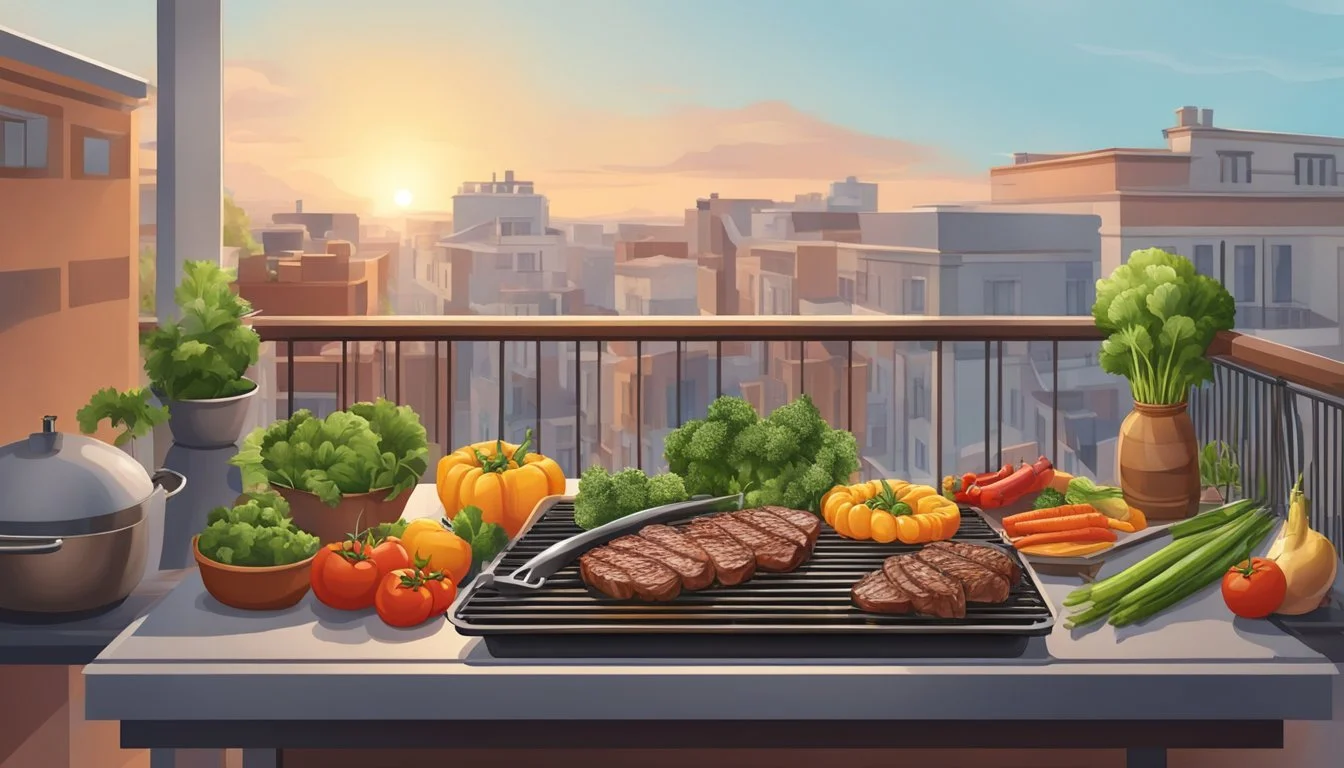
For balcony barbecues, where space limits the size of the grill, the challenge is enriching the taste and variety of grilled foods. This can be achieved by introducing smoking chips, utilizing various fuels, and experimenting with sauces and marinades to heighten the grilling experience.
Adding Smoking Chips to a Gas Grill
Gas grills can be easily adapted to mimic the smoky flavor of traditional charcoal barbecues. One can add specially designed smoking chips wrapped in foil or placed in a smoker box, directly on the grill. These chips come in various wood types like hickory or mesquite, each imparting a unique flavor to the food. It's essential to preheat the grill, allowing the chips to produce smoke, before placing the food on the grates.
Grilling With Different Fuels
Different grilling fuels contribute distinctive flavors to the food. A charcoal grill imparts a smoky essence that is prized in barbecue culture. On the other hand, propane grills are known for convenience and control, while electric grills are often used where open flames are not allowed. When available, flavorizer bars can be used in gas grills to vaporize drippings and create a smoky taste while adding sear marks, enhancing both the flavor and appearance of the food.
Creating Flavor with Sauces and Marinades
Sauces and marinades are seminal in a grill master's toolkit. Whether using a stovetop to prepare these mixtures or applying them directly on the grill, they add moisture, richness, and complexity to the simplest of dishes. Marinades interact with the proteins before cooking, tenderizing meat and infusing it with flavor. A dynamic range of sauces can be brushed on during the last few minutes of grilling to layer flavors that complement the natural taste of the food.
By incorporating these elements, one's balcony barbecue can rival the depth of flavors typically found in larger, more elaborate grilling setups.
Accessorizing Your Grill Setup
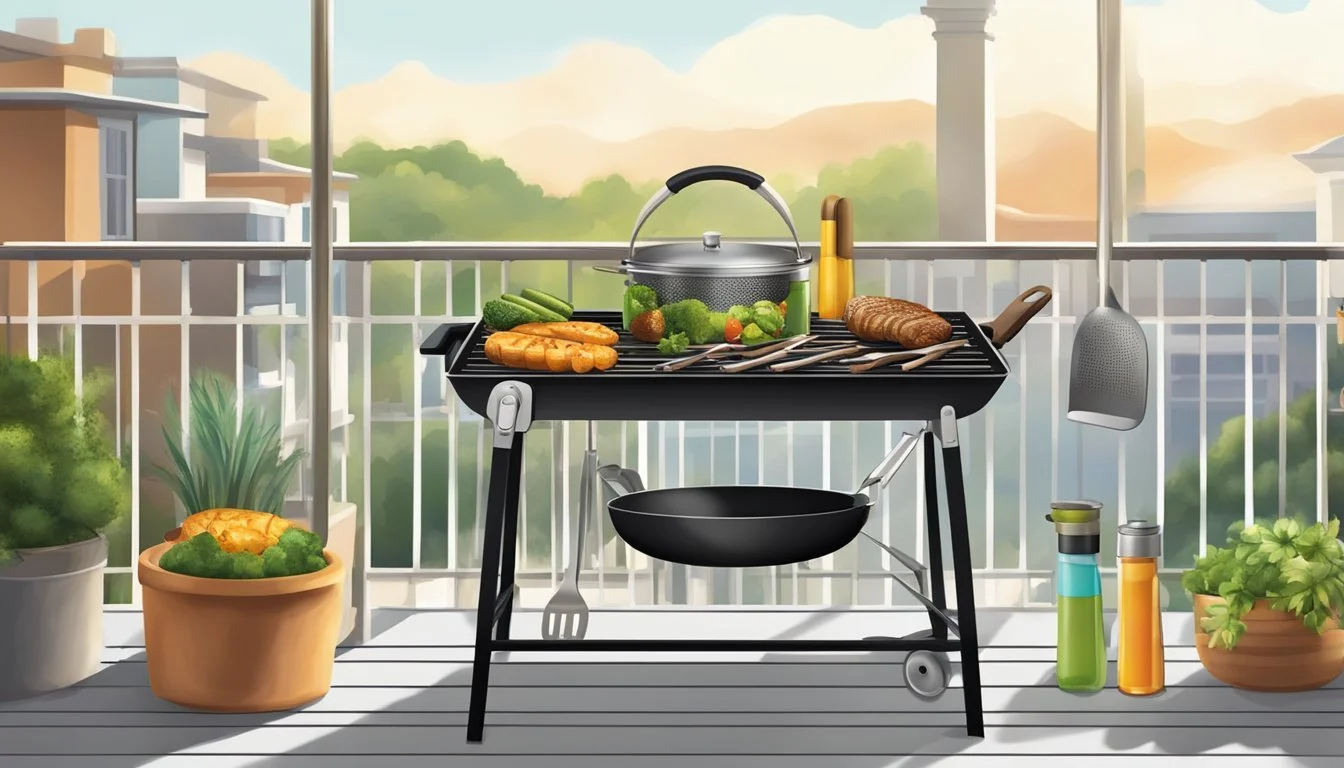
Accessorizing a balcony barbecue setup optimizes the grilling experience and ensures safety and convenience. Whether grilling on a single burner or using a grill pan, the right accessories can make a significant difference.
Must-Have Grilling Accessories
Grill Tools: A set of stainless steel, long-handled grilling tools such as tongs, spatula, and fork are essential for safe food handling and to avoid burns when flipping and moving food on the grill.
Cleaning Supplies: Consider a grill brush with durable bristles for effective cleaning and a scraper for removing stubborn residue.
Protective Gear: Heat-resistant gloves provide a good grip and protect hands from high temperatures.
Thermometers: A built-in thermometer or a handheld digital version helps monitor food temperature for perfectly grilled results.
Innovative Grill Gadgets for Single Burners
Grill Pans: A cast iron grill pan with ridges works well on single burners to emulate the grill lines of a freestanding barbecue.
Smoker Boxes: For those seeking a smoky flavor, a smoker box filled with wood chips can be placed directly on the stovetop burner under the grill pan.
Grill Lights: LED lights that attach to nearby structures can illuminate the grill during evening cooking sessions.
Choosing the Right Covers and Storage
Grill Covers: Durable, weatherproof covers protect single burner grills and grill pans from the elements when not in use, prolonging their life span.
Storage Solutions: Compact shelves or hanging racks can be installed on the deck or outdoor space for storing grilling accessories, keeping them within convenient reach.
Selecting Quality Grills and Grill Pans
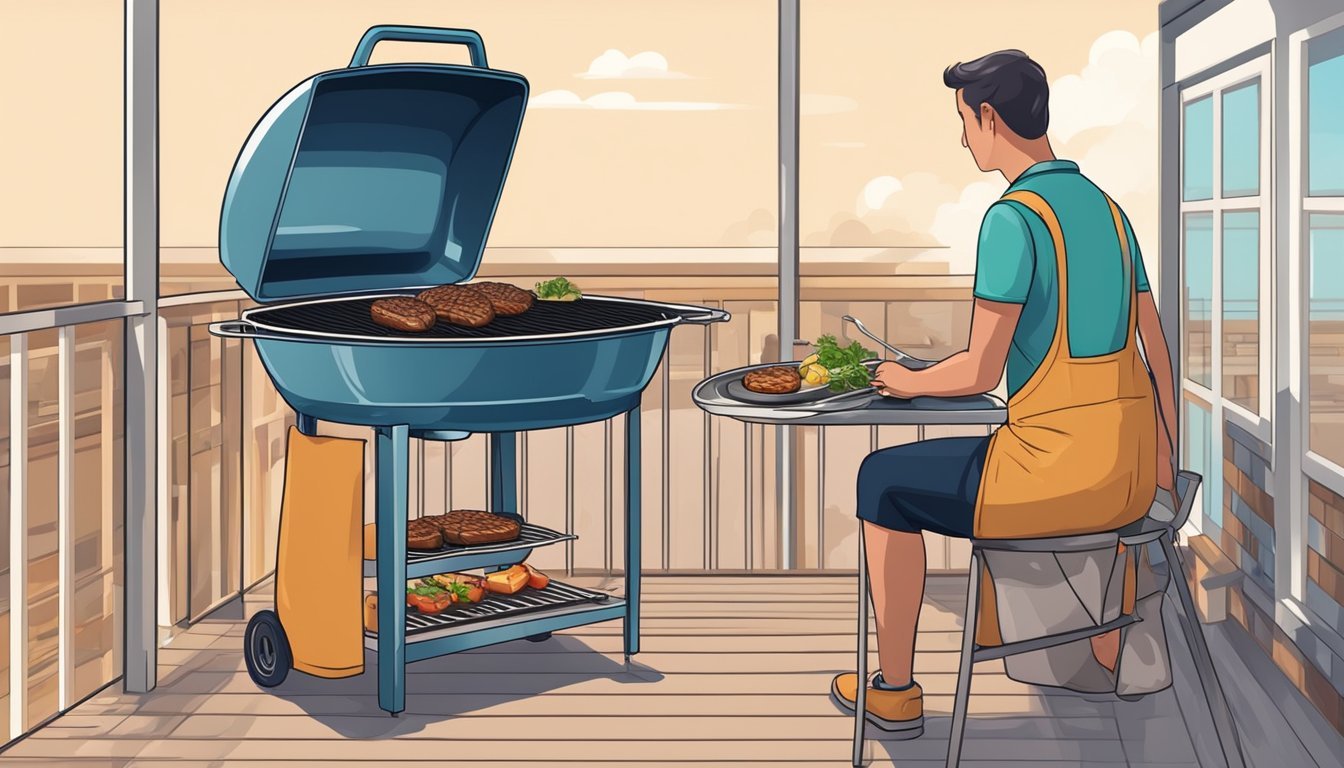
When selecting grilling equipment for balcony spaces, consumers should consider the durability and performance of grill pans and grills. One should account for the product's construction materials, brand reputation, pricing, and the warranties offered, which all influence the longevity and grilling experience.
Top-Rated Grill and Grill Pan Brands
Among the top performers, Lodge stands out for its heavy-duty cast iron selections that excel in heat retention and even cooking. Le Creuset offers premium enameled cast iron grill pans that are revered for their durability and low maintenance. For those seeking a modern approach, GreenPan and All-Clad offer alternatives such as hard anodized and nonstick options that combine performance with ease of cleaning. Brands like Weber, particularly the Weber Traveler, are recognized for portable gas grill options that are ideal for balcony settings.
Budget-Friendly Picks
For budget-conscious consumers, various brands offer aluminum and non-enamel cast iron grill pans that are cost-effective without significantly compromising on quality or performance. These options often require more maintenance yet can provide excellent grilling results. It is possible to find grills and grill pans under these categories that perform well and deliver satisfactory grilling experiences.
Ensuring Warranty and Support
Securing a lifetime warranty can be a testament to the quality of a grill or grill pan. Brands that offer extensive warranties stand by their products' build and durability. Lodge is a brand noted for its solid warranty policies. It is recommended that buyers verify warranty details, as provisions for stainless steel, aluminum, and cast iron can vary, and ensure there is accessible customer support for their kettle grill, electric or propane gas grill purchases.