
Gun Laws in Nebraska for Hunters
Key Regulations Explained
In Nebraska, hunters seeking to engage in the sport must navigate a series of gun laws designed to ensure both safety and conservation. The state maintains specific regulations regarding the purchase, possession, and carrying of firearms for hunting purposes. A handgun in Nebraska is defined as any firearm with a barrel less than sixteen inches in length, and these along with other firearms must be properly acquired and carried in accordance with state law.
The Nebraska Game and Parks Commission has established rules that hunters must follow. For instance, individuals aged 12 to 29 who wish to hunt with firearms or air guns are required to complete a firearm hunter education course to obtain a certificate. This education is crucial for promoting safe hunting practices and understanding the legal framework within which hunters operate. Additionally, regulations change periodically; for example, recent amendments have addressed issues such as baiting wildlife and carrying handguns while hunting, reflecting the Commission's ongoing commitment to ethical hunting practices.
These laws serve both to protect the rights of hunters and the wildlife populations they pursue, ensuring that hunting traditions can continue within a framework that promotes safety and respects wildlife conservation. Hunters in Nebraska must keep abreast of these regulations to remain compliant, as responsible hunting is paramount for the preservation of the sport and the state's natural resources.
Nebraska Gun Laws Overview
Nebraska upholds a series of specific regulations surrounding firearm ownership, which are particularly relevant for hunters in the state. The laws encompass a range of requirements and procedures, including obtaining various permits and undergoing background checks, to legally acquire and possess firearms in Nebraska.
Firearm Ownership Requirements
Individuals who wish to own firearms in Nebraska must satisfy certain criteria. They must be of legal age, have no prohibitory criminal convictions, and not be a fugitive from justice. Specifically, to purchase a handgun, one must be at least 21 years old.
State Permitting Process
For handgun purchases, residents are required to obtain a Handgun Certificate from the Nebraska State Patrol or a Concealed Carry Permit. These documents serve as evidence that the individual has passed the necessary checks to legally own a handgun in the state.
Background Checks and Identification
Background checks are obligatory for all who intend to purchase a handgun. This process, conducted by the Nebraska State Patrol, screens for felony convictions and other disqualifications. Buyers must also provide suitable identification when purchasing firearms.
Handgun and Hunting Permits
Aside from the Handgun Certificate, hunters in Nebraska planning to conceal carry a firearm for self-defense in the field must secure a state-issued Concealed Carry Permit. This permit mandates additional requirements, such as a firearm safety training course.
Residency and Firearm Possession
Nebraska law dictates that only residents or individuals with proof of permanent residence may possess and carry firearms within state borders. Non-residents must adhere to Nebraska's reciprocity laws when carrying firearms from other jurisdictions where they have lawful permits.
Hunting Regulations in Nebraska
In Nebraska, hunting regulations are designed to ensure that game populations are sustainably managed and that hunting remains a safe activity. These rules involve education requirements, specific game animal regulations, the lawful use of firearms and bows, and adhering to seasonal hunting provisions.
General Hunting Rules
Nebraska hunters must carry valid hunting permits and follow all federal, state, and local laws when hunting. They are also required to have proof of a valid Nebraska habitat stamp if they are residents aged 16 and older or if they are nonresidents. Loaded firearms must not be carried in or on vehicles to ensure safety.
Hunter Education and Certificates
Hunter education is mandatory for hunters aged 12 through 29 using a firearm or air gun, and for those hunting big game with a bow and arrow or crossbow. An Apprentice Hunter Education Exemption Certificate allows hunting under the supervision of a qualified adult. The adult must be 19 years or older and have completed the required education if between 19 and 29 years old.
Game Animal Regulations
Nebraska establishes specific seasons, bag limits, and hunting areas for various game animals. These regulations are updated annually to reflect changes in wildlife populations and conservation needs. It is the hunter's responsibility to stay informed of the current regulations for the game they intend to hunt.
Firearm and Bow Restrictions
The state regulates the types of firearms and ammunition that can be used for hunting to ensure ethical harvesting and safety. Likewise, restrictions on bows and crossbows are in place; for example, certain draw weights may be required to hunt big game.
Seasonal and Special Hunt Provisions
There are also special hunting provisions for youth, seniors, and disabled hunters. Seasonal regulations define when and where hunting can occur for different species. Special hunts may be allowed to control populations or to provide unique hunting opportunities. These seasonal dates and special provisions are critical for maintaining balance in the ecosystem and providing a fair opportunity for all hunters.
Hunting Permits and Endorsements
In Nebraska, hunters must secure the appropriate permits and endorsements from the Nebraska Game and Parks Commission to legally hunt various game species. These regulations ensure sustainable wildlife populations and provide for public safety.
Permit Application and Renewal
Individuals looking to hunt in Nebraska must apply for the necessary hunting permits, which can broadly encompass those for small game to specific big game tags. Resident hunters can apply for these permits through the Nebraska Game and Parks Commission's official website or via approved vendors. Hunting permit renewal processes vary based on the type of permit but typically involve confirming the hunter’s personal and hunting information and submitting the appropriate fees. Hunters are encouraged to check the expiration dates and renew their permits in a timely manner.
Application Channels:
Online: Through the Nebraska Game and Parks Commission website.
Mobile: Using designated hunting apps.
In person: At approved vendor locations.
Renewal Needs:
Personal identification.
Previous hunting permit details.
Payment method.
Special Permits for Youth and Apprentice Hunters
The Nebraska Game and Parks Commission offers special permits for youth and apprentice hunters as an initiative to encourage responsible hunting practices from an early age. These permits come with certain exceptions and requirements, such as the stipulation that an accompanying adult hunter must supervise the youth or apprentice. This mentor must possess a valid Nebraska hunting permit and, if they are aged between 19 and 29, must have completed a hunter or bowhunter education course.
Youth and Apprentice Requirements:
Adult supervision by a mentor 19 years or older.
The mentor must have a valid Nebraska hunting permit.
If the mentor is aged 19 to 29, completion of an online course or education is mandatory.
Big Game Tags and Permits
For those pursuing big game, such as deer, Nebraska requires specific tags and permits which dictate the type of game, the hunting method, and the period when the hunt is legal. Successfully drawn applicants must have their permits in their possession at all times during the hunt. It is also essential to be aware of the specific tagging and transport regulations following the harvest of a big game animal. These rules ensure proper resource management and ethical hunting practices.
Big Game Permit Details:
Tags must match the specific game and hunting method.
Permits must be kept on person.
Adherence to transport and tagging guidelines is mandatory after the harvest.
Hunting by Firearm Type
Nebraska hunters need to be aware that different hunting regulations apply depending on the type of firearm or archery equipment they plan to use. These specifics must be followed closely to ensure a lawful and ethical hunting experience.
Handgun Hunting
In Nebraska, hunters may use handguns for hunting various species during designated seasons. Handguns used for hunting should have a barrel length that conforms to state regulations and, when hunting big game, should fire a caliber legally specified for taking such game.
Shotgun Use in Hunting
Shotguns are commonly used in Nebraska for bird hunting, such as waterfowl and upland game birds. During firearm deer season, shotguns must be 20 gauge or larger and may only use slugs. Hunters are required to have completed a firearm hunter education if they fall within the specified age range.
Rifle and Airgun Regulations
Hunting with rifles and airguns is subject to Nebraska's specific caliber and season restrictions. Big game hunting typically requires a minimum caliber for rifles, and airgun use is generally permitted for certain small game and varmint species.
Archery and Crossbow Hunting
Nebraska's archery season typically runs from September 1 through December 31, with additional dates for special permits. Hunters using a bow or crossbow must have completed bowhunter education if required by law. For archery, equipment specifications such as draw weight and length are strictly regulated.
Hunters must have the appropriate permits and adhere to the state's hunting regulations to ensure sustainability and safety in Nebraska's hunting practices.
Game Hunting in Nebraska
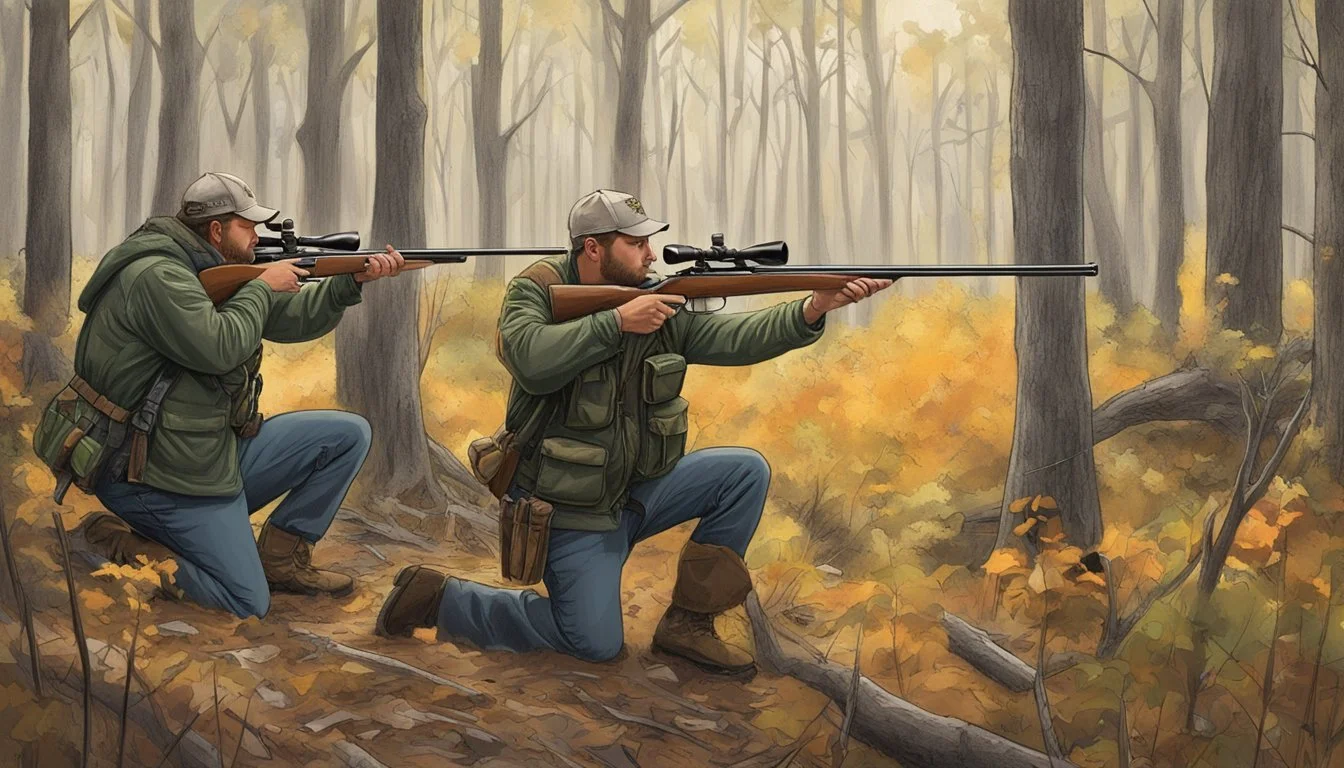
Nebraska offers a diverse array of hunting opportunities for various game species, with specific seasons and regulations tailored to manage wildlife populations and ensure conservation.
Deer and Turkey Hunting
Deer hunting in Nebraska is a popular activity, and hunters have ample opportunity with seasons designated for archery, firearms, and muzzleloading. These seasons typically run from September for archery, through November for firearms, and into December for muzzleloading, ensuring that hunters can choose their preferred method. Turkey hunting also offers various seasons, including spring and fall hunts, allowing hunters to pursue these birds with different techniques.
Elk, Antelope, and Other Big Game
Hunters interested in pursuing elk and antelope will find Nebraska hosts specific seasons for these species, reflecting the state's commitment to big game conservation. Opportunities to hunt other big game such as bighorn sheep may be available, adhering to strict quotas and often requiring a draw or lottery due to the limited number of permits.
Small Game and Migratory Birds
For those who prefer smaller quarry, Nebraska's hunting calendar includes seasons for small game such as rabbits and squirrels, as well as migratory birds like ducks and geese. These seasons are regulated to coincide with migration patterns and breeding cycles, offering hunters the chance to engage in these activities during peak times.
Trapping and Fur Harvesting
In addition to traditional hunting, Nebraska permits trapping and fur harvesting activities for various species, with specific seasons and regulations in place. These practices are closely monitored to support wildlife management objectives and sustainable use of the state's natural resources.
Hunter Safety and Ethics
Hunter safety and ethics in Nebraska are paramount for a responsible hunting experience. Ensuring the welfare of both the hunter and the environment, adherence to regulations and ethical standards is a fundamental aspect of conservation and wildlife management.
Safe Hunting Practices
Nebraska places a strong emphasis on safe hunting practices. Hunters are required to carry a certificate when hunting, which denotes completion of a hunter education course if they are between the ages of 12 and 29. This education is crucial in promoting a safe and responsible hunting environment, teaching individuals how to handle firearms safely and navigate the outdoors while remaining mobile and vigilant.
Key elements of safe hunting practices include:
Proper handling and storage of firearms.
Knowledge of hunting laws and regulations.
Awareness of other hunters to avoid accidents.
Educational Resources for Ethical Hunting
The hunter's role goes beyond safety; ethical hunting is of equal importance. Ethical hunting involves respect for wildlife and adherence to hunting ethics, ensuring fair chase and responsible harvest. Hunter education programs are designed to impart these values, providing resources through various channels such as online courses, in-person hunt safe sessions, and mentorship opportunities for novice hunters. By completing these programs, hunters learn the significance of their contributions to conservation management and gain respect for the animals and ecosystems they interact with.
Resources for hunters include:
Official Nebraska hunter safety courses.
Contact information for Nebraska Outdoor Education Center: 402-471-6134.
Ensuring Conservation and Wildlife Management
Conservation and wildlife management are core principles embedded in the hunter education curriculum. By practicing ethical hunting, individuals contribute to the sustainable management of wildlife populations and their habitats. Regulations that guide season dates and species-specific hunting ensure that wildlife conservation efforts are supported by the hunting community. Hunters in Nebraska play a crucial role in maintaining ecological balance and helping fund conservation management through licenses and permits.
To aid in conservation efforts, hunters must:
Abide by season dates and bag limits.
Participate in surveys and reporting to assist wildlife studies.
Hunting on Private and Public Lands
In Nebraska, hunters must navigate specific regulations when hunting on private and public lands to ensure legal and ethical practices. Respect for landowner rights and conservation management are paramount.
Obtaining Landowner Permission
Private Land: A hunter must obtain landowner permission to hunt on private property, irrespective of whether the land is posted. Transport of game from private property is lawful only after securing such permission. Documentation of consent should be carried at all times to avoid legal complications.
Public Land Hunting Restrictions
Public Land: Hunting on public land is usually more regulated to balance wildlife conservation and public safety. Hunters are expected to adhere to designated seasons, species restrictions, and area-specific guidelines. Public lands in Nebraska are displayed in the Public Access Atlas, making it imperative for hunters to consult this resource to be aware of legal hunting areas.
Hunting on Leased and Managed Lands
Leased and Managed Lands: These lands are often overseen by conservation management programs that facilitate controlled hunting experiences. Permission is often bundled with the lease, but hunters should verify the exact terms. Managed lands may come with extra stipulations such as quotas or limited entry to sustain wildlife populations and habitat health.
Purchasing and Registering Firearms
In Nebraska, hunters looking to purchase firearms must navigate a set of legal requirements, including adhering to dealer regulations, understanding online sales, and correctly handling the transfer of ownership.
Firearm Sales and Dealer Regulations
Nebraska mandates that all firearms dealers must be federally licensed to engage in the sale of firearms. Handguns, specifically, require the buyer to obtain a purchase permit, which includes a background check and a minimum age requirement of 21. Dealers are responsible for ensuring these criteria are met before completing a sale. Additionally, there is no state requirement to register firearms except in certain jurisdictions like Omaha, where handgun registration is mandatory.
Online Firearm Transactions
Online sales of firearms have additional restrictions. They must be processed through a licensed dealer in Nebraska. Firearms purchased online need to be shipped to the dealer and the buyer must complete all necessary state requirements as if purchasing directly from a dealer, including the filing fee. This applies equally to antique handguns and to modern firearms.
Transferring Ownership and Gifting Firearms
Firearm ownership can be legally transferred without a background check to immediate family members, including a spouse, sibling, parent, aunt, uncle, niece, nephew, and grandparent. However, it is crucial to ensure that the recipient is not a prohibited possessor before gifting or transferring a firearm. A filing fee is not required for these personal transfers. Outside of these family exemptions, transferring a firearm requires adherence to the same regulations as purchasing one through a dealer.
Carrying Firearms and Concealed Carry Options
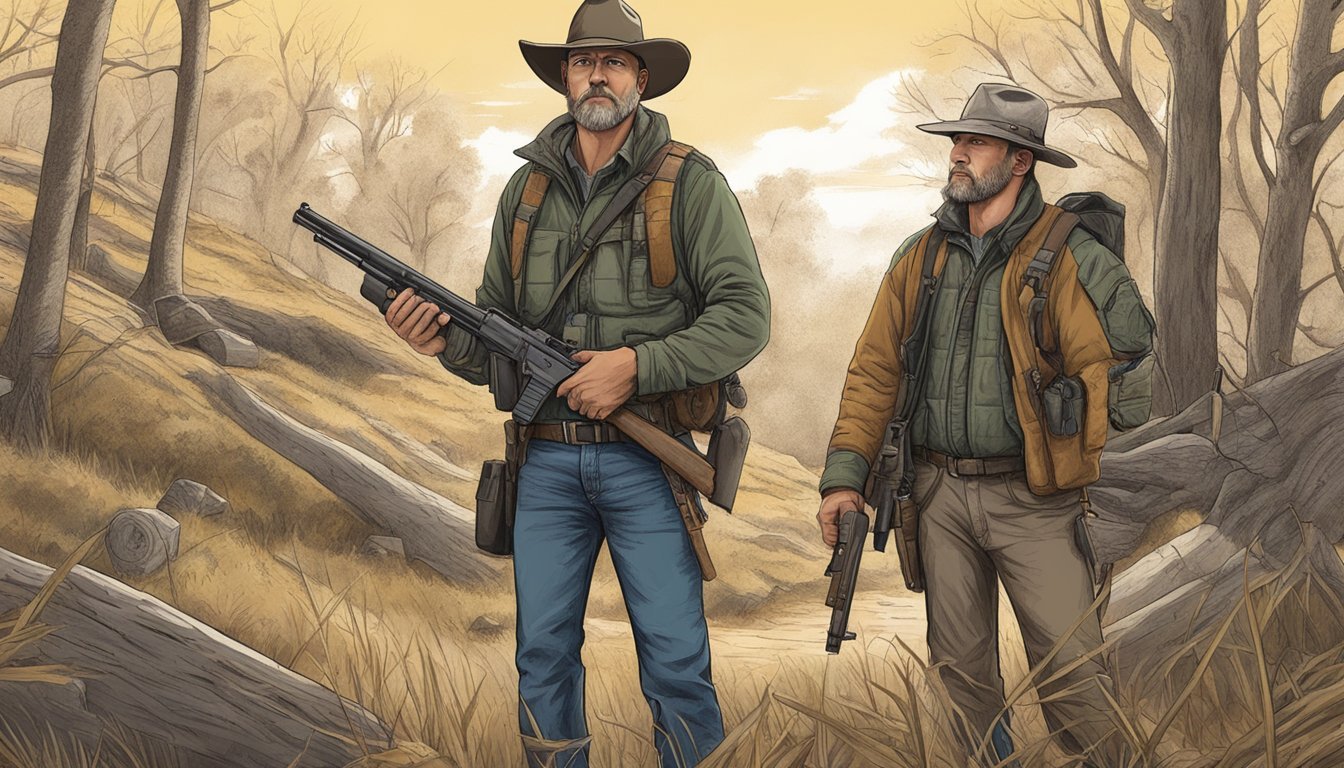
In Nebraska, hunters must understand the relevant laws governing the carrying of firearms. The state observes certain regulations that determine how hunters can carry their firearms, whether openly or concealed.
Open Carry
In Nebraska, open carry is generally legal without a permit. However, individuals should be aware of local ordinances that might impose additional restrictions in certain municipalities.
Concealed Carry
The state has made significant changes to its concealed carry laws. Individuals over the age of 21 can carry concealed firearms without requiring a state-issued permit. Despite this, hunters and other firearm carriers should note that certain locations may be exempt from this provision, and federal law overrides state law in certain areas such as schools.
Concealed Handgun Permits (CHP)
While the permit is not necessary for carrying concealed, obtaining a CHP might be beneficial for reciprocal carry in other states. It also indicates the individual has met mandatory firearm safety training requirements.
Transporting Firearms
For transporting firearms in a motor vehicle:
A firearm must be unloaded and stored separately from the ammunition if being carried by someone without a CHP.
The firearm should be placed in a location not readily accessible to the occupants of the vehicle.
Hunters carrying firearms in Nebraska should maintain awareness of the laws to ensure they remain compliant. They should also regularly check for updates or changes to these laws to avoid any inadvertent infractions.
Enforcement and Legal Considerations
In Nebraska, enforcement of hunting and firearm laws is a critical aspect that hunters must understand. Law enforcement agencies are responsible for ensuring compliance, while legal systems prescribe specific penalties for violations. Gun owners also have certain legal recourses available to them for addressing grievances related to firearm laws.
Local Law Enforcement Roles
Local law enforcement, which includes both sheriff's departments and police departments headed by a police chief, plays a vital role in upholding firearm regulations. They enforce state statutes that hunters must abide by, including the obligation to carry a state permit when applicable. These entities monitor compliance and are often the first to respond to any suspected breaches of firearm law within their jurisdictions.
Penalties for Firearm Law Violations
Penalties for violating firearm laws in Nebraska can range from misdemeanors to felonies, depending on the severity of the offense. For instance:
Unpermitted Concealed Carry: Carrying a concealed weapon without a permit may lead to charges that carry significant fines and potential jail time.
Hunting Violations: Hunting outside of regulated seasons or without proper permits can also result in legal repercussions.
Legal Recourse for Gun Owners
Gun owners in Nebraska have the right to legal recourse if they believe their firearm rights have been infringed upon. This may involve:
Appeals: Individuals may contest penalties or challenge permit denials through the legal system.
Representation: They may seek representation from an attorney to navigate the complexities of firearm laws.
Gun owners are encouraged to stay informed and consult with legal professionals if faced with legal challenges regarding firearm use or ownership.

