
Gun Laws in Nevada for Hunters
Understanding Regulations and Requirements
In the state of Nevada, gun laws provide a framework for hunters to engage in the sport while adhering to regulations designed to ensure safety and conservation. It's critical for hunters to have an up-to-date understanding of these laws to avoid legal repercussions, which can range from fines to more severe criminal charges. For instance, specific rules must be followed when it comes to minors under the age of 18, who are permitted to hunt with firearms only when accompanied by a parent, guardian, or an authorized adult who is present at all times.
Moreover, Nevada has introduced several new hunting regulations. These include laws pertaining to the use of trail cameras, thermal imaging, and drones by hunters, all of which are designed to maintain fair chase principles. Ensuring that these technologies are used in a legal and ethical manner directly aligns with Nevada's commitment to conservation and the responsible stewardship of wildlife. In addition, hunters must be mindful of the type of game they are pursuing; for example, newly adopted regulations apply to hunting specific animals such as spike elk.
The state constitution empowers every citizen with the right to bear arms for security, defense, and lawful hunting. However, with those rights come responsibilities, particularly for those participating in hunting activities. While the basics of Nevada's gun laws remain constant, it's important for hunters to keep abreast of any changes to avoid unintentional violations. Careful compliance with state laws not only protects hunters legally but also contributes to the safe and sustainable enjoyment of Nevada's rich hunting opportunities.
Eligibility for Gun Ownership
Eligibility for gun ownership in Nevada requires individuals to satisfy specific criteria laid out by the state's regulations. This section provides a detailed look into the age requirements, residency status, background check mandates, and the implications of restraining orders and domestic violence convictions on the right to own a firearm in Nevada.
Age Requirements
In Nevada, one must be 21 years of age or older to purchase a handgun from a licensed dealer. However, individuals who are 18 years of age or older may purchase rifles and shotguns. Additionally, those under 18 may possess a firearm if they are hunting or participating in shooting sports, provided they are supervised by a responsible adult.
Residency Status
To purchase a firearm in Nevada, individuals must be residents of the state. Nevada residents are required to provide proof of residency, such as a state-issued driver’s license or identification card, during the purchase.
Background Checks
Prospective gun owners in Nevada must pass a background check conducted by a licensed firearms dealer. This check involves screening for criminal records, including any history of felony convictions, which would disqualify the individual from owning a firearm.
Mandatory for: All firearms transactions through licensed dealers
Checks for: Criminal records, felony convictions
Restraining Orders and Domestic Violence
Individuals subjected to a restraining order for domestic violence or those convicted of domestic violence crimes may not purchase or possess firearms in Nevada. Laws are in place to ensure that perpetrators of domestic violence are prohibited from owning guns, as firearms pose an elevated risk in these situations.
Restrictions on: Individuals under restraining orders for domestic violence
Conditions: Convictions of domestic violence crimes
By adhering to these conditions, residents in Nevada can exercise their right to own firearms responsibly and within the bounds of the law.
Types of Firearms and Ammunition
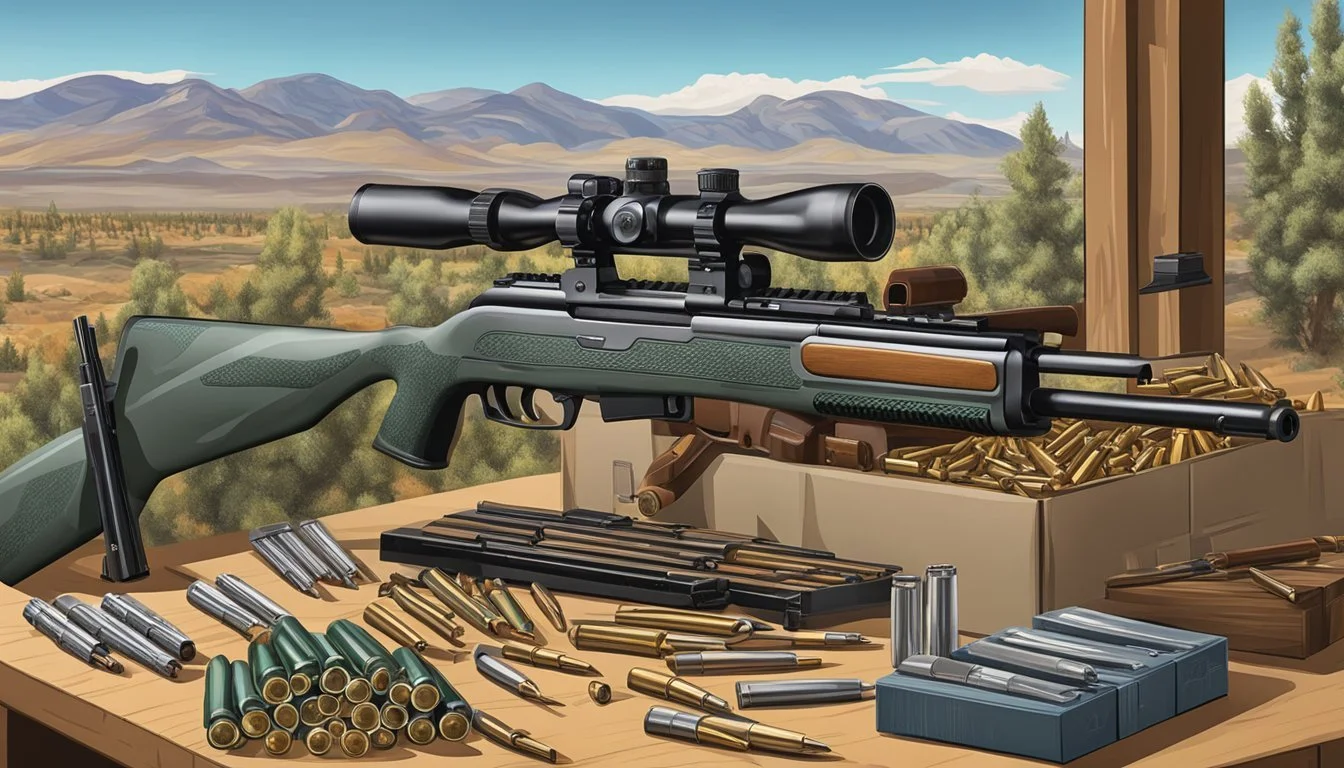
Nevada hunters have a variety of firearms at their disposal, each with specific regulations overseeing their use. Knowing the classifications of handguns, long guns, semiautomatic firearms, muzzleloaders, and shotguns is crucial for complying with state laws.
Handguns and Long Guns
Handguns in Nevada refer to firearms designed to be held and fired with one hand. They do not require a state permit for possession. Hunters typically use handguns for personal protection and for hunting small game at close range.
Long guns comprise rifles and shotguns, distinguished by barrel length and whether the stock is designed to be fired from the shoulder. They are a popular choice for hunting due to their accuracy and range. As with handguns, no state permit is required to possess these firearms.
Semiautomatic Firearms
Semiautomatic firearms are capable of firing one round per trigger pull and automatically reloading the next round. Hunters can legally use semiautomatic firearms for hunting in Nevada, but certain types of ammunition, such as armor-piercing bullets, are prohibited.
Key points for semiautomatic firearms in Nevada:
Legal for hunting: Yes
Permit required for possession: No
Prohibited ammunition: Armor-piercing bullets
Muzzleloaders and Shotguns
Muzzleloaders are firearms loaded from the muzzle and represent historical hunting methods. They are legal in Nevada and are often used during special heritage hunting seasons.
Shotguns, designed especially for bird and small game hunting, vary by the gauge and barrel length. Nevada law permits the use of shotguns for hunting purposes, and they are the preferred firearm for game birds and waterfowl due to their shot spread.
Muzzleloader specifics:
Seasons: Heritage hunting seasons
Legal for hunting: Yes
Shotgun specifics:
Used for: Game birds, waterfowl, small game
Permit required for possession: No
Buying and Selling Firearms
In Nevada, individuals looking to engage in the buying or selling of firearms must comply with both state and federal regulations. Private sales have certain exceptions to dealer requirements, but completing federal documentation remains a necessity.
Private Gun Sales
Under Nevada law, private gun sales between residents are permissible. Sellers and buyers are not required to go through a licensed dealer if both parties are residents of Nevada. However, all buyers must pass a background check, even when purchasing from a private seller. Federal law exempts private sellers from keeping formal sales records, but all sales are still subject to federal law.
Buyer Requirements: Must be at least 18 years old for rifles and shotguns, 21 for handguns.
Background Checks: Required, following the provisions mandated by state law.
Dealer Regulations
Licensed firearms dealers in Nevada must abide by stringent regulations set at the federal and state levels. All dealers are required to conduct background checks on potential buyers. This involves confirming that the buyer does not have any criminal history or other legal barriers to owning a firearm.
Federal Firearms License (FFL): Dealers must possess a valid FFL.
Age Restrictions: Buyers must be at least 21 years old to purchase a handgun from a licensed dealer.
Documentation and Record Keeping
Accurate record-keeping is an essential aspect of firearm transactions. Dealers are required by federal law to document sales through the completion of the ATF Form 4473. Buyers must provide personal identification and undergo a background check before the purchase can be approved.
ATF Form 4473: Details the buyer's personal information and attests to their eligibility to purchase a firearm.
Background Check Documentation: Must be maintained as stipulated by federal law.
Purchasers and sellers should be aware of their responsibilities in properly documenting and reporting firearm sales to prevent any legal discrepancies.
Carrying Firearms
In Nevada, understanding the specifics of carrying firearms is paramount, as regulations vary with regards to open carry, concealed carry, and transportation of firearms in vehicles. Hunters should note that adherence to these laws is necessary to avoid legal repercussions.
Concealed Carry Laws
Nevada requires individuals to obtain a Concealed Carry Weapon (CCW) permit to carry concealed firearms. The issuance of a CCW permit necessitates meeting certain eligibility criteria, including completing a firearms training course. It's illegal to carry a concealed firearm without this permit, with strict penalties for noncompliance.
Eligibility for Concealed Carry:
Minimum age of 21
Successful completion of a safety training course
No prohibitive criminal record
Open Carrying Regulations
As an open carry state, Nevada permits the visible carrying of firearms without needing a license. However, there are designated areas where carrying firearms openly is prohibited. These typically include government buildings, schools, and airport facilities. Hunters are free to open carry in areas not explicitly restricted by law.
Restrictions on Open Carry:
Public schools
Child care facilities
VA facilities
Airports and government buildings
Carrying Firearms in Vehicles
Transporting firearms in vehicles comes with its own set of regulations. Specifically, it is unlawful to carry a loaded rifle or shotgun in or on a vehicle on public roads. When transporting firearms in a vehicle, they should be unloaded and ideally stored in a case. This is especially relevant for hunters traveling to and from hunting locations.
Transporting Firearms in Vehicles:
No loaded rifles or shotguns in/on vehicles on public roads.
Unloaded firearms to be stored in a case is recommended.
Hunting Licenses and Hunter Education
In Nevada, hunters must comply with specific regulations that mandate the successful completion of hunter education programs and the acquisition of a hunting license. These measures ensure that individuals have the necessary knowledge of firearm safety and hunting laws before participating in the sport.
Nevada Hunting License
To hunt legally in Nevada, an individual is required to possess a valid Nevada hunting license. This license is obtainable through various methods: the Nevada Department of Wildlife website, by calling 1-866-703-4605, visiting a designated office, working with an approved license agent, or submitting a paper application.
Hunter Safety Certification
Every hunter in Nevada needs to provide proof of hunter safety certification when applying for a hunting license. Proof typically takes the form of an official hunter education card or certificate from any state or Canadian province. This certification confirms the completion of necessary safety courses.
Hunter Education Requirements
Seekers of a Nevada hunting license born after January 1, 1960, must meet hunter education requirements to ensure they understand the duties of responsible, safe, and ethical hunting practices. The hunter education program covers topics such as wildlife conservation, firearm safety, and outdoor survival skills. It's delivered through a mix of classroom and field instructions. Successful completion is recognized with a certificate indicating proficiency in the core aspects of responsible hunting.
Hunting Regulations and Seasons
This section provides an essential overview of the game species available for hunting in Nevada, the specific seasons they may be harvested, and practical considerations for organizing a hunting expedition within legal parameters.
Game Species
Nevada hosts a variety of game species regulated by the Nevada Department of Wildlife (NDOW). Key species include elk, mule deer, bighorn sheep, and antelope, each offering unique hunting opportunities across the state’s diverse terrains.
Open Seasons and Hunting Regulations
Nevada's hunting seasons are species-specific and have strict regulations. Below is a table outlining the general timeframes, but hunters should always confirm dates with NDOW as they may vary by year and management unit:
Species Season (General Timeframe) Elk August - January Mule Deer August - January Bighorn Sheep August - December Antelope Varies by specific hunt unit and sub-type
Hunters are responsible for understanding and adhering to all hunting regulations, such as those pertaining to weapon usage and hunter supervision requirements. For instance, minors under the age of 18 must be accompanied by a licensed adult.
Planning Your Hunt
Planning a successful hunt involves strategic preparation aligned with NDOW guidelines. Prospective hunters should apply for tags during designated application periods and await draw results. Important 2024 dates include:
Application Deadline: May 8, 2024
Initial Draw Results Released: May 17, 2024
Beyond date-specific preparations, hunters should evaluate group size, needed equipment, and unit-specific regulations. Participation in the legal and respectful harvest of game contributes positively to Nevada's ecology and conservation efforts.
Restricted Areas and Gun-Free Zones
In Nevada, hunters and firearm carriers must be mindful of specific locations where carrying firearms is heavily regulated or outright prohibited. These areas are designated to ensure public safety and to comply with state legislation.
Public Schools and Educational Buildings
In the state of Nevada, carrying firearms on the property of public schools, including any building or grounds of the Nevada System of Higher Education, is prohibited. The law applies to all public, private, and religious schools providing preschool, kindergarten, or any grades 1 through 12.
Off-limits: Public schools, preschools, kindergartens, universities (within the Nevada System of Higher Education)
Exceptions: CCW permit holders, under certain circumstances
Public Buildings and Lands
Firearms are not allowed within public buildings, which includes government-operated buildings and facilities. Specific care should be taken when visiting state parks, as carrying firearms in these locations typically requires observance of additional regulations. The use of metal detectors in state parks is generally permitted, but prospective users should familiarize themselves with any park-specific rules.
Off-limits: Government buildings, courthouses, state parks (conditional)
Metal detectors: Allowed with adherence to park rules
Exceptions: Law enforcement personnel and authorized individuals
Specific Hunting Area Restrictions
When hunting, firearms should not be discharged within or into a building, vehicle, aircraft, or watercraft, whether occupied or vacant. Furthermore, firing a gun from within a vehicle or structure is illegal. Hunters must also be aware of any seasonal or area-specific hunting restrictions that could impact the use of firearms.
Prohibited actions: Discharging firearms into/within structures or vehicles
Area restrictions: Seasonal hunting rules, designated no-hunt zones
Penalties and Legal Consequences
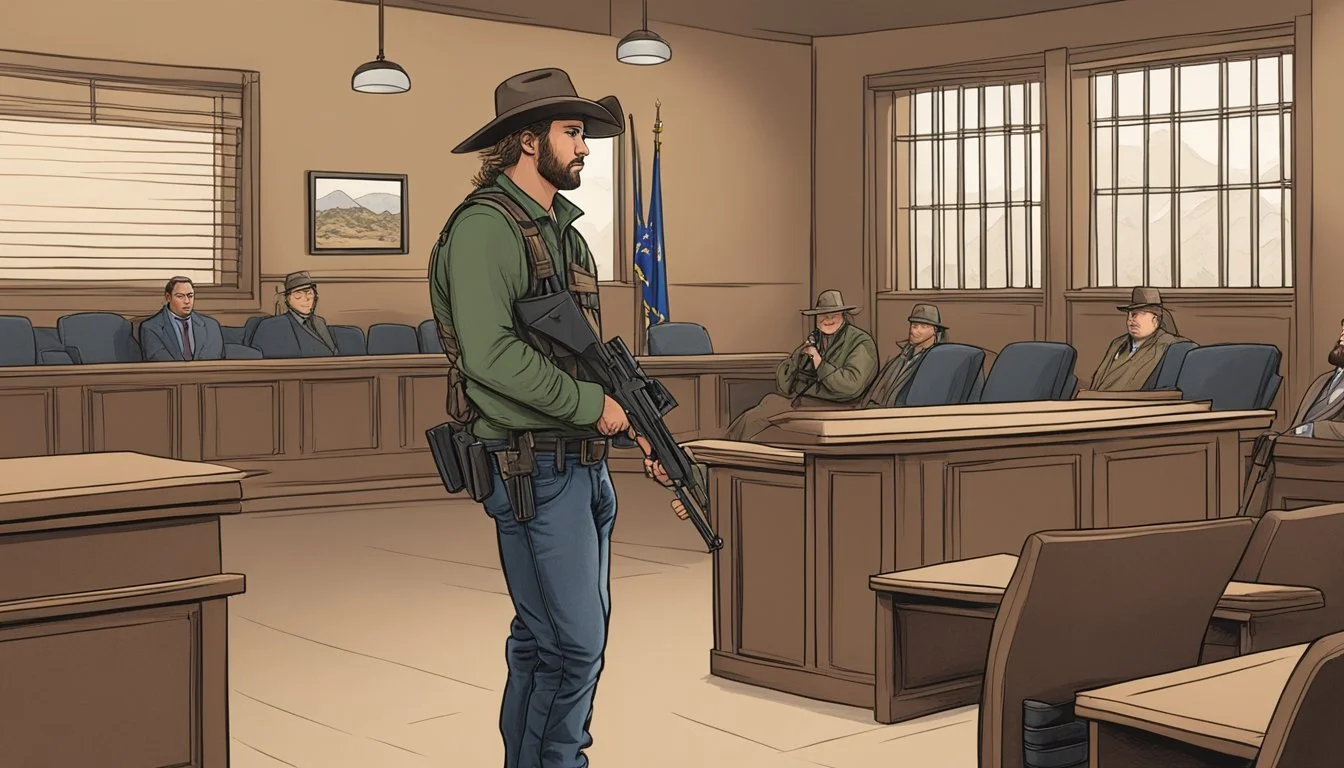
In Nevada, various penalties apply to hunting-related firearm offenses. They range from fines to incarceration, and these consequences can have lasting impacts on an individual's rights and legal standing.
Firearm Offenses and Punishments
Hunting Without a License:
Crime Category: Misdemeanor
Consequences: Up to 6 months in jail and/or up to $1,000 fine.
Carrying Loaded Firearms in/on Vehicles:
Crime Category: Misdemeanor
Consequences: A requirement to retake a hunter safety class before being reissued a hunting license.
Unlawful Possession of Firearms:
Illegal possession or use of firearms during hunting may escalate the offense from a misdemeanor to a felony, especially in the presence of aggravating factors such as stalking or use of crime guns (firearms used in the commission of a crime).
Impact of Criminal Convictions
A criminal conviction can lead to several direct and indirect consequences:
Loss of Firearm Rights:
Felony convictions result in the loss of the right to own or possess firearms.
Background and Employment:
Convictions, especially felonies, can affect background checks and limit employment opportunities.
Hunting Privileges:
Hunting violations can lead to suspension or revocation of hunting licenses and privileges.
Frequently Asked Questions
Can I carry a gun openly while hunting in Nevada? Yes, Nevada permits open carry of firearms. Hunters can carry guns openly without a need for a license or registration.
Is a CCW permit required for hunting in Nevada? A CCW (Concealed Carry Weapon) permit is necessary for carrying a concealed firearm. Hunters and other individuals must obtain a CCW permit if they wish to carry their firearm concealed while in the state.
Are there restrictions for minors hunting with firearms? A minor under 18 must be accompanied by a parent, guardian, or an authorized adult who is licensed to hunt. Minors aged 14 and above may hunt alone with parental permission.
Do peace officers need a CCW permit? Peace officers are typically exempt from the requirement to obtain a CCW permit while carrying a firearm in their official duties.
What areas are off-limits for carrying guns in Nevada, including hunting state areas? Firearms are prohibited in certain locations such as public schools, child care facilities, VA facilities, public airports, government buildings, and any area marked as off-limits by federal government regulation.
Must I notify a sheriff if I'm carrying a concealed firearm while hunting on public highways? It is not stated that hunters must notify the sheriff when carrying a concealed firearm on public highways. However, they must carry the CCW permit at all times and show it upon request.
What are the gun laws regarding transporting loaded rifles in vehicles? Nevada law prohibits carrying a loaded rifle or shotgun in or on a vehicle on a public highway.
Are there specific regulations regarding hunting antlerless elk or ewe? Regulations on hunting specific game such as antlerless elk or ewe are governed by Nevada hunting seasons and tags, and hunters must comply with those specific regulations.
Is firearm registration required in Nevada? Nevada does not require firearm registration except in specific jurisdictions that have their own rules.
What is the process for CCW permit renewal? CCW permit holders must apply for a renewal of their permits every five years. They may be required to undergo additional training and must not have a controlled substance issue, an outstanding warrant, or have violated any other conditions of CCW permit holding.

