
Gun Laws in North Dakota for Hunters
Essential Regulations and Requirements
North Dakota presents a set of gun laws that are straightforward, with specific regulations that are pertinent to hunters. The state permits individuals to possess and carry firearms, and this extends to those participating in hunting activities. North Dakota's hunting regulations require adherence to safety training and proper handling when using firearms for hunting purposes, ensuring a responsible and law-abiding hunting community.
For hunters, it's important to recognize the distinctions in shot size and game regulations in North Dakota. Depending on the game being pursued, hunters must select the appropriate ammunition, with different shot sizes suited for a variety of species from small birds to larger waterfowl. License costs vary depending on factors such as age and residency, reflecting a tier-based system for issuing hunting privileges.
Gun laws in North Dakota are also accommodating for youth involvement in hunting, allowing individuals younger than 15 to carry and use firearms under direct supervision. This encourages safe practices from an early age within the limits of the law, fostering a culture of respect for both the weapons and the sport of hunting. Hunters in North Dakota are expected to understand and comply with all relevant regulations to maintain the state's reputation for safe and sustainable hunting practices.
Understanding North Dakota's Gun Laws
North Dakota's gun legislation has seen significant developments over the years, with pivotal changes occurring around 2017. The state's approach to gun laws demonstrates a unique balance between the Second Amendment and safety considerations.
Historical Overview of Gun Legislation
The scope and interpretation of North Dakota's firearm laws have evolved, particularly with respect to constitutional carry. Constitutional carry was enacted in 2017, allowing residents to carry loaded, concealed handguns in public without the need for a permit or background check. This law marked a significant departure from previous regulations where such measures were required.
The history of gun legislation in the state is notably influenced by the Second Amendment of the U.S. Constitution, which grants the right to keep and bear arms. The state's Constitution similarly protects this right, shaping state laws in favor of gun ownership.
Key Legal Terms and Definitions
It's crucial for hunters and gun owners in North Dakota to understand key legal terms:
Background Check: A vetting process to determine eligibility for firearm ownership. Under federal law, licensed firearms dealers must perform a background check before selling any gun. However, North Dakota does not require background checks for private sales of firearms.
Constitutional Carry: The ability to carry a concealed handgun without a permit or background check. Effective from 2017 in North Dakota, this applies only to lawful residents over the age of 18.
While the state has its own set of regulations, all firearm owners must also comply with federal laws on gun ownership, which includes restrictions on certain individuals and types of firearms, emphasizing the intersection of state and federal law.
Firearm Ownership
In North Dakota, hunters opting for firearm ownership must navigate a set of regulations that ensure responsible use and transfer of guns. Key aspects to focus on include eligibility criteria and the process surrounding the purchase, including background checks.
Eligibility and Background Checks
To legally own a firearm in North Dakota, an individual must:
Be 18 or older for long guns.
Be 21 or older for handguns.
Pass a federal background check when purchasing from a licensed dealer.
A background check is paramount to confirm if a purchaser has any prohibiting criminal history that would disqualify them from firearm ownership. This check is conducted through the National Instant Criminal Background Check System (NICS) for sales by licensed dealers but is not required for private sales.
Purchase and Transfer of Firearms
The process of purchasing and transferring firearms in North Dakota varies based on the type of transaction.
Purchasing from a Licensed Dealer:
Provide valid identification.
Undergo and pass a background check.
No state permit required for purchase.
Private Sales and Transfers:
Purchaser must be eligible to own firearms.
Background check not mandated by state law.
Both parties must follow federal law regarding lawful ownership and transfer.
For hunters, understanding and complying with these guidelines is a foundational step in ensuring both legal and responsible firearm ownership in North Dakota.
Types of Firearms and Ammunition
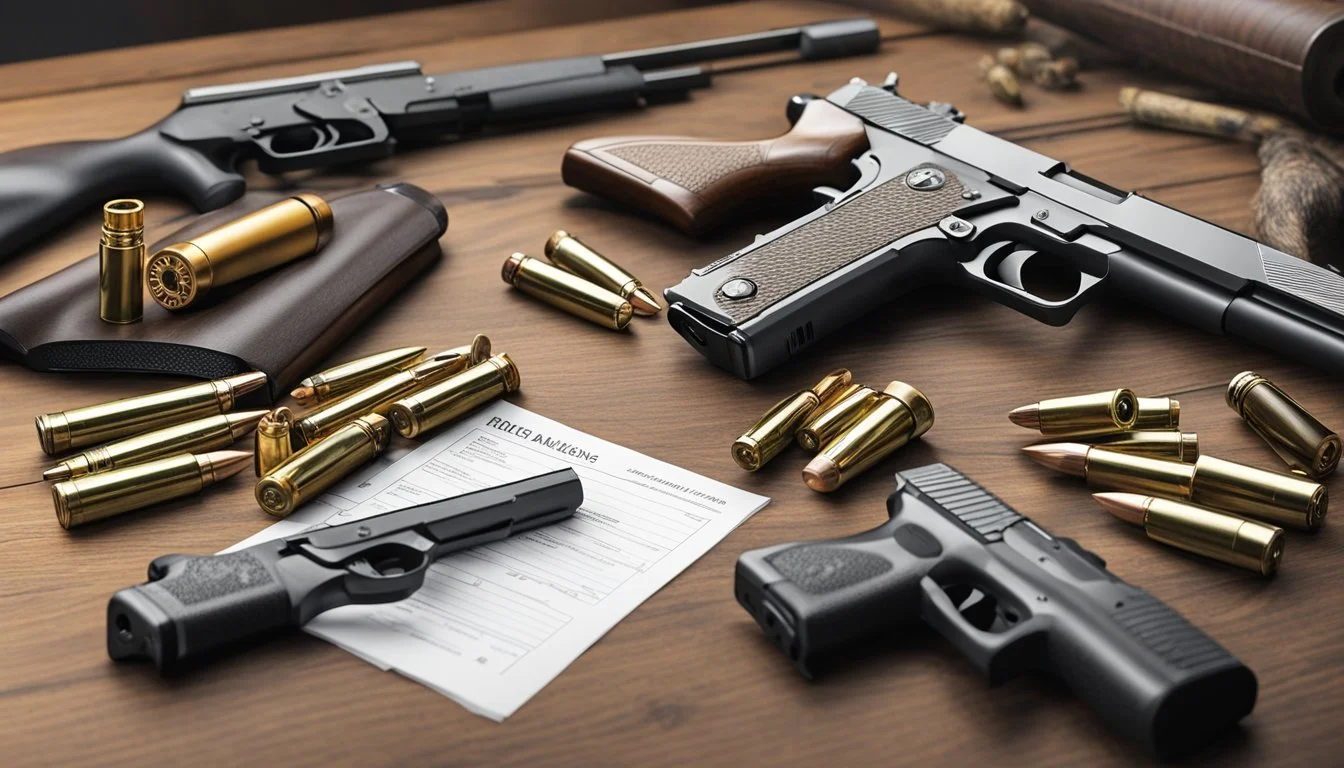
In North Dakota, hunters must distinguish between various firearm classifications and adhere to specific ammunition regulations to ensure they comply with state law.
Understanding Firearm Classifications
Firearms fall into different categories: handguns, rifles, and shotguns. A handgun is characterized by its short barrel and can be held and fired with one hand. Rifles and shotguns are designed for two-handed use and shoulder firing, with rifles firing bullets of varying calibers and shotguns typically firing shotshells.
Handgun: Typically used for personal defense or sport shooting, not commonly used for hunting in North Dakota.
Rifle: Preferred for hunting, available in various calibers suitable for different game.
Shotgun: Versatile with the ability to use different shot sizes or slugs, used for bird and large game hunting.
State law classifies certain firearms under more stringent regulations, such as machine guns, short-barreled rifles, and short-barreled shotguns, which are heavily regulated or prohibited for hunting purposes.
Ammunition Regulations
North Dakota prohibits the transfer of ammunition to individuals who are legally barred from possessing it under both state and federal law. When referring to ammunition, this includes both the projectiles (bullets or shot) and the components (such as powder and primer).
Key points about ammunition in North Dakota:
Legal Ammunition: Hunters can use ammunition that complies with federal laws.
Prohibited Ammunition: Armor-piercing, tracer, and incendiary ammunition are illegal under federal law and, therefore, prohibited in North Dakota.
It's important for hunters to familiarize themselves with these specifications to ensure they are purchasing and using the correct ammunition for their firearms and intended hunting activities.
Carry Laws in North Dakota
In North Dakota, hunters and other firearms users are subject to specific carry laws, with distinctions between concealed and open carry, as well as permit and permitless carry.
Concealed and Open Carry Regulations
In North Dakota, individuals over the age of 18 are legally permitted to carry firearms. To carry a concealed weapon, one must usually possess a Concealed Weapon License (CWL), but there are conditions under which a CWL is not required. Open carry is generally legal, but it is important to note that certain areas may have restrictions, and hunters should verify local regulations.
Minimum age for concealed carry: 18 years
Concealed Weapon License (CWL): Required for traditional concealed carry
Open Carry: Legal with potential local restrictions
Permit and Permitless Carry
In efforts to respect the right to bear arms, North Dakota has enacted "permitless carry." Under this provision, residents may carry a concealed handgun without a permit, provided they meet certain legal requirements.
Permitless Carry: Legal for handguns
Minimum age: 18
Must be legally allowed to possess a firearm
To purchase a handgun, however, the minimum age is 21. The state does not require a permit to purchase rifles, shotguns, or handguns, but carrying concealed firearms or dangerous weapons generally requires law enforcement status or a CWL—unless permitless carry conditions are met.
Hunting Regulations and Firearms
In North Dakota, hunters must navigate a set of specific gun laws and regulations that pertain to the transport and use of firearms while hunting. This section outlines the key legislative requirements and best practices for hunters regarding firearm usage.
Gun Laws Specific to Hunters
In North Dakota, there is a distinction in terms of the type of firearms hunters can use depending on the game they are pursuing. For small game, such as doves and rabbits, hunters commonly use shot sizes 8, 7½, and 7. When hunting upland birds, like pheasants, shot sizes 6 and 5 are recommended, whereas sizes 4, 3, and 2 are suitable for ducks. To hunt waterfowl, including ducks and geese, shot sizes 1 and BB may be used. Moreover, while a state permit is not required to purchase a firearm, carrying a concealed firearm demands specific conditions to be met, including being a law enforcement officer or having the appropriate concealed carry permit.
Transport and Use of Firearms for Hunting
The transportation of firearms while hunting in North Dakota must conform to state regulations. A firearm must be unloaded in both chamber and magazine while transported in a vehicle. This is to ensure safety for both the hunters and the public. Furthermore, hunters must take into account that certain areas, including parts of Lake Sakakawea State Park, have specialized hunting regulations. Hunters need special permits and must adhere to specific restrictions when hunting in these areas. Knowledge of the rules associated with each hunting zone is paramount for ethical and legal hunting practices.
The state extends opportunities for hunters in wheelchairs, offering them special provisions to participate in deer gun hunting in designated zones. They may require not only a Unit 3B3 deer gun hunting license but also a special park permit. Pertinent contact information, such as the park office number, is crucial for obtaining the necessary permits and for learning about associated restrictions.
Gun Laws and Public Safety
In North Dakota, gun laws aim to strike a balance between individual rights and public safety. These statutes are designed to regulate where firearms can be lawfully carried and how they are transported, particularly concerning hunters and their interactions with the public and prevention of gun violence.
Prohibited Locations and Premises
North Dakota law restricts the carrying of firearms in certain locations to enhance public safety and reduce the risk of gun violence. It is unlawful for individuals to possess firearms in the following areas:
Schools: Firearms are prohibited on school property, which is outlined to prevent potential violence in educational settings.
Liquor Establishments: Hunters and other individuals may not possess firearms on the premises of a liquor establishment, such as a bar, to minimize the risk of crime and violence where alcohol is consumed.
These regulations aim to safeguard the public from the potential dangers associated with firearms in sensitive areas where the risk of altercations and gun violence might be higher.
Possession in Motor Vehicles
The transportation of firearms in motor vehicles is subject to rules that promote public safety:
Unloaded and Cased: Firearms must be unloaded and cased in public motor vehicles.
No Concealed Carry Without Permit: Except for law enforcement officers, individuals are generally not permitted to carry a concealed firearm without the appropriate permit, reducing the risk of crime and enhancing public safety.
These measures are enforced to help prevent the misuse of firearms in motor vehicles and ensure that hunters and other lawful gun owners transport their firearms responsibly.
Reciprocity and Interstate Considerations
North Dakota's laws address how concealed carry permits are recognized between states and what is required for hunters carrying weapons across state lines.
Understanding Reciprocity Agreements
North Dakota is party to reciprocity agreements with several states. These agreements determine if the state recognizes concealed carry permits from other states, and vice versa. The Attorney General's office is responsible for issuing concealed carry licenses and maintains a list of states with which North Dakota has reciprocity. Hunters should check this list before traveling, as it can change.
Valid Licenses: A concealed weapon license issued by North Dakota is recognized in certain other states.
License Recognition: Many states recognize North Dakota's concealed carry permits, but the hunter is responsible for knowing and adhering to each state's laws.
Out-of-State and Travel Implications
When traveling, hunters must follow the specific firearm laws of the jurisdiction they are visiting. It is important to note that no permit, firearms registration, or background checks are required to buy a handgun from a private individual within North Dakota.
Traveling: Compliance with local laws is mandatory when hunters travel with firearms.
Moving to North Dakota: New residents with non-North Dakota licenses should contact their issuing state to understand how relocation affects their license.
Hunters should stay informed about the laws pertaining to firearms as they can vary significantly from state to state and ensure they are in compliance, particularly when engaging in interstate travel.
Legal Responsibilities of Gun Owners
In North Dakota, gun owners are required to adhere to specific legal responsibilities, including timely reporting of certain incidents and understanding the penalties for legal violations. These responsibilities are in place to ensure public safety while respecting the rights of individuals to own firearms for hunting and protection.
Reporting Requirements
Gun owners in North Dakota must immediately report any lost or stolen firearms to law enforcement authorities. Failure to do so could result in legal consequences, including charges related to negligence or obstruction. Additionally, individuals who are subjected to a court order or have been convicted of a felony offense are required to surrender their firearms.
Law Enforcement Notification:
Lost or stolen firearms: Immediate reporting to police
Court-ordered surrender: Following conviction or restraining orders
For Individuals on Parole or Probation:
Mandatory disclosure of firearm possession to a supervising officer
Penalties for Violations
Violations of gun laws in North Dakota are subject to severe penalties. Carrying a concealed weapon without the proper permit is illegal and may result in a criminal offense. Additionally, individuals found in possession of firearms who are deemed mentally deficient, or those using firearms for intimidation or as part of felony activities, face strict legal repercussions.
Concealed Weapon Violation:
Without a permit: Misdemeanor or felony, depending on circumstances
Possession Restrictions:
By a felon or mentally deficient person: Felony
For intimidation or related to other felony offenses: Felony
Probation and Parole Violations:
Unauthorized firearm possession: Potential for probation or parole revocation
Self-Defense and Gun Laws
In North Dakota, hunters must understand the nuances of the state’s self-defense laws, which include provisions for castle doctrine and stand your ground laws. These laws impact when and how a person can legally use force in defense of oneself or property.
Castle Doctrine and Stand Your Ground Laws
Castle Doctrine in North Dakota allows individuals the right to use force, including deadly force, to protect themselves against an intruder within their home or dwelling. This principle is based on the belief that individuals have the right to protect themselves and their habitat without the obligation to retreat.
Stand Your Ground Law, enacted in 2021, extends the right of self-defense to most public spaces. Under this law, individuals in North Dakota are not required to retreat before using force to defend themselves or another person. Rather, they are legally entitled to "stand their ground" and use force, including deadly force, if they believe it is necessary to prevent harm or a violent felony.
Use of Force in Self-Defense
The lawful use of force for self-defense in North Dakota is predicated on the individual's reasonable belief that such action is necessary to prevent harm. The state's laws provide that individuals may use sufficient force, including deadly force, as defense only when they:
Believe that such force is necessary to protect themselves or another person from imminent threat of harm or serious bodily injury.
Are not the initial aggressor in the encounter.
Are in a place where they have a legal right to be and are not engaging in criminal activity.
Additional Considerations and Legal Exemptions
In understanding gun laws in North Dakota, it is important to recognize specific exemptions provided to certain groups and under federal guidelines which influence owner responsibilities and legal capabilities.
Exemptions for Military and Law Enforcement
Military personnel and law enforcement officers in North Dakota are subject to unique exemptions in gun regulations. Active members of the Armed Forces are permitted to carry concealed firearms without the need for a state-issued permit, adhering to their status under federal jurisdiction and their respective roles in national security. Law enforcement officers, similarly, have authorizations that allow them to carry firearms during the course of their duties, also exempting them from some state regulations that apply to civilian gun owners.
Unique State Provisions and Exemptions
North Dakota offers several state-specific gun law exemptions. For instance, there are circumstances under which individuals are allowed to possess and use certain weapons that are typically regulated, like fully automatic rifles or silencers. These exemptions are generally connected to occupational requirements or in recognition of the equipment's use in activities such as sanctioned hunting events, pest control, or agricultural management, provided that the user complies with applicable safety regulations.
Federal Regulations and the National Firearms Act
The National Firearms Act (NFA) plays a significant role in dictating the use and possession of certain firearms such as fully automatic rifles, silencers, and bombs. Under the NFA, these items are tightly regulated and require thorough background checks, registration, and tax stamps. North Dakota hunters and gun owners must comply not only with state provisions but also federal laws. The NFA lays out clear restrictions and processes for the use, transfer, and manufacture of these regulated categories, emphasizing a national standard in firearms control.
Restrictions for Specific Individuals
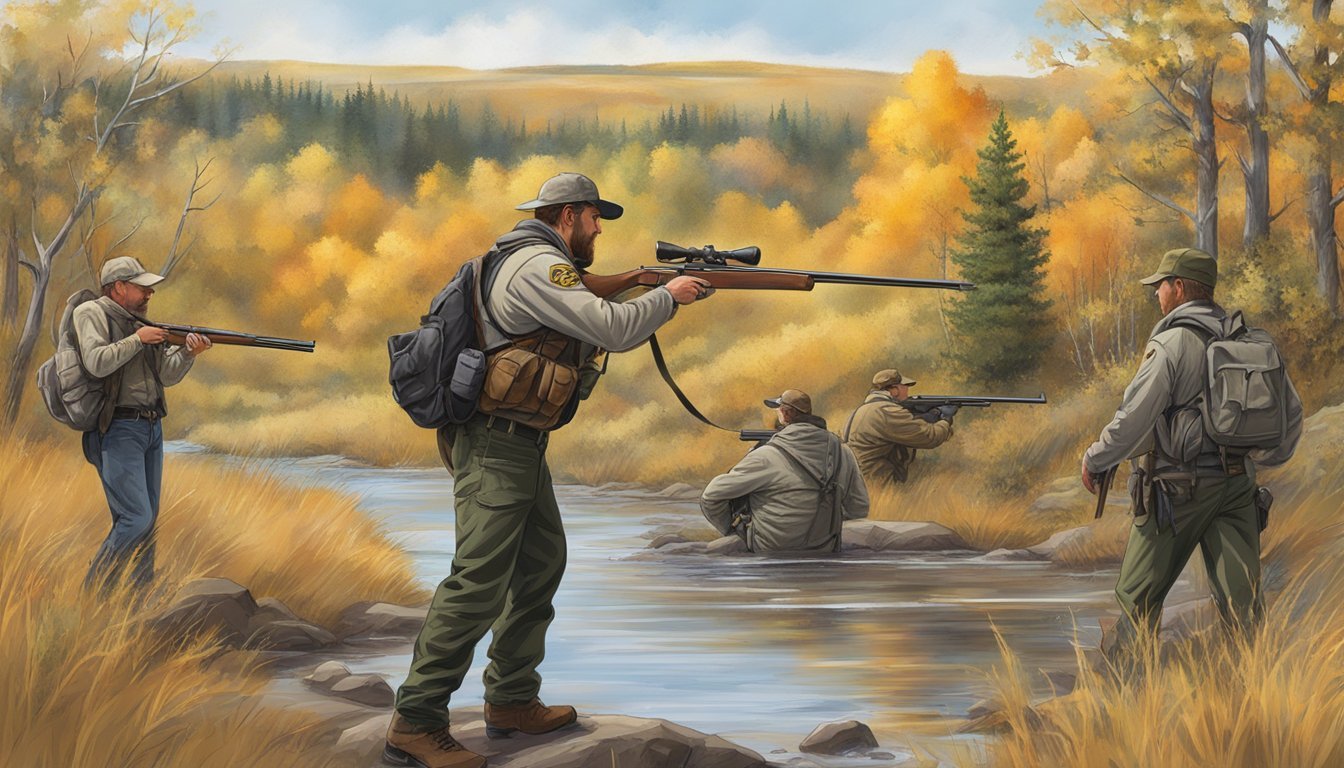
In North Dakota, certain individuals are legally prohibited from possessing firearms due to specific disqualifying criteria. This is to ensure the safety of the general public and to comply with both state and federal regulations governing firearm possession.
Disqualification Criteria for Firearm Possession
Minors: Individuals under the age of 18 are generally prohibited from possessing handguns. There are exceptions for hunting and safety training under adult supervision.
Felony Convictions: Those convicted of a felony are barred from firearm possession. The severity of the felony does not change this disqualification.
Misdemeanor Crime of Domestic Violence: An individual convicted of a misdemeanor crime of domestic violence cannot legally possess a firearm.
Illegal Alien Status: Non-U.S. citizens who are in the country illegally are not permitted to own or possess firearms in North Dakota.
Fugitive From Justice: An individual who is considered a fugitive from justice, meaning they have an active warrant for their arrest, is prohibited from possessing firearms.

