
Gun Laws in Pennsylvania for Hunters
A Comprehensive Guide
Pennsylvania offers a diverse array of wildlife, making it a significant destination for hunters. Understanding the state's gun laws is crucial for anyone looking to engage in the sport of hunting. In Pennsylvania, the legal framework governing the use of firearms for hunting is set forth by the Pennsylvania Uniform Firearms Act and regulated by the Pennsylvania Game Commission. This ensures hunter safety and wildlife conservation, while also maintaining the legal provisions for firearm possession and use in the state.
Hunters in Pennsylvania are permitted to use firearms, provided they adhere to certain regulations. Handguns can be legally used for hunting, but they must be manually operated and centerfire, with a caliber of .22 or larger capable of firing single-projectile ammunition. It should be noted that the use of semiautomatic handguns is restricted to self-defense purposes only and not sanctioned for hunting activities. Moreover, Pennsylvania outlines specific guidelines regarding magazine capacity for hunting different game species, aiming to promote ethical hunting.
It is essential for hunters to be aware of these laws to ensure a compliant and successful hunting experience. The state's commitment to balancing the rights of gun owners with public safety and wildlife management underscores the importance Pennsylvania places on responsible gun ownership and hunting practices. Whether a resident or non-resident, hunters must stay informed of the latest regulations, which may be subject to change, to properly plan their hunting excursions in the Keystone State.
Legal Framework for Firearm Ownership
In Pennsylvania, firearm ownership is regulated by a mix of federal laws and state-specific regulations, providing a comprehensive legal framework that hunters and other gun owners must adhere to. The state's approach to gun ownership is encapsulated in the Pennsylvania Uniform Firearms Act, while also being subject to pertinent federal laws.
Pennsylvania Uniform Firearms Act
The Pennsylvania Uniform Firearms Act primarily governs the ownership, possession, transfer, and transportation of firearms within the state. It defines a firearm as a pistol or revolver with a barrel less than 15 inches, a shotgun with a barrel less than 18 inches, or a rifle with a barrel less than 16 inches. The Act requires residents to adhere to various compliance measures regarding the acquisition and ownership of firearms.
Key provisions include:
Minimum age for possession: 18 years (with certain exceptions for minors under supervision)
Requirement for an instant background check for purchasing a handgun from licensed firearms dealers
Federal Law and State Regulations
Apart from the state-specific act, firearm ownership in Pennsylvania is also affected by federal law. These laws set forth the overarching legal structure within which states can formulate their own regulations.
Federal requirements include:
Minimum age for purchasing a handgun from a dealer: 21 years
Mandatory background checks per the Brady Handgun Violence Prevention Act
The Pennsylvania Supreme Court plays a role in interpreting both federal and state laws as they apply within Pennsylvania, ensuring that regulations adhere to the legal standards set by the Uniform Firearms Act, as well as federal statutes. Compliance with both state and federal law is essential for hunters to legally possess and use firearms in the state.
Obtaining a License and Background Checks
In Pennsylvania, hunters looking to carry firearms must navigate the processes of licensing and background checks, which are mandatory. These procedures ensure individuals are eligible to carry firearms and meet the criteria set forth by the state governing the possession and use of guns.
License to Carry Firearms
A License to Carry Firearms (LTCF) is required for individuals who wish to carry a firearm concealed on their person or in a vehicle. In Pennsylvania, the issuing authority for an LTCF is the county sheriff or the chief of police in cities of the first class. Applicants must be 21 years of age or older and submit a completed application along with the required fee. The processing time can vary but generally takes up to 45 days post-application submission.
Background Check Requirements
For the acquisition of a firearm in Pennsylvania, hunters must pass a background check through the Pennsylvania Instant Check System (PICS). This system cross-references records to ensure the purchaser has no disqualifying criminal history. The background check encompasses all firearm sales, including private sales of handguns and sales at gun shows, with the following procedures:
Identification: Present a state-issued ID
PICS Check: Completion of the PICS, which generally provides instant approval or denial
Federal Check: All federally licensed dealers must also conduct a federal background check
Prohibition for Crime and Mental Health Reasons
There are specific prohibitions that disqualify individuals from obtaining a license or possessing a firearm. They include:
Crime of Violence: Any person convicted of a crime categorized as a violent offense is barred from firearm possession.
Mental Institution: Individuals who have been involuntarily committed to a mental institution are ineligible for a license to carry.
Pennsylvania law reinforces these prohibitions through rigorous screening during the background check process, helping to prevent firearms from falling into the hands of those deemed a risk to themselves or others.
Hunting Licenses and Regulations
In Pennsylvania, hunters must navigate a series of regulations set forth by the Pennsylvania Game Commission, including the types of licenses available and specific hunting regulations. These rules vary for hunting on private versus public lands, with distinct procedures for obtaining permits and adhering to legal requirements.
Types of Hunting Licenses
Pennsylvania provides both resident and non-resident hunting licenses, and individuals are obliged to obtain the appropriate license before partaking in any hunting activities. The Pennsylvania Game Commission offers various licenses, such as:
Regular Hunting Licenses
Furtaker Licenses
Antlerless Deer Licenses
Permits for Hunters with Disabilities (specifically for veterans)
Licenses, including antlerless deer licenses, are time-sensitive and are valid from July 1 through June 30 of the following year. Additionally, a unique Shooting Range Permit is available which allows access to Pennsylvania Game Commission shooting ranges for 365 days from the date of purchase.
General Hunting Regulations
The state imposes a set of general hunting regulations to ensure both the safety of hunters and the sustainability of wildlife populations. These include:
Hunters must report harvested antlerless deer, after which they may apply for additional licenses if available.
There are magazine capacity restrictions for various game and hunting seasons.
Fluorescent orange requirements and hunting hours must be adhered to, as stated by the Pennsylvania Game Commission.
All hunters aged 12 and above are allowed to hunt with firearms, though special regulations exist for younger participants.
Hunting on Private vs. Public Lands
Hunting regulations differentiate between private and public lands. Hunters must obtain permission to hunt on private property, whereas on public lands, they must follow specific guidelines provided by the Pennsylvania Game Commission. This includes adherence to season dates and bag limits which are clearly outlined in the state's Hunting & Trapping Digest.
Regulations may also vary across Wildlife Management Units, requiring hunters to be aware of the rules pertaining to the specific unit they are hunting in. The Pennsylvania Game Commission mobile app is a valuable resource for up-to-date official information for both types of lands.
Firearms and Equipment for Hunters
Pennsylvania hunters must be aware of specific legal requirements regarding the firearms and equipment they can use during hunting seasons. These regulations are designed to ensure safety and conservation efforts are adhered to throughout the state.
Approved Firearms and Ammunition
Approved firearms for hunting in Pennsylvania include:
Rifles: Legal for deer hunting with restrictions on calibers and ammunition types.
Handguns: Must be manually operated, centerfire, .22 caliber or larger, and can only propel single-projectile ammunition.
Shotguns: Generally used for bird and small game hunting; slugs may be used for big game where allowed.
Crossbows: Classified as archery equipment and legal for hunting.
Air rifles: Eligible under certain conditions for small game and furbearers.
The ammunition must be suitable for the firearm and the game being hunted, adhering to state regulations on bullet or projectile types.
Restrictions on Equipment and Usage
When considering the use of hunting equipment in Pennsylvania, hunters face several restrictions:
Semiautomatic rifles: Not authorized for hunting purposes.
Suppressors: Not allowed to be used while hunting.
Magazine capacity: Specific limitations exist; hunters should consult current laws for details.
Additionally, it's important for hunters to verify that they purchase their firearms from a licensed firearms dealer. This ensures all state and federal regulations are followed, including background checks and potential inclusion in a sales database. Antique firearms also fall under specific guidelines and may not be suitable for regular hunting activities.
Specific Hunting Seasons and Game
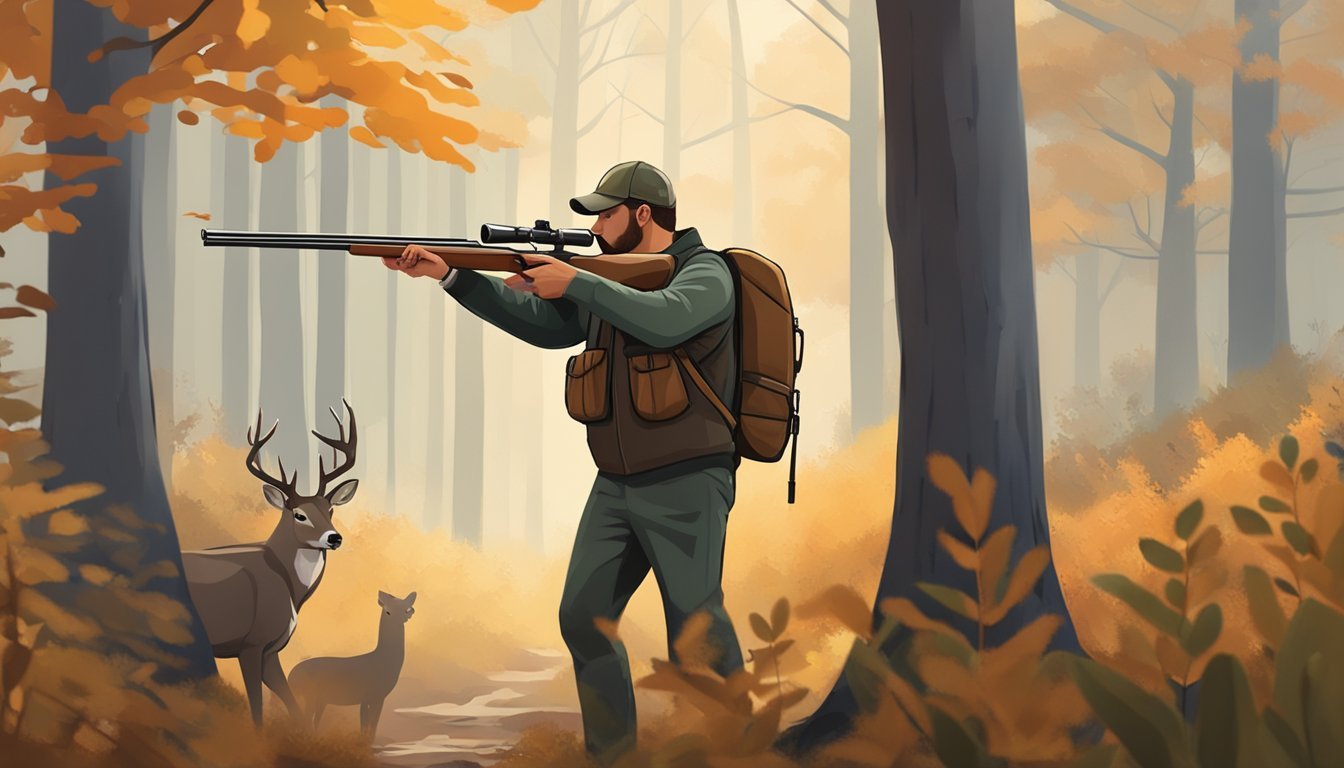
In Pennsylvania, hunters enjoy a diverse range of seasons for various game, from the popular deer hunting to the pursuit of small game. Each season is carefully regulated to ensure wildlife conservation and species protection.
Deer, Elk, and Small Game Seasons
Deer Hunting Season: Pennsylvania offers several deer hunting seasons, including archery, rifle, and muzzleloader seasons. These seasons generally occur in the fall and winter, with specific dates varying by region.
Archery: inclusively from early October to late November
Rifle: typically starts at the end of November
Muzzleloader: various dates, often in October and December
Elk Hunting Season: Limited to a select number of licensed hunters through a lottery system, the elk hunting season usually occurs in the fall.
Small Game Hunting: Pennsylvania hunters can pursue a variety of small game species, with seasons typically starting in the early fall and running into the late winter. The game includes:
Rabbits: Season usually starts in early October
Squirrels: Season coincides with rabbits
Groundhogs: Often have an open season, with exceptions
Pheasants, Quail (What wine goes well with quail?), and Grouse: Start in October
Woodchucks: No closed season, except on Sundays and during the regular firearms deer season
Wildlife Conservation and Species Protection
Pennsylvania takes wildlife conservation seriously, implementing strict hunting seasons and regulations to protect species populations. The seasons are structured to allow for sustainable harvesting of game while ensuring their continued prosperity.
Turkey Hunting: With a varying schedule by region, turkey seasons provide hunters with spring and fall opportunities, emphasizing species sustainability.
Waterfowl Hunting: Managed federally in partnership with the state, waterfowl seasons are designed around migratory patterns to support conservation.
Other Species:
Fox and Coyote Hunting: Often encompassing broader seasons or even year-round opportunities with certain restrictions
Dove Hunting: Typically begins in early September, with split seasons
Black Bear Hunting: Scheduled for limited times in the fall, including a separate archery season
The state enforces these regulations to preserve Pennsylvania's rich heritage of hunting, ensuring that both game populations and hunters' interests are balanced for future generations.
Carry and Transport of Firearms

In Pennsylvania, the carriage and transport of firearms by hunters are regulated by specific laws that ensure safety and legal compliance. Hunters must be aware of the distinctions between open carry and concealed carry, the rules for transporting firearms, and the importance of firearm storage and locking devices.
Open Carry and Sportsman’s Firearm Permit
Open carry in Pennsylvania is generally allowed without a license for individuals who are legally permitted to possess a firearm. However, when traveling by vehicle or within the city of Philadelphia, a Sportsman’s Firearm Permit or a License to Carry Firearms (LTCF) is required to transport a loaded firearm. The Sportsman's Firearm Permit specifically allows hunters and anglers to carry firearms during hunting or fishing activities.
To obtain this permit, one must:
Be 18 years of age or older.
Apply with the county treasurer's office.
Transporting Firearms for Hunting
While transporting firearms for hunting, unloaded firearms can be moved without a permit, but specific rules apply for different types of travel:
Within a Vehicle: Firearms must be unloaded and a sportsman's permit or LTCF is required if the firearms are loaded.
Moving to a New Residence: During the move, firearms should be unloaded and securely stored, separate from ammunition.
From a Licensed Dealer: After purchasing from a dealer, the firearm must be unloaded and secured for transport to the buyer's home or place of hunting.
It's important to note that during travel to and from shooting ranges, gun shows, or hunting grounds, firearms must be transported in accordance with state laws and regulations.
Firearm Storage and Locking Devices
Proper firearm storage with locking devices is crucial for safety, especially when the firearm is not in use:
At home, firearms should be stored unloaded in a secure location, with a locking device in place to prevent unauthorized access.
Locking devices can include cable locks, trigger locks, or safes specifically designed to store firearms.
This method of storage is important to prevent accidents and theft, and in some cases, it may be required by law, depending on the specifics of the firearm or situation.
Hunting Safety and Legal Restrictions
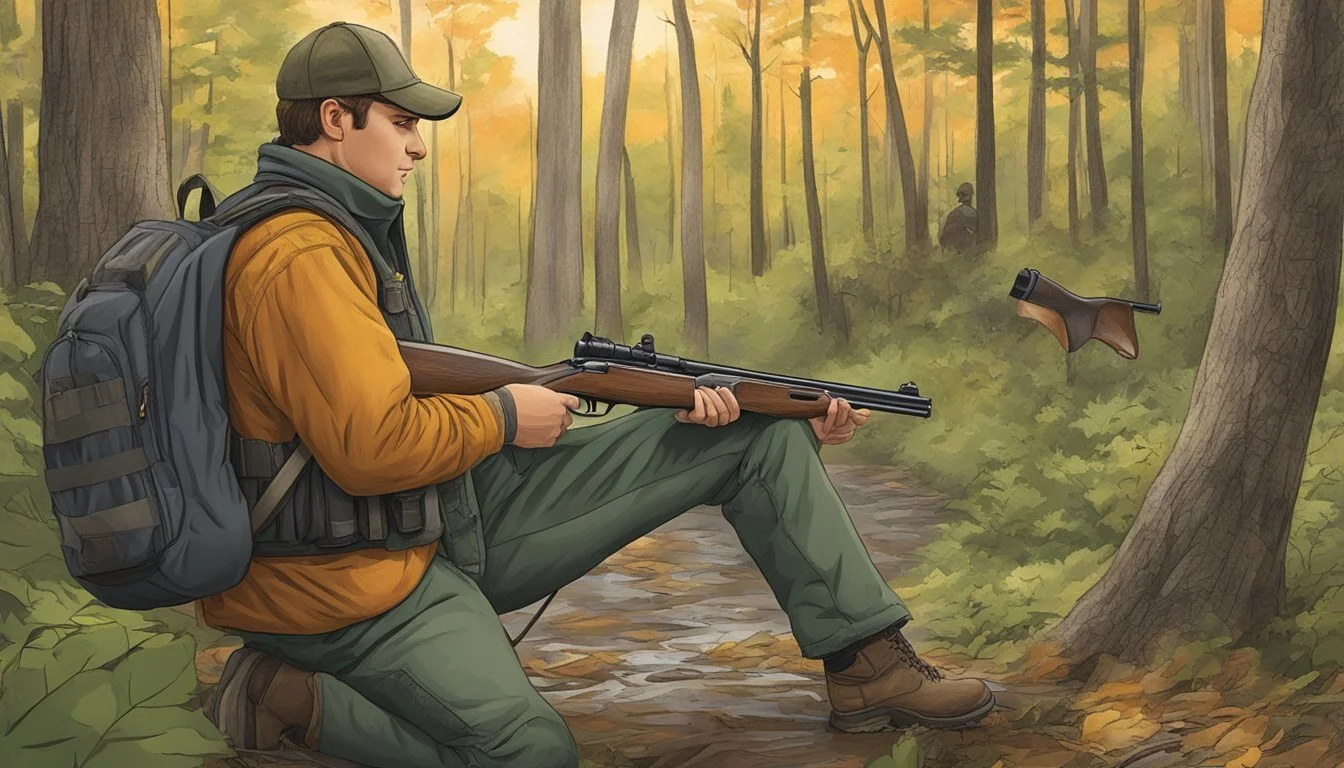
Pennsylvania enforces stringent rules to ensure hunting remains a safe and regulated activity. The state requires a foundation in education and mandates specific area restrictions, with the safety of both hunters and the public at the forefront.
Education and Safety Training
In Pennsylvania, all new hunters must complete a hunter education course before acquiring a hunting license. The curriculum covers a broad range of topics, including firearms safety, wildlife management, ethical hunting practices, and conservation. The successful completion of this program ensures that hunters are well-equipped with the knowledge to hunt responsibly.
Protection from Abuse (PFA) Orders: Individuals with PFA orders against them may face restrictions regarding firearms possession, potentially affecting their eligibility to hunt.
School Property: Carrying firearms onto school grounds, even for hunting purposes, is prohibited to ensure school safety.
Shooting Ranges: Hunters are often encouraged to visit shooting ranges to practice and improve their marksmanship under controlled conditions.
Safety training also emphasizes the importance of correctly identifying targets and understanding one’s zone of fire to protect fellow hunters and non-hunters alike.
Restrictions on Hunting in Certain Areas
Pennsylvania law strictly regulates where individuals can hunt to promote safety and conservation.
Court Facilities and Public Streets: Hunting is prohibited in these areas to ensure public safety and maintain order.
Fishing: Certain restrictions may apply to those hunting in areas where fishing occurs, to prevent conflicts and protect aquatic environments.
Hunters must adhere to clearly defined boundaries of Wildlife Management Units, State Forests, and Game Land boundaries. When planning a hunting trip, individuals should consult the Pennsylvania Hunting Map for guidance on permissible areas to ensure compliance with state regulations.
Additional Considerations for Hunters
When hunting in Pennsylvania, individuals must navigate specific legal terrain to ensure they are fully compliant with statewide regulations. This includes understanding the impact of gun laws on hunting practices as well as maintaining appropriate insurance and attention to liability.
Insurance and Liability
Hunters in Pennsylvania should consider securing insurance to mitigate the financial risk associated with accidents that may occur during hunting. Coverage might address costs ensuing from injury to third parties or damage to property.
Liability Coverage: Tailored to offer protection if a hunter is held legally responsible for bodily injury or property damage.
Castle Doctrine: In Pennsylvania, the Castle Doctrine law provides legal protections to individuals under certain circumstances if they use force in defense of themselves within their homes.
Impact of Gun Legislation on Hunting Practices
Gun laws in Pennsylvania directly affect hunting methodologies and legal compliance. Hunters must follow the regulations regarding the types of firearms allowed and the seasons during which these firearms can be used.
Legal Firearms: Pennsylvania law permits the use of shotguns, muzzleloaders, rifles, and handguns for hunting. The specific game dictates the type of gun a hunter may legally use.
Minimum Age Requirements: The minimum age for unsupervised gun use in hunting is contingent on meeting safety certification needs; however, gun possession must always align with state legislation concerning legal age and gun ownership.
Gun Ownership and Legislation: While pistol ownership for the purpose of hunting requires adherence to broader gun legislation in Pennsylvania, hunters must also be mindful of how these regulations impact their practices out in the field.
Hunters have a responsibility to remain informed on current gun laws to ensure both safety and compliance with state guidelines.

