
Gun Laws in Virginia for Hunters
Essentials for a Legal Hunt
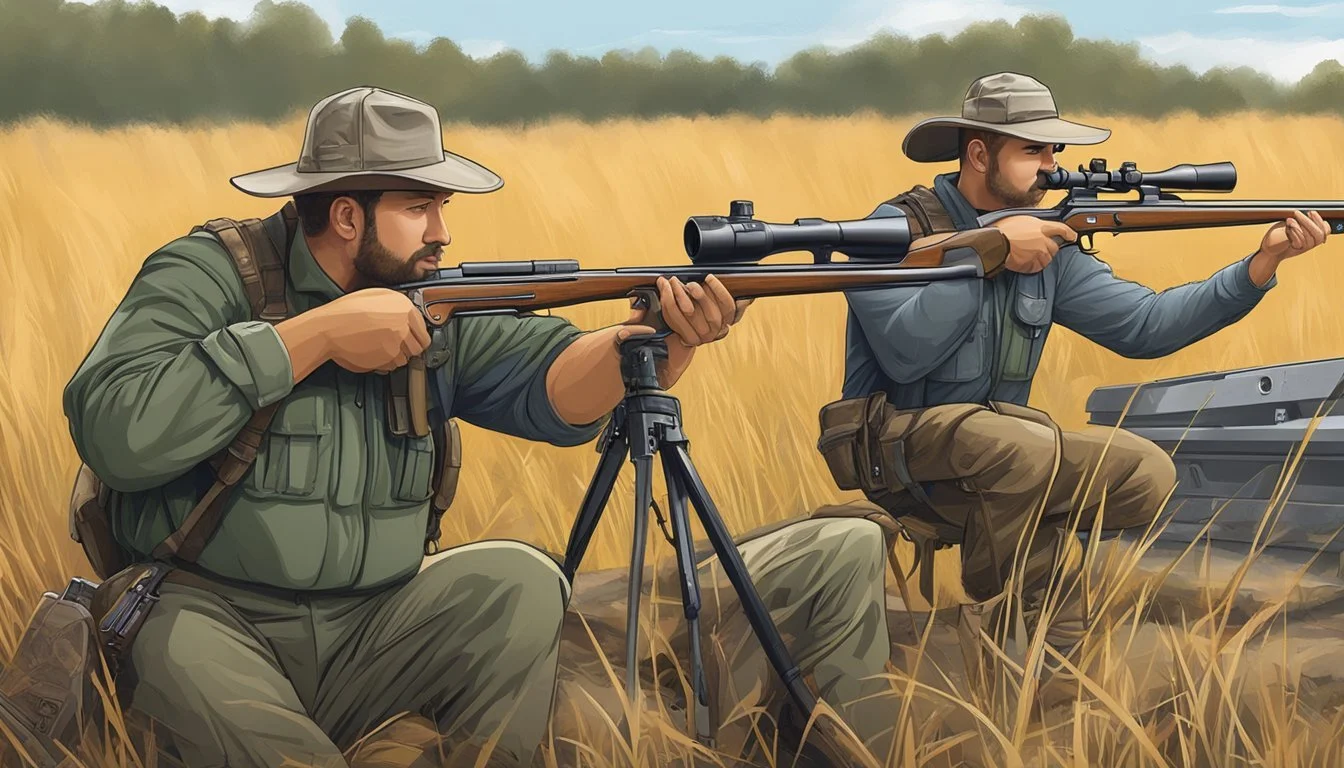
Virginia's gun laws establish specific regulations for hunters regarding the types of firearms and ammunition permissible for hunting. The state allows hunting with shotguns not larger than 10 gauge and with rifles of various calibers under regulated conditions. For instance, during certain seasons, hunters may use rifles larger than .22 caliber rimfire to hunt groundhogs. It is important to note that the discharge of firearms is generally restricted to approved ranges, and hunting with rifles larger than .22 caliber for other game is typically prohibited outside of specific regulations.
Additionally, Virginia's laws are crafted to ensure safe and legal hunting practices while respecting individual rights. Article 1, Section 13 of the state constitution underscores the significance of a well-regulated militia and the proper use of arms by the body of the people. In line with this, Virginia offers hunters the right to pursue their activities, provided they adhere to the stipulations for legal use of firearms and hunting gear during various hunting seasons. This balance aims to maintain public safety without infringing on the tradition and sport of hunting.
Legality and Ownership
In Virginia, individuals are not required to obtain a state permit to purchase or possess rifles, shotguns, or handguns. Regarding firearms sales and purchases, federal law mandates background checks for transactions involving licensed firearms dealers. However, private sales may not necessitate such checks, which is a point of contention among public safety advocates.
State Regulations:
Virginia hunters using firearms should note that there are specific regulations on the use of weapons during hunting seasons. For instance, muzzleloading shotguns/rifles may be employed during designated seasons. Certain projectiles such as slugs are restricted, and seasons dictate the allowable caliber of rifles for hunting specific game.
Minimum Age:
The minimum age for unsupervised handling of a handgun is 18, reinforcing the importance of responsibility among young gun owners. Moreover, while age signifies legal ownership, competence and safe use of firearms are equally critical, with safety courses strongly recommended.
Restrictions Based on Competence and Legal Standing:
A judge may issue a restraining order influencing an individual's right to possess firearms, especially in cases where the person poses a danger to oneself or others. If deemed incompetent or ineligible to own a weapon, the Virginia State Police play a role in enforcing these restrictions.
Permit and Carrying Regulations:
Concerning carrying handguns, Virginia offers a Concealed Handgun Permit (CHP) for which applicants undergo background screening. This permit ensures only eligible, law-abiding individuals legally concealed carry their pistols or revolvers.
In summary, while Virginia's gun laws might seem lenient, they encompass measures to ensure responsible ownership and use among hunters and gun owners at large.
Hunting Specific Laws
The key points of this section outline the framework guiding hunters in Virginia to ensure ethical hunting practices, appropriate use of firearms, conservation measures, and adherence to regulations based on location and time.
Hunting Season Compliance
Virginia hunters must follow specified hunting seasons set by the Department of Wildlife Resources, including dates for various game such as deer, black bear, and small game such as quail, grouse, and woodcock.
Firearm Use and Restrictions
Firearms including shotguns, rifles, and handguns are regulated in Virginia. Hunters must use the correct caliber or gauge for the game being hunted. Magazine capacity and the use of suppressors are also governed by Virginia gun laws.
Wildlife Conservation and Ethics
Hunters contribute to wildlife conservation and must conduct themselves ethically, respecting bag limits and hunting licenses to protect wildlife populations.
Hunting on Private vs. Public Land
Private Land: Hunting requires the landowner's permission. Public Land: Hunting is permitted in designated areas, with some counties or cities imposing additional restrictions.
Vehicle Regulations and Hunting
It is unlawful to shoot firearms from or across a public road or highway. Hunters must not have loaded firearms or archery equipment in or on vehicles.
Safety and Responsible Hunting Practices
Safety is paramount: firearms should not be used under the influence of alcohol or drugs. Virginia mandates hunter safety education for all first-time license holders.
Additional Hunting Methods
Besides firearms, hunting with archery equipment, muzzleloaders, and decoys is permissible. Specific regulations apply, such as prohibitions on hunting with dogs during certain seasons.
Hunting Permissible Areas
Hunters can discharge firearms or bows in areas designated for hunting. Discharge near homes, schools, or churches is restricted.
Seasonal and Animal-Specific Regulations
Season dates and hunting methods vary by animal and season. Deer hunting, for instance, includes regulations on antler size and hunting with decoys in certain periods.
Licensing and Tags
Before hunting, individuals must obtain a hunting license and appropriate tags, which can require a background check. Special state permits may also be necessary.
Bag and Possession Limits
Limits are strictly enforced to ensure sustainable populations of game animals. These limits vary by species and time of year.
Consistent with these hunting-specific laws, hunters are required to stay informed of changes to regulations and practice hunting in a responsible manner that ensures the safety and conservation of Virginia's wildlife resources.
Prohibitions in Specific Locations
In Virginia, hunters must navigate various location-based restrictions on the use of firearms. Public spaces--such as streets, sidewalks, and parks--often have laws prohibiting the carrying and discharge of loaded firearms, whether concealed or in plain sight.
Specific location prohibitions also apply to the following entities:
Schools: Firearms are typically banned on school property, including buildings and grounds.
Courthouses: It is unlawful to carry firearms into courthouses.
Airport Terminals: The carrying of firearms is generally prohibited in the secured areas of airport terminals.
Places of Worship: While Virginia law allows firearms in places of worship, individual places of worship may set their own prohibitions.
State Capitol: Restrictions are in place against firearms within the state capitol and legislative buildings.
Alcohol Establishments: Establishments that serve alcohol may restrict individuals from carrying firearms.
With a Restraining Order: Individuals under a restraining order may face restrictions on firearm possession.
Correctional Facilities: Firearms are not permitted within correctional facilities.
Hunters should also be aware of local ordinances which can further restrict firearm usage, such as prohibiting the discharge of firearms, even on private property, if the area is deemed heavily populated.
Below is a summary table of these prohibitions:
Entity Firearm Prohibition School Yes Courthouse Yes Airport Terminal Yes (secured areas) Place of Worship Varies State Capitol Yes Alcohol Establishment Yes (varies) Under Restraining Order Yes Correctional Facility Yes
It is the hunter's responsibility to be aware of and comply with these location-specific prohibitions in Virginia.
Restrictions on Transporting Firearms
When transporting firearms in Virginia, hunters must adhere to specific regulations to ensure safety and compliance with the law. Understanding the nuances for vehicle transport and the constraints on public transportation is crucial.
Transport in Vehicles
In Virginia, individuals may transport firearms in their vehicles; however, specific conditions apply depending on whether the firearm is loaded or unloaded. Loaded firearms must not be accessible from the passenger compartment. If the vehicle does not have a compartment separate from the passenger area, the loaded firearm should be in a locked container.
Loaded Handguns: Can be carried in a vehicle with a valid Concealed Handgun Permit (CHP).
Loaded Long Guns (Rifles/Shotguns): Typically prohibited in the passenger area.
For Unloaded Firearms:
May be transported in a vehicle without a CHP.
Must be secured in a compartment; if the vehicle lacks a separate compartment, the firearm must be kept in a closed container.
The key exception to this is for those with a concealed carry permit. They are generally permitted to transport a loaded handgun in their vehicle as long as they comply with relevant concealed carry laws.
Public Transportation Considerations
Hunters must recognize that restrictions are more stringent when it comes to public transportation. Firearms must be unloaded and securely wrapped or enclosed in a container, and any ammunition should be stored separately.
Specific rules vary between different transportation systems, so it is advised to check directly with the transit authority for their particular regulations regarding firearms transport. Here are some conditions hunters may encounter:
Buses and Trains: Requirements for locked cases and separate compartments for ammunition.
Air Travel: Special declarations at check-in, TSA-approved gun cases, and checked luggage regulations.
Failure to adhere to these regulations may result in serious legal repercussions, such as fines and potential criminal charges. It is the responsibility of hunters to ensure they are fully informed and compliant with transport laws when traveling with firearms.
Carrying Firearms
In the Commonwealth of Virginia, hunters must be aware of specific regulations governing the open carrying and concealed carrying of firearms. These provisions distinctly define what is permissible for hunters and other individuals.
Open Carry Laws
Virginia upholds the legal right to open carry firearms for individuals who are at least 18 years old and are not prohibited from possessing weapons due to past convictions or mental health adjudications. No permit or registration is required to openly carry rifles or handguns. However, local restrictions may apply, and carrying a firearm in certain public areas may be subject to regulations. The open carriage of firearms by convicted felons is strictly forbidden.
Concealed Carry Permits
Concealed carry in Virginia requires an individual to obtain a Concealed Handgun Permit (CHP). Eligible candidates must be at least 21 years old and have passed a background check. The permit process involves paperwork that can be submitted via fax or in person and includes:
A completed application form
Payment of the applicable fee
Proof of handgun competency
The Commonwealth does not require firearms to be registered. It's important to note that there are locations and circumstances where carrying a concealed firearm is prohibited, even with a permit. Additionally, like the open carry laws, individuals with a history of felony convictions or certain mental health conditions are barred from obtaining a CHP.
Gun Sales and Transfers
In Virginia, hunters engaging in the sale and purchase of firearms must adhere to state and federal regulations. The law mandates background checks for all sales conducted by licensed firearm dealers. These checks are integral to the process and are designed to assess whether a prospective purchaser is legally permitted to own a firearm.
Private sales, which are firearm transactions between individuals, do not require a background check if both the seller and buyer are Virginia residents. Nonetheless, it is incumbent upon the seller to verify that the buyer is of legal age — a minimum of 18 years — and is legally eligible to possess a firearm. It's advisable for private sellers to utilize a bill of sale, as it provides a record of the transaction.
The Department of State Police is available at every firearms show to conduct background checks. For gun show sales, the seller must process the transaction through the State Police, adhering to the same procedures as licensed dealers.
Firearm registration is not required for hunters in Virginia, which simplifies transactions involving hunting firearms. However, despite the lack of a state registration requirement, sellers must ensure their compliance with applicable laws about who may legally possess firearms.
Key Point Detail for Hunters Background Checks Mandatory for dealer sales, not private Private Sale Age Minimum 18 years old State Police at Gun Shows Available for background checks Registration Not required in Virginia
Hunters in Virginia should be diligent and remain informed about the legal requirements to ensure that any firearm sales or transfers they participate in are conducted lawfully.
Hunting with Dogs
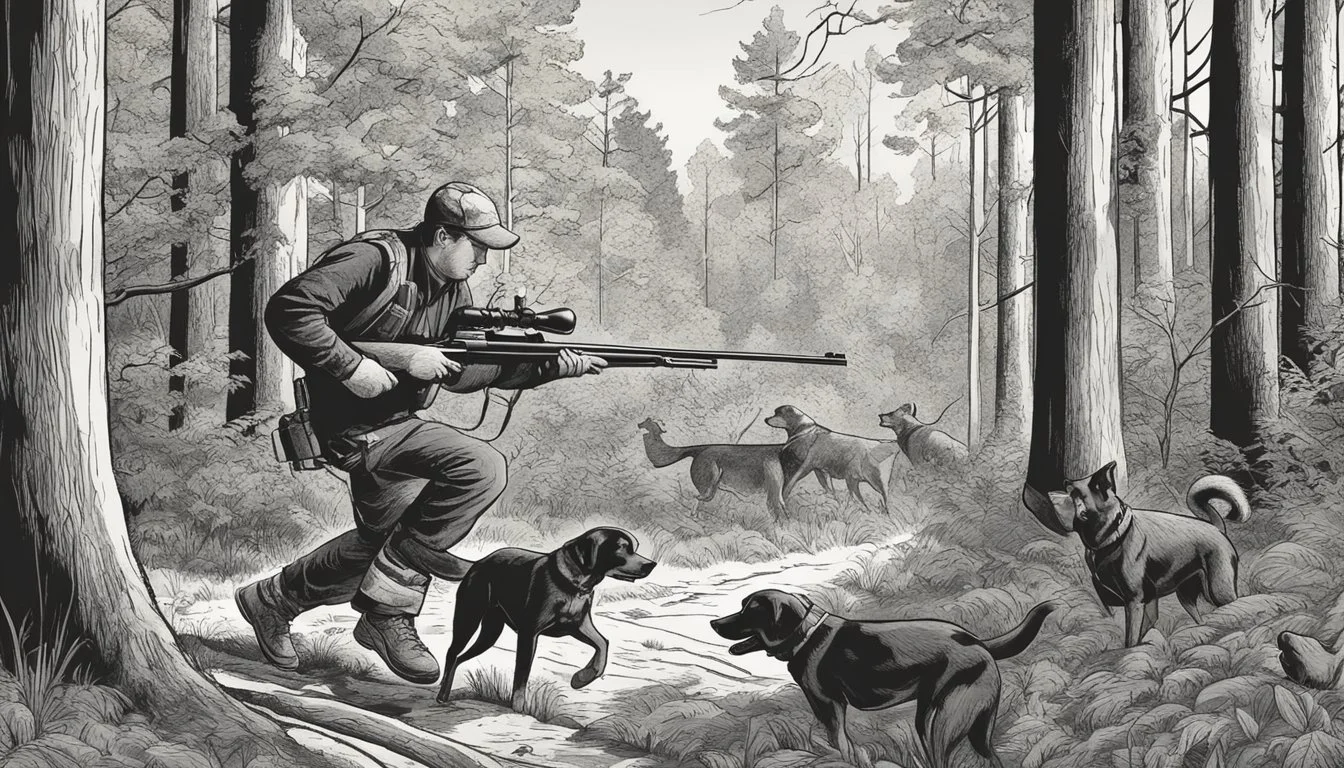
In Virginia, hunting with dogs is a practice with a set of specific regulations designed to balance wildlife management, hunter opportunity, and property rights. While hunting with dogs is permitted in many cases, there are notable restrictions hunters must observe to remain in compliance with the law.
Regulations Overview:
Sunday Hunting: It is prohibited to hunt deer or bear with guns and the assistance of dogs on Sundays.
Trespass Laws: Section 18.2-136 of the Code of Virginia decriminalizes trespass in certain instances relating to dog retrieval, improving relations between landowners and hunters.
Seasonal and Locational Restrictions:
Deer Hunting: Using dogs is not allowed during early archery and early muzzleloader seasons. Certain counties have additional restrictions for the first 14 days of the open deer season.
Protected Times: Hunting deer with dogs is banned on Sundays with a weapon according to § 29.1-521.
Recent Developments:
The Department of Wildlife Resources is undergoing changes that may affect how hunters can use dogs. Officials have proposed new regulations that could adjust the way hunting dogs are managed and allowed on properties. This is partially due to addressing challenges such as dog hunting-related complaints and potential conflicts with non-hunting landowners.
Wildlife Management Considerations:
Hunting with dogs is tightly connected to wildlife management efforts in the state. Officials continue to evaluate and adjust regulations to ensure healthy wildlife populations while accommodating the traditions and methods of Virginia hunters.
Public Involvement:
Recently, the state has opened a comment period to gather public input on proposed regulations, signaling a participatory approach to wildlife and hunting management policy adjustments.
Prohibitions for Specific Persons
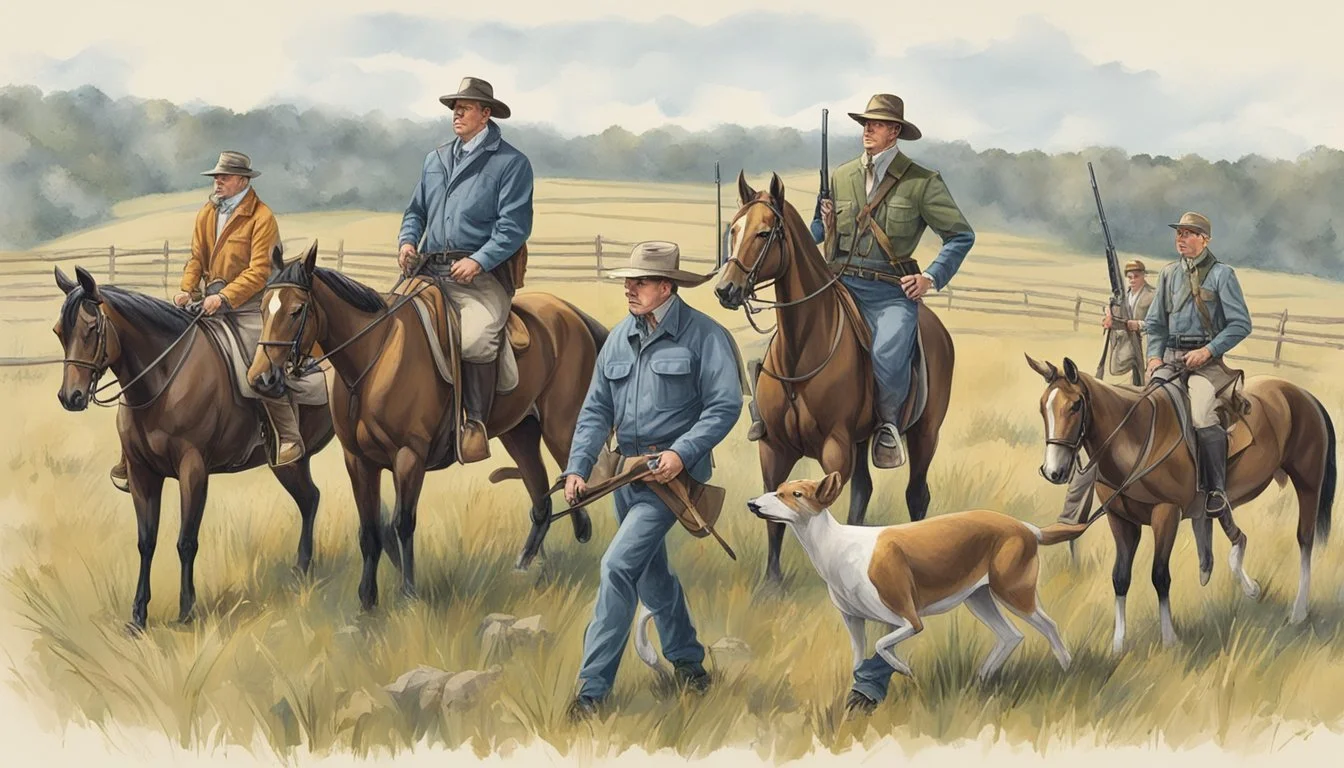
In Virginia, gun laws establish clear boundaries for certain individuals regarding firearm possession and use. Convicted felons are among those who face prohibition. They are not permitted to own or possess firearms, with strict penalties in place for violations.
Regarding mental competence, anyone adjudicated as mentally incompetent or involuntarily committed to a mental institution is also barred from possessing firearms.
A comprehensive background check is required for firearms purchases from licensed dealers, which screens out individuals with a disqualifying history.
While permits are issued for the carrying of concealed handguns, they are granted under the premise that the applicant meets all the necessary legal criteria, including the absence of a restraining order.
Individuals subject to a restraining order—specifically a protective order related to domestic violence—are similarly restricted from possessing firearms during the order's period.
Status Firearm Possession Convicted Felons Prohibited Mental Incompetence Prohibited Under Restraining Order Prohibited during its period Without Background Check Prohibited from purchase Without Proper Permits Prohibited from concealed carry
These prohibitions are designed to enhance public safety and ensure responsible gun ownership and use among hunters and other firearms users in the state. Those affected by these laws have specific pathways, such as legal restoration of rights, to regain their firearm privileges, contingent on fulfilling certain legal requirements.
Special Weapon Restrictions
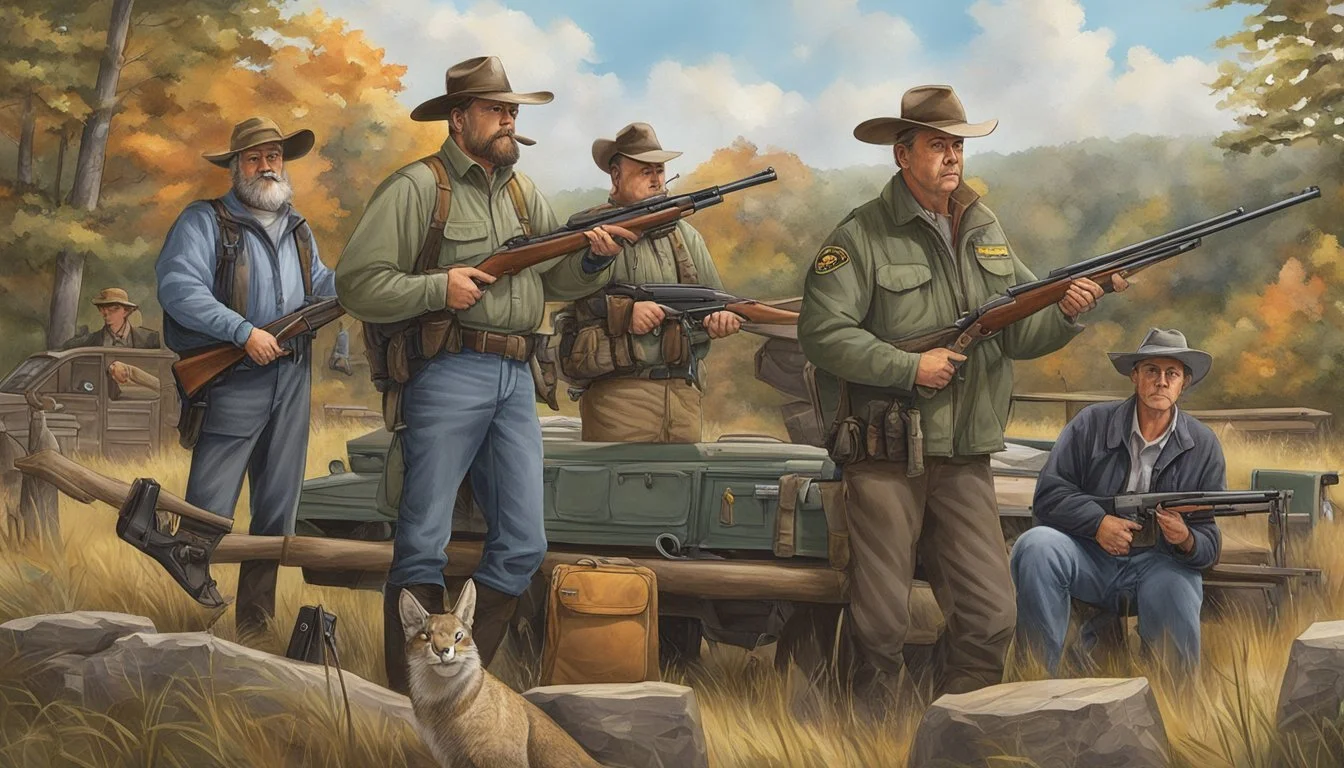
When hunting in Virginia, hunters must be aware of the specific weapon restrictions that govern the use of guns and firearms. There are several key provisions that they need to consider:
Muzzleloading firearms: These are permissible during the muzzleloading and firearms seasons. It's imperative that hunters check for additional details on specific muzzleloading weapons in the bear and deer hunting regulations.
Shotguns: Hunters are authorized to use shotguns for hunting nonmigratory game and crows. However, shotguns must not exceed 10 gauge, and barrels must be at least 18 inches long. Unplugged shotguns are permitted.
Pistols: Legal pistols are those with a caliber of .23 or larger and which generate at least 350 foot-pounds of energy.
Incorporated cities and towns may have their own nuances in firearm regulations, often specifying which types of weapons can be used. Hunters should consult the local ordinances for any special regulations.
The following list outlines prohibited items and activities:
Machine guns are not mentioned for use in hunting, indicating they are not a legal hunting firearm under Virginia's regulations.
Suppressors: Information about the legal use of suppressors in hunting is not explicitly stated in the search results; however, state regulations should be consulted to ensure compliance with the law.
Hunters should always cross-reference current local and state laws as well as the Virginia Department of Wildlife Resources' guidelines before setting out to ensure all equipment and methods are lawful for the hunting season.
Reporting and Responsibilities
In Virginia, hunters have specified responsibilities to ensure the safety and conservation of wildlife. They are required to follow established regulations by the Virginia Department of Wildlife Resources (DWR). Reporting is crucial as it enables the monitoring of game populations and conservation efforts.
Hunters must tag their harvest correctly and report it to the DWR. The process varies depending on the game; however, this typically involves logging the animal through the department's website or by phone. The validation of the tag must be completed before moving the game from the site of the kill.
It's also imperative for hunters to inform conservation police officers of any violations they observe. This includes instances of gun violence or other forms of illegal activity related to hunting. The presence of police officers often acts as a deterrent to such violations.
Entity Responsibility Conservation Police Officer Enforce game laws, handle violations, promote safety Hunters Abide by laws, report harvests, report violations Police Respond to violent incidents, support conservation efforts
Hunters must also understand that they have a role in preventing gun violence. Safe handling of firearms is non-negotiable and an ethical requirement, not just for personal safety but for the safety of others. They need to ensure their firearms are discharged only in lawful circumstances, such as on approved ranges or in designated hunting areas during the appropriate seasons.
The responsibilities in place are designed to promote a culture of safety, legal compliance, and conservation. By adhering to these, hunters contribute positively to the sustainable future of hunting and wildlife management in Virginia.
Legal Recourse and Penalties
Virginia maintains strict enforcement of its hunting laws to prevent any form of violence associated with the use of firearms and archery equipment by hunters. When hunters in Virginia violate hunting regulations, particularly those related to firearms, they face legal consequences which may involve the state's legal and court system.
Penalties can range from fines to more severe punishments, such as jail time, depending on the gravity of the offense. If a hunter is found guilty of hunting with firearms in prohibited areas or during restricted time periods, for instance, they may be subject to significant fines.
Here is a brief overview of potential legal consequences:
Fines: Monetary charges are the most common penalty.
License Suspension or Revocation: Serious or repeated offenses may lead to a temporary or permanent loss of hunting privileges.
Probation: A judge may impose probation that can include restrictions tailored to the nature of the offense, such as mandated hunting education courses.
Incarceration: Although less common, jail time can be a consequence for egregious violations.
Virginia's legal system takes hunting infractions seriously, with the Department of Wildlife Resources (DWR) highlighting that compliance with regulations upholds the safety and sustainability of wildlife populations. When Virginia's hunting laws are breached, cases are typically brought before a court where a judge decides on appropriate recourse, ensuring justice is served in accordance with the severity of the offense.
It is crucial for hunters to stay knowledgeable about the current laws and regulations to avoid legal complications and to ensure the well-balanced ecosystem and safety measures are upheld.
Educational Resources and Training
In Virginia, hunter education is a fundamental component of responsible firearm usage and safety. The Virginia Department of Wildlife Resources (DWR) oversees a comprehensive program that serves both new and experienced hunters. The program's structure ensures participants develop a strong foundation in hunting safety, conservation principles, and sportsmanship.
In-Person Instruction
For those preferring a traditional learning environment, In-person Basic Hunter Education Classes are available and are free of charge. These sessions usually range from 6-8 classroom hours and typically involve hands-on exercises.
Course Content:
Firearm handling
Survival skills
Wildlife conservation
Ethics and sportsmanship
Online Alternatives
An online course is available for learners who either cannot attend in-person or prefer to study at their own pace. As of 2016, Virginia offers a full-online hunter education course which includes:
Core topics covered in classroom courses
Quizzes or tests for knowledge assessment
State-specific regulations and information
To enroll, individuals must be Virginia residents aged 12 or older.
Volunteer Instructors
A network of over 500 trained volunteer instructors collaborates with Conservation Police Officers to train students statewide, reflecting a community-driven approach to education.
Specialty Courses
Besides basic hunter education, additional classes cover a variety of topics:
Game cooking
Tree stand safety
These resources ensure hunters in Virginia are well-equipped with the knowledge and skills to practice their sport safely and responsibly.
Additional Topics of Interest
When discussing Virginia's gun laws for hunters, several additional topics warrant attention. Here are key points to consider:
Sporting Regulations: Hunters must adhere to established sporting regulations, which govern the legal methods of hunting. It is important for hunters to stay current on these rules as they can change annually.
Ammunition and Shells: Virginia may have specific regulations on the types of ammunition and shells used for hunting. Hunters should verify the legal requirements for the game they are targeting, which could include restrictions on lead shot or the necessity of using non-toxic alternatives.
Stalking Laws: Stalking game must be done in compliance with state guidelines, which exist to ensure safe and ethical hunting practices. These laws protect both the hunter and the wildlife.
Hunters' Rights and Responsibilities: Hunters in Virginia must be aware of their rights to hunt, which come with corresponding responsibilities, such as obtaining the proper licenses and respecting bag limits and seasons.
Membership Requirements Note Conservation Groups Many hunters join to promote sustainable hunting. Hunting Clubs Some require memberships for access to private lands.
Landowner Relations: Establishing good relations with landowners is crucial for hunters seeking access to private lands. It’s not uncommon for hunters to secure hunting privileges through memberships or direct permissions.
Hunters should always confirm the legality of their firearms and ensure they follow the latest hunting regulations. Compliance with these laws is key to a responsible and enjoyable hunting experience in Virginia.
Contact Information and Resources
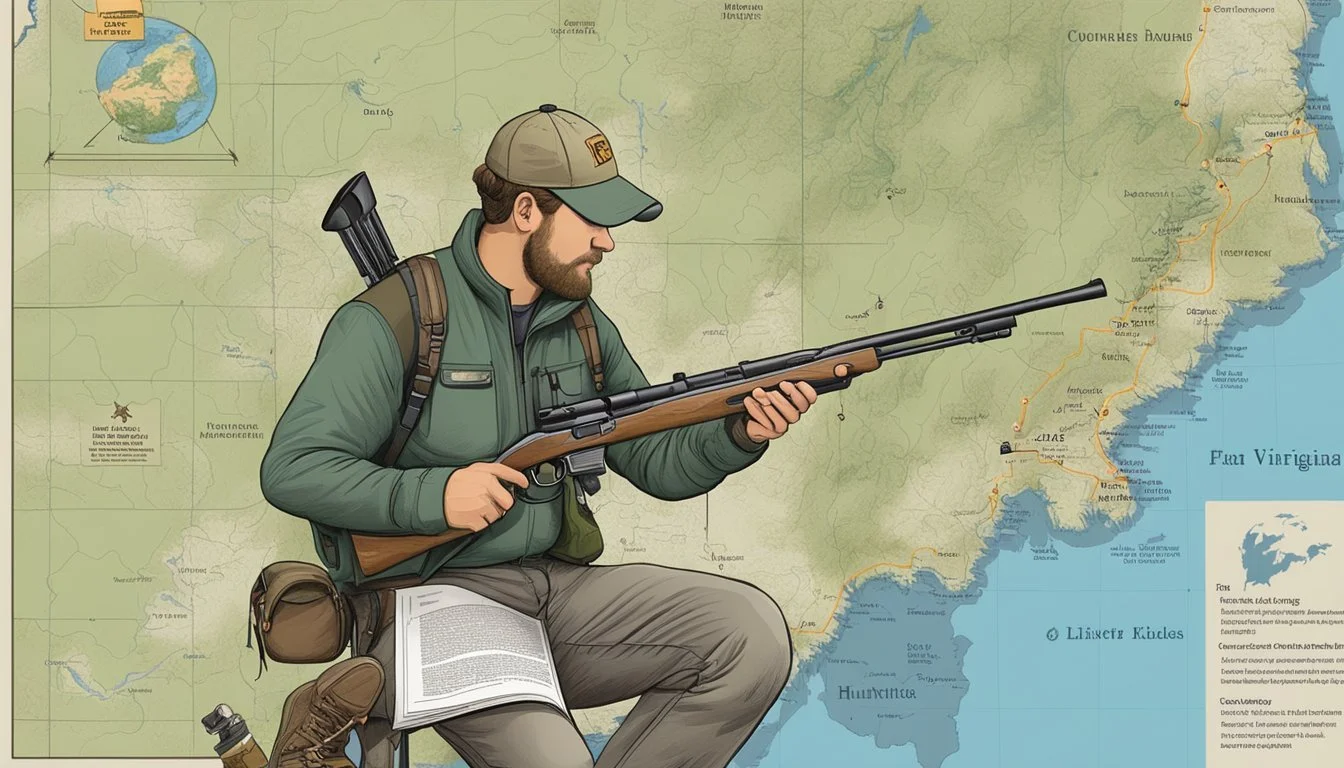
For hunters in Virginia needing clarification on firearms laws or regulations, several resources are readily available. The Virginia Department of Wildlife Resources (DWR) is the primary agency responsible for overseeing hunting regulations in the state. Hunters can acquire detailed information and assistance through the following DWR contact points:
Virginia Department of Wildlife Resources
General Inquiries & Regulation Information
Phone: (804) 367-1000
Web: Virginia DWR Website
Email: info@dwr.virginia.gov
Conservation Police Officers
For direct enforcement questions, Conservation Police Officers serve as the law enforcement arm of the DWR. They ensure compliance with hunting regulations and address any wildlife-related law enforcement issues.
Report Violations
Phone: 1-800-237-5712 or (804) 367-1258
Email: WildCrime@dwr.virginia.gov
Virginia State Police
The Virginia State Police can be contacted for broader firearms law inquiries, including those concerning transportation and ownership.
Firearms Law Questions
Phone: (804) 674-2000
Additionally, hunters are encouraged to review the DWR's published annually:
Virginia Hunting & Trapping Regulations
This compendium outlines specific laws and seasons for the current year, ensuring hunters are updated on regulations.
Hunters requiring education or certification should also visit the DWR site for information on Hunter Education Courses—a requirement for hunters aged 12-15.
By utilizing these contact points and resources, hunters can confidently navigate Virginia's hunting regulations and requirements.
Summary and Future Changes

Virginia's gun laws, as they currently stand within the Commonwealth, cover a range of regulations, including background checks, concealed carry permits, and the types of firearms permissible for hunting. Legislation is an ongoing and dynamic process, as observed with the introduction of proposed changes that emerge regularly.
One notable upcoming legislative proposal is HB 124, which aims to expand the range of guns allowed for big game hunting. This indicates a potential shift towards more inclusive regulations for hunters regarding their choice in firearms. It reflects an understanding of their needs and the evolving perspectives in firearm usage for the purpose of hunting within Virginia.
Gun storage laws are also under scrutiny. A significant proposal suggests that new gun purchases should come equipped with a locking device and safety labels. Should this become law, it represents a substantial step forward in preventing unauthorized access and accidental discharge, thereby increasing safety in environments where firearms are stored.
Furthermore, vigilance concerning anti-gun legislation is evident. The pre-filing of HB2 and SB2 points to the determination of some legislators to introduce more restrictive gun control measures. It underscores the active debate surrounding gun laws in the Commonwealth and the potential for future restrictions.
The trajectory of change in Virginia's gun laws remains closely tied to legislative actions and societal concerns. The future may see laws that balance the rights of hunters with the calls for increased safety and control.
Appendix: Definitions and Clarifications

State Constitutional Provision: Article 1, Section 13 of the Virginia Constitution articulates the right to a well-regulated militia, emphasizing that this entails a populace trained to arms for security purposes.
Firearms Regulations: These are the rules governing the ownership, use, and transportation of firearms within the state of Virginia. They include restrictions on the types of firearms that can be used in various contexts, such as hunting.
Muzzleloading: Refers to a type of firearm that is loaded from the muzzle end (front) as opposed to breech-loaded firearms. Both muzzleloading shotguns and rifles have specific usage guidelines during hunting seasons.
Archery Tackle: This term encompasses all equipment used in archery hunting, including longbows, recurve bows, compound bows, crossbows, sling-bows, and arrowguns/airbows.
Caliber: Indicates the interior diameter of a gun barrel's bore and consequently the diameter of the projectile it fires. For instance, Virginia law stipulates restrictions on the use of rifles larger than .22 caliber for hunting certain game.
Energy Measurement for Pistols: In Virginia, pistols used for hunting must generate a minimum of 350 foot-pounds of energy. This ensures sufficient power for ethical and humane harvesting of game.
Shotgun Regulations: Hunting regulations state that shotguns must not be larger than a 10-gauge, and barrels must be at least 18 inches long. The term "unplugged shotguns" refers to those without a device to limit their ammunition capacity and are legal for hunting certain types of game.
Hunting Seasons: These refer to specific timeframes during which hunters may legally pursue certain types of game. Regulations may vary by season, such as the use of different firearms or hunting methods.
Discharge Restrictions: Certain areas within Virginia may have specific regulations pertaining to the discharge of firearms, such as the prohibition of discharge except on approved ranges.
Table: Selected Legal Use of Firearms in Virginia Hunting
Type Caliber/Gauge Energy Requirement (if any) Specific Restriction Period (if any) Rifle Above .22 rimfire (for groundhogs) N/A March 1 - August 31 Pistol .23 caliber or larger Minimum 350 foot-pounds N/A Shotgun Not larger than 10 gauge N/A Barrel at least 18 inches

