
Gun Laws in Washington for Hunters
Regulations and Compliance Essentials

Washington state offers a diverse landscape for hunters, featuring coasts, mountains, and forests teeming with wildlife. Understanding the gun laws in Washington is crucial for hunters who need to comply with regulations to ensure a responsible and legal hunting experience. The state delineates its firearms laws without a requirement for a license to possess rifles, shotguns, or handguns, nor does it necessitate a license merely to purchase these firearms. In Washington, hunters are expected to adhere to these laws designed with both safety and conservation in mind.
During hunting seasons, Washington hunters can explore the terrain in pursuit of game species as defined by the Washington Department of Fish & Wildlife, which provides a summary of hunting seasons and sets regulations through a public rule-making process. Hunters in Washington may carry firearms for personal protection and open carry is permissible during hunting activities, provided the individual complies with age requirements — being at least twenty-one years old.
For those venturing into the sport of hunting in Washington, it's imperative to stay informed about current regulations, including those related to the types of firearms allowed. Local municipalities may impose additional restrictions affecting the use, possession, or sale of firearms, which necessitates a thorough understanding of both state and local policies before embarking on any hunting excursion.
Historical Overview of Gun Laws in Washington
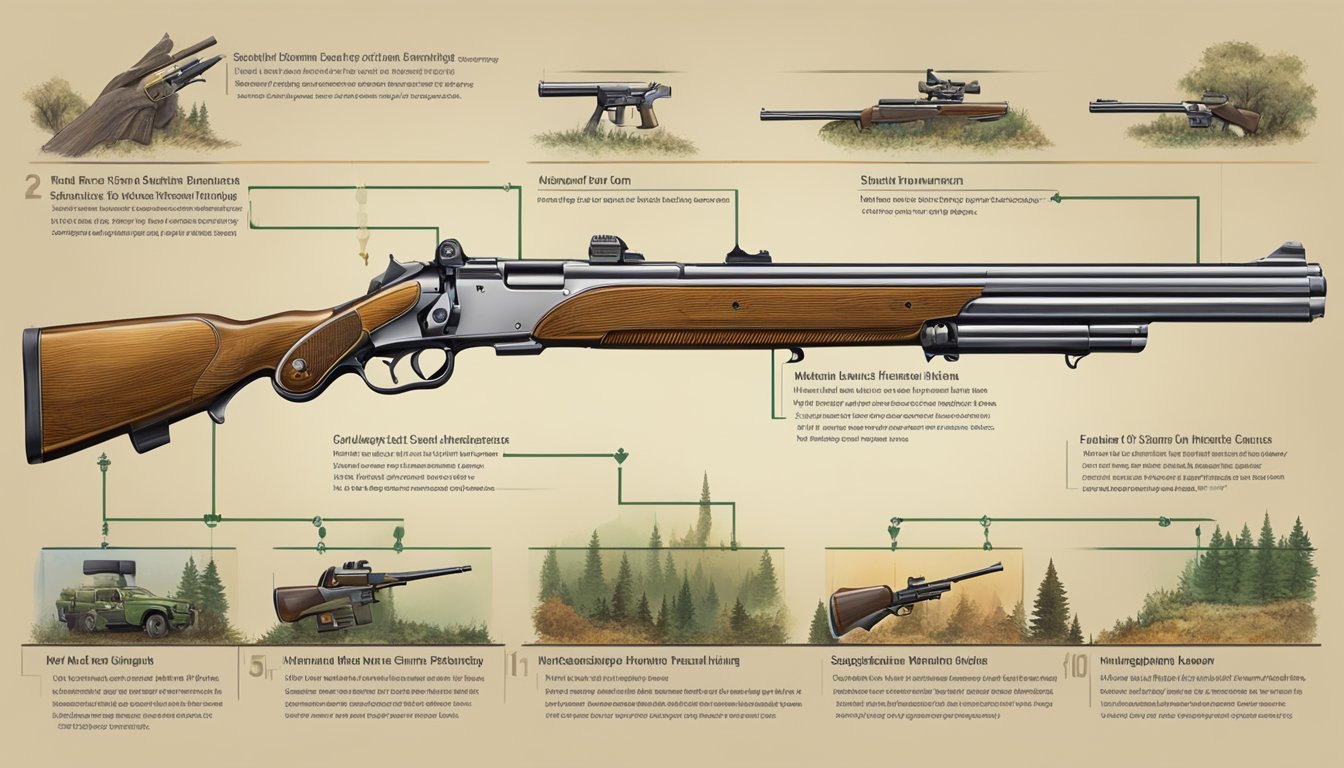
Washington State has been marked by both its protection of individual gun rights as recognized by its constitution and its progressive reinforcement of regulations aimed at increasing gun safety.
Development of Regulations
In the face of rising gun violence, Washington has progressively established laws that regulate the possession and use of firearms. Notably, the state's legislators have paid considerable attention to background checks, integral to the purchase process. Here is a standout regulation:
Washington preempts localities from enacting their own firearms regulations unless explicitly authorized by the state legislature.
Washington made headlines with the introduction of an assault weapon ban. Conceived by Attorney General Bob Ferguson, this legislation was part of a broader initiative to implement stricter gun laws in response to mounting public safety concerns. The ban adds a layer of control in a state that generally does not demand state licenses for the possession of rifles, shotguns, or handguns.
Impact of Legislation
Legislation in Washington has both reflected and prompted public debate on gun control. Measures like the assault weapon ban and expansive background check requirements have been critically shaped by:
Pressure from gun safety advocacy groups,
Legislative action taken by state officials,
Broad public support for more stringent gun restrictions observed through multiple voter-approved initiatives.
These developments signal a shifting landscape where conversations about gun safety regulations continue to evolve, highlighting Washington's role as a state undertaking critical review and reform of gun laws. This trend towards stricter regulations can be anticipated to influence the future of hunting practices, upholding safety as a paramount concern.
General Hunting Regulations

In Washington State, the Department of Fish and Wildlife sets forth regulations that hunters must follow. These rules are designed to manage wildlife populations responsibly and to ensure sustainable hunting practices.
Hunting Seasons and Bag Limits
Hunting Seasons: Each year, specific dates are assigned to various game species during which hunters may legally pursue them. Regulations can differ between the eastern and western parts of the state. For most species, these seasons are split into traditional firearm, muzzleloader, and archery seasons.
Deer and Elk: Specific dates according to species and hunting equipment.
Waterfowl: Seasonal dates are often aligned with migratory patterns.
Bag Limits: Defined as the maximum number of specific game species that a hunter can legally harvest in a set period. These limits are imposed to maintain healthy populations and avoid over-harvesting.
Big Game: Such as deer or elk, typically have a limit of one animal per tag.
Small Game & Waterfowl: May have daily or season-long limits based on species.
Wildlife Conservation and Management
Department of Fish and Wildlife: Tasked with the development and enforcement of hunting regulations. Its aim is to promote wildlife conservation and sustainable wildlife management practices. Hunters contribute directly to conservation efforts through license fees and taxes on hunting equipment.
Conservation Practices: Include habitat restoration and research projects.
Wildlife Management: Involves careful monitoring of animal populations to set appropriate season dates and bag limits that align with conservation goals.
By adhering to these regulations, hunters play a crucial role in preserving Washington's diverse wildlife for future generations.
Licensing and Hunter Education
In Washington, hunters are required to comply with specific licensing requirements and obligatory hunter education programs to ensure safety and conservation practices are upheld. The process necessitates a valid license, which varies depending on the hunter's age and experience level, and completion of education programs is a prerequisite for first-time hunters.
Types of Hunting Licenses
Washington offers several types of hunting licenses:
Regular Hunting License: For residents and non-residents, subject to standard eligibility.
Apprentice Hunting License: Aimed at new hunters as an introduction under the supervision of a licensed hunter.
Junior Hunting License: Available for younger hunters, emphasizing early education in hunting ethics and safety.
Requirements for Obtaining a License
Prerequisites for obtaining a hunting license in Washington are strict:
Evidence of Completion of Hunter Education: A mandatory hunter safety course is required for first-time hunters.
Valid Identification: A photo identification card is required for license verification purposes.
Age Restrictions: Individuals must meet age requirements specific to the type of license they are applying for.
Hunter Safety and Education Programs
Washington's hunter safety and education programs are designed with a comprehensive curriculum:
Online and Instructor-Led Options: Prospective hunters can choose between an online class or an instructor-led course.
Curriculum: Programs cover hunting safety rules, responsible hunting practices, wildlife conservation, and state hunting laws.
Certification: Successful completion is evidenced by a certification, which is necessary to obtain a hunting license.
These programs not only fulfill legal requirements but also instill responsible and ethical hunting practices.
Firearm Specific Laws for Hunters

Washington State maintains specific regulations governing the types of firearms hunters can use, the ammunition allowed, and how firearms must be transported and possessed. Compliance with these rules ensures hunters adhere to safety standards and legal requirements.
Type of Firearms Allowed for Hunting
In Washington, hunters can use both handguns and long guns for hunting. Long guns refer to rifles and shotguns typically used for various game. State law defines pistols as firearms with a barrel length less than sixteen inches or designed to be fired with one hand. Hunters must ensure their rifles have a minimum barrel length of 16 inches to be compliant.
Ammunition and Magazine Restrictions
The state imposes regulations on the type of ammunition and magazine capacity for hunting. While specifics may vary depending on the season and game, hunters are generally prohibited from using ammunition with explosive or tracer elements. Magazine restrictions often limit the number of rounds to promote ethical hunting and safety.
Transportation and Possession of Firearms
Hunters in Washington must abide by laws for the transportation and open carry of firearms. For individuals over the age of twenty-one, open carry is permitted during legal hunting activities. Possession of firearms by minors is allowed when under the supervision of an adult, such as during a hunter safety course. During transport, firearms should be unloaded and secured to prevent accidental discharge.
Washington hunters are expected to be familiar with and adhere to these laws to ensure responsible and lawful hunting practices are upheld.
Special Hunting Situations
When hunters in Washington confront special hunting situations, they must adapt to specific regulations that govern private versus state-owned land, the use of tree stands and hunting blinds, and the employment of traps and baiting.
Hunting on Private vs State-Owned Land
On private lands, hunters must obtain written permission to hunt or retrieve wildlife. Washington law does not require landowners to post signs indicating private property, yet trespassing to hunt is a legal offense with serious penalties. In contrast, state-owned lands are generally open to hunters, but it's crucial to consult regional rules as certain areas may have restrictions.
Hunting from Tree Stands and Hunting Blinds
Using tree stands and hunting blinds is typically prohibited on state-owned properties, except when authorized by permits. Hunters should check with the local wildlife authorities for designated areas where these installations are allowed. On private properties, the use of tree stands and blinds follows the terms agreed upon with landowners.
Use of Traps and Baiting
The regulations for traps and baiting vary in Washington and are often subject to change based on considerations for wildlife populations and their habitats. It is important for hunters to review the current Washington Department of Fish and Wildlife regulations before utilizing these methods to ensure legal compliance.
Safety and Legal Compliance
In Washington State, hunters must navigate a series of laws that ensure the safety and legal compliance of firearms handling. These laws serve to reduce gun violence, ensure responsible ownership, and preserve public safety.
Background Check and Purchasing Laws
Background Check Requirement: Individuals purchasing firearms through licensed firearm dealers must undergo a background check. This process is in place to evaluate if the buyer has any restrictions that would prohibit them from owning a firearm.
Rifles and Shotguns: No state licensing is required to possess these firearms.
Handguns: Purchasers must possess a Concealed Pistol License (CPL) or complete a background check for private sales and transfers.
Legal Restrictions and Penalties
Washington imposes several restrictions to prevent firearm misuse:
Protection Order: Individuals with a protection order against them may not possess a firearm.
Forfeited Firearms: Firearms may be forfeited if the owner is found guilty of certain offenses.
Liabilities: Owners can face legal consequences if they fail to secure firearms properly, leading to unauthorized access and use.
Penalties for breaking firearm laws range from fines to imprisonment, depending on the severity of the offense.
Alcohol Consumption and Firearms
The law is stringent when it comes to alcohol and firearm use:
Alcohol and Firearms: It is illegal to handle or discharge a firearm while under the influence of alcohol or drugs. This precaution aims to prevent accidents and enhance public and personal safety.
Protection of Wildlife and Habitat

Washington State places a strong emphasis on preserving both wildlife and its habitats. The laws encourage responsible hunting behaviors, ensuring that future generations can appreciate the natural resources Washington offers.
Endangered Species and Conservation Laws
In Washington, certain species are classified as endangered, such as the gray wolf, and are provided special protections under state law. Conservation laws dictate that:
Hunting Regulations: Hunters must follow strict regulations regarding wildlife such as bears, elk, deer, and big game to prevent overharvesting.
Protected Species: It’s illegal to hunt any species listed as endangered.
Habitat Protection: Areas critical to the survival of endangered species are protected from undue disturbance.
This framework aims to maintain ecological balance and biodiversity.
Ethical Hunting Practices
Ethical hunting is a core tenet of Washington’s hunting community, involving respect for wildlife and the environment. Ethical practices include:
Respect for Wildlife: Taking only what one needs and avoiding the unnecessary suffering of animals.
Safe and Legal Traps: Traps, if used, must be designed and placed to limit the capture to intended species and to cause the least harm.
Hunt Only with Legal Methods: The use of illegal methods, such as certain baits or electronic calls for migratory birds, is prohibited.
Education: Hunters are encouraged to educate themselves and others, especially newcomers, about hunting safely, knowing and obeying the law.
Hunters are expected to be stewards of the land, ensuring that their actions contribute to the sustainable management of wildlife populations.
Recent Changes to Hunting and Gun Laws
In Washington, significant legislation has been enacted to address gun laws, directly affecting hunters. Recent statutes focus on weapon types, sales processes, and community safety measures.
Updates to State Legislation
In recent years, Washington has seen substantial changes in its gun legislation. One of the pivotal alterations includes a ban on the sale of semi-automatic assault weapons. This category often covers firearms commonly used for hunting, which may impact hunters who prefer certain models of semi-automatic firearms.
Another critical update concerns high-capacity magazines. Washington has set limits on the capacity of magazines, affecting hunters who might use such magazines for hunting. All gun sales now mandate a thorough background check, which includes purchases from a licensed firearms dealer.
The shift in legislation also holds manufacturers and sellers accountable in cases of gun violence, providing a path for suing said parties if a firearm is misused. The state has placed a strong emphasis on community violence intervention programs, aiming to reduce gun violence across Washington.
Table: Key Legislation Updates for Hunters
Legislation Impact on Hunting Effective Date Ban on semi-automatic assault weapons Limits types of firearms hunters can use Signed into law March 26, 2024 Limitation on high-capacity magazines Restricts use of magazines beyond a certain capacity Signed into law March 26, 2024 Background checks for all gun sales Ensures all purchasers are vetted January 1, 2024 Accountability for gun violence Allows lawsuits against manufacturers/dealers March 26, 2024, and onwards
Current Discussions and Proposals
There is ongoing discourse in Washington's legislature regarding further changes to hunting and gun laws. One of the discussions revolves around possession of assault weapons. Although sales are banned, the specifics of possession for existing owners are under review. The state is exploring how to reconcile this with hunters' needs while ensuring public safety.
Proposals are also being evaluated about expanding background checks, possibly impacting how hunters acquire firearms in the future. These discussions could lead to stricter regulations on the transfer of firearms, even amongst private parties.
The discourse in Washington aims to balance the rights of hunters with the necessity of preventing gun violence. As such, hunters in Washington should stay informed on legislative developments to understand how their hunting practices and equipment choices may be affected.
Age-Specific Regulations
In Washington state, gun laws for hunters are stringently regulated with explicit age-specific guidelines. These regulations ensure that all hunting activities comply with legal standards, providing safety for both the hunter and the community.
Minors and Firearms
Washington state stipulates that minors must be at least 12 years old to engage in hunting activities. They categorize anyone below 18 years of age as a minor. When minors between 12 and 13 years old participate in hunting, they must do so in the presence of a licensed hunter aged 21 or older. Firearms, archery equipment, or crossbows can be used by minors for hunting; however, they must adhere to the particular rules set for each method:
Firearms: Allowed with supervision for minors 12-13 years old
Archery/Crossbow: Permitted following specific equipment regulations
Senior Hunter Provisions
While there appears to be no specific provisions mentioned for senior hunters in the provided search results, it is crucial for senior hunters to be aware of any potential changes in regulations that might affect their hunting practices. All hunters, regardless of age, should stay informed on current laws to ensure compliance.
Reciprocal Hunting Rights

When discussing hunting rights, an often-overlooked aspect is the concept of reciprocity. Reciprocity in hunting refers to the mutual recognition of hunting licenses between two or more states. However, it's important to note that the state of Washington currently does not have reciprocal hunting agreements with other states.
Washington Department of Fish and Wildlife (WDFW) oversees hunting regulations within Washington State. Hunters must abide by WDFW's rules, which stipulate that anyone hunting in Washington must possess a valid Washington hunting license, regardless of their state of residence.
Hunters should be aware of the following key points regarding non-resident hunting in Washington:
License Requirements: Non-residents must purchase the appropriate Washington hunting license and tags.
Hunter Education: They may also need to show proof of completing a hunter education program.
Special Permits: Certain game may require special permits or tags.
Washington offers a diverse range of wildlife and habitats, enticing hunters from across the country. Non-residents are welcome to enjoy these hunting opportunities, provided they comply with the state's hunting regulations.
For those who are new to hunting in Washington, the WDFW provides resources and information on hunter education programs and licensing. While the absence of reciprocal hunting rights requires non-residents to obtain a Washington license, the state’s commitment to conservation and ethical hunting practices ensures a fair hunting experience for all.

