
Gun Laws in West Virginia for Hunters
Regulations and Compliance Essentials

West Virginia upholds a strong tradition of gun ownership and hunting, which is reflected in the state's firearm regulations. The West Virginia State Constitution recognizes the right of individuals to keep and bear arms for defense, as well as for lawful hunting and recreational use. The state's hunting community must be well-acquainted with the relevant laws to ensure a safe and legal hunting experience. For instance, it is important to note that West Virginia allows the private sale of firearms without requiring a background check, as long as the purchaser is not a prohibited person.
When preparing for hunting season in West Virginia, hunters should familiarize themselves with the latest rules and guidelines which are updated annually. These rules cover a range of topics, including licensing requirements, hunting seasons, and specific hunting regulations that may vary from year to year. Adherence to these regulations not only promotes personal responsibility but is also crucial for wildlife conservation efforts and the safety of all individuals involved.
Overview of West Virginia Gun Laws

West Virginia's gun laws are defined by a strong tradition of gun ownership rights, emphasizing the freedom to carry firearms for personal defense and hunting purposes. These laws are supported by both state constitution provisions and federal law.
State Preemption of Firearms Laws
West Virginia operates under a state preemption model, which means that the state government retains exclusive authority over firearms laws. Municipalities, therefore, cannot enforce gun ordinances that are stricter than state laws. This preemption ensures consistency of firearm regulations across all local jurisdictions within the state. The governing body for firearms legislation is the state legislature, which sets the rules and restrictions that apply uniformly.
Uniformity: Preemption provides consistent firearm laws state-wide.
Authority: Only the state legislature can regulate firearms laws.
Constitutional and Legal Foundations
The foundation of gun laws in West Virginia is rooted in both the Second Amendment of the U.S. Constitution and Article 3, Section 22 of the West Virginia State Constitution. The state constitutional provision explicitly recognizes the right of individuals to keep and bear arms for the defense of self, family, and home, as well as for hunting and recreational use. These constitutional rights are subject to federal law which governs the broader aspects of firearm regulation across the United States.
Second Amendment: Provides a constitutional right to bear arms.
Article 3, Section 22: A specific state constitutional provision upholding the right to bear arms in West Virginia.
Eligibility and Requirements for Gun Ownership
In West Virginia, hunters and other individuals looking to own firearms must adhere to specific state regulations regarding age, background checks, and restrictions for convicted individuals. These requirements are designed to promote responsible gun ownership.
Age Restrictions and Child Access Prevention
West Virginia mandates that an individual must be at least 18 years old to purchase a long gun. For handguns, federal law aligns with the state in requiring individuals to be at least 21 years of age. West Virginia does not have specific laws regarding child access prevention; however, responsible storage of firearms is encouraged to prevent access by minors.
Background Checks and Firearm Registration
There is no requirement for firearm registration in West Virginia, and private firearm sales do not necessitate a background check. However, federal law requires licensed dealers to conduct background checks on all individuals purchasing firearms. This includes checks through databases such as the National Instant Criminal Background Check System (NICS), which screens for prohibitive criteria.
Prohibitions for Convicted Individuals
Persons who are prohibited from possessing firearms in West Virginia are those who:
Have been convicted of a felony.
Are mentally incompetent or have been admitted to a mental institution.
Are subject to a domestic violence protective order.
It is unlawful to sell, give, rent, or lend a firearm to someone known to fit any of these prohibitions.
Types of Firearms and Ammunition
West Virginia's gun laws impact hunters specifically in the categories of firearm and ammunition types permitted for use. These cover a range of firearms, from handguns to long guns, as well as rules pertaining to magazine capacities and the sale of ammunition.
Regulations on Handguns and Long Guns
In West Virginia, hunters must adhere to state laws that distinguish between handguns and long guns. Handguns, typically used for self-defense, require no state permit to carry concealed. Long guns include rifles, which are commonly used for hunting due to their accuracy over longer distances, and shotguns, which are preferred for bird hunting. There are currently no specific state laws in West Virginia regarding the transfer or possession of rifles and shotguns by law-abiding individuals.
Magazine Capacity and Prohibited Weapons
The state of West Virginia does not impose any restrictions on magazine capacity for firearms. Residents can own firearms with any magazine size, meaning there is no limit on the number of rounds a magazine can hold. Certain prohibited weapons, such as machine guns and other fully automatic weapons, are regulated under federal law. However, the term assault weapon law is not defined by West Virginia state legislation, thus no state-specific regulations apply in this context beyond federal laws.
Ammunition and Components
Ammunition regulations in West Virginia are relatively minimal. There are no state laws requiring a license to sell ammunition, and while public display or sale of ammunition in view of passersby on streets or alleys is prohibited, other forms of sale are not regulated. Hunting regulations, which can differ from general firearm laws, may specify acceptable types of ammunition for hunting certain game. The state does not regulate components like gunpowder or explosives, but purchasers must comply with federal laws concerning the purchasing and handling of these materials.
Concealed and Open Carry Laws
In West Virginia, variations in gun laws cater to both concealed and open carry preferences, providing legal avenues for residents and hunters to possess firearms. The state practices permitless carry for qualified individuals and has distinct stipulations for open carry, particularly concerning the method of carry within vehicles.
Permitless and Concealed Carry
West Virginia allows permitless carry for individuals who are 21 years old and over and who are legally entitled to own a firearm under both state and federal law. Despite the permitless carry option available in West Virginia, the state does offer a Concealed Handgun License (CHL), which can enhance reciprocity with other states and is issued on a shall-issue basis.
Age Criteria:
Permitless carry: 21 years and over
CHL holders: 21 years and over for residents, non-residents ineligible
Residency Requirements:
U.S. citizenship or legal residency
Prohibitions:
No firearms sold, given, or lent to persons prohibited from possessing them
Open Carry Regulations
Open carry in West Virginia is legal without the need for a license. Individuals must be at least 18 years old to open carry if they are legally entitled to possess a firearm. Restrictions come into play with the type of firearm carried; for example, the possession of assault weapons such as machine guns and certain semi-automatic firearms is prohibited.
Legal Age for Open Carry:
Minimum 18 years old
Prohibitions:
Manufacture, possession, and use of assault weapons restricted
Carrying Firearms in Vehicles
When carrying firearms in vehicles, West Virginia law distinguishes between open carry and concealed carry:
Open Carry in Vehicles:
Legal without a permit
Firearms must not be concealed from ordinary view
Concealed Carry in Vehicles:
Legal with or without a CHL
If without a CHL, the individual must be legally allowed to possess a firearm and meet the state's age requirement
Loaded firearms in the vehicle are considered concealed
Laws are subject to change, and hunters are advised to verify current regulations and reciprocities with other states if traveling.
Self-Defense Laws
West Virginia upholds certain measures to ensure a person’s right to self-defense, particularly for those who hunt and may face dangers in remote areas. These laws provide a structure for when and how individuals can protect themselves, their family, and property within the state.
Castle Doctrine and Stand Your Ground
Castle Doctrine: In West Virginia, the Castle Doctrine is a legal principle that permits individuals to use force, including deadly force, in self-defense when they are legally inside their home, without the duty to retreat. This principle is extended to also include one’s office or vehicle, recognizing these places as part of an individual's "castle".
_Duty to Retreat:* West Virginia does not require individuals to retreat if they are attacked in a place where they have a legal right to be.
Defense of Property and Persons
Defense of Property: While defending property, individuals in West Virginia may use reasonable force to prevent theft, vandalism, or trespassing. However, use of deadly force in defense of property alone is not legally justified unless there is a concurrent, immediate threat to personal safety.
Defense of Persons: When it comes to defending themselves or others, West Virginia law allows individuals to use force that they reasonably believe is necessary to prevent or terminate the unlawful entry or attack. The law is designed to protect those acting in self-defense from legal consequences, provided their actions are deemed reasonable under threat.
_Stand Your Ground in Public:* West Virginia does not specifically codify a "Stand Your Ground" law in public spaces, but the principles akin to "Stand Your Ground" are woven into the state's self-defense statutes, allowing individuals to defend themselves without retreating, under reasonable circumstances.
Hunting Laws and Regulations
In West Virginia, hunters are required to adhere to specific laws and regulations regarding the use of firearms during different hunting seasons, including those for bear and boar. These rules ensure that hunting practices are safe and sustainable.
Hunting with Firearms
Hunters in West Virginia must possess a valid hunting license for the corresponding game they intend to hunt. Firearms should be used in a responsible manner, adhering to the stipulations of both local and state hunting seasons, which define the types of game allowed to be hunted at various times of year.
Bear Seasons: Specific regulations govern the bear hunting seasons.
Boar Seasons: A different set of guidelines is applicable for boar hunting.
During certain times, the law may dictate specific firearms to be used for different game to manage population and safety.
Firearms Restrictions during Hunting
The following restrictions are imposed on the use of firearms in hunting:
Vehicle Transport: It is against the law to transport an uncased gun in or on a vehicle between 5 p.m. and 7 a.m. EST from October 1 to June 30; and between 8:30 p.m. and 5 a.m. EST from July 1 to September 30.
Sunday Hunting: Transporting an uncased or loaded gun after 5 a.m. on Sundays is prohibited in counties that do not allow Sunday hunting, with exceptions for use at a recognized firearm range or for trapping.
Trap and Net Prohibitions: The use of traps, nets, or firearms for hunting must comply with WV gun laws to prevent illegal poaching and ensure the conservation of wildlife.
It's important for hunters to stay informed about the precise dates, permissible weaponry, and hunting methods for different seasons through the West Virginia Division of Natural Resources or similar authoritative sources.
Legal Implications and Penalties

Understanding the legal implications of firearm use and the penalties for non-compliance is crucial for gun owners in West Virginia. This section clearly elucidates the specifics regarding violations, potential punishments, and the legal processes available for appeals.
Violations and Punishments
In West Virginia, gun owners who violate state gun laws may face serious repercussions. The consequences of unlawful possession, transfer, or use of firearms can range depending on the severity of the infraction:
Selling, giving, renting, or lending a firearm to a person prohibited from possession could lead to legal action.
Carrying a deadly weapon without a license or authority, particularly if the individual is under age 21, is classified as a misdemeanor. This infraction may result in imprisonment for up to 12 months, a fine between $100-$1,000, or both.
When the violation involves a felony, the consequences are significantly harsher, often leading to lengthier terms of imprisonment and larger fines.
Any involvement in gun violence could lead to increased penalties, reflecting the seriousness of such offenses.
Legal Recourse and Appeals
If a person is convicted for a gun law violation, they have the right to appeal the decision. The appeal process involves:
Filing a notice with the circuit court.
The convicted individual can request a review of the legal process and the verdict. If there were errors in law application or procedure, they could be grounds for appeal.
It is the responsibility of the sheriff or a relevant law-enforcement organization to enforce gun laws. However, these entities are also required to follow strict legal procedures. If an individual believes their rights were infringed upon during the enforcement process, they may challenge the actions of the authorities through legal channels.
Legal penalties are applied based on the adherence to or violation of specific state ordinances. For all legal proceedings, the rights of the accused must be protected, and the due process of law must be maintained.
Interactions with Law Enforcement
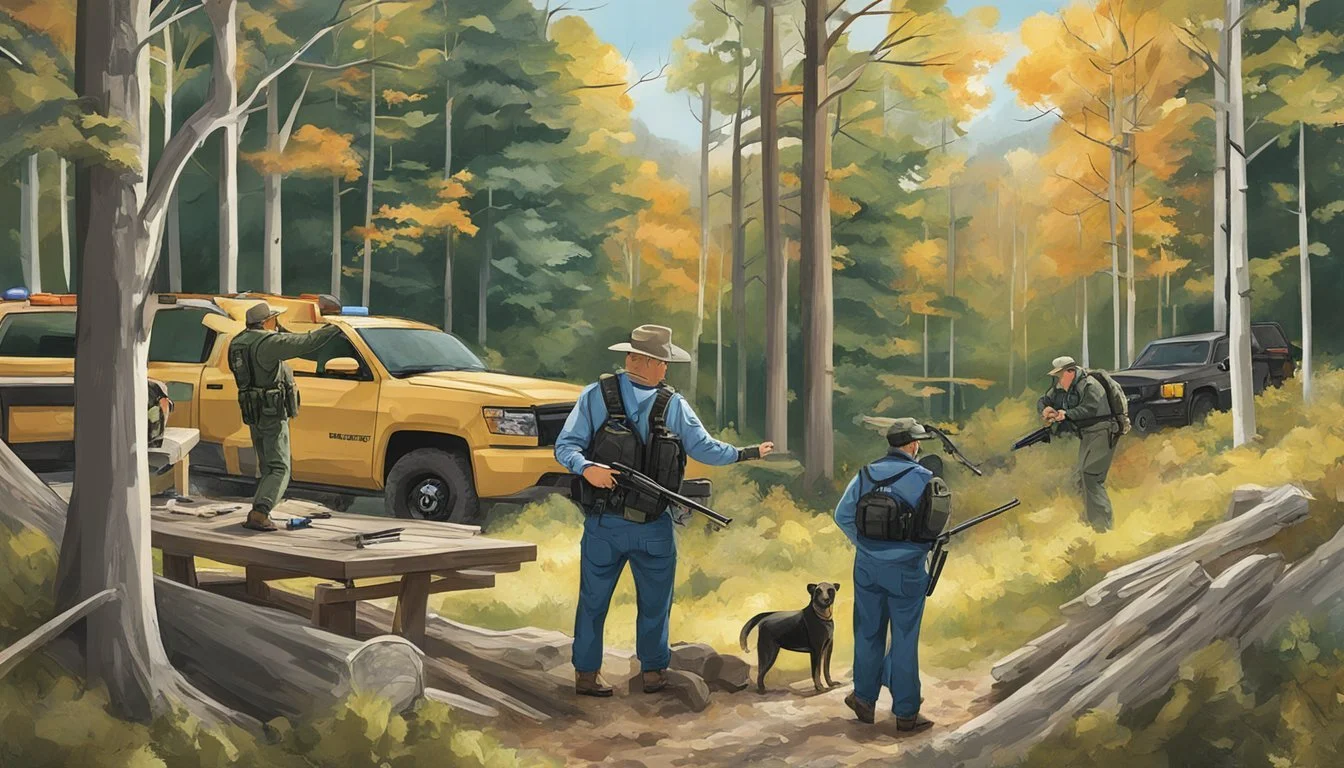
When hunters in West Virginia have encounters with law enforcement, it's important that they understand the requirements and expectations regarding disclosure and documentation.
Disclosure and Documentation during Encounters
During interactions with law enforcement—whether it's with a sheriff, state, or local police—hunters are generally required to disclose that they are carrying a firearm if stopped for a law enforcement purpose. In West Virginia:
Disclosure: While the state does not have a statute that mandates hunters to inform a law enforcement officer about the presence of a firearm during a traffic stop or other encounters, it is considered good practice to do so voluntarily. This action is perceived as a courtesy and can facilitate a more transparent and straightforward interaction.
Documentation: Hunters must carry any relevant licenses or permits with them. This may include:
A valid hunting license.
A firearm permit if applicable.
Proof of completion of a hunter education course.
Hunters must present these documents upon request by any law enforcement officer. Not having the required documents can result in penalties or inability to continue hunting. Enforcement is typically carried out by the West Virginia Division of Natural Resources Police Officers, who specifically deal with hunting regulations and conservation laws.
Additional Considerations for Gun Owners
When navigating gun ownership in West Virginia, individuals must be mindful of specific regulations that govern the interaction of firearms with certain substances and the exceptions applicable to different groups of people. Additionally, adherence to training and educational directives promotes responsible gun ownership.
Alcohol, Drugs, and Firearms
West Virginia law prohibits the possession or use of firearms while under the influence of alcohol or any controlled substance. Gun owners should be aware that:
Alcohol: It is unlawful to carry or use firearms while one has an alcohol concentration in his or her blood of 0.08 percent or more by weight.
Controlled Substances: The presence of any amount of a controlled substance in the body while handling firearms is strictly forbidden.
Military and Law Enforcement Exceptions
Military and law enforcement personnel are subject to certain exceptions under West Virginia gun laws:
Armed Forces and Reserve: Active members of the Armed Forces, the Reserve, or the National Guard may be exempt from specific state gun restrictions when on duty or traveling for duty.
Law Enforcement: Law enforcement officers might have different carrying privileges and may carry their assigned firearms in a manner consistent with their training and departmental regulations.
Training and Education Requirements
For a safe and legally compliant hunting experience, gun owners should consider the importance of proper training:
Gun Safety Training: While West Virginia doesn't mandate training for all gun owners, individuals may benefit from courses offered by the National Rifle Association (NRA) to enhance gun safety and handling skills.
Training Course: Those seeking a concealed carry permit may need to complete a safety training course that covers handling and shooting a firearm, storing a firearm for home safety, and applicable laws relating to carrying a firearm.
Reciprocity and Recognition of Out-of-State Permits
The state of West Virginia acknowledges the validity of concealed carry permits from other states under specific conditions, facilitating a clear process for permit holders who wish to carry handguns within its borders.
Concealed Carry Permit Reciprocity
Reciprocity allows individuals with a valid out-of-state permit to carry a concealed handgun in West Virginia, provided they meet certain criteria:
The permit holder must be at least twenty-one years old.
The issuing state must grant West Virginia permit holders the same rights.
This mutual recognition ensures that hunters and other firearms enthusiasts can travel into West Virginia with confidence that their out-of-state permits will be respected, subject to local regulations. Permit holders are still advised to verify the current status of reciprocity agreements and be aware of any county-specific constraints.
States that recognize West Virginia's concealed handgun licenses include, but may not be limited to:
Reciprocal States: These states have agreed to recognize West Virginia concealed carry permits.
States with Restrictions: Some states may impose conditions, such as not recognizing permits from non-residents of West Virginia.
To maintain compliance and avoid legal issues, permit holders should directly contact the states to which they plan to travel. This is crucial to ensure the recognition status of their permits and to understand any restrictions that may apply.
Renewing and Updating Licenses
In West Virginia, hunters are required to keep their licenses current and ensure their personal information is up-to-date. This section provides clear procedures for both renewing licenses and making changes to personal information.
License Renewal Procedures
To renew a hunting license in West Virginia, individuals must follow a set procedure. They can renew their licenses through the Electronic Licensing & Game Check System, which permits both residents and non-residents to conveniently renew online. The renewal process involves:
Logging in with one's DNR ID Number.
Following the prompts to renew the license for the new season.
Completing the payment process.
Printing the updated license immediately upon payment confirmation.
Renewal should be completed before the license expires to maintain uninterrupted hunting privileges.
Changes in Personal Information
It is important for hunters to update their personal information promptly if there are changes to their name, address, or other important details. To update personal information, the license holder must:
Access the Electronic Licensing & Game Check System.
Provide the necessary login credentials.
Navigate to the personal information section.
Submit the updated information following the system's guidance.
These steps ensure that the hunter's records reflect the current and correct information, which is crucial for staying compliant with hunting regulations and receiving timely updates from the West Virginia Division of Natural Resources.
Firearms and the Political Climate
The interplay of state and federal legislation, influenced by political debates and public opinion, forms the contours of gun laws in West Virginia.
Political Debates and Gun Legislation
West Virginia's gun legislation is often at the forefront of political discourse, reflecting a strong cultural affinity for Second Amendment rights. Legislative sessions regularly examine gun laws, balancing public safety concerns with constitutional freedoms. Recent controversies include discussions around Constitutional Carry laws, which allow individuals to carry concealed firearms without a permit. The state has passed such laws, aligning with a trend among several other states.
Lobbying Groups and Public Opinion
Lobbying groups such as the National Rifle Association (NRA) exert significant influence on public opinion and legislative agenda surrounding firearms. The NRA's involvement in promoting and defending gun owner rights often results in substantial support for less restrictive gun laws in West Virginia. Public sentiment in the state leans towards pro-gun policies, largely in favor of upholding Second Amendment guarantees.
State vs. Federal Law Interplay
The dynamics between state and federal law exhibit intricacies, particularly when local ordinances conflict with federal law. West Virginia lawmakers have proposed a resolution to limit the enforcement of federal gun control measures that are viewed as overreach, supporting the state's resolution to protect firearm possession rights. This includes the potential conflict with National Firearms Act (NFA) regulated weapons and federal mandates on federally licensed firearm dealers. Additionally, peaceable journey laws allow for the transportation of firearms across state lines, adding another layer of complexity to the state-federal relationship.
Private Sales and Gun Shows
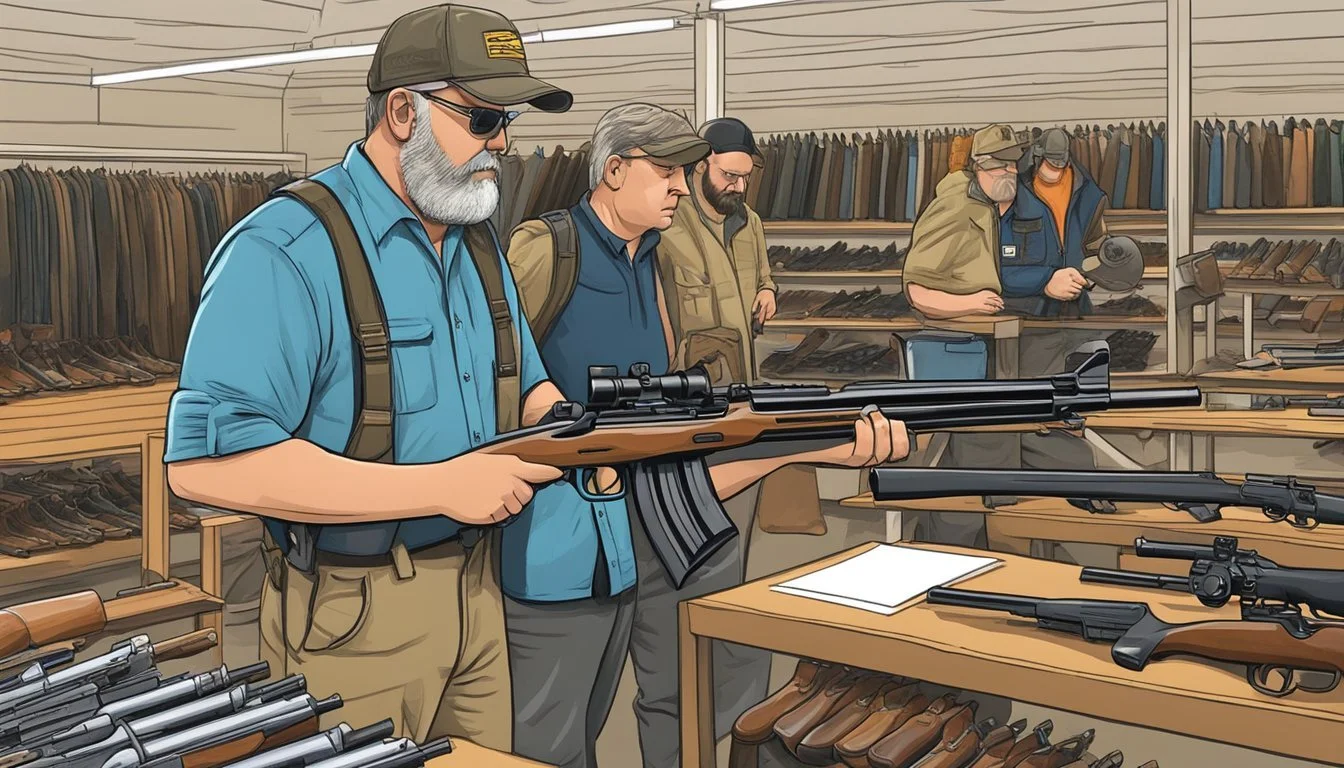
In West Virginia, hunters should be aware that state law impacts how firearms can be acquired through private sales and at gun shows, with distinct regulations and requirements governing each mode of transaction.
Regulations on Private Firearm Sales
Under West Virginia law, individuals are allowed to sell firearms privately without the need for an owner license for the transaction. Importantly, federal law still applies, meaning that the buyer must not be prohibited from gun ownership. Private sellers in West Virginia are not mandated to conduct background checks, but it is highly recommended to ensure compliance with all state and federal laws.
Requirements at Gun Shows
When purchasing firearms at gun shows in West Virginia, the seller's compliance with state and federal law is essential. Although there is no owner license requirement for private sellers, federal law requires licensed dealers to conduct background checks on purchasers. Buyers should expect that dealers at gun shows will adhere to these regulations:
Licensed Dealers: Must perform background checks on purchasers.
Private Sellers: No background checks required but advised.
For hunters in West Virginia, understanding these regulations is an important step in ensuring lawful gun ownership and responsible hunting practices.
Regulatory Agencies and Resources

Hunters in West Virginia need to understand the various regulatory agencies and resources at their disposal. These entities play pivotal roles in the regulation and education of hunting and firearm usage within the state.
State Regulatory Bodies
West Virginia Division of Natural Resources (WVDNR): This is the primary state agency responsible for managing and regulating hunting seasons, rules, and wildlife conservation efforts. The WVDNR ensures that hunting practices are sustainable and establishes the necessary regulations that all hunters must follow.
West Virginia State Capitol Complex: This facility houses the main offices of the WVDNR where hunters can obtain information on hunting regulations, licenses, and permits.
Educational and Support Organizations
National Rifle Association - Institute for Legislative Action (NRA-ILA): The NRA-ILA offers resources regarding state gun laws and regulations, providing pertinent information to gun owners and hunters about their legal responsibilities.
Educational Programs: Both the WVDNR and NRA-ILA offer hunter education courses and resources to ensure hunters are well-informed about safety practices, ethical hunting, and current regulations.
Law Enforcement and Legal Framework:
Law-Enforcement Organization: Hunters should be aware that the West Virginia Natural Resources Police, a division of the WVDNR, enforce hunting and fishing laws and are integral in upholding the conservation efforts throughout the state.
Circuit Court: Any legal disputes or serious violations of the hunting regulations may be settled in the circuit courts, and they are the entities that handle the legal proceedings relating to violations of wildlife management laws.

