
Ingredient Dupes vs True Substitutes
Understanding Key Differences in Cooking and Baking

When it comes to choosing alternatives for recipes, skincare, or perfumes, the terms "ingredient dupes" and "true substitutes" are often used interchangeably, but they aren’t the same. Ingredient dupes closely mimic the original product’s key components or effects, while true substitutes are intended to deliver an equivalent outcome, even if their formulas or properties differ. This distinction matters whether someone is swapping out a costly serum, adapting a recipe, or choosing a budget fragrance.
Understanding the gap between dupes and substitutes helps consumers make more informed decisions. A dupe typically has similar ingredients or characteristics to the original but may use different sources or slightly altered formulas. Substitutes, on the other hand, aim to fill the same role, regardless of similarity, which can affect results and overall experience.
Grasping these differences can impact effectiveness, safety, and satisfaction. Readers interested in maximizing value without compromising results will find that knowing when to use a dupe versus a substitute is key to smart shopping and better outcomes.
Defining Ingredient Dupes
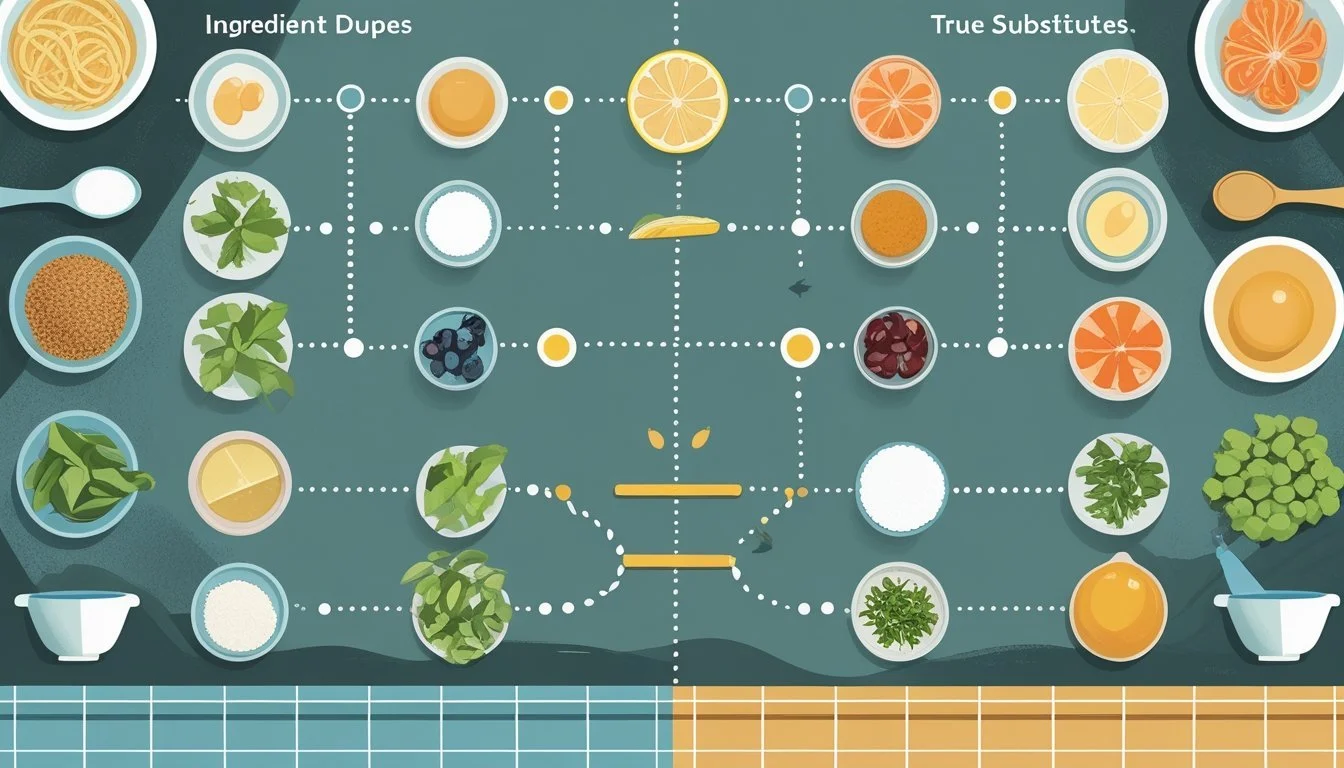
Ingredient dupes are commonly found in both skincare and food, allowing consumers to find lower-cost alternatives with similar functions or results. They are matched primarily based on ingredient lists, but not all dupes deliver identical performance or quality.
Characteristics of Dupes
A dupe, short for "duplicate," is a product created to closely mimic the ingredients, appearance, and sometimes the effects of a more popular or expensive item. In skincare, dupes often highlight similar active ingredients, such as hyaluronic acid or niacinamide, at a reduced price.
While ingredient lists between dupes and original products may look nearly identical, manufacturing processes and ingredient quality can differ. Dupes may use different concentrations of active ingredients, which can impact effectiveness. Packaging, scent, and texture may also be similar, but are not always exact.
Price is typically the most noticeable difference. Consumers choose dupes to save money or make a skincare routine more affordable. However, it's essential to check ingredient labels for potential allergens or irritants not found in the original.
Dupe Examples in Skincare and Food
In skincare, common dupes include budget-friendly moisturizers and serums that replicate cult-favorite products. For example:
Original Product Common Dupe Key Shared Ingredient La Roche-Posay Cicaplast CeraVe Healing Ointment Panthenol The Ordinary Niacinamide Good Molecules Niacinamide Niacinamide
In makeup, a lower-cost lipstick may match a luxury brand in shade and finish, but could vary in long-term wear.
Food dupes often arise when a specific ingredient is unavailable or costly. Bakers might use Greek yogurt instead of sour cream, or applesauce in place of oil when baking cakes. These swaps aim to preserve texture and taste while managing price or diet.
Careful reading of ingredient lists helps consumers find effective and safe dupes in both beauty and cooking.
Understanding True Substitutes
True substitutes replace an ingredient by matching both function and, when possible, taste or texture. They are especially important in baking and cooking, where a missing ingredient can affect structure, taste, or consistency.
How Substitutes Differ from Dupes
A true substitute is chosen because it performs the same role in a recipe as the original ingredient. For example, oil can substitute for butter in baking, providing needed fat and moisture. This differs from a "dupe," which often imitates appearance or flavor but may not function identically.
The effectiveness of a substitute often depends on the ingredient list and the recipe’s purpose. Milk alternatives like soy milk or almond milk can serve as direct substitutes for dairy milk in most cases, maintaining a similar texture and consistency. True substitutes must also align with dietary restrictions or allergies, making them safe for the intended audience.
Common True Substitutes in Baking and Cooking
Several ingredients frequently act as reliable substitutes in the kitchen. In baking, applesauce is sometimes used in place of oil or butter to lower fat content while maintaining moisture. For each cup of oil, about three-quarters of a cup of applesauce can be used.
Butter can often be swapped with equal amounts of margarine or plant-based spreads, especially for lactose-free recipes. Different types of milk—such as oat, almond, or soy milk—can replace cow’s milk at a one-to-one ratio in most recipes.
Below is a simple table summarizing a few common swaps:
Original Ingredient True Substitute Usage Ratio Butter Oil (vegetable/canola) 1 cup : ¾ cup Milk Soy/Almond/Oat Milk 1:1 Oil Applesauce 1 cup : ¾ cup
Key Differences Between Dupes and Substitutes
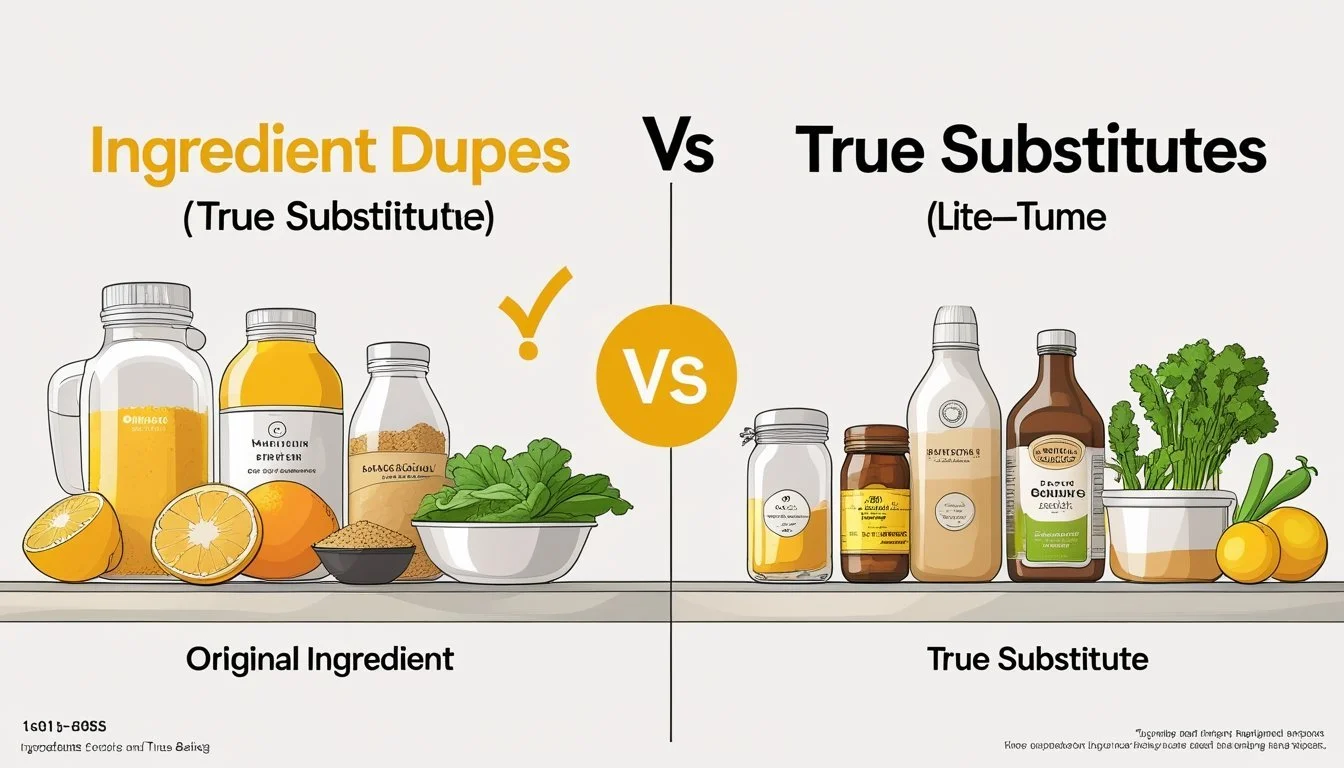
Dupes and substitutes are often confused, but their distinctions have significant implications for cooking, nutrition, and outcomes. Understanding the differences helps ensure better results whether switching ingredients for dietary, flavor, or budget reasons.
Ingredient Composition
Ingredient dupes are created to closely mimic the appearance and basic properties of the original ingredient, often using a blend of different materials or additives. These can replicate the look and some main characteristics but may skip complex or rare components found in the authentic version.
Substitutes, on the other hand, are separate ingredients with naturally different makeups but are used in similar contexts. For example, applesauce can substitute for oil in baking, but the nutritional profile and chemical composition differ significantly.
Transparency is higher with true substitutes, as what’s being used is clear to the consumer. Dupes might include processed or modified ingredients designed to present similarly without matching the original formula’s core elements.
Key comparisons:
Dupes Substitutes Composition Imitative, often blended Naturally different Active ingredients May be absent or altered Intrinsic to ingredient Transparency Variable Clear
Texture and Flavor Impact
Texture and flavor are affected differently by dupes and by substitutes. Dupes aim for a close sensory match, attempting to recreate the feel and taste of the original even if the underlying structure is artificial or simplified. This often means the result is similar, but subtle nuances may be lost.
Substitutes, while serving the same function in a dish, can bring new textures or flavors not present in the original ingredient. For example, using Greek yogurt instead of sour cream changes both texture and tanginess, which may benefit or detract from the final dish depending on preferences.
Flavor fidelity is often higher with a well-formulated dupe, but substitutes offer their own unique benefits—sometimes adding nutrients or offering a new taste experience.
Functionality and Performance
Dupes focus on replicating the core performance of the original ingredient, such as thickening ability, mouthfeel, or emulsification properties. However, not all dupes can duplicate the finer points of how an ingredient behaves under heat or when mixed with other components.
Substitutes may not perform exactly the same, but their functional qualities are usually reliable within traditional uses. Cornstarch and arrowroot, for example, both thicken sauces, though their results differ in clarity and stability.
When considering benefits like nutrition or allergen avoidance, substitutes can outperform dupes simply because their origins and effects are well-documented and understood. Dupes sometimes lack this level of transparency, which may be important for those with dietary concerns.
Evaluating Active Ingredients and Efficacy
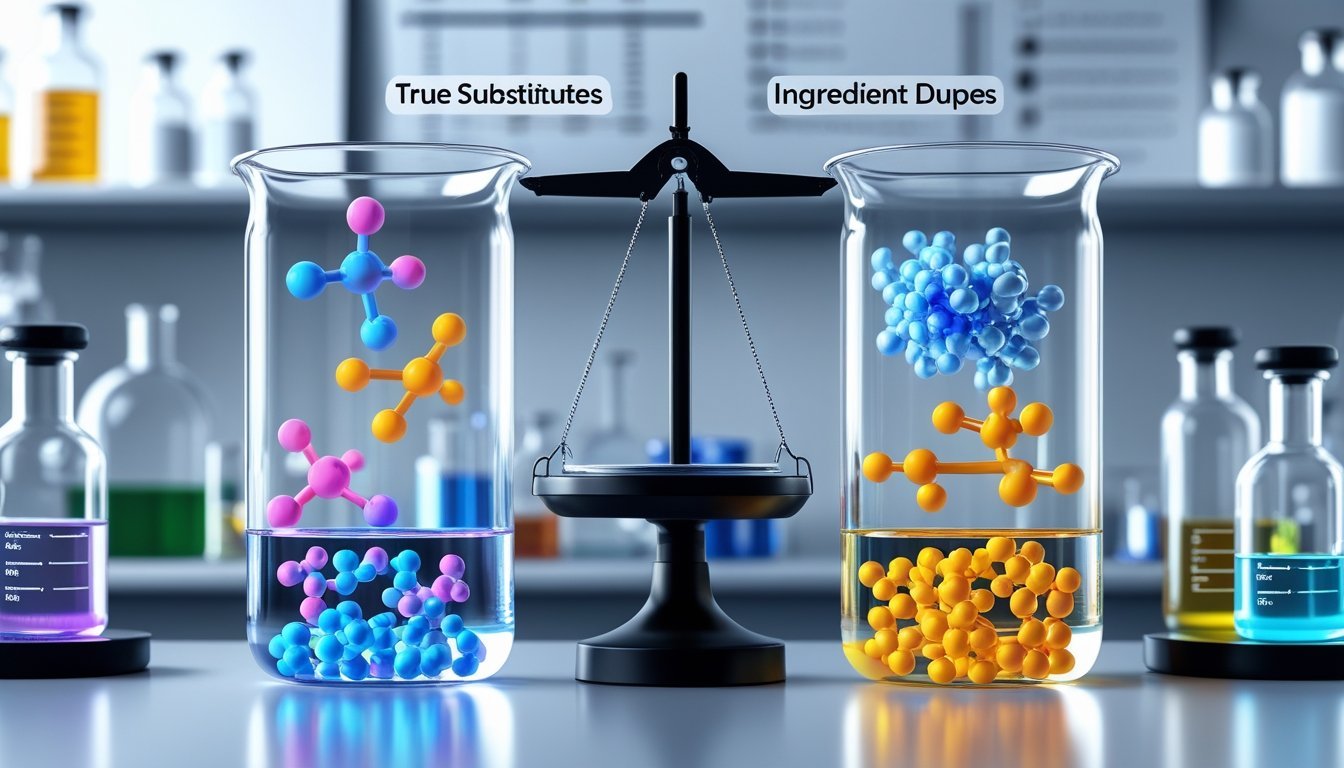
Understanding how specific components work and how well they perform is key when comparing skincare dupes and true substitutes. Ingredient lists alone don’t guarantee the same results, especially for actives like vitamin C, peptides, retinol, and AHAs.
Role of Active Ingredients
Active ingredients are the elements in skincare products responsible for delivering tangible benefits. Examples include vitamin C for brightening, peptides for supporting firmness, retinol for smoothing fine lines, and alpha hydroxy acids (AHA) for exfoliation.
Table: Common Actives and Functions
Active Ingredient Main Function Vitamin C Brightening, Antioxidant Peptides Firming, Repair Retinol Smoothing, Anti-aging AHA (e.g., glycolic acid) Exfoliation, Smoothing
For two products to have similar effects, they must not only contain the same actives but also in similar concentrations and forms. The delivery system and formulation can influence how well the active penetrates the skin and performs its intended role.
Efficacy in Skincare Dupes
Efficacy refers to how well a product works in actual use. With skincare dupes, similar ingredient lists don’t always equate to similar results. For example, two serums might both contain vitamin C, but differences in concentration or the presence of stabilizers can affect how much benefit the skin receives.
Clinical trials and lab tests are the gold standard for measuring efficacy, but these are rarely available for every brand. Instead, consumers and formulators should look at ingredient concentrations, supporting ingredients, and data on ingredient stability. Peptides and retinol, for example, are sensitive to light and air, and proper packaging is crucial for their effectiveness.
Formulations that carefully balance actives with supporting ingredients tend to perform better. A dupe that skips these details may fall short, no matter what its label lists.
Patent Implications and Transparency
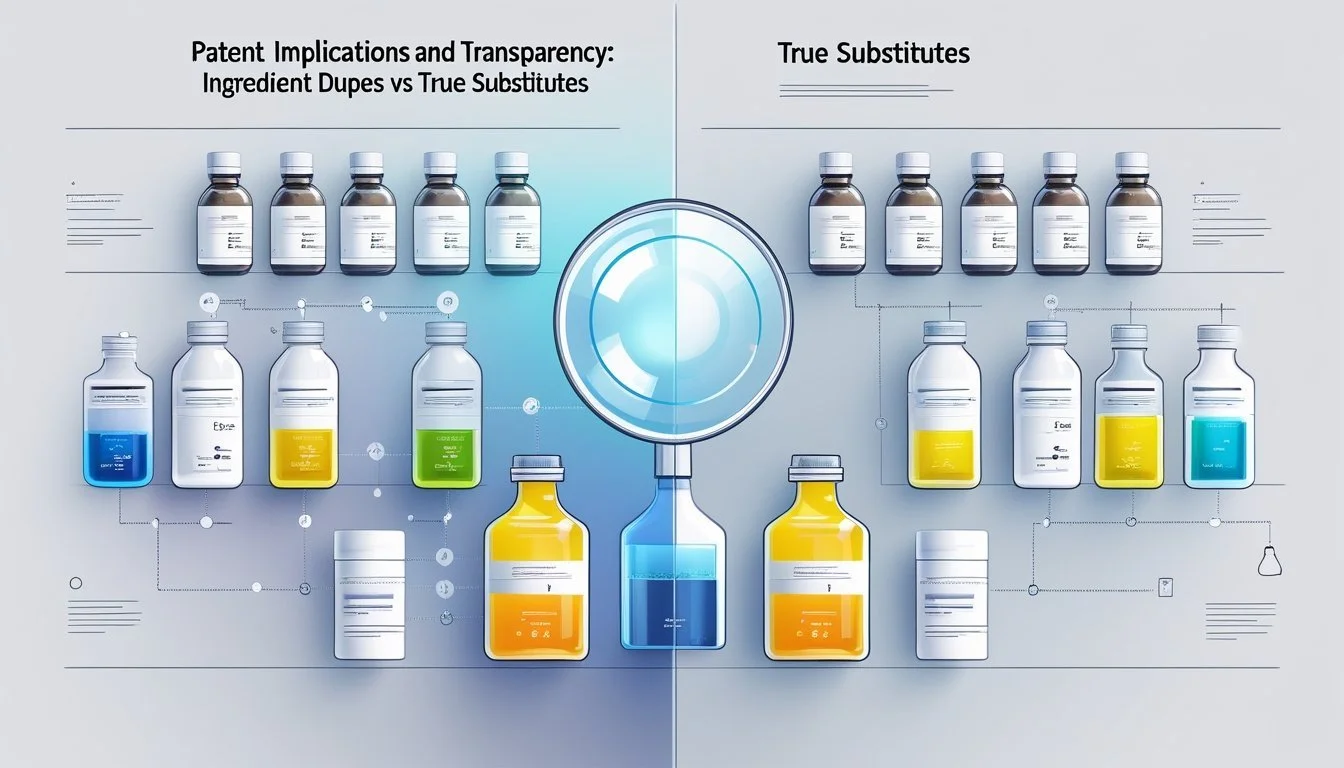
Patent rules shape what companies can copy or imitate in ingredient formulas, while transparency about ingredients affects how consumers interpret product claims. Both areas are essential for understanding the differences between ingredient dupes and true substitutes.
Patents in Ingredient Formulation
A patent can protect a unique formulation, combination of ingredients, or a novel method of production for a specified period, usually 20 years. This legal protection prevents other brands from making, using, or selling the patented invention without permission.
However, patent protection in cosmetics is limited. Basic ingredients like water, glycerin, or common plant extracts usually can’t be patented. Protection is more likely for unconventional blends, delivery methods, or specific chemical structures.
Ingredient dupes typically avoid legal challenges by altering the formula just enough to bypass patents or by using ingredients not covered by a patent. The doctrine of equivalents may still apply if a dupe mimics the function, way, and result of each element in a patented claim. However, most dupe products face little litigation because patents for mainstream formulations are rare and hard to enforce.
Transparency for Consumers
Transparency means brands clearly disclose the source, concentration, and function of each ingredient in a product. Full ingredient lists are now standard on most labels, but not all brands provide detailed explanations or context for those ingredients.
True substitutes usually state how and why an ingredient provides the same effect as the original. Most ingredient dupes emphasize similarity but may not clarify differences in concentration, quality, or source.
Consumers benefit from transparency because it allows comparison between products. Open ingredient disclosure helps users spot potential allergens, avoid misleading claims, and better understand what they are applying to their skin. Some brands include tables or charts comparing formulas, increasing trust and enabling side-by-side evaluation.
Pros and Cons of Ingredient Dupes and Substitutes
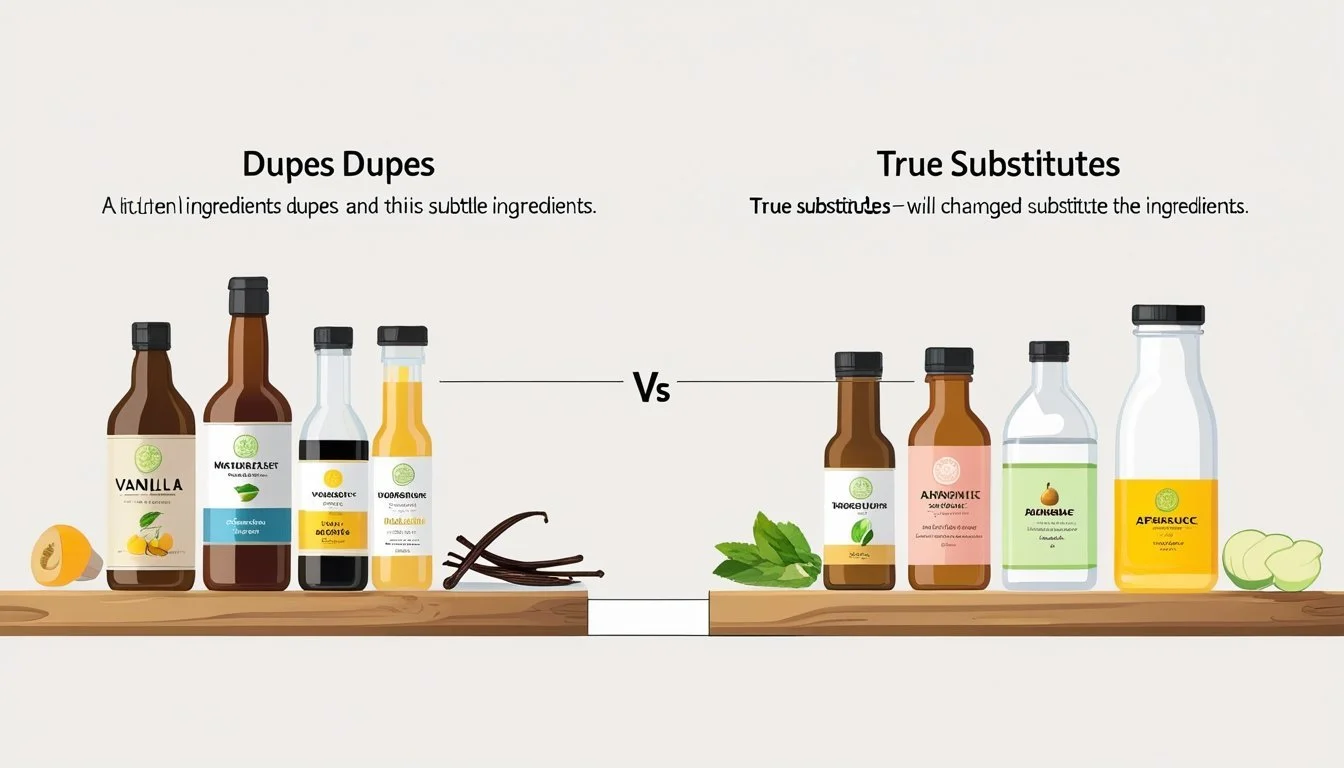
Ingredient dupes and true substitutes serve different purposes and come with their unique advantages and limitations. Understanding how each can impact taste, quality, cost, and suitability helps people make more informed choices in recipes or product selection.
Benefits and Drawbacks of Dupes
Benefits:
Dupes often provide a more affordable alternative to premium or specialty products. They are designed to replicate the flavor, appearance, or texture of the original, making them appealing for budget-conscious consumers. For cooking and baking, dupes can save money without a major compromise in results, especially in non-essential or flexible situations.
Price: Dupes usually cost less than the originals.
Brand differences: People can still enjoy similar experiences without the label.
Drawbacks:
Dupes are not made in exactly the same way as the originals, so ingredient lists can differ. Some dupes may not be suitable for those with allergies or dietary restrictions due to alternate components. The flavor or texture may fall short of the original, and quality can vary. There is also a risk that dupes lack certain nutrients found in the authentic product.
Tip: Always check the ingredient list to identify key differences.
Benefits and Drawbacks of True Substitutes
Benefits:
True substitutes are intended to replace an ingredient because of necessity, such as food allergies, dietary choices, or unavailability. These substitutes accommodate health conditions (e.g., nut allergies, lactose intolerance) and dietary preferences (e.g., vegan, gluten-free). They allow greater flexibility and often provide nutritional or health benefits not found in the original ingredient.
Suitability: Better for specific health needs.
Benefits: May include lower calories or added nutrients depending on the substitute.
Drawbacks:
Substitutes can noticeably change the taste and texture of a recipe. They are not always perfect one-to-one replacements and can impact the final result. Some substitutes cost more than the ingredient they replace, and in certain cases, they may not be suitable for all recipes or desired outcomes. Shoppers need to pay attention to recipe compatibility and nutritional information.
Making the Right Choice for Your Needs
Dupe and substitute products serve different roles depending on whether the context is cosmetic or culinary. Making a selection requires understanding how ingredient differences affect performance, effectiveness, and safety.
Choosing Between a Dupe and a Substitute
A dupe mimics the function or appearance of the original product, often at a lower cost. For skincare and makeup, dupes typically contain similar key active ingredients or pigments. This can make them feel and look much like the original item in a routine.
A substitute, however, replaces a missing ingredient with something that may serve a similar purpose but doesn’t necessarily replicate the original's formulation. For example, in baking, granulated sugar mixed with molasses is a substitute for brown sugar—providing a comparable result in texture and sweetness. However, the flavor and moisture content may differ slightly.
Key Differences Table:
Dupe Substitute Formulation Closely mimics original Functionally similar but not identical Usage Makeup/skincare, sometimes food Mainly food, some skincare (allergies, restrictions) Purpose Cost savings, accessibility Address absence/allergy, adapt recipes
Choosing between a dupe and a substitute involves weighing cost, ingredient transparency, and final performance.
Considerations for Skincare and Culinary Applications
In a skincare routine, ingredient sensitivity and efficacy are crucial. While a dupe may deliver similar results, ingredient sourcing and production standards can differ between brands, possibly impacting the skin.
Allergies and sensitivities require careful review of the full ingredient list, especially when swapping products in a regimen. For makeup, choosing a dupe can yield similar color payoff and finish but may lack longevity or use alternate preservatives.
In baking, substitutes must match not just flavor, but also chemical reactions. For example, replacing baking powder with baking soda plus an acid works because both serve as leavening agents. But substitutions aren’t always one-to-one for texture or taste.
For both skincare and food, consider the intended outcome, any health concerns, and the role of each component before making a switch. This helps prevent unwanted reactions or unsatisfactory results.

