
Memory and Substitution: How Flavor Nostalgia Shapes Our Perception of Taste

Flavor nostalgia directly shapes how people perceive food by linking taste experiences with personal memories and emotions. The familiar flavor of a childhood meal or a favorite treat can trigger strong recollections, often making these foods seem more vivid or enjoyable than they might taste otherwise. This connection between memory and flavor perception happens both consciously and subconsciously, creating lasting associations between past events and present taste.
Scientific research shows that sensory cues like taste and smell can activate autobiographical memories, sometimes making them feel more evocative than other types of memories. Contextual factors, such as where and with whom the food is eaten, also play a significant role in shaping these experiences. For many, substituting a familiar flavor in a new environment can evoke nostalgia, altering the way a dish is perceived and even enhancing its appeal.
The Science of Memory and Flavor Perception
Flavor perception results from a complex interaction between taste, smell, and past experiences. Neuroscience research shows that memory networks connect closely with the brain’s systems for recognizing flavor, shaping how sensory stimuli are processed and remembered.
How Memory Shapes Flavor Experiences
Memory enables people to recall flavors encountered in childhood or specific contexts, influencing how they perceive tastes in the present. These experiences create associations—such as linking the taste of cinnamon with holidays—that affect emotional and sensory responses.
Cultural norms and family habits strongly influence taste preferences and flavor memory. For example, repeated exposure to certain foods can lead to lifelong likes or dislikes. The emotional component of food memory is often intense; familiar flavors can trigger nostalgia or comfort.
People may even perceive a familiar food as tasting better when it is linked to positive memories. This process helps explain why some prefer traditional foods over new options, as memory reinforces their expectations and enjoyment.
Role of Sensory Stimuli in Taste Perception
Taste perception depends not only on the tongue but also on other senses, particularly smell. The combination of both—plus texture and temperature—creates what is known as flavor. This multisensory input is essential for accurate flavor recognition.
Key sensory stimuli involved in flavor perception include:
Stimulus Sense Involved Example Sweet, Bitter Taste Buds Sugar, Coffee Aroma Olfactory System Vanilla, Garlic Texture Touch Creaminess of chocolate Temperature Thermoreceptors Coolness of ice cream
Context, such as environment and social setting, also shapes sensory experiences. Meals shared in a positive atmosphere can enhance flavor perception through association. Sensory integration is crucial for memory formation related to food and taste.
Neurobiology of Flavor and Memory
Flavor recognition and memory rely on specific brain areas. The insular cortex is central for processing taste and integrating chemical senses, while the amygdala links these experiences to emotion. The hippocampus is critical for forming and retrieving food-related memories.
Neural pathways connect taste signals from the tongue to these brain regions, allowing rapid association between flavors and past experiences. The limbic system, which includes the amygdala and hippocampus, helps store the emotional context of flavors.
Changes in brain function, such as from injury or illness, can alter flavor memory and perception. Understanding these neural mechanisms helps clarify why flavor nostalgia can be so powerful and persistent over time.
Understanding Flavor Nostalgia
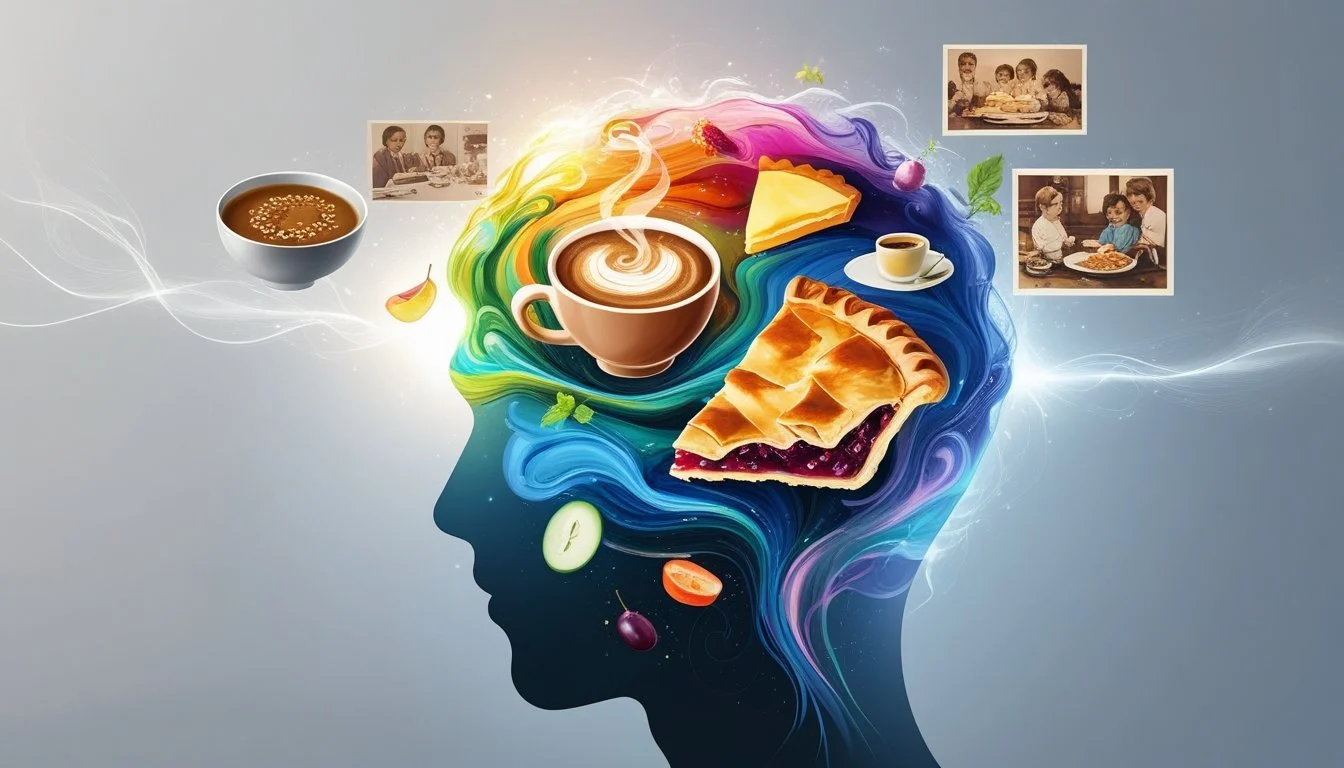
Specific foods and flavors can trigger strong nostalgic feelings, often transporting individuals back to meaningful moments in their past. These experiences involve complex interactions between taste, memory, and emotion.
Defining Gustatory and Food-Evoked Nostalgia
Gustatory nostalgia refers specifically to the longing or vivid memories that arise from tasting certain foods. This type of nostalgia often relates to childhood dishes, traditional family recipes, or specific flavors linked to cultural heritage.
Food-evoked nostalgia is broader and includes both taste and the context around eating. Ambiance, shared meals, and even the act of preparing food can all contribute. The emotional impact of these experiences is often heightened by their sensory richness.
Key elements of food-evoked nostalgia include:
Sensory triggers: Smell, taste, and texture.
Emotional recall: Feelings of comfort, security, or longing.
Cultural identity: Connecting people to tradition or family history.
Autobiographical Memories in Taste
Taste is closely linked with autobiographical memory. When someone eats a food they first tried years ago, it may unlock detailed memories of that time, place, or event. These memories are often more vivid due to the multi-sensory nature of eating.
Autobiographical memories tied to food can influence current taste preferences. A flavor liked in childhood might remain preferred into adulthood, shaped by early positive associations. This connection can also inform how new flavors are perceived and whether substitutes for nostalgic foods are emotionally satisfying.
Research highlights that the context of consumption matters. Dining environment, company, and even music can enhance or diminish the effect of nostalgic food memories.
The Proust Effect and Scent-Evoked Nostalgia
The Proust effect describes how a simple scent or taste can suddenly bring forth a flood of long-forgotten memories. Named after Marcel Proust, who described this phenomenon in his writing, it highlights the powerful connection between scent, taste, and autobiographical recall.
Scent-evoked nostalgia often triggers deeper and more emotional memories than those prompted by vision or sound. The olfactory system is closely linked to brain areas involved in emotion and memory, which explains why a specific aroma, like freshly baked bread or herbs from childhood meals, can be so evocative.
Studies show that familiar and emotionally significant scents activate brain regions associated with self-reflection and memory retrieval. This explains why certain smells or flavors not only remind people of the past but can also influence their mood and perception in the present.
Psychology of Flavor and Substitution
Flavor experiences are deeply connected to emotions, memory, and the contexts in which foods are consumed. The impact of nostalgic flavors extends to emotional regulation, social bonds, and the choices people make when substituting ingredients or dishes.
Emotional Associations with Flavor
Flavors often act as cues that trigger emotional memories. Specific smells or tastes can evoke events from childhood or significant periods, leading to strong emotional responses. This phenomenon, sometimes referred to as "emotional odor-event association," can result in vivid recollections and even physical reactions like emotional crying.
People tend to prefer flavors with positive emotional histories. For instance, a scent reminiscent of a favorite holiday meal can produce feelings of warmth or safety. These emotional links influence flavor substitution choices, as individuals may seek out alternatives that recreate similar psychological effects.
Comfort Foods and Psychological Benefits
Comfort foods are frequently chosen for their ability to improve mood and provide a sense of security. These foods are typically associated with familiar tastes and past comforts, which can support emotional well-being and even self-esteem.
When a preferred comfort food is unavailable, people often look for substitutes that offer comparable psychological benefits. This substitution process is based less on the exact flavor profile and more on the calming effect the food provides. The act of eating comfort foods or their substitutes can temporarily reduce stress, loneliness, and negative emotions.
Examples of Common Comfort Foods:
Food Type Psychological Benefit Soup Warmth, security Mashed potato Nostalgia, relaxation Ice cream Pleasure, stress relief
Social Connectedness Through Shared Tastes
Eating and sharing flavors contribute directly to social connectedness. Shared food experiences—such as family dinners or communal meals—are a foundation for social bonds and emotional closeness. These encounters can foster trust and reinforce group identity.
People often select foods or flavor substitutes that align with the tastes and preferences of those around them. This helps to maintain social connection and group harmony. The pleasure of shared tastes is not only about enjoyment but also about reinforcing interpersonal relationships and collective memories.
Neurochemical and Physiological Underpinnings

Flavor nostalgia relies on specific brain chemicals and neural circuits that process taste and memory. When individuals encounter flavors from their past, both physical and emotional responses are triggered, linking taste to emotion and memory retrieval.
Neurochemical Transmitters in Taste Memory
Neurotransmitters such as dopamine and serotonin play critical roles in encoding and retrieving taste-related memories. Dopamine is especially important because it is released during rewarding experiences, including eating favorite or nostalgic foods. This release can strengthen associative memories, making certain flavors more memorable.
Acetylcholine is another key neurotransmitter involved in flavor recognition memory. It supports the encoding of new taste and odor information. Glutamate and norepinephrine also contribute by supporting synaptic plasticity, allowing the brain to adapt to new flavor memories or modify old ones.
Cortisol, a stress hormone, can impair memory retrieval. High stress may reduce access to nostalgic flavor memories, while positive neurochemistry supports their recall. Together, these neurochemicals form a basis for how taste nostalgia is formed and accessed.
Brain Regions Involved in Flavor Recognition
Several distinct brain regions are involved in processing flavor nostalgia. The orbitofrontal cortex (OFC) integrates taste, smell, and reward signals, giving flavors emotional meaning. The hippocampus is essential for autobiographical memory and links specific flavors to personal experiences and locations.
The insula processes primary gustatory signals and helps distinguish subtle differences between flavors. The amygdala connects emotion with memory, explaining why nostalgic flavors can evoke strong emotional responses. Self-reflection and memory retrieval during nostalgic experiences also engage the medial prefrontal cortex.
A simplified table summarizes key regions and functions:
Brain Region Key Role Orbitofrontal Cortex Evaluates flavor/reward value Hippocampus Autobiographical memory Insula Gustatory processing Amygdala Emotional tagging Prefrontal Cortex Reflection/retrieval
Physiological Responses to Nostalgic Flavors
Exposure to nostalgic flavors often triggers immediate physiological reactions. These can include increased salivation, changes in heart rate, and even subtle shifts in skin temperature as the body prepares for a remembered food experience. Such responses are mediated by the autonomic nervous system.
Emotionally significant flavors can also reduce perceived psychological stress and foster comfort, mediated by shifts in neurochemical signaling, including increased dopamine or endorphin levels. In some cases, nostalgic flavors can produce psychosomatic effects like improved mood or reduced physical discomfort.
The interplay between a remembered taste, associated smells, and the body’s reactions demonstrates how deeply flavor nostalgia intertwines memory and physiology.
Mechanisms of Taste and Odor Memory Formation
Taste and odor memories depend on the interaction between sensory perception and neural processing in regions such as the insular cortex and amygdala. The formation and retrieval of these memories influence how individuals recognize, substitute, and emotionally respond to flavors.
Learning and Memory in Flavor Substitution
Flavor substitution relies on learned associations between specific tastes and odors encountered in various environments. When familiar flavors are unavailable, individuals often substitute with alternatives that closely match the original's sensory profile.
This process depends on memory recognition, involving both gustatory (taste) and olfactory (odor) cues. The brain’s regulatory processes—particularly in the insular cortex—help maintain the integrity of flavor memory even when substitutions occur. Studies show that accurate taste memory storage improves the acceptance of substitutes, especially when subtle sensory similarities are preserved.
Key Points:
Familiarity reduces the aversive response to substitutes.
Sensory overlap between original and substitute flavors enhances learning retention.
The amygdala plays a role in the emotional impact of flavor substitution.
Associative Taste and Odor Aversion
Associative learning mechanisms underpin the formation of aversions to certain flavors. When a taste or odor becomes linked with an unpleasant experience—such as nausea—a strong aversive memory can form. This process is known as conditioned taste aversion or conditioned odor aversion.
The association typically occurs within a critical window, referred to as the associable period. During this time, the taste perception triggers memory formation in the brain's relevant sensory and emotional centers. Subsequent exposure to the same taste or odor is likely to evoke an aversive response, even if the negative stimulus is no longer present.
Important features:
Rapid aversion learning after a single pairing with an unpleasant stimulus.
Involvement of the insular cortex, amygdala, and brainstem.
Persistence of aversive memories over long periods.
Taste-Potentiated Odor Aversion Memory
Taste-potentiated odor aversion (TPOA) demonstrates how the presence of a taste can enhance the formation of an aversive odor memory. When a neutral odor is paired with a taste and an aversive outcome (like illness), the association strengthens the memory of the odor aversion.
In TPOA, the taste acts as a potentiating stimulus, increasing the likelihood that the odor will be avoided in the future. This mechanism highlights the integration of gustatory and olfactory information within the nervous system.
Performance of TPOA depends on:
Temporal proximity between taste, odor, and aversive event.
Neural connectivity in the gustatory and olfactory pathways.
Individual variability in sensitivity to taste and odor cues.
Example Table: Summary of Key Factors in Memory Mechanisms
Mechanism Primary Brain Regions Outcome Flavor Substitution Learning Insular Cortex, Amygdala Acceptance/Recognition Conditioned Taste/Odor Aversion Insular Cortex, Amygdala Aversive Memory Taste-Potentiated Odor Aversion Gustatory & Olfactory Paths Enhanced Aversion
Sensory Drivers and Experience of Eating
The eating experience draws on multiple senses working together. Flavors, memories, and sensations combine to shape how each bite is perceived and remembered.
The Role of Smell, Touch, and Aroma
Smell is a primary driver of flavor perception. When food is chewed, volatile compounds travel from the mouth to the nose, activating olfactory receptors. This process, retronasal olfaction, allows the brain to distinguish nuanced flavors beyond what the taste buds provide.
Aroma contributes to nostalgia by linking certain scents to personal memories. For instance, the smell of cinnamon may recall childhood baking or holidays. Olfactory pathways are closely connected to memory centers in the brain, which helps explain why aroma triggers vivid recollections.
Touch adds texture and mouthfeel, such as creaminess or crunchiness, influencing flavor enjoyment. Tactile sensations can also be linked to past experiences, like the warmth of soup on a cold day or the crisp shell of freshly baked bread. This multisensory input forms the basis for emotional and nostalgic responses to food.
The Complete Sensory Experience
Eating is a multisensory experience involving sight, sound, smell, touch, taste, and memory, all processed at once. The brain synthesizes these inputs to create the sensation of flavor and to judge food quality and enjoyment.
Sensory drivers of nostalgia, such as a familiar smell or texture, can enhance the positive perception of flavor. Foods associated with positive memories are perceived as more flavorful, even when the ingredients remain unchanged.
List of Sensory Factors Shaping Flavor Nostalgia:
Smell (aroma molecules)
Touch (texture and mouthfeel)
Taste (sweet, salty, bitter, sour, umami)
Sound (crunch, sizzle)
Visual appearance (color, plating)
These elements interact to build a rich, memorable eating experience. The interplay of senses makes each meal unique and can lead to strong nostalgic associations tied to specific dishes or dining moments.
Context, Substitution, and Flavor Perception

Context can enhance or distort how individuals identify and appreciate flavors, while ingredient substitutions often change taste in subtle or noticeable ways. Both factors shape sensory expectations and determine if a flavor matches a person’s memory or preference.
Influence of Context on Flavor Recognition
Sensory cues such as lighting, plateware, surroundings, and meal companions can all influence how someone experiences a flavor. For example, a meal eaten in a noisy environment may seem less flavorful compared to the same dish enjoyed in a quiet, familiar setting.
Studies show that contextual cues adjust perceived intensity and identities of flavors. For instance:
The aroma of a dish may be heightened in a fine restaurant.
A familiar song or family gathering can make certain flavors feel more nostalgic.
Context not only affects recognition but also modifies emotional associations tied to flavors. Memories triggered by settings or events can make ordinary flavors seem exceptional, or conversely, cause them to feel lacking if the context does not match past experiences.
Impact of Substitution on Taste Expectations
Substituting key ingredients—such as using artificial sweeteners instead of sugar or non-dairy milk instead of cream—often leads to noticeable changes in flavor profile, aroma, or texture.
Expectations built from flavor memory can clash with the result of these substitutions. When substitutions fail to replicate the original sensory cues, people may perceive the new version as less satisfying or even unrecognizable.
Key effects of substitution include:
Altered mouthfeel
Differences in aftertaste
Variations in aroma and taste balance
Consumers may unconsciously compare the new item to their mental template of the "authentic" experience, often leading to a lower satisfaction rating if the memory and the substitute do not align.
Flavor Nostalgia in Marketing and Consumer Behavior
Flavor nostalgia plays a significant role in how brands connect with consumers, influencing both product choice and advertising outcomes. This section explores the ways companies harness nostalgic flavors in their marketing and how such flavors impact sensation seekers' decisions.
Marketing and Advertising Strategies
Brands often use nostalgic flavors as a tool to establish emotional connections, referencing familiar tastes from consumers’ pasts. Marketing campaigns highlight products with retro packaging or limited-edition flavors tied to earlier decades.
Key campaigns may feature slogans or imagery that evoke a sense of comfort and shared experience. For example, cereal companies reintroduce discontinued flavors from the 1990s, and beverage brands create new ads based on vintage styles to draw attention to classic tastes.
Table: Common Tactics in Flavor Nostalgia Marketing
Tactic Description Retro Packaging Uses vintage designs to trigger memory Re-releases Brings back old flavors for a limited time Storytelling in Ads Shares stories linking flavor to history Celebrity Endorsements Involves figures from relevant eras
The boundary conditions for effective nostalgia depend on social context and a shared sense of cultural memory. Research emphasizes that success in these campaigns comes from resonating with consumers’ yearning for familiarity.
Consumer Sensation Seeking and Nostalgia
Sensation seekers exhibit unique responses to nostalgic flavors. While nostalgia tends to foster feelings of comfort and safety, some consumers—particularly those high in sensation seeking—enjoy the blend of novelty and familiarity offered by nostalgic products.
These consumers often look for new experiences but may be drawn to twists on classic flavors, such as a modern reinterpretation of a childhood snack. Brands may target sensation seekers by combining trusted tastes with surprising ingredients or formats.
Important consumer behaviors related to flavor nostalgia:
Trying limited-edition products that remaster old favorites
Comparing original and revived flavors
Seeking out products that blend historic elements with modern trends
Social connections also shape how nostalgia is experienced. Products that evoke collective memories, like family meals or shared holiday treats, often create stronger engagement. This interplay between comfort and curiosity is central to how nostalgia shapes flavor perception and guides purchase decisions.

