Alcohol and Drinking Laws in Denton County, Texas
An Essential Guide for Residents and Visitors
Navigating the landscape of alcohol regulations can be complex, with laws varying significantly from one jurisdiction to another. In Denton County, Texas, these laws are no exception. They present a unique framework that governs the sale, distribution, and consumption of alcoholic beverages within the county's limits. Both residents and visitors must be aware of these regulations to ensure compliance and avoid legal complications.
The Texas Alcoholic Beverage Commission (TABC) is the primary authority responsible for administering the alcohol laws throughout the state, including Denton County. These regulations are designed to control alcohol-related activities in a manner that promotes safety and welfare among the Texan populace. In Denton County, specific rules apply not only to businesses involved in the alcoholic beverage industry but also to individuals who consume alcohol within the county's boundaries.
Alcohol laws in Denton County have particular stipulations for public consumption, which differ from those in other regions of Texas. Most areas permit drinking in public with certain exceptions, such as public parks and specific college districts where additional ordinances may apply. It's imperative for those engaging with alcohol in Denton County to be informed about these specific local laws, as they have implications for both the community and individuals' legal responsibilities.
Historical Context of Denton County Drinking Laws
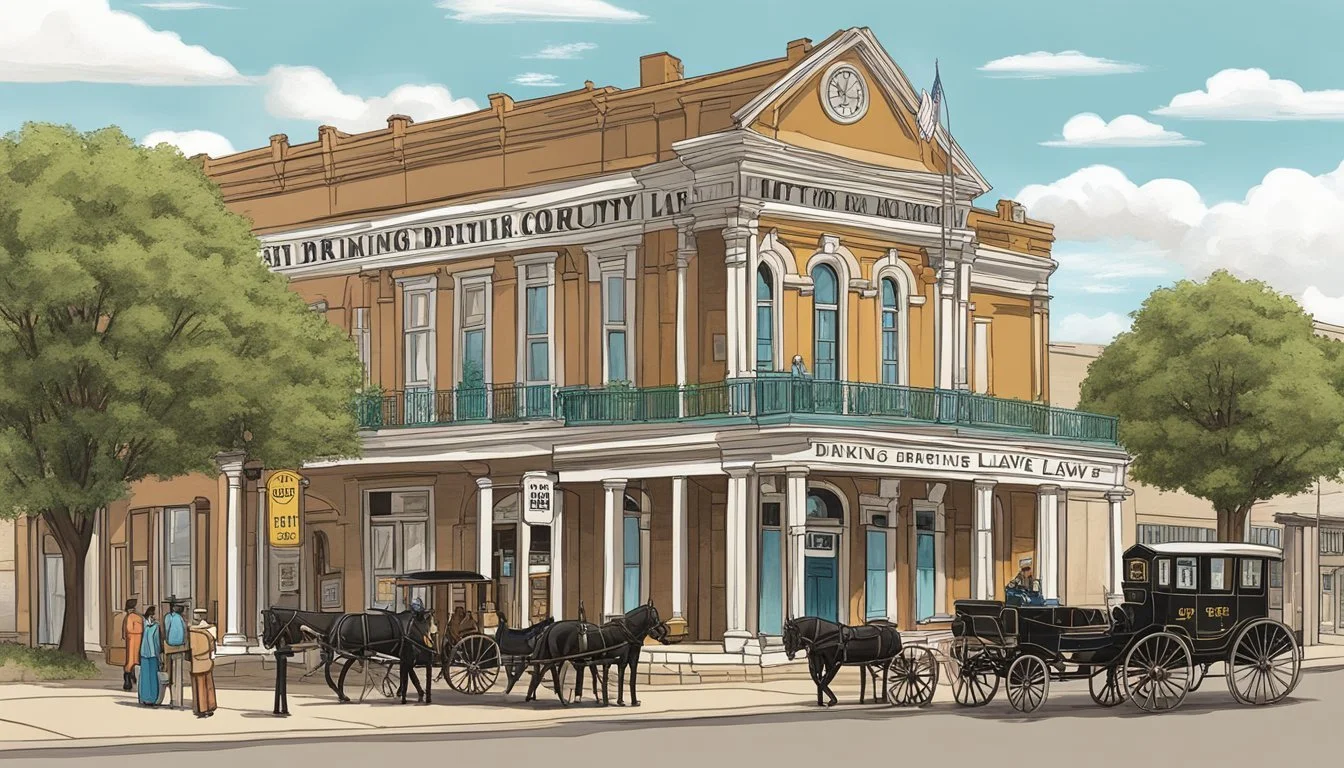
In the late 19th to early 20th centuries, Denton County, Texas, reflected the state's evolving stance on alcohol consumption. Texas laws permitted counties to individually determine the legality of alcohol sales, leading to a patchwork of dry and wet regions. Denton County's history showcases a strong engagement with Temperance movements, exemplified by archival documents such as a "Sons of Temperance" certificate from 1857.
By the 1870s, Texas had enacted legislation enabling counties to ban the sale of alcohol. This local option laid the groundwork for state participation in the national Prohibition era, which lasted from 1920 to 1933. During this period, Denton County, like many other rural counties in eastern and northern parts of Texas, actively pursued prohibitionist policies.
Post-Prohibition, the regulation of alcohol in Denton County adhered to the Texas Alcoholic Beverage Code, which provides a legal framework for the sale and distribution of alcoholic beverages within the state. Enforcement of the code falls to the Texas Alcoholic Beverage Commission (TABC), which oversees compliance.
Today, the legacy of these historical regulations is evident in local policies. Although statewide attitudes have liberalized, Denton County maintains a nuanced relationship with alcohol sales. Certain areas within the county have adopted looser regulations, becoming "wet," while others continue to restrict or prohibit sales, remaining "dry."
Drinking Age and Legal Requirements
In Denton County, Texas, the legal framework surrounding alcohol consumption is strict, with specific regulations on the drinking age and the necessary requirements for purchasing and consuming alcoholic beverages.
Age Verification
In Texas, individuals over the age of 21 are not legally required to present an ID to purchase alcohol. However, retailers often require a photo ID to prevent sales to minors due to the potential criminal liability of selling alcohol to individuals under the age of 21. Acceptable forms of ID typically include a driver's license, passport, or military identification.
Provision for Minors
Minors in Texas may consume alcohol if they are in the presence of their adult parent, guardian, or spouse who is over the age of 18. This supervision must be visible, and the supervising adult takes responsibility for the minor's alcohol consumption.
Criminal Penalties for Violation
Minors who attempt to buy, possess, or consume alcoholic beverages face criminal penalties. These penalties can include:
Charge: Class C misdemeanor
Fine: Up to $500
Additional Consequences:
Attendance in an alcohol awareness class
Between 8 and 40 hours of community service
Adults found to be providing alcohol to minors or allowing unsupervised consumption may also face severe consequences under the Texas Alcoholic Beverage Code.
Types of Alcoholic Beverages
In Denton County, Texas—as in the rest of the state—alcoholic beverages are classified into several categories. These classifications are important for regulation, taxation, and consumer understanding.
Distinguishing Beer, Ale, and Malt Liquor
Beer typically refers to a fermented beverage made from malted barley and hops, with an alcohol content usually ranging between 4% and 6%. Ale is a type of beer with a sweeter, fuller body and is often distinguished by its use of top-fermenting yeast, resulting in a higher alcohol content than standard beer, typically between 5% and 15%. Malt Liquor stands apart largely due to its alcohol content, which is higher than both beer and ale, and it may not always be hop-focused in flavor.
Definitions of Wine and Liquor
Wine is an alcoholic drink made from fermented grape juice, with various types including red, white, and sparkling, often ranging from 8% to 14% alcohol by volume. Liquor, also known as spirits, refers to distilled alcoholic beverages with a significantly higher alcohol content—usually 20% or more. This category includes vodka, whiskey, rum, and other distilled spirits.
Licensing and Permits
When looking to operate an establishment that sells alcoholic beverages in Denton County, Texas, businesses must navigate through the application process, understand the different types of permits and licenses available, and adhere to specific regulations. Compliance with the Texas Alcoholic Beverage Commission (TABC) is essential for restaurants, bars, and liquor stores seeking to maintain lawful operations.
Application Process
The TABC oversees the application process for alcoholic beverage permits and licenses in Denton County. Applicants must submit their paperwork through the Alcohol Industry Management System (AIMS), an online portal designed to streamline the application, renewal, and updating of licenses. The Denton County Tax Assessor-Collector office, located at 1505 E McKinney in Denton, TX, can also assist with processing state and county fees for various permits.
Steps for Application:
Create an account on the AIMS platform.
Complete the required application forms.
Submit the forms along with the applicable fees.
Types of Permits and Licenses
A variety of permits and licenses are available in Denton County to accommodate different types of alcohol sales:
On-Premise:
Mixed Beverage Permit: Allows the sale of mixed drinks for consumption on the premises.
Wine and Beer Retailer’s Permit: Permits the sale of wine and beer for on-premise consumption.
Off-Premise:
Wine and Beer Retailer’s Off-Premise Permit: Permits the sale of wine and beer to be consumed off the premises, such as in liquor stores or convenience stores.
Each permit caters to specific operational needs, therefore, choosing the appropriate permit is critical for legal compliance.
Regulations for Businesses
Businesses holding permits are subject to ongoing regulations by the TABC and local authorities. These rules aim to ensure public safety and responsible selling of alcohol. It is mandatory for permit holders to understand and incorporate these regulations:
Training: Employees must undergo TABC-approved training as part of the Texas Responsible Alcohol Management Program (TRAM).
Selling Hours: Sales of alcoholic beverages are restricted to certain hours, and businesses must abide by these timings.
Compliance is not optional, and penalties for violations can be severe. Establishments should continuously monitor TABC guidelines to remain informed about current and changing regulations.
Operating Hours and Sales Restrictions
In Denton County, Texas, alcohol sales are strictly regulated with specific operating hours for weekdays and Sundays, as well as distinct restrictions during certain holidays.
Weekday Sales Regulations
From Monday to Saturday, establishments may sell alcohol starting at 7 a.m. and must cease sales by midnight. This applies to both on-premises consumption, such as bars and restaurants, and off-premises sales, including liquor stores and grocery outlets.
Sunday Sales
On Sunday, the sale of alcohol comes with more limitations. For on-premises consumption, alcohol sales are permitted from 12 a.m. to 1 a.m., and then resume from 10 a.m. to midnight. However, licensed premises selling for off-premises consumption can only sell alcohol starting at noon, with sales ending alongside on-premises sales at midnight.
Holiday Restrictions
Alcohol sales observe heightened restrictions on three specific holidays: New Year's Day, Thanksgiving Day, and Christmas Day. No person or entity may sell, offer for sale, or deliver liquor on these days. Additionally, on Sundays and every other day, no sales are permitted before 10 a.m. or after 9 p.m. These rules ensure that celebratory days remain respectful of statewide norms and practices regarding alcohol consumption.
Location-Based Regulations
In Denton County, Texas, the alcohol laws vary not just from county to county but also among individual cities and townships. Understanding the specific regulations of each location is crucial for residents and visitors to abide by the law.
City and County Laws
In Denton, individuals of legal drinking age are allowed to consume alcohol in public, with the exception of public parks and specific ordinances such as the restriction against glass bottles in the Fry Street district. Flower Mound, Lewisville, Little Elm, and Frisco each have their own set of regulations which may differ from the county's rules. For example, businesses must adhere to state law regarding the purchase of alcohol for retail sales, which is enforced across the county.
Laws by Township
Here's a brief overview of the alcohol laws in the townships of Denton County:
Argyle: Specific local regulations apply.
Aubrey: Follows its own set of alcohol laws.
Bartonville: Has unique alcohol regulations in place.
Carrollton: Alcohol laws are distinct from other townships.
Copper Canyon: Conforms to its specific alcohol laws.
Corinth: Its alcohol regulations may vary from neighboring areas.
Corral City: Owns a unique set of rules governing alcohol.
Businesses and individuals must be aware of the local option elections that could affect the availability and sales of alcohol in their specific township.
Public Safety and Alcohol Consumption
In Denton County, Texas, the safety and well-being of the public are paramount when it comes to alcohol consumption. The following subsections detail laws and guidelines surrounding public intoxication, bring-your-own-beverage (BYOB) establishments, and the roles of peace officers in maintaining order and safety in these contexts.
Public Intoxication Laws
Public intoxication in Texas is an offense in which an individual is visibly intoxicated in a public place to the degree that they may potentially endanger themselves or others. Peace officers are authorized to take individuals into custody if they pose a considerable risk based on their level of intoxication. The aim is a balance between personal freedoms and community safety.
BYOB Guidelines
Denton County recognizes BYOB establishments, where patrons can bring their own alcoholic beverages for personal consumption. These venues must comply with Texas Alcoholic Beverage Commission (TABC) regulations, and it is their responsibility to ensure that public safety is not compromised by overconsumption.
Roles of Peace Officers
Peace officers and commissioned peace officers in Denton County have a duty to enforce alcohol laws vigilantly. Their roles include responding to incidents of public intoxication, verifying the legal age of individuals consuming alcohol, and ensuring BYOB guidelines are followed to safeguard the community from alcohol-related hazards.
Resources and Enforcement
In Denton County, Texas, the Texas Alcoholic Beverage Commission (TABC) provides robust support and resources to businesses and enforces state alcohol laws. Local law enforcement agencies collaborate with the TABC to ensure that these regulations are followed.
TABC Support and Resources
The TABC is an essential resource for anyone involved in the alcoholic beverage industry in Texas. Its office, located in Arlington, serves the Denton County area by processing various permit applications. The TABC's website offers a plethora of resources, including:
Licensing information
Tax guidelines
Educational training
Moreover, the TABC has its agents who are specially trained to support and regulate the alcoholic beverage industry.
Local Enforcement Agencies
Local enforcement agencies in Denton County work in conjunction with the TABC to enforce alcohol-related laws. They utilize:
Educational materials provided by the TABC to inform the community.
Enforcement of laws regarding the sale and consumption of alcohol.
Law enforcement agencies ensure compliance with state regulations and can take administrative or criminal action against violators.
Consumer Information

This section provides a comprehensive overview of key regulations affecting the purchase and transportation, as well as consumption of alcoholic beverages in Denton County, Texas.
Purchasing and Transportation
In Denton County, the sale of packaged liquor is not allowed on Sundays. From Monday to Saturday, consumers can purchase these items between 10:00 a.m. and 9:00 p.m. For packaged beer and wine, gas stations and other authorized retailers offer sales from noon to midnight on Sundays and from 7:00 a.m. to midnight on other weekdays. To facilitate these transactions, customers should be aware that retailers may request a valid ID, typically verified via phone scanning systems, to confirm legal drinking age.
Guidelines for Transportation:
Alcoholic beverages must be sealed and stored away from the driver’s reach.
Open container laws prohibit the presence of open alcohol in the passenger area.
Consumption Guidelines
Drinking alcohol in public places in Denton City is permissible save for public parks and the Fry Street district, where glass bottles are also restricted. Individuals must adhere to legal drinking age regulations.
Notable Consumption Rules for Public Spaces:
Age Limit: Legal drinking age applies.
Public Parks: Alcohol consumption is not allowed.
Fry Street District: No glass bottles.
Industry-Specific Provisions
In Denton County, Texas, the alcohol industry is guided by a set of specific provisions that ensure compliance with state law. These provisions include systems and regulations tailored to the management, manufacture, and distribution of alcoholic beverages, with a focus on permits and adherence to state guidelines.
Alcohol Industry Management System (AIMS)
The Texas Alcoholic Beverage Commission (TABC) has implemented the Alcohol Industry Management System (AIMS), a comprehensive platform designed to streamline the permitting process. AIMS allows industry members to manage their licensing, track compliance, and submit applications. Entities in Denton County that need to apply for permits or licenses must utilize AIMS to operate legally within Texas.
Regulations for Manufacturers and Distributors
Manufacturers and distributors in Denton County are required to comply with specific state laws that regulate their operations. Some of these regulations encompass:
License Applications: Every manufacturer and distributor must obtain the proper licenses before they can operate. Application and processing of these licenses are now centralized through the Arlington District Office.
Purchasing Regulations: Entities must follow a Cash/Credit Law, which dictates the terms under which they can purchase alcohol for retail sales.
Permitting Process: The TABC requires permits for a wide range of activities, ensuring that manufacturers and distributors adhere to state law.
These rules and regulations are enforced to maintain the integrity of the alcohol industry in Texas and must be followed by all applicable parties in Denton County.