Alcohol and Drinking Laws in Live Oak County, Texas
An Overview

In Live Oak County, Texas, alcohol and drinking laws are reflective of the state's complex relationship with alcoholic beverages, featuring both state-wide statutes and local regulations. Texas, known for its particular brand of independence, grants its counties the autonomy to modify certain elements of its liquor laws. This has led to a diverse tapestry of rules that can vary significantly from one area to another, and Live Oak County is no exception. Establishing a clear understanding of these laws is crucial for residents and visitors alike to ensure they remain compliant with local regulations.
Within unincorporated areas of Live Oak County, alcohol sales are governed by regulations that may differ from those in effect within its incorporated towns and cities, such as George West and Three Rivers. For example, the sale of packaged liquor may have specific restrictions on days of operation and hours, reflecting the community standards and local governance. Detangling the nuances of Live Oak's liquor laws from the larger web of Texas alcohol legislation requires a close examination of both local county ordinances and state-wide mandates issued by the Texas Alcoholic Beverage Commission (TABC).
The TABC oversees the statewide regulatory framework, setting forth the guiding laws which cover aspects such as the sale, distribution, and consumption of alcohol. While these state laws provide a foundation, Live Oak County's local options allow communities to adapt the regulations to suit their unique preferences and needs. Therefore, understanding the alcohol and drinking laws in Live Oak County demands an understanding of both the state's general guidelines and the county's specific codifications, which together shape the legal landscape of alcohol use in this region of Texas.
Historical Overview of Alcohol Laws in Texas
In Texas, the legislation around the sale and consumption of alcohol has undergone significant changes from the post-Prohibition era to the present day. These evolutions in law have shaped Texas' current alcohol framework and enforcement practices.
Evolution of Regulatory Framework
After the repeal of Prohibition by the 21st Amendment in 1933, the responsibility for regulating alcoholic beverages was passed to the states. Texas immediately began crafting its own set of laws within this new national context. In the 1930s, Texas established foundational alcohol laws that would set the tone for decades to come.
In line with its localized approach to alcohol regulation, Texas enacted laws enabling counties to control the sale of alcohol at a local level. The outcome was a patchwork of "wet" and "dry" counties—terminology referring to whether the sale of alcoholic beverages was permitted (wet) or prohibited (dry).
Notable Amendments and Acts
Throughout the years, the Texas Alcoholic Beverage Code has seen several significant amendments. Key legislative updates have expanded and refined the state’s approach to regulation.
Separate Votes for Alcohol Sales: Specific instances required separate votes to permit on-premise beer and wine sales, off-premise beer and wine sales, on-premise liquor sales, and off-premise liquor sales.
TABC Formation: The Texas Alcoholic Beverage Commission (TABC) was formed to oversee the enforcement of alcohol-related laws within the state.
Texas continues to update its Alcoholic Beverage Code in response to societal and legal shifts, yet some criticize the pace and relevance of these changes, noting that many current regulations still reflect the framework established shortly after the 1930s.
Current Drinking Laws in Live Oak County
Live Oak County adheres to strict Texas state regulations regarding the consumption and sale of alcoholic beverages. The laws are in place to ensure responsible drinking and to mitigate underage alcohol consumption.
Legal Drinking Age
In Live Oak County, as in the rest of Texas, the legal drinking age is 21 years old. Any underage drinking is considered a legal violation and can lead to serious consequences both for the individual and for any establishments that serve alcohol to minors.
Alcohol Sales Regulations
The sales of alcoholic beverages in Live Oak County must comply with Texas Alcoholic Beverage Code. Retailers must maintain specific hours of operation, and there are distinct times when the sale of alcohol is permitted.
Weekday Sales: It is lawful for licensed premises to sell alcoholic beverages from 7 a.m. to midnight.
Saturday Sales: Extended hours permit sales from 7 a.m. to 1 a.m.
Sunday Sales: Sales are allowed from noon to midnight.
These regulations help maintain order and ensure that the presence of alcoholic beverages in the community is controlled and monitored effectively.
Licensing and Enforcement

In Live Oak County, Texas, the regulation and enforcement of alcohol sales and distribution are critical to maintaining public safety and compliance with state laws. Entities seeking to engage in activities involving alcohol must navigate a well-defined system of permits and adhere to the oversight provided by the Texas Alcoholic Beverage Commission (TABC).
Types of Alcohol Permits
Entities in Live Oak County must obtain the appropriate permit from the TABC to sell, distribute, or manufacture alcoholic beverages. The types of permits include, but are not limited to:
Retail Dealer's On-Premise License (BE): Allows businesses to sell beer for consumption on or off the premises where sold.
Retail Dealer's Off-Premise License (BF): Permits the sale of beer in sealed containers for consumption off the premises only.
Mixed Beverage Permit (MB): Authorizes the sale of mixed drinks from unsealed containers and the sale of beer, ale, and wine for on-premises consumption.
Accessibility to the Alcohol Industry Management System (AIMS) is provided for entities to apply for, renew, or update their licenses online, ensuring efficient management of licensing tasks.
Role of Texas Alcoholic Beverage Commission
The Texas Alcoholic Beverage Commission plays a pivotal role in the enforcement of alcohol laws in Live Oak County. It ensures that:
All entities hold the correct permits to legally sell, manufacture, or distribute alcoholic beverages.
Licensees comply with the regulations set forth by the state, maintaining order and public welfare.
TABC agents conduct regular inspections and investigations to enforce the rules and penalize those found in violation. They collaborate with local governments, like the City of Live Oak, to ensure cohesive enforcement of both city codes and state alcohol regulations.
Operating Hours and Days for Alcohol Sales
The sale of alcohol in Live Oak County, Texas adheres to specific times during weekdays and Saturdays, with distinct allowances during Sundays and certain holidays. Retailers, including liquor stores, bars, and restaurants, must comply with these regulations.
Weekdays and Saturdays
Liquor Stores:
Sales of packaged liquor are permitted from 10:00 a.m. to 9:00 p.m., Monday through Saturday.
Bars, Restaurants, and Hotel Bars:
Alcoholic beverages can be sold from 7:00 a.m. to midnight, Monday through Friday.
On Saturdays, the time extends to 1:00 a.m. the following day.
Sundays and Holidays Exceptions
Liquor Stores:
The sale of packaged liquor on Sundays is prohibited.
Bars, Restaurants, and Hotel Bars:
On Sundays, alcoholic beverages can be served from noon to midnight.
An exception exists where alcohol can be sold from 10:00 a.m. if it is served alongside food to the customer.
Holidays:
There may be special considerations for holiday hours, which are subject to state regulations and local ordinances.
Specific Regulations for Different Alcoholic Beverages
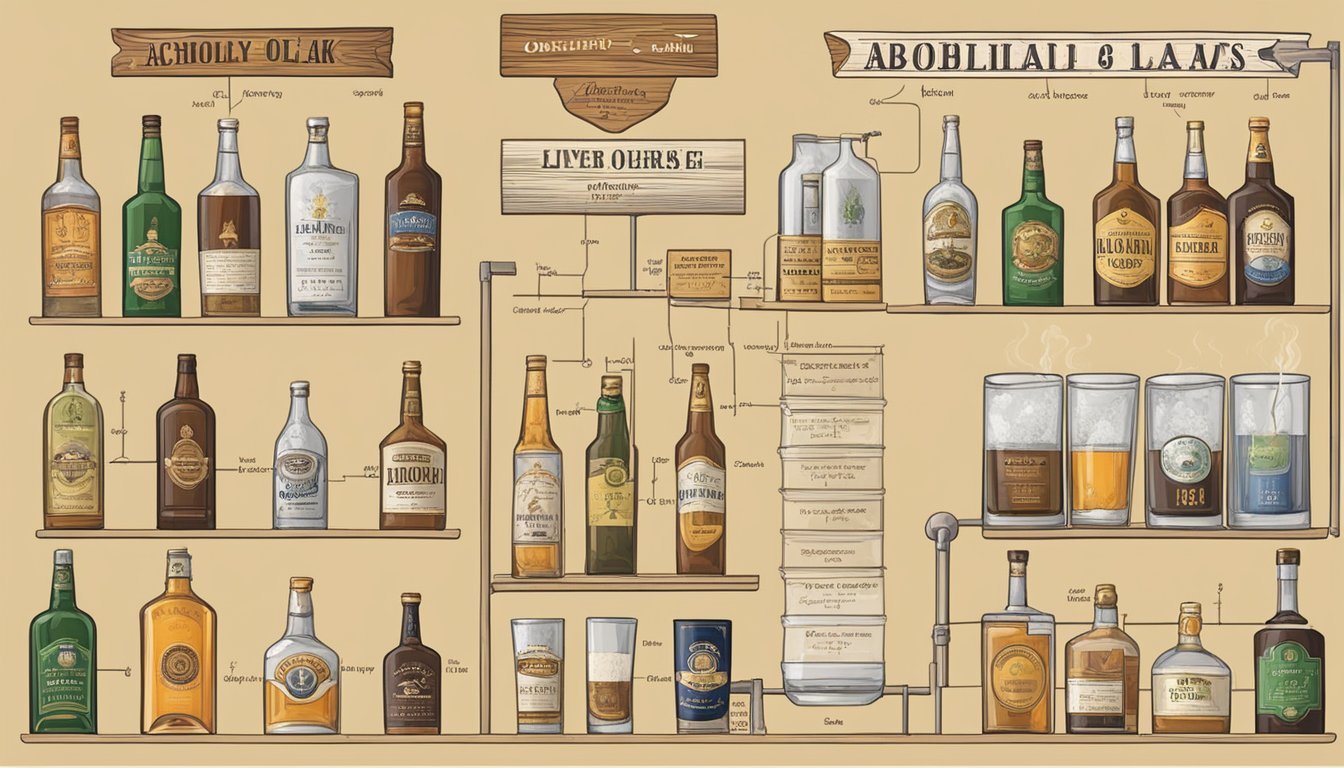
In Live Oak County, Texas, the sale and distribution of alcoholic beverages are subject to state regulation with specific guidelines applying to beer, wine, and liquor.
Beer and Malt Beverages
In Texas, "beer" and "malt beverages" are terms that refer to a variety of brews containing not more than 4% alcohol by weight. In Live Oak County, as in all of Texas, retailers must adhere to state laws when selling beer and malt beverages. These regulations include:
Hours of Sale for Off-Premise Consumption:
Monday - Friday: 7:00 am - midnight
Saturday: 7:00 am - 1:00 am (Sunday morning)
Sunday: Noon - midnight (10:00 am - noon for premises with a Late Hours Permit)
Hours of Sale for On-Premise Consumption:
Same as off-premise hours, but sales can continue until 2:00 am any night with a Late Hours Permit.
Wine Laws
Wine laws in Live Oak County allow for the sale of wine with specific restrictions on alcohol content and hours of sale. Wines with an alcohol content of up to 14% or 17% by volume fall into distinct classifications and may have different license requirements. The sale hours for wine are generally similar to those for beer and malt beverages, subject to the same late hours extension.
Spirits and Liquor
The regulation of spirits and liquor is more stringent than that for beer and wine. Liquor sales in Live Oak County include requirements for a separate liquor license and adhere to stricter rules:
Hours of Sale for Package Stores:
Monday - Saturday: 10:00 am - 9:00 pm
Closed on Sunday, Thanksgiving Day, Christmas Day, and New Year's Day
Sales in Restaurants and Bars:
Monday - Friday: 7:00 am - midnight
Saturday: 7:00 am - 1:00 am (Sunday morning)
Sunday: Noon - midnight
Note: On-premises consumption permit holders can extend these hours up to 2:00 am with a Late Hours Permit.
Dry Areas:
Certain areas within Live Oak County may be designated as "dry," prohibiting the sale of liquor entirely. Local option elections can alter these designations.
Purchases of beer, wine, and liquor must also comply with the state's Cash/Credit Law, and businesses should be aware of the Delinquent List, which affects purchasing beverages for retail sales from wholesalers.
Legal Consequences of Alcohol Law Violations
In Live Oak County, Texas, businesses and individuals found in violation of alcohol laws encounter structured penalties. These consequences are in place to ensure that alcohol is sold, served, and consumed responsibly.
Penalties for Businesses
First Offense:
Fine: Up to $2,000
Suspension: Possible alcohol permit/license suspension
Subsequent Offenses may lead to:
Heavier Fine: Increased based on the violation severity
License Revocation: Loss of license to sell or serve alcohol
Violations could include selling to minors, non-compliance with the Cash/Credit law, or serving alcohol to intoxicated individuals.
Penalties for Individuals
Minor in Possession:
Fine: Up to $500 for a first offense
Class C Misdemeanor: On their record
Education: Attendance at an alcohol awareness class may be required
Community Service: 20 to 40 hours mandated
Driving Under the Influence (DUI):
For Adults (BAC 0.08% or higher):
Fine: Up to $2,000 for a first offense
Jail Time: 3 to 180 days
License Suspension: Up to a year
Annual Fee: $1,000 to $2,000 for 3 years to retain driver's license
For Minors (any detectable amount of alcohol):
Fine: Up to $500
Driver's License Suspension: 60 days
Community Service: 20 to 40 hours
Open Container Laws:
Fine: Up to $500
Class C Misdemeanor: If found with an open alcohol container in a vehicle's passenger area
The enforcement of these laws showcases Texas’s commitment to mitigating the risks associated with alcohol consumption and distribution.
Special Circumstances
In Live Oak County, Texas, alcohol laws involve specific provisions under certain circumstances. These include the handling of alcohol within motor vehicles, the privileges of registered guests at hotel bars, and variations in county-specific regulations.
Transportation in Motor Vehicles
In Texas, open container laws prohibit the possession of an open container of alcohol in the passenger area of a motor vehicle on a public highway. This applies regardless of whether the vehicle is being operated or is parked. Live Oak County enforces these state laws, making it illegal for drivers or passengers to have an open container. There are some exceptions for passengers in vehicles like limousines, buses, and taxis.
Registered Guests in Hotel Bars
Hotel bars in Live Oak County may serve alcohol to registered guests without violating Texas alcohol laws. Guests must be over the age of 21 and can consume alcoholic beverages in the bar area. Some hotels may offer minibars in guest rooms, where the same age restrictions apply.
County-Specific Laws
Live Oak County can be classified as either wet, dry, or mixed, affecting the sale of alcoholic beverages. Residents have the right to vote on these designations, which determine local alcohol laws beyond state regulations. In wet areas, the sale of alcohol is permitted, while dry areas prohibit it. In mixed areas, some types of alcoholic beverage sales may be allowed but with limits, such as beer and wine only, or sales on specific days of the week or hours.
Resources for Further Information
When seeking detailed information about alcohol laws in Live Oak County, Texas, individuals have two primary sources: the Texas Alcoholic Beverage Commission and a variety of legal assistance groups. These resources provide comprehensive data and support for understanding and navigating the county’s alcohol regulations.
Texas Alcoholic Beverage Commission Resources
The Texas Alcoholic Beverage Commission (TABC) offers extensive materials for those interested in the specifics of state alcohol laws. Their webpage includes:
Alcoholic Beverage Code: Updates on legislative changes
Violations: Information on administrative hearings and penalties
Education: Free resources for retailers, law enforcement, and communities
For printed materials and additional data, visit TABC’s educational order portal at tabcprevention.com.
Legal Assistance and Advocacy Groups
Legal assistance and advocacy groups can provide guidance and support for issues related to alcohol laws. They offer services such as:
Interpretation of laws: Understanding the nuance in legal language
Advocacy: Representing businesses or individuals in hearings or disputes
These groups can often be found through local directories or by contacting the State Bar of Texas for referrals.