An Essential Guide
Alcohol laws within Llano County, Texas, are defined by both state mandates and local regulations. These laws establish the legal framework governing the sale, distribution, and consumption of alcoholic beverages in the county. It's important to recognize that while Texas state law provides overarching guidelines, specific rules can vary for incorporated areas within the county, including cities such as Buchanan Dam, Buchanan Lake Village, Horseshoe Bay, Kingsland, and Llano itself.
Llano County adheres to the Texas Alcoholic Beverage Code, which clarifies the regulations for alcohol licensing, enforcement of drinking ages, hours of sale, and other pertinent details regarding alcohol consumption and sales. Individuals and businesses are expected to comply with these regulations to avoid penalties and foster responsible alcohol consumption. Understanding these laws is crucial for residents, visitors, and business operators to ensure they act within legal bounds.
Local option elections play a significant role in determining the types of alcohol sales allowed, which may lead to variance in alcohol laws from one jurisdiction to another within Llano County. These differences highlight the necessity for businesses and consumers to stay informed about the current laws applicable to their specific location. Whether it’s for purchasing alcohol for retail sales or understanding the consequences of underage drinking, knowledge of these laws promotes safety and legal compliance.
Historical Context of Alcohol Laws in Llano County
In the broader narrative of Texas alcohol legislation, Llano County's experience is particularly illustrative. Texas, influenced by the prohibition movement nationwide, saw a strong anti-alcohol sentiment dating back to the 1840s, with many citizens advocating for abstinence due to the societal issues correlated with excessive drinking.
By the late 19th century, Texas had granted counties the authority to regulate alcohol sales. This led to a patchwork of "wet" and "dry" counties, distinguishing between areas that permitted or prohibited alcohol sales. In this climate, Llano County, established officially in 1856, navigated its own path concerning alcohol.
Alcohol Regulations in Llano County:
Prohibition Era: Llano County, like much of Texas, enacted local laws that reflected statewide trends towards prohibition before the national law in 1920.
Modern-Day Laws: Today, the county maintains restrictions on alcohol sales, including the prohibition of packaged liquor sales on Sunday and specific time frames for sales during the rest of the week.
Sale Timeframes:
Packaged liquor: Monday - Saturday (10:00 a.m. - 9:00 p.m.)
Packaged beer and wine:
Sunday (noon - midnight)
Monday - Friday (7:00 a.m. - midnight)
Saturday (7:00 a.m. - 1:00 a.m.)
The presence of German immigrants in the 19th century, influencing the western part of the county, contrasted with the Anglo-Americans in the east and may have impacted local attitudes towards alcohol consumption and regulation.
It is within this mosaic of cultural and political influences that Llano County's alcohol laws have evolved, reflecting a commitment to local control over alcohol sales, consistent with the historical tendency in Texas to delegate such decisions to the county level.
Understanding Llano County's Alcohol Regulations
Navigating the complexities of Llano County's alcohol laws requires a clear understanding of the Texas Alcoholic Beverage Code and local policies. This section equips readers with the necessary knowledge of general sales regulations, licensing requirements, and age verification.
General Alcohol Sales Regulations
In Llano County, Texas, alcohol sales are governed by both the Texas Alcoholic Beverage Code and local county ordinances. Stores, bars, and restaurants must adhere to specific hours for selling alcoholic beverages. Sales of packaged liquor are prohibited on Sunday before noon. Additionally, some areas in Llano County are designated as "dry," where the sale of alcoholic beverages may be entirely restricted.
Licensing and Permits
Businesses that wish to sell alcoholic beverages in Llano County must obtain the appropriate licenses and permits through the Texas Alcoholic Beverage Commission (TABC). This includes a thorough review process to ensure compliance with state laws and local regulations. Failure to comply can result in significant penalties and the potential revocation of the license.
Legal Age and Identification Requirements
The legal drinking age in Texas is 21 years old. Retailers in Llano County have a responsibility to verify the age of their customers by demanding a valid, government-issued photo ID. Selling alcohol to a minor is strictly prohibited unless the minor is with a parent, legal guardian, or spouse who is legally of age. Compliance checks are regularly conducted to enforce these laws.
Drinking Laws and Offenses
In Llano County, Texas, alcohol-related offenses are taken seriously, with specific laws in place to manage DUI/DWI, public intoxication, and the provision of alcohol to minors. These laws outline penalties such as fines, jail time, and license suspension to discourage these violations.
Driving Under the Influence (DUI/DWI)
Texas enforces a strict policy against driving under the influence of alcohol. The Blood Alcohol Concentration (BAC) limit is 0.08% for drivers age 21 and over. For drivers under 21, any detectable amount of alcohol constitutes a DUI offense. First-time offenders may face up to 72 hours in jail, a fine of up to $2,000, and a potential license suspension. Repeat offenses result in harsher penalties including longer jail time and higher fines, along with mandatory court-ordered community service and alcohol education programs. Field sobriety tests are commonly utilized during traffic stops to assess a driver’s impairment.
Public Intoxication and Open Container Violations
It is a violation of state law to be publicly intoxicated or have an open container of alcohol in certain public places. A person may be charged with public intoxication if they appear to be a danger to themselves or others. For open container violations, the law specifies that alcohol must be transported in the trunk or another area not accessible to passengers if the seal is broken. These offenses typically result in a Class C misdemeanor, accompanied by a fine.
Offense Classification Potential Penalty
Public Intoxication Class C misdemeanor Fine
Open Container Violation Class C misdemeanor Fine
Providing Alcohol to Minors and Related Offenses
State law prohibits making alcoholic beverages available to anyone under the age of 21. This includes parents or guardians providing alcohol to minors. Violators can face a Class A misdemeanor, which may result in severe penalties including a fine, community service, and a permanent record of the offense.
Offense Classification Potential Penalty Making alcoholic beverages available to a minor Class A misdemeanor Fine, community service, record
Compliance with these laws ensures the safety of the community and reduces the risk of alcohol-related incidents within Llano County.
Operational Hours and Local Exceptions
In Llano County, Texas, alcohol sales are regulated with specific operational hours for various types of establishments and sales methods. The hours during which alcohol can be sold and consumed vary by location and day of the week.
Retail Sales:
Packaged Liquor: Sales are permitted from 10:00 a.m. to 9:00 p.m., Monday through Saturday. Notably, the sale of packaged liquor is not allowed on Sundays.
Packaged Beer and Wine: Sales from retailers are more lenient, allowing transactions from noon to midnight on Sundays, 7:00 a.m. to midnight Monday through Friday, and 7:00 a.m. to 1:00 a.m. on Saturday.
On-Premises Consumption:
Bars and Hotels: Typically, these establishments serve alcohol starting at 7 a.m. until midnight from Monday to Saturday. On Sundays, sales may begin at noon and continue until midnight.
Exceptions: There is a provision for a "Sunday Brunch" exception, where if a venue has the necessary permits, it can serve alcohol as early as 10 a.m. on Sundays.
Registered guests at hotels may be allowed extended service hours. Additionally, establishments with a late-hours permit in areas where this is legal have the option to serve alcohol for on-premise consumption until 2 a.m. any night of the week.
These local exceptions ensure that service hours can be adjusted to accommodate specific needs or events, within the scope of Texas Alcoholic Beverage Commission regulations.
State and Local Resources for Alcohol Law Education
In Llano County, Texas, individuals and entities involved in the sale, consumption, or enforcement of alcohol regulations can access various educational resources through the Texas Alcoholic Beverage Commission (TABC). The TABC is the primary state authority providing educational materials and certification programs to enhance compliance with Texas alcohol laws.
Resources offered by TABC include:
Retailer Education: TABC provides a suite of digital materials aimed at alcoholic beverage retailers to ensure they are informed about the latest laws and regulations. These materials are easily accessible through their official website.
Law Enforcement Tools: TABC offers resources tailored to law enforcement agencies, assisting officers in understanding alcohol-related laws to better serve their communities.
Community Outreach: The TABC reaches out to parents, teachers, and students, offering relevant information to foster safer alcohol consumption practices within the community.
Certification Programs: Employees in the service and sale of alcoholic beverages can obtain certifications through TABC-approved providers. These programs cover responsible alcohol service, legal obligations, and public safety aspects.
For physical materials, individuals and institutions can order from TABC’s educational order portal, enhancing their knowledge base and aiding in the responsible distribution and consumption of alcohol.
Local entities often collaborate with the TABC to hold educational sessions, highlighting regional nuances in enforcement and legal protocols unique to Llano County. It is essential for residents and businesses engaged with alcohol in any form to routinely review TABC's resources to maintain a well-informed stance on evolving state and local alcohol laws.
Penalties and Enforcement
In Llano County, Texas, the enforcement of alcohol laws is taken seriously, with strict penalties for violations.
Penalties for Alcohol-Related Offenses
Driving While Intoxicated (DWI): Offenses related to operating a vehicle while intoxicated fall under Texas Penal Code Section 49.04. A first-time DWI is typically a Class B misdemeanor, carrying a minimum confinement of 72 hours. Penalties can escalate with subsequent offenses or aggravating factors, such as having a blood alcohol concentration well above the legal limit, which could elevate the charge to a felony.
Supplying to Minors: Providing alcohol to individuals under the age of 21 is considered a Class A misdemeanor in Texas. It is punishable by up to a $4,000 fine, confinement in jail for up to a year, or both. Conviction also leads to an automatic driver’s license suspension for 180 days.
Open Container Violations: As noted by state law, open container violations are classified as Class C misdemeanors, generally resulting in fines without jail time.
Enforcement Agencies and Their Roles
Texas Alcoholic Beverage Commission (TABC): The TABC enforces the state's alcohol laws, including those in Llano County. They oversee compliance with regulations, handle violations, and guide the administrative hearing process for establishments with violations.
Local Law Enforcement: Local police departments and the Llano County Sheriff’s office work in conjunction to patrol and implement state law compliance. These agencies are also integral in the arrest and charging process for alcohol-related offenses such as DWI and underage drinking.
State Laws and Regulations: Enforcement agencies operate under the guidance of the Texas Alcoholic Beverage Code. This includes adhering to updates and changes in legislation relating to the sale and consumption of alcohol.
Other Texas Counties' Alcohol Laws Comparison
In Texas, alcohol laws vary widely among counties, creating a complex landscape for the sale and consumption of beer, wine, liquor, and ale. While Llano County allows the sale of alcoholic beverages, many other counties have different regulations that reflect the state's diverse attitudes toward alcohol.
Counties like Aransas, Bexar, and Fort Bend generally permit the sale of alcohol with fewer restrictions, reflecting their more urban settings where businesses thrive on the economic benefits from alcohol sales. El Paso and Cameron also fall under this category, supporting a more liberal approach to alcohol laws.
In contrast, counties like Brewster, Brooks, and Crosby maintain stricter control, some even holding the status of being 'dry.' Cottle and Collingsworth counties are notable examples of completely dry counties, where the sale of alcohol is not permitted at all. However, even within dry counties, exceptions exist; certain cities may have voted to permit alcohol sales, creating 'wet' areas within the 'dry' landscape.
County Alcohol Status Notable Exceptions
Brewster Mixed None
Brooks Mixed None
Cottle (Dry) Dry None
Crosby Mixed None
Collingsworth Dry None
Moreover, Culberson and Childress allow alcohol sales in some form but are stricter compared to counties like Fayette and Comal, which have a more permissive stance supporting tourism and local economies.
While considering Goliad and Dimmit counties, they illustrate a blend of regulations, sometimes reflecting historical or local sentiments. Legislation in such counties can be the result of local option elections, which give residents the power to tailor alcohol laws to their community's preferences.
As state regulations provide the framework for alcohol sales, the variance among Texas counties like Ector, Donley, and Duval underscores the importance of understanding local laws, which can range from relatively permissive to restrictive.
Social Impacts and Community Initiatives
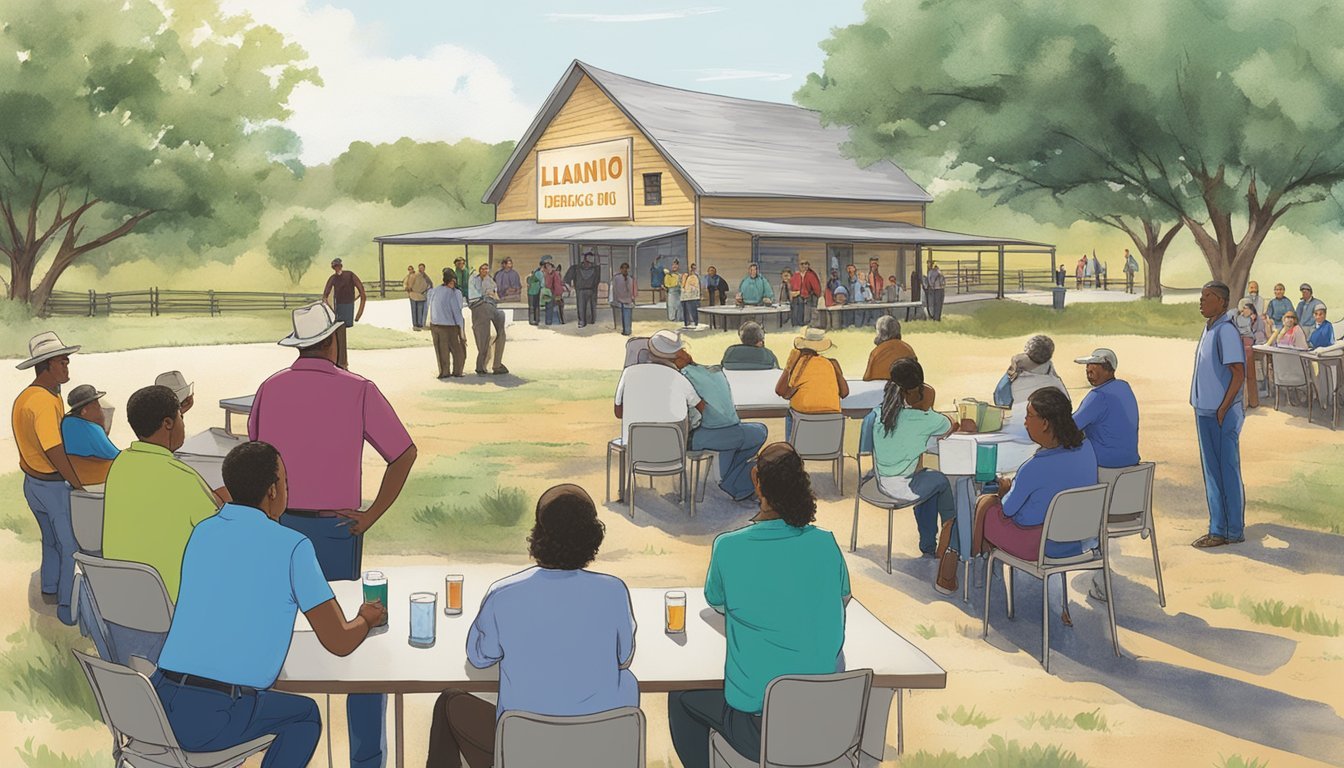
In Llano County, Texas, the community experiences both the challenges and the initiatives associated with alcohol use. Community service organizations often witness the social impacts first-hand, addressing alcohol-related issues that range from public health to law enforcement.
Alcohol Laws in Llano County are tailored to curb misuse. For instance, the sale of packaged liquor is prohibited on Sundays, a regulation that reflects Texas's broader commitment to moderating alcohol consumption. Such laws aim to reduce potential harms, acknowledging that alcohol misuse can strain healthcare systems and affect community well-being.
The alcohol industry also plays a role in shaping the social fabric. Texans engaged in the wine and beer industry often promote responsible drinking initiatives, and many endeavor to contribute positively to the community's economic and social vitality.
Community efforts in Llano include programs designed to prevent underage drinking. Educational strategies may be employed in schools as a part of a larger initiative to combat early alcohol misuse. These efforts are linked to a reduced prevalence of underage drinking, reflecting an effective community response.
Community Initiatives Include:
School-based prevention curricula
Restrictions on hours of alcohol sales
Enforcement of underage drinking laws
Ultimately, Llano County's approach to alcohol laws and community initiatives displays a commitment to maintaining a stable and safe environment for its residents. By advocating for responsible drinking and providing resources for alcohol education, Llano County stands as a testament to a proactive Texas community.
Conclusion
Llano County, Texas, upholds specific local alcohol laws that residents and visitors must adhere to. In unincorporated areas of the county, packaged liquor sales are prohibited on Sundays. For beer and wine, however, sales are permitted in both liquor stores and gas stations.
Those interested in the nuances of alcohol-related regulations in Texas should consult resources such as the Texas Alcoholic Beverage Code and seek updates from the Texas Alcoholic Beverage Commission (TABC). They regularly publish legislative updates and essential information concerning violations and penalties.
The legal landscape includes recent changes, such as the Texas State Legislature's approval of House Bill 1024 on April 28th, 2021, which Governor Abbott signed into law on May 12th of the same year. This law allows mixed beverage and private club permittees to include alcohol delivery services.
Given the variability of alcohol laws in Texas and local areas like Llano County, those seeking comprehensive understanding or facing legal issues should consider talking to local legal professionals. These experts can provide valuable insights into the rights and responsibilities of individuals under Texas law.
For current and future legal considerations regarding public consumption, alcohol sales, or other related activities, one should refer to credible and authoritative legal resources or contact knowledgeable attorneys in the field.