Alcohol and Drinking Laws in Upshur County, Texas
A Comprehensive Guide
In Texas, alcohol regulations are established by the Texas Alcoholic Beverage Commission (TABC) and are enforced across the state, including in Upshur County. These laws determine when and where alcoholic beverages can be sold and consumed, and vary significantly from one jurisdiction to another within the state. Each county in Texas may have unique provisions that reflect the choices of its residents, often decided through local-option elections.
Upshur County adheres to specific alcohol and drinking laws that regulate the sale and consumption of alcoholic beverages within its borders. For instance, the sale of packaged liquor is not permitted on certain holidays, including New Year's Day, Thanksgiving, and Christmas Day. The county’s regulations are a blend of state-level legislative mandates and local preferences, which influence the hours of operation for bars and restaurants serving alcoholic beverages.
Understanding the intricacies of these laws is essential for residents and businesses to ensure compliance. The Alcoholic Beverage Code allows for local-option elections, which enable counties, cities, or individual justice of the peace precincts to tailor the types of alcoholic beverages that may be sold and the manner in which they can be sold. In Upshur County, as is common in many Texas locales, specifics such as operating hours and days of sale can significantly impact the dynamics of local businesses and consumer habits.
Historical Context of Alcohol Laws in Texas
Texas has a diverse history regarding the regulation of alcoholic beverages. The state's legislative stance on alcohol has evolved over time, reflecting shifts in societal attitudes and economic circumstances. Early legislation can be traced back to the Nineteenth Century, when many licenses were issued for the sale of wines and liquors, often outnumbering other businesses.
By the late 1800s and early 1900s, the prohibition movement gained momentum, highlighting the negative impact of alcohol on society. Texas, influenced by this movement, had various communities that voted to ban alcohol, adopting what is known as the county-option, or local option method. This allowed counties to declare themselves as either "dry" (no alcohol sales) or "wet" (alcohol sales permitted).
In the years subsequent to the nationwide Prohibition era (1920-1933), Texas established its primary laws governing the sale, distribution, and consumption of alcoholic beverages. Much of this legislation, crafted post-Prohibition, remains in place, albeit with updates.
Notably, some counties like Aransas, Bexar, and Cameron favor more lenient laws, enabling sales of alcoholic beverages, while counties such as Childress have held onto stricter regulations. Brooks and Burnet counties distinctly represent the diversity in alcohol laws across the state, with ongoing debates about remaining dry or turning wet.
Within this framework, local elections continue to serve as the deciding factor:
On-premise beer and wine sales
Off-premise beer and wine sales
On-premise liquor sales
Off-premise liquor sales
These choices shape the local landscape of alcohol regulation, reflecting Texas's unique combination of historical precedent and contemporary perspective on alcohol laws.
Current Alcohol Legislation in Upshur County
The alcohol regulations in Upshur County are dictated by both Texas state law and local ordinances. Businesses serving or selling alcohol must comply with these rules, which cover licensing, operating hours, and sales regulations.
Licensing and Permits
Entities in Upshur County must obtain the appropriate licenses and permits from the Texas Alcoholic Beverage Commission (TABC) before they can legally sell alcohol. This includes a distinct set of permits for bars, restaurants, and stores, reflecting the type of alcohol they intend on selling and the manner in which it will be sold.
Hours and Days of Sale
The sale of packaged liquor in Upshur County is prohibited on New Year's Day, Thanksgiving Day, Christmas Day, and the following Mondays if the holiday falls on a Sunday. Bars, restaurants, and stores must adhere to the following hours for alcohol sales:
Monday to Friday: Sales begin at 7 a.m. for beer and wine, and liquor sales can start at 10 a.m. All sales must conclude by midnight.
Saturday: Alcohol sales are allowed from 7 a.m. to 1 a.m. Sunday morning for beer and wine, with liquor sales ending at 9 p.m.
Sunday: Sales for beer and wine can commence at noon and must finish by midnight; however, liquor stores remain closed.
Sales Regulation
In Upshur County, the sale of alcoholic beverages is monitored by the Alcoholic Beverage Code. The Code specifies that businesses must follow state law for purchasing alcohol for retail sales. Bars and restaurants are subject to additional regulations regarding responsible service of alcohol and training for their staff to ensure compliance with state mandates.
Restrictions and Enforcement
In Upshur County, Texas, as in the rest of the state, laws pertaining to alcohol consumption and enforcement are designed to ensure public safety. These regulations are stringently enforced by local law enforcement agencies, with specific focus on preventing underage drinking, driving while intoxicated (DWI), and other alcohol-related offenses.
Age Restrictions
In Texas, the legal drinking age is 21. Minors (individuals under 21) are prohibited from purchasing, attempting to purchase, possessing, or consuming alcoholic beverages. Adults, including parent, spouse, or guardian, may provide alcohol to a minor under their supervision, but public intoxication and misrepresentation of age by minors to obtain alcohol are offenses that can lead to penalties. Violation of these laws typically results in a Class C misdemeanor, punishable by a fine up to $500.
DWI Laws
The state enforces strict DWI laws to deter operating a motor vehicle under the influence. For adults, having a blood alcohol concentration (BAC) of 0.08% or higher constitutes intoxication. Minors, however, face DWI charges with any detectable amount of alcohol. The first offense can lead to fines, suspension of driver's license, and education programs. A third offense escalates to a Class A misdemeanor, with increased fines, potential jail time, and longer driver's license suspension.
Penalties for Violations
Penalties for violating alcohol laws in Upshur County range from fines to incarceration, based on the severity of the offense.
For Minors:
First offense: Up to $500 fine.
Subsequent offenses: Higher fines, possible community service, and mandatory alcohol awareness classes.
For Adults (DWI):
First offense: A fine of up to $2,000, 3 to 180 days in jail, and driver's license suspension for 90 days to a year.
Second offense: A fine of up to $4,000, 1 month to 1 year in jail, and driver's license suspension for 180 days to 2 years.
Third offense: A fine up to $10,000, 2 to 10 years in prison, and driver's license suspension for 180 days to 2 years.
Courts in Upshur County also have the authority to impose additional sanctions, such as ignition interlocks, community service, or alcohol education programs.
Special Provisions and Exemptions
This section will detail the nuances of alcohol and drinking laws within Upshur County, Texas, including exceptions on specific holidays, the influence of parental guidance, and industry-specific rules that govern the sale and consumption of alcoholic beverages.
Holidays and Other Exceptions
In Upshur County, Texas, certain holidays like New Year's Day, Thanksgiving Day, and Christmas Day may affect alcohol sales. Retailers are typically permitted to sell beer and wine during these holidays, though restrictions for liquor may differ based on local ordinances. On Sundays, the purchase of alcoholic beverages might have time restrictions, usually starting from noon.
New Year's Day: Sales often follow suit with regular operating hours for retailers.
Thanksgiving Day: Special hours can apply; check local provisions.
Christmas Day: Some retailers may choose to close, but no specific ban exists.
Parental Guidance and Consent
Minors in Upshur County are not permitted to consume alcoholic beverages such as ale, beer, wine, or liquor without consent and supervision. The law provides an exemption that allows a minor to consume these beverages when in the presence and with the consent of their adult parent or spouse, provided they remain on private, non-alcohol-selling premises.
Minors with parental consent: Allowed on private premises.
Parental presence: Required for the above exemption to apply.
Industry-Specific Rules
The alcohol industry in Upshur County operates under specific regulations that control the production, sale, and distribution of alcoholic beverages. Retailers and industry entities are subject to licensing, which dictates delivery protocols and business hours. Additionally, laws are in place to prevent underage drinking, putting liability on licensed establishments to ensure that they do not serve or sell alcohol to minors.
Retail hours of operation: Governed by county-specific rules.
Underage drinking prevention: Mandatory for licensed establishments.
Impact on Local Communities and Businesses
The alteration of alcohol sales laws in Upshur County has tangible effects on local economies and the general welfare of communities. These changes influence retail sales, public health, and may inspire community-led initiatives.
Economic Effects
In Upshur County, the potential legalization of alcohol sales could lead to a shift in the economic landscape. Retailers in the city of Gilmer, for example, might see an increase in retail sales due to the availability of alcoholic beverages. This could, in turn, result in increased tax revenues for the city and county, which they might use to fund other initiatives or community services.
Increased retail sales: Retail establishments that can sell alcoholic beverages may experience a rise in cash flow.
Job creation: The alcohol industry may contribute to job creation, ranging from retail positions to distribution and sales roles.
Public Safety and Health
Public safety and health are often at the forefront of discussions concerning the sale of alcoholic beverages.
Safety concerns: Upshur County law enforcement is likely to monitor for any rise in offenses related to alcohol consumption.
Health considerations: Public health initiatives often aim to educate the community on safe drinking practices and the risks associated with overconsumption.
Community Initiatives
Community response to changes in local alcohol laws often results in various initiatives aimed at balancing economic benefits with public health and safety.
Defense against potential risks: Community groups may advocate for responsible drinking campaigns or fund community service initiatives to counteract the potential negative impacts of increased alcohol availability.
Support for regulation: There may be a push from the community to establish or maintain certain limits on sales to prevent negative outcomes, ensuring that any changes in law protect community wellbeing.
Resources and Legal Assistance
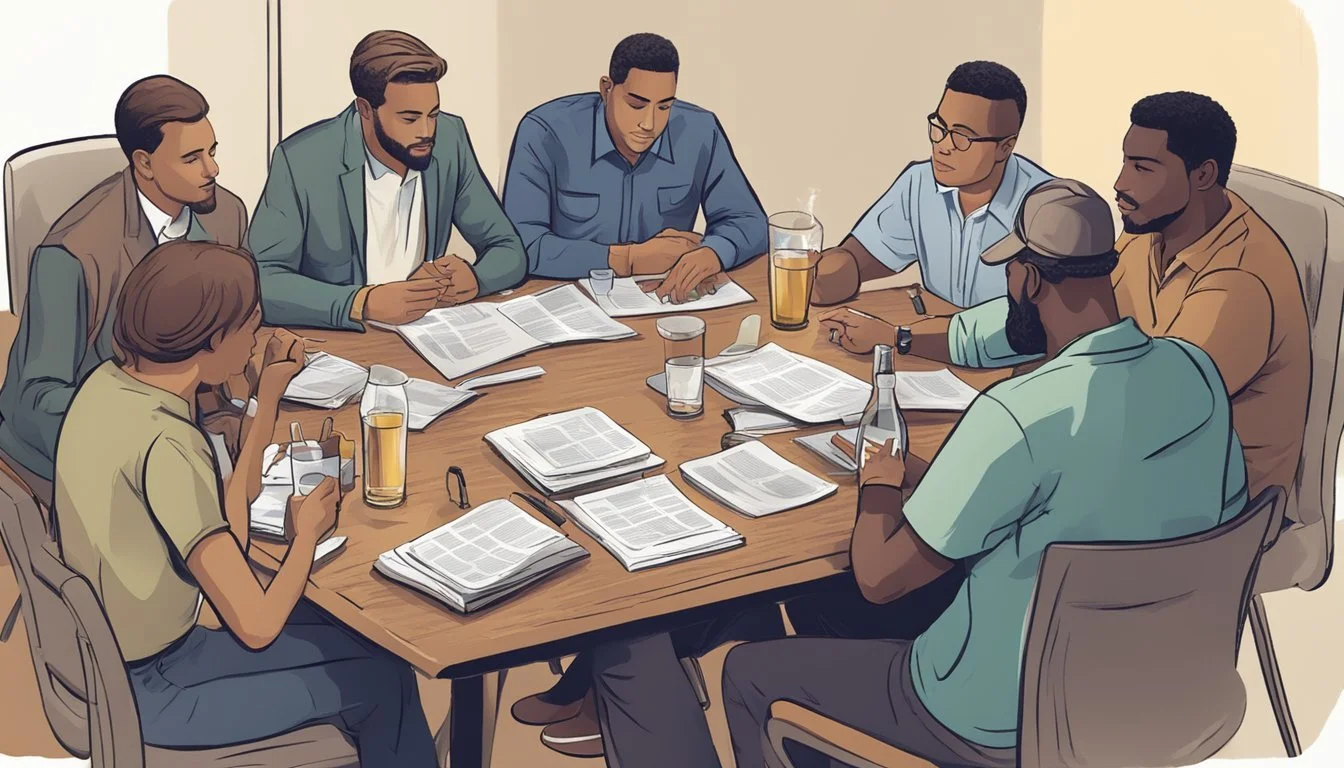
For individuals in Upshur County seeking clarity on alcohol laws and the support available for legal issues, Texas offers a variety of resources. These resources provide information about the state's alcohol regulations and offer legal advice and services, particularly to those who might not otherwise have access to legal representation.
Legal Advice
Residents of Upshur County can obtain free legal services regarding alcohol laws and potential violations through the Texas Legal Services Center (TLSC). While the Texas Alcoholic Beverage Commission (TABC) is the key regulatory body responsible for overseeing the enforcement of alcohol laws, the TLSC helps to educate and represent Texans in legal matters pertaining to these regulations.
Helpful Links and Information:
TABC FAQs: Quick answers about Texas alcohol laws and regulations
TexasLawHelp.org: Education, advice, and representation for underserved Texans
Contact Information
To seek advice or report a violation:
Texas Alcoholic Beverage Commission:
Phone: Specific number for TABC's local office
Website: A direct link to the TABC page where individuals can learn more about laws and penalties
Texas Legal Services Center:
Phone: Specific hotline number for legal advice
Email: Contact email for TLSC
Website: Link to TexasLawHelp.org for online resources and assistance
The standard penalties and fines for alcohol-related violations in Texas are structured by the TABC, and local courts in Upshur County uphold these regulations. Individuals can access this information and learn about legal recourse through the aforementioned entities.
Future Developments and Legislative Trends
Upshur County, like many regions in Texas, is subject to the state's evolving legal landscape concerning the sale and consumption of alcoholic beverages, including malt beverages. As Texans' preferences shift, it is anticipated that Upshur County may observe amendments in state law, driven by both market trends and public policy considerations.
One expected trend is the increased regulation of third-party delivery and shipping laws. The state may see a continuation in the debate over the roles and limitations of third-party providers (TPP) in the sale and delivery of alcohol, with new bills likely being introduced in the Texas House. These proposed laws might focus on ensuring responsible distribution while balancing consumer convenience.
Key Legislative Areas to Watch:
Regulations on Non-Alcoholic Beverages: With a surge in popularity for non-alcoholic drinks, Upshur County may see the state law expanding to clearly regulate this emerging category.
Local Option Elections: Alcoholic beverage law adaptations may also continue through local option elections, which could affect the types of sales allowed in Upshur County.
Potential Bills:
TPP Regulation: Bills addressing third-party delivery services, with an emphasis on reinforcing responsible sales practices.
Sales Framework: Legislative propositions adjusting the framework for sales and consumption of alcoholic and malt beverages in Upshur County.
As the Texas House considers new legislation, Upshur County stakeholders, including businesses and consumers, should stay informed on how potential law changes could impact them. It is essential for all parties to actively engage in the legislative process to guide the responsible evolution of alcohol-related policies in their community.
Conclusion
Upshur County, Texas enforces state-level alcohol regulations, with provisions for local adjustments through local-option elections. These elections enable communities to determine specifics about the sale and distribution of alcoholic beverages in their jurisdiction. Key points include:
Local-option elections allow customization of alcohol laws at the county, city, or precinct level.
Operating hours for liquor stores are regulated, with current laws prohibiting Sunday sales and restricting business hours to between 10 a.m. and 9 p.m. on other days.
Alcohol Sale Restrictions:
Day Sale Restrictions Sunday No liquor sales Other Days (Mon-Sat) 10 a.m. to 9 p.m. New Year's Day No liquor sales Thanksgiving Day No liquor sales
One should note the complexity of Texas alcohol laws, which can vary significantly from one area to another within the state. It is imperative that residents and businesses in Upshur County stay informed about these laws to ensure compliance. Moreover, legal cases such as William Lee Smarr v. The State of Texas and Franky Paul Johnson v. The State of Texas demonstrate the repercussions of non-compliance.
Providers of temporary events involving alcohol in Upshur County must adhere to the specific guidance and meet certain requirements to operate legally. Through effective adherence to these regulations, the community aims to maintain public safety and order regarding the consumption and sale of alcoholic beverages.