Alcohol and Drinking Laws in Upton County, Texas
A Comprehensive Guide
Upton County, Texas, maintains a distinct set of regulations concerning the sale and consumption of alcoholic beverages, reflecting the state's commitment to manage these activities responsibly. In the unincorporated areas of Upton County, the sale of packaged liquor follows specific hours, with sales prohibited on Sundays. This approach not only aligns with Texas's broader regulatory framework but also addresses community norms and expectations regarding alcohol use.
The state of Texas, known for its strict enforcement of drinking laws, sets the legal drinking age at 21. Upton County adheres to these regulations, emphasizing the prevention of underage drinking. Establishments within the county must carefully navigate the complex landscape of state and local regulations, including specific sales hours for different types of alcoholic beverages, to ensure compliance. These measures serve public safety while supporting lawful business operations within the alcohol industry.
Historical Background of Alcohol Laws in Texas
Texas has a complex and evolving history of alcohol legislation, marked by early prohibition efforts and the eventual development of a comprehensive legal framework.
Prohibition and Early Regulations
In the late 19th century, Texas began to enact alcohol laws at a county level, paving the way for local options to prohibit the sale of alcohol. During the early 20th century, as the United States moved toward national Prohibition, Texas had already been implementing its own version of dry laws across various counties.
Development of the Texas Alcoholic Beverage Code
Following the repeal of Prohibition in the 1930s, Texas established the Alcoholic Beverage Code, which has since governed all aspects of alcohol regulation in the state. This code sets forth blue law restrictions, such as the times and days alcohol can be sold, determined by the type of establishment and aligns with Texas's reputation for strict enforcement of alcohol sales and consumption.
The Texas Alcoholic Beverage Code includes:
Legal drinking age of 21.
Specific hours for alcohol sales: e.g., no liquor sales on Sundays.
County-specific dry laws: regions where the sale of alcohol is prohibited or restricted.
Through these laws, Texas maintains a challenging balance between historical blue law traditions and modern alcohol regulation.
Current Alcohol and Drinking Laws in Upton County
In Upton County, Texas, alcohol sales are tightly regulated with specific hours for sale and consumption, arising from a blend of state law and local ordinances. These laws stipulate when and where alcoholic beverages can be sold, affecting both residents and businesses within the county.
County Regulations and Local Ordinances
Upton County enforces the state alcohol laws with additional local ordinances. The sale of packaged liquor is barred on Sundays throughout the county. Local Option Elections allow for cities and counties within Texas to fine-tune these regulations, which means that certain types of alcohol may be sold under different conditions depending on local legislation.
Hours of Sale and Alcohol Service Times
The sale of alcoholic beverages in Upton County follows strict time frames:
Packaged Liquor:
Monday to Saturday: 10:00 a.m. to 9:00 p.m.
Packaged Beer and Wine:
Sunday: Noon to Midnight
Monday to Friday: 7:00 a.m. to Midnight
Saturday: 7:00 a.m. to 1:00 a.m.
Every establishment must comply with these hours to maintain their license for retail alcohol sales.
Special Rules for Sundays and Holidays
Sunday sales are subject to special restrictions:
Packaged liquor is not sold on Sundays.
Beer and wine sales commence at noon on Sundays.
On certain holidays, including New Year's Day, Thanksgiving Day, and Christmas Day, Upton County follows state-wide regulations, which may impose further restrictions on the sale of alcohol. During such holidays, it's essential for retailers and consumers to verify any alterations to the regular rules to remain in compliance.
Licensing and Permits
In Upton County, Texas, the process for obtaining alcohol-related licenses and permits is an orchestrated procedure to regulate the sale and consumption of alcoholic beverages. These licenses are vital for compliance and smooth operation within the alcohol industry.
Obtaining Alcohol-Related Licenses
Individuals and businesses looking to engage in activities involving the sale, distribution, or manufacturing of alcoholic beverages must first obtain the appropriate licenses from the Texas Alcoholic Beverage Commission (TABC). The Alcohol Industry Management System (AIMS) is the online platform where applicants can apply for, renew, or update their licenses. The steps involve ensuring the chosen license or permit is available in Upton County and completing the application process through AIMS.
Retail Sales and Mixed Beverage Permits
Retailers planning to sell alcoholic beverages directly to consumers in Upton County need specific permits. The two primary types are the Mixed Beverage Permit, which allows the sale of spirits, malt beverages, and wine, and the Package Store Permit, permitting the sale of liquor for off-premise consumption. Additionally, there is a Wine-Only Package Store Permit, focused solely on the retail sale of wine.
Special Permits for Brewpubs and Wineries
Special licenses pertain to Brewpubs and Wineries seeking to operate in Upton County. A Brewpub License allows a venue to manufacture beer and sell it to consumers on-premise, while a Winery Permit is required for businesses intending to manufacture wine. It's also important for entities such as private clubs to secure a Private Club Registration Permit to legally serve alcohol to members.
Alcohol Sale and Distribution
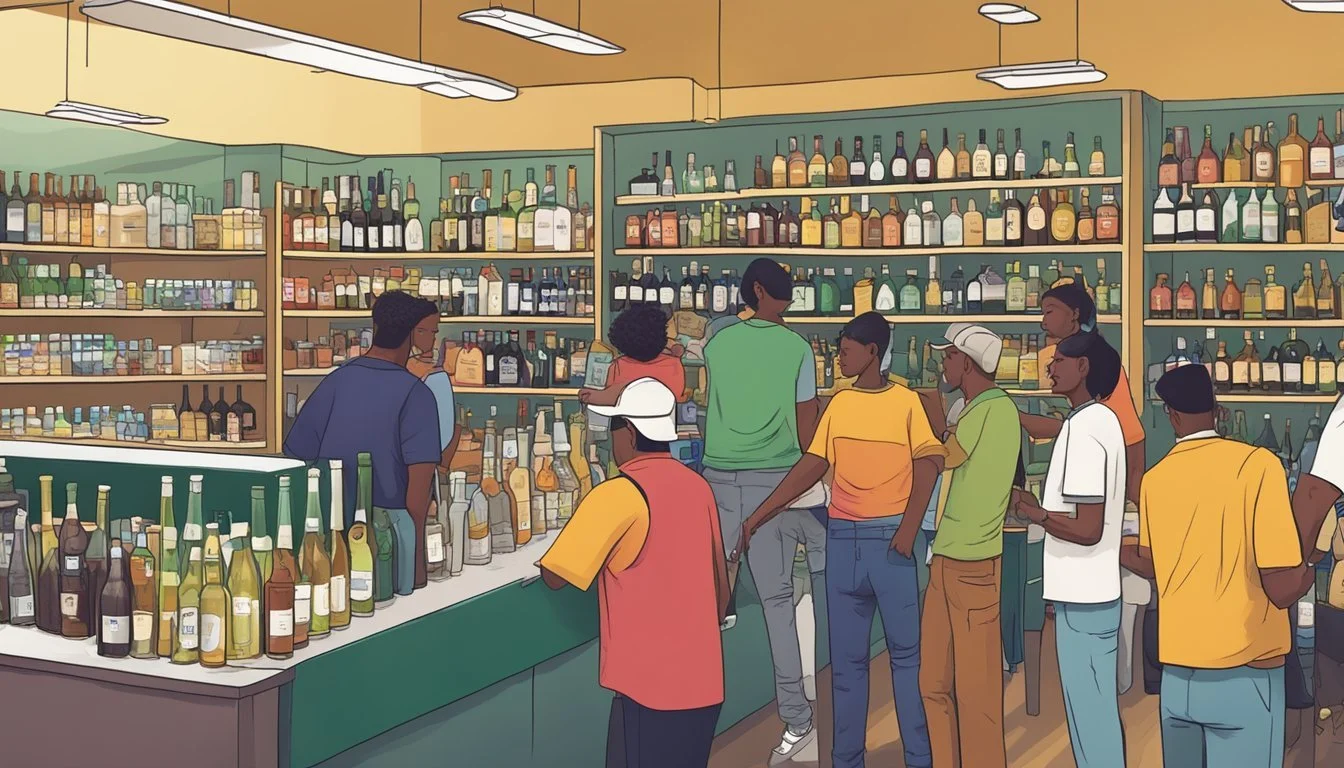
In Upton County, Texas, the sale and distribution of alcohol are governed by specific local regulations, particularly distinguishing between liquor stores and on-premise establishments like bars and restaurants.
Regulations for Liquor Stores and Bars
Liquor Stores:
Operating Hours: Sales are permitted between 10:00 a.m. and 9:00 p.m., Monday through Saturday.
Sunday Sales: The sale of packaged liquor is prohibited on Sunday.
License Requirements: Establishments must hold a valid liquor license to operate legally.
Bars and Restaurants:
Operating Hours: These establishments may serve alcohol from 7:00 a.m. until midnight from Monday to Friday, from 7:00 a.m. to 1:00 a.m. on Saturday, and from noon to midnight on Sunday. They can also sell alcohol-to-go under certain conditions.
Alcohol with Food: On Sundays between 10 a.m. and noon, alcohol can only be served alongside food.
Roles of Distributors and Retailers
Distributors:
Play a crucial role in managing the flow of alcohol products from manufacturers to retailers within the legal framework set by state law.
They must abide by the strict transport and delivery regulations that apply to alcohol distribution.
Include licensed entities like liquor stores, bars, restaurants, and package stores.
Responsible for ensuring legal retail sales, compliant with the timing and licensing rules.
Must enforce age verification to prevent underage purchases and comply with alcohol-to-go and delivery specifics where permitted by law.
Consumption Laws and Regulations
In Upton County, Texas, specific laws regulate the possession and consumption of alcohol. These are in line with state legislation and focus on maintaining public safety and order.
Open Container and Public Consumption Laws
Texas law prohibits the possession of an open container of alcohol in a vehicle on a public highway. Public consumption of alcohol in Upton County is also restricted. It is illegal to consume alcohol in certain public places, such as streets, parks, or where signage prohibits it. Offenders may face fines and legal action.
BYOB Policies and Underage Drinking Rules
"Bring Your Own Bottle" (BYOB) establishments in Upton County allow patrons to bring their own alcohol, but they must comply with Texas Alcoholic Beverage Code. For underage drinking, Texas law states that individuals under the age of 21 are not permitted to consume alcohol. However, a minor may consume alcohol under the direct supervision and approval of a legal guardian, but this is only permissible in a private residence or when the guardian is present. Violation of underage drinking laws can result in penalties including fines, community service, and mandatory alcohol awareness classes ordered by the court.
Health, Safety, and Enforcement
Upton County adheres to Texas state laws governing alcohol sales and consumption, ensuring public health and safety while outlining strict penalties for violations. These regulations are enforced to create a responsible drinking environment and mitigate any negative impacts on the community.
Alcohol Policies and Public Safety
Texas Alcohol Beverage Commission (TABC) sets policies that Upton County businesses must follow to promote public safety. These include prohibiting alcohol sales during certain hours and enforcing age restrictions for consumption and purchase. Local option elections can further refine these rules, allowing communities within Upton County to determine specific alcohol regulations reflecting their preferences on alcohol availability and consumption.
Prohibited Hours: Sales of alcohol are not allowed after certain hours, typically past 2 a.m. for bars and restaurants, and between 10 p.m. and 7 a.m. for retail establishments.
Age Restrictions: The legal drinking age is 21. Violating this can result in penalties for both the consumer and the establishment.
Enforcement and Penalties for Violations
Enforcement of alcohol laws in Upton County is a combined effort between local authorities and the TABC. When violations are detected, penalties can range from fines to suspension or revocation of liquor licenses.
Violations: Can include underage drinking, public intoxication, and selling alcohol during prohibited hours.
Penalties: Fines are imposed depending on the severity of the offense, and repeated violations can lead to more severe consequences such as license revocation.
Strict enforcement ensures that the rules designed to protect public health and safety are followed, maintaining Upton County as a safe environment for residents and visitors alike.
Special Considerations and Exceptions
In Upton County, Texas, alcohol laws take into account the nature of the premises and specific events that may call for different regulations. These tailored laws ensure safety while accommodating the needs of various establishments and gatherings.
Variances for Specific Premises and Events
Certain premises in Upton County may apply for variances to the standard alcohol laws, allowing them to operate under adjusted rules. For example:
Event Venues: May acquire a temporary permit for alcohol sales at festivals or community events, with sales times potentially extending beyond standard hours.
Private Functions: Premises hosting a private event might be exempt from usual restrictions to cater to the nature of the event.
Regulations for Hotels and Private Clubs
Hotels and private clubs in Upton County operate under specialized regulations that acknowledge their unique settings:
Hotel Bars:
May offer extended service hours to guests.
Out-of-hours service can be exclusive to registered guests.
Private Clubs:
Must adhere to Upton County alcohol restrictions but can serve during times when public sales are prohibited if they obtain the appropriate licenses.
Are typically required to have a membership structure that complies with Texas Alcohol and Beverage Commission (TABC) rules.
Industry Information
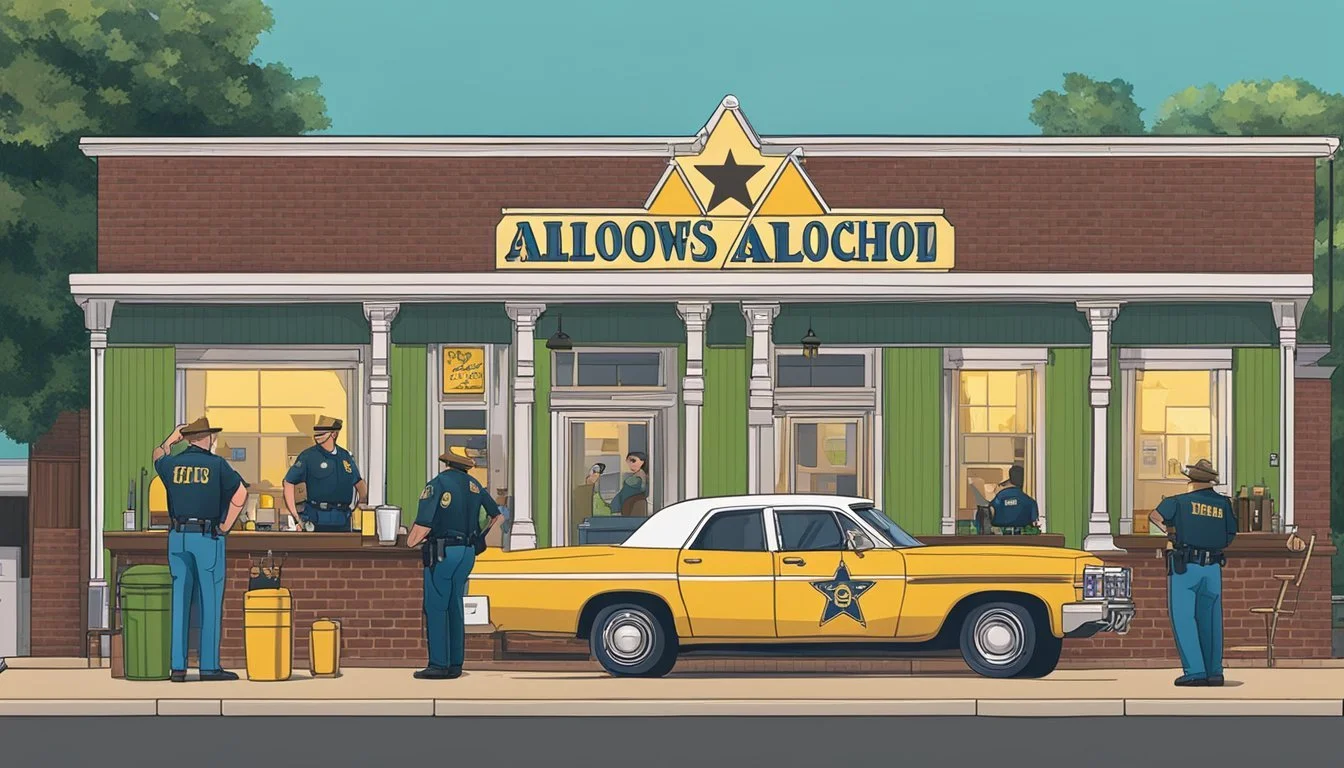
In Upton County, Texas, entities within the alcohol industry, including brewpubs, distilleries, and retail establishments, must navigate a complex framework of regulations. The Texas Alcoholic Beverage Commission (TABC) serves as the principal authority, ensuring compliance with state laws concerning the production, distribution, and sale of malt beverages, distilled spirits, ale, beer, wine, and other alcoholic beverages.
Support and Resources for Texas Businesses
The Texas Alcoholic Beverage Commission (TABC) is dedicated to supporting businesses in the alcohol industry through a variety of resources. Entities such as brewpubs and wine retailers can access licensing assistance, training programs, and guidance on regulatory compliance. An essential requirement for businesses is to maintain a distance of 300 feet from schools or churches, with a larger buffer of 1,000 feet from childcare facilities or youth centers.
Licensing Assistance: TABC offers online portals where businesses can apply for, renew, or manage their alcohol-related licenses.
Education and Training: The commission provides training for sellers and servers to promote responsible alcohol service and minimize the risks associated with alcohol consumption.
Businesses are encouraged to engage with these resources to operate effectively within the state's legal framework.
Alcohol Industry Trends and Statistics
The Texas alcohol industry continuously evolves, influenced by changing consumer preferences and legislative adjustments. Trends indicate a growing interest in craft malt beverages and artisanal distilled spirits, reflecting a nationwide movement towards small-scale, locally-sourced production.
Brewpub and Craft Beer Growth: The popularity of craft beer and brewpubs in Texas mirrors the national trend, leading to an increase in specialty malt beverage offerings.
Wine Production and Sales: Texas, including Upton County, remains a significant market for wine, with both consumption and production on the rise.
Wine Varietals: Texas vineyards are known for producing a wide range of varietals suited to the diverse climate of the state.
The TABC provides statistics on production, sales, and distribution, which are invaluable for businesses to understand market dynamics and consumer behavior. These insights enable industry players to make informed decisions and strategize effectively.
Consumer Guidance
Consumers in Upton County, Texas, navigating the local regulations on alcohol purchases should be aware of specific guidelines pertaining to how they engage in the procurement and receipt of alcoholic beverages. The following subsections detail important considerations around label comprehension, age verification for purchases, and the intricate rules concerning to-go orders and home delivery of alcohol.
Understanding Alcohol Labels and Age Verification
Texas law mandates that all alcoholic beverages include a label displaying Alcohol by Volume (ABV). Consumers should check these labels to understand the strength of the alcohol they purchase. Age verification is a critical step in the purchase of alcohol, and retailers are required to confirm that buyers are at least 21 years of age. Legally, an underaged person may only be provided alcohol if they are in the visible presence of an adult parent, guardian, or spouse with a valid ID proving their age.
Guidelines for To-go Orders and Home Delivery
For to-go orders, businesses with a Food and Beverage Certificate can sell alcohol provided they adhere to the Texas Alcoholic Beverage Commission's (TABC) regulations. Regarding home delivery, entities must possess a Consumer Delivery Permit to deliver alcoholic beverages legally. Such deliveries must still follow the standard age verification process, and all alcohol should be properly sealed and labeled during transport. Deliveries are typically confined within specific hours of operation, in line with state and county laws.
Texas Culture and Alcohol
The complex relationship between alcohol and Texas culture intertwines with the state's history and social norms, reflecting a nuanced approach to consumption and regulation.
Relationship Between Texans and Alcohol Consumption
Texans have a long-standing connection with alcoholic beverages, embodying an aspect of social cohesion and community identity. The state's legal framework, however, reflects a commitment to regulate consumption responsibly. Predominant attitudes towards alcohol are informed by historical context, with the illustrious "Lone Star State" both embracing the camaraderie found in social drinking and advocating for structured legal boundaries.
Regulations: Texans face strict legal implications for missteps, such as minors attempting to purchase or consume alcohol can incur a Class C misdemeanor.
Attitudes: They strike a balance between recognizing alcohol as a component of social events and enforcing adherence to the laws set forth by the Texas Alcoholic Beverage Commission (TABC).
Influence of Alcohol on Local Traditions
Alcohol finds its way into many Texan traditions, from festivals to rodeos, cementing its role in the cultural fabric of the state. However, this influence is mitigated by robust regulation to ensure these traditions do not lead to excessive misuse.
Local Traditions: Events like barbecues and county fairs often feature alcohol, supported by a community-oriented perspective on consumption.
Regulations and Practices: Comprehensive laws, such as the Texas Alcoholic Beverage Code, govern alcohol sales to ensure traditions are celebrated safely.
The laws and customs surrounding alcohol in Texas showcase a state that deeply values its cultural heritage while maintaining a sober regard for the rules that safeguard community welfare.