
Understanding Your Rights and Responsibilities

In New York, gun laws are among the strictest in the United States, presenting a unique set of challenges and considerations for homesteaders who wish to own firearms for protection, hunting, or sport. For those living a self-reliant lifestyle away from urban centers, understanding these laws is essential to ensure compliance and maintain the right to bear arms within the state. New York State issues various types of handgun licenses, which are essential for homesteaders to legally possess firearms within their homes.
Recent legislative changes have also impacted gun ownership in the state. Following the New York State Rifle & Pistol Association v. Bruen decision, which struck down a key element of the state's previous gun laws, new measures were signed into law by Governor Kathy Hochul on July 1, 2022. These laws demand even more stringent control over the possession and carrying of firearms, significantly affecting the licensing process for carrying handguns in public spaces.
Moreover, homesteaders with a valid New York State concealed carry license need to be aware of the frequent revisions in the law, such as the more rigorous recertification requirements now due every three years rather than five. Knowledge of these regulations is crucial for rural dwellers to both maintain their safety and adhere to the legal framework that governs gun ownership in New York.
Overview of New York Gun Laws
In New York, the balance between Second Amendment rights and public safety is navigated through a comprehensive legal framework. Homesteaders must understand state regulations, which are among the strictest in the country, in addition to federal laws.
Historical Context
New York’s stance on gun control has been shaped over decades, escalating significantly with the passage of the SAFE Act in 2013. This Act was a response to increase gun safety and thwart the misuse of firearms, influenced by national events and concerns over public safety.
Legal Framework
The state’s gun laws are particularly stringent, requiring permits for handgun possession and stringent qualifications for ownership. New York Penal Law § 400 outlines the conditions and types of handgun licenses. The Supreme Court's decision on June 23, 2022, adjusted the state's concealed carry law by striking down the "proper cause" provision for obtaining a license.
Handgun licenses:
Premises License: To have and possess in one's dwelling.
Concealed Carry License: Must show proper cause (pre-June 2022 ruling) and recertify every three years post-issuance.
State vs. Federal Regulations
The federal government also imposes gun control laws that work in tandem with state regulations. While the Second Amendment protects the individual right to bear arms, New York State laws often have more restrictive measures than federal regulations, necessitating additional awareness from residents.
Federal laws address the broader aspects of gun ownership.
State laws detail specific conditions unique to New York, such as the SAFE Act.
By understanding both layers of legislation, individuals can better navigate the legal requirements for gun ownership and possession in New York.
Gun Ownership Eligibility

In New York, an individual's eligibility to own a firearm is determined by stringent laws ensuring only those meeting specific criteria can obtain a license. These regulations are in place to uphold safety standards within the state.
Age and Residency Requirements
New York State requires an individual to be at least 21 years of age to own a semi-automatic rifle. They must also apply for and receive a state-issued semi-automatic rifle license. As for residency, applicants must be legal residents of New York to be eligible for a firearms license.
Background Checks
Background checks are a crucial step in the gun ownership process. They are conducted by the FBI and include various databases to ensure no misdemeanor convictions or other legal impediments exist. This process verifies that the individual has maintained good moral character and has no criminal history that would disqualify them from owning a firearm.
Mental Health and Criminal History
An aspect of the background check is the assessment of mental health and criminal history. New York laws dictate that individuals with certain mental health conditions or those who have been involuntarily committed to a mental institution are ineligible to own a firearm. Additionally, those with a felony or serious offense conviction are disqualified.
Firearms and Licensing
In New York, homesteaders should be aware that firearms licensing is mandatory, and specific categories of weapons require different permits. Regulations are strict, and adhering to them is essential for legal firearm ownership and use.
Types of Firearms
Handguns: A handgun, such as a pistol or revolver, requires a Pistol Permit in New York. Homesteaders should note that Assault Weapons, as defined by state law, are subject to additional restrictions and may not be readily available for licensing.
Long Guns: Rifles and shotguns typically do not require a permit unless they fall under the definition of assault weapons.
Licensing Procedures
To obtain a Firearm License in New York, individuals must:
Complete an application specific to their county of residence.
Provide personal information and reason for the permit request.
Pass a background check.
Complete a firearms safety course, if applicable.
License to Carry: Following the Bruen decision, New York reevaluated its "proper cause" requirement. Obtaining a License to Carry now follows updated criteria, yet remains stringent and geared towards promoting public safety.
Renewal and Revocation
Renewal: Firearm licenses in New York generally do not expire, but certain municipalities require periodic renewal. Owners should verify local laws to maintain their permits.
Revocation: Licenses may be revoked for various reasons, such as criminal convictions or violating gun safety regulations. It's crucial for firearm owners to comply with state and local laws to avoid revocation.
Specific Regulations for Homesteaders
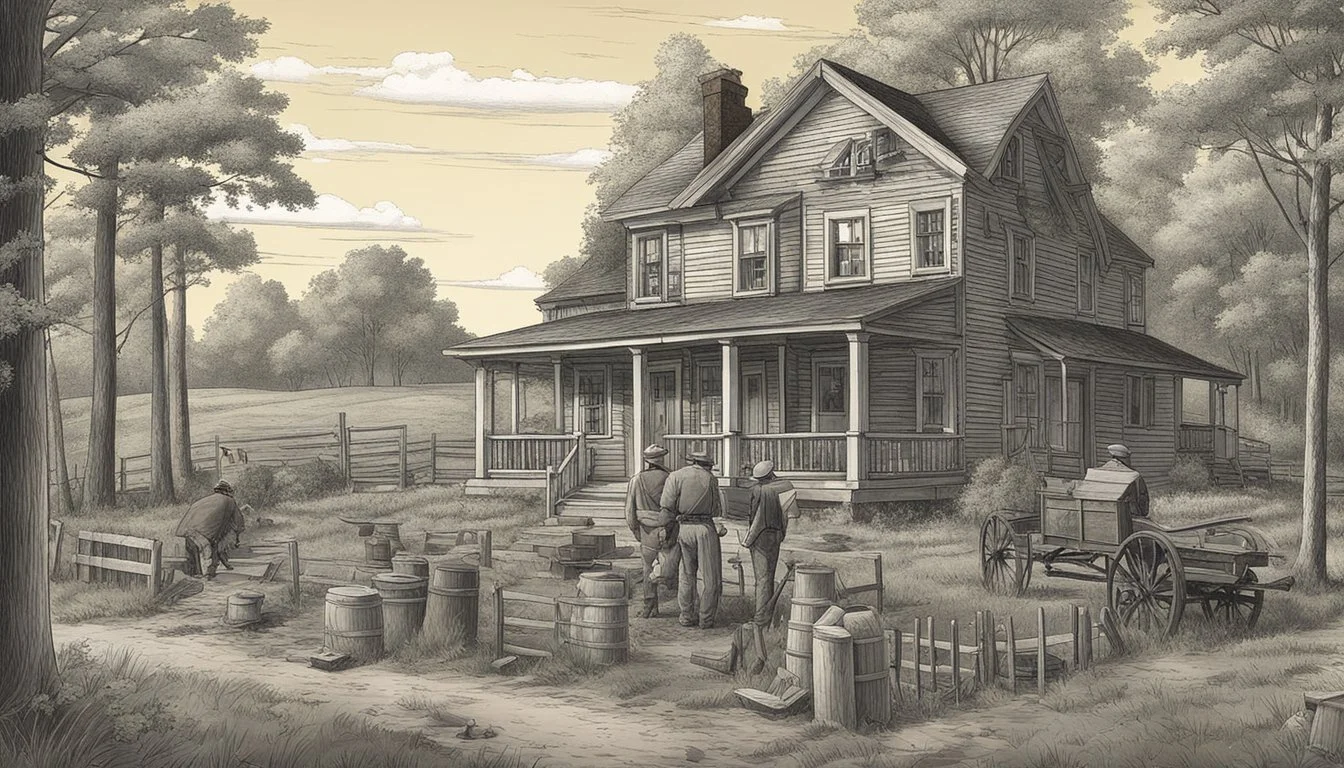
For homesteaders in New York, understanding the state's gun laws is crucial when it comes to carrying firearms, defending one's property, and ensuring proper firearm storage and safety.
Carrying Firearms on Private Property
In New York, homestead owners are allowed to carry their firearms on their private property without a permit. This means that homesteaders can carry their firearms while on their own homestead. However, it is important to note that carrying a firearm off the property typically requires a concealed carry permit, which was affected by recent legislation requiring tighter controls.
Permit Requirement for Off-Property: A permit is required to carry a concealed handgun off one's own property.
No Open Carry: New York strictly prohibits the open carry of handguns.
Using Firearms for Self-Defense
When it comes to self-defense on a homestead, New York adheres to strict regulations. A homesteader may use a firearm to defend themselves within their home under the state's Castle Doctrine, but the use of deadly force must be justified and necessary to prevent certain serious crimes.
Justifiable Use: Firearm use in self-defense is strictly scrutinized and must be in response to an immediate threat of serious harm.
Castle Doctrine: New Yorkers have the right to defend their domicile without the duty to retreat from an intruder.
Firearm Storage and Safety
Safe storage is a critical aspect of gun ownership for homesteaders. New York laws require that firearms, when not in use, are stored securely to prevent access by unauthorized users, especially minors.
Secure Storage Requirements: Firearms must be stored in a locked container like a lockbox or a safe.
Preventing Unauthorized Access: It is a homesteader's responsibility to ensure that guns are inaccessible to individuals who are not permitted to handle them.
Firearm Storage Devices:
Lockbox
Gun Safe
Safety Measures:
Use of trigger locks
Storing ammunition separately
Purchasing and Selling Firearms
In New York, gun purchasers and sellers must navigate a regulatory environment that distinguishes between different types of firearm transactions. Such sales can transpire through licensed dealers or private parties, each with its own set of rules.
Dealers vs. Private Parties
Licensed Dealer: When purchasing a firearm from a licensed dealer, buyers are ensured compliance with all state and federal laws. Dealers conduct mandatory background checks and are required to adhere to strict guidelines set forth by law.
Background Checks: Required for all dealer sales.
Federal License: Dealers must possess a current Federal Firearms License (FFL).
Private Parties: Private sellers in New York are permitted to sell firearms; however, since March 15, 2013, all transactions must involve a background check performed by a licensed dealer, except when the transfer is between immediate family members.
Gun Shows: Sales at gun shows are treated similarly to other private sales and require a background check by a licensed dealer.
Family Exemption: Immediate family transfers do not require a background check.
Ammunition Sales
Sellers of ammunition are also subject to state regulations:
Licensing: Vendors selling ammunition must be licensed by the state.
Background Checks: While initially more lenient, regulations have been pushing towards the necessity for background checks on ammunition sales.
Recordkeeping Requirements
Both licensed dealers and individuals involved in the sale or transfer of firearms are subject to recordkeeping requirements:
Dealers: Must maintain detailed records of all transactions, including information about the firearm and the purchaser.
Private Parties: Are required to conduct the transfer through a licensed dealer, who will then be responsible for the requisite paperwork.
Purchasers and sellers must ensure all transactions of firearms and ammunition comply with New York's regulatory framework, which aims to balance personal rights with public safety.
Prohibited Locations and Sensitive Areas
In New York, strict laws prohibit firearms in various designated areas, often referred to as "sensitive locations," to ensure public safety and reduce gun violence. These restrictions have been upheld by courts, confirming the state's commitment to control where guns can be lawfully carried.
Schools and Government Buildings
Schools, including K-12 institutions and colleges, are mandated to be gun-free zones. It is against the law to carry firearms on school premises, which is a direct measure to safeguard students, faculty, and staff. Government Buildings, including state offices, often overseen by officials like Governor Kathy Hochul, and courthouses are also part of these prohibited areas. The goal is to maintain a secure environment where government operations can proceed unhindered by the threat of gun violence.
Public Transportation and Shelters
Public safety in transit systems is a priority. Consequently, firearms are banned on all forms of Public Transportation, including subways, buses, and trains, to ensure the security of the commuting public. Additionally, environments that provide refuge like homeless shelters are included in the list of sensitive areas where New Yorkers are not permitted to carry guns.
Entertainment and Recreation Locations
Places where people gather for leisure activities, such as Entertainment and Recreation Locations, are also designated as sensitive. These areas often draw large crowds and include venues like theaters and sports stadiums. Similarly, accessible community spaces like playgrounds, libraries, and houses of worship fall into this category. The restrictions extend to locales where individuals seek care and healing, such as hospitals. The enforcement of these gun-free zones is pivotal to maintain a safe and secure atmosphere for residents and visitors alike.
Legal Implications and Penalties

In the state of New York, gun laws carry specific legal implications with associated penalties that are critical for individuals to understand. Ensuring compliance with these laws is vital, as penalties can range from fines to imprisonment.
Violations of Gun Laws
Under New York law, carrying an unlicensed firearm is illegal. The law classifies possession of an unlicensed firearm as a misdemeanor offense, which can lead to a fine of up to $10,000 and/or up to one year in jail. However, if the firearm is loaded and in an individual's possession without a license, it escalates to a felony offense. The penalties in such cases are more severe, potentially including longer prison sentences.
Criminal Charges and Consequences
In addition to fines and potential jail time, individuals charged with gun law violations may face long-term consequences. Criminal charges could result in a criminal record, which can affect employment, housing, and other areas of life. Furthermore, an individual might need an attorney to navigate the criminal justice system, which can be a complex and costly process. Oversight of these laws is stringent, and violators are subject to thorough investigation and prosecution to the full extent of the law.
Emerging Trends and Future Considerations

In the realm of New York's gun laws, homesteaders must be cognizant of technology's role in firearm safety and the implications of recent legislative adjustments.
Technology Advancements in Firearm Safety
Advancements in firearm technology, particularly in safety mechanisms, are rapidly emerging. Microstamping, a process that allows ballistic identification through specific markings on cartridge casings, is one such trend. This technology could potentially aid in law enforcement investigations and could influence future regulations surrounding firearm ownership.
Moreover, the integration of technology in firearms extends to safety features that could alter the landscape for homesteaders. These include biometric locks and smart guns that only fire when used by an authenticated user, thereby potentially reducing the risk of accidental discharges or unauthorized use.
Legislation Changes and Proposals
With the U.S. Supreme Court ruling on June 23, 2022, striking down a New York law requiring "proper cause" for concealed carry permits, state legislators have been prompted to reevaluate gun laws. Homesteaders should be aware that such legal shifts can impact their usage and ownership of firearms like semi-automatic rifles. Following the ruling, lawmakers, with figures like Senate Majority Leader Andrea Stewart-Cousins and Speaker Carl Heastie, have been focusing on revising the state's regulatory framework.
One significant consideration is the influence of the National Instant Criminal Background Check system, which is pivotal in the acquisition of firearms. Regulation proposals in New York may involve these checks becoming more stringent, affecting all firearm purchases.
Additionally, "Red Flag" laws, which allow police or family members to petition for the temporary removal of firearms from a person who may present a danger to themselves or others, are also gaining traction. The advocacy of groups such as the NRA can be expected to shape these legislative endeavors, actively defending gun owner rights in the face of new regulations.

