
Understanding Your Rights and Responsibilities
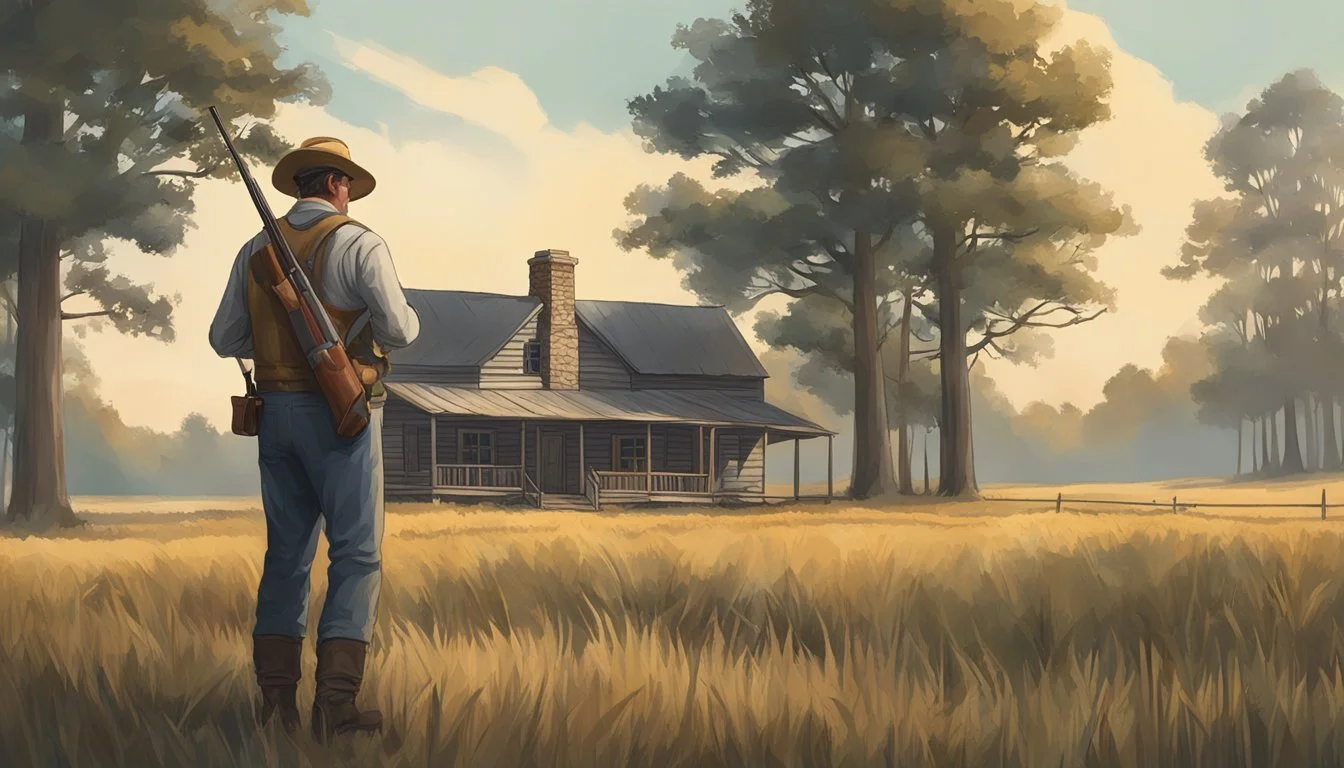
In North Carolina, homesteaders often equate firearms to essential tools for their lifestyle, similar to shovels and cast iron pans. These tools are held for various purposes including hunting for food, protecting livestock from predators, and ensuring the safety of one's family. North Carolina gun laws are designed to balance the need for personal protection with public safety, allowing the citizens to exercise their Second Amendment rights within the framework of the law.
The state upholds an open carry policy, permitting residents to carry firearms visibly without a permit, provided they meet the legal age requirement and possess no legal impediments to firearm ownership. However, pertaining to the purchase of handguns, North Carolina mandates the procurement of a pistol purchase permit. This permit system underscores the state's vigilance in monitoring handgun ownership, ensuring that each transfer of a handgun is legally compliant and the owner is authorized.
In the context of homesteading, understanding the intricacies of North Carolina's firearm regulations is imperative. The regulations offer a structural foundation for exercising firearm rights responsibly, which includes the open carrying of firearms and the lawful purchase and ownership of rifles, shotguns, and handguns. It is equally important for homesteaders to recognize that adherence to local firearm laws and awareness of no-gun zones are also aspects of responsible gun ownership.
Background of Gun Laws in North Carolina

North Carolina's gun laws are a blend of federal guidelines interwoven with state-specific regulations that have evolved over time. The laws are crafted to respect the Second Amendment while addressing the state's own approach to firearm regulation and public safety at various periods.
Second Amendment and State Regulations
In North Carolina, the recognition of the Second Amendment is paired with Article 1, Section 30 of the State Constitution, which secures the right of residents to possess firearms. The state legislature has the authority to enact laws regulating the use, sale, and possession of firearms within North Carolina. Open carry of firearms is permitted without a permit, provided the individual is at least 18 years old and compliant with federal prohibitions.
Historical Changes in Gun Laws
Gun regulations in North Carolina have undergone significant changes in recent years. In 2021, there were events that brought gun laws to the forefront of legislative sessions. By 2023, the state's legislature made a notable shift by overriding the governor's veto to repeal handgun purchase permit requirements. This alteration reflects the evolving landscape of firearm laws and a commitment to align with the sentiment of some North Carolina residents, while still being a topic of contentious debate across the states.
Understanding Gun Ownership Requirements
In North Carolina, homesteaders seeking to own firearms must navigate various legal requirements, which include eligibility guidelines, a formal permitting process for handguns, and specific considerations for both residents and non-residents.
Eligibility and Restrictions
To legally possess firearms in North Carolina, individuals must be at least 18 years old for rifles and shotguns, and 21 for handguns. State law prohibits individuals convicted of felonies, those under indictment for felonies, or unlawful users of controlled substances, from owning firearms. The transfer of handguns requires a pistol purchase permit or a concealed carry permit, which are issued after a criminal background check by the county sheriff.
Background Checks and Permitting Process
Before purchasing a handgun, a resident must obtain a pistol purchase permit from their local sheriff's department or hold a valid concealed carry permit. To acquire this permit, applicants undergo a criminal background check. The check includes scrutiny for past criminal activity, including any history of felony convictions or domestic violence. If an applicant fails the background check, the permit will be denied. For rifles and shotguns, federal law requires a criminal background check at the point of purchase.
Gun Ownership for Residents vs. Non-residents
Residents of North Carolina are eligible to apply for a pistol purchase permit from their local sheriff's office. Non-residents, however, are generally not eligible for such permits in the state, unless for a job-related purpose authorized by law. Non-residents can possess firearms that they legally own in their home state, but they must comply with North Carolina's firearm regulations, especially regarding transfer and possession of handguns, while in the state.
Carrying and Transporting Firearms
In North Carolina, the laws for carrying and transporting firearms are distinct for concealed and open carry, and vary based on location, such as personal property versus public areas. Understanding these regulations ensures legal compliance and reinforces responsible gun ownership among homesteaders.
Concealed Carry Permitting
To carry a concealed handgun in North Carolina, individuals must obtain a North Carolina Concealed Handgun Permit (CCHP). The permitting process involves:
Completing an approved safety training course.
Submitting a permit application to the county sheriff's office.
Presenting valid identification and proof of residency.
Once issued, the CCHP allows the permit holder to carry concealed on their person or in a vehicle throughout the state. However, certain locations like schools, government buildings, and establishments that prohibit concealed weapons are off-limits, even with a permit.
Open Carry Regulations
North Carolina permits the open carry of firearms without a CCHP. This means one can visibly carry a gun on their person in areas where it is not expressly forbidden. Open carry is subject to the following conditions:
The individual must be at least 18 years old.
The firearm should be carried in a non-threatening manner.
Businesses and private property owners may restrict or prohibit the practice on their premises.
Practicing open carry requires a careful understanding of where it is allowed, as some municipalities have stricter rules.
Carrying Firearms on Personal Property
On personal property, North Carolinians are protected under the Castle Doctrine, which allows individuals to use a firearm in defense of their home, vehicle, or workplace. The specific guidelines include:
No permit is required to carry a firearm on one's own property.
Consent is necessary to carry a firearm on someone else's property.
Firearms may be kept in a home or business without licensing requirements.
The property owner's rights are paramount when carrying firearms on personal grounds, whether openly or concealed.
Buying and Selling Firearms
When engaging in the buying or selling of firearms in North Carolina, there are specific regulations that must be followed. These include obtaining necessary permits, understanding how private sales work, and complying with dealer obligations.
Pistol Purchase and Transfer Permits
To purchase a pistol in North Carolina, individuals must obtain either a pistol purchase permit from their county sheriff's office or possess a valid concealed carry permit. This ensures a background check has been conducted, complying with state pistol purchase permitting laws. The same applies when transferring a pistol; a background check is required, and the appropriate permit must be presented.
Pistol Purchase Permit Requirements:
Background Check: Mandatory
Valid: One-time use
Where to Obtain: County Sheriff's Office
Private Sales and Gun Shows
Private sales of firearms, including those at gun shows, do not legally require federal background checks if conducted between North Carolina residents. However, the seller is responsible to ensure that the purchaser is legally allowed to own a firearm and is not prohibited due to any restrictions. For private handgun transfers, the purchaser must present a pistol purchase permit or concealed carry permit.
Pistol Sales:
Permit required for handgun transfers
No federal background check mandated
Regulations for Dealers and Businesses
Federal firearms licensees (FFLs) in North Carolina are obliged to conduct federal background checks before selling any firearm. This applies to dealers and businesses selling firearms as a part of their regular commerce. These background checks are performed to ascertain any purchaser prohibitions and ensure the buyer is legally eligible to receive and own a firearm.
Dealer Obligations:
Background Checks: Federal checks required for all sales
Permits: Handgun sales require pistol purchase or concealed carry permit
Adhering to these laws is crucial for individuals and businesses alike to ensure that all transactions of firearms are conducted legally and responsibly.
Firearm Prohibitions and Penalties
Understanding North Carolina's firearm prohibitions and the penalties for violations is essential for homesteaders to ensure they remain within the bounds of the law. This section outlines who is barred from possessing firearms and the legal repercussions of non-compliance.
Prohibited Possessors and Circumstances
Prohibited possessors in North Carolina include:
Individuals convicted of a felony unless their firearm rights have been restored.
Those deemed a fugitive from justice, indicating an outstanding arrest warrant.
Persons determined to be an unlawful user of, or addicted to, controlled substances.
Additional prohibitive circumstances encompass:
Minors under the age of 18 possessing handguns, except in specific situations such as hunting or with parental supervision.
Individuals subject to a current domestic violence protective order.
Penalties for Violating Gun Laws
Violating North Carolina's gun laws results in serious consequences:
Individuals unlawfully in possession of a firearm, having been convicted of a felony, may face charges with potential federal penalties, including imprisonment.
Misdemeanor offenses can result in fines and potential jail time, depending on the severity of the violation.
Homesteaders are advised to seek guidance from a criminal defense lawyer if they are uncertain about their legal standing or if they require representation in response to accusations of violating firearm laws.
Self-Defense and Gun Laws
In North Carolina, homesteaders must navigate specific statutes that govern the use of firearms for self-protection, primarily focusing on the Castle Doctrine and related regulations about deadly force to ensure the security of their home and family.
Castle Doctrine and Home Defense
North Carolina's adherence to the Castle Doctrine allows individuals the legal right to use reasonable force, including deadly force, to defend themselves against an intruder within their home. This principle is rooted in the belief that one's home is a sanctuary, and certain protections are afforded to those who must act to safeguard themselves and their family within it.
No Duty to Retreat: There is no obligation to retreat from the threat if an individual is in a place where they have a lawful right to be.
Protection Extends: This right of defense extends to one's home, workplace, and vehicle.
Use of Deadly Force and Legal Implications
The use of deadly force is justified in North Carolina under specific conditions where there is a reasonable belief of imminent risk of death or serious bodily harm. The law tightly regulates these instances to prevent unnecessary gun violence.
Conditions where deadly force is justified:
To protect oneself or others from imminent harm
To prevent the commission of a forcible felony
Legal Implications:
Conceal Carry Permit Holders: They must inform law enforcement of their weapon during official encounters.
Limits: Laws prohibit firearm use under the influence of alcohol/drugs or in certain locations like schools and government buildings.
When wielding a firearm in self-defense, individuals must be aware of their responsibilities and the profound implications of their actions, ensuring the protection of lives is upheld without unnecessary risk.
Special Categories of Firearms

In North Carolina, specific regulations apply to particular types of firearms, including assault weapons, machine guns, and devices such as suppressors. Homesteaders must navigate these rules to ensure compliance.
Regulations for Assault Weapons and Machine Guns
North Carolina does not have a state-specific assault weapon law separate from federal regulations. Therefore, the possession and usage of these firearms are primarily governed by federal statutes. Machine guns, however, are a different matter. Under both state and federal law, machine guns are heavily regulated. Individuals must comply with the National Firearms Act (NFA) and register with the Bureau of Alcohol, Tobacco, Firearms and Explosives (ATF). This includes a thorough background check and the payment of a tax stamp.
Limitations on Magazine Capacity
There are no state-imposed limitations on magazine capacity in North Carolina. This means that for rifles, handguns, and shotguns, magazines can feasibly hold any number of rounds without violating state laws. This aligns with federal law, which currently does not impose magazine capacity restrictions for the general public.
Ownership and Usage of Suppressors
The ownership and usage of suppressors, also known as silencers, is permitted in North Carolina, given that they adhere to the rules established by the National Firearms Act (NFA). Like machine guns, suppressors must be registered with the ATF, and the owner must undergo a background check and pay for a tax stamp. Suppressors are used to lower the decibel level of the gunshot sound and are legal for hunting in North Carolina.
Lost, Stolen, or Destroyed Firearms
In North Carolina, firearm owners are not legally obliged to report when their firearms are lost, stolen, or destroyed. However, there are protocols and possible repercussions to consider regarding how these situations are managed.
Reporting and Legal Requirements
When a firearm goes missing, North Carolina law does not mandate gun owners to report lost or stolen firearms to the police or any other authority. However, law enforcement agencies recommend reporting these incidents for the purpose of public safety and potential recovery of the firearm. If a firearm is used in a crime after it is lost or stolen and it had not been reported, the original owner might face difficulties proving non-involvement in the incident.
Report to Local Sheriff: It is advisable to contact the county sheriff as soon as possible to inform them of the situation.
Case Number: Obtaining a case number can be useful for insurance claims or if the firearm is recovered.
Replacement of Permits and Licenses
If a permit or license specifically related to the ownership, carrying, or purchasing of firearms is lost, stolen, or destroyed, gun owners must contact their local county sheriff's office to inquire about the replacement process.
Pistol Purchase Permit: Prior to 2023, a pistol purchase permit obtained from the sheriff's office was required for handgun acquisitions, but legislative changes have since removed this requirement.
Concealed Handgun Permit (CHP): If a CHP is lost or destroyed, owners must apply for a duplicate permit through the sheriff's office of the county where the permit was originally issued.
Fee: There is typically a fee for the issuance of a duplicate permit.
Identification: Proper identification and documentation of the loss or destruction will be necessary.
It is important for gun owners in North Carolina to stay informed about their responsibilities under current gun laws and understand the processes for dealing with lost, stolen, or destroyed firearms to ensure the safety of themselves and their communities.
Firearm Safety and Training
In North Carolina, homesteaders recognize the importance of firearm safety and training. Safe and responsible gun handling is not only essential for personal safety but also for ensuring the security of the homestead.
Safety Courses and Certifications
North Carolina offers a variety of firearm safety courses and certifications to promote responsible gun ownership. A firearms safety and training course typically encompasses key safety rules, including the handling, storage, and maintenance of firearms. Most courses culminate in a certification that acknowledges the attendee's understanding and commitment to firearm safety. The courses are often required for those seeking a concealed handgun permit. Here's an example of what the course content generally includes:
Basic Firearm Safety Rules
Always treat the firearm as if it is loaded.
Keep the firearm pointed in a safe direction.
Keep your finger off the trigger until ready to shoot.
Always know your target and what is beyond it.
Secure Storage Options to Ensure Child Safety
Gun safes.
Locking devices for triggers and firearms.
Separate storage of unloaded firearms and ammunition.
Best Practices for Safe Gun Handling
The cornerstone of firearm safety is ingrained in the best practices of handling guns, which can help prevent accidental discharges and injuries. Homesteaders are encouraged to:
Familiarize Themselves with their firearm's mechanical and handling characteristics.
Educate All Family Members, including children, about the dangers of firearms.
Practice Regularly to maintain proficiency in using their firearms under various conditions.
By following these protocols and participating in a firearms safety course, North Carolina residents ensure that safety is prioritized in their interaction with firearms on their homesteads.
Legal Considerations and Resources

For homesteaders in North Carolina, understanding the specific legal requirements for firearm ownership is crucial. This section outlines the necessary steps for compliance with state and federal laws.
Renewal and Reciprocity of Permits
North Carolina requires periodic renewal of handgun permits. Owners must ensure they renew their permits to maintain the legality of possession. Additionally, North Carolina recognizes the gun permits of other states—a concept known as reciprocity. Homesteaders must verify that their permits are valid and consult state resources to understand the scope of recognized out-of-state permits.
Role of Legal Counsel in Firearm Issues
Consulting with a lawyer knowledgeable in state laws and firearm regulations can be beneficial for homesteaders. Legal counsel can assist with issues such as the transfer of firearm ownership and inheritance of guns. They play a pivotal role in guiding through legal complexities and ensuring that firearm owners adhere to both state and federal regulations.
Navigating State and Federal Regulations
Maintaining compliance with both state and federal law is key for homesteaders who own firearms. State laws dictate the process of obtaining an owner license and a state permit, while federal laws lay out the overarching rules that apply to all states. It is important for firearm owners to stay informed about changes in the law to avoid unintentional violations. Resources such as the NRA-ILA (National Rifle Association Institute for Legislative Action) provide updates and explanations on current laws and regulations.

