How do you eat jerk chicken?
A Guide to Enjoying this Spicy Delicacy
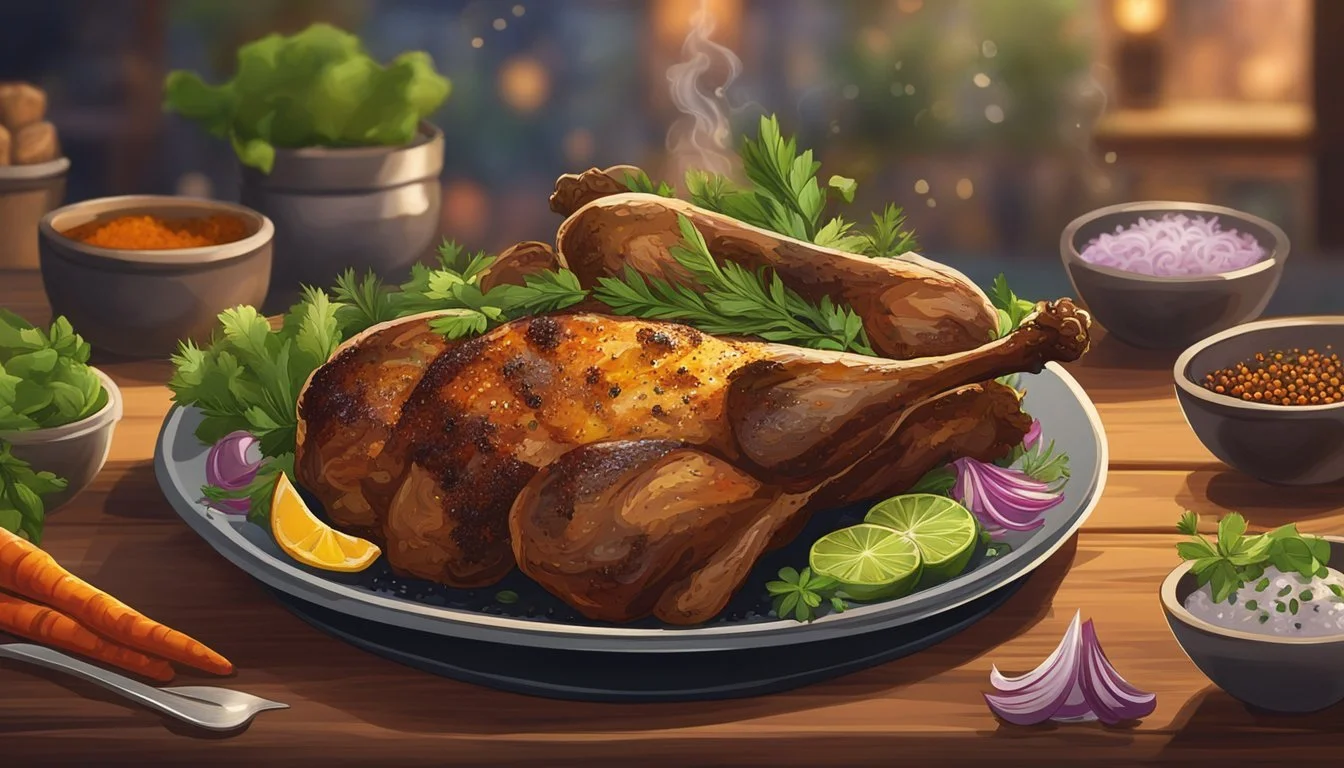
Jerk chicken (how long does chicken last?), a fiery and flavorful dish, is deeply rooted in Jamaican culture, embodying the island's rich history in its taste. The method of cooking jerk involves marinating the chicken in a vibrant blend of spices, including allspice and Scotch bonnet peppers, which infuses the meat with heat and a complex spectrum of flavors. Traditionally, the marinated chicken is slow-cooked over pimento wood, which imparts a smoky essence characteristic of authentic jerk cuisine.
Eating jerk chicken is an experience that extends beyond mere taste; it is a culinary journey that embraces the heart and soul of Jamaican culinary traditions. When served, jerk chicken is often accompanied by staples such as coconut rice or rice and beans, which balance the spiciness while adding creamy and savory notes to the meal. This creates a harmonious combination, allowing the eater to appreciate the full depth of the jerk chicken's flavor profile.
As for the preparation process of the chicken itself, it can vary, involving either grilling over coals or baking in an oven to achieve the desired level of char and smokiness. Regardless of the cooking method, the chicken should be well-cooked, with an internal temperature reaching 160 degrees Fahrenheit to ensure safety and tenderness. Once cooked, the jerk chicken can be finished with a drizzle of sauce made from the same spices used in the marinade to amplify its bold taste, creating a dish that truly represents the essence of Jamaican cuisine.
Historical Context
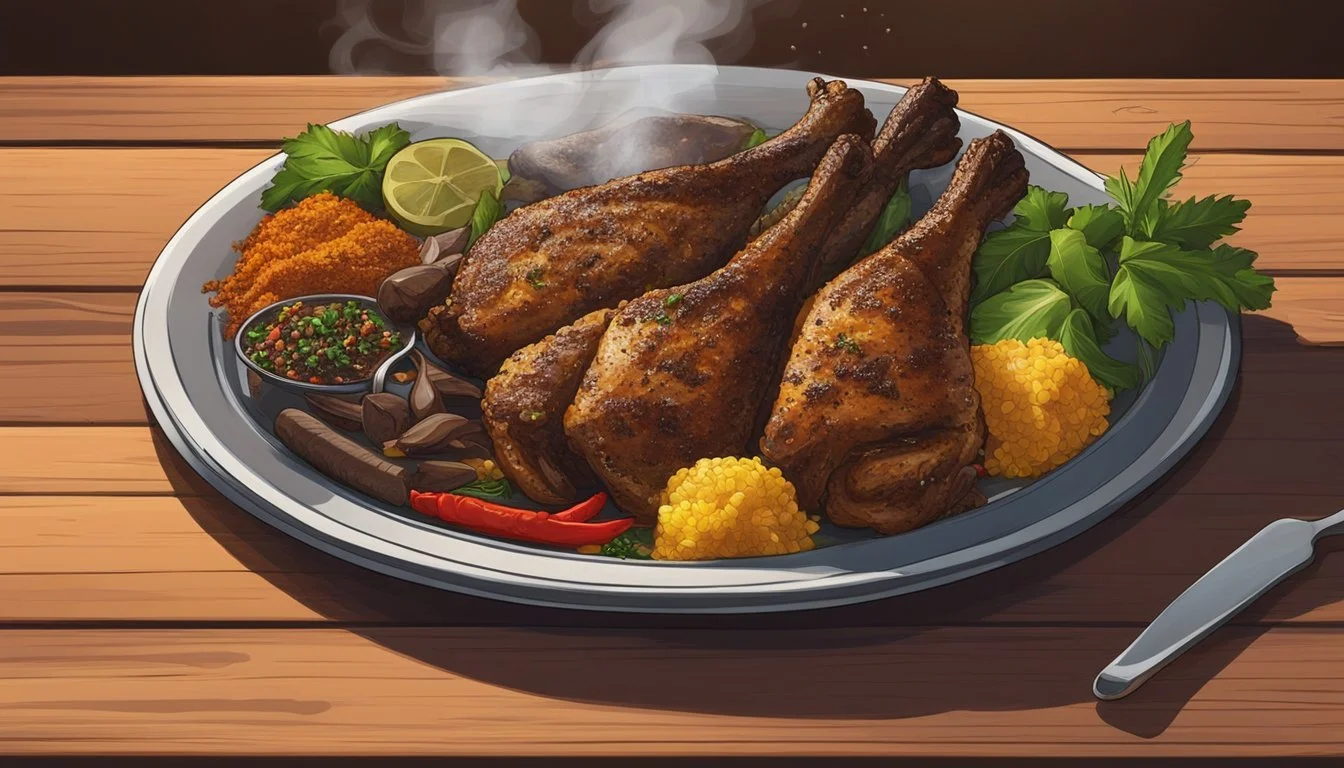
Jerk cooking is a culinary tradition steeped in the history of Jamaica, characterized by its distinctive use of spices and slow-cooking technique. The roots of jerk can be traced back to the indigenous Arawak and Taino peoples, who developed the method of jerking to preserve meat. However, the practice evolved significantly with the arrival of African slaves to the island in the 17th century. They infused the original jerking method with their own flavors and spices, giving rise to the jerk we recognize today.
Central to jerk seasoning is the combination of allspice, scotch bonnet peppers, and other ingredients. Allspice, native to Jamaica and also known as pimento, comes from the dried berries of the pimento tree and imparts a warm, aromatic flavor. Scotch bonnet peppers, meanwhile, contribute a fiery kick, which is a defining characteristic of jerk seasoning.
The traditional jerk cooking process involves marinating meat—most commonly chicken—in this bold mixture of spices and then slow-cooking it over a flame, traditionally fueled by pimento wood. The wood itself is significant; it not only imparts a smoky flavor but its indigenous origin places the cooking method firmly within Jamaican tradition.
The technique has been passed down through generations and remains a celebrated aspect of Jamaican culture. It reflects the resilience and creativity of the people, particularly the influence of African slaves who adapted and preserved their culinary heritage under the harsh conditions of colonialism. Today, jerk seasoning and cooking techniques are integral to Jamaican identity and cuisine.
Essential Ingredients
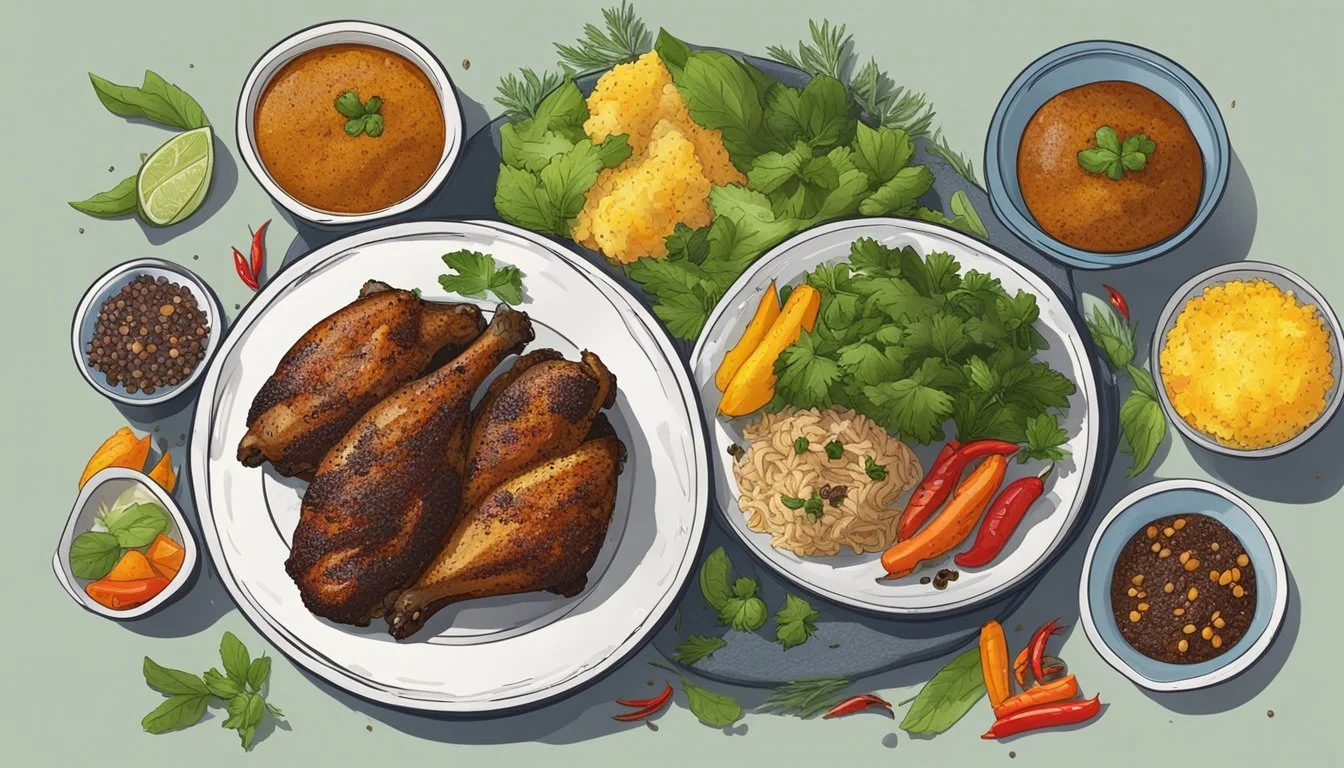
The preparation of jerk chicken pivots around three core elements—quality of meat, authenticity of the jerk spice blend, and the composition of the marinade. These foundations ensure the dish exhibits its characteristic spicy, aromatic, and smoky flavor.
Meat Selection
The meat of choice for jerk chicken is, unsurprisingly, chicken. One often opts for skin-on, bone-in chicken pieces like thighs, breasts, or drumsticks for their ability to retain moisture and flavor during cooking.
Jerk Spice Blend
A quintessential jerk spice blend is rich and complex. It typically includes:
Allspice: Essential for authentic jerk flavor
Thyme: An aromatic must
Cinnamon and Nutmeg: Warm spices that add depth
Ginger: Offers a sharp, peppery profile
Black Pepper and Salt: For seasoning balance
Scotch Bonnet or Habanero Peppers: These peppers deliver the heat jerk chicken is known for
Marinade Components
Not merely a seasoning, the marinade is a vital component that tenderizes and infuses the chicken with jerk flavors. Elements of the marinade are:
Soy Sauce: It gives a savory umami taste.
Brown Sugar: Adds a hint of sweetness to counter the heat.
Garlic: Provides a pungent kick.
Olive Oil: Helps to bind the spices to the meat.
Lime Juice and Rum: Both contribute to the overall flavor and tenderization process.
Optional: a sweet element like molasses can enhance the complexity of the marinade.
Chicken should marinate for several hours, preferably overnight, to ensure flavors are well-absorbed.
Marination Process
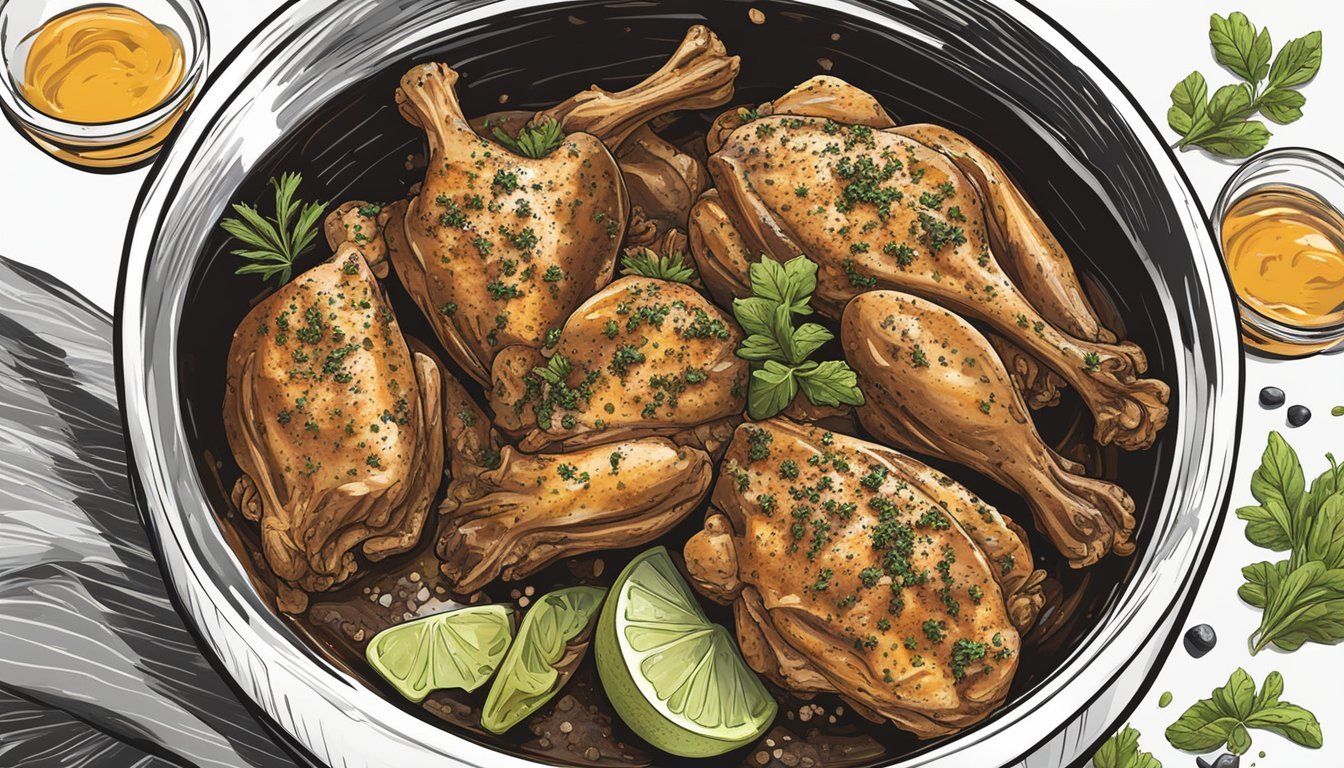
The marination process is a critical step in preparing jerk chicken, imbuing it with its signature spicy and sweet flavors. Proper execution ensures that the chicken is both flavorful and tender.
Preparing the Marinade
One begins by assembling a jerk marinade, which usually contains a blend of oil, onion, habanero peppers, and jerk seasoning—the hallmark of authenticity in a jerk chicken recipe. To start:
Oil: Acts as a base, ensuring the marinade adheres well to the chicken.
Onions: The fresh onions are roughly chopped; they provide a robust flavor foundation.
Habanero Peppers: These fiery peppers add the quintessential spicy kick. They should be used with caution due to their heat.
Jerk Seasoning: A mix of spices, typically including thyme, allspice, garlic, and cinnamon, delivers a complex flavor profile.
Additional elements: A splash of rum can be added for depth, while a touch of sweetener balances the heat.
The ingredients are typically blended until smooth to create a consistent marinade.
Marinating the Chicken
Chicken pieces—whether thighs, legs, or breasts—are submerged in the jerk marinade to absorb the flavors. The following steps should be adhered to:
Duration: Chicken should marinate for at least 30 minutes, but for a more profound flavor, a longer marinating time of up to 24 hours is advisable, especially for larger or bone-in pieces.
Coating: Thoroughly coat the chicken pieces with the marinade to ensure every part is seasoned.
Refrigeration: Always marinate in the refrigerator to maintain food safety.
Post-marination: Before cooking, removing the chicken from the fridge and letting it come to room temperature can help ensure even cooking.
Understanding these marination steps is key to creating a flavorful jerk chicken that boasts the perfect balance of spicy, sweet, and savory notes.
Cooking Techniques
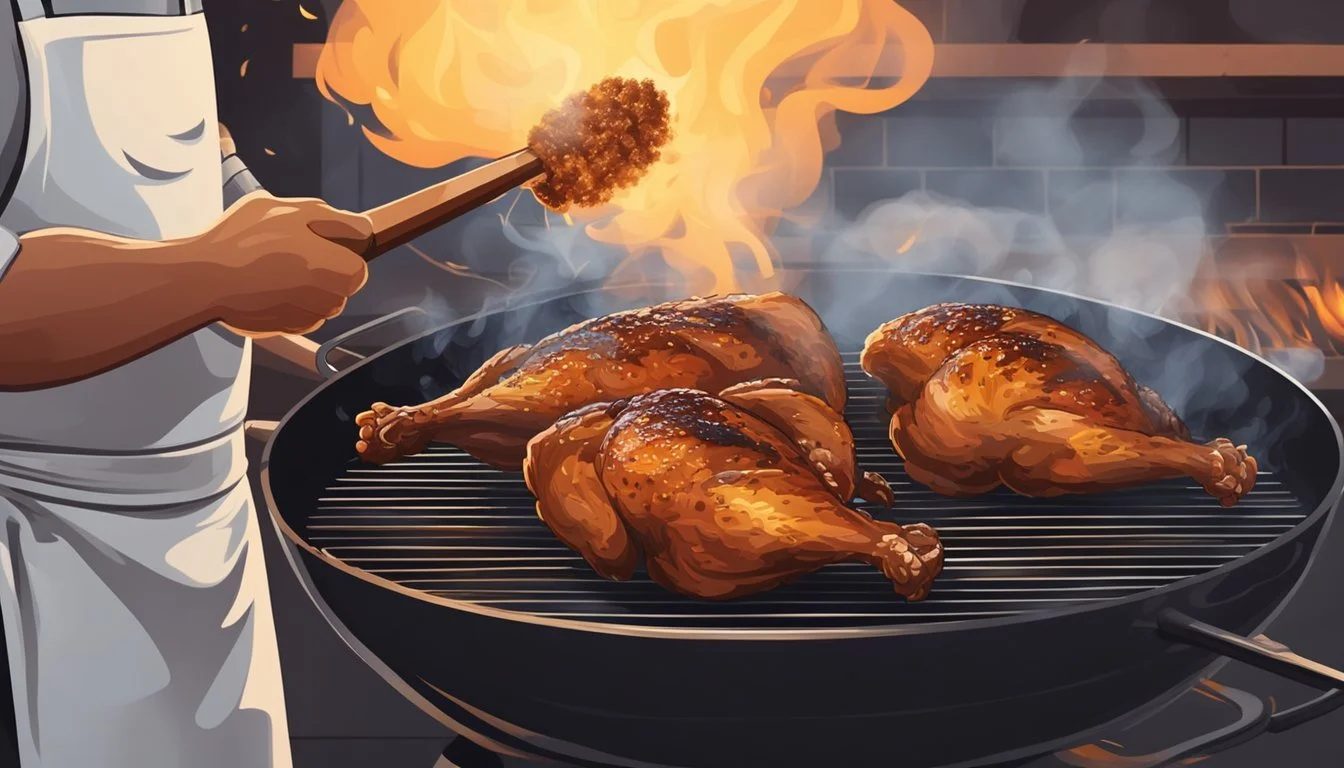
Jerk chicken can be cooked using a variety of methods, each bringing out unique flavors and textures. The key is to achieve the right balance of smoky, charred exterior with juicy, tender meat.
Grilling Method
One popular technique for cooking jerk chicken is by grilling. To grill jerk chicken:
Preparation: Marinate the chicken, typically legs, thighs, or breasts, in jerk seasoning for 3 to 24 hours.
Grilling: Heat a gas grill or charcoal barbecue. Place the chicken on the grill.
Steps:
Cook over medium-high heat until lightly charred, about 3 minutes per side.
If using a thermometer, the internal temperature should reach 150°F to 155°F (66°C to 68°C) for breasts and a bit higher for darker meat.
Let the chicken rest for about 5 minutes before serving to allow the juices to redistribute.
Benefits of grilling include the distinct charred flavor and a smoky aroma that is quintessential in jerk chicken.
Baking Method
Baking is another method that can bring out the jerk chicken's flavor while being relatively easier to manage.
Oven Preparation: Preheat the oven to between 375°F (190°C) and 450°F (232°C).
Baking: Arrange the chicken, skin-on and bone-in preferred, on a lined baking sheet or in a baking dish.
Steps:
Bake in the preheated oven until the skin is crisp and the internal temperature reaches 165°F (74°C) for breasts and 175°F (80°C) for thigh meat.
Basting with marinade halfway through might be advised for extra flavor.
An oven roast can provide a crisp skin and maintain internal moisture without the need for constant attention.
Alternative Cooking Methods
While grilling and baking are the most traditional methods, there are alternative techniques for cooking jerk chicken:
Smoking: For a deeply smoked flavor, cook the chicken in a smoker.
Oven Roast: A high-temperature roast in a cast-iron skillet can simulate the high heat of a grill.
In each alternative method, it's important to ensure the chicken is properly marinated and cooked to the correct internal temperature while aiming for a slightly charred exterior for that authentic jerk experience.
Serving and Accompaniments
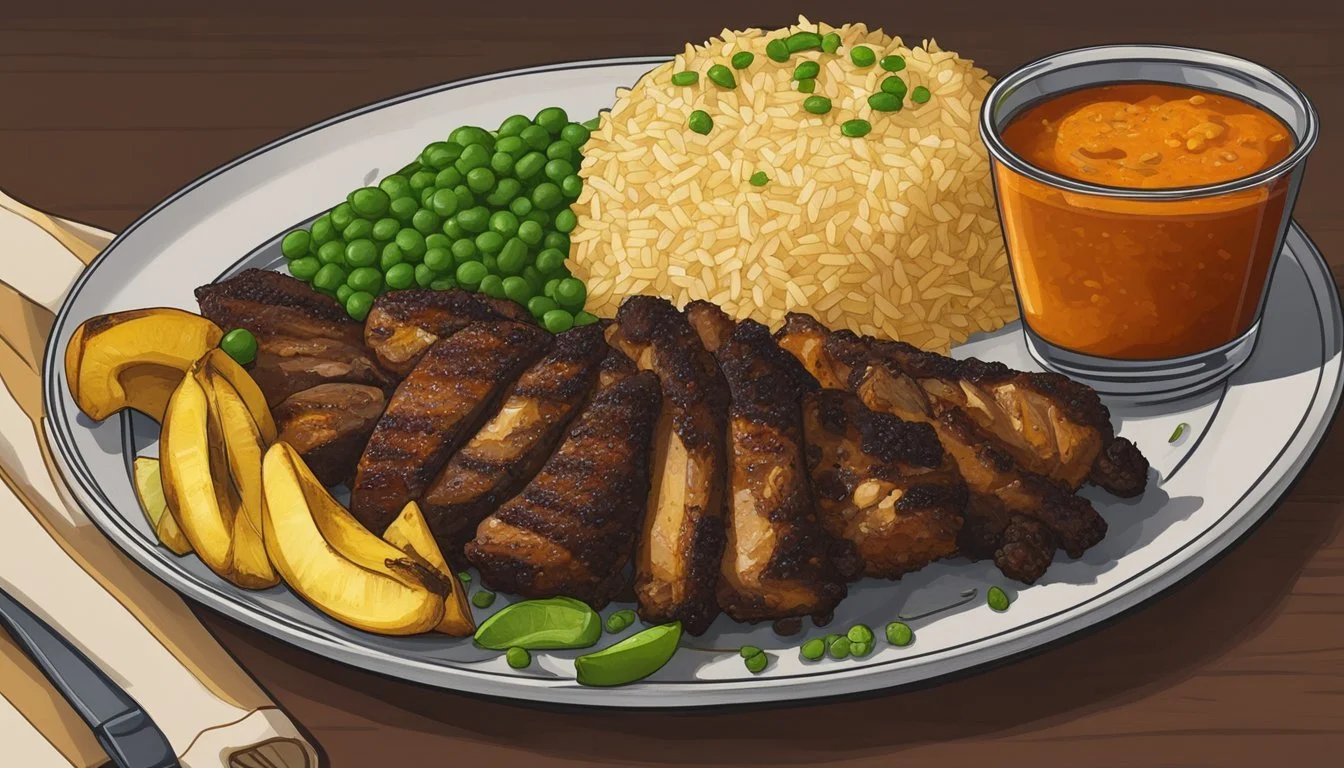
When enjoying jerk chicken, the choice of accompaniments can greatly enhance the dining experience. These side dishes range from traditional options that complement the flavors of the Caribbean to contemporary pairings that add a modern twist.
Traditional Accompaniments
Coconut Rice: A staple side, coconut rice infuses the sweetness of coconut milk to complement the bold spices of jerk chicken, offering a creamy taste and texture.
Rice and Beans: Traditionally known as 'rice and peas' in Jamaica, this dish pairs rice with red beans or peas, seasoned with green onions, thyme, and garlic to balance the heat of the chicken.
Fried Plantains: Sweet fried plantains add a caramelized flavor that pairs well with the savory notes of the jerk seasoning.
Sweet Potatoes: Either mashed or roasted, sweet potatoes provide a comforting side that contrasts with the jerk chicken's spiciness.
Modern Pairings
Pineapple Coleslaw: The addition of pineapple to coleslaw introduces a refreshing and tangy twist that cuts through the richness of the chicken.
Grilled Pineapple: Grilled slices of pineapple achieve a smoky sweetness, creating a side that echoes the grilled nature of jerk chicken.
Bold Salads: A salad with crispy greens and a citrusy dressing is a contemporary option that provides a crisp and cooling element on the plate.
Vegetable Kabobs: Skewered and grilled vegetables, such as bell peppers and onions, can add a colorful and healthful component to the meal.
Presentation and Enjoyment
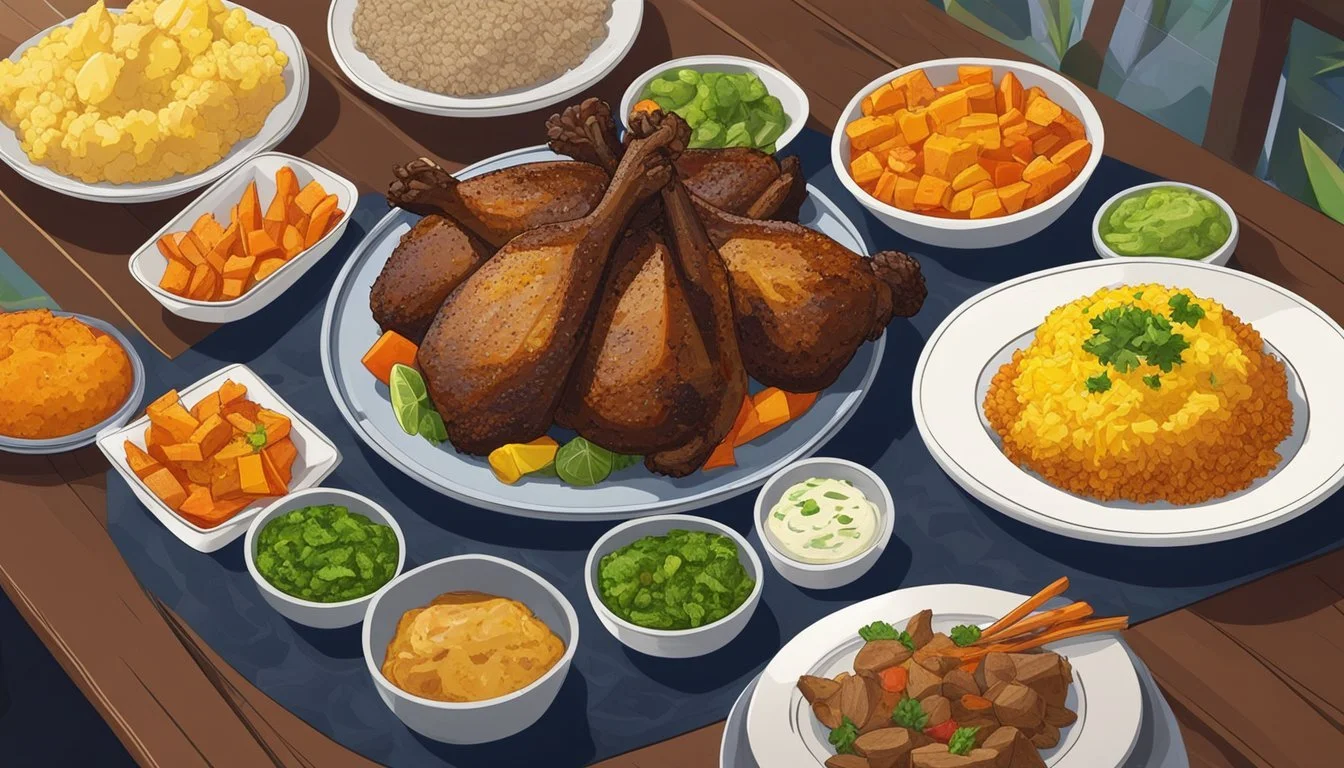
When serving jerk chicken, one should consider both the appearance of the plate and the way one consumes the dish. A thoughtful presentation enhances the appeal of this spicy, smoky entree, while understanding eating etiquette can lead to a more enjoyable experience, highlighting the tender texture and flavorful char of well-prepared jerk chicken.
Plating Tips
When plating jerk chicken, one's aim should be to showcase its tempting char and rich, mahogany color. Here are some specific pointers:
White Platter: Use a clean, white dish to make the colors pop.
Garnishes: Garnish with fresh herbs (how long do fresh herbs last?) or a wedge of lime to add brightness.
Sauces: If a sauce is provided, place it in a small dish on the side to avoid drenching the chicken and losing its crisp texture.
Eating Etiquette
Jerk chicken is traditionally a hands-on dish, so feel free to eat with one's fingers if the setting is casual.
Napkins: Have plenty of napkins available; the dish can be messy due to its juicy and tender nature.
Bones: If it is served bone-in, be mindful of bones and consume carefully to enjoy the meat fully.
Leftovers: Should there be leftovers, they can be repurposed into sandwiches or salads, ensuring that the smoky and fiery flavor of the chicken can be savored once more.
Health Considerations
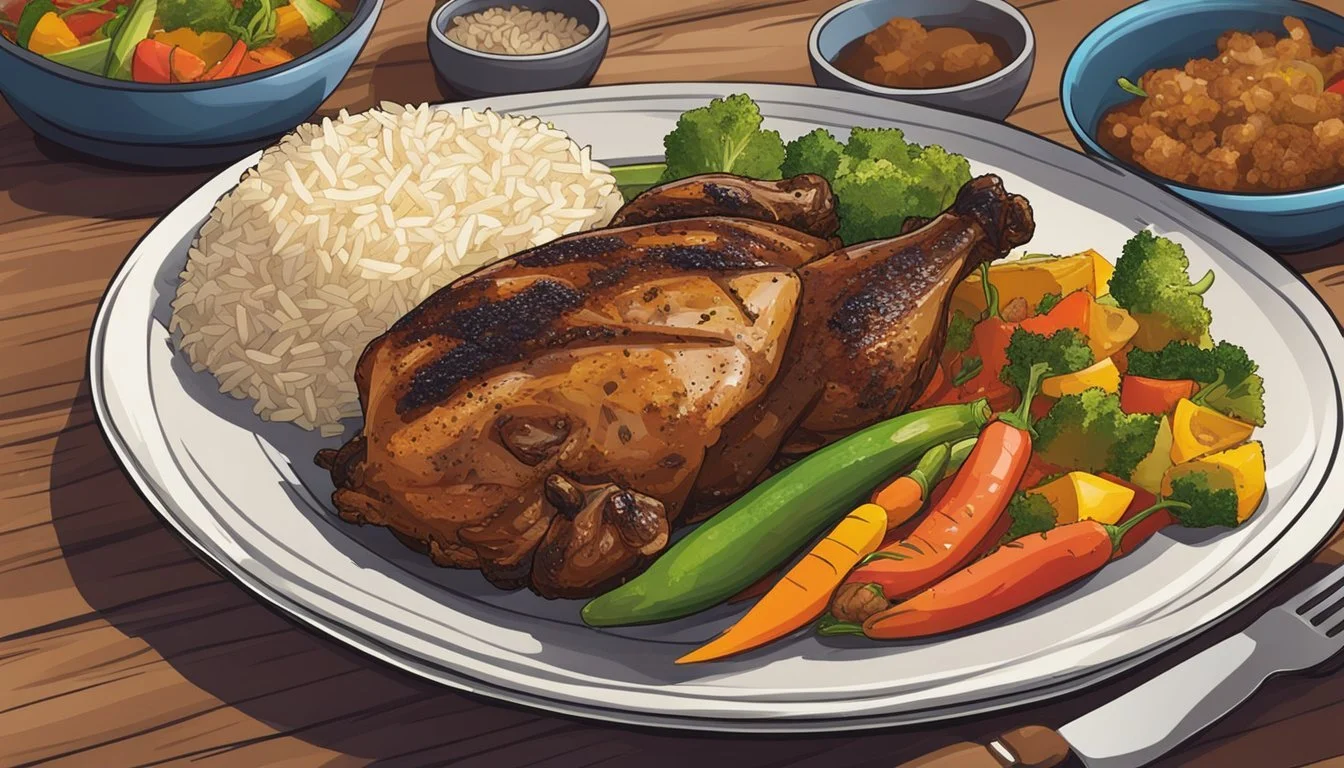
When eating jerk chicken, one should consider both its nutritional profile and ways to adapt it to various dietary needs. The dish's healthiness largely depends on the preparation method and the balance of ingredients.
Nutritional Information
Jerk chicken is a flavorful dish originating from Jamaica, known for its spicy marinade. The nutritional content can vary, but typically it includes protein-packed chicken and an array of spices. Here's a brief breakdown:
Calories: A serving size of jerk chicken will vary in calories depending on the cut of the chicken and additional ingredients.
Protein: Chicken is an excellent source of lean protein, important for muscle repair and growth.
Fat: Skinless chicken options provide less fat. Olive oil, often used in marinades, contains monounsaturated fats, which are considered healthy.
Carbohydrates: The carbohydrate content is typically low; however, sugar or honey may be added to balance the heat, which can increase carbohydrate content.
Sodium: Jerk seasoning can be high in sodium, particularly if pre-made mixes are used. Kosher salt is a common ingredient, but should be used judiciously to control sodium intake.
Dietary Adjustments
Individuals with dietary restrictions may need to make adjustments to the traditional jerk chicken recipe:
Reducing Sodium: Opt for homemade spice blends to control the amount of salt and use lower-sodium alternatives like fresh herbs.
Cutting Sugar: Minimize or substitute sugar and honey with natural sweeteners or omit altogether to lower the sugar content.
Managing Spice: Adjust the level of spice to tolerance; not all jerk chicken has to be very spicy.
Choosing Lean Cuts: Select skinless chicken breasts or thighs to reduce the dish's overall fat content.
By considering these factors, jerk chicken can be adapted to fit a healthier diet without sacrificing flavor.
Recipe Variations
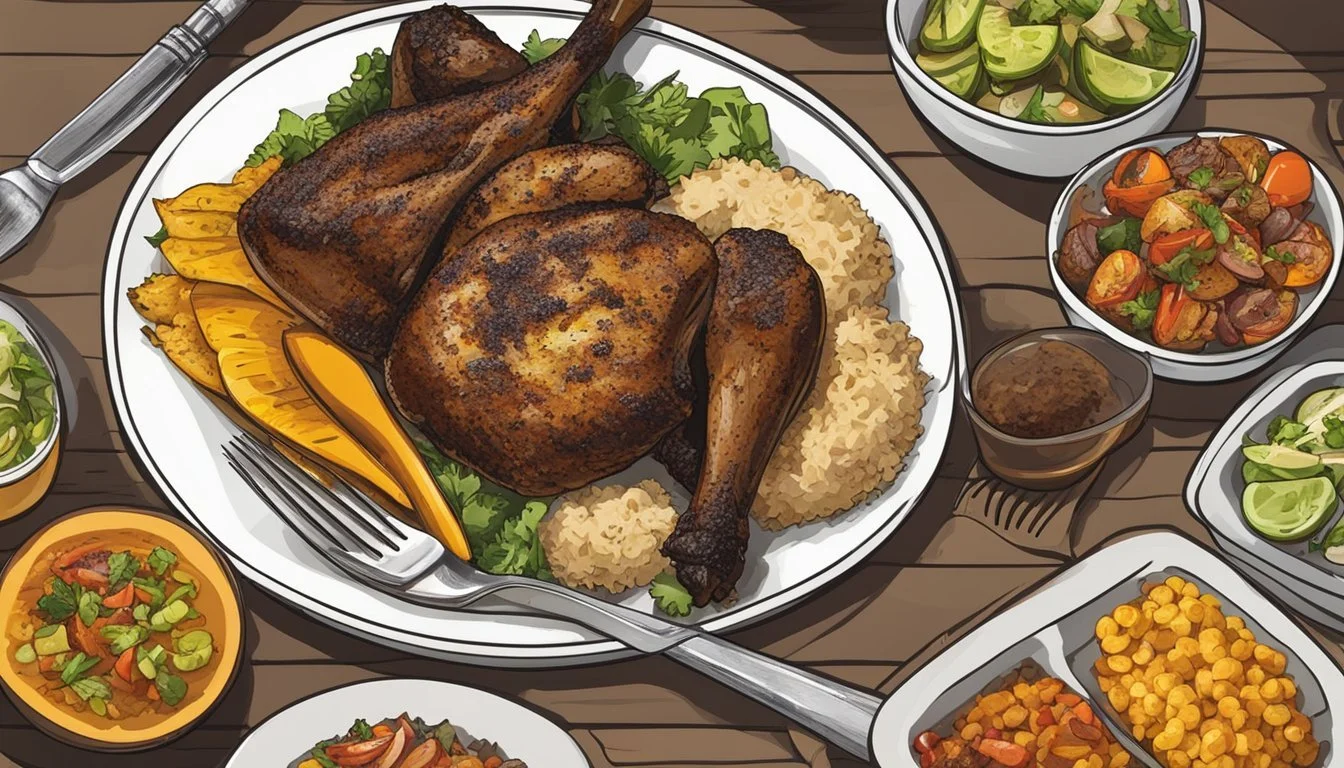
Jerk chicken is a versatile dish that can easily be adapted to different dietary preferences and available ingredients, ensuring that the rich and spicy flavor profile can be enjoyed in a variety of forms.
Meat Alternatives
For those who enjoy meat but are looking for alternatives to chicken, pork and fish make excellent substitutes. The firm texture of pork shoulder or loin holds up well to the robust jerk seasoning. For fish, one should opt for thicker, steak-like cuts such as swordfish or tuna to prevent them from falling apart during cooking. They should follow a similar marinating and grilling process to chicken to achieve a comparable depth of flavor.
Example:
Pork: Marinate for up to 24 hours and grill over medium-high heat.
Fish: Marinate for no longer than 1 hour to avoid the flesh breaking down, grill carefully on a well-oiled grate.
Vegan and Vegetarian Options
Vegetarians and vegans can also savor the essence of jerk seasoning by employing it on an array of vegetables such as zucchini, bell peppers, and eggplants. These should be sliced to optimize marination and grilled until tender. For a heartier option, plant-based proteins like tofu or tempeh can be used. Tofu should ideally be pressed to remove excess moisture and then marinated to absorb the flavors of the jerk seasoning before grilling or baking.
Sample Preparation:
Vegetables: Chop into large chunks or slices, marinate for at least 30 minutes, then grill or roast.
Tofu/Tempeh: Press, slice, marinate for at least 1 hour, and then bake or grill until the exterior is crispy and golden.
Preservation and Leftovers
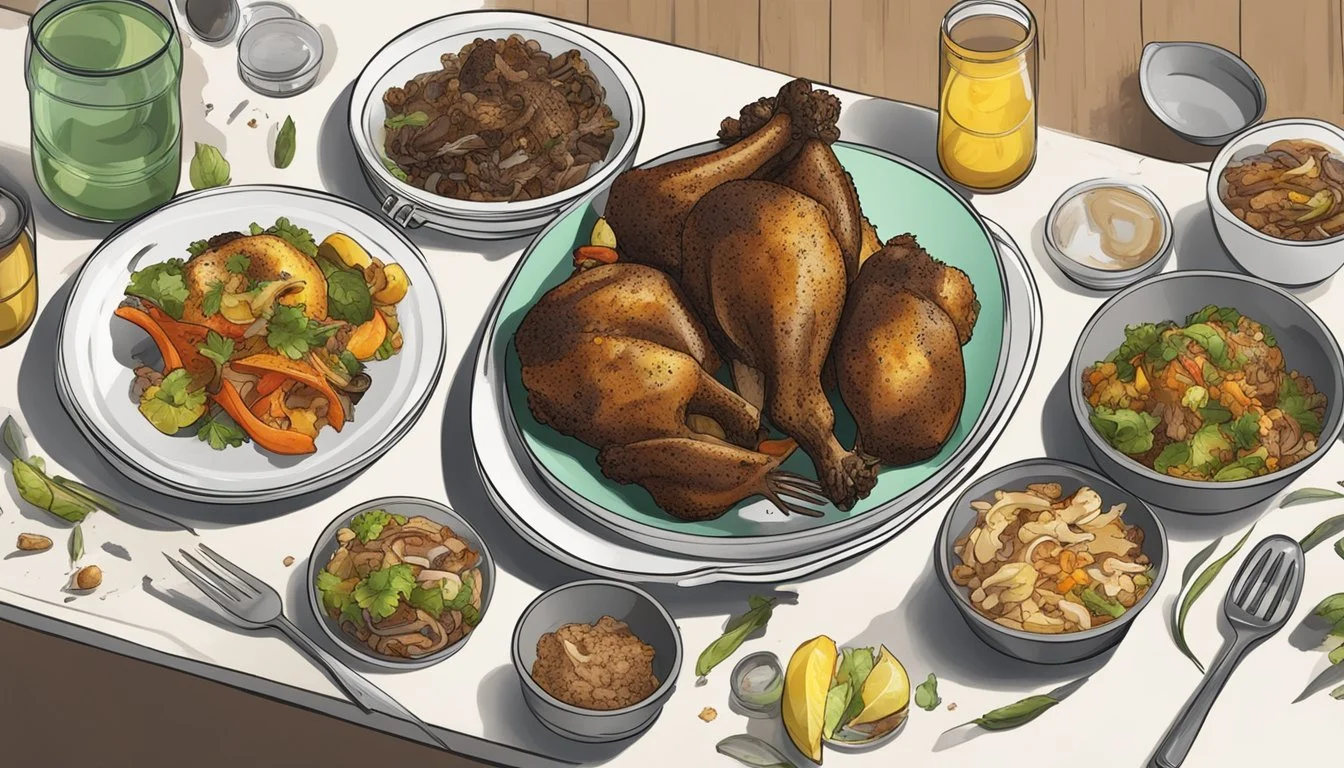
When it comes to jerk chicken, proper preservation ensures that the flavors remain intact and that the leftovers can be safely enjoyed later on. Managing leftovers effectively reduces waste and allows for enjoyment of this flavorful dish in subsequent meals.
Storing Jerk Chicken
Leftover jerk chicken should be stored in an air-tight container to preserve its moisture and flavor. It's crucial to refrigerate the chicken within two hours of cooking to prevent bacterial growth. They can be kept in the fridge for up to 3-4 days. For long-term storage, freeze the jerk chicken in freezer bags or airtight containers, clearly labeled with the date. It will retain its quality in the freezer for about 2-3 months.
Reheating Tips
To retain the jerk chicken's succulent texture, reheat it gently. In the oven, wrap the chicken in foil and reheat at 350°F (175°C) until thoroughly heated, approximately 10-15 minutes. Microwaving can dry out the meat, so add a splash of water before covering with a microwave-safe lid or wrap to create steam. This method is suitable for a quick warm-up, typically 1-2 minutes on high. When reheating from frozen, thaw in the refrigerator overnight before following the above reheating methods.
Cultural Significance
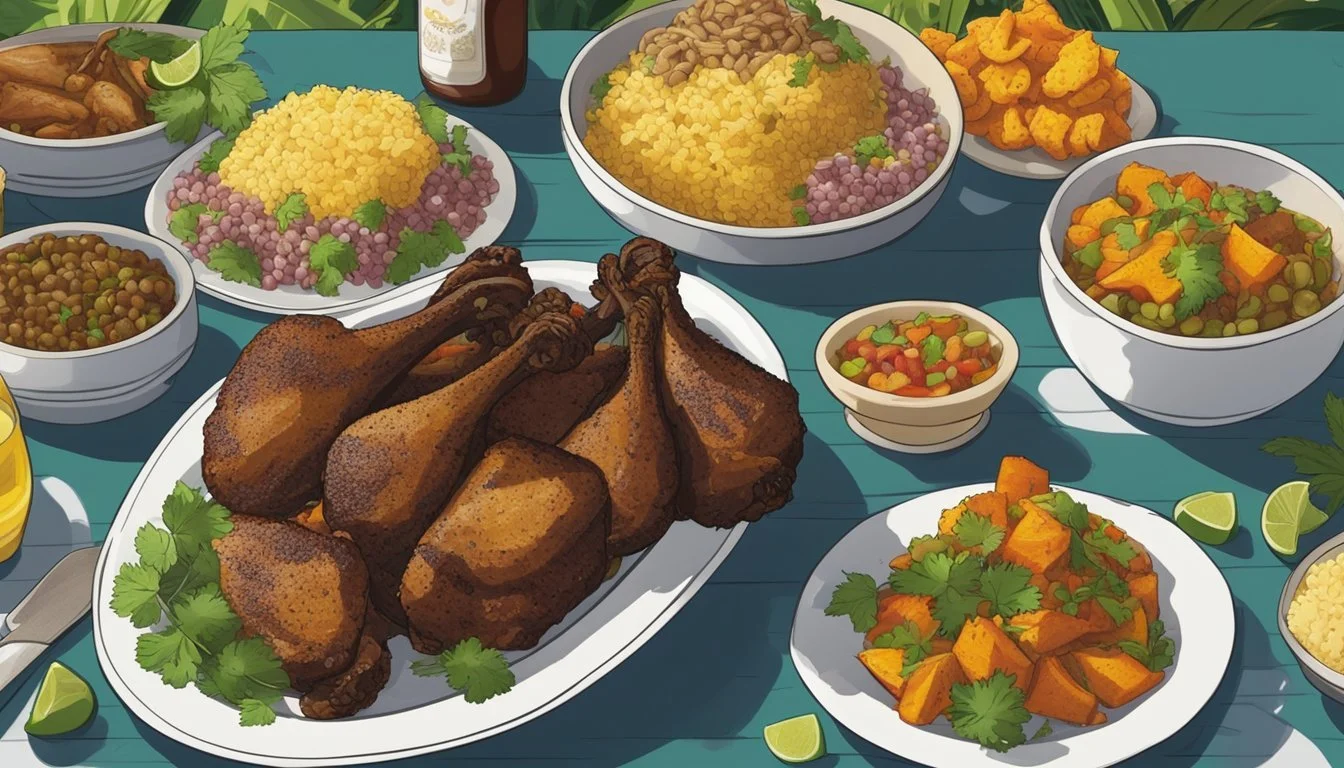
Jerk chicken is not just a beloved dish; it's a symbol of Jamaican culture with a global reach that reflects a rich history and the influence of various cultures.
Jerk Chicken in Jamaican Culture
Jamaican jerk chicken is deeply rooted in the island's history, tracing back to the blending of the indigenous Taino and Arawak with African techniques brought by slaves who arrived on the island centuries ago. It stands as an emblem of resilience and cultural fusion in Jamaica. The dish is commonly prepared for special occasions and is also enjoyed as everyday fare. Jerk chicken is usually served with rice and peas, festivals (sweet fried dumplings), or hard dough bread.
Two main components are essential in Jamaican jerk chicken:
Spices: A blend that typically contains allspice and Scotch bonnet peppers.
Cooking method: Traditionally slow-cooked over pimento wood for a smoky flavor.
At Christmas dinner, it finds its place alongside curried goat and other festive foods, illustrating its importance to Jamaican feasts and celebrations.
Global Influence
Jerk chicken has transcended its origins and has become a representative of Caribbean cuisine around the world. It is recognized and celebrated in places with Jamaican diaspora communities, such as the United Kingdom, Canada, and the United States.
The global culinary scene has been impacted by Jamaican jerk chicken, turning it into both a popular street food and a menu item in upscale restaurants. Internationally, the dish serves as a flavorful introduction to the tastes of the Caribbean, often leading diners to explore the wider Jamaican cuisine and culture.