Maximize Space & Organization
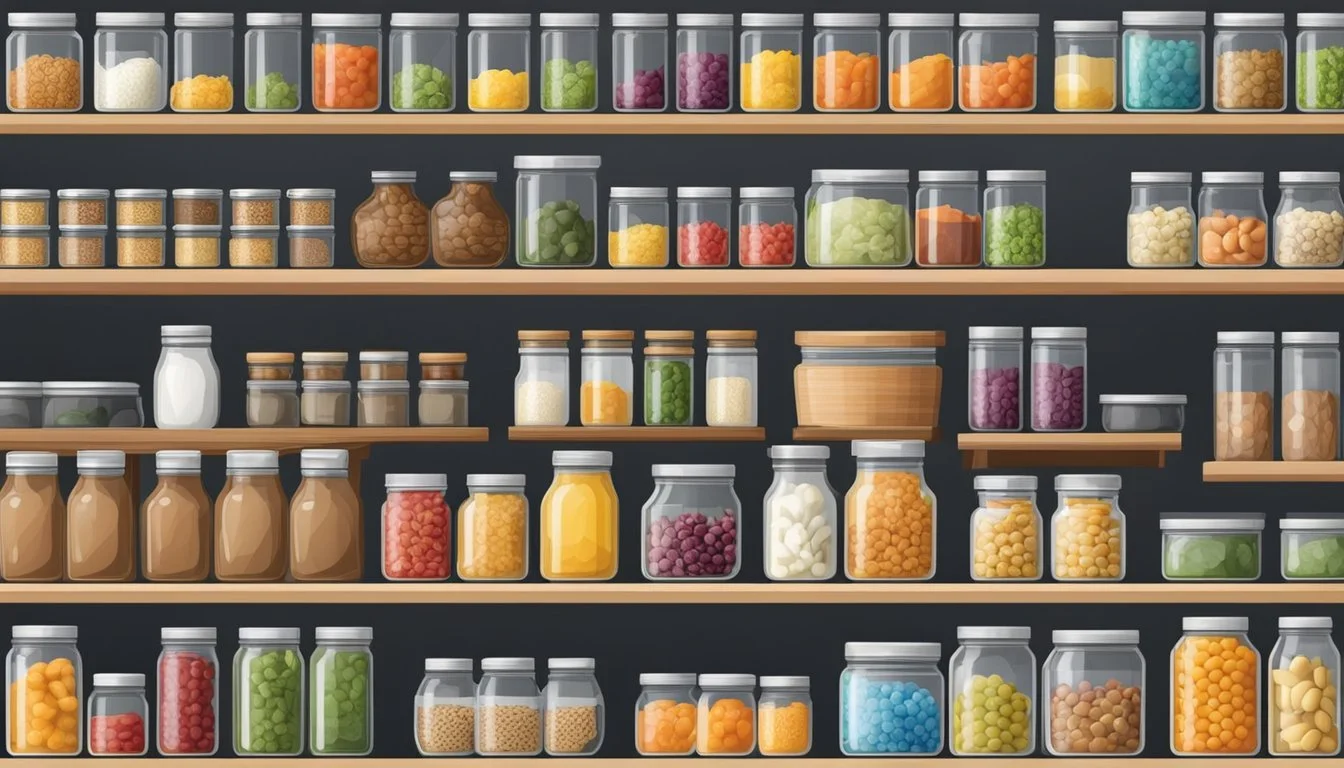
Organizing canned goods and jars efficiently in a pantry ensures that ingredients are easy to locate and keeps the space clutter-free. Strategic storage solutions can transform a chaotic pantry into a well-organized haven where every item has its place. The best storage solutions take into account the frequency of use, the available space, and the need for accessibility. This understanding leads to a smoother cooking process and better inventory management, preventing over-purchasing and waste.
Innovative pantry storage solutions include stackable racks, transparent bins, and rotating trays like lazy Susans. Stackable racks elevate the visibility and reachability of items, making the most of vertical space. Transparent bins serve a dual purpose of tidiness and at-a-glance inventory, allowing for a quick assessment of stock levels. For corner cabinets or deep shelves, lazy Susans make it easy to access items with a simple rotation, utilizing every inch of available space. Using these tools, one can customize their pantry layout to suit their personal needs, creating an efficient system for managing canned goods and jars.
The key to selecting the right pantry storage solutions lies in their adaptability and functionality. Canned goods come in various sizes, and adjustable shelves or racks can accommodate this diverse array. By investing in units that can be modified or expanded, homeowners ensure their storage system remains relevant and effective over time. With the right solutions in place, a pantry becomes a testament to organization and ease, ensuring that preparing meals is a pleasure, not a puzzle.
Understanding Pantry Storage Needs
When addressing pantry storage needs, a homeowner must consider both the available space and the types of items that necessitate storage. The objective is to effectively manage the pantry so that it serves the kitchen's needs in a functional, organized manner.
Assessing Space and Size
Pantry space is often limited, making optimization key. A homeowner should begin by measuring the pantry shelves, factoring in both the depth and the width of each shelf. It's crucial to account for the height between shelves, especially for storing taller items like jars. Understanding these dimensions facilitates efficient use of available space and helps in selecting appropriate storage solutions. For canned food, storage aids such as stackable racks or tiered shelving units can maximize vertical space.
Identifying Pantry Staples
A well-stocked pantry contains a variety of staples, often including an assortment of canned goods such as vegetables, fruits, beans, and soups. It's important to inventory these items to determine the frequency of use and quantity on hand. This step informs the organization process, ensuring that high-use items are kept within easy reach. Here's an example list of common pantry staples:
Canned vegetables (corn, peas, tomatoes)
Canned fruits (peaches, pears)
Beans (black, pinto, chickpeas)
Soups and broths
Pasta sauces
Prioritizing Accessibility
The ease of accessing pantry items significantly impacts the efficiency of a kitchen. For canned goods, solutions like a lazy Susan can provide easy access and visibility, allowing one to quickly find and retrieve items without having to move others. Clear bins or labeling systems can also contribute to better organization. Placing most-used items at eye level and grouping similar items together can expedite meal preparation and inventory checks.
Optimizing Pantry Layout
To ensure an efficient and functional pantry, they must optimize the layout to utilize space fully. This involves selecting the right shelving solutions, making use of wall and door space, and incorporating elements like lazy Susans and turntables for easy access.
Effective Shelving Solutions
When they aim to maximize shelf space for canned goods and jars, adjustable shelves offer a versatile option. They allow customization according to the varying heights of items, enabling more strategic placement of goods. For instance, they can set taller shelves for large canned items and closer spacing for small jars and cans. Sturdy materials like metal or solid wood ensure that the shelves can bear the weight without warping or bending.
Adjustable Shelves: Modify the distance between shelves to fit different-sized items.
Material Choice: Opt for robust materials to support the weight of cans and jars.
Utilizing Wall and Door Space
Wall and door spaces are often underutilized in pantries. They can install hooks or hanging organizers to the inside of the pantry door to store lightweight items like utensils or small jars. Wall-mounted racks can also hold canned goods, keeping them visible and within reach.
Door Organizers: Employ over-the-door racks for extra storage.
Wall Racks: Use wall-mounted shelves or wire racks to increase storage surface area for cans and jars.
Incorporating Lazy Susans and Turntables
Lazy Susans and turntables make accessing items simple, especially in corner spaces that are difficult to reach. These rotating solutions provide visibility to all items with a simple spin, preventing cans and jars from being lost at the back of deep shelves. They can choose from various materials such as acrylic, which offers durability and clean lines, or wood for a classic look.
Material Variety: Select from acrylic or wood turntables to match the pantry aesthetic.
Rotation Function: Make use of rotating mechanisms to access hard-to-reach items effortlessly.
By integrating these storage solutions, shelves remain organized, space is maximized, and the pantry becomes more user-friendly.
Choosing the Right Storage Solutions
When organizing pantry space, selecting the storage solutions that make the most efficient use of space and keep canned goods easily accessible is crucial. Durability and ease of use should guide the choice of pantry organizers.
Best Containers for Canned Goods
For canned goods, heavy-duty can organizers crafted from metal or strong plastic are recommended. They should be designed to fit comfortably within a kitchen cabinet while providing the stability and support that canned goods require. Clear containers may be utilized for visibility, with emphasis on airtight seals to prevent pantry pests and maintain freshness.
Materials: Choose durable, easy-to-clean materials like BPA-free plastic or coated wire.
Visibility: Opt for clear or open-faced containers to quickly find what you need.
Innovative Drawer and Basket Systems
Drawer systems offer a slide-out feature that makes it simple to reach items stored at the back, while baskets can be labeled and used to group items by type or expiration date. These systems transform a cluttered pantry into a streamlined storage space.
Drawer Features: Look for full-extension sliders and sturdy construction.
Basket Options: Consider stackable baskets with handles for easy access.
Can Dispensers and Risers
Can dispensers provide an automatic rotation system, ensuring older cans are used first, which is essential for maintaining a practical stock rotation. Risers can be employed to step shelves within cabinets, making it easier to see and retrieve cans from the back. Both dispensers and risers utilize vertical space efficiently.
Dispensers: Ensure they fit your commonly purchased can sizes and styles.
Risers: Measure shelf space to find risers that maximize vertical storage areas.
By careful consideration of the specific needs of the pantry and the types and sizes of canned goods typically stored, one can choose the appropriate containers, drawer systems, and risers or dispensers that will offer the best in organization and accessibility.
Labeling and Managing Inventory
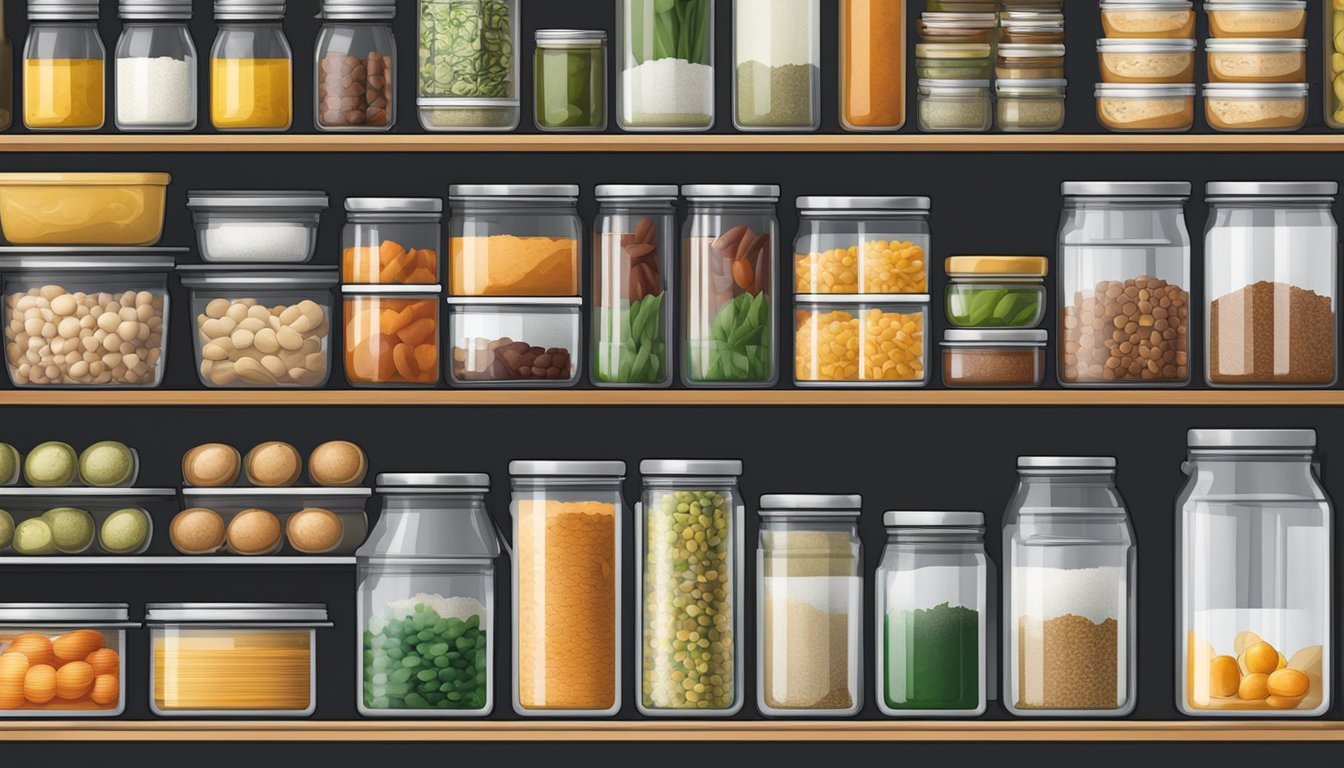
Labeling and inventory management are critical for maintaining an organized pantry and ensuring food safety. Accurate labeling coupled with a systematic inventory approach allows for easy tracking of expiration dates and promotes the consumption of the oldest items first.
Effective Use of Labels
One must create a consistent labeling system that includes the product name, expiration date, and possibly the purchase date. Labels should be clear and legible, applied directly to the cans or jars, or on the shelving where items are stored. A label maker or printed labels can be used for a uniform appearance, which aids in quickly identifying contents and monitoring expiry dates.
Example Label:
Product Name Expiration Date Purchase Date Black Beans Dec 2024 Mar 2024
Ensuring Rotation of Canned Goods
To avoid wasting food, it's imperative to rotate canned goods, using the oldest cans first. This practice is known as the first-in, first-out (FIFO) inventory method. Ideally, shelves should be organized in a way that places the items approaching their expiration date at the front and newer purchases towards the back. This can be achieved by rearranging cans during restocking.
Upon restocking:
Move older cans to the front.
Place new purchases behind older items.
Shopping for Storage Products
When outfitting a pantry with storage solutions for canned goods and jars, consumers find a range of options on Amazon and at the Container Store. These retailers offer solutions that balance aesthetics with functionality.
Top Picks from Amazon and Container Store
Amazon:
Heritage Hill Glass Jar with Lid, Set of 2: At $36.99, these jars offer a retro style and have been a mainstay since the 1940s. They're favored by professionals like Ina Garten.
SimpleHouseware Stackable Can Rack Organizer: Priced at $23, this organizer maximizes space by allowing cans to be stacked securely.
Yumkfoi Bamboo Can Rack Organizer: For $50, this eco-friendly option adds a natural aesthetic to pantry organization.
Container Store:
The Home Edit by iDesign 3-Tier Shelf: For $25, users get a sleek, sturdy, tiered shelf that creates visibility and accessibility.
Container Store Small Water Hyacinth Bin Natural: At $16, this bin offers a stylish way to store miscellaneous items.
Storage Product Reviews and Recommendations
Product Reviews:
CHEFSTORY Airtight Food Storage Containers: Available for $20, these are durable with tight-fitting, easy-to-latch lids. However, they are not dishwasher-safe.
Recommendations:
For classic design, the Heritage Hill Glass Jar is highly recommended due to its long-standing reputation and endorsement by culinary professionals.
The SimpleHouseware Stackable Can Rack Organizer is recommended for those seeking a budget-friendly, space-saving solution.
Experts suggest choosing products based on durability, ease of cleaning, and how well they maintain the freshness of stored items. It is important to consider personal pantry size and the types of items to be stored when making a purchase.
DIY Storage Solutions
When it comes to pantry organization, crafting your own storage solutions harnesses both creativity and functionality. These DIY methods for storing canned goods and jars can be tailored to fit the space and aesthetic of any kitchen.
Crafting Custom Shelving
One can build custom shelving designed to fit the dimensions of their pantry and accommodate canned goods. Utilizing vertical space allows for an organized display of jars and cans, making it easy to see and access each item. Magazine holders can be repurposed as shelf dividers, smartly separating items by category or expiry date.
Homemade Can Organizers
For a tiered system, homemade can organizers create an efficient storage solution. By constructing a First-In-First-Out (FIFO) can dispenser, one ensures older cans are used first, preventing wastage. A DIY can organizer can be made from simple materials like wood or wire racks, and it can be customized to hold cans of various sizes, enabling the homeowner to maximize their pantry's storage capability.
Storing Dry and Baking Goods
For optimal pantry organization, storage solutions must accommodate the varied sizes and needs of dry goods and baking essentials. Moisture control and ease of access are paramount when selecting containers for items such as flour, sugar, and rice.
Separate Storage for Baking Essentials
A dedicated area for baking essentials ensures that items like baking powder, baking soda, and various spices are separately stored and easy to reach. Clear glass jars with ash wood lids, mentioned in "The Kitchn," not only enhance visibility but also add an aesthetic appeal to the pantry. Each jar should have a silicone gasket for an airtight seal, protecting the contents from moisture and pests.
Baking Soda - should be kept in a small, airtight container.
Baking Powder - also requires a small, moisture-proof container.
Spices - are best in small jars that block light and can be labeled for quick identification.
Containers for Flour, Sugar, and Rice
Large staples like flour, sugar, and rice demand larger containers with secure seals. According to a review of Rubbermaid containers, these are ideal for their super-sealed, secure lids. Moreover, the OXO Good Grips 8-Piece POP Container Baking Set provides a range of sizes that work for both spacious and narrow pantries.
Flour: Store in a large, airtight container that can accommodate at least a five-pound bag, easy to scoop from.
Sugar: Similar to flour, sugar should be in an airtight container, possibly with a pouring spout for granulated types.
Rice: Opt for containers with a slim design for easy pouring and a flip-up spout or dedicated spoon.
A thorough pantry organization system that separates baking essentials from other items and provides tailored storage options for flour, sugar, and rice can greatly enhance the functionality of the space.
Maintaining a Well-Organized Pantry
Maintaining a well-organized pantry ensures efficient use of space, easy access to food items, and prevents spoilage and waste. Thoughtful strategies aid in keeping canned goods and jars in order, making meal prep more straightforward and inventory management more practical.
Professional Organizing Tips
A professional organizer would recommend categorizing pantry items and employing suitable storage solutions. Shelving units should be adjusted to fit the height of canned goods and jars to maximize vertical space. It's crucial to label shelves and bins for different categories like vegetables, fruits, sauces, and soups. Implementing a first in, first out (FIFO) system, where newer items are placed behind older ones, ensures rotation and reduces the risk of expiration.
For cans and jars, a tiered shelf or a turntable can be beneficial to keep everything visible and accessible. For scalability and flexibility, an over-the-door rack or adjustable shelving can adapt to changing needs. It's advised to invest in uniform containers to store opened items, which can be clearly labeled and dated.
Preventing Spoilage and Waste
Ultimately, the goal of a well-organized pantry is to minimize spoilage and food waste. Regular inspection of dates and condition of canned goods and jars is important:
Weekly checks: Look for any signs of damage or expiration.
Clear visibility: Ensure no item is hidden at the back of the pantry.
A simple inventory system can also be established to track what is in the pantry and what needs to be used up soon. Maintaining consistent temperatures in the pantry helps prevent spoilage due to heat fluctuations. Cans and jars should be kept in cool, dry areas and away from direct sunlight. Lastly, any perishable items opened from cans or jars should be transferred to airtight containers and refrigerated promptly to maintain freshness.
Pantry Storage for Small Spaces
In smaller living environments, efficient use of kitchen space is essential. Innovative storage solutions can transform cluttered areas into well-organized pantry spaces, making the most out of every inch available.
Maximizing Space in Compact Kitchens
Compact kitchens require creative strategies to maximize storage space. Utilizing vertical wall space can dramatically increase the available area to store canned goods and jars. Skinny shelves, which occupy minimal space, can be installed to create a dedicated zone for such items. These slim shelving units make use of underutilized spaces, fitting snugly against walls or on the backs of doors. They provide the added benefit of keeping all items visible and accessible, with a slight lip to prevent items from tumbling out.
Another technique is to employ stackable bins or baskets, which can be labeled and organized by contents. These containers can be easily pulled out and re-arranged, optimizing pantry organization. Tabletop Lazy Susans also offer space-saving convenience, allowing for 360-degree access to jars and cans with a simple spin.
Multi-Purpose Storage Options
For those with particularly small spaces, furniture that serves a dual function is a real asset. Pieces like a stylish locker can double as decor while offering additional space for pantry storage. Such lockers can neatly hide away overflow pantry items or double as a snack station.
Adjustable organizers are valuable assets for small pantry spaces. They can modify to fit various sizes of jars and cans, and can be used to transform deep drawer spaces. With adjustable widths and compartments, these solutions can conform to an individual's specific pantry needs, ensuring that space is used as effectively as possible.
Beyond traditional shelving, hanging organizers that can attach to the inside of a pantry door offer another layer of storage without impeding on valuable shelf space. By keeping items off the shelves, these organizers craft more room for bulkier items, while keeping smaller cans and jars within easy reach.
Specialty Storage Considerations
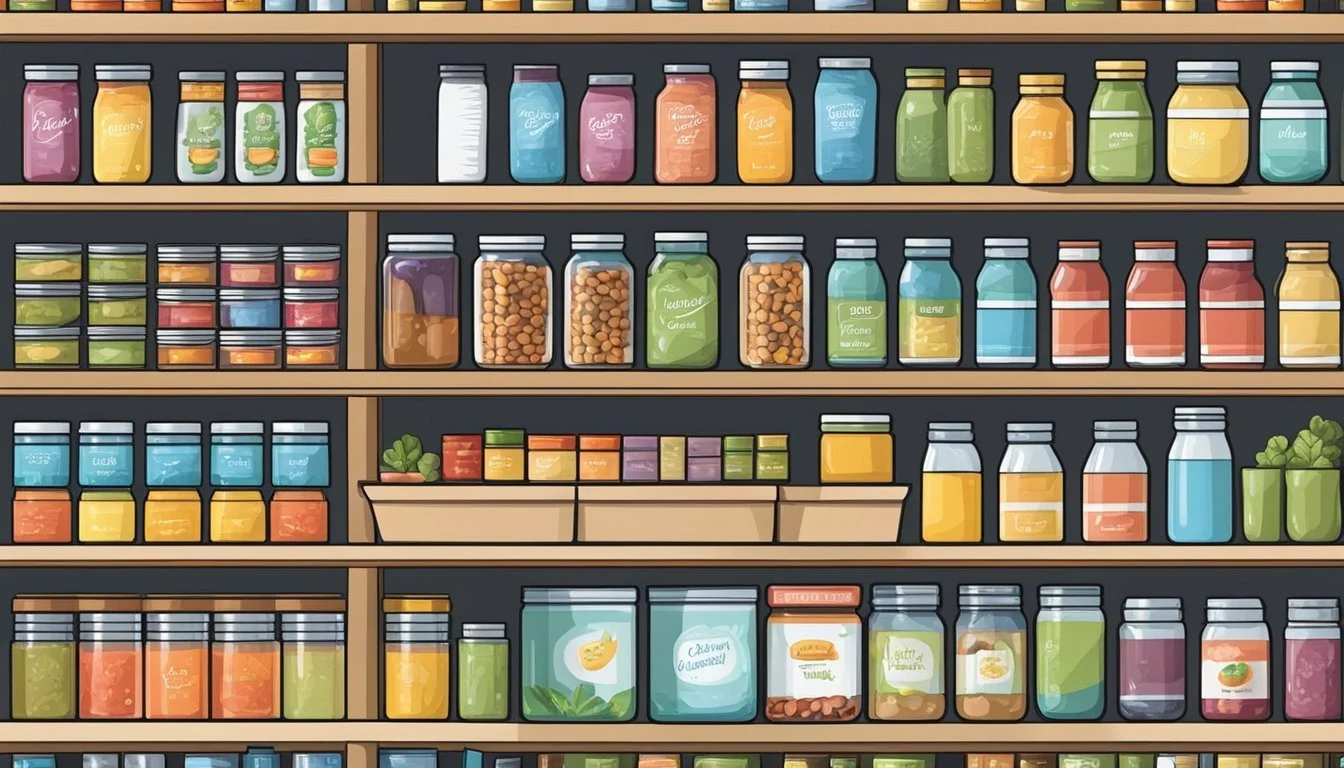
In optimizing pantry storage, one must consider unique environments such as garages or basements and tailored solutions for larger households. Attention to detail in these specialty areas can significantly enhance the longevity and accessibility of canned goods and jars.
Keeping Canned Goods in Garage or Basement
When storing canned goods in a garage or basement, it is important to maintain a consistent environment. These areas should be:
Cool: The ideal temperature range is 50-70°F (10-21°C).
Dry: Avoid areas prone to dampness to prevent can corrosion.
Dark: Limit exposure to sunlight to preserve the contents of the cans.
It's essential to use shelving that keeps items off the floor to protect them from moisture and potential pests. One should periodically check for temperature swings, especially in areas with extreme weather changes.
Pantry Design for Large Households
Large households require a more strategic approach to pantry organization that maximizes space and accessibility:
Walk-in Pantry: If space allows, a walk-in pantry provides an excellent solution where items can be organized effectively. Utilize vertical space with floor-to-ceiling shelving.
Storage Containers: Clear, labeled bins and containers help with visibility and organization. They make it easier to group similar items and track inventory.
For space-saving, consider a lazy Susan for corner shelves to conveniently access items, or install pull-out drawers that allow full visibility of canned goods and jars. Prioritizing ergonomics in pantry design is key to making the space functional for all household members, ensuring items are within easy reach and well-preserved.