
Mongolian Warriors and the Meat-Only Life
Unveiling the Diet Behind Their Legendary Endurance
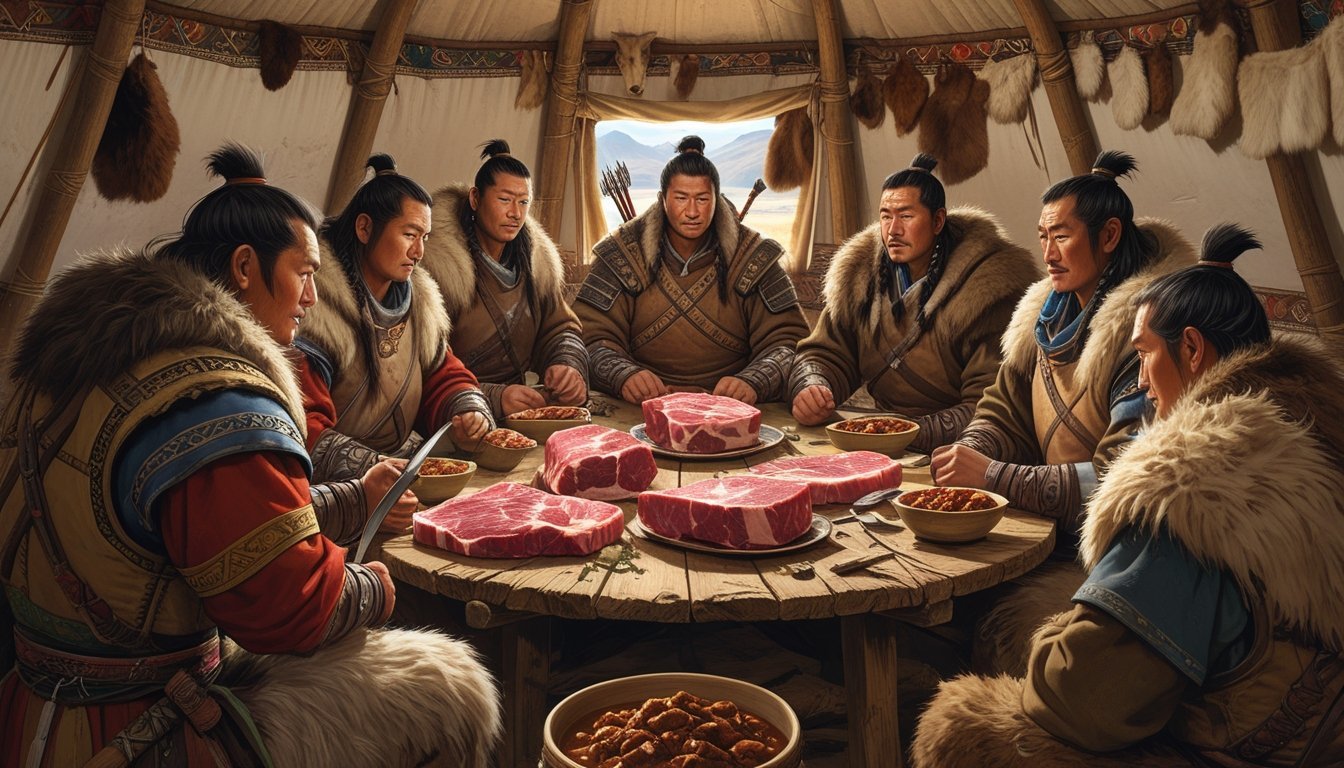
Mongolian warriors thrived on a diet centered around meat and dairy, which provided the strength and endurance needed for their demanding nomadic lifestyle and relentless military campaigns. Their meals often consisted of boiled or dried meats, rich animal fats, and fermented dairy products. In extreme situations, they even relied on horse blood and milk as sustenance, showing remarkable adaptability in harsh steppe environments.
Unlike rival armies that survived on grains, Mongols rarely consumed plant-based foods, believing that animal products made them healthier and stronger. The ability to quickly prepare meals—sometimes cooking food using nothing but body heat and the warmth of a horse—gave Mongolian soldiers a unique advantage on the move. Their frugal and practical approach to nutrition is a key part of what set them apart on the battlefield and in daily life.
Origins Of The Meat-Only Diet Among Mongolian Warriors
Mongolian warriors shaped their diet in response to their environment and their way of life. Reliance on livestock and pastoralism gave rise to a menu centered almost entirely on animal products.
Evolution Of Pastoralist Traditions
The Mongols’ nomadic lifestyle developed in the steppe grasslands of Central Asia, where harsh winters and limited arable land made crop farming nearly impossible. Herding livestock became essential for survival and mobility. Nomad families moved with their herds, primarily sheep, goats, cattle, camels, and horses, ensuring a steady source of meat and dairy throughout the year.
Meat became the foundational food, especially for young males during their warrior years. Historical accounts note that from adolescence, Mongol men consumed almost exclusively meat and dairy. This focus provided both the nutrition and caloric energy needed for the demands of travel and combat on the steppe.
Over centuries, pastoralist traditions shaped not just the Mongols' diet but also their social structure and military organization. Their dependence on herding reinforced a routine of animal-based food sources, embedding these habits deep within the culture.
Role Of Livestock In Mongolian Society
Livestock held both economic and symbolic importance in Mongolian society. Herds were a primary measure of wealth and social status among families and clans. Meat—mutton, lamb, and occasionally horse—was favored for daily sustenance, especially among the warrior class.
Dairy products were also central, but meat consumption dominated, particularly during military campaigns. Table: Common Livestock In Mongol Diets
Livestock Uses Sheep/Goats Meat, milk, wool Horses Meat (special occasions), transport, milk Cattle/Yaks Meat, milk Camels Meat, milk, transport
The practice of consuming almost exclusively animal foods tied warriors closely to their animals. This not only influenced health and survival but also reinforced the cultural identity and unity of Mongol groups across Central Asia.
Daily Life And Nutrition Of The Mongols
Mongolian daily life revolved around their livestock, which shaped their food preferences and nutritional intake. The harsh steppe demanded adaptive diets, with meat and dairy forming the backbone of nutrition.
Staple Foods And All-Meat Meals
The Mongols ate primarily what they herded—sheep, goats, oxen, yaks, horses, and camels. Meat was a central food source, often boiled, roasted, or dried for preservation. Lamb, veal, and beef were especially valued for their energy content and availability.
Meals frequently consisted of simple preparations, such as boiled mutton or roasted cuts. Stews and soups often featured chunks of lamb or beef. Vegetables and grains were limited due to the arid environment, making carbohydrates rare in daily meals.
The all-meat diet provided essential proteins and fats but little in the way of carbohydrates. Supplementation occurred through occasional trade for millet or barley. However, these grains appeared more in times of abundance or along trade routes.
Role Of Dairy In The Diet
Dairy products were a staple, particularly in summer. The Mongols consumed milk, curds, yogurt, and butter from their herds. Fermented mare’s milk, known as kumis, served as a popular drink with mild alcoholic content.
A typical day included fresh or dried cheese and clotted cream. Dairy supplied vital nutrients and calories, partly making up for the lack of fruits and green vegetables. In colder months, dried dairy products could be stored and eaten long after production.
Dairy was often more important than meat for daily nutrition. Herds were valued more for their ongoing production of milk than immediate meat yield, reflecting the efficiency of the nomadic system.
Mongolian Meat Dumplings And Cuisine
Among the best-known Mongolian foods are meat dumplings called buuz. These steamed dumplings are filled with ground lamb, beef, or sometimes veal, seasoned simply with salt and onion. Buuz represented both convenience and comfort, especially during festivals.
Other popular dishes included khuushuur (fried meat pies) and bansh (smaller dumplings). Protein remained the centerpiece, with little use of vegetables or grains compared to cuisines from settled societies.
Despite the scarcity of carbohydrates, these dishes provided variety and used available resources efficiently. Mongol cuisine therefore balanced preservation, portability, and necessary nutrition for a nomadic warrior’s life.
Warrior Culture And The Influence Of Diet
The daily life of Mongolian warriors was shaped by their dietary habits and traditions. The availability of meat and dairy from livestock, along with a unique approach to hospitality, impacted both their fighting abilities and social gatherings.
The Horsemen's Endurance And Strength
Mongolian horsemen relied on a high-protein diet rich in meat and dairy. Sheep, goats, yaks, and horses provided the primary sources of food, with boiled or dried meats and fermented mare’s milk, known as airag, commonly consumed.
This diet helped supply the warriors with long-lasting energy and supported muscle recovery after grueling rides. During campaigns, warriors could survive on preserved meats and cheese, and in emergencies, they might drink horse blood or fresh mare’s milk directly from their mounts.
The reliance on animal products gave the Mongols resilience on the move. They adapted to harsh environments, able to travel days without resupply, and their physical endurance became a hallmark of their military reputation.
Hospitality And Rituals In Mongol Camps
In Mongol society, hospitality played a central role, even within the context of war. Hosts offered guests mutton, roasted meats, and dairy products, emphasizing generosity regardless of personal wealth.
Meals in camp were often communal, fostering unity among warriors. Special rituals included passing cups of fermented milk and presenting cooked meat to honored guests. Sharing food reflected allegiance and mutual respect.
Visitors could expect certain rules and customs. For example, the first cut of meat went to the most senior or respected guest. Such traditions helped reinforce bonds between clans and contributed to the cohesion of Mongol forces.
Leadership, Diplomacy, And Expansion
The Mongol Empire's growth depended not only on battlefield skills but also on innovative leadership and pragmatic alliances. Mongol rulers shaped Asia’s history through decisive military tactics, calculated diplomacy, and control over vital trade networks.
Genghis Khan’s Strategies
Genghis Khan implemented a strict meritocracy, promoting individuals based on loyalty and skill rather than tribal connections. He established clear communication systems across the army using messengers and flags, enabling effective command over vast distances. His rule unified the Mongol tribes, ending decades of internal strife.
The military relied heavily on light cavalry, strict discipline, and coordinated attacks. They used psychological warfare, spreading fear to weaken opponents before battles began. Khan's adaptability allowed him to learn from defeated enemies, incorporating new tactics and weapons into his forces.
Key tactics included:
Rapid Mobility: Horses allowed fast travel and flanking maneuvers.
Deception: Feigned retreats often trapped opponents.
Adaptability: Adoption of siege technology from conquered peoples.
Trade Routes And Tribute Systems
The Mongol Empire secured and revitalized ancient trade routes such as the Silk Road, ensuring safe passage for merchants. They eliminated banditry along these paths by deploying patrols and establishing waystations. This stability helped commerce flourish and linked distant civilizations.
Tribute systems required conquered states to send goods, money, or other resources regularly to the Mongols. In return, subject regions often kept local autonomy and received protection. The tribute system fostered a flow of spices, silver, textiles, and livestock across Eurasia.
Table: Roles of Tribute and Trade
Aspect Details Secured Routes Military patrols, waystations, postal relays Tribute Payments Precious metals, food, livestock, luxury goods Benefits Local rule retained, Mongol protection ensured
Interactions With China And Beyond
Mongol leaders approached China first through warfare, conquering Northern China and ultimately the entire region. Genghis Khan and his successors combined force with diplomatic negotiation, leveraging marriage alliances and formal treaties.
After conquest, the Mongols maintained China’s bureaucracy to collect taxes and manage daily affairs. They dealt with other regions such as Persia and Russia using various combinations of military pressure and alliances. Diplomatic immunity for envoys encouraged open negotiation, reducing conflicts with distant kingdoms.
Mongol diplomacy extended into Europe and the Middle East as well. Envoys traveled freely and exchanged information, setting a precedent for international relations across continents.
Nutritional Impacts Of A Meat-Only Diet
Mongolian warriors relied heavily on a meat-based diet, which offered high energy and protein but also posed certain health risks. These impacts have been studied in both historical records and modern nutrition science.
Benefits And Risks: Historical And Modern Perspectives
A diet focused primarily on meat provided Mongolian warriors with ample protein, iron, and vitamin B12. These nutrients supported muscle maintenance and strength, crucial for their demanding lifestyle.
However, this diet lacked vitamin C and fiber. The absence of fresh fruits or vegetables created a risk of scurvy and digestive issues. Historical adaptations may have included consuming organ meats or fermented dairy, which can partially offset deficiencies but not eliminate them.
Modern studies link meat-heavy diets to increased rates of certain chronic conditions when combined with contemporary sedentary lifestyles. However, the nomadic and physically active lives of Mongolian warriors would have mitigated some negative effects seen today.
Fat Intake And Ketosis
A traditional Mongolian meat-based diet was high in animal fats. Warriors consumed fatty cuts from sheep, goats, and horses, often with little carbohydrate intake.
Such high-fat, low-carbohydrate diets can induce ketosis. In ketosis, the body burns fat for fuel instead of glucose, which may enhance endurance during long campaigns. This metabolic state can also suppress appetite and stabilize energy levels, which would be advantageous in harsh environments with inconsistent food supply.
However, excessive fat intake, especially saturated fats, is linked to elevated blood cholesterol over the long term. While short-term adaptation brought benefits, the long-term impact on cardiovascular health has been a concern in modern populations consuming similar diets.
Effects On Kidney Function And Heart Disease
The high protein content of a meat-only diet increases the workload on the kidneys. For individuals with pre-existing kidney conditions, this can accelerate damage or lead to kidney stone formation due to increased urea and calcium excretion.
Meat-based diets are associated with higher intake of saturated fats, contributing to atherosclerosis and heart disease risk, particularly if physical activity levels are low. Traditionally, the risk may have been reduced among Mongolian warriors due to their active lifestyle, but studies in modern Mongolian adults show growing concerns.
Low intake of plant foods further increases the risk for non-communicable diseases, such as heart disease and type 2 diabetes. Balanced dietary patterns with more plant-based foods are now recommended to address these health risks.
Comparisons To Other Meat-Exclusive Cultures

Cultures from different parts of the world have practiced diets focused almost exclusively on animal products. Historical accounts and scientific studies provide direct comparisons for understanding how groups like Mongolian warriors thrived on such foods.
Inuit And Eskimos
The Inuit and Eskimos of the Arctic are among the most well-documented examples of populations that have relied on animal-based diets for thousands of years. Due to the climate and lack of plant-based options, their diet traditionally centered on fish, seal, whale, and caribou.
While vegetables and grains were nearly absent, they obtained necessary nutrients from organ meats and raw animal products, which supplied vitamins such as C and D. Their diet included high levels of fat and protein but maintained metabolic health and surprisingly low rates of cardiovascular disease.
Traditional food preparation techniques, such as fermenting and consuming parts like liver or skin, allowed for a complete amino acid profile and a range of micronutrients. Anthropological studies have shown that this way of eating was sustainable for generations.
Vilhjalmur Stefansson’s Studies
Explorer Vilhjalmur Stefansson directly studied the consequences of an all-meat diet when he lived among the Inuit in the early 20th century. Stefansson and a colleague later submitted themselves to a year-long meat-only diet experiment under clinical supervision.
His experiences, documented in detailed reports, showed that humans could maintain health without plant foods, provided the diet included enough fat along with lean meat. Stefansson emphasized the importance of proportion, as relying only on lean meat led to health problems like protein poisoning, known as "rabbit starvation."
Stefansson's work was controversial but influential, challenging common Western beliefs about the necessity of carbohydrate-rich plant foods. His observations are still referenced in ongoing research into low-carbohydrate, high-fat diets.
Harvard University And Anthropological Insights
Harvard University has contributed significantly to the understanding of meat-based traditional diets through its Department of Anthropology. Researchers have compared dietary habits of groups such as Mongolian herders and Arctic peoples.
Anthropologists found similarities in adaptation, especially how both societies used animal fat and organ meats to meet nutritional needs in environments where crops were scarce. Comparative studies analyzed not just preserved health, but also cultural practices around food storage, preparation, and consumption.
Key findings include the social role of hunting, food-sharing, and the transfer of dietary customs across generations. Insights from Harvard's research highlight how these meat-exclusive diets were connected to the survival strategies of different nomadic and semi-nomadic groups.
Contemporary Legacy Of Mongolian Diet And Culture
Mongolia’s traditional diet remains rooted in livestock farming and the use of animal products. Urbanization and global trends have influenced local eating habits and brought new visibility to Mongolian cuisine abroad.
Modern-Day Practices In Ulaanbaatar
Ulaanbaatar, the capital of Mongolia, has seen significant changes in its food culture. Despite these changes, meat and dairy still dominate meals. Residents commonly consume mutton, beef, and horsemeat, with products like suutei tsai (milk tea) and aaruul (dried curds) remaining staples.
Street food vendors and restaurants feature traditional dishes such as buuz (steamed dumplings), khorkhog (meat cooked with hot stones), and tsuivan (stir-fried noodles with meat). City supermarkets now also stock imported produce, but animal-based foods remain prominent in daily diets.
Festivals see the continued use of preserved meats and dairy, reflecting nomadic heritage. Many families still produce their own dairy goods at home. The influence of western fast food is present, yet local preferences for hearty, high-energy foods persist throughout the city.
Global Influence Of Mongolian Cuisine
Mongolian cuisine has reached international audiences primarily through themed restaurants and “Mongolian barbecue” experiences abroad. These often diverge from authentic practices but have raised awareness of foods like lamb, beef, and unique dairy products.
Popular ingredients highlighted outside Mongolia include mutton, yak cheese, and mare’s milk. Some major metropolitan areas host restaurants offering dishes such as buuz, khuushuur (fried meat pies), and yogurt-based treats.
A table of exported staples:
Food Item Use Typical Export Destinations Dried Cheese Snack, Ingredient China, Russia Yak Meat Specialty Meat Japan, South Korea Airag (Fermented Mare’s Milk) Drink Limited, niche markets
The cultural emphasis on meat and dairy in Mongolian cooking continues to distinguish it in the international food scene. Chefs and food enthusiasts highlight the country’s methods of preservation and the direct, unembellished approach to ingredients.

