
AI-Powered Food Scanners: Transforming Nutrition Analysis and Meal Planning
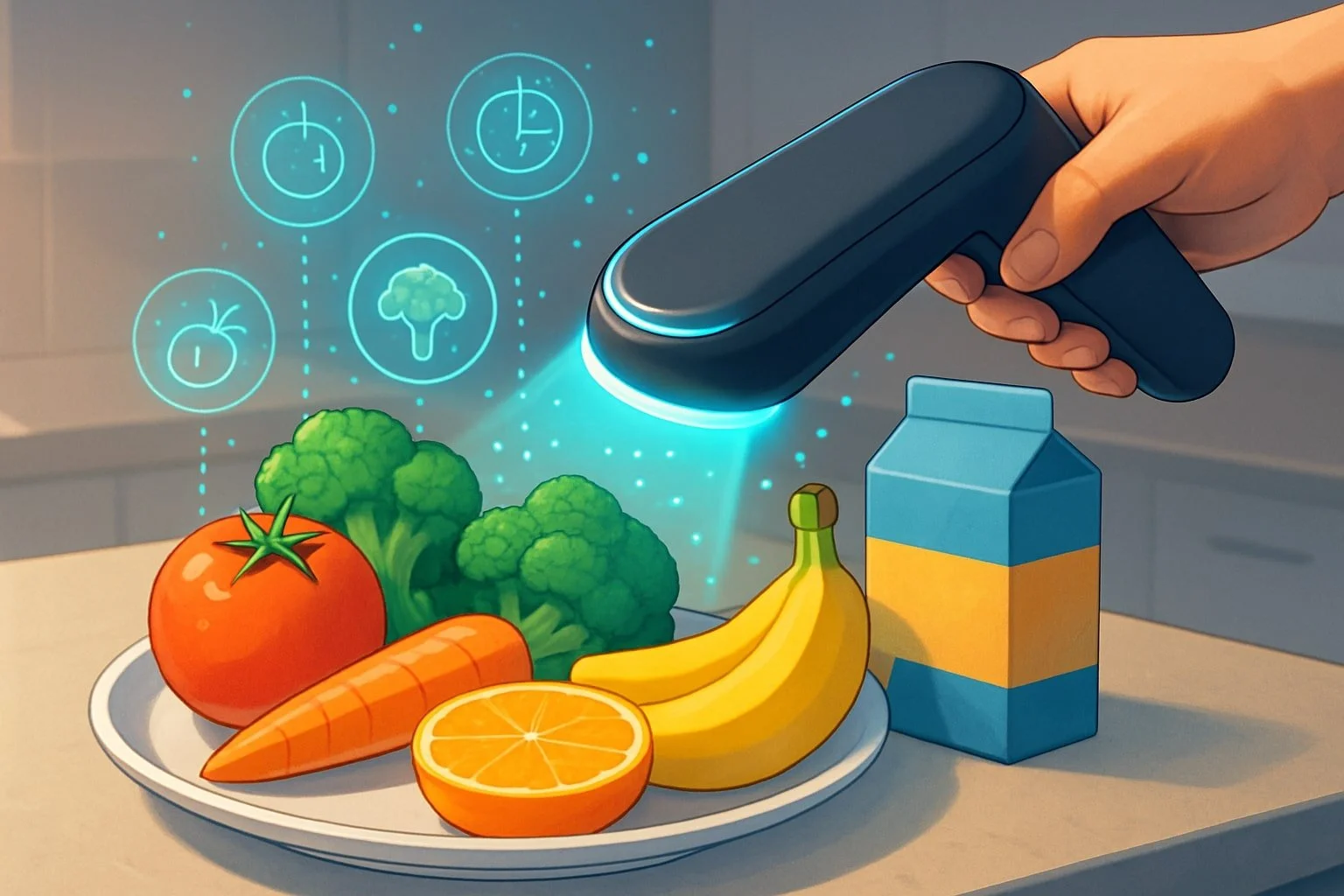
AI-powered food scanners are taking much of the uncertainty out of nutrition tracking by using phone cameras and machine learning to estimate the nutritional content of meals from photos. These systems can provide quick, data-driven nutritional analysis, reducing the need for manual input and making it easier for people to understand what they eat. Recent advances in image recognition allow these tools to identify foods on a plate and even estimate portion sizes with notable accuracy.
Early results suggest some AI food scanners can recognize foods in complex settings, with a mean Average Precision of nearly 80% when identifying overlapping items. With features like barcode scanning and health app integration, these devices streamline the process of tracking calories, macronutrients, and daily intake, helping people make informed choices without tedious logging.
How AI-Powered Food Scanners Work
AI-powered food scanners rely on multiple layers of digital technology to turn images of food into accurate nutritional breakdowns. Central to this process are advanced imaging systems, machine learning algorithms, and robust data sources.
Core Technologies
These scanners use a combination of sensors, cameras, and spectroscopy tools to capture detailed images and data from food items. High-resolution photography provides visual data, while spectroscopy can analyze the internal composition of items, measuring factors like water and sugar content.
Advanced image recognition algorithms identify food types from photos. The system cross-references visual data with extensive nutrition databases. Some devices are portable, allowing users to scan food on the go, while others function as smartphone apps that use the phone’s camera.
The technology transforms a standard photo into quantifiable data points. This process removes much of the manual guesswork from diet tracking and nutrition monitoring.
Role of Machine Learning
Machine learning is integral to these scanners. Early versions relied on static rules, but now modern systems employ supervised and unsupervised learning to continually improve accuracy. Models are trained on thousands of food images and nutritional labels to learn patterns and identify items under varied conditions.
Deep learning and generative AI techniques enable the system to distinguish between similar-looking foods and estimate portion sizes more reliably. As users scan more foods, the AI adapts, learning from new data inputs to refine its predictions.
The use of generative AI also allows models to handle food variations, such as preparation methods or cultural differences. This adaptability makes the scanner useful in real-world eating scenarios.
Accuracy and Reliability
Accuracy depends largely on the quality of the training data and the sophistication of the algorithms. Well-trained models can deliver reliable calorie counts, fat contents, and breakdowns of key nutrients for a broad range of foods. However, there can be challenges with unusual items, mixed dishes, or poor lighting.
Manufacturers often publish validation studies and benchmarks that compare the scanner’s results with laboratory analysis. Most current systems do well with common foods and typical meals, but processed or homemade dishes may yield less precise results.
User involvement, such as confirming or correcting suggestions, helps improve ongoing reliability. Over time, the system’s performance improves as it processes more diverse food samples and user feedback.
Types of AI Food Scanners and Related Appliances
Consumers and professionals now have access to a variety of AI food scanning technologies that fit different needs and environments. These tools range from simple handheld devices to advanced upgrades for existing kitchen equipment.
Handheld Scanners
Handheld AI food scanners are compact devices designed for quick, on-the-go analysis. Users can point these scanners at a food item or product label to receive instant nutritional information and ingredient breakdowns.
Many models use embedded cameras and sensors combined with cloud-based AI to interpret results. Some offer features like allergen alerts, making them valuable for people with dietary restrictions.
These devices are typically portable and battery operated. They appeal to shoppers who want to verify food content on the spot, whether in a grocery store or restaurant.
Common uses include checking calorie counts, confirming the presence of specific allergens, or understanding ingredient lists. Some scanners offer barcode scanning for packaged foods, extending their utility beyond fresh items.
High-Tech Kitchen Gadgets
High-tech kitchen gadgets with AI scanning are often integrated into smart home environments. Smart cutting boards or countertop-based scanners can analyze raw and cooked foods during meal prep.
These gadgets often feature visual recognition and multi-sensor arrays. Some are connected to mobile apps, allowing users to track consumption or receive personalized cooking suggestions.
Notable features:
Real-time nutrition analysis as food is prepared
Detection of food weight and freshness levels
Syncing with health-tracking applications
Such tools address the needs of health-conscious cooks or those managing specific diets. They provide actionable insights without disrupting kitchen routines.
AI-Powered Appliances
AI-powered appliances take food scanning a step further by embedding advanced recognition and analysis directly into the device. Examples include smart refrigerators, ovens, and microwaves with built-in cameras and sensors.
These appliances can automatically identify food items placed inside, estimate expiry dates, and suggest recipes or storage tips. Some models offer inventory tracking and meal planning, reducing food waste.
For commercial kitchens, large-scale appliances utilize AI to track food waste, assess portion sizes, and generate compliance reports. Integrations with cloud databases allow for regular updates and improved accuracy.
The appeal lies in automation and the removal of manual tracking, which saves time for busy households and food professionals.
Retrofit Scanning Solutions
Retrofit scanning solutions allow users to upgrade traditional kitchen equipment and storage spaces with AI food analysis capabilities. These are often modular devices or attachments that can be added to existing fridges, shelves, or prep areas.
Common examples include clip-on barcode scanners, small camera units, or weight sensors. These solutions bring food recognition and inventory features to any kitchen without the need for full appliance replacement.
Benefits include cost savings and flexibility. Users can tailor the system to their space and needs, enabling gradual adoption.
Retrofitting is particularly popular in commercial or institutional kitchens, where replacing all equipment at once is impractical. These solutions extend the benefits of AI scanning to a wider range of environments.
Applications in Everyday Cooking
AI-powered food scanners are seeing widespread use in the kitchen for meal tracking, recipe development, and dietary management. Devices and apps equipped with this technology are reshaping how food is identified, measured, and prepared in home and professional kitchens.
Portion and Nutrient Analysis
Modern scanners use cameras and artificial intelligence to analyze portion sizes and estimate the nutritional value of meals in real time. Many apps allow users to simply photograph their plate, after which the AI breaks down food items and measures calories, protein, fats, and carbohydrates.
This technology eliminates the need for manual logging or guesswork. AI-powered appliances and chef AI systems can integrate data with fitness platforms such as Apple Health for seamless tracking. For those monitoring macros, this cuts down on errors and saves time.
A quick scan provides a detailed snapshot, showing both ingredients and serving sizes. This helps individuals with specific dietary goals—such as weight loss, muscle gain, or diabetes management—to make informed decisions at the table.
Automated Recipe Suggestions
AI systems are capable of more than just analyzing food; they also generate tailored recipe suggestions based on ingredients at hand and nutritional preferences. By scanning items in the pantry or fridge, the AI can propose specific meal ideas that match dietary goals or restrictions.
Chef AI modules within smart appliances may assist users in choosing recipes that adjust proportionally to the number of servings or nutritional needs. This feature is especially helpful for busy families who want to maximize ingredient use and minimize waste.
Automated recipe suggestions can present options in easy-to-follow steps, often listing prep times, required tools, and potential substitutions for missing ingredients. This makes it straightforward for users to cook balanced meals with less planning and fewer trips to the store.
AI Food Scanners at CES 2024: Innovations and Highlights
CES 2024 showcased significant advances in AI-driven food scanners and kitchen appliances. These devices emphasized smarter food analysis, improved nutritional insights, and new ways to approach indoor cooking.
InnoGrill AI 2.0
InnoGrill AI 2.0 builds on previous smart grilling models with updated sensors and algorithmic enhancements. Its core feature is real-time food recognition using an integrated camera system and edge AI processing.
Through a touch panel interface, users receive instant feedback on doneness, nutrition data, and optimal cooking times for different meats and vegetables. The device scans the surface of the food and continuously adjusts settings such as temperature and timing for more consistent results.
A detailed summary table visualizes results:
Feature Details Food Recognition Real-time, camera-based Smart Cooking Modes Beef, poultry, fish, veggies Nutrition Info Automatic, per serving Connectivity Wi-Fi, app for remote alerts
InnoGrill AI 2.0 aims to minimize overcooking and reduce guesswork, making it suitable for both skilled cooks and beginners who want precision at home.
GE Profile Smart Indoor Smoker
The GE Profile Smart Indoor Smoker attracted attention as a countertop appliance that uses AI to regulate smoke levels and cooking time. Its core advantage is delivering authentic smoked flavors indoors with precise control.
The smoker analyzes food type and weight to set smoke intensity and heat level automatically. Users can monitor cooking progress in real time on the companion app or the built-in display.
Key features include:
Sealed smoke chamber for minimal odor escape
Preset modes for brisket, poultry, fish, and vegetables
Alerts for each cooking stage
AI-driven suggestions for optimal smoking duration
This appliance is particularly useful for those living in urban areas or apartments where traditional outdoor smoking is not possible. Its use of AI is focused on simplifying the smoking process without sacrificing taste or texture.
Revolutionizing Food and Beverage Preparation
AI-powered food scanners are unlocking new levels of precision in kitchen appliances. Innovations such as smart grills and integrated air fryers are delivering accurate, reliable results while reducing guesswork and manual effort for cooks.
Smart Grill Technology
Smart grills now use embedded AI to automatically recognize the type, weight, and thickness of food. The integrated scanner analyzes the surface and internal composition, then adjusts cooking time and temperature. This eliminates much of the manual monitoring and reduces the chance of undercooked or overdone results.
Users can select from predefined settings or allow the grill to make autonomous choices for foods such as steaks, fish, or vegetables. Paired with mobile apps, these grills display real-time data and offer visual progress updates. Advanced sensors track moisture, texture, and doneness, helping users get predictable outcomes with each use.
Some smart grills feature automatic cleaning modes, programmable timers, and wireless notifications. As a result, home cooks and professionals alike can achieve restaurant-quality results without the need for constant supervision.
Air Fryer Integration
Modern air fryers increasingly include AI-powered scanners to identify ingredients and suggest optimal cooking programs. After scanning, the air fryer sets temperature and time automatically, adapting for food density and size.
Quick-reference tables on device screens highlight recommended settings for common items like chicken wings, fries, or vegetables. Many air fryers now support voice control and app connectivity, enabling users to monitor or adjust cooking remotely.
Integrated sensors check internal food temperature to prevent overcooking or burning. With more precise controls, users enjoy healthier meals with improved consistency, less guesswork, and less potential waste.
Feature Comparison Table
Feature Smart Grill Air Fryer Ingredient Recognition Yes Yes Auto-Temperature Adjustment Yes Yes Moisture/Doneness Sensors Advanced Basic to Advanced App Connectivity Often Common Voice Control Sometimes Growing Availability
The Future of AI in Culinary Robotics
AI-driven robotics are reshaping the commercial kitchen and cafe landscape, offering precision, consistency, and operational efficiency. These technologies automate complex tasks that once required skilled labor, enabling new standards in food quality and service.
Chef-Like Robots
Chef-like robots are now capable of handling repetitive and labor-intensive kitchen duties such as sorting produce, assembling meals, and performing quality control. Some companies report up to a 20% decrease in food defects thanks to AI-powered monitoring and sorting systems.
These robots can quickly adapt recipes and portion control based on real-time data, reducing waste and optimizing ingredient usage. Sensors and computer vision allow them to ensure food safety and maintain hygiene standards with minimal human intervention.
Advanced models can also monitor cooking times and adjust temperatures automatically, minimizing human error. For restaurant operators, this means more consistent dishes and faster service, which is critical in high-volume environments.
Key benefits:
Improved consistency and reduced errors
Enhanced food safety and quality control
Streamlined prep and cooking workflows
Robot Barista Innovations
Robot baristas have become increasingly common in specialty coffee shops, notably through systems like Artly Coffee’s Barista Bot. These robots prepare fine coffee beverages by precisely grinding, tamping, and brewing, then presenting drinks with a level of accuracy difficult for even skilled humans to match.
Unlike traditional machines, a robot barista can memorize hundreds of unique drink recipes and repeat them without fatigue or mistakes. Customers receive drinks with consistent texture, temperature, and flavor, regardless of order volume or time of day.
In addition to efficiency, the technology frees up human staff to focus on customer service and creative aspects. Artly Coffee continues to refine their Barista Bot with machine learning, improving how the system recognizes preferences and adapts to different beans and roast profiles.
Features of leading robot barista systems:
Feature Benefit Precision Measurements Consistency in quality Automated Cleaning Improved hygiene Recipe Memorization Broad menu options Real-Time Adjustments Optimal extraction and flavor
AI in Ice Cream and Dessert Making
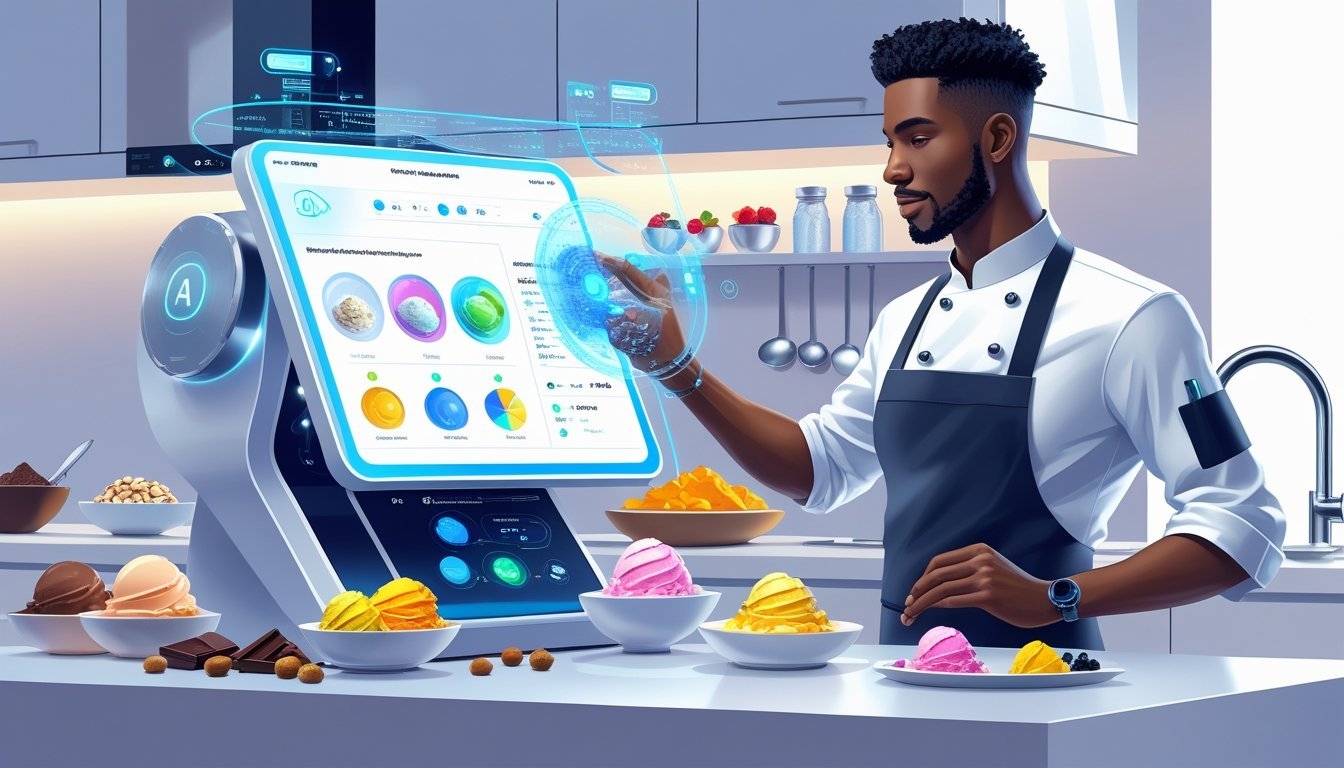
AI is transforming how frozen desserts are prepared and served. Ice cream-making machines equipped with smart features now offer higher efficiency, enhanced food safety, and improved customization for consumers.
No-Clean Ice Cream Machines
No-clean ice cream machines use advanced automation and AI to reduce the need for manual cleaning and maintenance. The core benefit is hygiene—AI-driven sensors monitor performance and detect residue, ensuring machines dispense only when internal standards are met.
Self-sanitizing cycles reduce the risk of contamination. This technology leads to less downtime and faster service, which is ideal for high-traffic food retail environments. Inventory management is also automated, with ingredient levels and usage tracked in real time.
Key Features:
Automated cleaning cycles
Real-time performance monitoring
Stock tracking and predictive maintenance
For customers, this results in consistent quality and more reliable availability of menu items. For operators, the machines lower labor costs and reduce food waste.
ColdSnap System
The ColdSnap system brings single-serve ice cream production directly to the point of sale. It operates with on-demand freezing using AI controls that adjust the freezing process based on portion size, ingredient type, and desired texture.
ColdSnap pods store shelf-stable liquid mixes. When loaded, the machine freezes the contents in under two minutes, minimizing wait time and preserving freshness. No cleaning between servings is required, as ingredients are never exposed inside the unit.
How ColdSnap Stands Out:
Pod-based single servings ensure no cross-contamination
AI-driven freezing technology personalizes texture and flavor
Minimal cleaning needs improve operational efficiency
ColdSnap’s approach helps retailers reduce ingredient waste and simplifies handling allergens, since every serving is contained until the moment of preparation. This system appeals to settings where convenience, safety, and speed are priorities.
AI-Enhanced Beverage and Cocktail Solutions
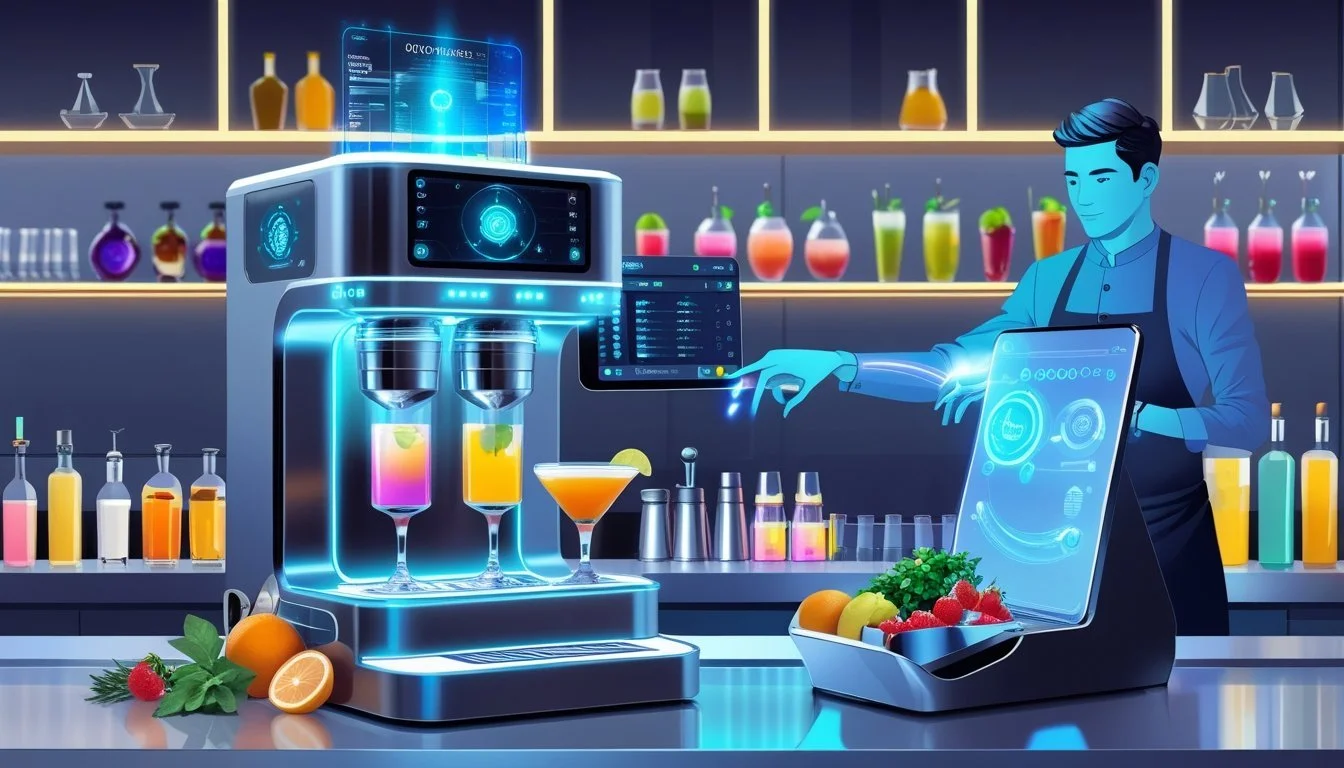
AI-powered appliances are shifting how people prepare beverages at home and in commercial settings. Smart brewing and cocktail machines are improving convenience, customization, and consistency in drink preparation by integrating sensors, data, and automation.
Automated Brewing Machines
Automated brewing machines use AI technology to simplify beer and coffee production. These devices monitor temperature, pressure, ingredient additions, and brewing times through a combination of sensors and algorithms.
Features include step-by-step guided recipes and automatic adjustments for environmental factors. Many machines offer customization options, allowing users to set preferred strength or flavor profiles.
For beer enthusiasts, DIY beer kits like Igulu's automated system enable users to brew high-quality craft beer at home. A table below shows some typical features:
Feature Description Temperature Control Maintains optimal brewing temperatures Ingredient Dosing Precisely adds hops, malt, or yeast App Connectivity Allows remote monitoring and control
These features help reduce brewing errors and support more consistent results.
Cocktail-Mixing Appliances
Cocktail-mixing appliances use AI to automate the process of mixing, shaking, and pouring cocktails. By integrating ingredient recognition, users can place common spirits and mixers in the machine, and the appliance selects quantities based on standardized recipes or personal preferences.
Some models include touchscreen controls, recipe suggestions, and app integrations. Users can input their spirits inventory, and the system recommends cocktails based on what's available.
The use of AI-powered sensors ensures accuracy in ingredient measurement, helping to recreate bar-quality drinks at home. Reliability and convenience are the primary benefits.
Bartesian and Igulu Devices
Bartesian's cocktail-mixing appliance combines capsules containing mixers with user-supplied spirits. Using AI-led ingredient tracking and automatic dispensing, it creates classic cocktails with minimal manual effort. Simple cleaning mechanisms and a broad library of cocktails support usability for frequent use.
Igulu, mainly known for smart brewing, also applies automation principles to beverage customization. Its platforms offer guided brewing or mixing experiences and detailed analytics on taste profiles and process metrics.
Both brands illustrate how dedicated AI-powered beverage devices are bridging the gap between professional results and at-home simplicity.
Urban Environments and Sustainable Cooking

Urban environments are facing rising pressure to adopt more sustainable cooking practices. Addressing indoor air quality and reducing resource use have become important parts of city living.
Indoor Smoker Use
Indoor smokers are gaining popularity in metropolitan areas where outdoor grilling is limited by space or building regulations. These appliances are typically electric, making them suitable for apartments and high-rise dwellers. Built-in filters and ventilation systems help reduce smoke and odors, addressing concerns about indoor air pollution.
Key features to consider include:
Feature Benefit Air Filtration Systems Reduces smoke particles Temperature Control Ensures consistent cooking results Compact Design Fits easily in small kitchens
Safety is critical. Users should monitor ventilation and follow manufacturer guidelines to minimize health risks. By using technology that limits emissions, indoor smokers provide more sustainable options for city residents.
Wood Pellets and Eco-Friendly Options
Wood pellets are recognized for their efficiency and lower environmental impact compared to traditional charcoal or gas. Pellets made from compressed sawdust or wood scraps burn cleanly, producing less ash and fewer harmful compounds. This makes them attractive for environmentally conscious consumers in urban environments.
Some brands offer certified-sustainable pellets, supporting responsible forestry. Eco-friendly options now include pellets made from agricultural waste or hardwood blends with minimal additives. When paired with AI-enabled food scanners, users can further reduce waste by cooking only what is needed, tracking consumption, and selecting optimal pellet types for specific meals.
A comparison table:
Fuel Type Emissions Ash Residue Sourcing Traditional Wood Higher High Variable Charcoal Higher Moderate Often non-renewable Wood Pellets Lower Low Often sustainable

