
Consumer Confusion Around Date Labels and Its Impact on Food Waste

Many shoppers are familiar with food date labels such as "best before," "use by," and "sell by," but what these terms actually mean continues to cause widespread confusion. Consumer confusion around food date labels leads to a significant amount of edible food being thrown away unnecessarily. Recent national surveys indicate that a large majority of U.S. consumers discard food near or past the label date, often believing it is unsafe, when the labels usually refer to quality and not safety.
This misunderstanding is a major factor behind food waste, with estimates suggesting that confusion over date labelling is responsible for about 20 percent of what households throw out. As food prices rise, this issue impacts not only people's wallets but also broader efforts to reduce waste and improve food security. By gaining a clear understanding of what date labels actually indicate, consumers can make better decisions, save money, and cut down on unnecessary waste.
Understanding Date Labels on Food Products
Date labels are widely used on food products in the United States, yet many consumers misunderstand their meanings. Inconsistent terms and limited regulatory guidance contribute to frequent food waste and public confusion.
Types of Food Date Labels
Food date labels generally fall into several main categories. The most common terms are:
Best if Used By/Before: Indicates when a product is expected to be at peak quality or flavor. It does not relate to safety.
Use By: Communicates the last date for optimal quality, often used on perishable goods. With certain products, especially infant formula, this label can also reference safety.
Sell By: Informs retailers how long to display a product for sale. It is not intended as a safety guide for consumers.
Expires On: Occasionally found on dietary supplements and baby formula, signaling a strict expiration date.
A lack of standardization in labeling contributes to misinterpretations. According to recent surveys, over 80% of consumers admit discarding foods near or just after the date on the package, reflecting a belief that these dates guarantee safety rather than quality.
The History and Purpose of Date Labeling
Date labeling was introduced by the food industry to help retailers manage stock and optimize product rotation. Initial efforts focused on product codes readable only by manufacturers. By the 1970s, visible date labels became common in response to consumer demand for more product information.
The primary aim is quality assurance. Manufacturers use codes or date labels to indicate when a product is likely to be freshest or perform as intended. There is no federal requirement for most food date labels, except for baby formula, which must have a "Use By" or "Expires On" date for safety reasons.
The lack of a consistent federal mandate has led to various labeling practices—impacting how consumers interpret these dates and when they choose to discard food.
Key Regulatory Bodies and Guidance
Several agencies play roles in food date labeling. The Food and Drug Administration (FDA) oversees food safety broadly, while the USDA Food Safety and Inspection Service (FSIS) regulates labeling for meat, poultry, and some egg products. However, outside infant formula, these agencies do not require specific date labeling for most products.
The food industry, responding to calls for clarity, has voluntarily adopted standardized terms like "Best if Used By" as recommended by the Product Code Dating Initiative. Despite these efforts, inconsistencies persist because label language remains largely unregulated.
Regulatory attention has increased. In late 2024, the federal government sought public input on standardizing food date labels, signaling potential future requirements for label consistency across the U.S. food system.
Why Consumers Are Confused About Date Labels
Consumers in the U.S. often struggle to correctly interpret date labels on food, leading to unnecessary waste and uncertainty. Several factors contribute to this issue, including the unclear meaning of common date terms, varied consumer expectations, and the influence of risk-averse attitudes on disposal behavior.
Misinterpretation of Label Terms
Many shoppers encounter a range of date labels, such as “sell by,” “best by,” and “use by.” These terms are not standardized and frequently lack explanation, making it challenging for consumers to know their actual significance.
Often, people interpret all of these labels as direct indicators of safety. In reality, most date labels refer to product quality rather than food safety, except for certain perishable items.
For example, a “sell by” date is meant for stock rotation by retailers but is commonly mistaken for a discard date by buyers. The lack of clarity is made worse by inconsistent placement and poor legibility of date labels on packaging.
Consumer Perceptions and Behavior
Consumer perceptions are shaped by their understanding—or misunderstanding—of what date labels mean. Many believe these dates are governed by official regulation, while in fact, most are not standardized or enforced in the U.S.
Surveys show a significant portion of U.S. consumers admit to discarding food based on dates, regardless of whether there are signs of spoilage. The belief that date labeling assures food safety increases the likelihood of premature disposal.
This reliance on date labels as authoritative leads to confusion and reinforces the idea that food past a labeled date should be thrown away, resulting in avoidable food waste.
The Role of Risk Aversion in Food Disposal
Risk aversion strongly affects how people respond to date labels. Many consumers, out of concern for possible foodborne illness, err on the side of caution and dispose of products as soon as the labeled date has passed.
Examples of risk-averse behaviors:
Discarding unopened, shelf-stable food based solely on the date label
Avoiding products with unreadable or missing date information
Relying on date labels instead of sensory checks (smell, texture)
Studies reveal that people who are more concerned about health risks are particularly likely to use “best by” and “use by” dates as strict cutoffs for consumption. This cautious approach can lead to significant food waste, especially in households that are not confident in their ability to assess food safety themselves.
Impacts of Date Label Confusion
Confusion over food date labels leads to widespread food waste, unnecessary spending, and public misunderstanding about safety. These impacts affect both individual households and broader food systems.
Food Waste and Environmental Impact
A national survey found that 88% of U.S. consumers discard food near or past the labeled date, often while the food is still safe to eat or donate. This behavior directly increases food loss and contributes to higher levels of edible food waste.
Wasted food increases landfill volume, which leads to higher greenhouse gas emissions. Resources used to produce, transport, and store discarded food—such as water, land, and energy—are also wasted. With rising food prices and global concerns about food insecurity, reducing unnecessary disposal is an important step for sustainability.
Common causes of this waste include unclear labels such as "best if used by" or inconsistent placement and poor legibility of information. Consumers may not distinguish between indicators of food quality (like taste or freshness) and those of food safety.
Economic Consequences for Consumers
Discarding food prematurely raises the weekly and monthly food budget for households. As food prices continue to increase, unnecessary disposal puts additional strain on families and individuals—especially those facing economic vulnerabilities.
A 2025 survey highlighted that many consumers throw away products that are still edible, reducing their ability to stretch their food budget effectively. For low-income households, this loss is particularly significant, as it means less access to healthy food and resources.
Buyers often err on the side of caution due to uncertainty, resulting in the loss of foods with no quality or safety issues. Over time, this behavior can add up to hundreds of dollars in wasted groceries per year per household.
Health and Food Safety Concerns
Many consumers mistakenly believe all date labels are related to food safety, but most indicate quality, such as peak flavor or texture. Misunderstanding these terms can cause people to dispose of food that is still safe to eat, while some risk eating items that should be discarded if the label is not clear.
When individuals ignore safety-based labels like "use by," there is a risk of consuming foods past their safe period, potentially leading to foodborne illness. Simultaneously, the disposal of safe, nutritious foods can limit access to these items for families and communities facing food insecurity.
Clear guidance and public education on the real meaning of different labels are important to help consumers make informed decisions about when to keep or discard food. Better understanding also promotes safe practices and reduces avoidable food waste.
Current Regulations and Industry Practices
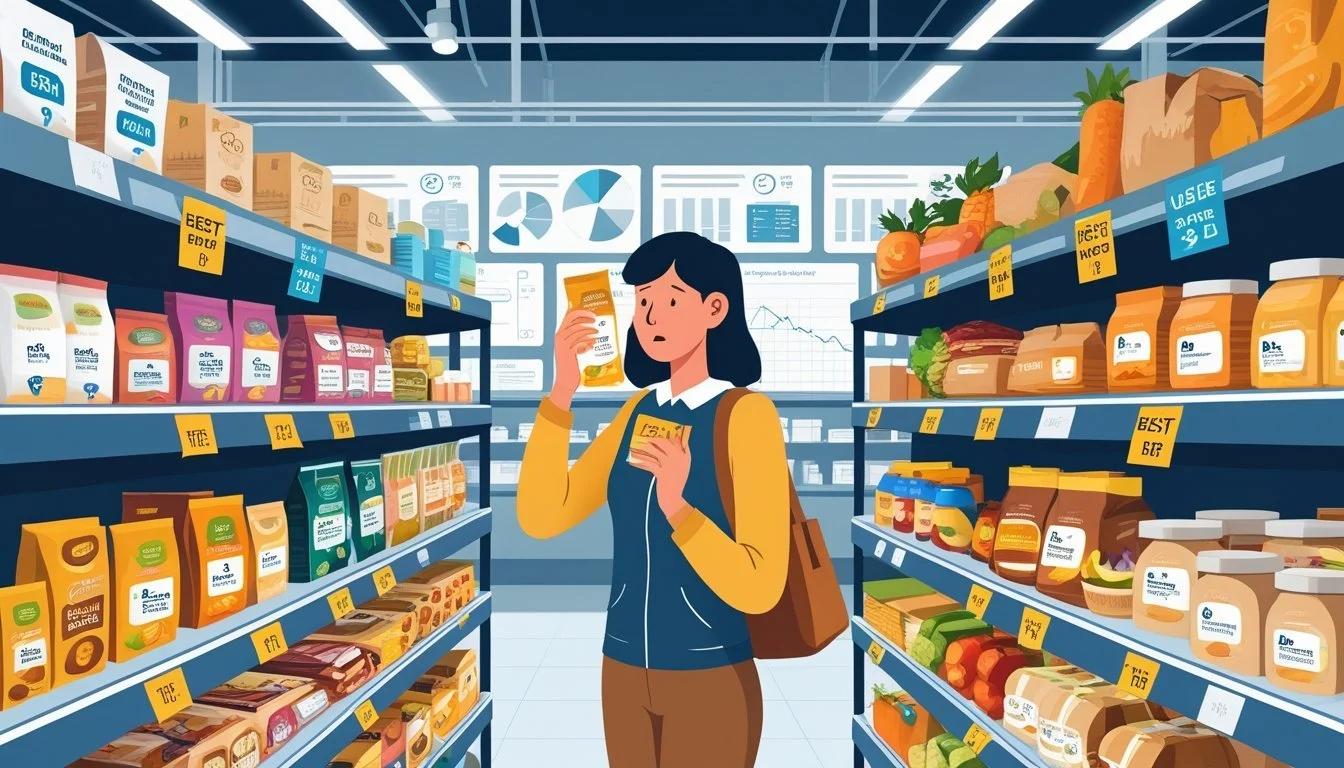
Date labeling on food products in the United States is overseen by both the FDA and the USDA, but approaches and requirements vary. While some labeling is regulated, much of what appears on packaging is driven by industry discretion and is not mandated by law. Recent legislative efforts aim to unify and clarify these standards.
Overview of FDA and USDA Guidelines
The FDA regulates most packaged foods, while the USDA oversees meat, poultry, and certain egg products. Generally, neither agency requires uniform date labels like "Best By" or "Sell By" for most foods, except in rare cases such as infant formula.
For perishable items such as meat and poultry, the USDA Food Safety division recommends but does not mandate quality or safety dates. The meaning of terms like "Best If Used By," "Sell By," and "Use By" often varies between products and is not always linked to food safety.
The agencies recently issued a Request for Information to gather more data and input on standardizing food date labeling nationwide. The lack of clear and consistent rules contributes significantly to confusion among both food manufacturers and consumers.
Voluntary Practices by Food Manufacturers
Most food manufacturers voluntarily add date labels to their products even when not required to do so by law. Labels are intended to communicate quality rather than safety in most cases. Common terms include:
"Best By": Indicates when the product is at peak quality.
"Sell By": Used predominantly for inventory management in stores.
"Use By": Often signals the last date for peak freshness.
Manufacturers develop their own systems based on product testing, consumer expectations, and retailer requirements. There is little uniformity across the industry, with practices differing between companies and product categories. Some manufacturers are moving to use the FDA-recommended "Best If Used By" for clarity, but adoption is not universal.
Food Date Labeling Act and Legislative Efforts
The Food Date Labeling Act was introduced in Congress to create clear, uniform requirements for date labeling on food. It seeks to establish two standard phrases: one for food quality ("Best If Used By") and another for safety ("Use By"). As of now, the Act remains pending and has not passed into law.
In parallel, both the FDA and USDA are jointly seeking input on possible regulations through public consultations. Stakeholders across the food industry, including manufacturers and consumer advocates, are participating in these discussions. These efforts aim to reduce food waste and eliminate consumer confusion by setting nationwide standards for date labeling.
If enacted, future rules or legislation could finally standardize terminology and improve consumer understanding, aligning industry practices with regulatory requirements.
Efforts to Standardize Food Date Labels
Efforts to standardize food date labels are increasing as confusion persists among consumers. Standardization aims to reduce food waste and make label meanings clear, with various stakeholders involved at national and international levels.
Standardization Initiatives in the United States
In the United States, confusion over date labels like "Sell By" and "Best Before" has led to unnecessary food waste. Federal efforts, such as the Food Date Labeling Act (S.1484 | H.R.3159), propose simplified and uniform labeling nationwide.
Major industry groups, including the Grocery Manufacturers Association (GMA) and Food Marketing Institute (FMI), introduced a voluntary product code dating initiative. The initiative encourages manufacturers to use only two terms: "Best If Used By" for quality and "Use By" for safety.
Surveys show that 88% of U.S. consumers discard food around the listed date, often due to inconsistent terms and unclear meanings. Standardizing date labels is expected to improve household decision-making and help reduce unnecessary food waste.
Global Trends Toward Unified Labeling
Globally, several countries have pursued standardized food date labels to curb confusion and address food system inefficiencies. The European Union has issued guidelines promoting consistent use of "Best Before" and "Use By" across member states.
Australia, Canada, and the UK have adopted similar label simplification, focusing on clearer terminology and improved design. These countries often work with regulatory agencies to enforce format and placement.
Japan and South Korea have also moved toward unified rules, making label meanings more consistent within their food markets. International organizations continue promoting best practices, recognizing that global commerce requires clearer, more harmonized approaches.
Role of Organizations Like ReFED
ReFED is a nonprofit that focuses on reducing food waste throughout the supply chain. They advocate for standardizing date labels as a cost-effective way to lower consumer-level food waste.
ReFED compiles data, publishes insights, and brings together industry, government, and nonprofits. Their research finds that standardized food date labels can prevent millions of pounds of edible food from being discarded each year.
They also support pilot projects and educational campaigns to help consumers interpret product date codes more correctly. By partnering with food manufacturers and retailers, ReFED advances practical solutions to food system challenges related to labeling and waste reduction.
Strategies to Reduce Consumer Confusion
Efforts to address confusion about date labels focus on clear communication, standardization, and support from both industry and policy makers. Direct actions from the food system, retailers, and government agencies can minimize food waste and help consumers make better decisions about healthy food consumption.
Consumer Education Campaigns
Consumer education is key to correcting misunderstandings about date labels like “use by” and “best if used by.” Surveys show more than half of consumers do not know the difference between these terms, leading many to discard food that is still safe.
Targeted educational efforts, such as in-store signage, community workshops, and online resources, help clarify that most date labels are about quality, not safety. Practical guidance on proper food storage and food safety can also reduce confusion.
Partnerships between non-profits, universities, and public health agencies increase the reach and credibility of these campaigns. By providing clear examples and easy-to-understand tips, education reduces waste and helps consumers stretch their food budgets.
Improved Labeling Clarity
Unifying date labels across the food industry reduces ambiguity. Organizations like the Grocery Manufacturers Association (GMA) and Food Marketing Institute (FMI) have recommended limiting labels to just two phrases:
Label Meaning Best If Used By Food quality may decline after this date Use By Food should not be consumed after this date for safety
Adopting standardized terms and simple language allows consumers to make informed choices. Clear visual symbols and easy-to-read fonts can help, especially for those with language or literacy barriers.
Retailers and manufacturers can further assist by including food storage guidance and tips directly on packaging. These strategies reduce confusion at the point of purchase and in consumers' homes.
Food Waste Solutions Through Policy and Innovation
Policy changes can motivate industry-wide adoption of standard date labels and support food waste solutions. Some regions have passed legislation mandating clearer date labeling, which encourages consistency across brands.
Innovative approaches, such as dynamic QR codes on packaging, provide consumers with real-time guidance about food freshness and safety. Government-backed incentives for food donation further encourage retailers to donate safe, surplus food instead of discarding it.
The food industry can play a leading role by piloting new label formats and funding research into consumer behavior. Combined with supportive policy, these measures help minimize waste while ensuring people have access to healthy food.
The Future of Food Date Labeling
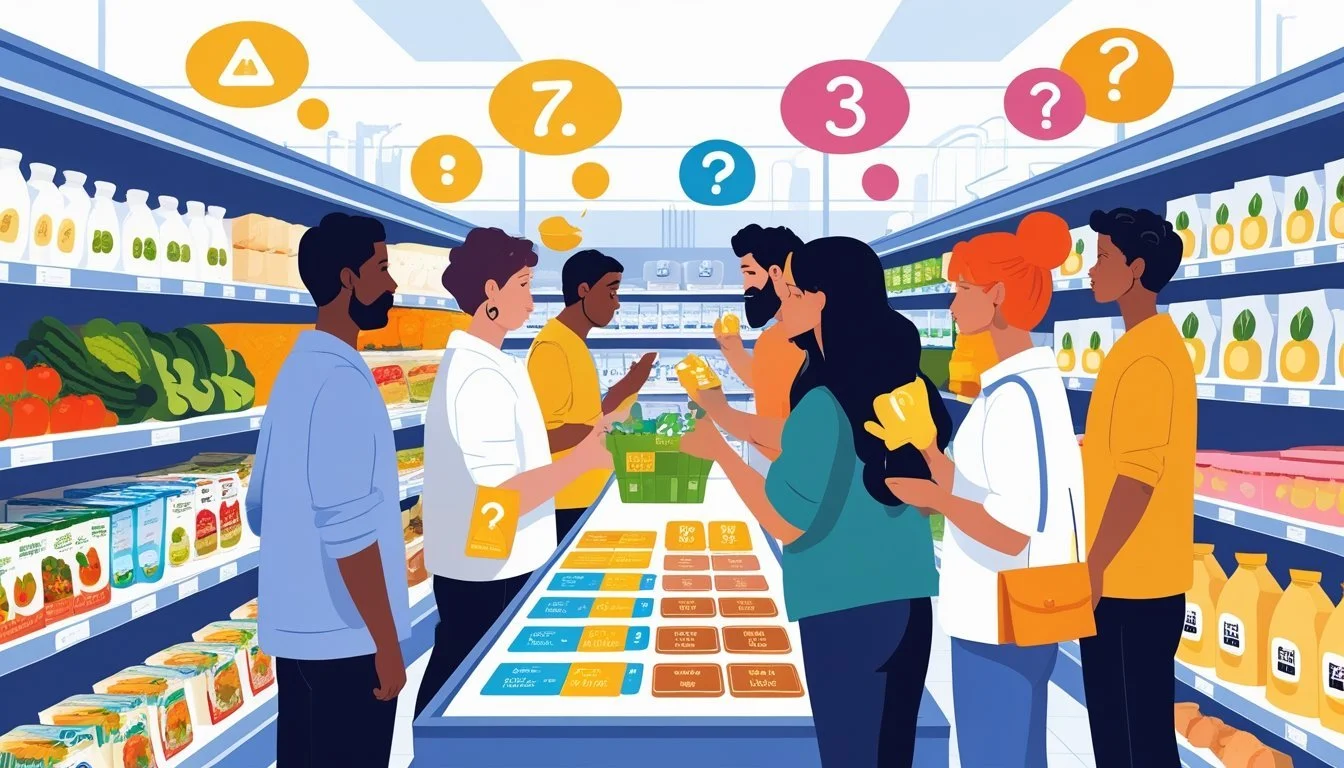
Efforts to address consumer confusion around food date labeling are focusing on advances in technology, evolving policy approaches, and practical steps the food industry can take. Standardization, transparency, and innovations in packaging and data sharing are seen as key ways to help reduce food waste and improve understanding of food quality and shelf life.
Emerging Technologies and Digital Tools
Food manufacturers and retailers are exploring new tools such as QR codes and smart packaging to give accurate, real-time data about product freshness. Sensors that monitor temperature and humidity during transport or storage can provide updated information about a product's remaining shelf life.
Digital labels accessed via smartphones let consumers check batch-specific details—such as how long a particular item has been outside a recommended temperature range. Some apps also notify users when products at home are nearing their true expiration, connecting kitchen inventories with actionable reminders.
A summary table of common technologies:
Technology Type Example Use Smart Sensors Track temperature fluctuations Digital Labels Provide product-specific info Inventory Apps Send shelf-life alerts to consumers
These innovations make it possible to move away from static “best by” or “use by” dates and instead offer personalized, dynamic assessments of food quality.
Potential Policy Changes
Policymakers in the United States and other countries are assessing ways to clarify date labeling regulations. Proposals often include standardized definitions for terms like "Best by" and "Use by" to distinguish between quality and safety, making it easier for consumers to interpret labels.
Some states and advocacy groups support federal guidelines that would require manufacturers to adopt a simple standardized system. For example, “Best if Used By” could universally signify peak quality, while “Use By” could consistently refer to food safety.
There is also interest in giving suppliers flexibility to update date information digitally, reducing waste for items with stable shelf life. Such moves require regulatory updates and industry collaboration, but could have a measurable impact on reducing discarded but still-edible food.
Opportunities for the Food Industry
The food industry has a significant role in reducing confusion and waste by improving how it communicates food quality and shelf life. Manufacturers can shift to labels that retain consistency and transparency, backed by consumer education to ensure correct interpretation.
Large grocery chains and brands are experimenting with clearer front-of-pack labeling and collaborating with food banks to redistribute items near but not past their true safety thresholds. Companies adopting data-driven shelf life estimates can optimize inventory, increase trust, and minimize unsaleable losses.
By adopting digital tools and embracing policy changes, the industry stands to benefit through increased efficiency and improved consumer confidence. These shifts can help consumers make informed decisions and reduce unnecessary food waste.

