
Food Shelf Life as a Risk Management Tool for Safer and More Efficient Supply Chains
Food shelf life plays a crucial role as a risk management tool by helping companies control food safety, reduce waste, and maintain product quality. Understanding and managing shelf life allows food businesses to identify and mitigate potential risks related to spoilage, contamination, and regulatory compliance. Shelf-life management is an essential part of a food company's safety program, ensuring products meet specific safety requirements.
Proper shelf-life assessment supports decision-making throughout the supply chain. It offers a systematic approach to determine how long products remain safe and effective for consumption while minimizing the risk of foodborne illnesses or recalls. For food manufacturers and retailers, using precise shelf-life data not only helps protect consumers but also improves operational efficiency.
Understanding Food Shelf Life
Food shelf life is closely tied to safety, quality, and economic considerations in the food industry. The management of shelf life requires knowing how long a product remains safe and appealing, recognizing what affects that duration, and identifying risks that can cause spoilage.
Definition and Importance
Shelf life is the specific period during which a food product remains safe to consume, maintains expected quality, and meets regulatory standards. It is determined based on scientific studies, such as microbial testing and sensory evaluation.
Manufacturers rely on expiration dates, best before dates, or use by dates to communicate when a product should no longer be consumed. Accurate shelf-life management helps companies minimize food waste, protect consumer health, and comply with food safety regulations.
A well-defined shelf life is essential for inventory management. It informs decisions about storage, distribution, and stock rotation. Proper understanding protects both consumers and brands from risks associated with food spoilage and recalls.
Key Factors Influencing Shelf Life
Several variables influence how long food remains safe and high quality. Spoilage microorganisms such as bacteria, mold, or yeast can rapidly decrease a product's shelf life. The presence and activity of these microorganisms depend on processing, sanitation, and initial food quality.
Chemical reactions—such as oxidation of fats or enzymatic browning—also shorten shelf life. Physical changes, including moisture loss or texture degradation, can reduce shelf stability as well. Temperature, humidity, packaging materials, and exposure to light each contribute to how fast these processes occur.
The table below summarizes key factors:
Factor Example Impact Spoilage microorganisms Mold on bread, sour milk Chemical reactions Rancidity in oils, browning in fruits Physical changes Stale crackers, wilted lettuce
Common Causes of Food Spoilage
Food spoilage happens when products become unsafe or lose desirable qualities. Microbial growth is the leading cause; bacteria, molds, and yeasts can multiply rapidly if conditions allow, leading to off-odors, discoloration, and slime.
Chemical degradation is another major contributor. Exposure to air can oxidize fats, making oils and snacks taste rancid. Enzymatic changes often produce unwanted flavors or color changes over time.
Physical changes like dehydration, ice crystal formation, or bruising can also spoil food. In addition, flaws in packaging or storage can accelerate these issues, further shortening shelf life and increasing the risk of foodborne illness.
Food Shelf Life as a Risk Management Tool
Shelf life is not just a matter of food quality—it is a core element in risk management, food safety programs, and regulatory adherence. Effective control of shelf life helps organizations identify hazards, maintain consumer trust, and meet international compliance requirements such as Codex Alimentarius and HACCP.
Integrating Shelf Life into Risk Assessment
Shelf life data supports the identification and evaluation of risks throughout the food supply chain. By determining how long a food remains safe and acceptable, companies can predict when products may pose a hazard due to spoilage or pathogen growth.
A structured risk assessment involves assessing factors like temperature, humidity, packaging, and microbial limits. Table 1 summarizes essential shelf life risk indicators:
Indicator Relevance to Risk Temperature Affects microbial growth pH/Water Level Influences preservation Packaging Prevents contamination
Integrated risk assessment ensures products do not exceed safe shelf life, reducing recalls and foodborne illness incidents.
Role in Food Safety Management
Shelf life control is central to food safety management systems such as HACCP and those aligned with Codex Alimentarius. These programs require regular monitoring of product age, storage conditions, and distribution practices.
In practice, companies establish Critical Control Points (CCPs) linked to shelf life—such as refrigeration or packaging integrity. Monitoring these CCPs minimizes risks by targeting factors that directly impact a product's safety before it reaches consumers.
Organizations often use predictive models to estimate safe shelf life under various conditions, enhancing the ability to respond to deviations quickly.
Impact on Regulatory Compliance
Compliance with legal and international standards, including those set by the WHO, FAO, and Codex Alimentarius, often mandates clear shelf life labeling and evidence-based determination of expiry dates. Authorities may conduct audits to verify adherence.
Businesses must document shelf life studies, validation data, and monitoring records to demonstrate compliance. Failure to manage shelf life effectively can result in regulatory action, product withdrawals, or loss of certification.
Proper shelf life management streamlines the path to compliance, reducing administrative burdens and promoting safer food distribution.
Microbiological and Chemical Hazards Affecting Shelf Life
Food shelf life is heavily shaped by both microbiological and chemical factors. Key hazards, such as bacterial contamination and chemical changes, shorten shelf stability and impact food safety.
Microbial Growth and Foodborne Pathogens
Many bacteria, such as Listeria monocytogenes, Salmonella, and Campylobacter, present risks to food safety and reduce shelf life. When these foodborne pathogens multiply, they can lead to foodborne illness and the spoilage of products before their intended use.
Spoilage organisms, including molds like Aspergillus and certain Enterobacteriaceae, further contribute to deteriorating quality. Their growth depends on intrinsic factors such as water activity and pH. For example, lower water activity or acidic pH levels help inhibit microbial activity, prolonging shelf life.
Manufacturers often use microbiological criteria to assess safety and spoilage potential. Regular testing for pathogens and indicator organisms informs risk management decisions regarding shelf life duration.
Key microbiological factors affecting shelf life:
Presence of foodborne pathogens
Activity of spoilage microorganisms
Water activity and pH
Compliance with microbiological criteria
Chemical and Physical Deterioration
Chemical changes, such as oxidation of fats or enzymatic reactions, can cause food to lose flavor, color, and safety. Oxidation leads to rancidity, especially in products with unsaturated fats, which shortens shelf life even if microbiological risks are controlled.
Physical properties, including moisture migration and packaging integrity, influence how quickly a product degrades. Breaks in packaging may promote both chemical damage and microbial entry.
Environmental conditions—light, temperature, and humidity—accelerate chemical and physical deterioration. Careful control of these factors, alongside microbial management, is necessary to maintain both safety and shelf life.
Examples of common chemical and physical hazards:
Lipid oxidation
Loss of nutrients due to enzymatic activity
Moisture loss or uptake
Physical damage to packaging
Environmental and Storage Factors
Shelf life is determined by a combination of temperature control, storage conditions, and packaging methods. Each of these factors can directly influence how long food remains safe and maintains its intended quality.
Temperature Control
Temperature is a primary determinant of microbial growth and chemical reactions in food. Bacteria, yeasts, and molds multiply more rapidly at higher temperatures, increasing the risk of spoilage and foodborne illness.
Using refrigeration or freezing slows down microbial activity and preserves freshness. Most perishable foods require storage below 4°C (39°F) to minimize risk. Even a small increase in storage temperature can reduce shelf life considerably.
Continuous temperature monitoring and timely interventions, such as moving products to colder environments, help manage fluctuations. Uninterrupted cold storage from production to consumption is essential to maintain safety and reduce waste.
Packaging Innovations
Advances in packaging play a significant role in extending shelf life and reducing risk. Modified Atmosphere Packaging (MAP) alters the oxygen, carbon dioxide, and nitrogen levels inside the packaging to slow down spoilage and oxidation.
Vacuum packaging removes air, limiting the growth of aerobic microbes. Edible coatings are also used for products like fruits to delay ripening and moisture loss. Innovations such as antimicrobial films add an extra layer of protection against pathogens.
Clear labeling about storage instructions and best-before dates further assists consumers in managing shelf life safely. Selecting the right packaging for each product type ensures food quality and compliance with safety standards.
Storage Conditions and Cold Chain
Appropriate storage conditions—including temperature, humidity, and light—affect a product's deterioration rate. Dry environments discourage mold in bakery products, while produce and dairy often demand strict moisture and temperature regulation.
The cold chain refers to a seamless refrigeration and freezing process from manufacturer to end-user. Any break in the cold chain can compromise product safety by encouraging rapid microbial growth or chemical changes.
Maintaining optimal storage conditions requires regular equipment checks and prompt responses to any equipment failure. Using data loggers and remote monitoring systems helps food businesses track compliance and ensure proper handling throughout distribution.
Predictive Tools and Modeling in Shelf Life Estimation

Advances in predictive tools enable food producers to estimate shelf life more accurately, supporting food safety and minimizing waste. Using evidence-based models, both traditional and modern, helps organizations design food products and storage strategies with measurable risk management outcomes.
Predictive Microbiology and Modeling
Predictive microbiology combines laboratory data with mathematical models to forecast microbial growth and spoilage in food. By inputting specific factors—such as temperature, pH, and water activity—into these models, producers can estimate how quickly food may become unsafe or lose quality. Software tools like ComBase and the ComBase database provide access to extensive pathogen and spoilage organism growth data.
Quantitative Microbial Risk Assessment (QMRA) and QMRA models support systematic risk evaluation by quantifying the likelihood of hazards under defined scenarios. Tools such as Risk Ranger offer user-friendly interfaces for risk prioritization and shelf life decision-making based on real-world microbiological data.
Predictive modeling is not limited to high-tech solutions; even Excel spreadsheet software is widely used to customize shelf life calculations and compare outcomes under different storage or distribution scenarios.
Data-Driven Shelf Life Prediction
Modern shelf life prediction increasingly relies on large, high-quality datasets collected from supply chains, production, and storage environments. This approach enables manufacturers to tailor shelf life estimates to real-world variations rather than static laboratory conditions.
Data-driven techniques use real-time inputs such as temperature logs, humidity records, and product-specific spoilage thresholds. By integrating these variables, producers adjust shelf life projections and improve risk management accuracy. Data aggregation also supports traceability and analytics, enabling companies to detect trends in shelf life losses and optimize interventions.
Collaboration with food safety databases and regulatory bodies ensures that shelf life predictions meet both safety and compliance criteria, aligning actual product performance with claims.
Role of Machine Learning and Artificial Intelligence
Machine learning and artificial intelligence (AI) are now central to advanced shelf life estimation. These systems analyze complex, multi-variable datasets to uncover patterns that traditional models may overlook. Techniques such as artificial neural networks help simulate spoilage and safety outcomes across a range of food types and storage conditions.
AI models can continually improve as they ingest new data, making predictions more accurate over time. Automated anomaly detection may flag deviations from expected shelf life, which can prompt rapid quality control actions or recalls if required.
By integrating machine learning tools with databases and process controls, companies increase efficiency, reduce food waste, and enhance decision-making regarding shelf life claims and risk management. This approach supports a move toward smarter and more responsive supply chains.
Applications in the Food Industry and Supply Chain
Food shelf life management directly affects risk mitigation throughout production, storage, transport, and retail. Effective use of shelf life data helps the food industry minimize losses, maintain food safety, and meet regulatory requirements more consistently.
Industry Best Practices
Leading food companies use shelf life tracking as a part of their risk management protocols. They conduct regular quality assessments at critical stages, from receiving raw materials to product delivery.
Rotational inventory systems like FIFO (First-In, First-Out) are standard for managing perishable goods. This ensures older stock is used before newer arrivals and helps prevent waste.
Training employees on shelf life importance, labeling accuracy, and storage conditions is emphasized. Documentation and reviewing of shelf life compliance are used for accountability and oversight.
Ensuring Quality and Safety in the Supply Chain
Maintaining optimal shelf life at each supply chain stage is essential for food safety and brand reputation. Quality assessment measures, including routine inspections and lab testing, are necessary for detecting spoilage or contamination.
Suppliers and distributors coordinate to control temperatures, humidity, and other storage variables that influence freshness and shelf life. Cold chain logistics, for example, use temperature monitoring to reduce spoilage risk for dairy, meat, and produce.
Audits, supplier evaluations, and clear communication of shelf life standards are integral processes. Compliance with national and international regulations lowers risk exposure and ensures product safety until the point of sale.
Technology Integration: IoT, Smart Farms, and Labs
Recent advances in the Internet of Things (IoT) have introduced real-time monitoring of shelf life variables. Sensors track temperature, humidity, and light exposure during transport and storage, alerting stakeholders immediately if conditions deviate from safe ranges.
Smart farms use automated systems to monitor produce freshness, soil health, and harvest timing, aligning supply with optimal shelf life. Innovations in smart labs allow rapid, on-site testing for pathogens and spoilage markers before distribution.
Data gathered through these platforms enables predictive analytics for shelf life, letting companies optimize storage duration, reduce waste, and maintain product quality more accurately. This integration raises the standard for traceability and supply chain transparency.
Strategies for Minimizing Food Waste and Enhancing Sustainability
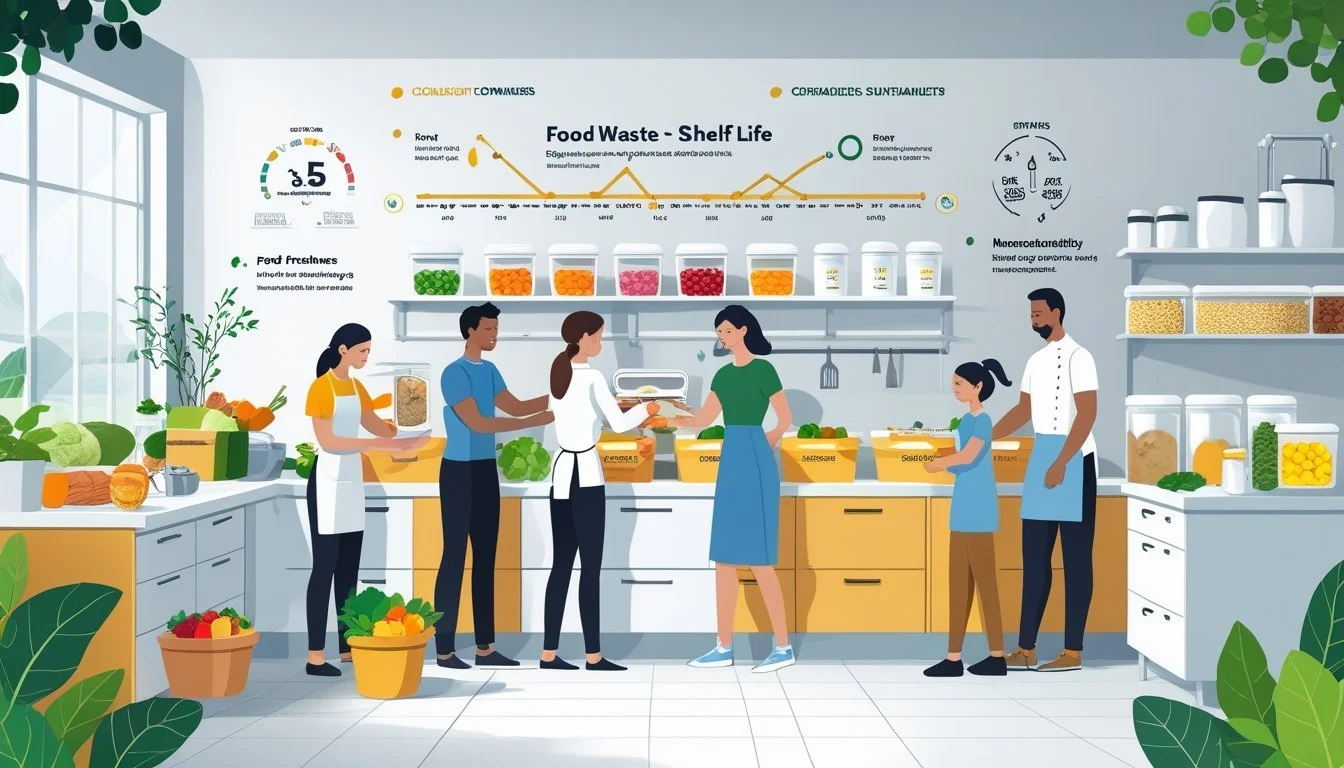
Effective shelf life management plays a significant role in both reducing food waste and promoting sustainable food systems. Organizations and households can cut food losses, lower costs, and decrease environmental impact with targeted practices.
Reducing Food Waste through Shelf Life Management
Precise labeling—such as "best before" and "use by" dates—enables consumers and businesses to better understand real product longevity. This practice prevents premature disposal of still-edible foods.
Dynamic shelf life tracking, using time-temperature indicators or smart labels, helps monitor storage conditions and adjust shelf life estimates in real time. Predictive analytics, which incorporates factors like microbiological data, allows for more tailored and accurate shelf life assessments.
Regular audits and waste monitoring highlight common sources of waste and make targeted interventions possible. Improved stock rotation, also known as FIFO (First-In, First-Out), ensures that older items are used before new ones, preventing spoilage.
Education on food hygiene practices, such as proper storage temperatures and handling, further extends shelf life and reduces waste at every point in the supply chain.
Sustainability and Environmental Impact
Minimizing food waste reduces the environmental footprint linked to food production, transportation, and disposal. Less waste means fewer greenhouse gas emissions from landfills and lower energy use in food manufacturing.
Sustainable practices include integrating recyclable or biodegradable packaging and promoting donation or redistribution of surplus food to reduce landfill rates. Businesses that implement waste reduction strategies through employee engagement and regular monitoring can see financial benefits.
Effective food preservation methods—like canning, freezing, and dehydration—also play a role. Using these techniques prolongs shelf life while maintaining food safety and nutritional value.
Sustainability initiatives often measure success by tracking waste reduction, resource use, and emissions, highlighting the value of combining shelf life management with broader environmental goals.

